What Cities Still Have Lamplighters?
Wroclaw in Poland still employs a municipal lamplighter, and it is the most famous surviving example of the trade. Where the lamps are, when they are lit, and how to see them.
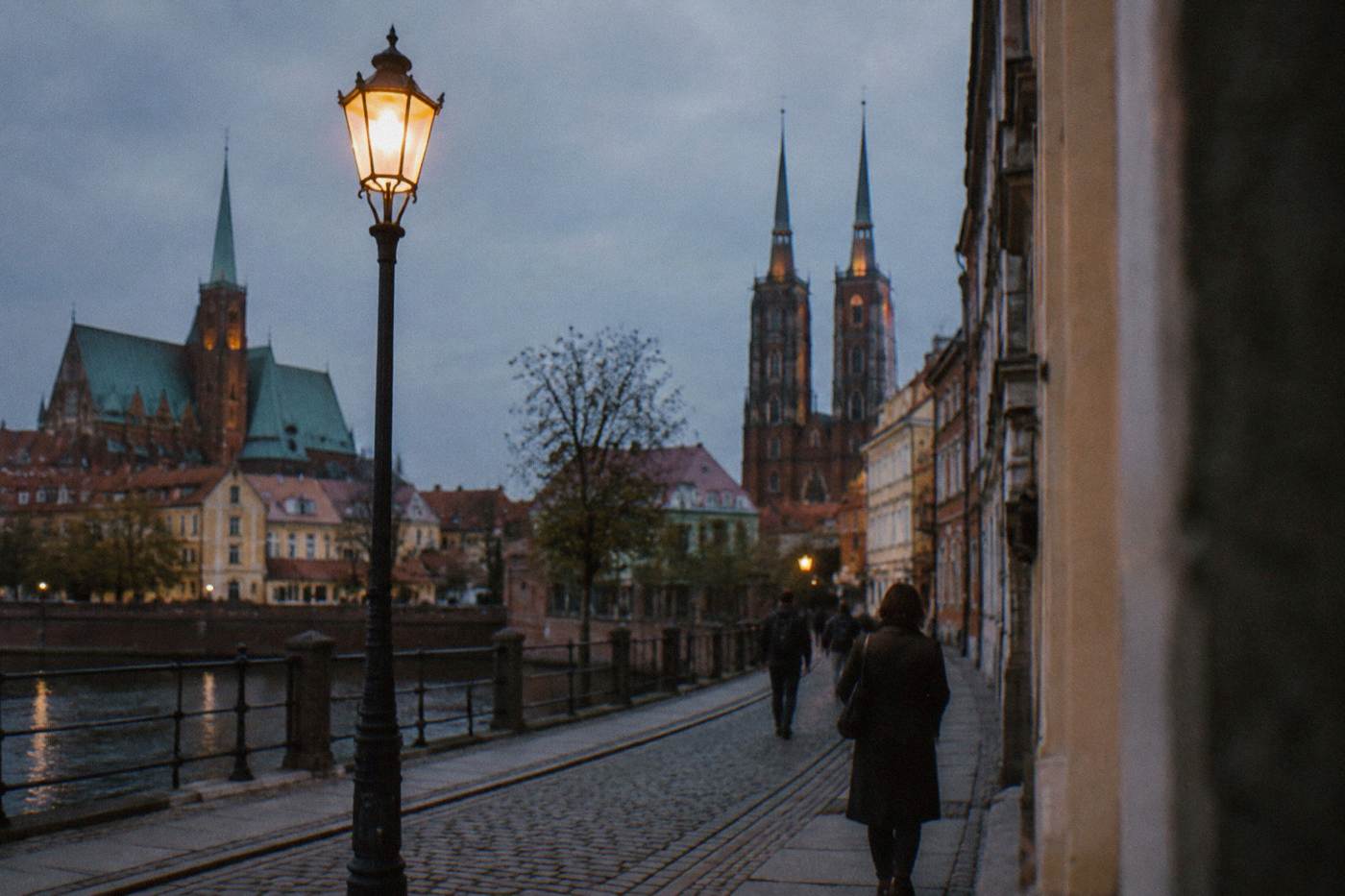
Wroclaw, the largest city in Lower Silesia in southwestern Poland, is one of the very few cities in the world where a lamplighter still walks his rounds as a real, municipal job. Every evening a city employee crosses onto Ostrow Tumski, the cathedral island in the Odra river, and lights the old gas lamps by hand, one by one, just as lamplighters did in cities across Europe before electricity made the role almost everywhere obsolete. The trade survives elsewhere only in scattered corners, which makes Wroclaw's version the most famous working example on the continent.
What Cities Still Have Lamplighters?
The cities most often cited for hand-lit street lamps are Wroclaw in Poland and a small number of other European places, mainly in the United Kingdom and Central Europe. Wroclaw is the standout case because its lamplighter is a municipal employee who lights the gas lamps of Ostrow Tumski every evening, year round, as a formal part of the city's street-lighting operation rather than as a once-a-year tourist ceremony.
In most of the world the lamplighter vanished when cities converted to electric street lighting, and the job survives only as ceremony, reenactment or a single symbolic post. What separates Wroclaw is continuity: the lamps on the cathedral island were never wired for automatic ignition, so the city kept paying someone to climb the island's bridges at dusk with a long brass pole and light each lamp individually, then return at dawn to put them out.
That daily ritual turns a piece of obsolete infrastructure into a live one. Travel writers who cover the trade usually place Wroclaw first, with the remaining gas-lit streets of London second, since a handful of central London's old gas lamps are still maintained and lit by hand rather than converted. Beyond those two, references to working lamplighters are patchy and mostly ceremonial, so treat any long list you see online with caution: a city that hires a lamplighter for one heritage festival is not a city that still has lamplighters.
For Wroclaw, this is daily operations. The Wroclaw Travel Guide treats the lamplighter as one of the city's signature sights, on par with the dwarfs and the market square, precisely because it is not staged for visitors.
Where In Wroclaw Do The Lamplighters Work?
The lamplighter's round is confined to Ostrow Tumski, Wroclaw's cathedral island, where the street lamps are historic gas fixtures rather than modern electric ones. The route runs across the bridges linking the island to the rest of the city and along the lanes around the cathedral, and the timing follows dusk, so the lighting moment slides from late afternoon in winter to well past dinner in midsummer.
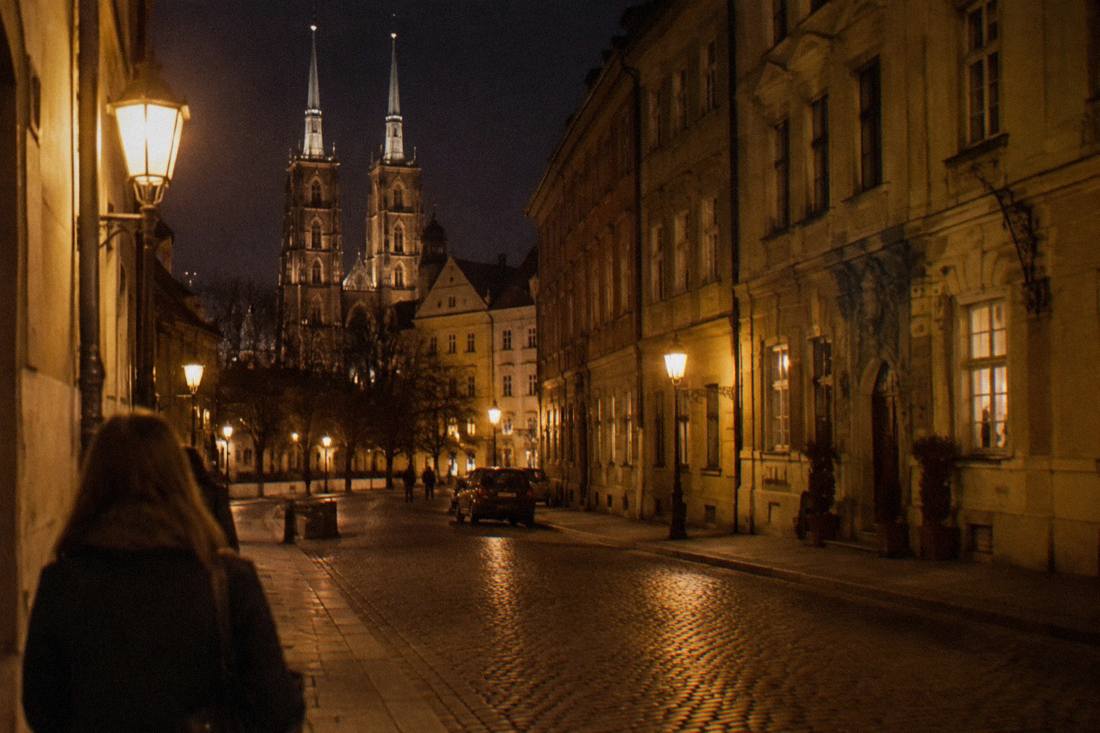
Ostrow Tumski is the oldest part of Wroclaw, a quiet district of churches, the cathedral and cobbled lanes that feels closer to a village than to a city of 672,601 people. The gas lamps are part of why. Because they burn with a warmer, softer flame than modern lighting, the island's evenings look and feel genuinely old, and photographers chase that light in the short window after the lamplighter passes.
The practical advice is simple. Stand on or near one of the footbridges into the island around dusk and look for a figure with a long pole working along the lamp line. He does not wait for an audience, does not announce himself and does not pause for photos, so the encounter is usually brief and unposed. In winter, when dusk falls in the late afternoon, the round happens when the island is busiest with commuters, so you can catch it on the way to an early dinner. In summer you may be waiting until after 21:00 for the light to drop enough for the lamps to matter.
Timing also shapes what the visit costs you in comfort. IMGW's 1991-2020 climate normals for the Wroclaw station show July means of 19.7C against January means of 0.0C, so the winter round is a cold one and the summer round a mild, late-evening stroll.
| Month | Mean Temperature (C) | What It Means For The Lamp Round |
|---|---|---|
| January | 0.0 | Dusk is late afternoon; wrap up, the bridges are exposed |
| April | 9.7 | Dusk moves toward 20:00; combine with an evening walk |
| July | 19.7 | Dusk is late; the round can fall after 21:00 |
| October | 9.6 | Dusk back near 18:00; good month for a short visit |
If you want a guided frame around the island, the free GuruWalk tour "Wroclaw Through Ages: Old Town & Cathedral Island Walking Tour" covers the same ground with a guide on a free, tip-based basis: see the full walk on GuruWalk here. Pair it with the deeper background in the Ostrow Tumski cathedral island guide if you want the history rather than just the atmosphere.
How Do You See The Lamp Lighting In Wroclaw?
You see it by walking: Ostrow Tumski is a few minutes on foot from Wroclaw's market square, across the Tumski Bridge, so no ticket, tour or booking is needed to stand in the lamplighter's path. The only real decisions are timing, since the lighting follows dusk and not a schedule, and whether you want a guided evening in the old town before or after crossing onto the island.
The walk from the market square to the island is short and pleasant, along the riverfront and past the university buildings. Because the lamplighter's round is unfenced and free, it fits easily at the end of any old town itinerary. Many visitors plan dinner in the old town first, then drift over the bridge for the dusk round, then walk back under the lit lamps. The island itself is quiet at night, and it stays a normal, public city street rather than a ticketed attraction.
If you prefer your evening with a guide rather than self-directed, two guided options fit the plan. A guided old town walk covers the market square side of the river, while a golf cart city tour lets you cover more ground before the dusk round; the retro golf cart version with unlimited beer is a relaxed way to spend the hour before crossing to the island, and you can read about the golf cart tour here or Check availability for your dates.
For visitors who like the idea of the golf cart but want the full picture first, the tour below is the featured pick for this page. It suits an early evening start: a slow loop of the old town streets while the sky is still bright, then a short walk over to the island as the light drops and the lamps go up one by one.
The same logic applies to almost every guided option in the city: use it for the hours before dusk, then give the lamplighter's round the last half hour of daylight on foot. The round is the one sight in Wroclaw that no vehicle can improve on, because the point is standing still on a quiet bridge while the lamp catches.
What Else Pairs Well With An Evening Of Old Lamplight In Wroclaw?
The natural pairing is a full evening in the old town and on the islands: the market square's lamplit facades, a slow walk along the Odra, the bridges between the sand and cathedral islands, and dinner in the old town afterward. Wroclaw rewards exactly this kind of low-key evening itinerary because its core sights sit close together and the walk between them stays interesting after dark.
Start at the market square, one of the largest medieval squares in Poland, though smaller than Krakow's Rynek Glowny: Krakow's square covers around 4 hectares against Wroclaw's roughly 3.64 to 3.79 hectares, and Krakow's population of 816,614 also exceeds Wroclaw's 672,601 per GUS data as of 31 December 2025. Wroclaw does not need to win that comparison to work as an evening. Its square, its island and its riverside all sit within an easy stroll of each other.
| Wroclaw | Krakow | |
|---|---|---|
| Population (GUS, 31 Dec 2025) | 672,601 | 816,614 |
| Main market square size | approx. 3.64-3.79 ha | approx. 4 ha |
| Hand-lit gas lamps on a city round | Yes, Ostrow Tumski, daily | No equivalent daily round |
After the square, walk down to the river. The Odra's islands, including Slodowa Island with its evening crowds in the warmer months, sit between the old town and the cathedral island, so the river walk is a natural approach to the lamps. In summer the whole stretch stays lively late; in winter it empties fast once the cold settles in, which is when the gas lamps matter most.
If a whole evening is not enough and you want a bigger Lower Silesian day around it, two organized day trips pair well with an evening on the island: the half-day trip to the UNESCO-listed Peace Churches in Swidnica and Jawor, whose own entry fees run 18 zl for an adult in Swidnica, and the Jewels of Lower Silesia route, which strings the region's castles and churches into one long day. Both return to Wroclaw with enough light left for the lamplighter's round in most seasons.
For the wider city context before your trip, the pieces on what Wroclaw is famous for and on how many days in Wroclaw is enough cover the planning questions this page does not.
What Other Cities Still Light Their Lamps By Hand?
Outside Wroclaw, the best-documented hand-lit lamps are in London, where a small number of gas lamps survive in the central districts and are maintained and lit rather than converted to electricity. Elsewhere the trade exists mainly as ceremony or as a single heritage post, so Wroclaw and London are the two names that reliably answer this question in the present tense.
London's case is different in kind from Wroclaw's. The remaining gas lamps there are treated as heritage assets, tended and lit by hand as part of their preservation, and the role has a strongly ceremonial flavor. Wroclaw's lamplighter, by contrast, lights his lamps because the island's lighting has genuinely never been automated, which gives the Polish example its claim to be the most authentic working version of the trade.
Everywhere else, be skeptical of lists. Cities across Europe revived lamplighter performances for tourism, and some hold annual festivals where costumed figures light replica lamps for a crowd. Those are worth watching, but they answer a different question: a performance is not a lamplighter any more than a battle reenactment is a war. The honest answer to which cities still have lamplighters is short, and Wroclaw sits at the top of it.
Common Questions About Lamplighters In Wroclaw
What cities still have lamplighters?
Wroclaw in Poland and, in a smaller and more ceremonial way, parts of central London. Wroclaw is the strongest example because its lamplighter is a municipal employee lighting the gas lamps of Ostrow Tumski daily, not a performer hired for an occasion.
Where exactly in Wroclaw does the lamplighter work?
On Ostrow Tumski, the cathedral island. The round covers the bridges into the island and the lanes around the cathedral, and it starts at dusk, which means late afternoon in winter and past 21:00 in midsummer.
Does it cost anything to see the lamplighter in Wroclaw?
No. The island is a normal public street, there is no ticket or viewing area, and the lamplighter's round is part of the city's ordinary lighting operation. You simply need to be there around dusk.
Is Ostrow Tumski safe at night?
Yes, the cathedral island and the walk between it and the market square are calm, well-frequented areas in the evening. The broader question of night safety in the city is covered in the site's piece on walking in Wroclaw at night.
Can you photograph the lamplighting?
You can, and many visitors do, but the lamplighter does not pause or pose, so expect to shoot the working moment rather than a staged one. The light immediately after a lamp is lit is the shot most photographers are after.
The lamplighter is the kind of sight that costs nothing and cannot be booked, which is exactly why it is worth planning around. Time your evening for dusk, cross the bridge to Ostrow Tumski, and let a job that died out everywhere else a century ago happen in front of you.