What Is The Best Orchestra In Poland?
No official ranking crowns a single best orchestra in Poland, and this Wroclaw travel guide says so honestly. Here is what a music-loving visitor to Wroclaw, in southwestern Poland, can actually plan around.
Wroclaw, the largest city in Lower Silesia (Dolnoslaskie voivodeship) in southwestern Poland, is a destination many music lovers reach with one question loaded in advance: which orchestra should they cross the country for? This site covers Wroclaw rather than the whole Polish orchestral map, so this page answers the question the only honest way it can be answered, and then turns the answer into a plan. Poland's currency is the zloty (PLN), the city's population is 672,601 as of 31 December 2025 according to GUS, Statistics Poland, and Krakow, at 816,614, remains the larger city, which matters when travelers assume Wroclaw is Poland's second everything. It is not. What Wroclaw does have, alongside its concert life, is one of Central Europe's most walkable historic cores, and the practical advice below leans on that.
What Is The Best Orchestra In Poland?
No official ranking, statistic or verified source names a single best orchestra in Poland, and this guide's research found none. Poland has several major symphony orchestras spread across its largest cities, each with its own season, hall and following, and "best" is a matter of taste and repertoire rather than a title anyone awards. For a traveler, the practical answer is to pick the city first and the concert second.
That answer may feel like a dodge, so here is the reasoning behind it. A travel publisher that prints "the best orchestra in Poland is X" without a ranking, poll or juried prize behind it is inventing prestige, and invented prestige is exactly what this site refuses to trade in. The verified facts pack behind this page covers population, admission prices, transport fares and climate normals for Wroclaw, and it contains no orchestral ranking at all. Where a competing guide would write a confident superlative, this one writes what the sources support: Poland has multiple full-time symphony orchestras, and which one suits you depends on what you want to hear, in which hall, on which night of your trip.
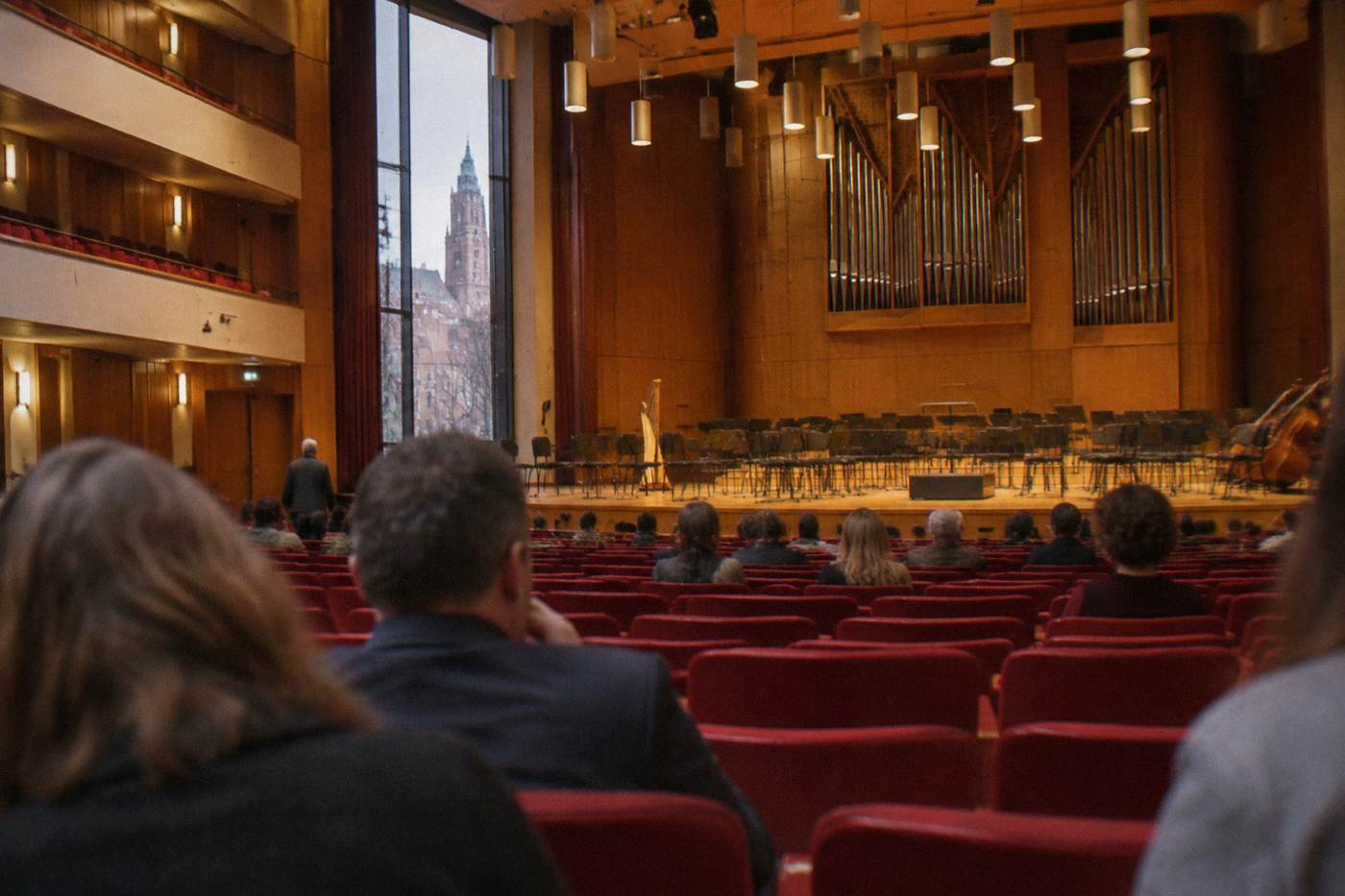
Wroclaw's own contribution to Polish musical life is the National Forum of Music, the concert venue this site treats as one of the city's flagship cultural institutions. A traveler planning a trip around a performance in Wroclaw will book that hall, not a nationwide ranking. The venue sits in a city that GUS counted at 672,601 residents at the end of 2025, a city small enough that a concertgoer can walk from a riverside dinner to the hall and back across the Odra in an evening. That compactness, not a superlative, is Wroclaw's real musical advantage.
A final word on scope, because honesty cuts both ways. This page cannot tell you which Polish conductor, orchestra or philharmonic is objectively finest, and any site that does so in a single confident sentence is filling a gap with opinion dressed as fact. What it can do is tell you what Wroclaw offers around the concert hall, what things cost in verified zloty figures, and how to build a trip that survives the possibility that the performance you most wanted is sold out. That plan follows.
Where To Hear Classical Music In Wroclaw, Poland
Wroclaw's flagship classical venue is the National Forum of Music, the concert hall this site lists among the city's major cultural institutions. It is the natural anchor for a music-led visit, sitting in a compact city center where the Old Town, Cathedral Island and the market square are all within reach on foot or a short tram ride of 4.60 zl for a 15-minute single ticket.
The venue matters to travelers for a simple logistical reason: it concentrates an evening's plans. A city of 672,601 people, per GUS's 31 December 2025 count, does not sprawl like a capital, and a concert night in Wroclaw typically means dinner in the center, the performance, and a walk back over one of the Odra bridges. The practical advice is to book the performance first, since halls in mid-size cities sell out around festivals and weekends, and build the rest of the day outward from the booking. Check the venue's own calendar for programs, dates and ticket prices rather than relying on any third-party summary, including this one.
Getting to the hall is cheap by Western European standards. The city's official transport price guide gives a 15-minute MPK ticket at 4.60 zl normal and 2.30 zl reduced, with a 30-minute tier at 7.00/3.50 zl and a 24-hour city ticket band around 15.00/7.50 zl. Those are the verified base fares, and they mean a music trip in Wroclaw does not need a car.
| MPK Wroclaw ticket | Normal | Reduced |
|---|---|---|
| 15-minute | 4.60 zl | 2.30 zl |
| 30-minute | 7.00 zl | 3.50 zl |
| 24-hour city ticket | approx. 15.00 zl | approx. 7.50 zl |
One planning trap deserves a name. There is no all-inclusive, Go City-style multi-attraction tourist pass currently sold for Wroclaw; the UrbanCard that exists is a transport-focused fare card with resident discounts, not a sightseeing pass, and no verified source supports any claim that it covers museum or concert admission. Budget for the hall, the museums and the tram separately, and read the museum prices below before assuming a bundle exists.
For the hours between performances, the electric-car city tour below is the efficient way to see the ground you will otherwise only walk past at night. The full selection of bookable options, including day trips beyond the city, sits here.
When To Visit Wroclaw For A Music Trip
IMGW's 1991-2020 climate normals for the Wroclaw station give a July mean of 19.7C as the warmest month and a January mean of 0.0C as the coldest, with an annual mean of 9.7C. For a music-led trip, shoulder seasons trade thinner tourist crowds against cooler evenings, and a warm jacket is a concert-hall constant in winter.
The climate table below is the verified monthly picture, and it rewards a closer read than the usual "visit in summer" advice. July carries the heaviest rainfall of the year at 91.4 mm, while April is one of the drier months at 31.2 mm. A spring or early-autumn trip to Wroclaw can therefore mean drier streets for the walk to the hall than a July one, at the cost of cooler evenings. Winter visits, around the Christmas market, mean the coldest means of the year, 0.0C in January, but also the shortest tourist queues at the museums you fill your days with. Everything else covered here is indexed on Wroclaw Travel Guide.
| Month | Mean temperature | Precipitation |
|---|---|---|
| Jan | 0.0C | 28.3 mm |
| Feb | 1.1C | 25.6 mm |
| Mar | 4.3C | 35.0 mm |
| Apr | 9.7C | 31.2 mm |
| May | 14.3C | 59.6 mm |
| Jun | 17.7C | 65.4 mm |
| Jul | 19.7C | 91.4 mm |
| Aug | 19.3C | 59.5 mm |
| Sep | 14.5C | 48.4 mm |
| Oct | 9.6C | 37.6 mm |
| Nov | 4.8C | 31.4 mm |
| Dec | 1.1C | 27.9 mm |
Season also changes the shape of the trip. Summer means the Odra-side evenings, the islands and the open-air life of Slodowa Island; winter means the Christmas market and a concert hall that becomes the main evening draw. If you want both music and the full outdoor city, late spring is the compromise the numbers support: May's mean of 14.3C sits well above the annual mean of 9.7C without July's rainfall peak. Whatever month you choose, book the performance before the hotel, because the concert calendar, not the weather, is the scarce resource.
How To Fill The Days Between Concerts In Wroclaw
A music-led Wroclaw itinerary fills its daylight hours with the Panorama Raclawicka, whose 50 zl adult ticket also covers the National Museum's permanent exhibitions, the Ethnographic Museum and the Four Domes Pavilion within 3 months, plus the free-entry Saturdays at the National Museum and the 69 zl online zoo ticket that includes the Afrykarium. Concert nights anchor the plan; verified prices fill it.
The Panorama deal is the detail most first-time visitors miss, and it is straight from the museum's own practical-information page: one 50 zl adult ticket, 35 zl reduced, buys the 30-minute screening and then three months of entry to the National Museum's permanent exhibitions, the Ethnographic Museum and the Four Domes Pavilion. That single purchase can structure two full sightseeing days. The National Museum on its own charges 20 zl adult and 15 zl reduced, with free entry to permanent exhibitions every Saturday, a fact budget travelers should build a weekend around.
| Wroclaw attraction | Adult price | Detail |
|---|---|---|
| Panorama Raclawicka | 50 zl | 35 zl reduced; also covers 3 more museums within 3 months |
| National Museum, permanent exhibitions | 20 zl | 15 zl reduced; free entry every Saturday |
| Wroclaw Zoo | 69 zl online | 99 zl at the gate; Afrykarium included |
Between those, the city itself is the attraction, and the fastest orientation is a seat rather than a walking pace. The group electric-car tour this page features covers the Old Town, Cathedral Island and the dwarf trail in a couple of hours, which leaves the late afternoon free for dinner before the hall opens. You can browse the tour's own page for its current price, rating and availability, or go straight to the operator's live listing: Check availability.
If the electric-car format does not suit your group, the same operator family offers the variants already listed in the trio above, including a longer UNESCO Church of Peace day tour for a free afternoon. Whichever you take, the point of an orientation tour on a music trip is simple: it buys you a map in your head before the evening walk to the hall, and it does so without eating the daylight hours you promised to the museums.
For travelers who want to look past the city on a free afternoon, two of the trio below leave Wroclaw entirely: one to the UNESCO-listed Church of Peace in Swidnica, whose own tariff lists the adult ticket at 18 zl, and one toward Krakow and the Wieliczka salt mine. Both are long days, so neither belongs on a concert evening. The Szukajka-style shortcuts do not exist here; pick one day trip or none, and keep the music nights in the city.
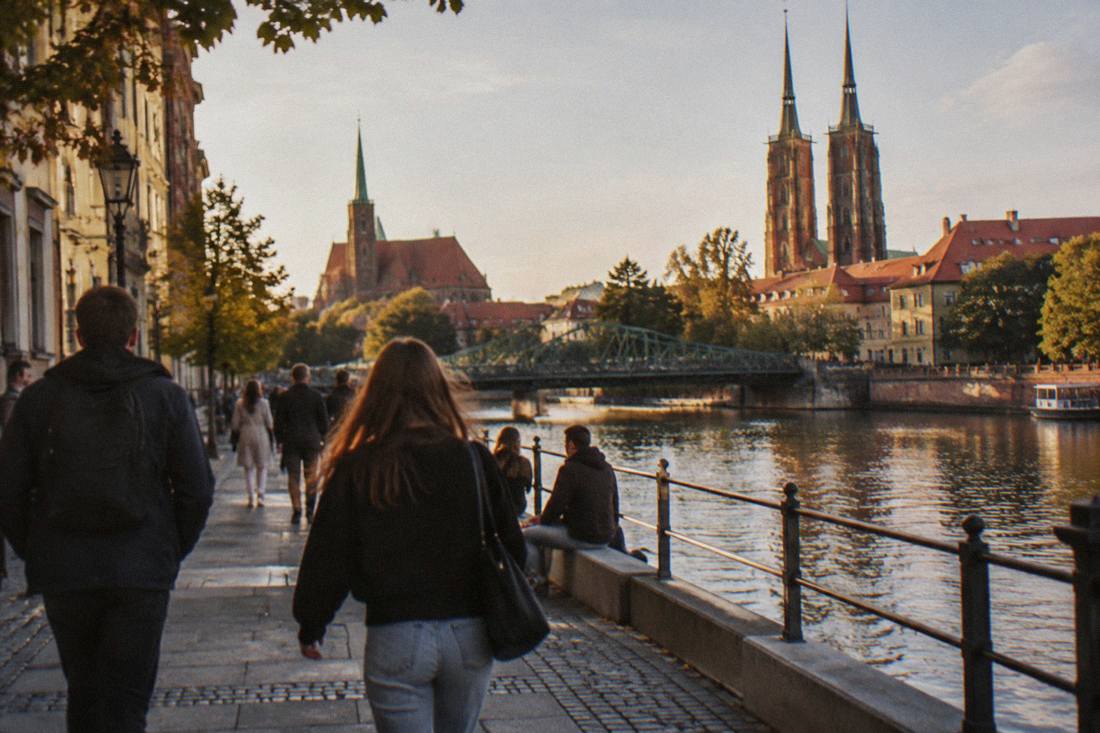
If the performance you want is full, the fallback is not a lesser evening. Walk the lamplighted streets of Cathedral Island, where this city's last lamplighters still work, browse what the market square does after dark, or simply reserve a table along the Odra and let the river carry the evening. Wroclaw absorbs a sold-out show better than most cities its size.
Common Questions About Orchestras And Classical Music In Poland
Questions about orchestras, concert halls and planning a music trip to Wroclaw come up in a predictable pattern, and the answers below reuse the exact strings travelers search for. Four of the most common follow, each answered from this site's verified facts rather than from reputation.
What is the best orchestra in Poland?
There is no official best orchestra in Poland, and no ranking, poll or juried prize in this site's verified research names one. Poland has several major symphony orchestras in its largest cities, and the choice between them is a matter of repertoire, hall and travel timing. For a trip anchored on Wroclaw, the National Forum of Music is the venue to plan around.
Does Wroclaw have a major concert hall?
Yes. The National Forum of Music is the concert venue this site lists among Wroclaw's flagship cultural institutions, and it anchors the city's classical calendar. Check its own program page for current performances, dates and ticket prices before booking anything else on the trip.
What currency do I pay for tickets in Wroclaw?
The zloty (PLN), abbreviated zl, is Poland's currency. Poland is in the EU and the Schengen area but not in the Eurozone, so budget museum and transport figures in zloty: the verified examples on this page include the 50 zl Panorama Raclawicka ticket and the 4.60 zl 15-minute MPK tram fare.
How many days in Wroclaw is enough for a music trip?
Two to three days covers one or two concert evenings plus the Panorama Raclawicka, the National Museum and the zoo, with time for the Old Town and Cathedral Island. The Panorama ticket's 3-month validity across four museums rewards a longer stay. This site's own page on how long a Wroclaw visit needs breaks the tradeoffs down.
Is Wroclaw worth visiting outside concert season?
Yes. IMGW's 1991-2020 normals give Wroclaw means from 0.0C in January to 19.7C in July, so even winter is mild by Polish standards, and the city's market square, dwarfs and islands do not close for the season. The case for visiting Wroclaw at all holds year-round.
The honest summary: no verified source crowns a Polish orchestra, and a good trip does not need one. Choose Wroclaw, book the hall, carry a jacket, and let the city's 672,601 residents share their streets with you between the music.