Is Wroclaw, Poland Worth Visiting?
An honest answer to whether Wroclaw, Poland deserves a spot on your itinerary, with verified prices, opening facts and what the city is actually known for.
Wroclaw, in southwestern Poland on the Odra river, is the largest city in Lower Silesia with a population of 672,601 as of 31 December 2025, per GUS, the Polish statistics office. It is not the biggest city in the country, Krakow holds that distinction among the two with 816,614 residents, and its market square is not Poland's largest either. What it does have is a dense, walkable old town, more than a hundred bridges across a river that splits into channels around islands, a UNESCO-listed modernist landmark, and a museum housing one of the few surviving panorama paintings in Europe. Whether that adds up to a trip depends on what you want from a city, and the sections below price it out so the decision can rest on numbers.
Is Wroclaw, Poland Worth Visiting?
Yes, Wroclaw is worth visiting for most travelers, especially anyone combining it with Krakow, Prague or Berlin rather than flying in for it alone. The city offers a UNESCO World Heritage site (Centennial Hall, inscribed in 2006), the Panorama Raclawicka painting, a dwarf-hunting tradition that doubles as a self-guided game, and day-trip access to Ksiaz Castle and the Churches of Peace. Costs run lower than Western Europe, with museum tickets between 20 and 50 zl and a base transit fare of 4.60 zl.
That is the short version. The longer version weighs what the city genuinely does well against what it does not, and it is honest about both. Wroclaw's strength is concentration: the old town, Cathedral Island and the market square sit close enough together that a first-time visitor covers the core on foot in a day or two. Its weakness, if it has one for leisure travelers, is that it lacks a single iconic sight on the scale of Krakow's Wawel or Warsaw's rebuilt Old Town, so the appeal is cumulative rather than hingeing on one blockbuster. People who enjoy cities as a whole, cafe districts, riverside islands, street-art quarters, tend to rate it highly. People who travel to tick one famous monument often leave satisfied but not stunned.
Context matters too. The city's 2016 European Capital of Culture year left behind venues and a festival habit, including the New Horizons film festival, which the city still hosts. The Nadodrze district, once neglected, is now widely described in reporting as a street-art and creative quarter, with murals concentrated around courtyard projects. Those are real, sourced reasons the city has momentum, not marketing copy. For more background on the city's fame, the companion piece why Wroclaw is famous breaks down each claim.
What Are The Highlights That Justify A Wroclaw Trip?
The five sights that anchor a Wroclaw visit are the Market Square with its two town halls, Cathedral Island (Ostrow Tumski), the Panorama Raclawicka, Centennial Hall, and the dwarf statues scattered across the city center. The Panorama costs 50 zl for an adult and the viewing lasts 30 minutes, Centennial Hall has been UNESCO-inscribed since 2006, and the dwarfs are free to hunt.
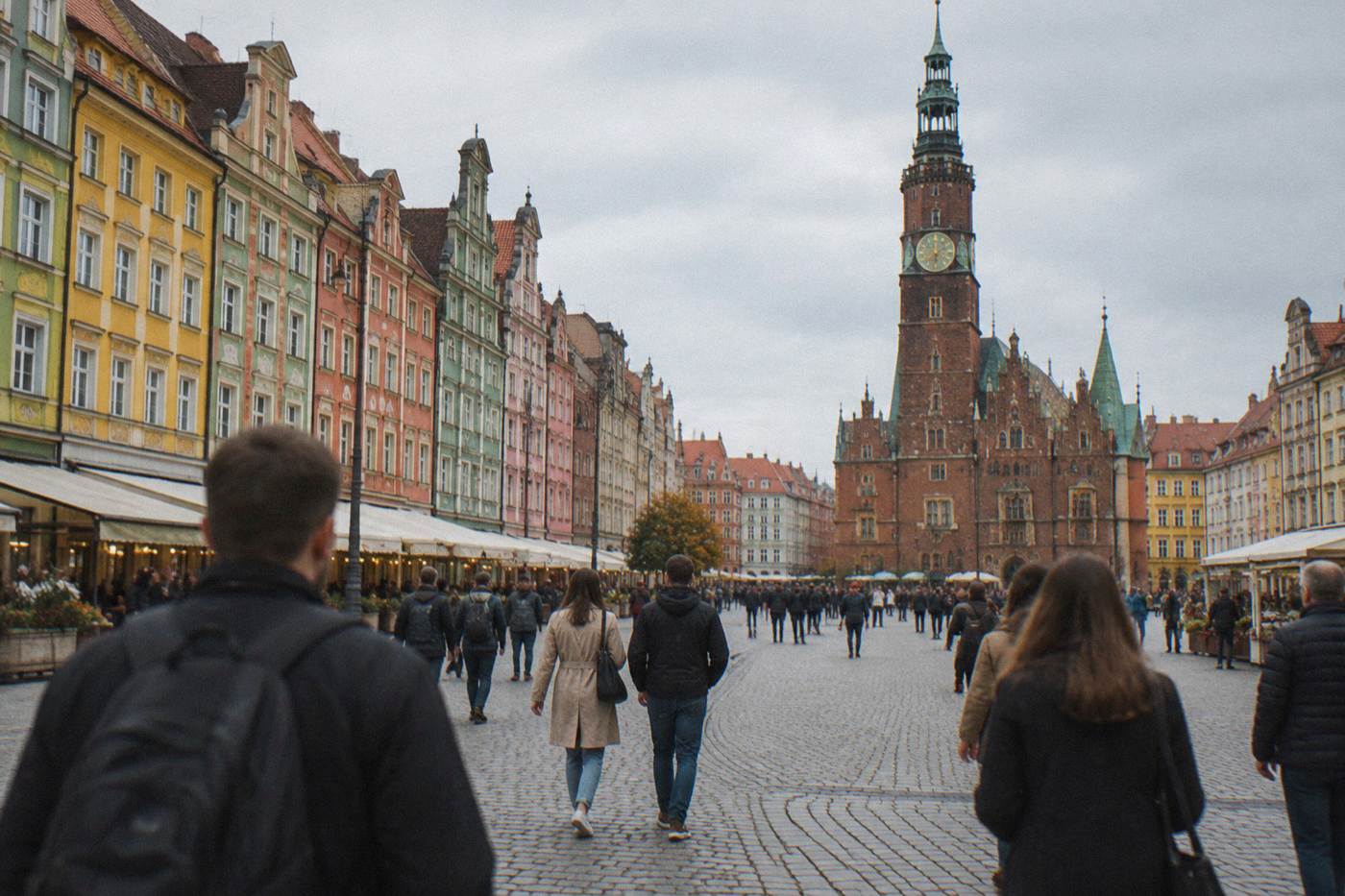
The Market Square, smaller than Krakow's but among Poland's grandest, is the natural starting point, with the Gothic Old Town Hall at its center and colored burgher houses around the sides. Cathedral Island, a short walk north, is the oldest part of the city, an island of churches and cobbled lanes where, notably, gas street lamps are still lit by hand each evening; the question of which cities still have lamplighters is one Wroclaw answers in the affirmative.
The Panorama Raclawicka is a giant cycloramic painting displayed in a purpose-built rotunda. The museum's own ticket page lists an adult ticket at 50 zl, reduced at 35 zl, with the screening running 30 minutes, and one ticket also covers the National Museum's permanent exhibitions, the Ethnographic Museum and the Four Domes Pavilion within three months, which makes it better value than it first looks. Centennial Hall, designed by architect Max Berg and built between 1911 and 1913, is a reinforced-concrete structure with a capacity of up to 10,000 and was inscribed by UNESCO in 2006.
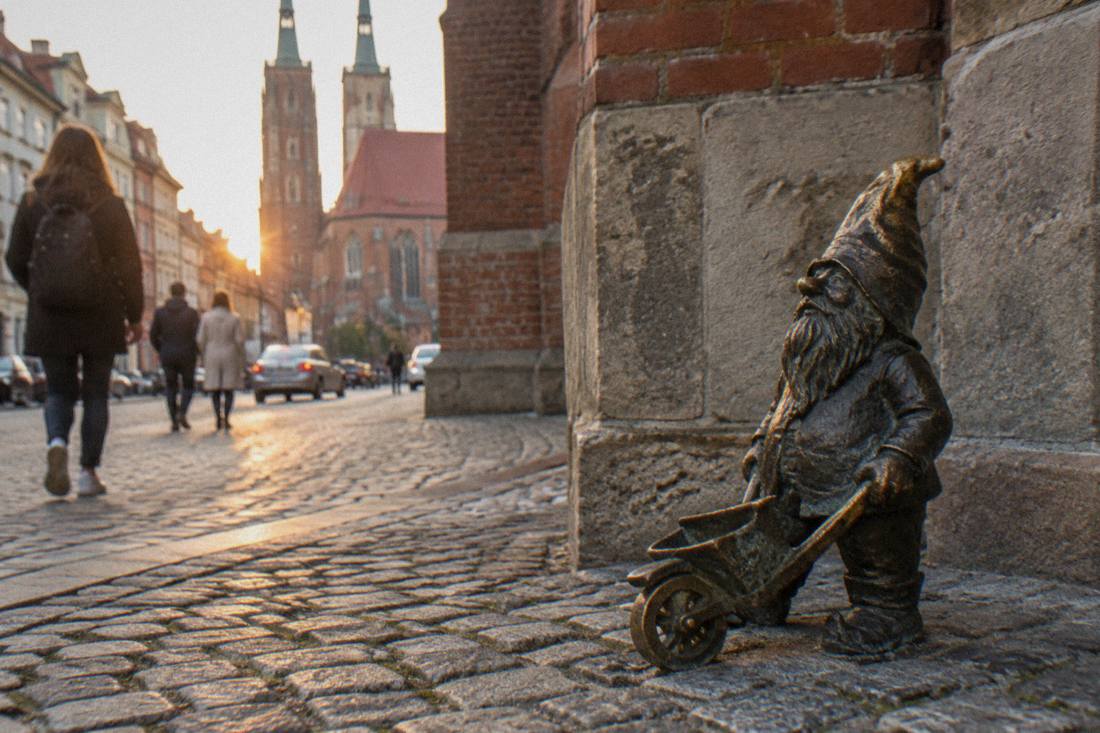
The dwarfs deserve their own paragraph because they are the city's quirkiest draw. Hundreds of small bronze figurines are embedded in pavements, walls and lamp posts across the center, originally tied to an anticommunist protest movement and now a scavenger hunt in miniature. For visitors who want the hunt organized rather than improvised, the E-Car Dwarf Hunt tour pairs the figurines with the main sights from an electric car, Check availability if that format suits your group.
Beyond the core five, the city spreads across islands: Slodowa Island is the riverside gathering spot, and the Zoo with its included Afrykarium aquarium is one of the most visited paid attractions in the region. The table below prices the headline sights using each institution's own published tariff.
| Sight | Adult price | Reduced price | Sourced note |
|---|---|---|---|
| Panorama Raclawicka | 50 zl | 35 zl | 30-minute screening; ticket also covers three museums within 3 months |
| National Museum (permanent) | 20 zl | 15 zl | Free entry to permanent exhibitions every Saturday |
| Wroclaw Zoo | 69 zl online / 99 zl at gate | 59 zl online / 89 zl at gate | Afrykarium included, no separate ticket |
| Dwarf hunt | free | free | Bronze figurines across the city center |
| Ksiaz Castle (castle, audioguide, terraces) | 72 zl | 62 zl | Day trip; terraces open only 15 Apr to 30 Sep |
What Does A Wroclaw Trip Cost?
A Wroclaw trip is inexpensive by Western European standards: headline museum tickets run 20 to 50 zl, the zoo costs 69 zl online versus 99 zl at the gate, a 15-minute public transport ticket is 4.60 zl, and the currency is the zloty, not the euro. There is currently no all-inclusive Go City-style tourist pass for Wroclaw, so savings come from online zoo tickets, free Saturday museum entry, and the free-entry sights.
Poland uses the zloty (PLN). It is in the European Union and the Schengen area, but it is not in the Eurozone, so arriving with euro cash expecting to spend it directly will not work. On attractions, the pattern is simple: state museums are cheap, the zoo is the one place where buying online rather than at the gate saves 30 zl per adult, per the zoo's own price table, and the Panorama is the priciest single ticket but bundles three further museums into its validity window.
Transport is equally modest. The city's official fare page lists a 15-minute ticket at 4.60 zl normal and 2.30 zl reduced, rising through a 30-minute ticket at 7.00/3.50 zl to a 24-hour city ticket band around 15.00/7.50 zl and multi-day bands above that. For a visitor staying near the center, the honest answer is that most of the core is walkable and transit is a supplement for the zoo, Centennial Hall or Nadodrze rather than a daily necessity.
| MPK ticket | Normal fare | Reduced fare |
|---|---|---|
| 15 minutes | 4.60 zl | 2.30 zl |
| 30 minutes | 7.00 zl | 3.50 zl |
| 24 hours (city band) | 15.00 zl | 7.50 zl |
One planning note: there is no city-wide multi-attraction pass. The UrbanCard that exists is a transport-focused fare card oriented to residents, not a sightseeing product, and describing it as covering museums would be wrong. Budget instead by attraction, using the first table above as the baseline.
How Easy Is It To Get To And Around Wroclaw?
Wroclaw is reachable by air through Wroclaw Airport (WRO), which handled 4,473,945 passengers in 2024 and is open today; a temporary full closure for a renovation ran only from 26 October to 4 December 2025 and finished, with the wider project completed ahead of schedule in September 2026. By train, PKP Intercity connects the city to Warsaw and Krakow, with fares and journey times varying by date.
The airport question attracts odd rumors, so it is worth being precise: the airport is not closed. The renovation closure of late 2025 was a temporary, planned event, and reporting after it noted the airport's largest-ever investment program finishing ahead of schedule and 2026 passenger records being set. Anyone searching today should plan on a functioning airport.
Getting around inside the city is the easier half of the question. The old town, islands and market square are compact enough that walking covers most of a first visit, and the MPK tram and bus network handles the longer hops to the zoo or Centennial Hall. The climate matters for planning: IMGW's 1991-2020 climate normals for the Wroclaw station give a mean of 0.0C in January, the coldest month, rising to 19.7C in July, the warmest, with an annual mean of 9.7C. That is a four-season city with mild winters by Polish standards and warm, occasionally rainy summers.
| Month | Mean temperature (IMGW 1991-2020) | Precipitation |
|---|---|---|
| January | 0.0C | 28.3 mm |
| April | 9.7C | 31.2 mm |
| July | 19.7C | 91.4 mm |
| October | 9.6C | 37.6 mm |
How Many Days Should You Spend In Wroclaw?
Two to three days is the sweet spot for Wroclaw itself, with the first day covering the Market Square, Cathedral Island and the Panorama, the second covering Centennial Hall, the Japanese Garden side of Szczytnicki Park and the zoo, and a third for Nadodrze and riverside islands. Add a fourth day only for a day trip such as Ksiaz Castle or the Church of Peace in Swidnica.
The full breakdown lives in the how many days in Wroclaw is enough companion answer, but the reasoning is simple: the core sights are close together, so compressing them into one frantic day wastes the city's pace, while a full week without day trips runs out of headline attractions. The day trips change the math. Ksiaz Castle, owned by the Walbrzych municipality and reachable by regional train to Walbrzych plus a bus or taxi connection, and the UNESCO-listed Church of Peace in Swidnica, where an adult ticket is 18 zl, are the two most common add-ons, both covered by guided tours from the city.
Visitors who prefer a structured introduction can start with a guided option and fill free time around it. The picks below cover the city center and the two flagship day trips.
Seasonality is the other lever. The market square and the dwarf hunt work year-round, but the Christmas market season is a genuine draw in its own right, enough that the question is Wroclaw worth visiting at Christmas gets its own answer, and winter light on Cathedral Island has its partisans. Summer trades longer days against the year's peak rainfall in July, per the IMGW normals.
Common Questions About Visiting Wroclaw
Is Wroclaw, Poland worth visiting?
Yes, for most travelers. The city pairs a walkable old town and island river landscape with UNESCO-listed Centennial Hall, the Panorama Raclawicka and low entry costs of 20 to 50 zl at headline museums, and it works especially well combined with Krakow, Prague or Berlin rather than as a sole destination.
Is Wroclaw worth visiting at Christmas?
The Christmas market season is one of the city's strongest periods, with the Market Square as its center. The companion answer on Christmas visits covers the timing and what changes in the city during the market weeks.
Is Wroclaw more Polish or German?
Wroclaw's history spans Bohemian, Habsburg, Prussian and German periods before the postwar border changes made it Polish, and the architecture reflects all of them. The dedicated answer on the city's Polish or German character traces the layers without flattening them.
Is Wroclaw bigger than Krakow?
No. Krakow is larger in population, 816,614 versus Wroclaw's 672,601 per GUS at 31 December 2025, and its main market square is bigger than Wroclaw's. Wroclaw remains the largest city in Lower Silesia.
Is it safe to walk in Wroclaw at night?
The city center, including the Market Square and the routes to Cathedral Island, is busy and considered safe for pedestrians at night by normal European city standards. The safety-specific answer on this site covers the practical detail.
The verdict, weighed: Wroclaw rewards travelers who give it two or three unhurried days, a dwarf map, one panorama painting and one island walk at dusk, and it does so at prices that leave room for a pierogi dinner afterward. That is a defensible yes, and Wroclaw Travel Guide carries the sight-by-sight detail to build the rest of the trip around it.