Why Is Wroclaw Famous?
Wroclaw, the largest city in Lower Silesia in southwestern Poland, is famous for its Market Square, its dwarfs, Cathedral Island, UNESCO Centennial Hall and its year as 2016 European Capital of Culture. Here is what actually made it known.
Wroclaw, the largest city in Lower Silesia (Dolnoslaskie voivodeship) in southwestern Poland, is famous for a compact set of things that are unusually easy to verify: one of the great market squares of Central Europe, a citywide scavenger hunt of bronze dwarfs, a cathedral island with hand-lit gas lamps, a UNESCO-listed reinforced-concrete hall from 1913, and a recent turn as a European Capital of Culture. Ask the question in a search bar and you will also meet claims that are simply not true, like the idea that Wroclaw's square is the second largest in Europe or that Wroclaw out-sizes Krakow. This page separates the real reasons from the folklore, using figures the official Polish sources actually publish.
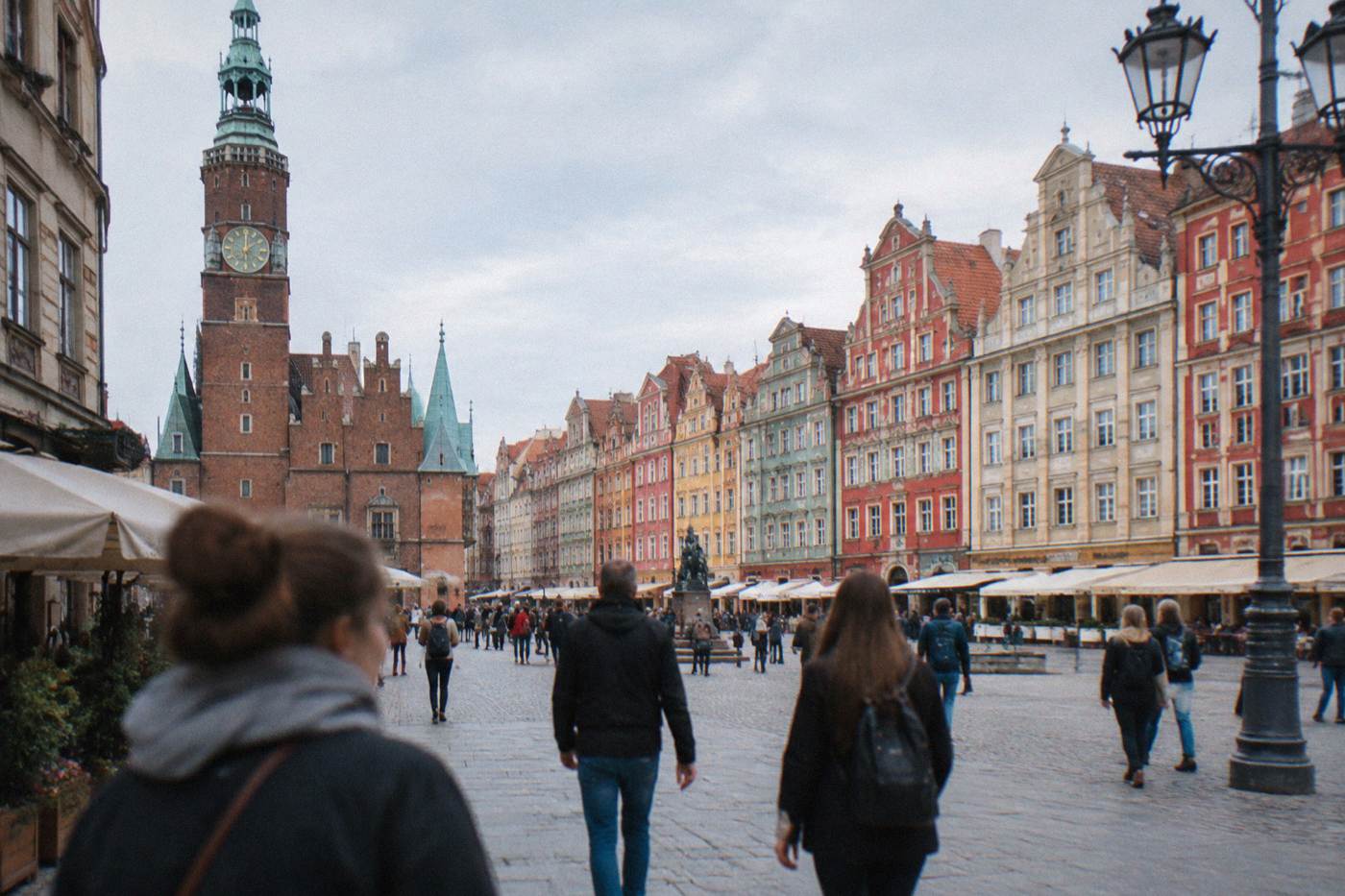
Why Is Wroclaw Famous?
Wroclaw is famous for five verifiable things: one of Poland's great market squares, a hunt for hundreds of small bronze dwarf statues, the historic cathedral island of Ostrow Tumski on the Odra river, the UNESCO-listed Centennial Hall of 1913, and its year as the 2016 European Capital of Culture. The city of 672,601 people (GUS, 31 December 2025) is also the largest city in Lower Silesia and a major university town.
Those five anchors are what almost every guidebook and every local tourism page leads with, and they hold up. What varies wildly between sources is the framing. Wroclaw gets called "the Venice of Poland" for its bridges and islands, "the city of dwarfs" for the statues, and occasionally things it has not earned, which this page avoids. The honest version is strong enough. A city that rebuilt its old town after wartime destruction, kept a UNESCO landmark, and ran a Capital of Culture year does not need inflation.
There is also a structural reason for the fame that visitors feel but rarely name. Wroclaw sits on a dozen or so islands in the Odra river, which spreads the city across water and gives it the bridges, the riverbanks and the cathedral island that make the postcard. The Wroclaw Travel Guide homepage covers how those pieces fit together for a first visit.
What Is The Market Square Famous For?
Wroclaw's Market Square (Rynek) is famous as one of the largest market squares in Poland, at roughly 3.64 to 3.79 hectares, ringed by colored townhouses and dominated by the Old Town Hall. It is smaller than Krakow's Rynek Glowny, at about 4 hectares, so the often-repeated claim that it is the second-largest square in Europe should be treated with caution.
What the square actually delivers is density rather than record-breaking size. The Old Town Hall sits in the middle of the Rynek as one of the landmark civic buildings of Central Europe, and the townhouse rows around it give Wroclaw its most photographed view. The scale is real, just not superlative: Krakow, with 816,614 residents to Wroclaw's 672,601, holds the larger square as well as the larger population, per GUS figures for 31 December 2025.
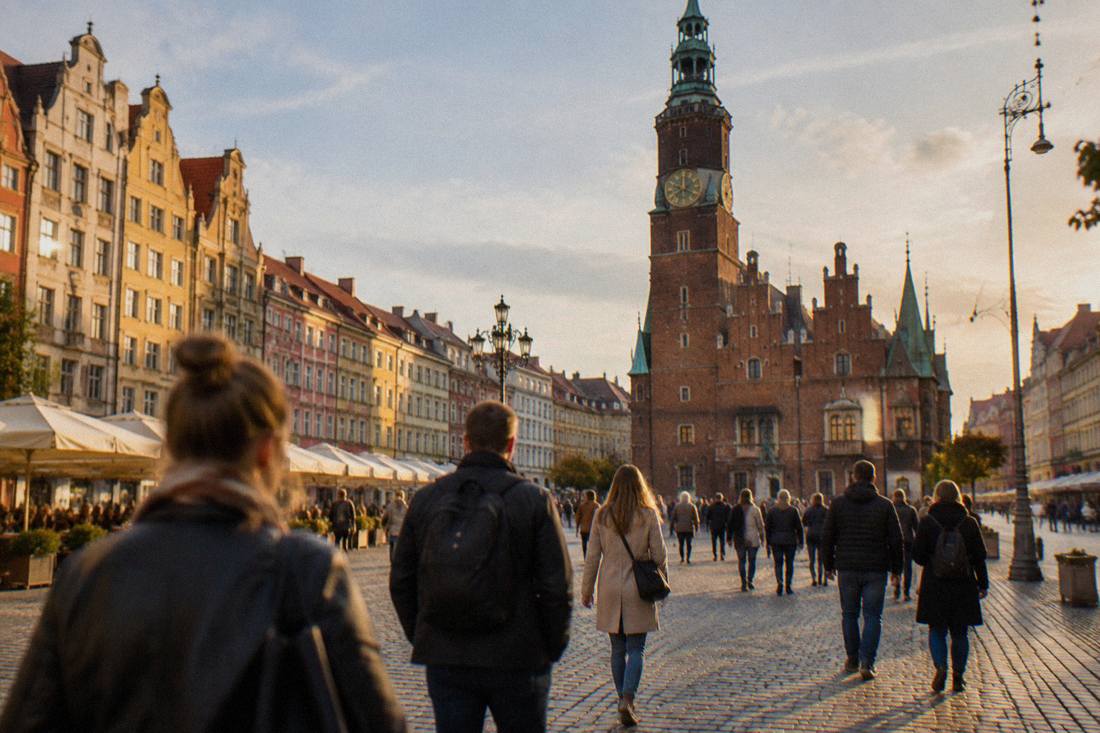
The dwarfs are the square's other fame. Small bronze figurines, the first of them tied to the Orange Alternative protest movement of the communist era, now appear across the city in dozens of poses, and hunting them has become Wroclaw's signature activity for families. The dedicated Wroclaw dwarfs guide covers the hunt in detail, and the practical best time of day for the Market Square matters more than you'd think, since the Rynek is at its calmest in the early morning.
Why Is Ostrow Tumski Famous?
Ostrow Tumski, Wroclaw's cathedral island, is famous as the oldest part of the city, home to the Gothic cathedral and a district of cobblestones where the gas street lamps are still lit by hand each evening. It is the piece of Wroclaw most often compared to a small town frozen in time, and it anchors the city's reputation for history layered on islands in the Odra.
The lamplighter is the detail that travels. The question of which cities still have lamplighters comes up again and again, and Ostrow Tumski's hand-lit lamps are the reason Wroclaw appears in it. Around the island, the river splits into branches that also carry Sand Island and Slodowa Island, the student-and-picnic island covered separately in the Slodowa Island guide.
The district is small enough to walk in under an hour, which is why so many visitors bundle it with the Market Square on the same loop. The full Ostrow Tumski guide maps that loop, and the history of the island's cathedral, rebuilt after wartime destruction, is part of why the history of Wroclaw reads as a story of rebuilding rather than preservation.
Why Is Centennial Hall A UNESCO Site?
Centennial Hall (Hala Stulecia) is a UNESCO World Heritage Site because it is an early masterpiece of reinforced-concrete engineering: built 1911-1913 to architect Max Berg's design, with a vast dome and a capacity of up to 10,000, it was inscribed by UNESCO in 2006. It stands in a park east of the center, beside the Japanese Garden and a fountain that is one of the city's big summer draws.
The building matters historically because it proved that concrete could carry a civic monument, not just a factory. UNESCO's own listing, under the exact name "Centennial Hall in Wroclaw," is the source for the 2006 date and Berg's authorship, and the Centennial Hall guide covers what you actually see inside and around it. The surrounding Szczytnicki Park area, with the Japanese Garden and the Zoo and Afrykarium, makes this eastern edge of Wroclaw a second sightseeing cluster beyond the old town.
It is the only UNESCO inscription inside the city itself, which sharpens the point: Wroclaw's fame inside Poland rests on the old town, but its one global-grade monument is modernist. The surrounding district is also where you will find the multimedia fountain shows in summer, and the practical detail that the zoo's Afrykarium oceanarium is included in the standard zoo ticket, not sold separately.
What Else Made Wroclaw Known?
Wroclaw's wider fame comes from its cultural and educational weight: it was a European Capital of Culture in 2016, it hosts the New Horizons film festival, its Nadodrze district has a documented reputation as a street-art and creative quarter, and it is one of Poland's largest university cities. The claims it has not earned are "Poland's most vegan city" and "Poland's artsy city.
The Capital of Culture year in 2016 is the single clearest line on that list, and the European Capital of Culture guide explains what it left behind, from the Afrykarium-era investment wave to renovated festival venues. The New Horizons film festival is the city's flagship film event, though it is Lodz, not Wroclaw, that holds the UNESCO City of Film title and the national film school. The honest comparison with other Polish cities is laid out in what Silesia is famous for and in the Wroclaw versus Krakow guide.
Nadodrze is the newer entry. Recent reporting describes the district as a revitalized creative quarter with community murals and an "art district" reputation, and the Nadodrze guide covers the specific courtyards. The student population is the engine under all of it, so the nightlife, the cafe density and the cheap eating are not accidents, they are consequences, as the student nightlife guide shows.
What Sights Define The City For Visitors?
The sights that define a Wroclaw visit are the Market Square with the Old Town Hall, Ostrow Tumski cathedral island, the dwarf statues across the whole city, Centennial Hall with its park and fountain, the Panorama Racławicka painting, and the Zoo with its included Afrykarium. Together they fill the two or three days that most sources recommend for a first visit.
Two of those carry figures worth planning around. The Panorama Racławicka, a monumental panoramic painting presented in a purpose-built rotunda, runs a 30-minute screening, with the adult ticket at 50 zl and reduced at 35 zl per the National Museum's own site, and that one ticket also covers three other museum branches within three months. The zoo's own price table gives adult tickets from 69 zl online against 99 zl at the gate, a gap large enough that buying ahead is genuinely worth the two minutes it takes.
| Sight | What It Is Famous For | Official Figure |
|---|---|---|
| Market Square (Rynek) | Colored townhouses, Old Town Hall, dwarf statues | Roughly 3.64-3.79 ha, smaller than Krakow's |
| Centennial Hall | Reinforced-concrete dome by Max Berg, 1911-1913 | UNESCO-inscribed 2006, capacity up to 10,000 |
| Panorama Racławicka | Monumental painting in a rotunda | 30-minute screening, adult 50 zl / reduced 35 zl |
| Wroclaw Zoo | Standard ticket includes the Afrykarium | Adult from 69 zl online, 99 zl at the gate |
| Ostrow Tumski | Cathedral island, hand-lit gas lamps | Oldest part of the city |
The painting and the zoo sit on the same eastern side as Centennial Hall, which is why most itineraries split the city into an old-town-and-islands day and an eastern-parks day. That is exactly the split used in the one day in Wroclaw and two days in Wroclaw itineraries, and the deeper question of how many days in Wroclaw is enough depends mostly on whether you add the day trips.
What Is Wroclaw A Gateway To?
Wroclaw is famous as a base for Lower Silesia's day trips, above all Ksiaz Castle, the largest castle in the region and the subject of its own "who owns it" question, and the UNESCO Churches of Peace in Swidnica and Jawor, inscribed in 2001. Ksiaz's own cennik, effective 6 May 2026, prices the castle with audioguide and terraces at 72 zl adult, 62 zl reduced.
Ksiaz Castle, owned by the Walbrzych municipality and run by its municipal operator, is the headliner: a vast hillside pile with terraces that open only from 15 April to 30 September, and an underground complex tied to the wartime Project Riese, which the Project Riese Osowka guide unpacks. The Church of Peace in Swidnica, a vast timber church, costs 18 zl for an adult per its own site. The Ksiaz Castle guide and the Church of Peace guide cover both in full.
| Day Trip From Wroclaw | Why It Is Famous | Official Figure |
|---|---|---|
| Ksiaz Castle | Region's grandest castle, terraces, Project Riese underground | Castle, audioguide and terraces 72 zl adult (cennik of 6 May 2026) |
| Church of Peace, Swidnica | UNESCO since 2001, vast timber church | Adult 18 zl, reduced 15 zl |
| Giant Mountains (Karkonosze) | Poland's highest range, hiking at Karpacz | Reached via the Karpacz guide's routes |
| Auschwitz-Birkenau | Memorial site, guided full-day visits | Full-day tours run about 10 hours |
None of this requires a car. The Ksiaz and Peace Church trips in particular run as organized full-day tours, and the three options worth a first look are gathered below.
For a first Wroclaw orientation without walking your legs off, the Wroclaw: E-Car Tour and Audio Guide loops the Market Square, the islands and the dwarf hotspots with a recorded commentary, and you can Check availability for your dates before you build the rest of the plan around it.
Common Questions About Why Wroclaw Is Famous
Why Is Wroclaw Famous?
Wroclaw is famous for its Market Square, its bronze dwarf statues, the lamp-lit cathedral island of Ostrow Tumski, UNESCO-listed Centennial Hall and its 2016 European Capital of Culture year. It is the largest city in Lower Silesia, in southwestern Poland, with 672,601 residents as of 31 December 2025.
Is Wroclaw Bigger Than Krakow?
No. Krakow is larger in both population (816,614 to Wroclaw's 672,601 per GUS, 31 December 2025) and main market square, roughly 4 hectares against Wroclaw's 3.64 to 3.79. Wroclaw is, however, the largest city in Lower Silesia.
Is Wroclaw's Market Square The Second Largest In Europe?
That claim is commonly repeated but has not been independently confirmed. What is confirmed is that the Rynek measures roughly 3.64 to 3.79 hectares and is one of the largest market squares in Poland, smaller than Krakow's Rynek Glowny.
What Is Wroclaw's Most Famous Building?
Centennial Hall, UNESCO-inscribed since 2006. It was built 1911-1913 to architect Max Berg's design with a reinforced-concrete dome and capacity for up to 10,000 people, and it is the city's only UNESCO inscription.
Is Wroclaw Famous For Its Dwarfs?
Yes. The small bronze dwarf statues, which began with the Orange Alternative movement and now number in the hundreds across the city, are Wroclaw's most distinctive modern trademark, and hunting them is the city's signature family activity.
Was Wroclaw A European Capital Of Culture?
Yes, in 2016. That year, alongside the New Horizons film festival and the Nadodrze district's street-art revival, is the anchor of Wroclaw's contemporary cultural reputation.