Centennial Hall In Wroclaw, Poland: The Complete Visitor Guide
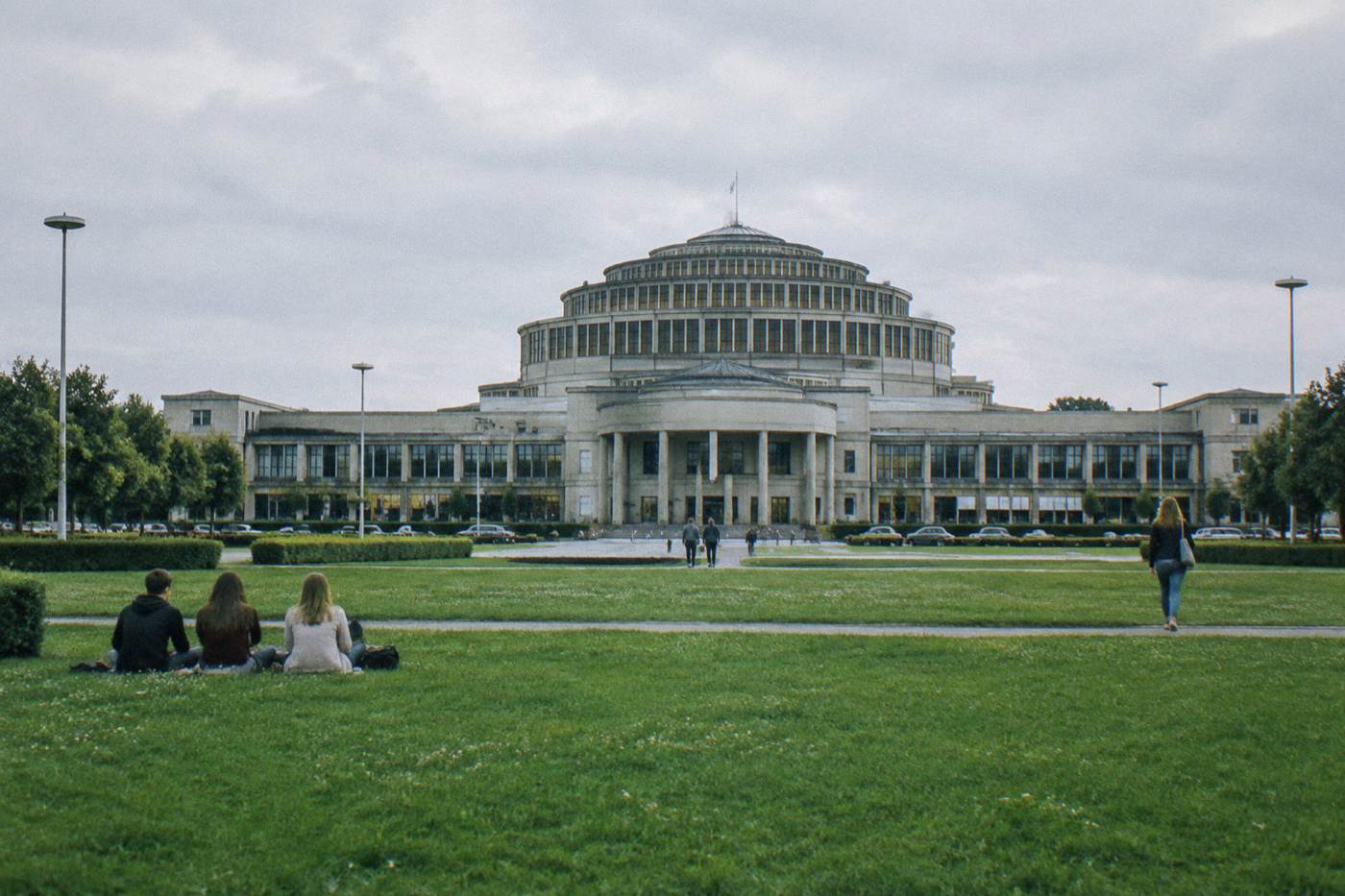
Centennial Hall in Wroclaw, southwestern Poland, is a UNESCO World Heritage landmark built 1911-1913 by architect Max Berg, with a reinforced-concrete dome seating up to 10,000 people.
Short answer
Centennial Hall (Hala Stulecia) in Wroclaw, Poland, was designed by Max Berg and built between 1911 and 1913. UNESCO inscribed it in 2006 under the property name Centennial Hall in Wroclaw. Its reinforced-concrete dome holds up to 10,000 people, making it one of the most significant early modernist buildings in Europe.
Centennial Hall in Wroclaw, the largest city in Lower Silesia (Dolnoslaskie voivodeship) in southwestern Poland, is one of the most influential buildings in the history of modern architecture anywhere in Europe. Designed by architect Max Berg and completed between 1911 and 1913, its reinforced-concrete dome encloses a hall for up to 10,000 people, and UNESCO inscribed the building in 2006 under the exact property name "Centennial Hall in Wroclaw". Few cities of Wroclaw's size, 672,601 residents as of 31 December 2025 per GUS, the Polish statistics office, carry a single-engineering landmark of this caliber. This guide from Wroclaw Travel Guide covers what the hall is, how to reach it, what surrounds it, when to go, and which tours pair well with it.
What Is Centennial Hall In Wroclaw, Poland?
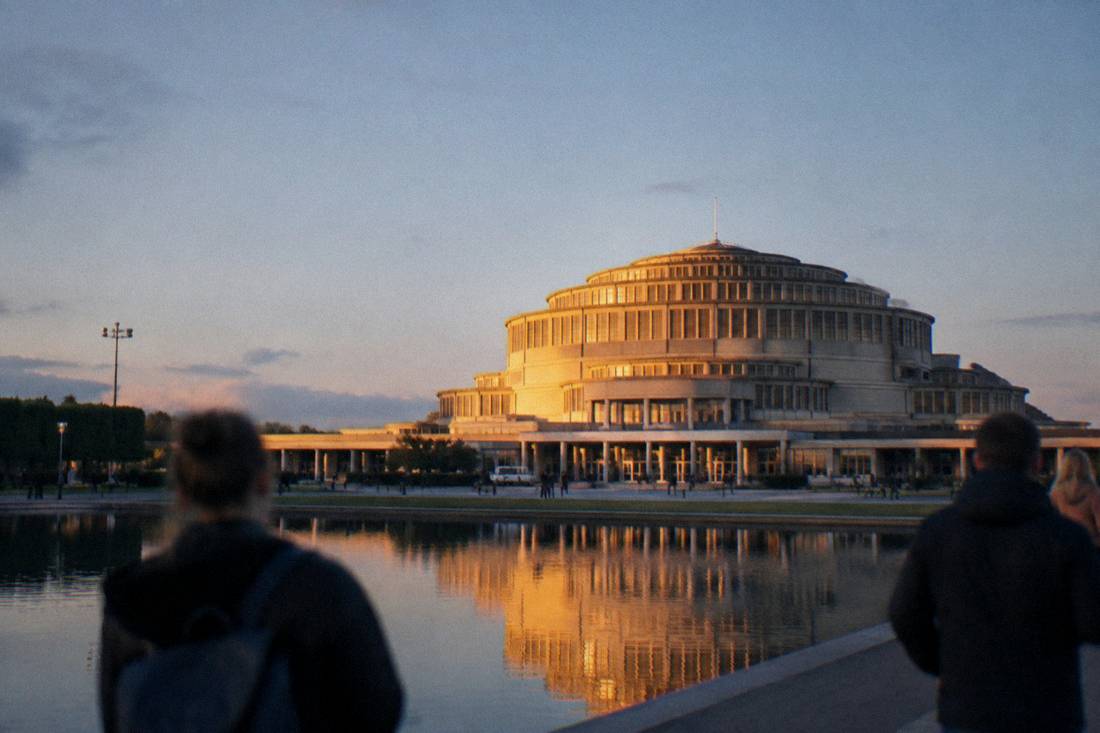
Centennial Hall (Hala Stulecia) is a UNESCO World Heritage-listed event hall in Wroclaw, Poland, designed by architect Max Berg and built between 1911 and 1913. Its reinforced-concrete dome encloses a main hall with capacity for up to 10,000 people, and UNESCO inscribed the building in 2006 under the exact property name "Centennial Hall in Wroclaw".
The hall's importance is structural as much as historical. The building's own UNESCO listing, verified on the World Heritage Centre's page for the property, records Max Berg as the architect, the 1911-1913 construction period, the reinforced-concrete dome, and the up to 10,000 capacity. Those five facts are the core of every serious description of the building, and anything beyond them, a specific event schedule, a current interior admission price, a queue length, belongs to the venue's own live channels rather than to a fixed guide. The hall functions as a concert, congress and exhibition venue, which means access to the interior depends on what is staged there on a given day rather than on a standing museum arrangement.
| Centennial Hall fact | Verified detail |
|---|---|
| Architect | Max Berg |
| Built | 1911-1913 |
| UNESCO inscription year | 2006 |
| UNESCO property name | Centennial Hall in Wroclaw |
| Structural signature | Reinforced-concrete dome |
| Capacity | Up to 10,000 people |
| City | Wroclaw, Lower Silesia, Poland |
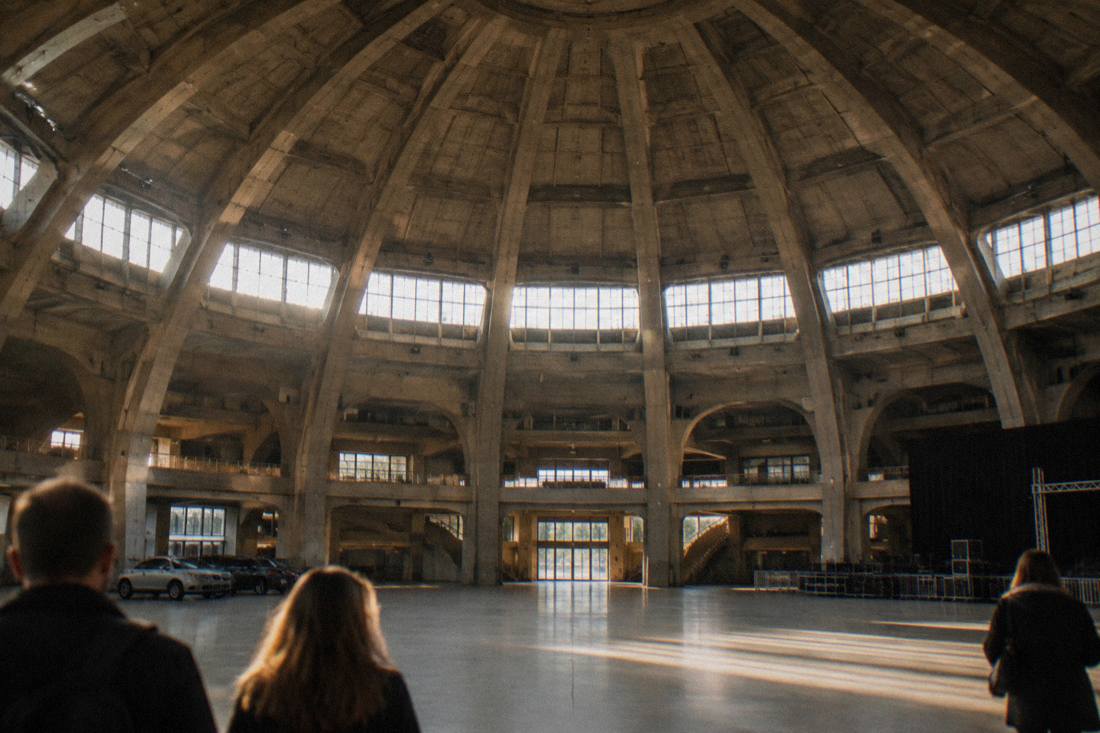
Context matters for understanding why the building is famous. When Berg's dome rose between 1911 and 1913, reinforced concrete at this scale was a young material, and the hall became a reference point for modernist engineering across Europe. UNESCO's 2006 inscription recognized precisely that: an early modernist landmark whose structure was itself the architecture. Visitors expecting a decorated palace interior find instead a vast, disciplined space whose drama comes from geometry and span. The practical point is simpler: the hall rewards visitors who know what they are looking at before they arrive, and the table above is the minimum toolkit. It is also worth saying plainly that the hall is not a museum in the conventional sense. There is no permanent gallery of exhibits inside verified by this site's research, so the draw is the building itself, the dome seen from the floor if an event allows it, and the ensemble of parks and attractions that grew up around it.
How Do You Get To Centennial Hall In Wroclaw?
Centennial Hall sits in Wroclaw's park district east of the center, and the city's MPK transport network covers the ride with a base 15-minute ticket at 4.60 zl normal or 2.30 zl reduced. Longer journeys use the 30-minute tier at 7.00 zl, and the city's official fare page lists 24-hour tickets around 15.00 zl plus multi-day bands at 26, 32 and 54 zl.
The fares above come from the city of Wroclaw's own ticket page, which lists tiers by duration rather than as one flat price. The 15-minute fare is the base short-hop figure; a ride out to the hall from the center can outlast it, so the 30-minute tier or a day ticket is the better pick if more sightseeing follows. Poland uses the zloty (PLN), not the euro, so these fares are paid in zl at machines and kiosks. Poland is in the EU and the Schengen area, which simplifies arrival logistics for most European visitors, and the Wroclaw airport guide covers that end of the journey in detail.
| MPK Wroclaw ticket tier | Normal (zl) | Reduced (zl) |
|---|---|---|
| 15-minute | 4.60 | 2.30 |
| 30-minute | 7.00 | 3.50 |
| Up to 24 hours | 15.00 | 7.50 |
| Multi-day band 1 | 26.00 | 13.00 |
| Multi-day band 2 | 32.00 | 16.00 |
| Multi-day band 3 | 54.00 | 27.00 |
Two honest caveats. First, the pack behind this page does not carry a specific tram or bus line number for the hall, so none is printed here; the MPK network map and journey planner on the city's own portal is the live source for that. Second, there is no all-inclusive Go City-style tourist pass currently sold for Wroclaw, so do not plan around one. The UrbanCard is a transport-focused fare card with resident discounts and does not cover attraction admission. Visitors who prefer a vehicle to transit can pair the ride with a guided loop, and the small-group electric-car option below is the most direct fit for exactly that decision.
An electric-car circuit saves the legs after a park afternoon, and it doubles as an orientation pass if Centennial Hall is your first stop in the city. The trio below covers the three most common shapes of a Wroclaw visit: a walking tour of the center, a big day trip into Lower Silesia, and the electric-car loop itself.
What Can You See Around Centennial Hall In Wroclaw?
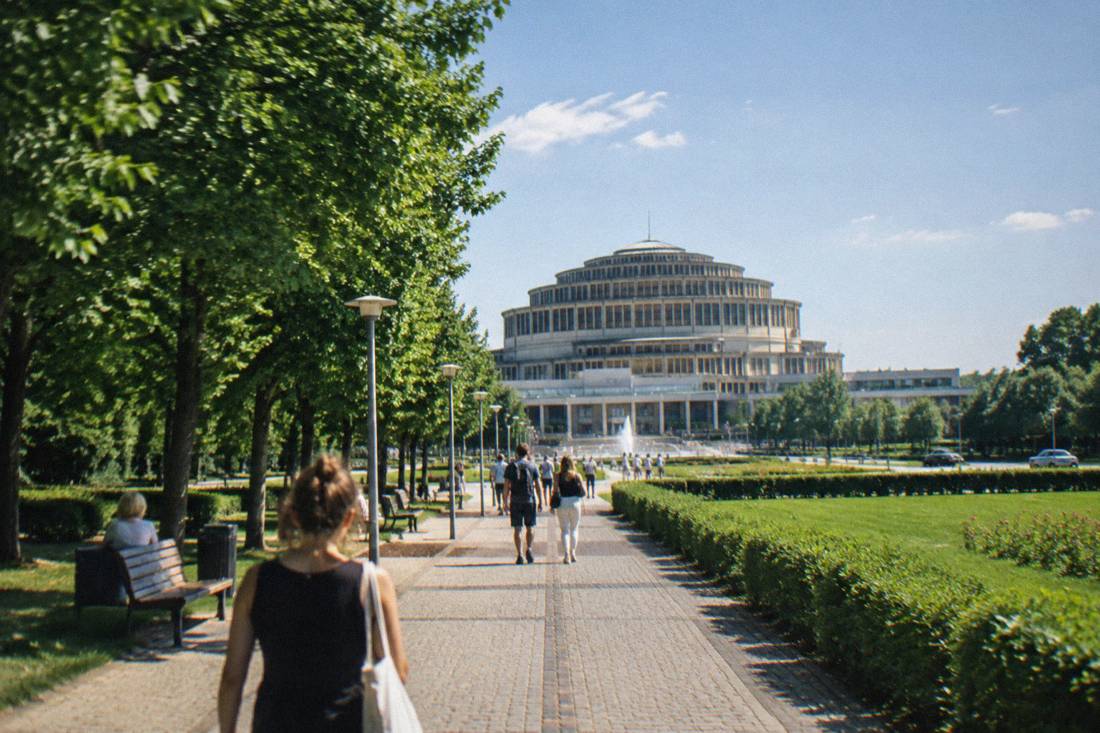
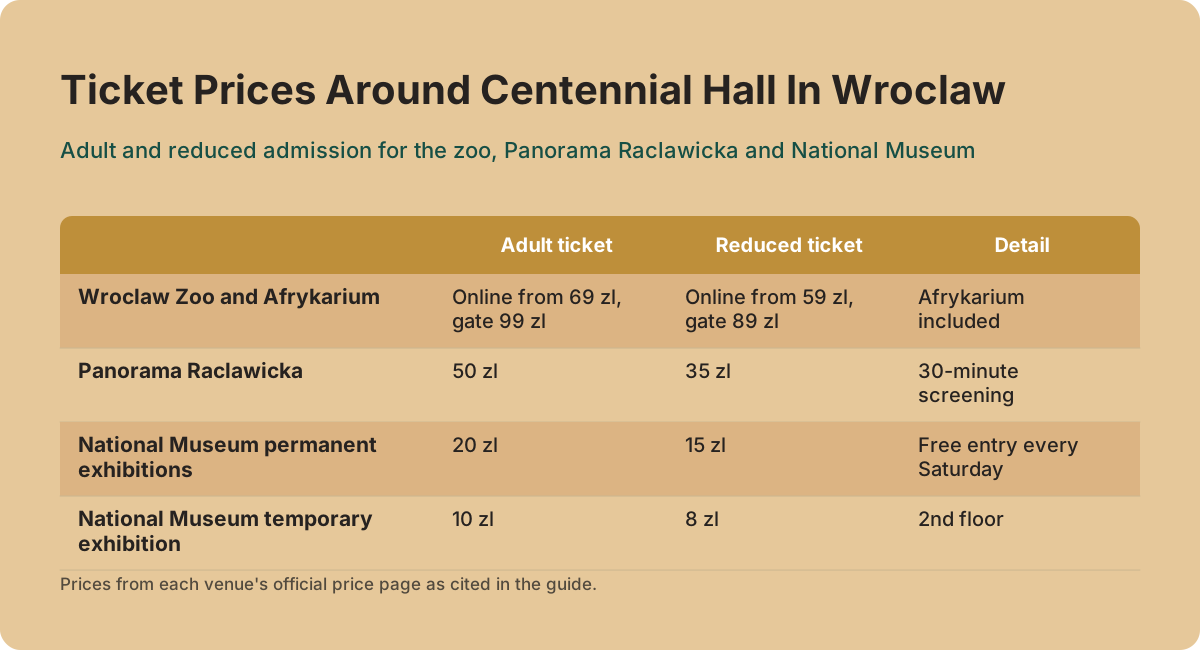
The park district around Centennial Hall holds several of Wroclaw's headline sights. Wroclaw Zoo sells adult tickets online from 69 zl, or 99 zl at the gate, with the Afrykarium aquarium included in the standard ticket, while the Panorama Raclawicka charges 50 zl adult and 35 zl reduced, and the National Museum's standalone permanent ticket is 20 zl adult, 15 zl reduced.
Each of those figures comes from the venue's own official price page. The zoo's pricing page states plainly that the standard ticket also authorizes entry to the Afrykarium, so a separate aquarium charge should never appear on a planning list. Zoo hours run every day of the year, with April-September grounds open 9:00-18:00 on weekdays and 9:00-19:00 on Fridays, Saturdays, Sundays and holidays. The Panorama Raclawicka, a 30-minute panoramic screening, closes Mondays in its winter season (1 November to 31 March) and runs daily 8:30-19:00 in summer, and its ticket also covers the National Museum's permanent exhibitions, the Ethnographic Museum and the Four Domes Pavilion within three months of the visit date.
| Nearby Wroclaw attraction | Adult ticket | Reduced ticket | Source detail |
|---|---|---|---|
| Wroclaw Zoo and Afrykarium | Online from 69 zl, gate 99 zl | Online from 59 zl, gate 89 zl | Afrykarium included in standard ticket |
| Panorama Raclawicka | 50 zl | 35 zl | 30-minute screening |
| National Museum permanent exhibitions | 20 zl | 15 zl | Free entry every Saturday |
| National Museum temporary exhibition | 10 zl | 8 zl | 2nd floor |
The pairing logic is straightforward: the Japanese Garden and the Wroclaw Zoo and Afrykarium are the classic companions to the hall, while the Panorama Raclawicka and the National Museum pull visitors back toward the center. A single Panorama ticket effectively bundles four museums into one purchase inside its three-month window, which is the single best value trick in this table. The museum's own page also lists a "Museum for a zloty" ticket at 1 zl for students and pupils under 26, and free entry for children under 7, so families should price that out before assuming adult figures. If rain interrupts the park plan, the one day in Wroclaw itinerary rearranges easily around indoor stops.
When Is The Best Time To Visit Centennial Hall In Wroclaw?
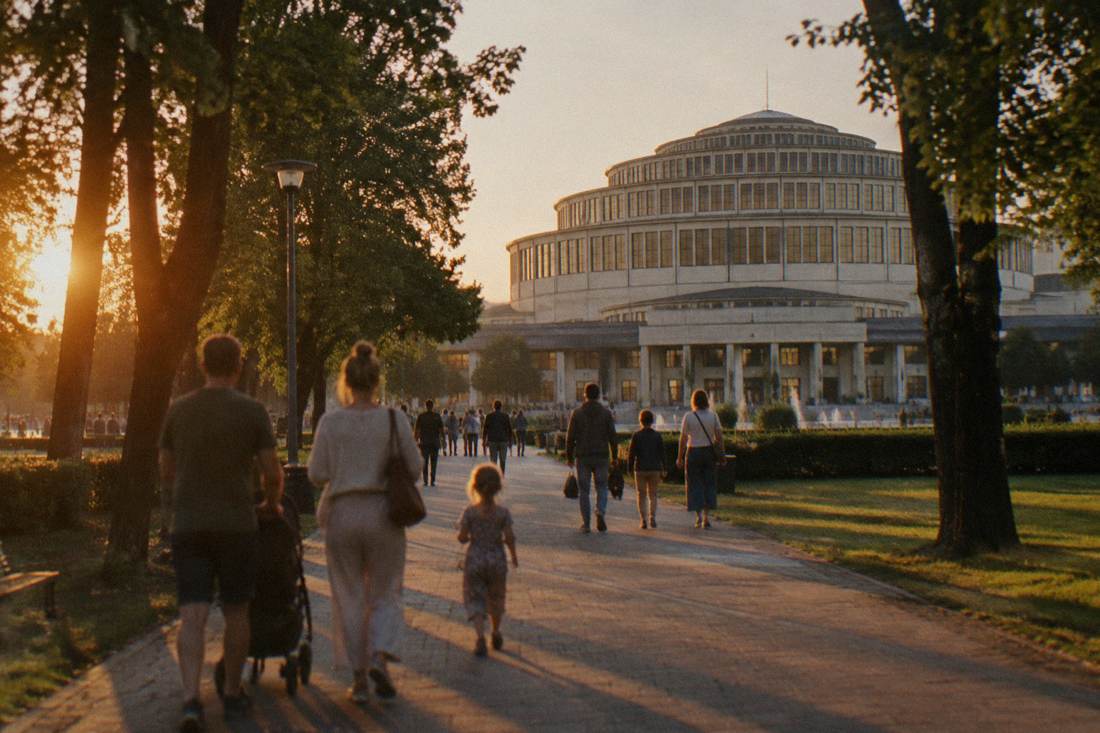
IMGW's 1991-2020 climate normals for the Wroclaw station (code 12424) put July at a 19.7C mean as the warmest month and January at 0.0C as the coldest, with an annual mean of 9.7C. May through September, at mean temperatures of 14.3C up to 19.7C, is the comfortable window for enjoying the hall's park setting.
The climate table deserves reading rather than skimming, because Wroclaw's pattern is not the one visitors assume. July is both the warmest month and, at 91.4 mm of precipitation, the wettest. April is the driest month at 31.2 mm, not a summer month. Winter visitors are not gambling on extremes: January's 0.0C mean is among the mildest of Poland's major synoptic stations in the IMGW table, and the hall itself is an indoor venue, which makes it a reliable anchor stop in any weather.
| Month | Mean temperature (C) | Precipitation (mm) |
|---|---|---|
| January | 0.0 | 28.3 |
| February | 1.1 | 25.6 |
| March | 4.3 | 35.0 |
| April | 9.7 | 31.2 |
| May | 14.3 | 59.6 |
| June | 17.7 | 65.4 |
| July | 19.7 | 91.4 |
| August | 19.3 | 59.5 |
| September | 14.5 | 48.4 |
| October | 9.6 | 37.6 |
| November | 4.8 | 31.4 |
| December | 1.1 | 27.9 |
Two planning reads follow. If the park, the Japanese Garden and the zoo are the point of the trip, late April through June offers dry-ish shoulder months (31.2 to 65.4 mm) before July's peak heat and rain arrive together. If the hall's events calendar is the point, there is no bad month, only whatever the venue stages: check the event listing before locking dates, since interior access follows the calendar. Every figure above traces to a named primary source: IMGW's normals, the zoo's price page, the museum's own tariff. A third read concerns daylight and comfort rather than rain. The months from May to August cluster tightly, 14.3C, 17.7C, 19.7C and 19.3C, which means the park district works on roughly the same footing across all four, and the deciding factor becomes crowds and event schedules rather than temperature. September, at 14.5C with 48.4 mm of rain, is the sleeper pick: nearly June's warmth with materially less rain than either June or July.
Which Tours Pair Well With Centennial Hall In Wroclaw?
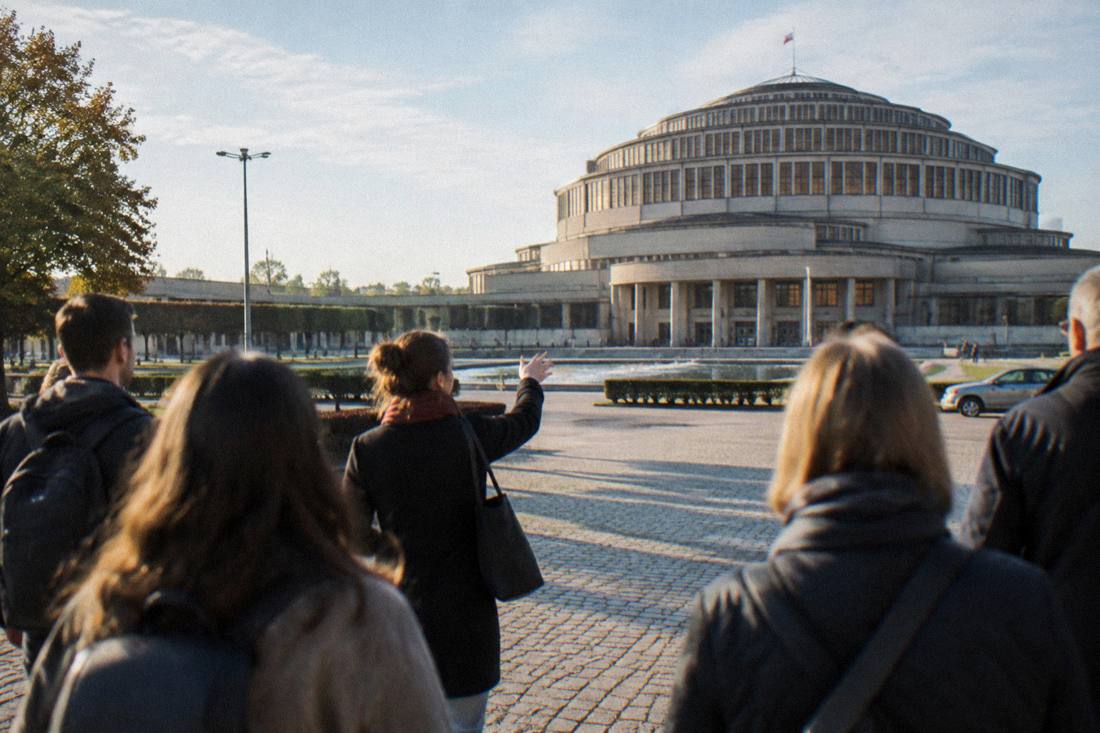
A small-group Old Town walking tour is the natural companion to a Centennial Hall visit, because the hall sits away from the center and the two are often seen on different halves of the same day. For bigger excursions, the Ksiaz Castle and Church of Peace day trip covers Lower Silesia's other headline landmarks, while free, tip-based GuruWalk walks cover the Old Town for travelers on a budget.
The Old Town walking tour above is this site's featured pairing for the hall: it covers the center while the hall covers the east, and the two together form a complete first day. The tour has its own page, where the Small-Group Old Town walk details its route, with Check availability showing live dates and pricing. The budget alternative is genuinely free: GuruWalk, a walking-tour platform that must be named because these are its guides' own walks, lists four verified live routes in Wroclaw, including "Legends of Wroclaw: Free Tour Around Ostrow Tumski & Market Square". These are tip-based, so no price is printed here, and the honest framing is that a historian-led or guide-led walk costs whatever you choose to tip. For travelers who want to compress the center into a short loop, the electric-car group tour's page covers that option alongside its own live listing.
One free walk worth flagging by name is the Legends of Wroclaw free tour on GuruWalk, which covers Cathedral Island and the Market Square, the two center sights that best contextualize the city the hall was built to celebrate. Free walks are not free of scheduling: they run on set departure times and booking, so treat them like any other reservation. The same platform also carries "Wroclaw Through Ages: Old Town & Cathedral Island Walking Tour" and "Old Town Wroclaw by Walkative!", both verified live, so a traveler who misses one departure usually has another operator's walk the same day.
Can You Combine Centennial Hall With A Ksiaz Castle Day Trip From Wroclaw?
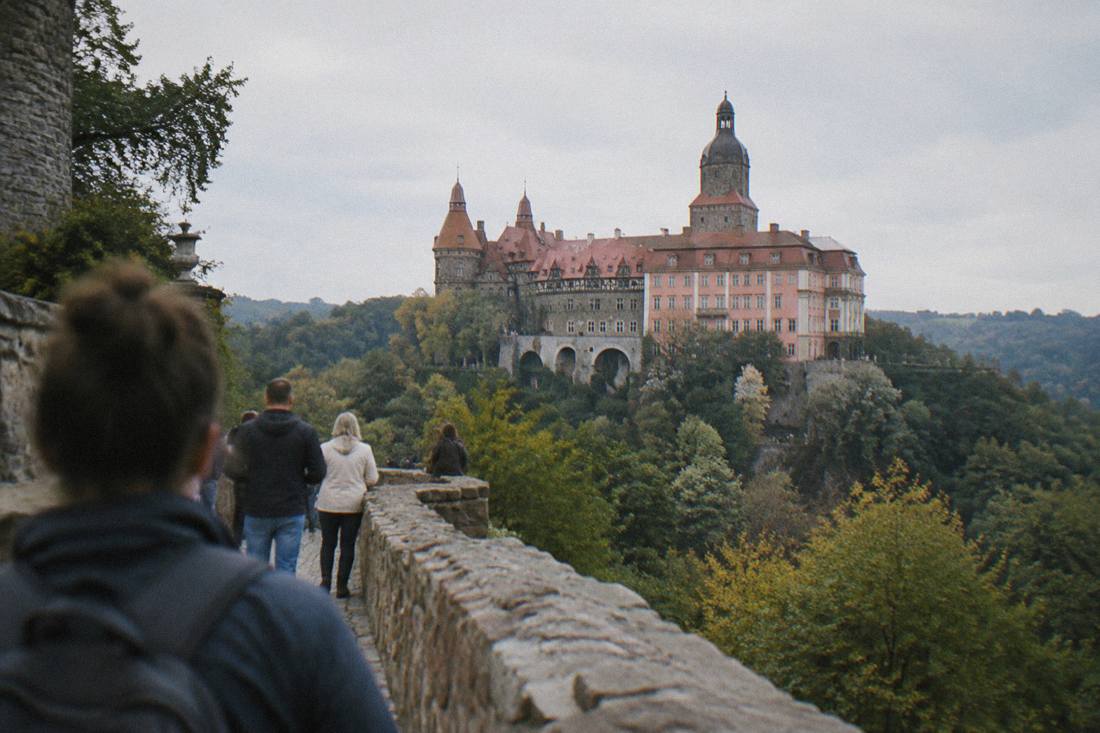
Yes, and the two sit naturally on different days. Ksiaz Castle in Walbrzych, owned by the Walbrzych municipality and run by its municipal company, sells a castle, audioguide and terraces ticket at 72 zl adult and 62 zl reduced, per its cennik effective 6 May 2026, with terraces open only from 15 April to 30 September. Its All Day Ticket runs 104 zl adult and 94 zl reduced.
The ownership point matters because it is widely gotten wrong: the castle belongs to the Gmina Walbrzych, not to a private owner or a national agency, and the municipal operator's own tariff page carries every figure in the table below. The terraces date restriction is the planning trap. A March visitor can see the castle but not the terraces; a May visitor gets both, plus, from the same tariff, underground access at 45 zl adult or folded into the 92 zl castle-plus-underground combination ticket.
| Ksiaz Castle ticket (cennik of 6 May 2026) | Adult (zl) | Reduced (zl) |
|---|---|---|
| Castle with audioguide + terraces | 72.00 | 62.00 |
| Castle + terraces + underground tour | 92.00 | 82.00 |
| Castle + terraces + stud farm | 79.00 | 69.00 |
| All Day Ticket | 104.00 | 94.00 |
| Underground tour alone | 45.00 | 39.00 |
| Mausoleum alone | 13.00 | 8.00 |
| Palm House alone | 27.00 | 21.00 |
Combining the two on one itinerary is easiest with an organized day trip, because the castle is commonly reached by regional train to Walbrzych plus a bus or taxi connection, and this page's research did not confirm a specific rail time worth printing. The Ksiaz Castle day trip guide covers the independent route, while the tour below bundles the castle with the UNESCO Churches of Peace (inscribed 2001), whose Swidnica church charges 18 zl adult and 15 zl reduced per its own listing. That is two UNESCO World Heritage inscriptions, 2006 for the hall and 2001 for the churches, inside one Lower Silesia itinerary, a pairing few regions in Europe can match on a single drive. The Church of Peace also sells a family ticket at 45 zl for two adults and children under 18, per its own zwiedzanie page, so the castle-plus-churches day scales better for families than the per-person arithmetic first suggests.
For travelers deciding between a second Wroclaw day and a Lower Silesia excursion, the honest comparison is: the castle day trip is a full-day commitment and the park district around the hall is a half-day at most. The two days in Wroclaw itinerary splits the difference, and the trio below is the same three-product shortlist this site recommends for either shape of trip.
Common Questions About Centennial Hall In Wroclaw
Is Centennial Hall In Wroclaw UNESCO Listed?
Yes. UNESCO inscribed it in 2006 under the exact property name "Centennial Hall in Wroclaw", recognizing Max Berg's reinforced-concrete hall of 1911-1913 with capacity for up to 10,000 people as a landmark of early modernist engineering.
Who Designed Centennial Hall And When Was It Built?
Architect Max Berg designed it, and construction ran from 1911 to 1913. The building's signature is its reinforced-concrete dome, which encloses the main hall for up to 10,000 people, per the property's UNESCO listing.
Is Centennial Hall Worth Visiting If Nothing Is On?
The interior is an event venue, so access depends on what is staged there on a given day, and no standing interior admission price is published in this site's verified research. Even without an event, the exterior, dome and surrounding park district, including the Japanese Garden and the zoo with its included Afrykarium, make the trip out east worthwhile.
How Much Does It Cost To Get To Centennial Hall By Public Transport?
MPK's base 15-minute ticket is 4.60 zl normal or 2.30 zl reduced, the 30-minute tier is 7.00 zl, and 24-hour tickets run around 15.00 zl normal, per the city of Wroclaw's official fare page. Fares are paid in zloty (PLN), not euro.
Can You Visit Centennial Hall And The Wroclaw Zoo On The Same Day?
Yes, they share the eastern park district. The zoo is open every day of the year; from April to September its grounds run 9:00-18:00 Monday to Thursday and 9:00-19:00 on Friday to Sunday and holidays, with adult tickets online from 69 zl (99 zl at the gate) and the Afrykarium included in the standard ticket.
What Is The Best Month To Visit Wroclaw For Centennial Hall?
Per IMGW's 1991-2020 normals, July is the warmest month at a 19.7C mean and January the coldest at 0.0C, with an annual mean of 9.7C. Late April through June offers mean temperatures of 9.7C to 17.7C with lower rainfall than July, which combines peak warmth with the year's highest precipitation at 91.4 mm.
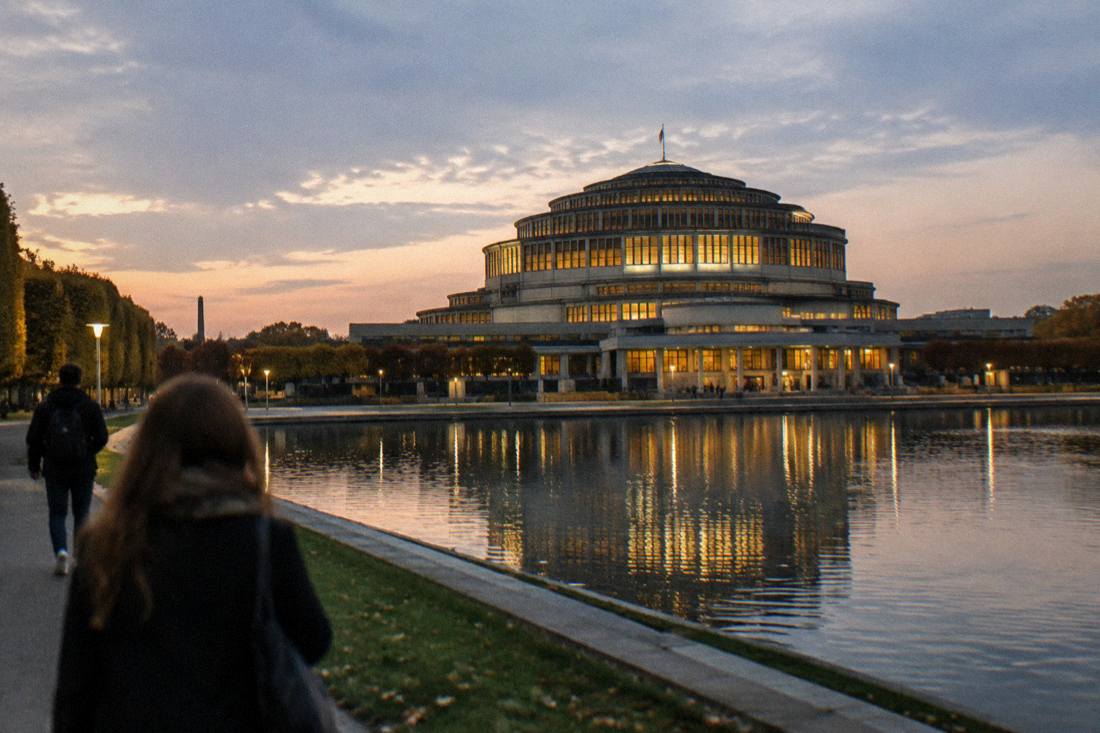
Centennial Hall rewards exactly the kind of visitor who reads past the postcard: a building whose concrete dome was the headline when it opened in 1913 and is still the headline now, in a park corner of Wroclaw that also holds the zoo, the Afrykarium and the Japanese Garden. Plan the transport tier, check the event calendar for interior access, and use the climate table to pick the month, and the hall slots neatly into any first visit to this corner of southwestern Poland.