One Day In Wroclaw
Wroclaw, the largest city in Lower Silesia in southwestern Poland, squeezes a Gothic market square, a cathedral island, hundreds of bronze dwarfs and a UNESCO-listed concrete dome into a core you can cross on foot. This itinerary sequences all of it into one day.
Short answer
One day in Wroclaw covers the Market Square and Town Hall, the bronze dwarfs, Ostrow Tumski cathedral island, the Panorama Raclawicka and the Odra river islands, with the zoo and Centennial Hall as an add-on. Tickets are priced in zloty: the Panorama is 50 zl adult, the National Museum 20 zl and the zoo from 69 zl online.
Wroclaw, the largest city in Lower Silesia (Dolnoslaskie voivodeship) in southwestern Poland, is built for the one-day visitor. The city of 672,601 residents (GUS, 31 December 2025) arranges its headline sights, a vast Market Square, a cathedral island in the Odra river, a famous rotunda painting and hundreds of small bronze dwarfs, inside a flat, walkable core where nothing essential sits far from anything else. Poland uses the zloty (zl), not the euro, which matters because the best of Wroclaw is cheap by Western European standards. This page lays out a single day that works in any season, with verified opening hours and ticket prices for every paid stop.
What Can You See In Wroclaw In One Day?
One day in Wroclaw covers the Market Square and its Gothic Town Hall, the bronze dwarfs scattered across the city center, Cathedral Island (Ostrow Tumski), the Panorama Raclawicka rotunda and a stroll along the Odra river islands, with the zoo and UNESCO-listed Centennial Hall as an add-on for early risers. The core is compact and flat, so the real constraint is opening hours, not distance between sights.
The shape of the day is simple: morning in the Old Town, midday on the cathedral island, one big paid sight in the afternoon, then the river islands and dinner. The Market Square, the dwarfs and Ostrow Tumski cost nothing to wander, which leaves the Panorama Raclawicka (50 zl adult) as the single biggest mandatory ticket of the day. The zoo, out toward Centennial Hall, only fits if you skip a museum or start very early.
This sequencing also matches how the crowds move. The Rynek is at its calmest before late morning, the Panorama's queues build through the afternoon, and the Odra islands only come alive toward evening. More on timing choices, including the light-versus-crowd trade-off at the square, sits in our guide to the best time of day at Market Square.
| Part of the day | Where | What you get | Ticket needed |
|---|---|---|---|
| Morning | Market Square and Old Town | Gothic Town Hall, burgher houses, dwarf clusters | No, free to wander |
| Midday | Ostrow Tumski | Cathedral, oldest streets, river views | No, free to wander |
| Afternoon | Panorama Raclawicka | 30-minute rotunda painting screening | Yes, 50 zl adult |
| Late afternoon | National Museum or zoo | Silesian art, or Afrykarium aquarium | 20 zl, or from 69 zl online |
| Evening | Odra islands and Old Town | Slodowa Island, restaurants, night views | No |
Morning: Wroclaw Market Square And The Dwarfs
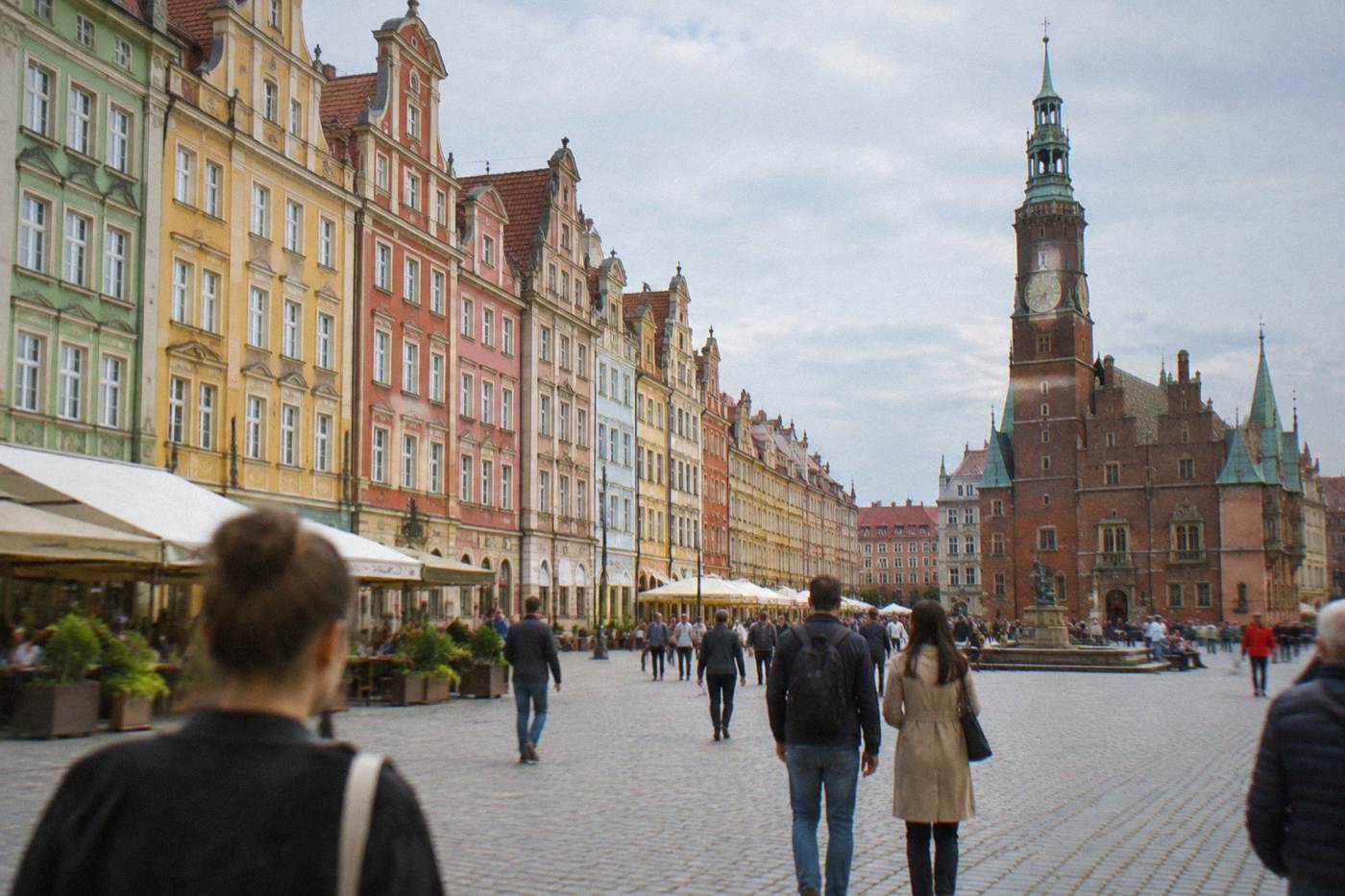
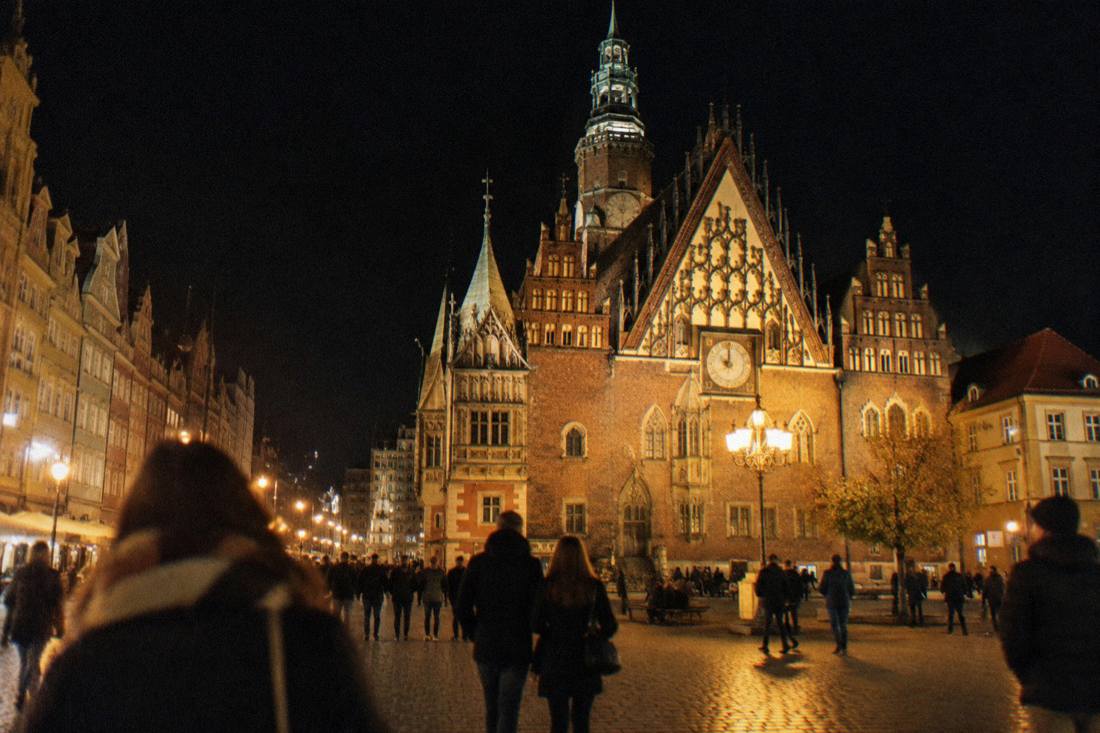
Start at the Market Square (Rynek) in the heart of the Old Town, where the Gothic Town Hall stands ringed by colored burgher houses, then spend the rest of the morning hunting the city's bronze dwarfs. The dwarfs are installed on doorsteps, lampposts and window sills across the whole center, and the streets immediately around the square hold one of the densest clusters. The square itself is free, open at all hours and genuinely walkable end to end.
The Rynek is one of the largest medieval market squares in this part of Europe, roughly 3.64 to 3.79 hectares against Krakow's approximately 4 hectares, so do not let anyone tell you it out-sizes Krakow's. What it does have is density: the Town Hall, the glass-roofed trading halls and a fan of side streets, all in one frame. Our full Wroclaw Market Square guide covers the buildings stop by stop.
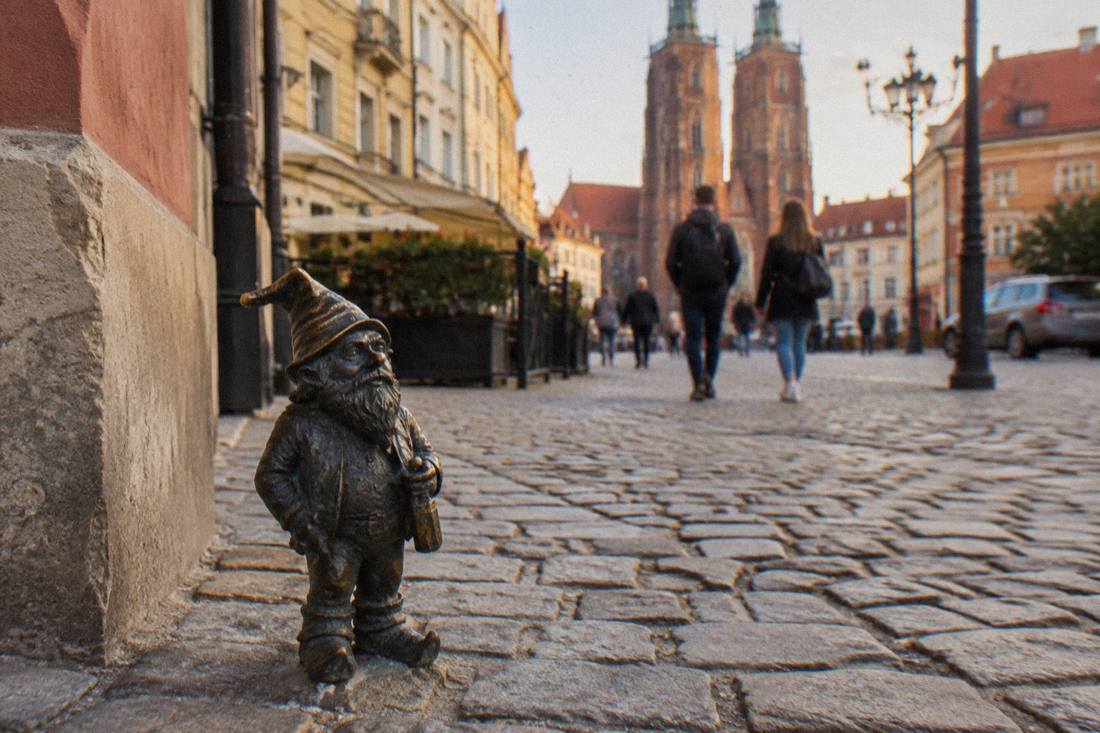
The dwarfs deserve their own hour. They began as a single commemorative figure and multiplied into a citywide scavenger hunt, and tracking them is the single most reliable way to enjoy the Old Town's back streets. Families with children should note there is a dedicated Wroclaw dwarfs guide listing where the best-known figures live.
You can hunt solo with a free map, or hand the morning to someone who already knows the clusters. The Garden Gnome Hunt with a Local Guide is this site's featured pick for exactly this slot: Check availability.
Between the square and the dwarfs, the morning needs no ticket and no schedule beyond a rough start time. Coffee and a pastry on the Rynek is the standard opening move, and the cafes around the square open with the morning foot traffic. When the square starts filling, that is the natural cue to drift north toward the river.
If a guided morning appeals more than a self-directed one, three options below fit the one-day format particularly well, from a dwarf-focused walk to a compact private Old Town tour.
Midday: Ostrow Tumski, Cathedral Island
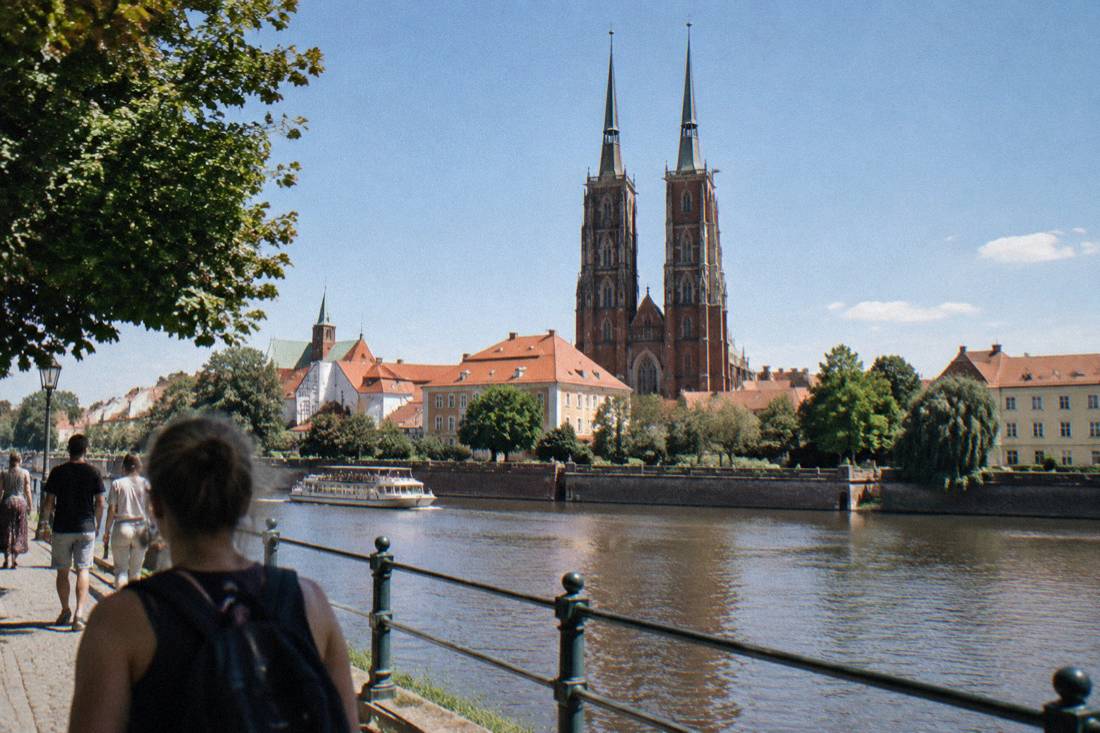
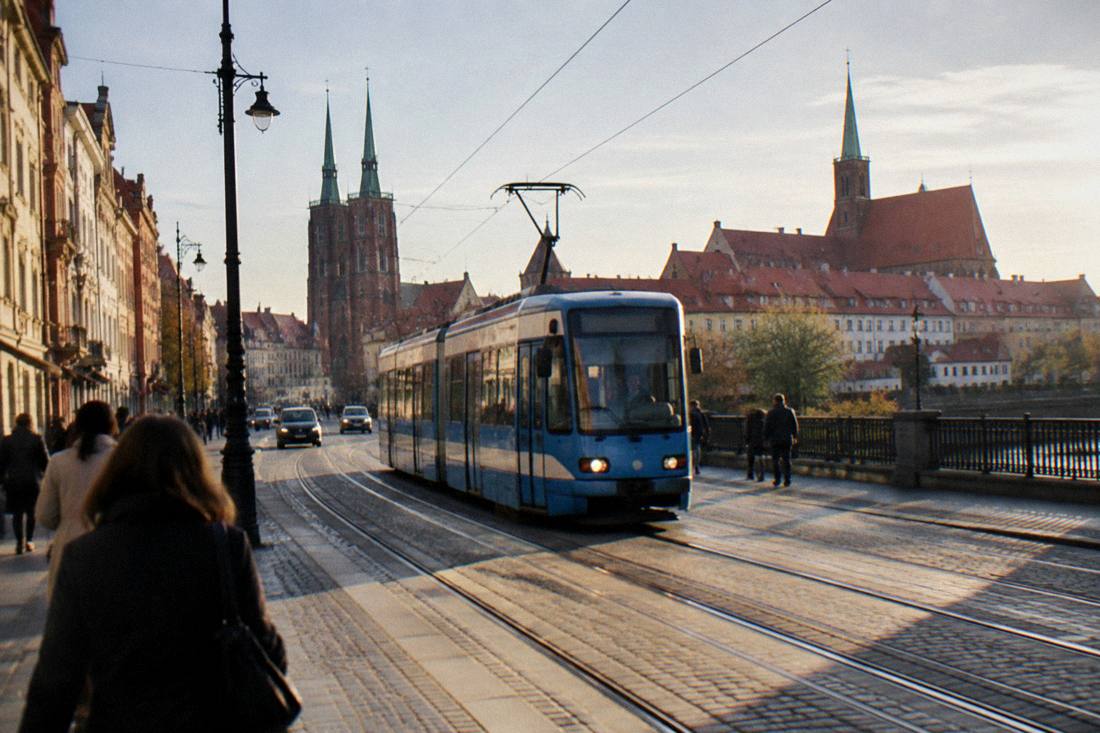
Ostrow Tumski, Cathedral Island, is the oldest part of Wroclaw and holds the Cathedral of St. John the Baptist, whose twin towers define the city skyline. The island sits just north of the Market Square across an arm of the Odra, and its quiet lanes and historic gas street lamps give midday Wroclaw a completely different register from the busy Rynek. Give it the lunch hour and the early afternoon.
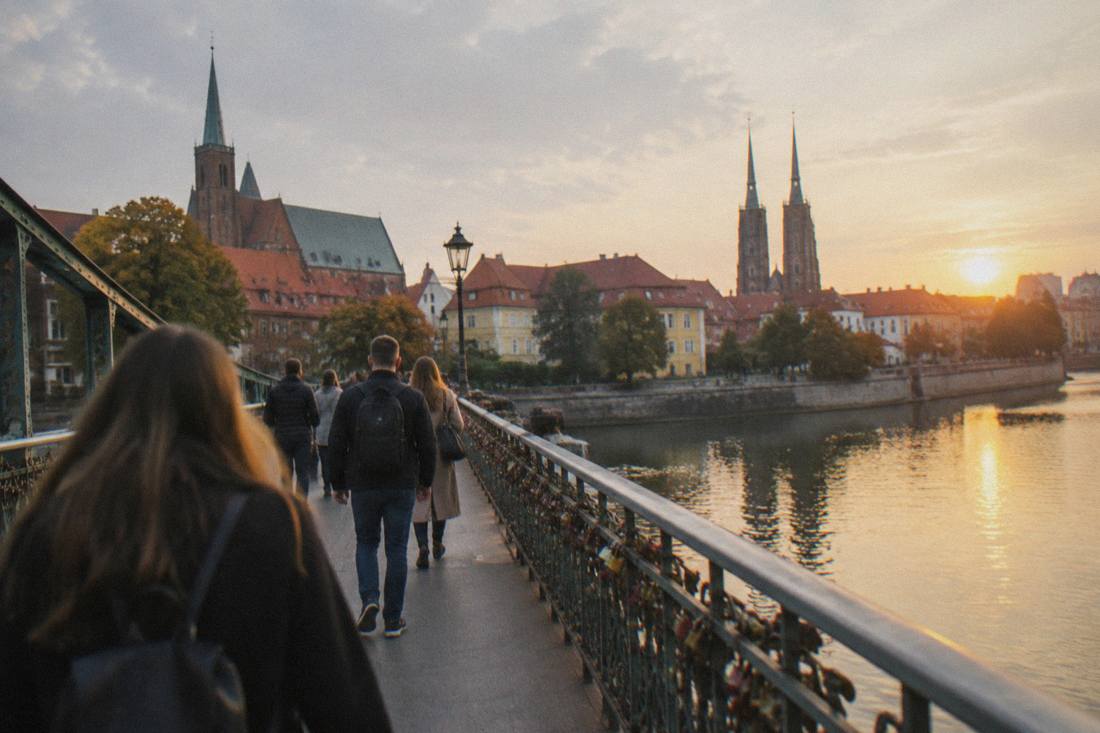
Cathedral Island is where Wroclaw keeps its stillness. The cathedral's towers can be picked out from most riverbank viewpoints, and the island's lanes are narrow, churchy and largely free of commerce. Cross one of the footbridges from the Old Town side and the noise of the square simply stops. Our Ostrow Tumski guide details the churches and the riverbank paths.
Lunch options split neatly. Stay on the island side for quiet, or loop back toward the Old Town for the densest choice of restaurants and milk bars, which our best restaurants in Wroclaw guide breaks down by budget and dish. Either way, eat before the afternoon museum stop: the Panorama and the National Museum both have unforgiving afternoon hours in the winter season.
| Stop on the island | What it is | Time to give it | Cost |
|---|---|---|---|
| Cathedral of St. John the Baptist | Gothic cathedral, twin spires | 30-45 minutes | Free entry |
| Island lanes and riverbank | Oldest streets in the city | 30 minutes | Free |
| Sand Bridge viewpoints | Odra river and Old Town back views | 15 minutes | Free |
Guided walks earn their keep here, because the island's stories are the kind you will not get from a plaque. Several free, tip-based walks cover both the Old Town and the island, among them "Wroclaw Through Ages: Old Town & Cathedral Island Walking Tour" and "Legends of Wroclaw: Free Tour Around Ostrow Tumski & Market Square", both listed on GuruWalk, which must be named for these because they are independent tip-based walks rather than our products.
If you would rather lock in a paid private guide for the whole one-day route, the box below books the featured option with free cancellation.
Afternoon: Panorama Raclawicka And The National Museum
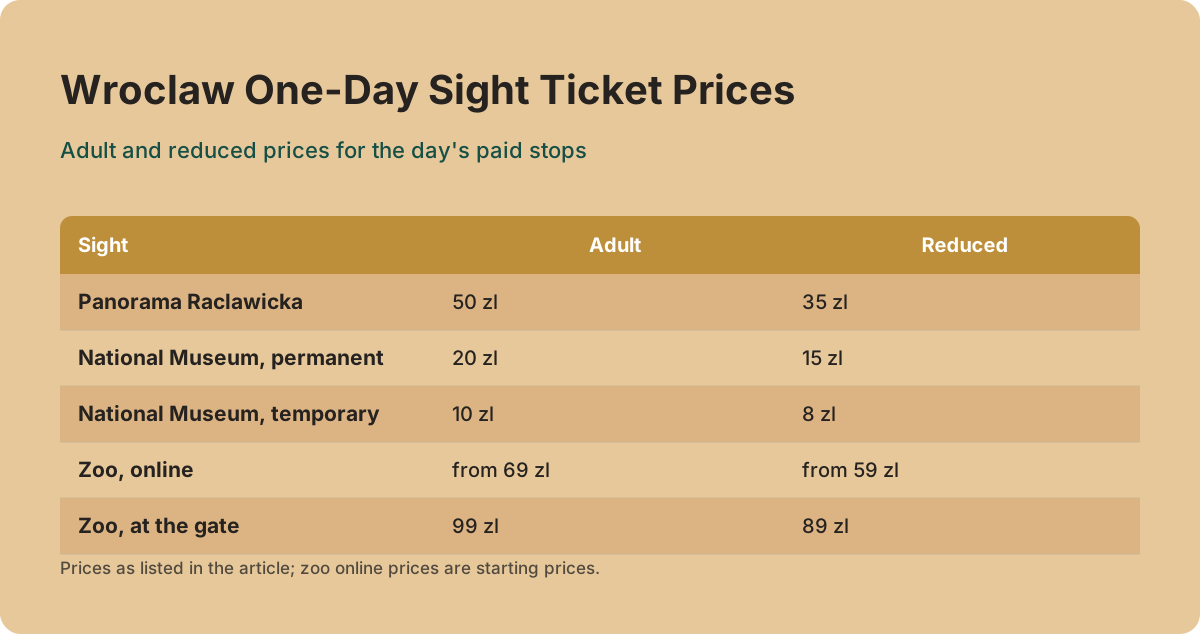
The Panorama Raclawicka, a giant circular painting housed in its own purpose-built rotunda, is Wroclaw's flagship paid sight: an adult ticket is 50 zl, reduced 35 zl, and the screening lasts 30 minutes. The same ticket also covers the National Museum's permanent exhibitions, the Ethnographic Museum and the Four Domes Pavilion within three months, so one purchase can seed a whole second visit.
The Panorama is the one afternoon stop worth pre-planning around. Hours shift with the seasons: in summer (1 April to 31 October) it opens daily 8:30-19:00, while in winter (1 November to 31 March) it closes on Mondays and runs Tuesday to Friday 9:30-16:00, Saturday 9:30-17:00 and Sunday 9:30-16:00. The full details, including how the combined-museum ticket works, are in our Panorama Raclawicka guide.
The National Museum itself is the natural add-on. Its own pricing page lists a standalone permanent-exhibition ticket at 20 zl adult and 15 zl reduced, with group and family tickets at 10 zl per person, a 3 zl student special and a 1 zl "Museum for a zloty" ticket for under-26s. Under-7s enter free, and every Saturday entry to the permanent exhibitions is free. Winter hours run Tuesday to Friday 10:00-16:00 and weekends 10:00-17:00, closed Monday; summer hours shift to 10:00-17:00 on weekdays and 10:30-18:00 on weekends.
| Sight | Adult | Reduced | Opening pattern |
|---|---|---|---|
| Panorama Raclawicka | 50 zl | 35 zl | Summer daily 8:30-19:00; winter closed Mon |
| National Museum, permanent | 20 zl | 15 zl | Closed Mon; free every Saturday |
| National Museum, temporary | 10 zl | 8 zl | Same hours as permanent |
| Panorama combined ticket bonus | Covers 3 more museums | Same | Valid 3 months |
The practical afternoon splits by season. In summer, do the Panorama later in the day when the morning rush has passed and hours stretch to 19:00. In winter, go early afternoon, because Monday closures can compress your week and the 16:00 winter close leaves no slack after a late lunch.
Late Afternoon: Centennial Hall, The Zoo And Afrykarium
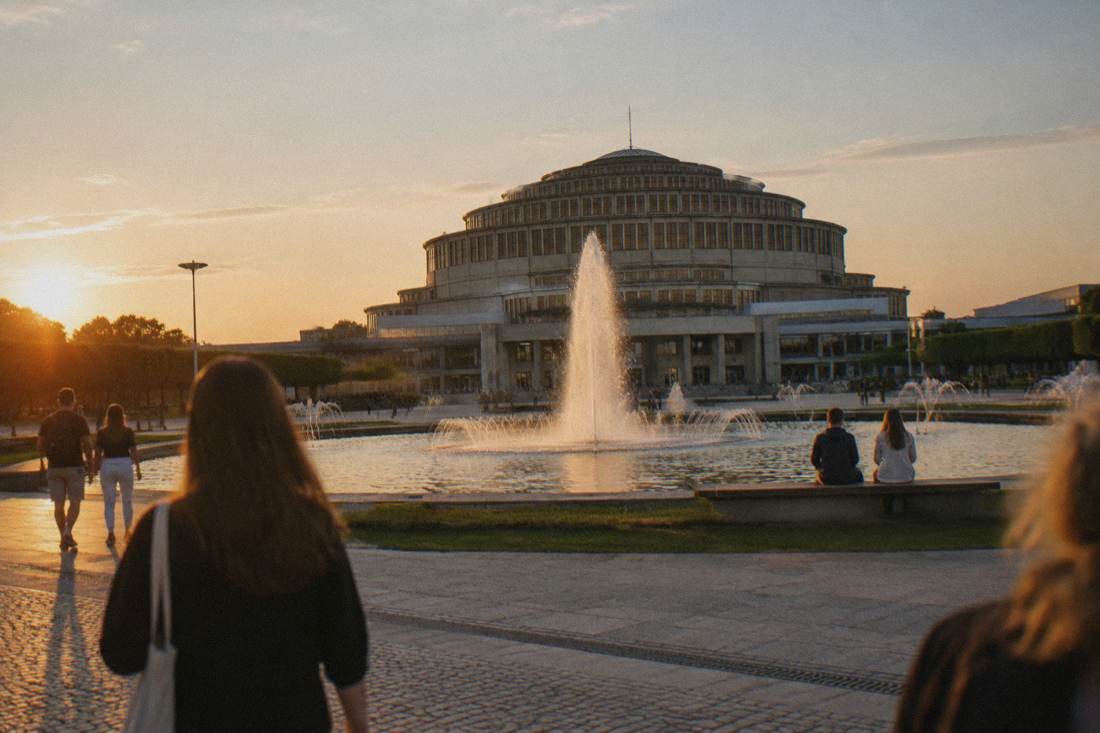
Centennial Hall (Hala Stulecia), a reinforced-concrete dome by architect Max Berg, built 1911-1913 and UNESCO-inscribed since 2006, anchors Wroclaw's eastern parkland with a capacity of up to 10,000 people. The neighboring Wroclaw Zoo, open every day of the year, sells adult tickets online from 69 zl against 99 zl at the gate, reduced 59 zl online against 89 zl at the gate, and the Afrykarium aquarium is included in the standard ticket, never a separate charge.
This pair sits a tram ride east of the center, so it belongs on a one-day itinerary only if you accept trading a museum for it. The zoo's own price table is the source for those figures, and the online-versus-gate gap is large enough that buying ahead is genuinely worth it. Our Wroclaw Zoo and Afrykarium guide covers what to see inside and how the seasonal hours work.
The zoo's hours matter, because they change four times a year. April through September, grounds run 9:00-18:00 Monday to Thursday and 9:00-19:00 Friday to Sunday and holidays. March and October shift to 9:00-17:00 weekdays and 9:00-18:00 weekends. November, December, January and February all run 9:00-16:00 daily, with shortened days on 24 and 31 December and a late 11:00 opening on 1 January.
| Zoo ticket | Online | At the gate |
|---|---|---|
| Adult | from 69 zl | 99 zl |
| Reduced | from 59 zl | 89 zl |
| Zoo plus Safari Ride, adult | 107 zl | 107 zl |
| Zoo plus Safari Ride, reduced | 93 zl | 93 zl |
| Afrykarium | Included in standard ticket | Included |
Centennial Hall itself is best treated as architecture to walk around rather than a timed interior visit on a one-day schedule. The UNESCO inscription dates from 2006 under the property name "Centennial Hall in Wroclaw", and the surrounding parkland, including the historic fountain and the Japanese Garden nearby, makes the tram trip out feel less like a commute and more like a detour into the city's greener half. Our Centennial Hall guide gives the building's full history.
Evening: The Odra Islands And Dinner In Wroclaw
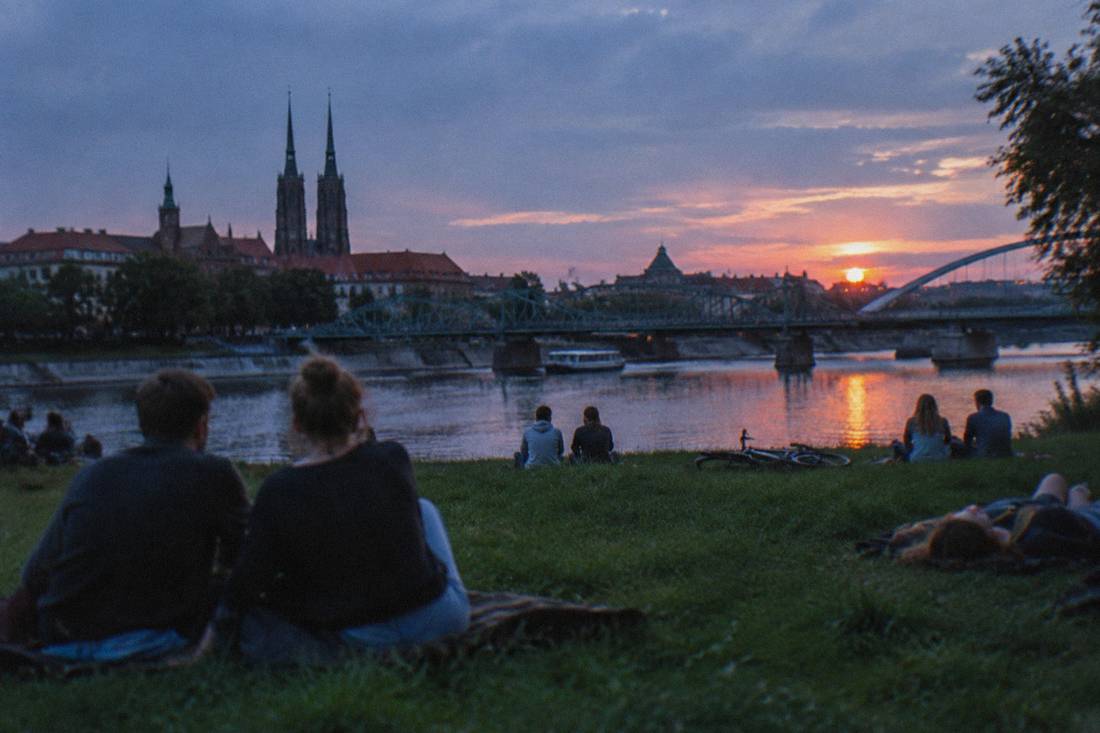
Evening in Wroclaw belongs to the Odra river islands and the Old Town's restaurant rows. Slodowa Island, the student island nearest the center, fills up on warm evenings as an open-air social space, while the lanes around the Market Square hold the city's densest run of restaurants, milk bars and craft-beer bars. Dinner plus a slow loop past the lit Town Hall is the natural close to a one-day visit.
Slodowa Island is the evening's anchor. It sits among the cluster of river islands between the Old Town and the northern bank, and on any warm evening it does the work a beer garden does elsewhere, without the fences. Our Slodowa Island guide explains the layout, and the surrounding riverbanks give the best night views of the cathedral towers back across the water.
For dinner, the Old Town wins on density. The streets running off the Rynek hold everything from pierogi kitchens to modern Polish rooms, and the milk-bar tradition, where the city eats cheap and fast, is covered in its own milk bars guide. Anyone planning to keep walking after dark will find the center calm and well-trafficked; our Wroclaw safety guide goes into the specifics.
If an evening walk with a guide sounds better than finding the lanes alone, a short private Old Town tour is the format that fits best after dinner plans, and the solo pick below is that exact product.
One honest note on the one-day clock: the evening is also the stretch most first-time visitors under-plan. The river islands cost nothing, stay open as long as the bridges do, and deliver the view that ends up in most people's photos of the city. Do not trade them for another hour of shopping.
How Much Does One Day In Wroclaw Cost?
A full one-day Wroclaw sightseeing budget runs on the zloty: the Panorama Raclawicka at 50 zl adult, the National Museum at 20 zl with free entry every Saturday, the zoo from 69 zl online, and a 15-minute MPK tram ticket at 4.60 zl normal or 2.30 zl reduced. A day built on the free core, the Market Square, Ostrow Tumski and the dwarfs, can cost almost nothing beyond food and coffee.
The transport figures come from the city's own fare page, which prices a 15-minute ticket at 4.60 zl normal and 2.30 zl reduced, rising to a 30-minute ticket at 7.00/3.50 zl and longer-duration tiers beyond that. There is no all-inclusive city sightseeing pass for Wroclaw of the kind sold for some European capitals, so budgeting is a matter of choosing individual tickets, not buying a bundle. Our Wroclaw trip cost guide and Wroclaw city pass explainer cover this in depth.
| MPK ticket | Normal | Reduced |
|---|---|---|
| 15 minutes | 4.60 zl | 2.30 zl |
| 30 minutes | 7.00 zl | 3.50 zl |
| 24-hour city ticket (approx.) | 15.00 zl | 7.50 zl |
| Multi-day tier 1 | 26 zl | 13 zl |
| Multi-day tier 2 | 32 zl | 16 zl |
| Multi-day tier 3 | 54 zl | 27 zl |
Two structural savings stand out. First, the zoo's online pricing: the gap between the 69 zl online adult ticket and the 99 zl gate price is the largest single saving on this page. Second, the Panorama's combined ticket, which folds the National Museum, the Ethnographic Museum and the Four Domes Pavilion into a purchase you may already be making.
For visitors extending the day-trip logic outward, note that the big Lower Silesia destinations, Ksiaz Castle and the Karkonosze mountains around Karpacz, are not one-day-in-Wroclaw add-ons. They are dedicated day trips in their own right, and the castle's own tariff (72 zl adult for castle, audioguide and terraces, terraces open only 15 April to 30 September) confirms they deserve a full day, not a detour.
An Hour-By-Hour Plan For One Day In Wroclaw
A workable one-day plan runs the Market Square from 9:00, dwarfs until 11:00, Ostrow Tumski through the lunch hour, the Panorama at 14:00, a museum or the zoo's eastern pair until 17:00, then the river islands and dinner from 18:00. The order front-loads the free sights, puts the timed Panorama in its quietest window and leaves the evening open, which is the part of the day hardest to schedule anyway.
The table below is the whole day in one view. Treat the clock times as anchors rather than obligations: in winter the Panorama closes at 16:00, so shift everything an hour earlier, and on Saturdays the National Museum is free, which changes the arithmetic in the afternoon.
| Time | Stop | What you are doing |
|---|---|---|
| 9:00-11:00 | Market Square and Old Town | Town Hall, burgher houses, first dwarf cluster |
| 11:00-13:00 | Dwarfs and side streets | Scavenger hunt through the Old Town lanes |
| 13:00-14:30 | Ostrow Tumski | Cathedral, island lanes, riverbank, late lunch |
| 14:30-15:30 | Panorama Raclawicka | 30-minute screening, book around the 16:00 winter close |
| 15:30-17:00 | National Museum, or tram east | Permanent galleries, or Centennial Hall and the zoo |
| 17:00-18:30 | Slodowa Island and riverbanks | Open-air evening, river views back toward the cathedral |
| 18:30 onward | Old Town dinner | Restaurants and milk bars off the Rynek |
Weather reshapes this plan more than season does. July, the warmest month at a 19.7C mean, and January, the coldest at 0.0C, ask for different packing but not a different route; the indoor-heavy stretch simply moves from optional to essential in the cold months. Our Wroclaw weather by month guide carries the full IMGW table, and the rainy day Wroclaw itinerary is the wet-weather variant of exactly this day.
If your one day falls on a Monday, note the closures: both the Panorama (in winter) and the National Museum close on Mondays year-round, so a Monday visit should push the zoo to the afternoon slot and treat the museums as a lost cause, or move the day to Tuesday.
The trio below is the shortlist if you want any part of this table handled by a guide instead of by yourself.
Is One Day In Wroclaw Enough, Or Should You Stay Longer?
One day is genuinely enough for Wroclaw's walkable core, the Market Square, the dwarfs, Ostrow Tumski and one big paid sight such as the Panorama Raclawicka, at an unhurried pace. It is not enough to also add the zoo, Centennial Hall or a Lower Silesia day trip; those need a second or third day, and this city rewards staying longer more than most.
The honest answer depends on what kind of trip this is. A weekend visitor gets a better version of the same day: our two days in Wroclaw itinerary and three days in Wroclaw itinerary split this same material at a humane pace, and the Wroclaw weekend itinerary is the condensed version for short city breaks.
A one-day visitor coming from Krakow or Warsaw should know that PKP Intercity operates the rail routes into Wroclaw, with fares and journey times varying by date, so check the live timetable rather than any quoted figure. And if your one day in Wroclaw is a stop on a wider Poland route, our walking tour route guide covers this same ground on foot with no ticket at all.
One honest exception deserves mention. Some visitors use their single day not for the city but for the Auschwitz-Birkenau memorial, reachable on a dedicated full-day guided tour from Wroclaw, and the solo pick below is that product. That is a legitimate use of a day, but it is a different day: the memorial deserves the whole of it, and you would return to Wroclaw having seen none of the city itself.
For everyone else, the calculation is simple. One day delivers the postcard Wroclaw: square, dwarfs, cathedral island, panorama, islands, dinner. Two days deliver the actual city, including the zoo, the museums the combined ticket covers and the neighborhoods that never make a one-day schedule. Three days add the Lower Silesia day trips. Whatever you choose, Wroclaw Travel Guide keeps every verified price and hour for the rest of the planning.
Common Questions About One Day In Wroclaw
Is one day enough in Wroclaw?
Yes, for the core. One day covers the Market Square, the bronze dwarfs, Ostrow Tumski and one major paid sight such as the Panorama Raclawicka, at a comfortable walking pace. It is not enough to also fit the zoo, Centennial Hall or a day trip to Ksiaz Castle, which need a second day.
How much does one day in Wroclaw cost?
Counting only sightseeing and transport, expect roughly 75 zl per adult for the full version: 50 zl for the Panorama Raclawicka, 20 zl for the National Museum's permanent exhibitions and 4.60 zl for a 15-minute MPK tram ticket. The free core, the Market Square, Ostrow Tumski and the dwarfs, costs nothing, and Saturday entry to the National Museum's permanent exhibitions is free.
What is the one thing you should not miss in Wroclaw?
The Market Square with its Gothic Town Hall, because it is the city's defining public space and free to enter at any hour. If you want one paid sight, the Panorama Raclawicka is the flagship: a 30-minute screening in a purpose-built rotunda, adult 50 zl, reduced 35 zl.
Can you see Wroclaw entirely on foot in one day?
The core, yes: the Market Square, the Old Town lanes, Ostrow Tumski and the Odra river islands are all within one walkable, flat area. The exceptions are Centennial Hall and the zoo, which sit east of the center and are normally reached by tram using a standard MPK ticket.
What should you skip if you only have one day in Wroclaw?
Skip the zoo and Centennial Hall if a museum matters more to you, and skip any day trip. Ksiaz Castle, the Church of Peace in Swidnica and the Karkonosze mountains are full-day destinations in their own right, not add-ons to a city day. Also skip them on a Monday in winter, when both the Panorama and the National Museum close.
Is Wroclaw worth a day trip from Krakow?
It can be done, since PKP Intercity operates the route between the two cities with fares and times varying by date, but it is a long day for a city that rewards an overnight. If your total time in the region is short, decide whether the day belongs to Wroclaw's core or to a single deep stop like the Panorama, and do not try to force both.