The Wroclaw Dwarfs
Hundreds of bronze dwarfs are scattered across Wroclaw in southwestern Poland, and hunting them has become the city's signature game. This guide covers where they hide, how to plan a hunt, and what a dwarf-themed day really involves.
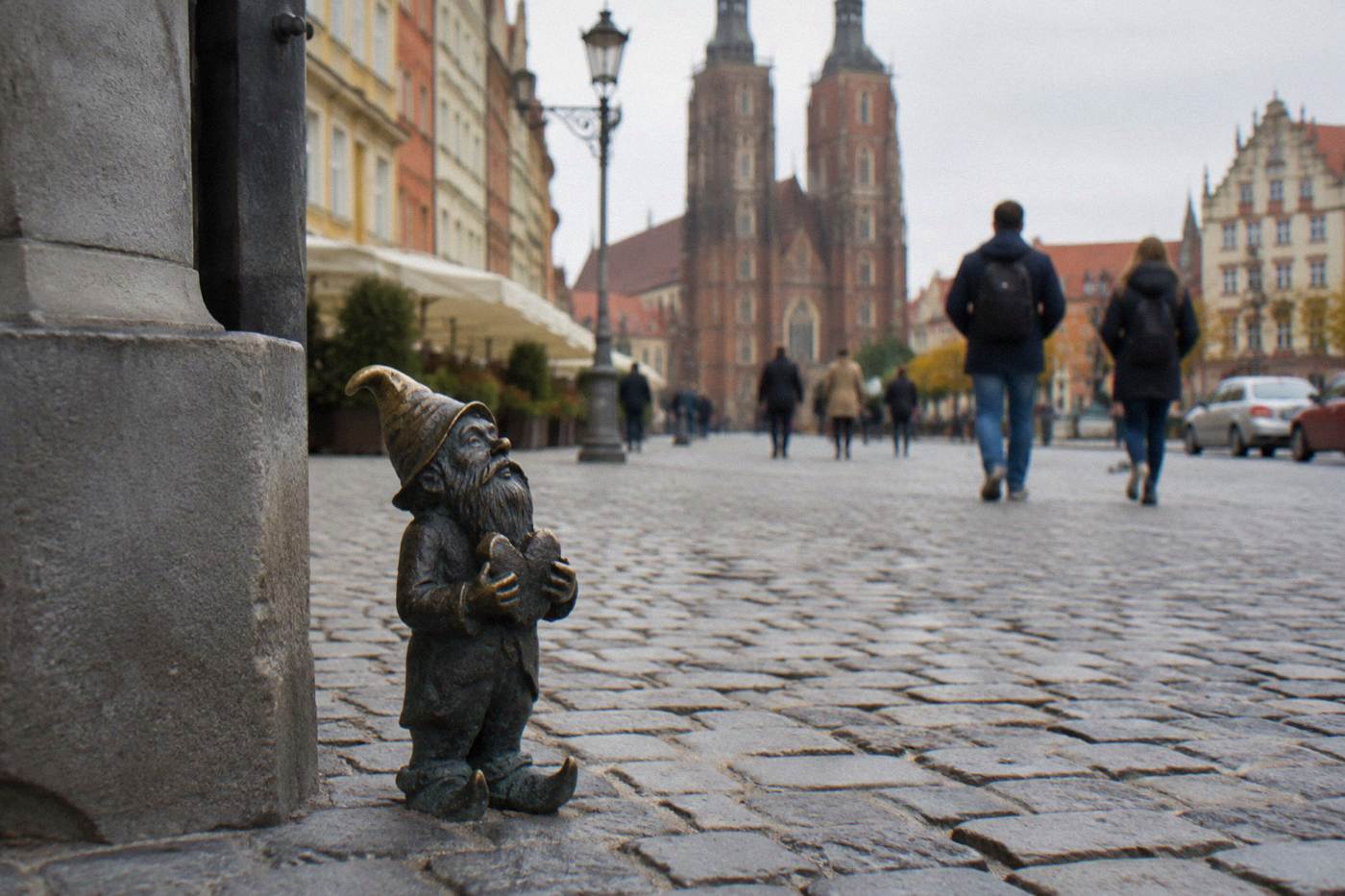
Short answer
The Wroclaw dwarfs are hundreds of small bronze statues scattered across the city of Wroclaw in Lower Silesia, Poland. They hide on lampposts, doorsteps and bridges, mostly in the Old Town and around the Market Square. Seeing them is free, hunting them takes a few hours on foot, and guided dwarf-hunt tours and e-car tours are the shortcut for visitors short on time.
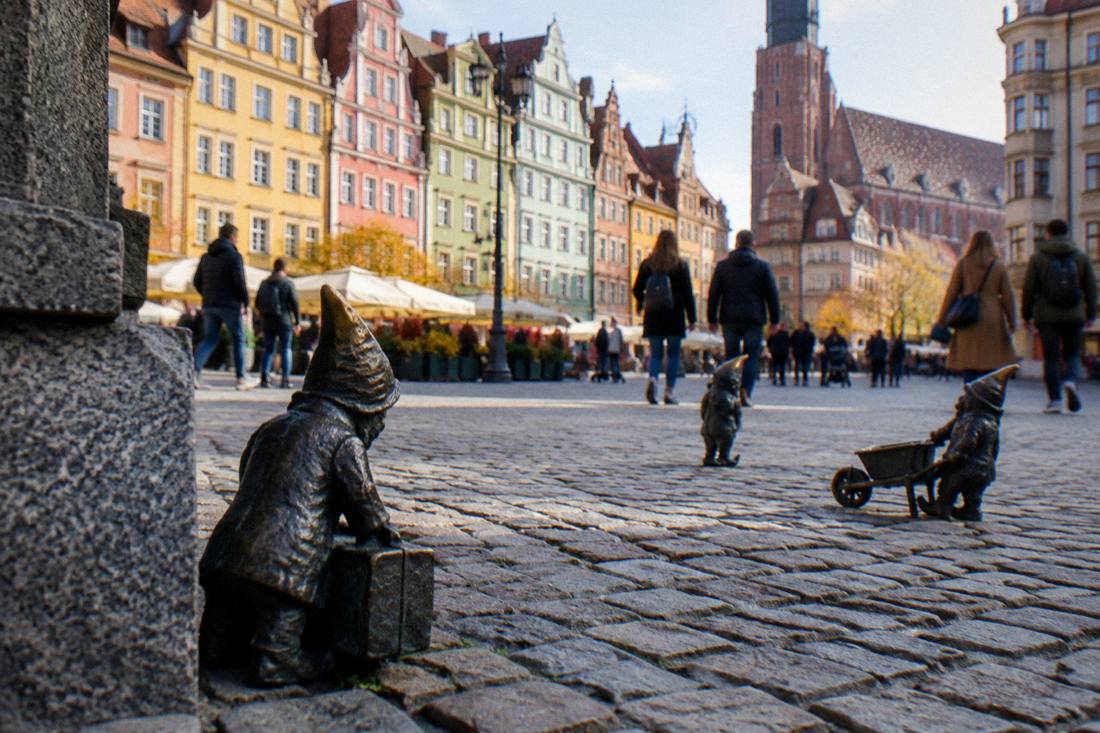
Wroclaw, the largest city in Lower Silesia (Dolnoslaskie voivodeship) in southwestern Poland, is the city of the dwarfs. Hundreds of small bronze figures, known locally as krasnale, hide in plain sight across the center: on lamppost bases, doorsteps, bridge railings and window sills, each a few centimeters tall and easy to walk past a dozen times before spotting. Hunting them has grown into the city's signature activity, the thing families with children, student groups and solo photographers all end up doing, armed with a map or an app and a running tally.
This guide from Wroclaw Travel Guide covers what the dwarfs are, where they cluster, how to structure a hunt, what tours and costs are involved, and what else to see while you are walking between them.
What Are The Wroclaw Dwarfs?
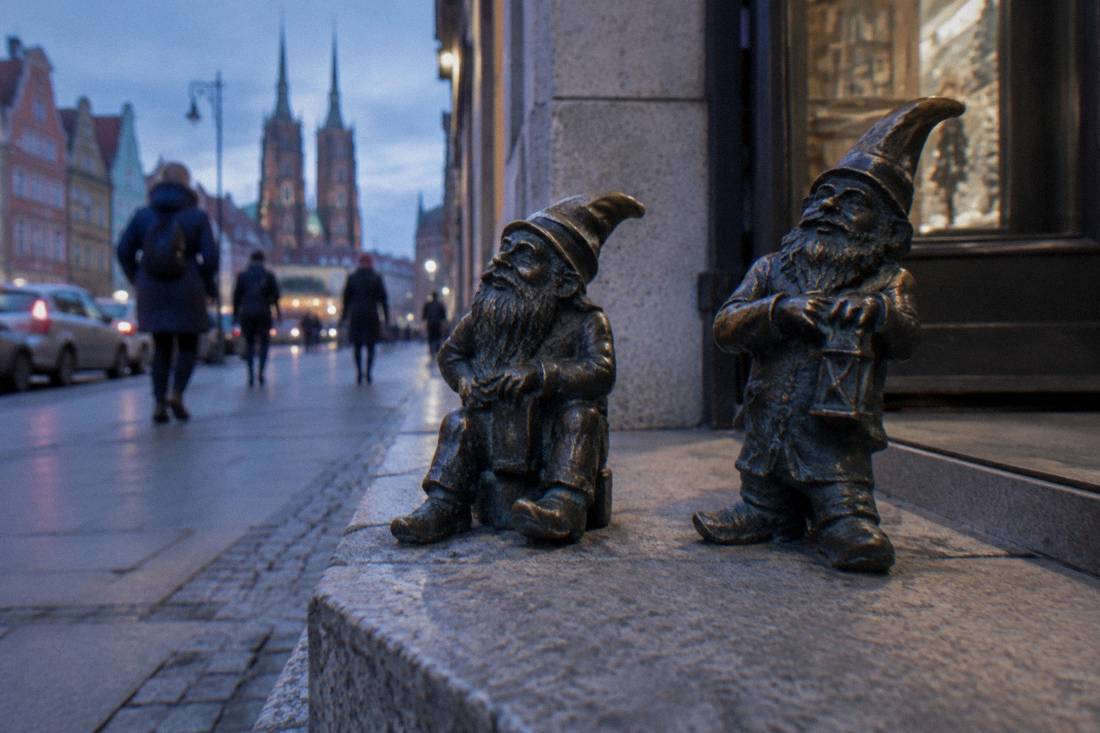
The Wroclaw dwarfs are hundreds of small bronze statues distributed across Wroclaw, Poland, each depicting a dwarf in a different occupation or pose: firefighters, bankers, musicians, smokers and sightseers, all roughly palm-sized and cast in bronze. An exact current count has not been independently verified, so the honest number is simply "hundreds." They are free to visit, outdoors, and reachable at any hour since they are public street installations.
They began as a small set of figures tied to the city's anticommunist dwarf-graffiti satire and multiplied over the years into a citywide collection, with new figures added by businesses, institutions and organizations that each sponsored their own dwarf. The result is a scavenger hunt that the city never officially planned but fully embraced. Individual dwarfs reference banks, restaurants, universities and trades, so the hunt doubles as a walking tour of Wroclaw's commercial and civic life.
The dwarfs are the main reason many first-time visitors end up walking far more of the Old Town than they intended. Because the statues sit low, often at ankle or knee height, they reward the slow, downward-glancing walker and punish the fast one. That mechanic is what makes the activity work for children who would otherwise complain about another cathedral.
Where To Find The Wroclaw Dwarfs?
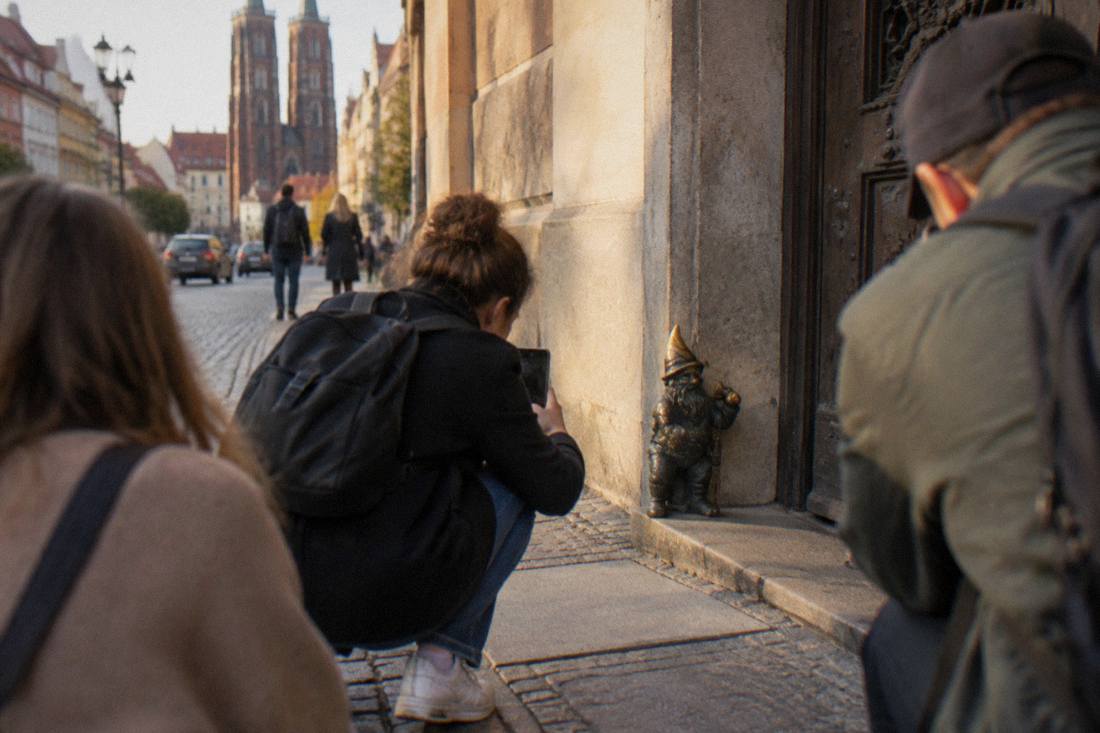
The densest clusters of Wroclaw's dwarfs sit in and around the Market Square (Rynek) and the streets of the Old Town, with more figures on the passages leading to the Odra river, near Ostrow Tumski, and scattered along the city's bridges and shopping streets. The Market Square alone holds a double-digit share of the best-known figures, including the most photographed dwarfs in the city.
Start at the Wroclaw Market Square, where the famous bronze figures cluster around the edges of the square and its side streets. From there, work outward through the Old Town lanes: Swidnicka Street, the arcades near the old town hall, and the alleys connecting the square to the river. Cross toward Ostrow Tumski, the cathedral island, where a handful of figures mark the quieter, older part of the city.
A realistic district-by-district plan looks like this:
| District Or Zone | Dwarf Density | Best Anchor Landmark | What The Hunt Feels Like |
|---|---|---|---|
| Market Square and side streets | Highest | Wroclaw Market Square | Constant spotting, crowds, easy walking |
| Old Town lanes beyond the square | High | Old Town Wroclaw | Quieter alleys, more hidden figures |
| Passage toward the river and bridges | Medium | Grunwaldzki Bridge area | Longer walks, photo-friendly stops |
| Ostrow Tumski cathedral island | Medium | Ostrow Tumski | Calm, historic, fewer but rewarding finds |
| Further districts (Nadodrze and beyond) | Scattered | Nadodrze | For repeat visitors with time |
The two biggest mistakes first-time hunters make are walking too fast and only checking eye-level surfaces. Dwarfs sit on the ground, on ledges at shoe height, on the base of lampposts and on the corners of buildings. Plan on a slow loop of the center rather than a sprint between two or three famous figures.
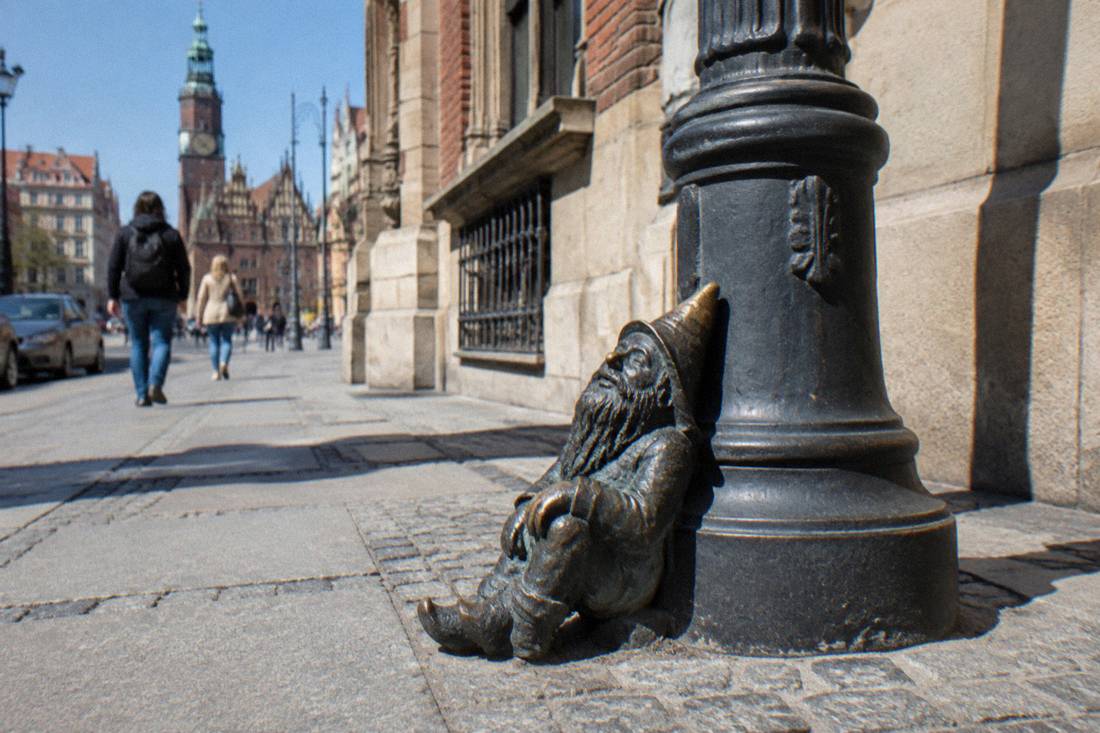
If you would rather not self-navigate, three tour formats cover the same ground with a guide doing the finding. A quick e-car dwarf hunt covers the widest ground for the least walking, and you can Check availability alongside it. On foot, the free walks deserve a look too: the GuruWalk platform lists a free, tip-based Old Town walk by Walkative! with over a thousand reviews behind it, which passes many of the same streets.
How To Hunt The Wroclaw Dwarfs In One Day?
A full dwarf-hunting day in Wroclaw works best as a loop: the Market Square and its side streets in the morning, the Old Town lanes before lunch, the river passage and Ostrow Tumski in the afternoon, and a slow return past any figures you missed. Comfortable shoes matter more than timing, the hunt itself is free, and the whole loop fits comfortably inside a single well-planned day in the city center.
Morning is the practical window. The Market Square is at its calmest before the middle of the day, the light is better for photographing small bronze figures, and the side streets around Swidnicka are not yet busy. Count your finds as you go: most casual hunters stop somewhere between a dozen and a few dozen figures before the fun of tallying wears off, and serious hunters keep going into the hundreds. The loop matches the structure of a one-day Wroclaw itinerary almost exactly.
Midday, break the walk with one of the indoor anchors around the dwarf zones. The Panorama Raclawicka, a screening housed in its own rotunda, sits within easy reach of the center, and its adult ticket at 50 zl (reduced 35 zl) also covers the National Museum's permanent exhibitions, the Ethnographic Museum and the Four Domes Pavilion within three months of the visit, per the museum's own practical-information page. The National Museum itself, if you enter standalone instead, lists a 20 zl adult ticket (15 zl reduced) and free entry to permanent exhibitions every Saturday.
Afternoon is for the island. Ostrow Tumski and the riverbank stretch between the bridges hold a thinner but satisfying spread of figures, and the walk there passes some of the city's most photographed street corners. If your legs are done by this point, that is exactly the moment the e-car option earns its keep.
What Dwarf Tours In Wroclaw Include?
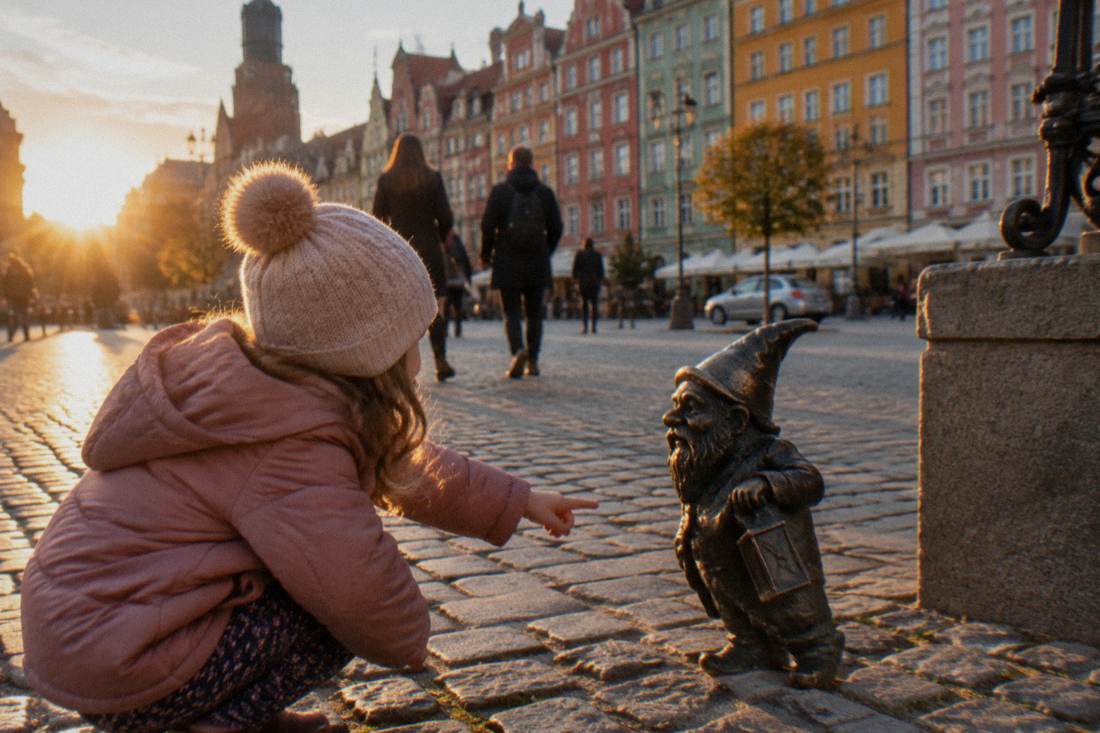
Dwarf-focused tours in Wroclaw come in four formats: a one-hour e-car hunt that drives between clusters, a two-hour guided gnome hunt on foot with a local guide, a free tip-based walking tour that passes dwarf territory while covering the city's history, and longer private walks that fold the dwarfs into a general Old Town tour. All four are bookable through the operator's live listing, and the free walks run on the GuruWalk platform.
The e-car format is the one most tailored to the hunt itself: the driver-guide covers the spread-out clusters that a self-guided walker would need hours to reach. The on-foot gnome hunt flips that, trading coverage for the detail a guide points out at street level. The free walks, including the historian-led tour and the Walkative! Old Town walk, both listed on GuruWalk, are history walks first and dwarf walks second, but they pass the densest zones and cost nothing up front, tip based as they are.
Which format fits which visitor:
| Visitor Type | Best Fit | Why |
|---|---|---|
| Families with small children | E-car dwarf hunt | No long walks, high spotting rate |
| Fit adults, first visit | Guided gnome hunt on foot | Guide finds figures you would miss |
| Budget travelers | Free tip-based walk on GuruWalk | No fixed cost, city history included |
| Repeat visitors | Self-guided loop with a map | The game is the point, not the guide |
Honesty about ratings matters here: some dwarf products carry published review scores and some are new listings with none, and both states are normal. The tour cards on this site render live figures from the operator's data, so a card showing no rating is a listing without one yet, not a hidden number.
Do You Need To Pay To See The Wroclaw Dwarfs?
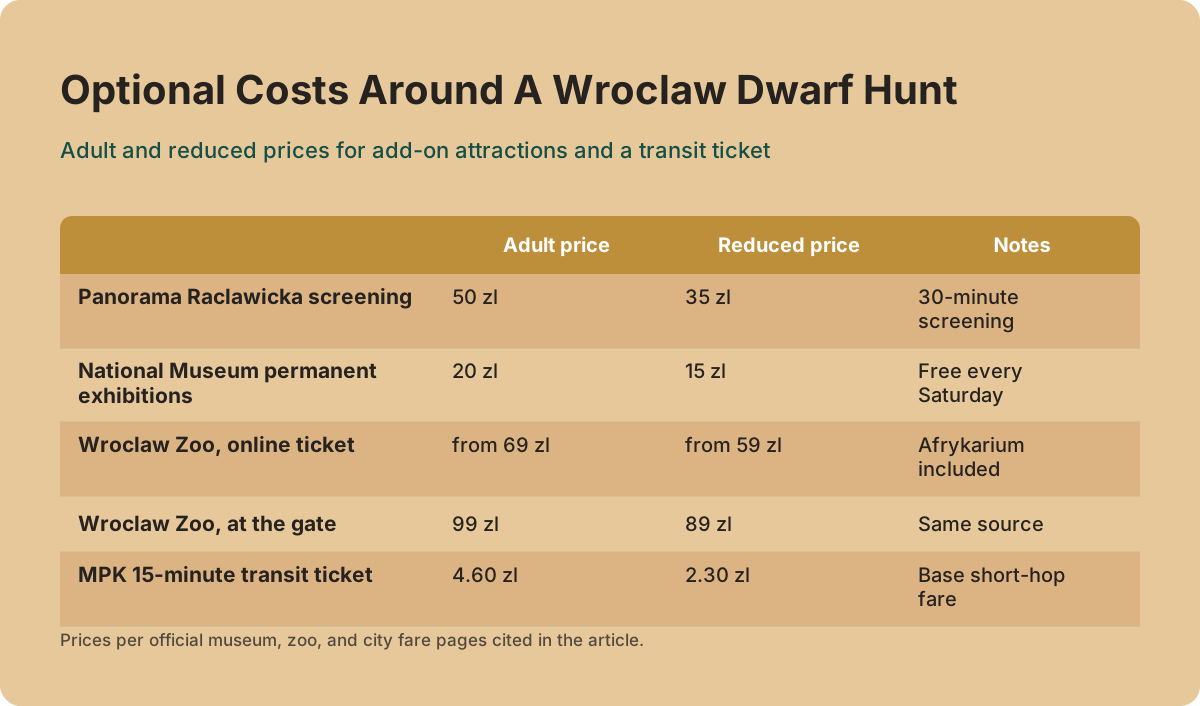
No, seeing the Wroclaw dwarfs costs nothing. Every bronze dwarf is a public street installation in Wroclaw, Poland, visible at any hour for free. The only costs in a dwarf day are optional: a guided tour if you want the figures found for you, and the ordinary expenses of walking around the city, where a 15-minute public transport ticket runs 4.60 zl normal fare or 2.30 zl reduced, per the city's official fare page.
This is one of the reasons the dwarf hunt anchors the free side of a Wroclaw trip. A self-guided hunter pays nothing beyond coffee stops, and the whole activity sits outdoors in public space. What you might reasonably add is the rest of the day around the hunt, and there the verified Wroclaw figures look like this:
| Add-On Around The Hunt | Adult Price | Reduced Price | Notes |
|---|---|---|---|
| Panorama Raclawicka screening | 50 zl | 35 zl | 30-minute screening, per the museum's own page |
| National Museum permanent exhibitions | 20 zl | 15 zl | Free every Saturday, per the museum site |
| Wroclaw Zoo, online ticket | from 69 zl | from 59 zl | Afrykarium included, per the zoo price table |
| Wroclaw Zoo, at the gate | 99 zl | 89 zl | Same source |
| MPK 15-minute transit ticket | 4.60 zl | 2.30 zl | Base short-hop fare, city portal |
Note what is absent: there is no all-inclusive Go City-style tourist pass sold for Wroclaw, so a "dwarf day pass" does not exist and anyone selling you one is selling something else. The city's real card product is transport-focused and does not cover attraction admission. Budget the day as individual tickets, or skip the paid attractions entirely, which many dwarf hunters do.
What Else To See Around The Dwarf Hotspots In Wroclaw?
The dwarf hotspots overlap almost perfectly with Wroclaw's main sightseeing core: the Market Square, the Old Town streets, the riverbank between the bridges and Ostrow Tumski. A dwarf hunter therefore gets the rest of Wroclaw's center for free, from the painted townhouses of the Rynek to the cathedral island, without ever leaving the hunt's route. If the day stretches, the Zoo with its included Afrykarium and the Centennial Hall, a UNESCO World Heritage site since 2006, sit a short tram ride east of the center.
The practical overlap works like this. The morning Market Square loop puts you at the heart of Wroclaw's Rynek, one of the largest market squares in Poland though smaller than Krakow's. The Old Town segment passes the university quarter, where the Aula Leopoldina and the university's famous mathematical attractions sit. The island leg covers Ostrow Tumski, the oldest part of the city. Every one of these is a headline Wroclaw sight in its own right, reached on the same walk.
For a second day, the dwarf theme extends naturally to the city's quirkier family stops, above all the Wroclaw Zoo and Afrykarium, where the online adult ticket starts at 69 zl against 99 zl at the gate, per the zoo's own price table, and the Afrykarium oceanarium is included in the standard ticket rather than sold separately. And if the bronze figures have you in the mood for Polish eccentricity at scale, the big-ticket day trips from Wroclaw deliver it.
When Is The Best Time To Hunt The Wroclaw Dwarfs?
The best months to hunt the Wroclaw dwarfs are May through September, when IMGW's 1991-2020 climate normals for the Wroclaw station show mean temperatures of 14.3C in May rising to 19.7C in July, the warmest month, and dropping to 14.5C by September. The hunt is free and outdoors, so weather drives everything; winter works too, with January means of 0.0C, but expect cold hands and shorter comfortable days.
The climate normals, published by Poland's Institute of Meteorology and Water Management for station 12424, give the honest month-by-month picture:
| Month | Mean Temperature (C) | Precipitation (mm) |
|---|---|---|
| Jan | 0.0 | 28.3 |
| Feb | 1.1 | 25.6 |
| Mar | 4.3 | 35.0 |
| Apr | 9.7 | 31.2 |
| May | 14.3 | 59.6 |
| Jun | 17.7 | 65.4 |
| Jul | 19.7 | 91.4 |
| Aug | 19.3 | 59.5 |
| Sep | 14.5 | 48.4 |
| Oct | 9.6 | 37.6 |
| Nov | 4.8 | 31.4 |
| Dec | 1.1 | 27.9 |
Read the table before assuming summer is the whole answer. July is the warmest month but also the wettest at 91.4 mm of precipitation, while the April figure of 31.2 mm is actually the driest month in the normals. A shoulder-month hunt, April or May, or September, trades a few degrees for thinner crowds around the Market Square and better photographs without heads in the frame. December brings the Christmas market crowds, a different kind of magic, and dwarfs dusted with the season.
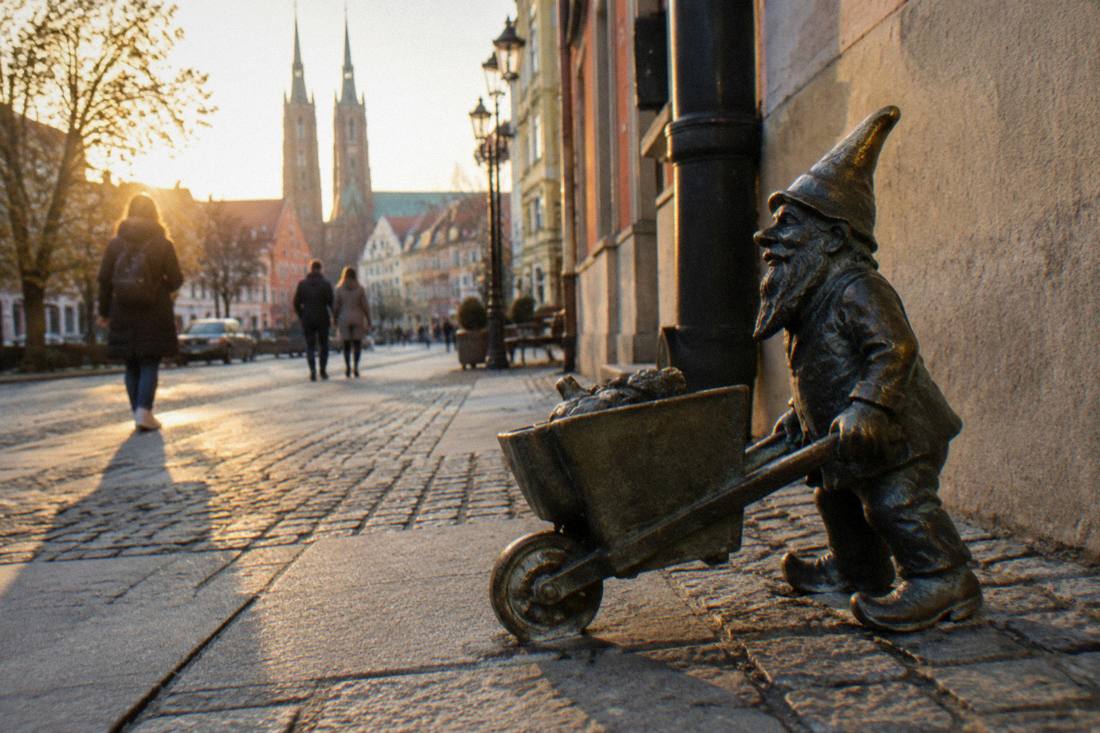
Within a day, the first two hours after sunrise and the last hour before dusk give the best light on bronze figures, and the Market Square is emptiest before mid-morning. Rain matters less than you would think: the dwarfs are bronze, the ground dries, and a wet cobbled square photographs beautifully. For more on the seasons, see the site's guide to the best time to visit Wroclaw sibling coverage in our itinerary pages.
How Do The Dwarfs Fit A First Wroclaw Visit?
For a first-time visitor, the dwarfs work as the thread that stitches a Wroclaw visit together: they give the Market Square, the Old Town, the riverbank and Ostrow Tumski a single purpose, turn ordinary walking into a game, and cost nothing. In a one-day visit they structure the whole day; in two or three days they become the filler between the headline sights, the activity you return to between museum visits and meals.
The practical way to fold dwarfs into a longer stay is to assign them to the gaps. A two-day Wroclaw itinerary spends its first day on the core center, where the densest dwarf clusters live anyway, and its second day on the east-bank sights: Centennial Hall, the zoo, the Japanese garden side of the grounds. The dwarfs belong to day one, scattered along routes you would walk regardless.
For travelers who finish the city and want Lower Silesia's big destinations, two dwarf-scale eccentricities lead the list: Ksiaz Castle, where the castle-with-audioguide-and-terraces ticket is 72 zl adult and 62 zl reduced per the castle's own cennik effective 6 May 2026, with the terraces open only from 15 April to 30 September, and the Church of Peace in Swidnica, a UNESCO World Heritage listing since 2001, at 18 zl adult and 15 zl reduced per its own visitor page.
| Day-Trip Destination | Key Figure (Verified) | Source Basis |
|---|---|---|
| Ksiaz Castle, castle + audioguide + terraces | 72 / 62 zl | Castle cennik, effective 6 May 2026 |
| Ksiaz Castle, underground tour alone | 45 / 39 zl | Same cennik |
| Ksiaz Castle, Palm House alone | 27 / 21 zl | Same cennik |
| Church of Peace, Swidnica, adult | 18 zl | Church visitor page |
| Church of Peace, family ticket | 45 zl | Same page |
If a guided day trip sounds better than a self-driven train ride, the most-reviewed options from Wroclaw cover exactly these two destinations, and the band below shows the live listings.
Common Questions About The Wroclaw Dwarfs
How Many Dwarfs Are There In Wroclaw?
Hundreds, honestly stated. The bronze figures number in the hundreds across Wroclaw, but an exact current count has not been independently verified, and new figures keep appearing as businesses and institutions sponsor additions. Any source giving a precise total is giving a number that ages badly, so plan on "hundreds" and enjoy finding your own personal record.
Where Is The Best Place To Start A Dwarf Hunt?
The Market Square and its immediate side streets, where the densest clusters of figures sit within a few minutes' walk of each other. From there the natural loop runs outward through the Old Town lanes toward the river and Ostrow Tumski. Starting early in the morning gives the emptiest square and the best light on the bronze figures.
Are The Wroclaw Dwarfs Free To Visit?
Yes, completely. Every dwarf is a public street installation in outdoor space, visible at any hour with no ticket, no fence and no opening hours. Paid options exist only if you want a guide or an e-car to do the finding for you, and the free tip-based walking walks on GuruWalk pass the same streets for nothing up front.
Can Children Do A Dwarf Hunt?
Yes, and they are usually better at it than adults, because the statues sit at ankle height where children naturally look. The e-car tour format suits very young children whose legs give out, while the on-foot gnome hunts work well from school age up. Either way, the game structure keeps children engaged through streets they would otherwise find boring.
Do You Need A Tour To Find The Dwarfs?
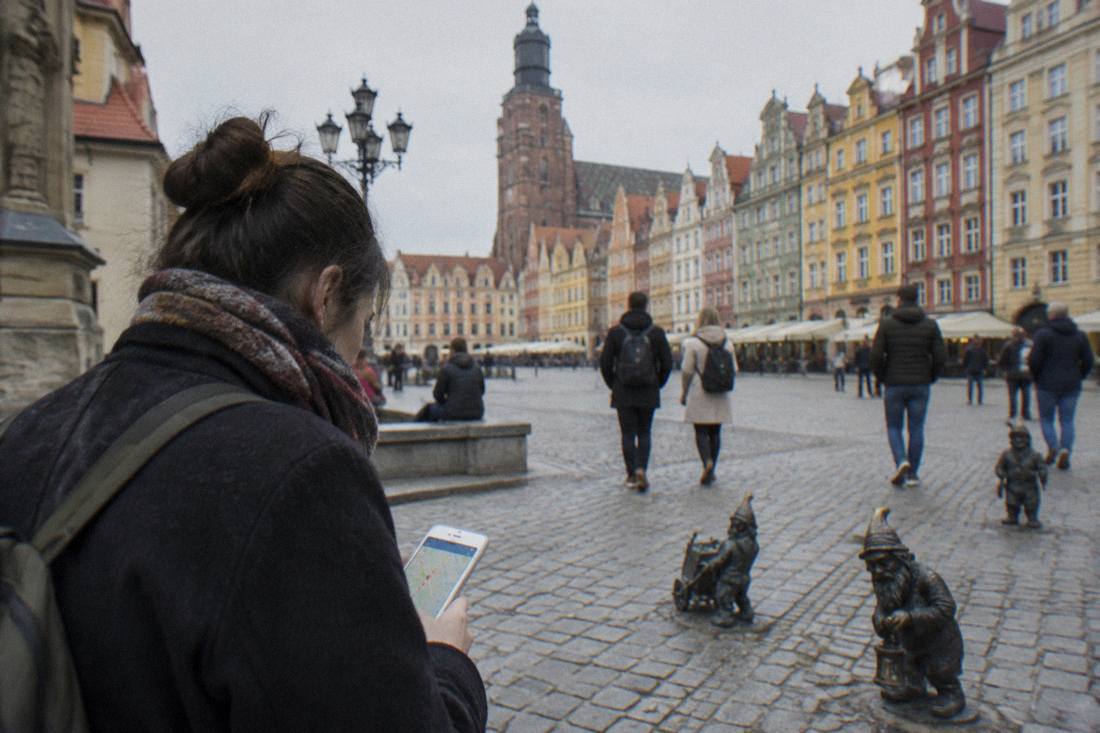
No. A map, a phone and slow walking are enough, and most hunters find a satisfying number of figures within a couple of hours in the center. A tour buys you the figures a guide already knows, the stories behind them, and coverage of spread-out clusters without backtracking, which matters most on short visits.
What Do The Dwarfs Have To Do With Wroclaw's History?
The bronze figures grew out of the city's anticommunist dwarf-graffiti satire of the late communist period and became a beloved public collection afterward, with businesses and institutions later sponsoring their own occupational dwarfs. The tradition itself, rather than any installation date, is the honest version of the story.
The dwarfs are the cheapest, most democratic attraction Wroclaw has: no queue, no ticket, no schedule, just hundreds of small bronze jokes hidden around one of Poland's most walkable historic centers. Hunt them slowly, look down, and let the game pull you into streets the headline sights never mention.