Wroclaw Market Square
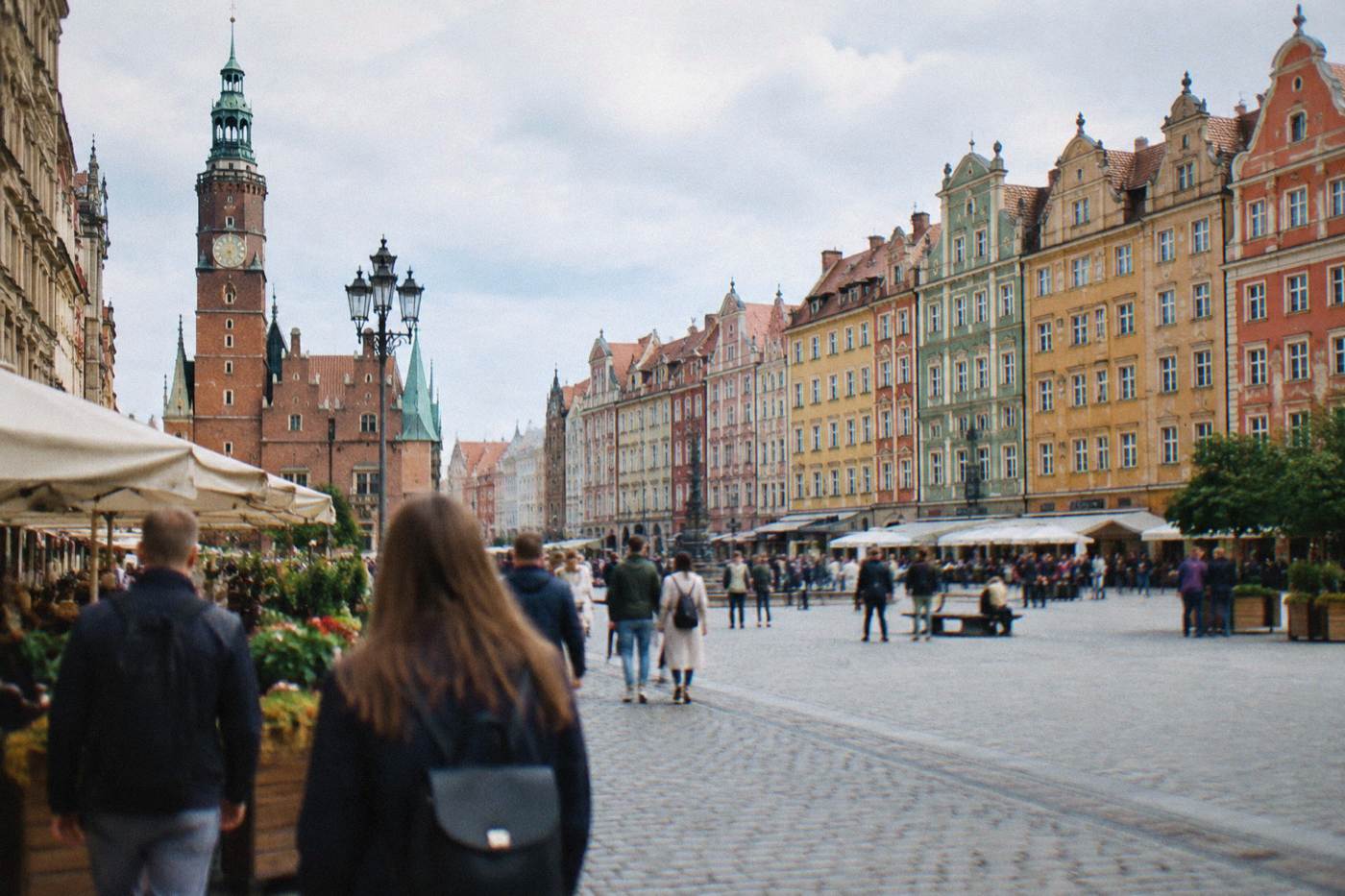
The medieval Rynek at the heart of Wroclaw, Poland, with the Old Town Hall at its center, ringed by painted townhouses and dwarf statues.
Short answer
Wroclaw Market Square (the Rynek) is the medieval heart of Wroclaw in southwestern Poland, with the Gothic Old Town Hall at its center and painted townhouses on all sides. It is smaller than Krakow's Rynek Glowny, free to walk at any hour, and sits within a short walk of Cathedral Island, the dwarfs, and the Panorama Raclawicka.
Wroclaw Market Square, the Rynek, is the medieval centerpiece of Wroclaw, the largest city in Lower Silesia (Dolnoslaskie voivodeship), in southwestern Poland. The square holds the Old Town Hall at its center, with rows of narrow painted townhouses around its edges, and every practical thing a visitor needs, from tram stops to ticketed museums, sits within an easy walk of its cobbles. GUS, Poland's statistics office, puts the city's population at 672,601 as of 31 December 2025, and the square is where most of those people's visitors end up within an hour of arriving.
This page from Wroclaw Travel Guide covers what the square actually is, how to reach it by public transport, what to see on and around it, the hours and ticket prices that matter for planning, and how it honestly compares with Krakow's larger Rynek Glowny, a comparison Polish cities invite and one that deserves real numbers rather than slogans.
What Is Wroclaw Market Square?
Wroclaw Market Square, known locally as the Rynek, is the medieval main square of Wroclaw's Old Town, built around the Old Town Hall, which still stands in the center of the square itself. Painted townhouses line all four sides, the square is entirely pedestrianized, and it functions as the city's meeting point, event space, and the natural starting line for almost every visit to Wroclaw.
The Rynek is not a single flat rectangle in the way first-time visitors often expect. The Old Town Hall sits in the middle as a freestanding block, so the square reads as a ring of space flowing around the building, wider on some sides than others. Around that ring stand the narrow merchant townhouses the city is photographed for, each with its own paint scheme, gables, and ground-floor cafe or restaurant. The square is a living room for the city as much as a monument, and it fills and empties with the rhythm of the day, from early-morning deliveries to late-evening crowds spilling out of the bars on the streets running off the corners.
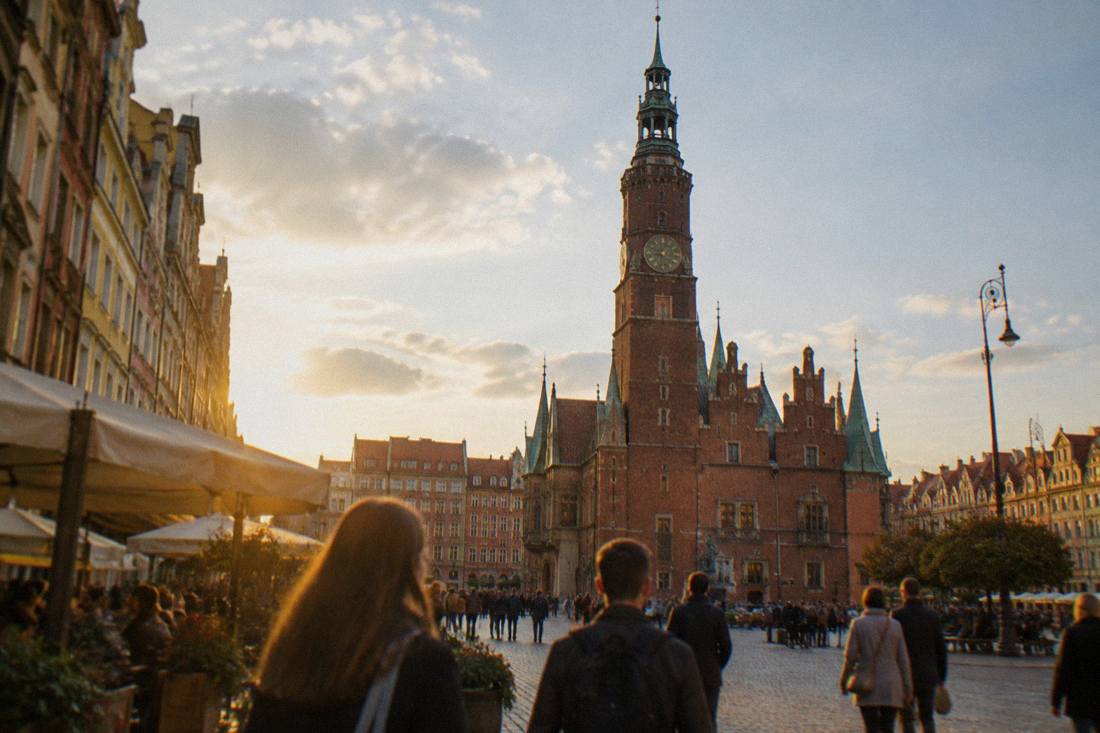
What gives the square its practical appeal for a visitor is density. Within the space of a few minutes' walking you have the Old Town Hall, the dwarf statues the city is famous for, the streets of the Old Town area radiating outward, and the Odra river and its islands a short walk beyond. The Old Town area around the square is where visitors tend to base themselves for exactly this reason, and the rest of this guide works outward from the Rynek's edges.
How Do You Get To Wroclaw Market Square By Public Transport?
The square sits at the center of Wroclaw's tram network, and MPK's base 15-minute ticket costs 4.60 zl (2.30 zl reduced), enough to ride from the main railway station or most central stops to a stop beside the Rynek. Longer tickets run in tiers, 30 minutes at 7.00 zl, and a 24-hour city ticket at around 15.00 zl, so the fare you buy depends on how many rides you plan, not on the destination.
The city's own fare portal lists those tiers by duration rather than by destination, which matters for visitors: a single ride to the square costs the base fare no matter which tram you board. The main railway station, Wroclaw Glowny, connects to the Old Town by tram in a few minutes, and trams also serve the stops around the square's perimeter, so you rarely need to walk more than a block or two from a stop to the Rynek's edge. Tickets are for the city's trams and buses alike, and the same fare structure applies across the network.
| MPK ticket | Normal fare | Reduced fare |
|---|---|---|
| 15-minute | 4.60 zl | 2.30 zl |
| 30-minute | 7.00 zl | 3.50 zl |
| 24-hour (approx. band) | 15.00 zl | 7.50 zl |
For orientation, remember that the square is the natural zero point of the city. The river and its islands lie to the north, the railway station to the south, and the main walking streets of the Old Town fan out from the square's corners. If you land at Wroclaw Airport, the same tram and bus system carries you toward the center, and the airport is open and operating normally after its 2025 renovation closure finished ahead of schedule in September 2026, with 2026 setting new passenger records after 4,473,945 passengers passed through in 2024.
On arrival at the square itself, everything is on foot. The Rynek and the streets around it are pedestrianized, so the classic pattern is tram to the edge, then walk. Many visitors skip the tram entirely for the day and simply walk the whole core, which is what the layout invites.
What Should You See On And Around The Square?
The essential sights on Wroclaw Market Square are the Old Town Hall at its center, the ring of painted townhouses, the dwarf statues scattered across the square and the streets nearby, and the viewpoints from the town hall tower if it is open on the day you visit. Around the corners, the walkable additions are Cathedral Island, the Panorama Raclawicka, and the National Museum, each reachable from the square without a vehicle.
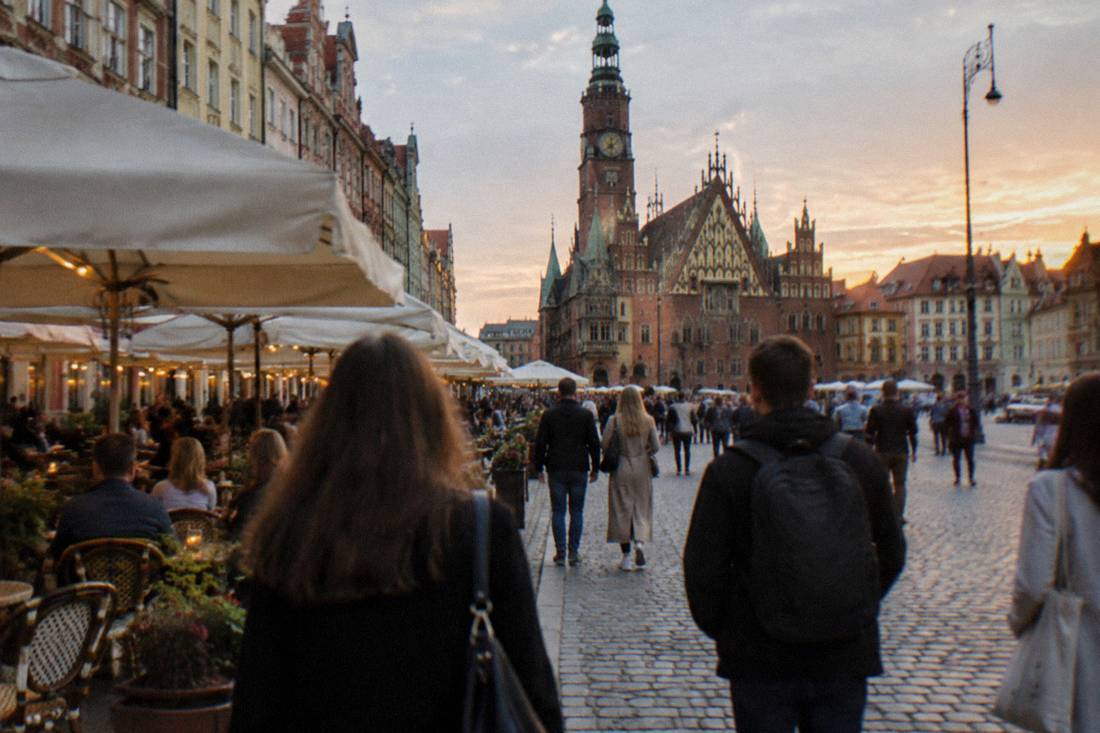
Start in the middle. The Old Town Hall anchors the square, and its tower is the single most recognizable silhouette on the Wroclaw skyline after the cathedral's spires across the river. The townhouses around the ring reward slow looking: facades are painted in different palettes, gables take different shapes, and the ground floors hold the cafes and milk-bar-style eateries that make the square work as a place to sit for an hour rather than only to photograph.
Then go hunting. The dwarf statues of Wroclaw are the city's signature scavenger hunt, small bronze figures placed on ledges, doorposts, and pavement corners, several of them on or within sight of the square itself. Families treat the Rynek as the starting point of a dwarf hunt that sprawls across the Old Town, and the square's edge is where most first sightings happen. Guided dwarf-hunt and city tours build whole itineraries around the same game, and the selection below shows three of the most-booked ways to see the square and the city around it.
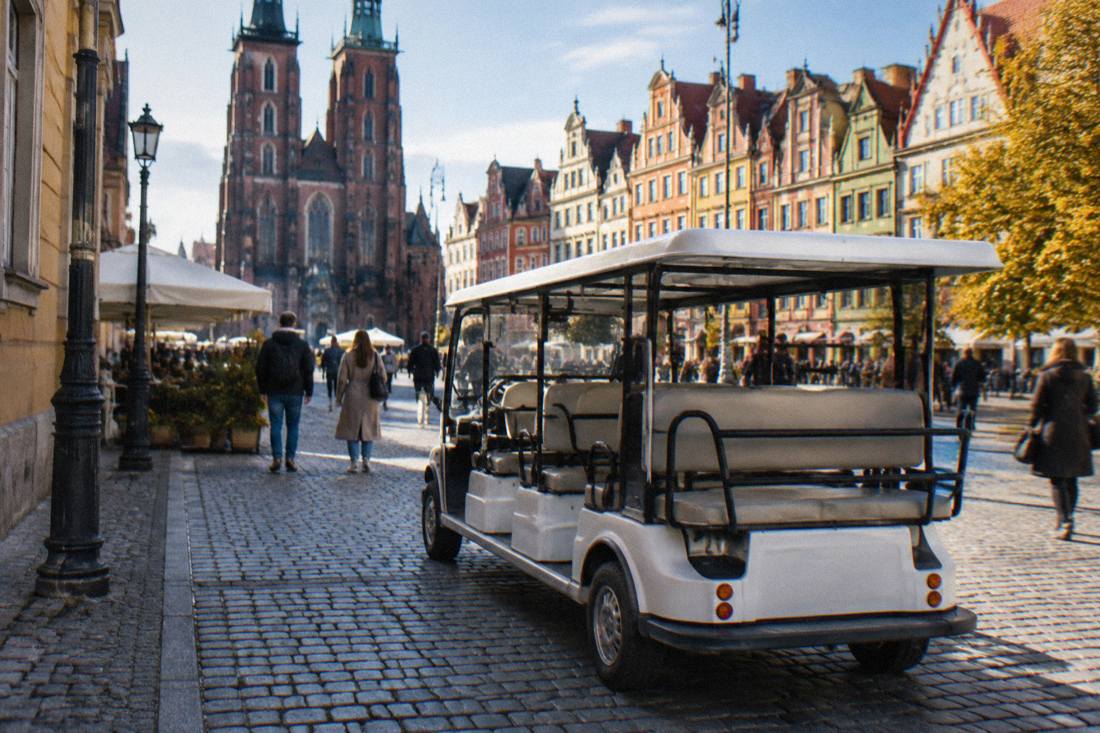
An e-car tour with an audio guide is a natural fit for the square specifically because the Rynek anchors so many routes: you ride out from it, loop the islands, and return. The site's featured pick for this page is the Wroclaw E-Car Tour and Audio Guide, which covers the square and the wider Old Town, with Check availability handled through the operator's live listing.
Beyond the square's own ring, the immediate neighborhood stacks up fast. A short walk north brings you to the Odra, the islands, and Cathedral Island (Ostrow Tumski), the oldest part of the city. The Panorama Raclawicka and the National Museum sit close to that same walk, which makes a square-centered day plan easy to assemble without any transport at all.
What Hours And Ticket Prices Should You Plan Around?
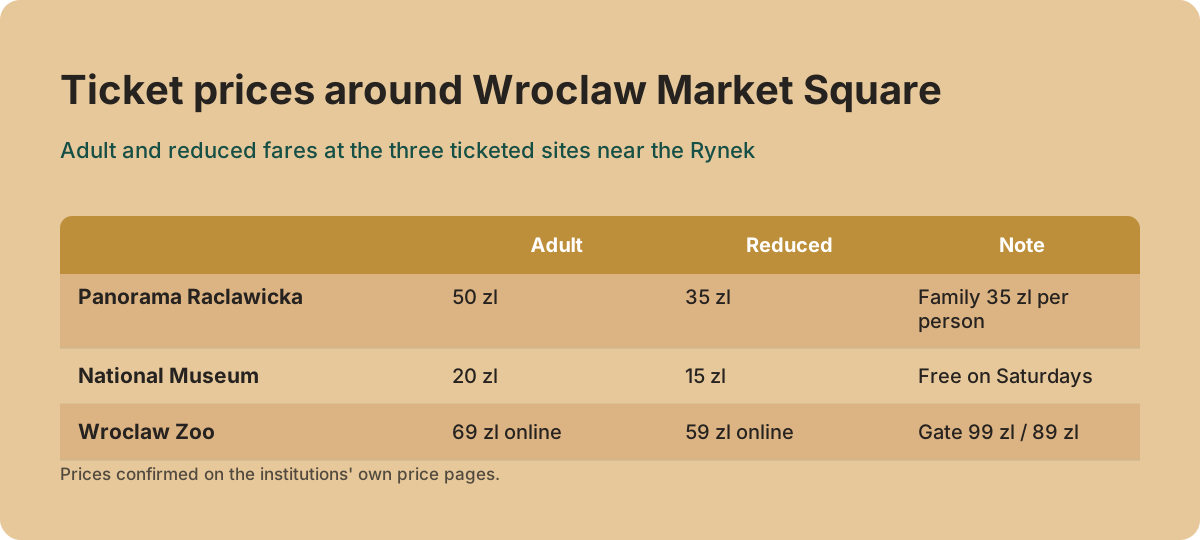
The square itself is a public, always-open space with no ticket and no closing time. The things that cost money are around its edges: the Panorama Raclawicka at 50 zl adult and 35 zl reduced, the National Museum at 20 zl adult and 15 zl reduced, and the zoo at 69 zl online versus 99 zl at the gate for an adult, all confirmed on the institutions' own price pages.
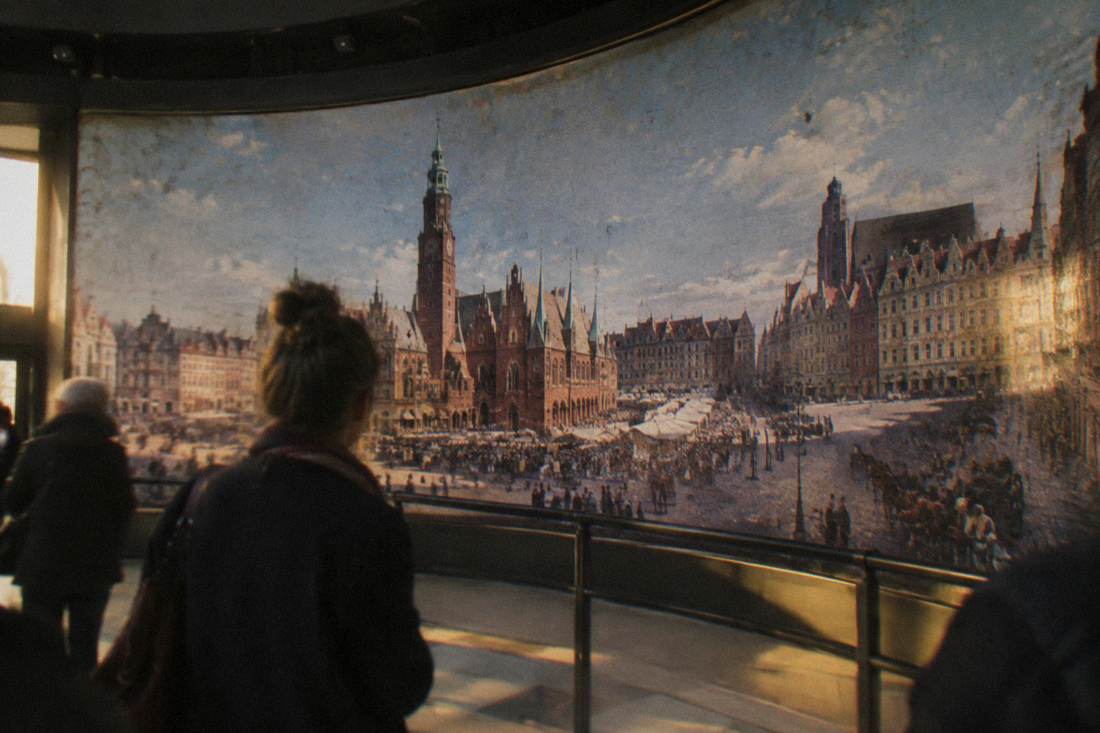
Those three ticketed attractions are the ones visitors commonly bolt onto a square-centered visit, and their prices and hours are the ones worth carrying in your head. The Panorama's own tickets page gives 50 zl normal, 35 zl reduced, family at 35 zl per person, and a group-guide rate of 10 zl, for a 30-minute screening. Winter hours there run Tuesday to Friday 9:30-16:00, Saturday 9:30-17:00, and Sunday 9:30-16:00, closed Mondays, while summer hours run daily 8:30-19:00. One Panorama ticket also covers the National Museum's permanent exhibitions, the Ethnographic Museum, and the Four Domes Pavilion within three months of the visit date, which is the best value detail in the whole neighborhood and one most first-time visitors miss.
| Attraction | Adult ticket | Reduced ticket | Notes |
|---|---|---|---|
| Panorama Raclawicka | 50 zl | 35 zl | 30-minute screening; ticket also covers National Museum, Ethnographic Museum, Four Domes Pavilion within 3 months |
| National Museum (permanent exhibitions) | 20 zl | 15 zl | Free entry to permanent exhibitions every Saturday |
| Wroclaw Zoo | 69 zl online | 59 zl online | Gate prices 99 zl adult / 89 zl reduced; Afrykarium included in the standard ticket |
The National Museum's own practical page fills in the rest: group and family tickets at 10 zl per person, a student and pupil special at 3 zl, the "Museum for a zloty" ticket at 1 zl for students and pupils under 26, and free entry for children under 7. Its winter season (1 October to 31 March) runs Tuesday to Friday 10:00-16:00 and Saturday to Sunday 10:00-17:00, closed Mondays, and the summer season runs Tuesday to Friday 10:00-17:00 and Saturday to Sunday 10:30-18:00, with the ticket office closing 30 minutes before the museum in both seasons.
The zoo deserves one specific correction that circulates widely online: the Afrykarium, the zoo's ocean-and-Africa pavilion, is included in the standard zoo ticket and is never a separate charge. The zoo's own price page states this plainly, and its hours page shows it open every day of the year, including public holidays, with April to September grounds open 9:00-18:00 Monday to Thursday and 9:00-19:00 from Friday to Sunday and on holidays.
Where Should You Eat And Drink Near The Square?
The streets running off the square's corners carry most of the eating options visitors actually want: milk bars serving cheap Polish classics, pierogi kitchens, craft beer bars, and the cafe terraces on the square itself. The square is the most expensive seat in the neighborhood, and walking two or three streets out, toward the Old Town's side lanes, is the standard local move for the same food at gentler prices.
Poland's currency is the zloty (PLN), not the euro, and every till around the square prices in zl, so budget in local terms. For the classic budget experience, the city's milk bars, the self-service canteens left over from the communist era, serve pierogi, soups, and daily mains at prices a restaurant terrace on the Rynek cannot match, and the site's guide to Wroclaw's milk bars maps the ones worth queuing for. For the sit-down version, the pierogi guide covers where the dumpling standards are highest.
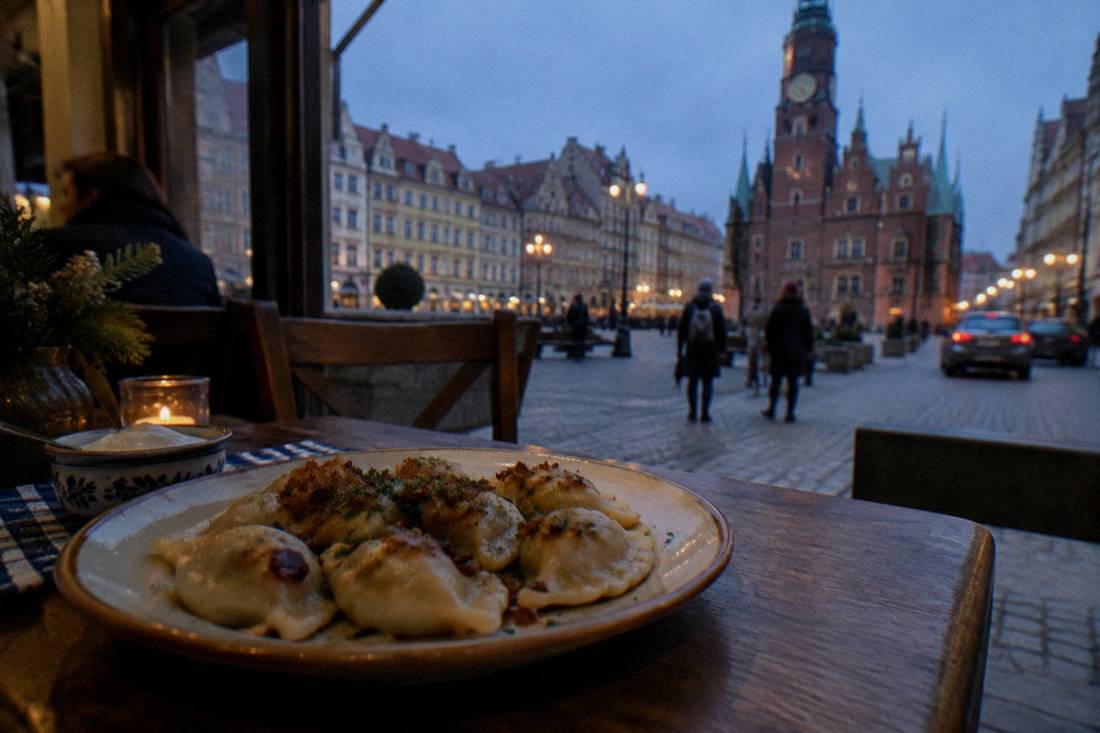
Evenings around the square follow the river logic: the Rynek's bars fill first, and the crowd then drifts toward the student end of the Old Town and the islands. The Slodowa Island scene, where students carry their own drinks onto the riverside lawn in warm months, is the classic late-night walk from the square, and the Wroclaw nightlife guide sorts the rest of it by neighborhood and style. Craft beer has a serious foothold in the city too, and the craft beer guide lists the bars within walking distance of the Rynek.
When Is The Best Time Of Day To Visit The Square?
The square changes character three times a day: quietest and most photographic in the early morning before the cafe umbrellas go up, busiest and loudest from late afternoon through the evening, and at its most atmospheric in December, when the Christmas market fills the Rynek with wooden stalls. IMGW's 1991-2020 climate normals put July at a 19.7C mean, the warmest month, and January at 0.0C, the coldest, so the shoulder seasons give the most comfortable walking hours.
The site's own analysis of this exact question, the best time of day for the market square, goes deeper on light and crowds, but the short version is that photographers win at dawn and everyone else wins after dark, when the townhouse facades are lit and the square becomes the city's living room in earnest. Winter deserves special mention: the Wroclaw Christmas market guide covers the Rynek's December transformation, and the question of which Christmas market is better, Krakow's or Wroclaw's is one the site answers with a direct comparison rather than a shrug.
| Month | Mean temperature (C) | Precipitation (mm) |
|---|---|---|
| January | 0.0 | 28.3 |
| February | 1.1 | 25.6 |
| March | 4.3 | 35.0 |
| April | 9.7 | 31.2 |
| May | 14.3 | 59.6 |
| June | 17.7 | 65.4 |
| July | 19.7 | 91.4 |
| August | 19.3 | 59.5 |
| September | 14.5 | 48.4 |
| October | 9.6 | 37.6 |
| November | 4.8 | 31.4 |
| December | 1.1 | 27.9 |
That climate table is IMGW's official 1991-2020 normal for the Wroclaw station, and two readings in it surprise people. July, the warmest month at 19.7C mean, is also the wettest at 91.4 mm of rain, and December, a month often assumed to be the soggiest, is actually one of the driest at 27.9 mm. The practical reading: a July day trip should carry a rain plan, and a December visit is drier and milder than the reputation suggests, with a 1.1C mean that sits among the warmer January-and-December figures for Poland's big-city stations.
How Does Wroclaw Market Square Compare With Krakow's?
Krakow's Rynek Glowny is bigger than Wroclaw's square, roughly 4 hectares against approximately 3.64 to 3.79 hectares, and Krakow itself is the larger city, 816,614 residents to Wroclaw's 672,601 on GUS figures for 31 December 2025. Wroclaw's square is the more enclosed and colorful of the two, Krakow's the grander and more monumental, and neither ranking is a reason to skip either city.
The comparison deserves honesty because the internet routinely gets it backwards. The claim that Wroclaw's Rynek is the second-largest market square in Europe was not independently confirmed when this site's facts were checked against primary sources, so this guide does not state it as fact. What the sources do support: Krakow's main square is larger by roughly a fifth, and Krakow is a bigger city by a clear margin on the same GUS count. The site's dedicated answer page, what is the largest market square in Poland, works through the full ranking, and the broader Wroclaw versus Krakow comparison weighs the two cities on food, prices, and atmosphere rather than on square size alone.
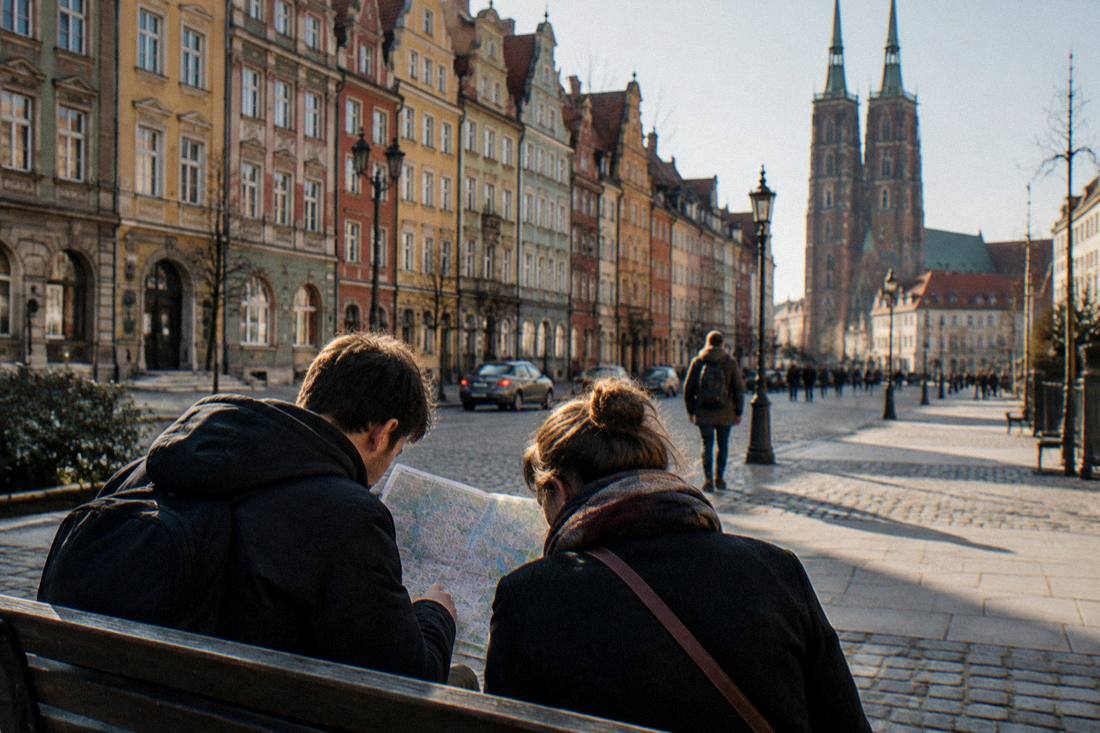
Where Wroclaw genuinely wins against Krakow for many travelers is compactness. From the Rynek you can walk to the cathedral, two major museums, the river islands, and a dozen dwarf sightings inside a single afternoon, without a tram ride. The square also sits inside a city that received a full 2016 European Capital of Culture year, and its calendar still runs on the New Horizons film festival and the Wratislavia Cantans music festival, both of which use venues within walking range of the Rynek.
What Is Within Walking Distance Once You Leave The Square?
Everything in central Wroclaw worth a first-day visit sits inside a walkable ring around the square: Cathedral Island and its cathedral to the north, the National Museum and Panorama Raclawicka to the south and west, the botanical garden and Japanese garden a short walk east toward the river, and the university's Aula Leopoldina inside the same loop. The zoo, Afrykarium included, is the one headliner that sits beyond that ring.
A useful day structure is to give the square the morning, walk north to the islands after lunch, and spend the late afternoon in one ticketed attraction. The one day in Wroclaw itinerary sequences exactly that, and the Wroclaw walking tour route maps it street by street for anyone who prefers a printed route to an app.
| Place | Direction from the square | Entry cost | Best for |
|---|---|---|---|
| Ostrow Tumski (Cathedral Island) | North, across the river | Free to walk the island | The city's oldest quarter and the cathedral |
| National Museum | South of the river loop | 20 zl adult, 15 zl reduced | Polish art, free on Saturdays |
| Panorama Raclawicka | Near the museum quarter | 50 zl adult, 35 zl reduced | The giant rotunda painting |
| Wroclaw Zoo with Afrykarium | East, beyond the center | 69 zl online, 99 zl at the gate | Families, full or half day |
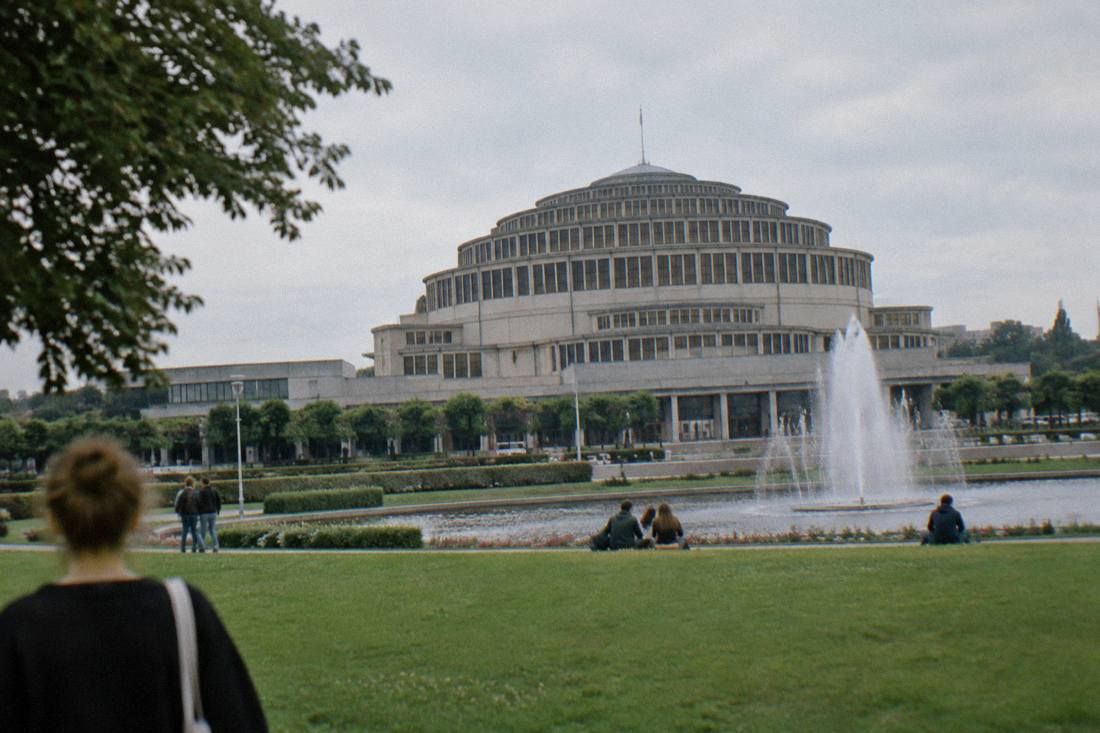
| Centennial Hall | Beside the zoo, Szczytnicki Park | Grounds free to walk | The 1911-1913 UNESCO-listed hall by Max Berg |
The Centennial Hall entry in that table is the city's other UNESCO listing besides the churches of the region: inscribed in 2006, designed by architect Max Berg and built 1911-1913, with a capacity of up to 10,000, and its park setting beside the Japanese garden makes it a half-day trip from the square rather than a quick stop. The Centennial Hall guide covers how to combine it with the zoo in a single run.
For visitors with more than a weekend, the same regional network that makes Wroclaw a base also makes the square a departure point. Ksiaz Castle, owned by the Walbrzych municipality and operated by its municipal company, runs a cennik with the castle, audioguide and terraces at 72 zl adult and 62 zl reduced, and the Church of Peace in Swidnica, UNESCO-inscribed since 2001, charges 18 zl adult and 15 zl reduced. The Ksiaz Castle guide and the Church of Peace in Swidnica guide cover both day trips in detail.
Can You See The Square Better With A Tour?
A guided tour of the square and the Old Town is worth it when you want history explained rather than just seen, when the weather makes walking less appealing, or when a private guide's pace suits a family. The strongest tour formats for a square-first visit are a small-group old town walk, a private top-attractions walk, and the featured e-car tour with audio guide, and free, tip-based walking tours also cover the Rynek for visitors who want the storytelling without a fixed price.
The e-car format suits the square because the vehicles loop the pedestrian core and the islands in a single ride, and the featured E-Car Tour and Audio Guide is the pick this page recommends for that reason.
For travelers who would rather walk, the small-group Old Town Wroclaw walking tour keeps the group small and spends its whole route inside the streets around the Rynek, covering the square's stories at a walking pace.
And for a private pace, the Private Top Attractions of Wroclaw tour builds the route around whatever the group most wants, which works well when the square is only one stop on a longer wish list.
The wider comparison of guided options, including the free walks and the specialist formats, sits in the site's best walking tours in Wroclaw roundup, and the two most-booked day trips that start from the same Old Town hotels appear in the final selection below.
One planning note for tour bookers: the square is where most walking tours set their meeting points, so whichever format you choose, confirm the exact meeting spot on the listing before you set out, and arrive ten minutes early, because the Rynek has several corners and guide groups cluster in different ones.
Common Questions About Wroclaw Market Square
Is Wroclaw Market Square The Largest In Poland?
No. Krakow's Rynek Glowny is larger, roughly 4 hectares against Wroclaw's approximately 3.64 to 3.79 hectares, and the same ordering holds for city population, with Krakow at 816,614 residents to Wroclaw's 672,601 on GUS figures for 31 December 2025. The claim that Wroclaw's square is the second-largest in Europe is not confirmed by primary sources and should not be repeated as fact.
How Much Does It Cost To Visit Wroclaw Market Square?
Nothing. The square is a public pedestrian space with no ticket and no closing time. The costs around it are the attractions on its edges: the Panorama Raclawicka at 50 zl adult, the National Museum at 20 zl adult, and transport to the square on a 4.60 zl base MPK ticket.
Is The Square Worth Visiting At Christmas?
Yes. December transforms the Rynek into the setting for the city's Christmas market, and IMGW's climate normals show December is one of the drier months in Wroclaw at 27.9 mm of precipitation, with a 1.1C mean temperature. The site's dedicated Christmas market guide covers the stalls, dates, and how the square's layout changes for the season.
Where Is The Best View Of The Square?
The Old Town Hall's tower, when open, is the classic elevated view over the townhouse roofs, and the square's own corners give the best ground-level frames of the painted facades. Early morning gives the emptiest square and the most even light, as the site's best-time-of-day guide explains in detail.
Are The Dwarfs On The Square Itself?
Several of Wroclaw's bronze dwarfs stand on or within sight of the Rynek, and the square is the traditional starting point for a dwarf hunt that spreads across the whole Old Town. The site's dedicated dwarfs guide lists a good starting set of figures.
Wroclaw Market Square is the single most efficient first hour you can spend in the city: free to enter, always open, and close enough to the cathedral, the museums, the dwarfs, and the river that a whole day's plan assembles itself from its corners. Walk it at dawn, eat two streets away from the terraces, come back after dark, and the Rynek will have earned the place it holds in every photograph of the city.