Where To Eat Pierogi In Wroclaw
Pierogi are Poland's dumpling and Wroclaw, the largest city in Lower Silesia in southwestern Poland, eats them everywhere from cafeteria-style milk bars to Market Square restaurants. This guide explains what to order, where to look, and how to fold a pierogi stop into a day of sightseeing.
Short answer
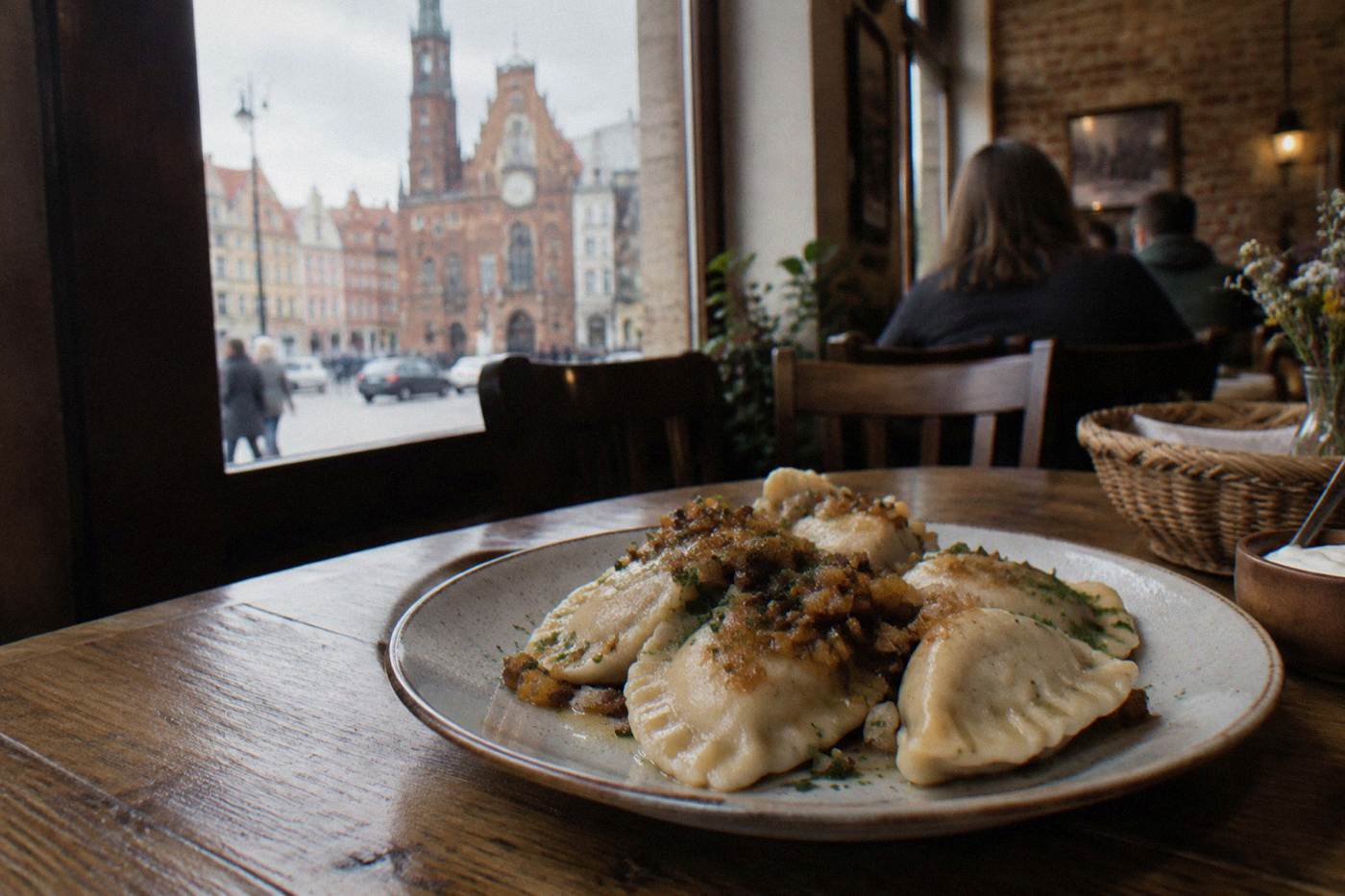
Pierogi are boiled or fried filled dumplings and they are Wroclaw's most reliable everyday meal. The best-value plates come from milk bars, the cafeteria-style eateries that survive across the city, while the Market Square and Old Town hold the tourist-facing restaurants. Order ruskie (potato and cheese) first, follow with a seasonal filling, and pair it with kompot or a local beer.
Wroclaw, the largest city in Lower Silesia (Dolnoslaskie voivodeship) in southwestern Poland, is a city of 672,601 residents (31 Dec 2025, GUS/Statistics Poland) spread across the Odra river, and nearly every one of them has an opinion about pierogi. These filled dumplings are the country's signature comfort food, and in Wroclaw they appear on menus from the humblest milk bar to the most polished Old Town terrace. This page is about the practical side of eating them: what the varieties are, where the different kinds of eateries sit on price and atmosphere, and how a visitor strings a food day together without wasting sightseeing time. It does not pretend to have tasted anything; every figure quoted here comes from an official source and every recommendation is framed as where to look rather than what a specific kitchen served on a specific evening.
What Are Pierogi And Why Are They Everywhere In Wroclaw?
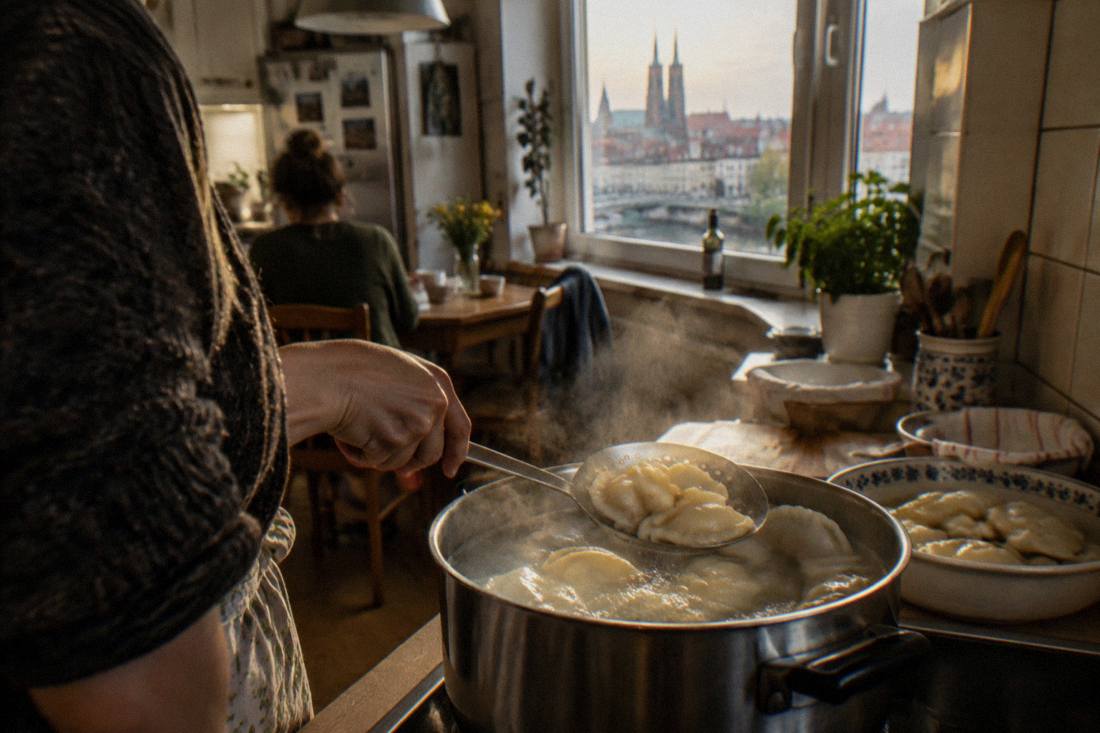
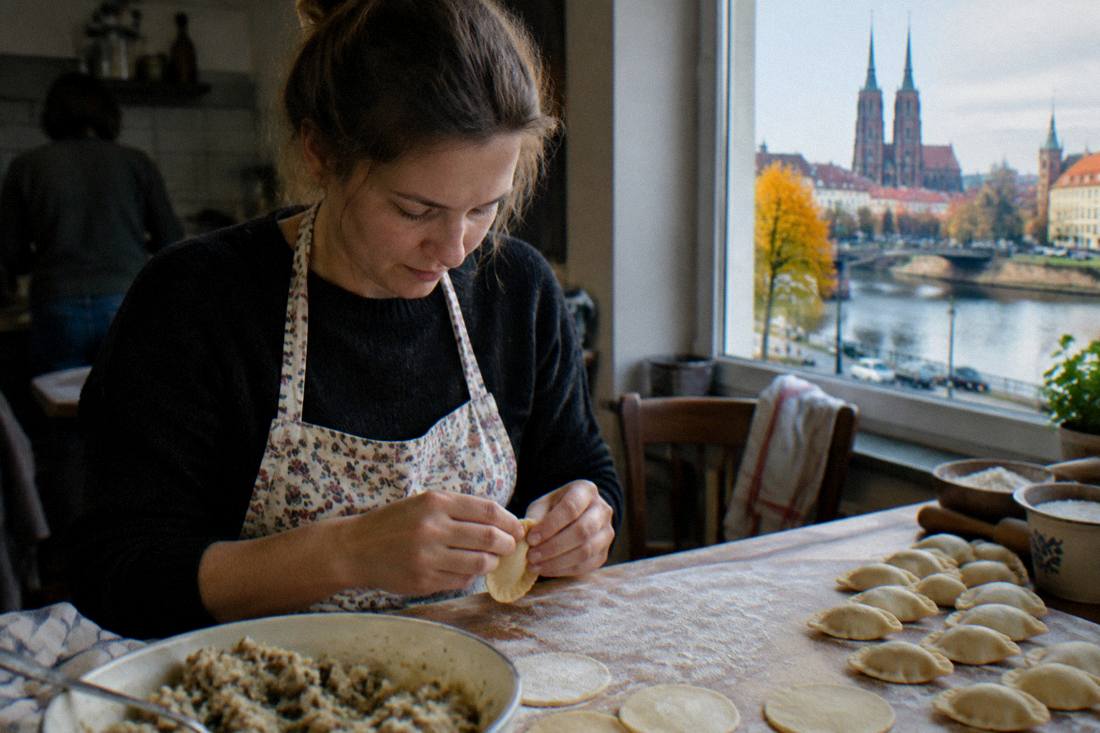
Pierogi are semicircular dumplings made from a simple flour-and-water dough, rolled flat, filled, folded over and crimped at the edge, then boiled and, often, finished in a pan with butter and fried onion. They are a home dish first and a restaurant dish second, which is why they survive so well in Wroclaw's cheapest eateries and appear on the poshest menus alike, in sweet and savory versions, at breakfast, lunch and dinner.
The word itself is plural, a quirk that trips up plenty of first-time visitors. One dumpling is a pierog. Ordering "one pierogi" is grammatically odd in the way "one spaghetti" would be. Menus in Wroclaw list them by filling, usually with a count: a portion is typically a set number of dumplings rather than a weight, though the exact count varies from kitchen to kitchen and the listing is the authority, not this page.
The reason they are everywhere is economic as much as cultural. A dumpling is inexpensive to make, filling to eat, and simple to hold at quality in a cafeteria setting. That is the same logic that built the milk bar (bar mleczny), the state-era cheap-eats institution that still anchors everyday lunches in Wroclaw. A full explanation of that tradition, including what a milk bar actually is and how to order at one, sits in the companion guide to Wroclaw's milk bars, and it pairs naturally with this page.
For visitors, pierogi are also the lowest-risk order in the city. If a menu is entirely in Polish and nothing is recognizable, pierogi are near-certainly on it, usually in several varieties, and the waiter will know the English word. It is the dish that makes a first meal in Wroclaw easy.
Where To Eat Pierogi In Wroclaw: Milk Bars, Old Town And Everything Between?
The honest answer is that Wroclaw's pierogi scene splits into four settings: milk bars for the cheapest, most local plates; Old Town and Market Square restaurants for sit-down meals with a view; modern Polish bistros in and around the center for updated takes; and seasonal events, above all the Christmas market, for eating outdoors with a crowd. None of these is "the best" in any objective sense, they serve different budgets and moods, and all four coexist within the walkable core of the city.
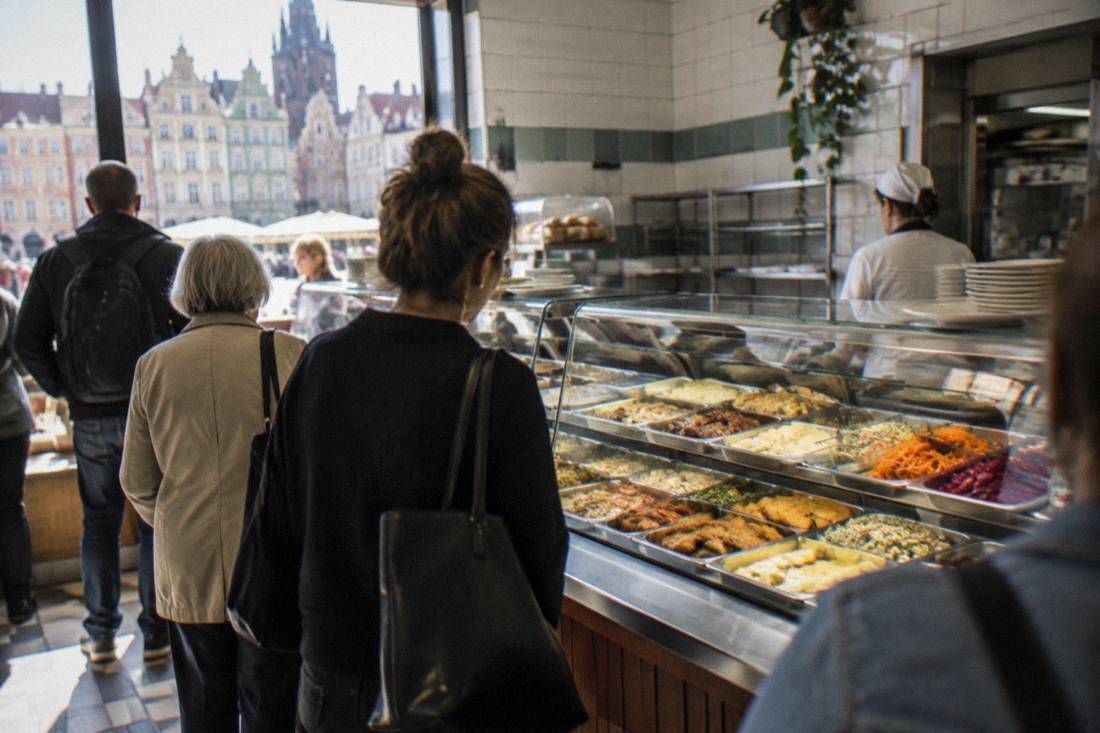
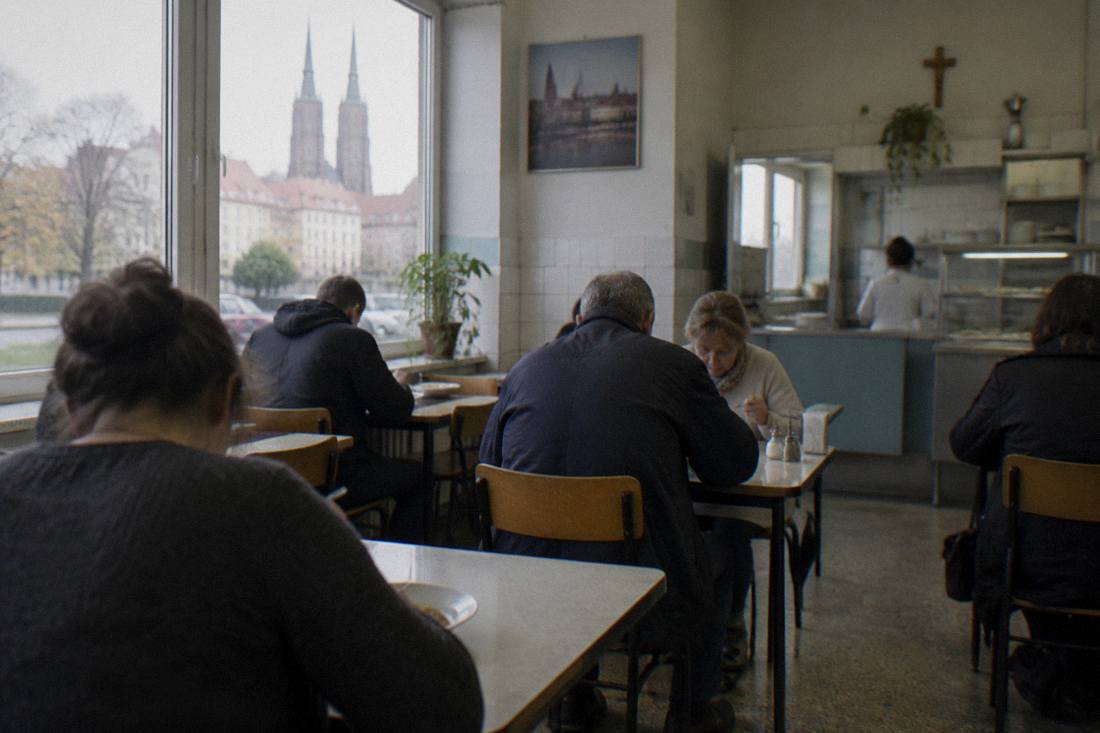
Milk bars are the structural backbone of cheap eating in Wroclaw and they should be the first stop for a visitor who wants pierogi the way locals actually eat them on a workday. They are cafeteria-style, partly self-service, and designed around speed and low prices rather than atmosphere. The milk bars guide covers their history and etiquette in detail.
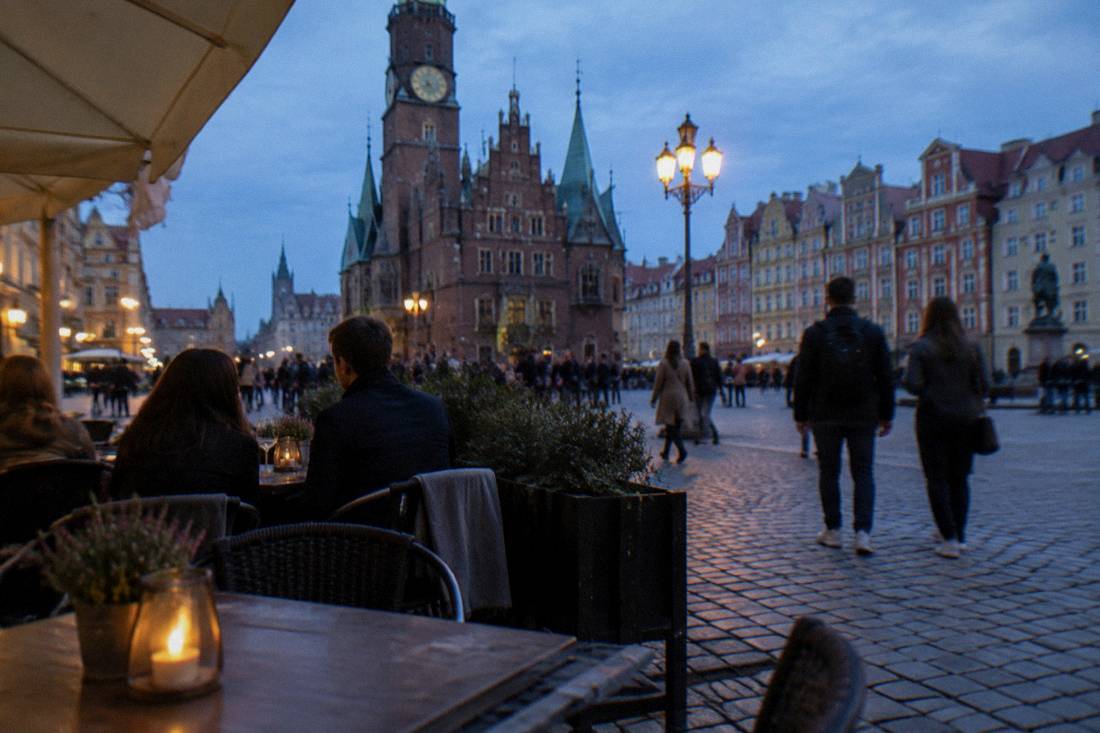
The Old Town (Stare Miasto) and the Market Square (Rynek) hold the tourist-facing layer: cellar restaurants, terrace seating, English-language menus, and prices that reflect the address. The square itself, at roughly 3.64-3.79 hectares, is smaller than Krakow's Rynek Glowny at around 4 hectares, a comparison worth remembering because Krakow's larger square concentrates more terrace dining. Wroclaw's compact equivalent still gives a visitor dozens of pierogi menus within a few minutes' walk.
Beyond those two layers, Wroclaw's modern food scene has grown around the center. The general Wroclaw restaurant guide tracks that wider landscape, and the street food in Wroclaw page covers the faster, more informal end of the spectrum. Pierogi in those settings are usually one option among many rather than the whole point of the kitchen.
Eating pierogi is also a natural companion to sightseeing, and a guided walk doubles as an appetite builder. The gnome hunt with a local guide routes through the same Old Town streets where the milk bars and restaurants sit, so a morning walk lands you in the center at lunchtime, Check availability if that combination appeals.
How Much Does A Pierogi Meal Cost In Wroclaw?
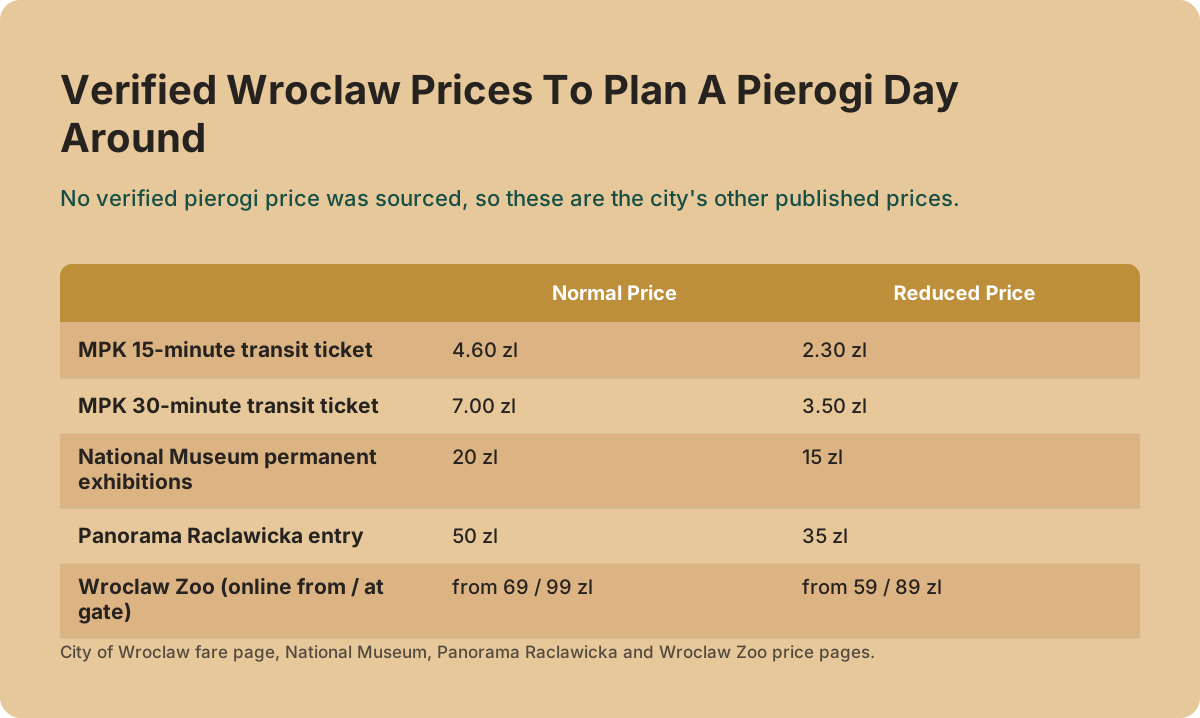
This page will not print a restaurant price, because no verified pierogi price was sourced for it, and the honest framing is this: milk bars are structurally the cheapest place to eat in Wroclaw, Market Square and Old Town restaurants carry the highest prices for the same dish, and the reliable figures a visitor can plan around are the city's other published prices, such as the 4.60 zl base MPK transit ticket and the 20 zl National Museum entry, which together define a realistic budget day.
That may sound like dodging, but it is the opposite. Plenty of guides quote pierogi prices that nobody re-checked, and menus in a city of 672,601 people vary by kitchen, season and address. What can be stated from official sources is the framework around the meal. Poland uses the zloty (PLN, "zl"), not the euro, though Poland is in the EU and Schengen area, so card payment is widely accepted. Cash is still useful in the older, cheaper eateries.
The table below sets out the verified fixed costs of a budget food-and-sightseeing day in Wroclaw. These are published till prices, not estimates, and they come from each institution's own price list.
| Cost Item | Normal Price | Reduced Price | Source Basis |
|---|---|---|---|
| MPK 15-minute transit ticket | 4.60 zl | 2.30 zl | City of Wroclaw official fare page |
| MPK 30-minute transit ticket | 7.00 zl | 3.50 zl | City of Wroclaw official fare page |
| National Museum permanent exhibitions | 20 zl | 15 zl | National Museum pricing page |
| Panorama Raclawicka entry | 50 zl | 35 zl | Panorama's own ticket page |
| Wroclaw Zoo (online from / at gate) | from 69 / 99 zl | from 59 / 89 zl | Zoo's own price table |
Note the zoo's online-versus-gate gap: buying ahead saves a meaningful slice, a pattern that holds for bookable experiences across this site too. Product prices shown on the site's tour cards are rendered from verified listings, in whatever currency the listing itself carries, which is why this page never types one into prose.
For a fuller budget build-out, including accommodation tiers and a day-rate estimate for the city, the Wroclaw trip cost guide does the arithmetic with the same sourced figures.
Which Pierogi Fillings Should You Try First In Wroclaw?
Start with pierogi ruskie, the potato-and-farmer's-cheese filling that is the national default and the one every kitchen in Wroclaw makes, then move to meat (mięsne), seasonal fruit fillings in summer, and the lenten cabbage-and-mushroom version that dominates around Christmas. Sweet and savory pierogi coexist on the same menu, and the fried-versus-boiled choice, which most kitchens offer, changes the character of the dish more than the filling does.
Ruskie is the safe order and the benchmark: it is how a kitchen reveals whether it makes dumplings well, because there is nothing to hide behind. Meat-filled pierogi are the heartier winter option. Fruit pierogi, typically filled with seasonal berries or plums and served with cream or sugar, are the summer version that surprises visitors who assumed dumplings were only savory.
The table below is a plain taxonomy, not a ranking. No kitchen is endorsed and no price is attached.
| Pierogi Type | Filling | Character | When Wroclaw Kitchens Feature It |
|---|---|---|---|
| Ruskie | Potato and farmer's cheese | Mild, default order | Year-round, on nearly every menu |
| Mięsne | Minced meat | Hearty, savory | Year-round, heartier in winter |
| Z kapustą i grzybami | Sauerkraut and mushroom | Tangy, lenten | Year-round, peaking at Christmas |
| Z owocami | Seasonal fruit | Sweet, served with cream or sugar | Summer fruit season |
| Z szpinakiem | Spinach, often with cheese | Modern bistro staple | Year-round in newer kitchens |
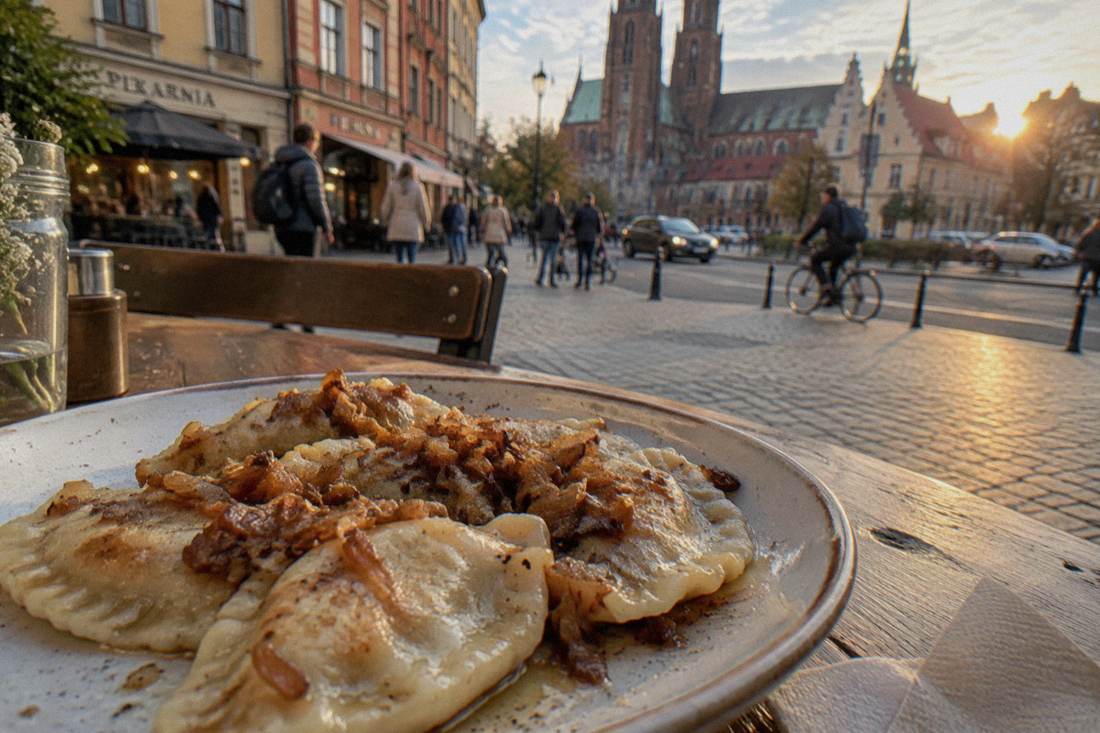
The seasonal rhythm matters more in Wroclaw than in most European cities, because the climate genuinely seasons the menu. IMGW's 1991-2020 climate normals for the Wroclaw station (station 12424) put July at a 19.7C mean and January at 0.0C, an annual mean of 9.7C. Summer terraces favor light fruit pierogi and cold drinks; the deep of winter pushes kitchens toward meat and cabbage versions, and the Christmas market concentrates all of it in one place.
That seasonal logic is laid out month by month, with the full IMGW table, in the best time to visit Wroclaw guide and the Wroclaw weather by month page.
Milk Bars Or Market Square: Where Should A Visitor Actually Eat In Wroclaw?
Eat pierogi in both, in that order: a milk bar for the first plate because it is the cheapest and most local way to understand the dish, and a Market Square or Old Town restaurant for a second, slower meal because the setting is part of what you are paying for. The difference between the two is not quality but theater: milk bars deliver the dish as infrastructure, restaurants deliver it as an evening.
A milk bar works like this: you queue, you read a board, you pay at the till, you carry a tray. There is no tipping pressure, no drawn-out service, and the clientele skews local at lunchtime. The trade-off is atmosphere and, in the older places, limited English. A Market Square cellar restaurant inverts every one of those variables. More of these guides are collected on Wroclaw Travel Guide.
| Setting | Order Style | Atmosphere | Best For |
|---|---|---|---|
| Milk bar (bar mleczny) | Counter, tray, pay first | Functional, local lunch crowd | Cheapest plate, first pierogi |
| Market Square / Old Town restaurant | Table service | Tourist-facing, terrace in summer | A slow meal with the square outside |
| Modern Polish bistro | Table service, updated menus | Small rooms, younger crowd | A twist on the classics |
| Christmas market stall | Standing, outdoor | Crowded, seasonal | One skew meal with a crowd |
The fourth row deserves its own note. The Wroclaw Christmas market guide covers the seasonal event in detail, and if your trip falls in December, eating pierogi outdoors with a mulled wine is a different experience from any indoor kitchen, though a winter-mean of around 1.1C in December means dressing for it.
What Should You Drink With Pierogi In Wroclaw?
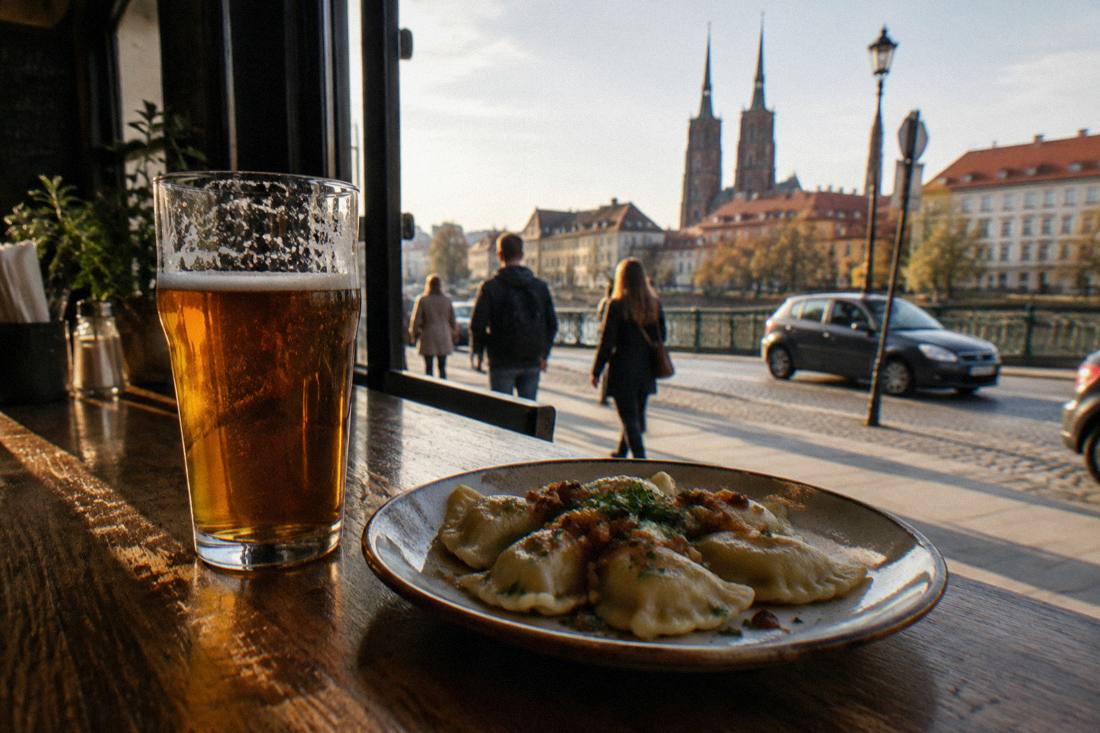
The two canonical pairings are kompot, the cold stewed-fruit drink that milk bars serve by the glass, and Polish beer, with Wroclaw's own craft scene giving the pairing a modern upgrade; tea is the default hot option in the older eateries, and a shot of vodka remains the traditional celebratory counterpoint. There is no wrong answer, but kompot is the one visitors regret not trying.
Kompot is the milk bar drink: stewed fruit, often with seasonal produce, served chilled, and it belongs to the same state-era food tradition as the eateries themselves. Beer, by contrast, is the pairing Wroclaw has modernized most visibly. The city has a genuine craft brewing identity, and the Wroclaw craft beer guide maps it.
For the evening version of the food day, the Wroclaw nightlife guide covers where the same night out continues after the plates are cleared, and the best cafes in Wroclaw page handles the morning coffee before any of it begins.
How Do You Fit A Pierogi Stop Into A Day Of Sightseeing In Wroclaw?
The pattern that works is to anchor the day around the Old Town core, eat one pierogi meal inside it at midday so no extra travel is needed, and spend the rest of the day on what the neighborhood already offers: the Market Square itself, the dwarfs scattered across the streets, the Cathedral Island walk, and a museum whose verified entry price makes the afternoon cheap. Pierogi work as the fixed point of a food day because every eatery type sits within walking distance of the sights.
A concrete shape for such a day: a morning walking tour of the Old Town and Cathedral Island, lunch at a milk bar or a square restaurant, an afternoon at the National Museum (20 zl adult, free entry to permanent exhibitions every Saturday, per its own site) or, in the April-October season, the Panorama Raclawicka (50 zl adult, a 30-minute screening whose ticket also covers the National Museum's permanent exhibitions, the Ethnographic Museum and the Four Domes Pavilion within 3 months, per the Panorama's own page).
Two verified-price options for the sightseeing half of that day, from the same institutions' own pages:
| Sightseeing Stop | Adult Price | Free Or Discount Angle | Verified Hours Note |
|---|---|---|---|
| National Museum | 20 zl | Free to permanent exhibitions every Saturday | Closed Mondays year-round |
| Panorama Raclawicka | 50 zl | Covers 4 museums within 3 months | Daily 8:30-19:00 in summer season |
Guided walks slot into the same skeleton. The English bike tour covers ground faster for the morning half, and a guided Old Town walk ends within a few minutes' walk of the Market Square's kitchens.
What Mistakes Should You Avoid When Ordering Pierogi In Wroclaw?
The common errors are ordering in tourist-rush hours at the most visible Market Square tables and expecting local prices, assuming every kitchen boils rather than fries, treating pierogi as a shared starter when portions are designed as one person's main, and skipping the milk bars entirely because they look austere. None of these ruin a meal, but each one costs money, time or the actual point of the dish.
The first mistake is purely positional. The restaurants directly on the most visible corners of the Rynek price for the view; walking five minutes off the square routinely changes the menu's level. The second is ordering blind on preparation: most kitchens offer boiled, and many will pan-fry after boiling on request, and the two versions taste like different dishes.
The third is portion logic. A plate of pierogi is a main course in a milk bar and frequently a starter-size plate in a tourist restaurant, which is part of why the milk bar plate carries the reputation it does. The fourth is the biggest: skipping the milk bars because they look institutional. They are the living version of the tradition, and the milk bar guide exists to make them approachable.
For the broader question of what to be careful about in the city, not just at the table, the Wroclaw safety guide and the general what-to-avoid coverage handle that; the short version is that Wroclaw is an ordinary European city for street awareness and the food scene asks for no special caution.
Is Wroclaw A Better Food City Than Krakow Or Warsaw?
Wroclaw's food scene is genuinely strong, compact and easy to navigate on foot, but an honest comparison does not crown it: Krakow is the larger city (816,614 versus Wroclaw's 672,601 residents, GUS, 31 Dec 2025) with the larger market square, and Warsaw is the internationally noted food hub, so Wroclaw's honest pitch is quality and convenience in a walkable center rather than national supremacy. That smaller scale is arguably the advantage for a visitor eating their way through a weekend.
The comparison pages do this properly: Wroclaw versus Krakow, Wroclaw versus Warsaw and Wroclaw versus Gdansk each lay out the real differences. What matters for a pierogi eater is concentration: in Wroclaw, the milk bars, bistros and square-side restaurants sit within a short walk of each other and of the main sights, so a food day loses almost no time in transit.
The transport figures support that. The MPK base 15-minute ticket is 4.60 zl (2.30 zl reduced) per the city's official fare page, and a 30-minute ticket is 7.00 zl, meaning the occasional tram hop between eatery and sight costs less than a single museum's cloakroom habit. The getting around Wroclaw guide covers the network.
How Do You Keep Eating Well Beyond Pierogi In Wroclaw?
Widen out through the same structure that served the pierogi hunt: milk bars for everything cheap and traditional, the street food pages for fast modern bites, the restaurant guide for the full sit-down scene, and the event calendar for the festivals and markets that periodically turn the whole center into one open-air kitchen. Pierogi are the entry point to Wroclaw food, not its boundary.
The natural next reads are the best restaurants in Wroclaw for the formal end, street food in Wroclaw for the informal end, and the Wroclaw events calendar plus the festivals guide for timing a trip to coincide with something bigger than a single meal. And for the day a plate of dumplings is not enough, a full-day trip into Lower Silesia, such as the private Project Riese and Ksiaz Castle tour, swaps the dining table for the region's castles and underground passages.
Whichever direction the day takes, one rule holds: book the walk before you book the table, because a guided tour has a fixed meeting time and a pierogi kitchen rarely does. The small-group Old Town walk below is the lowest-commitment way to add a guide to the same streets you have just eaten through.
Common Questions About Pierogi In Wroclaw
The questions below are the ones visitors actually ask before a first pierogi meal in Wroclaw, answered with the same sourcing discipline as the rest of this page: no invented restaurant prices, and honest framing where a figure simply was not sourced.
What are pierogi made of?
A simple flour-and-water dough, rolled thin, filled, folded into a half-moon and crimped, then boiled and often pan-fried with butter and onion afterwards. Fillings range from potato and cheese to minced meat, sauerkraut and mushroom, and seasonal fruit.
Are pierogi a meal or a snack in Wroclaw?
A meal. In milk bars a plate of pierogi is a main course and the center of a workday lunch; in tourist restaurants portions are often smaller and can work as a starter, but the default local treatment is a full plate as the main event.
How much do pierogi cost in Wroclaw?
No verified pierogi price was sourced for this page, so none is printed here. Structurally, milk bars are the cheapest eateries in the city, Market Square and Old Town restaurants carry the highest prices for the same dish, and menus vary by kitchen and season. The verified budget anchors around a food day are the 4.60 zl base transit ticket and the 20 zl National Museum entry.
What is pierogi ruskie?
The potato-and-farmer's-cheese filled pierogi, the default order across Poland and the benchmark Wroclaw kitchens use. If you order one variety first, it is this one.
Do milk bars in Wroclaw serve pierogi?
Yes, pierogi are a staple of the milk bar repertoire, and milk bars are the cheapest and most local setting for them. The separate milk bars guide on this site explains how the counter, tray and till system works.
Can you get sweet pierogi in Wroclaw?
Yes, fruit-filled pierogi are a standard summer offering, typically served with cream or sugar, and many kitchens list them alongside the savory varieties year-round with seasonal fruit determining what is actually inside.
Eat the ruskie first, drink the kompot, take the second plate somewhere with a view of the square, and you will have done pierogi in Wroclaw about as well as they can be done.