Wroclaw Vs Gdansk
Wroclaw, the largest city in Lower Silesia in southwestern Poland, and Gdansk on the Baltic coast play completely different roles in a Poland trip. Here is how the two compare, in the parts a planner actually decides on.
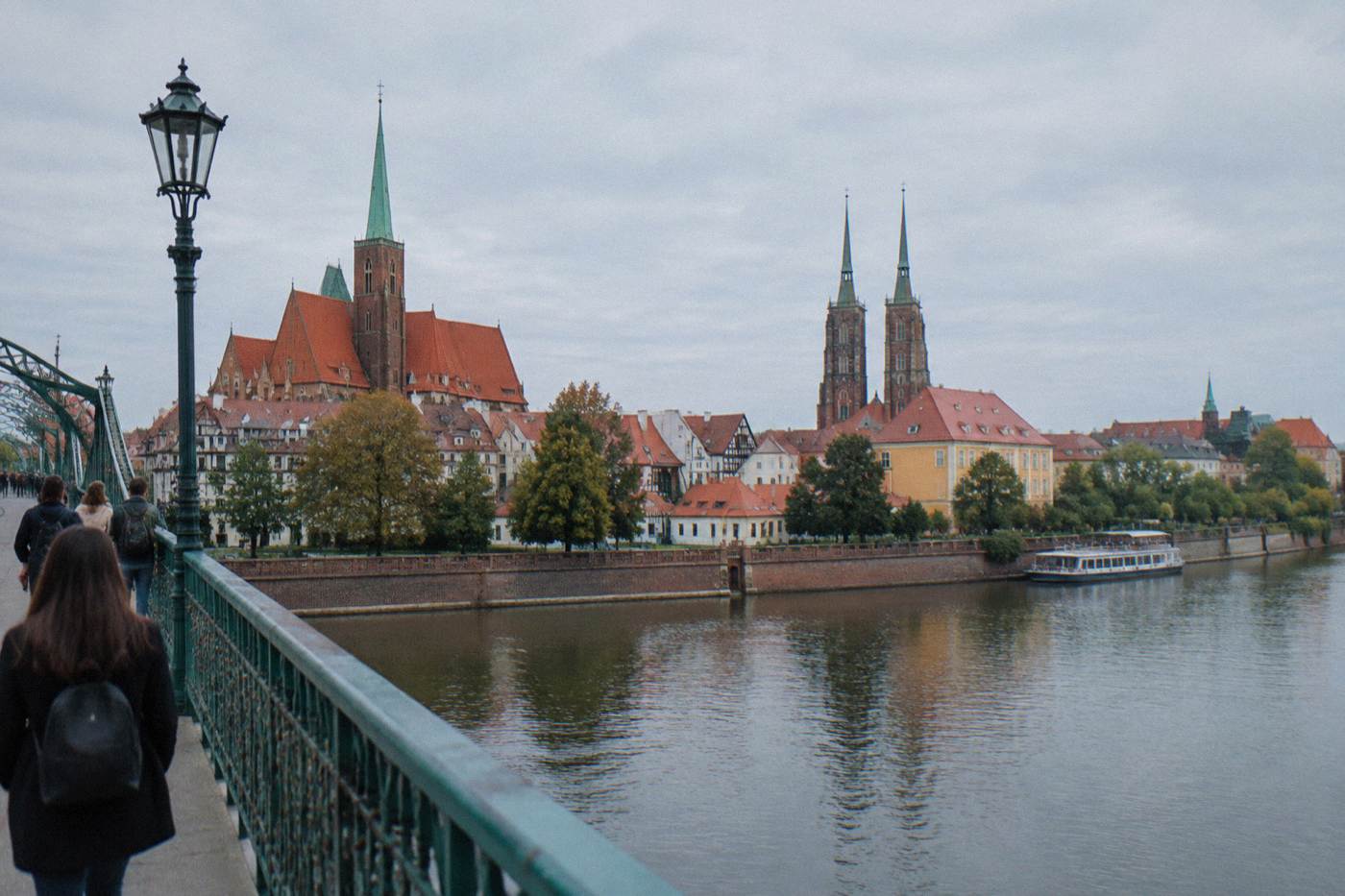
Short answer
Pick Wroclaw for a compact, island-stitched old city with dwarf-hunting, a strong museum quarter and easy castle day trips inland. Pick Gdansk for a Baltic seaside trip built around one grand merchant street and beach time. For a first visit of two to three days built around walking, Wroclaw is the denser, easier city to work through.
Wroclaw, the largest city in Lower Silesia (Dolnoslaskie voivodeship) in southwestern Poland, sits on twelve river islands stitched together by bridges on the Odra, while Gdansk belongs to the Baltic coast in the north of the country. The two cities are regularly pitched against each other by travelers short on time, and the honest answer is that the comparison resolves fast once you know what each city is actually built around. This guide works through that decision the way a planner does: atmosphere, sights, costs, weather, family logistics and day trips, using sourced figures wherever a figure exists and saying so plainly where one does not.
Is Wroclaw Or Gdansk Better For A First Trip To Poland?
For a compact, walkable first taste of Poland, Wroclaw is the easier city to work through: its market square, Cathedral Island, the Panorama Raclawicka and the dwarf figures all sit within an easy walk of each other, and the city's population of 672,601 (GUS) is big enough for full days without feeling sprawled. Gdansk rewards a different brief, a seaside itinerary with beach days, so the better choice depends on whether your first Poland trip is a city break or a coast trip.
Neither city is the capital and neither is Krakow, which is the point: both are the "second city" argument travelers actually enjoy having. Wroclaw's appeal is density. The Rynek, the cathedral quarter on Ostrow Tumski and the museum cluster around the National Museum can fill two to three days without a single long transit ride. The Wroclaw Travel Guide homepage breaks the full inventory down if you want the complete picture before choosing.
Gdansk, by contrast, is organized around one magnificent merchant axis down to the waterfront and then, crucially, the sea. Its Old Town is a reconstruction of a historic trading port, and the beach towns sit right next to it. That makes Gdansk a two-center trip in itself, city plus coast, while Wroclaw stays a single, deep city break.
A reasonable rule of thumb: if your trip is three days or fewer and you want architecture, museums and atmosphere on foot, Wroclaw wins on density. If your trip is a week or you want sand and water between sightseeing days, the Baltic coast does something Wroclaw cannot; the sea is simply too far from a southwestern river city for a day trip, so any itinerary that needs a beach points north.
For travelers who land on Wroclaw, the fastest way to get oriented is a guided walk. The private top-attractions option is covered further down, and a cheaper first morning can also be spent on a small-group Old Town walk, which covers the same core streets in a shared group.
How Do Wroclaw And Gdansk Compare On Size And Atmosphere?
Wroclaw is a river-and-island city of 672,601 residents in southwestern Poland whose character comes from its bridges, its student population and its dozen islands; Gdansk is a northern port city on the Baltic whose atmosphere is maritime, built around merchant facades, cranes and shipyard history rather than islands. Neither is bigger in a way that decides the trip: Wroclaw's own verified population figure is the only hard number this comparison needs, and the choice is about whether you want bridges or the sea.
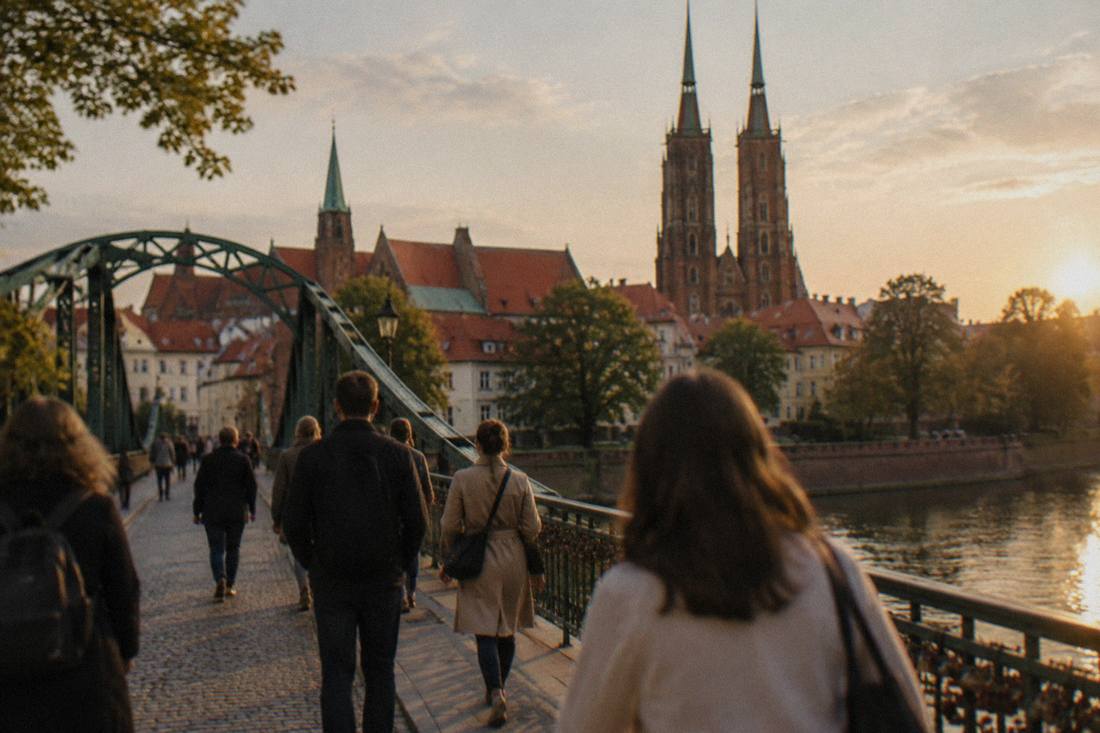
The useful framing is not "which is bigger" but "which is built around what." Wroclaw's core is a lattice of water: the Odra splits around islands, and the old center sits inside that split. Every walk in central Wroclaw crosses a bridge sooner or later, and that geography is what gives the city its distinct rhythm. The atmosphere is Central European and university-town, with a large student population shaping the cafe, bar and festival calendar.
Gdansk's core is a single grand spine: a long market street of merchant houses leading down to the waterfront gates and cranes. It is one of the most photographed streets in Poland, and the experience of it is more linear, one magnificent route rather than a web of islands.
For scale comparisons between Polish cities, the verified population figures this site carries are Wroclaw's 672,601 and Krakow's 816,614 (both GUS), and no equivalent Gdansk figure is sourced on this page, so any head-to-head numbers you see quoted elsewhere deserve a second look. What can be said honestly is structural: Wroclaw is one of Poland's largest cities, it hosted the European Capital of Culture year in 2016, and its New Horizons film festival and the Nadodrze district's street-art quarter are its best-sourced cultural claims, not a national "artsy city" title, which recent reporting places with Lodz instead.
Where the two cities genuinely tie is walkability. Both historic centers are pedestrian-scale and both are best seen entirely on foot, which is why walking tours are the main paid product in both. Wroclaw's roster also includes themed versions built around the city's famous dwarf figures, a hook Gdansk simply does not have an equivalent of.
What Does A Wroclaw Trip Cost Compared With Gdansk?
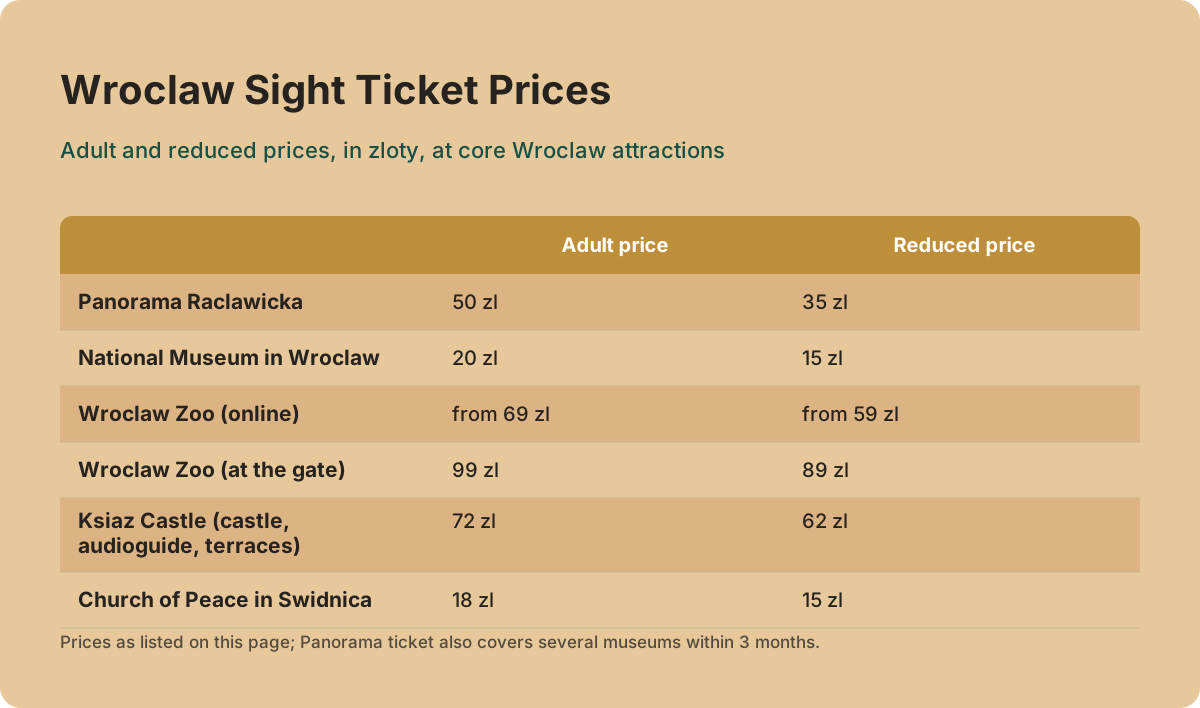
Wroclaw's core sightseeing is priced in zloty and runs cheap by Western European standards: the Panorama Raclawicka adult ticket is 50 zl (35 zl reduced) for a 30-minute screening that also covers the National Museum's permanent exhibitions, the Ethnographic Museum and the Four Domes Pavilion within 3 months; the National Museum standalone is 20 zl (15 zl reduced) with free permanent exhibitions every Saturday; no sourced Gdansk price list appears here, so Gdansk costs should be checked against its own museums' pages rather than assumed equal.
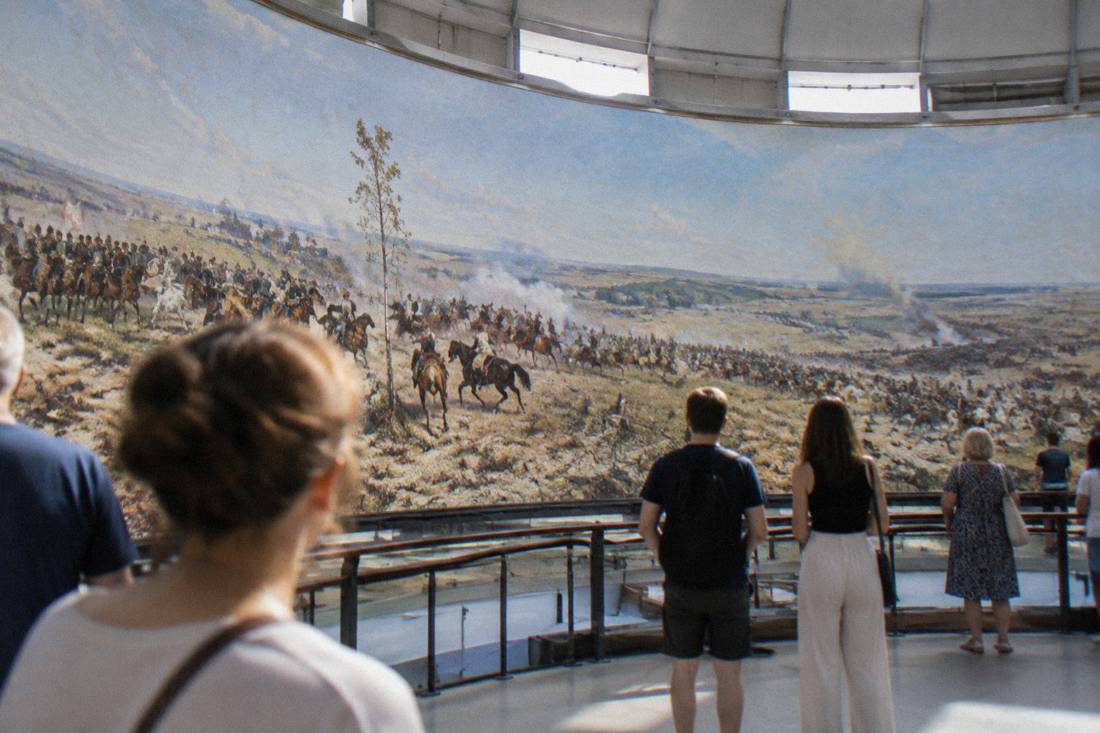
Poland uses the zloty (PLN), not the euro, in both cities, and that single fact does more for budgeting than any list: card payment is near-universal, but till prices are displayed in zl. The table below collects every verified Wroclaw figure a first visit is likely to touch, all from the institutions' own published price lists.
| Wroclaw sight | Adult price | Reduced | Sourced note |
|---|---|---|---|
| Panorama Raclawicka | 50 zl | 35 zl | 30-minute screening; ticket also covers National Museum permanent exhibitions, Ethnographic Museum and Four Domes Pavilion within 3 months |
| National Museum in Wroclaw | 20 zl | 15 zl | Free entry to permanent exhibitions every Saturday |
| Wroclaw Zoo (online) | from 69 zl | from 59 zl | Afrykarium included in the standard ticket |
| Wroclaw Zoo (at the gate) | 99 zl | 89 zl | Buying online is the cheaper route |
| Ksiaz Castle (castle, audioguide, terraces) | 72 zl | 62 zl | Terraces open only 15 April to 30 September |
| Church of Peace in Swidnica | 18 zl | 15 zl | UNESCO-listed since 2001 |
The structural difference between the two cities on cost is day-trip geometry, not museum prices. Wroclaw's headline day trips (Ksiaz Castle, the Church of Peace, the Giant Mountains) each carry their own modest entry fees as listed above, while Gdansk's headline trips run toward the Malbork castle and the coastal resorts. Without a sourced Gdansk tariff this page will not pretend to a number, but the pattern holds everywhere in Poland: state and municipal museums are inexpensive, private tours are priced per product, and the zloty keeps the whole table far below Western European city-break costs.
On transport, Wroclaw's official MPK fares are fully sourced and short hops are very cheap. A 15-minute ticket is 4.60 zl (2.30 zl reduced), rising through the official tiers shown below. There is no all-inclusive Go City-style tourist pass sold for Wroclaw, so do not budget for one; the city's UrbanCard is a transport fare card with resident discounts, not a sightseeing pass.
| MPK Wroclaw ticket | Normal | Reduced |
|---|---|---|
| 15-minute | 4.60 zl | 2.30 zl |
| 30-minute | 7.00 zl | 3.50 zl |
| 24-hour city ticket | around 15.00 zl | around 7.50 zl |
| Multi-day tier | 26.00 zl | 13.00 zl |
| Longer multi-day tier | 32.00 zl | 16.00 zl |
| Extended multi-day tier | 54.00 zl | 27.00 zl |
For a full costed breakdown of a Wroclaw stay, see the Wroclaw trip cost guide; for the fare system in more depth, getting around Wroclaw covers tickets, trams and the bike network.
The most efficient first spend in Wroclaw is a guided introduction that bundles the core sights, and the private top-attractions walk does exactly that. Check availability for your dates if a private, guide-led sweep of the square, the islands and the dwarf figures suits your first day.
Which City Has The Better Old Town And Sights?
Wroclaw's sightseeing is broader and more layered: a market square of roughly 3.6 to 3.8 hectares surrounded by colored merchant houses, the Gothic cathedral quarter on Ostrow Tumski, a UNESCO-listed Centennial Hall (inscribed 2006, architect Max Berg, built 1911-1913, capacity up to 10,000) and a dense museum cluster; Gdansk counters with one of the grandest merchant streets in Northern Europe and the Baltic waterfront, so Gdansk has the more spectacular single street while Wroclaw has the deeper list of sights beyond it.
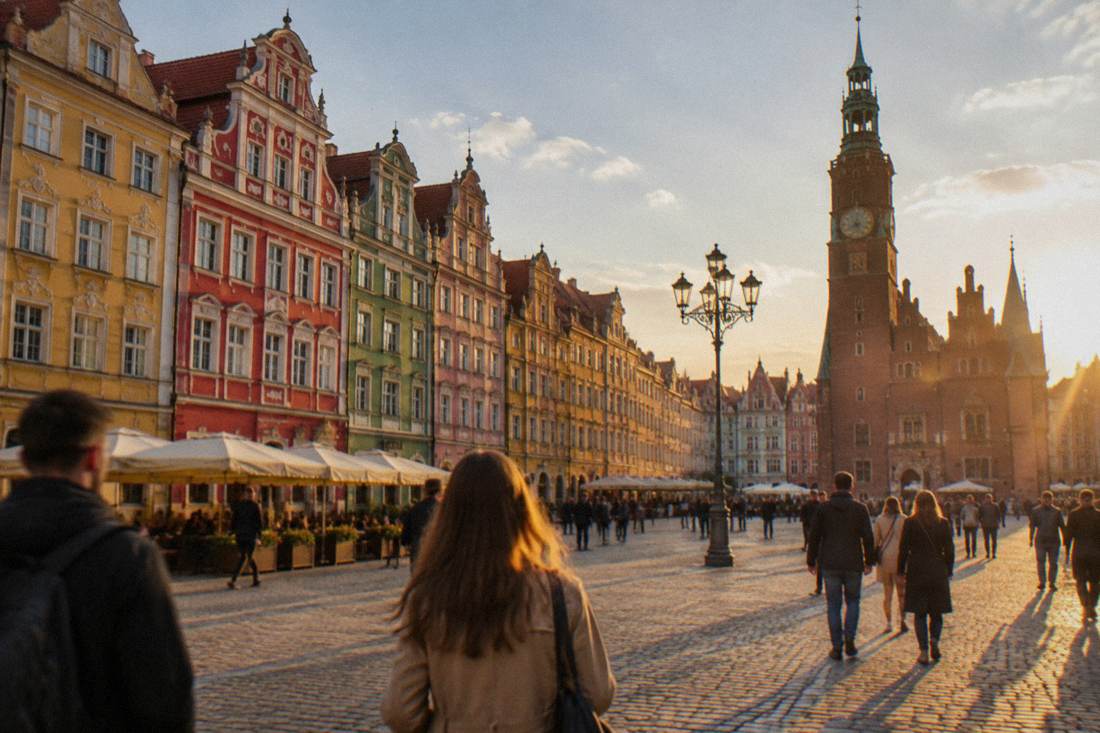
Wroclaw's Rynek is one of the largest market squares in Poland, though it is smaller than Krakow's Rynek Glowny at roughly 4 hectares, a comparison this site states plainly because the "second-largest square in Europe" claim you may have read is not confirmed by the sourced figures. What the square delivers is a complete destination in itself: the Town Hall, the narrow side streets, the dwarf figures hidden around its edges, and the small beer streets and islands a five-minute walk away.
Beyond the square, the inventory splits into two halves. The old-town half holds Ostrow Tumski with the cathedral, and the university's ceremonial hall. The modern half holds Centennial Hall with its surrounding park, the Japanese Garden, the Zoo with the Afrykarium oceanarium (included in the standard zoo ticket, never a separate charge), and the multimedia Hydropolis water museum. That spread is why three days in Wroclaw fills easily and why the city rewards readers who plan by neighborhood.
Gdansk's Old Town is a reconstruction of a Hanseatic merchant port, and its main street with its waterfront gates and medieval crane is genuinely spectacular, one of the great streets of the Baltic. But the rest of its list thins faster: the shipyard history, a couple of strong museums, and then the coast. Gdansk is a city you see mostly along one axis; Wroclaw is a city you see in loops.
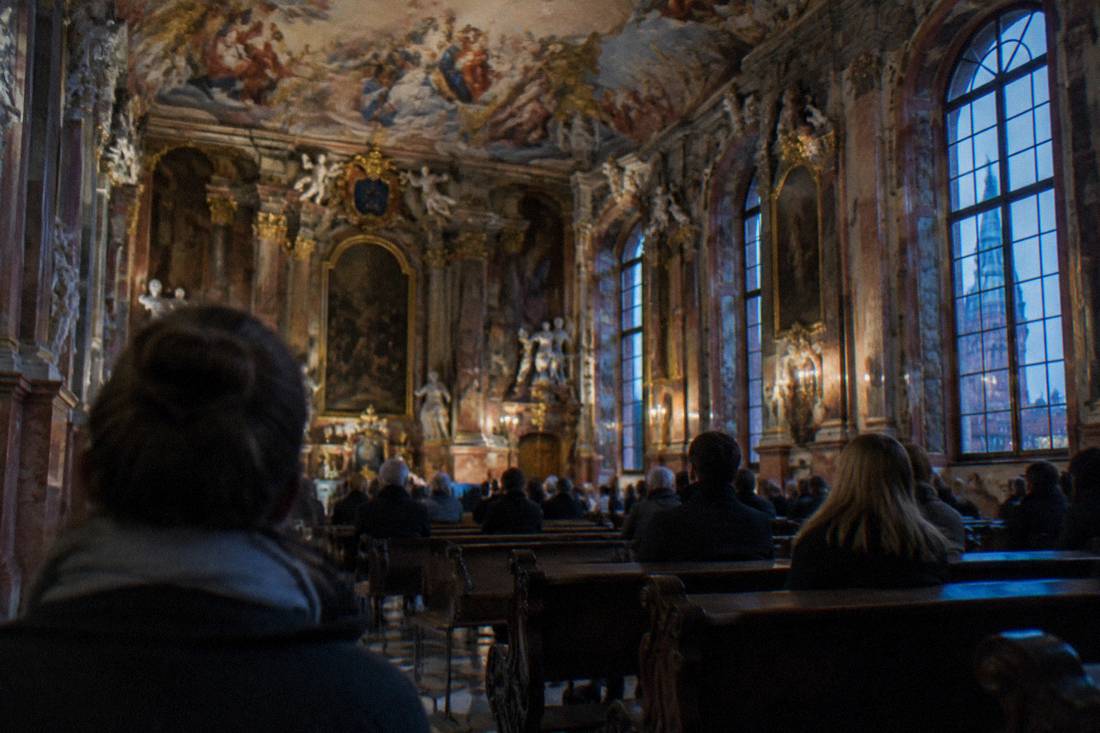
For sight-by-sight depth, the Wroclaw market square guide, Ostrow Tumski and Centennial Hall each break a single sight down properly, and the dwarf hunting guide covers the figurine trail that gives Wroclaw its most distinctive, most family-friendly hook.
How Does Wroclaw Weather Compare With Gdansk For Timing A Trip?
Wroclaw's verified climate normals (IMGW 1991-2020, station 12424) run from a January mean of 0.0C, the coldest month, to a July mean of 19.7C, the warmest, with an annual mean of 9.7C; Gdansk's Baltic position gives it cooler summers and milder, stormier winters in general terms, but no sourced Gdansk normal is printed here, so the timing decision comes down to whether you want the warmest city months or a Baltic summer that trades a few degrees for the beach.
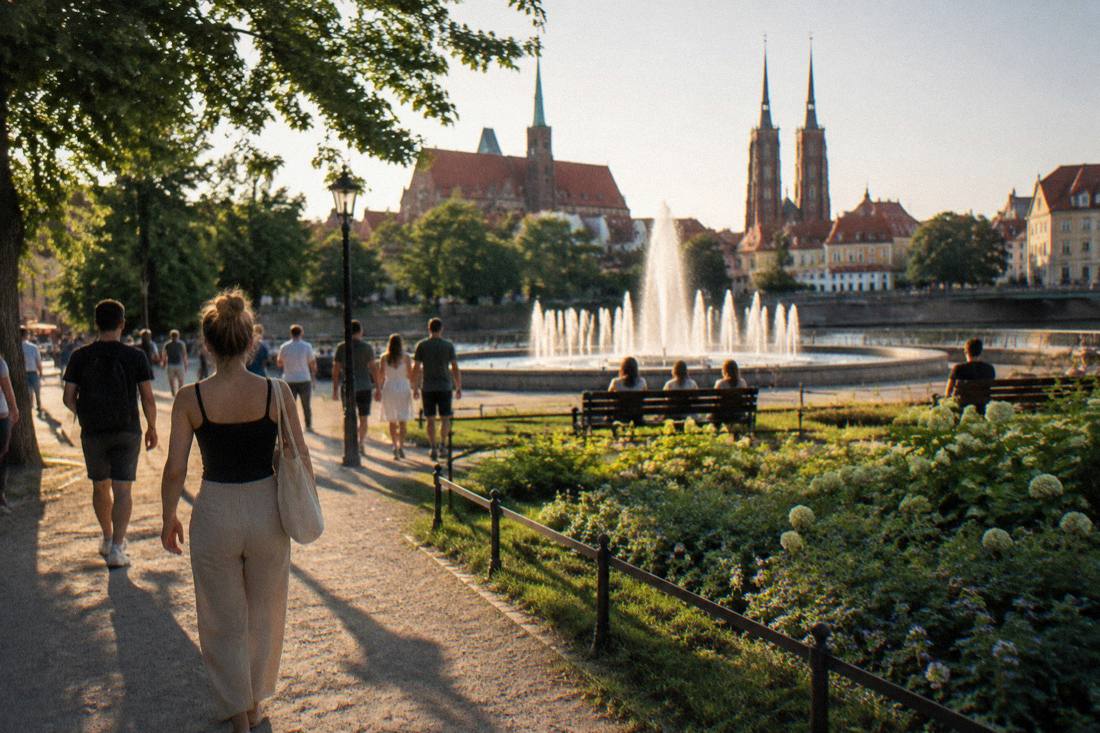
The table below is the only fully sourced climate data this comparison can print: Wroclaw's official normals, month by month, with rainfall totals on the same page.
| Month | Mean C | Precipitation mm |
|---|---|---|
| Jan | 0.0 | 28.3 |
| Feb | 1.1 | 25.6 |
| Mar | 4.3 | 35.0 |
| Apr | 9.7 | 31.2 |
| May | 14.3 | 59.6 |
| Jun | 17.7 | 65.4 |
| Jul | 19.7 | 91.4 |
| Aug | 19.3 | 59.5 |
| Sep | 14.5 | 48.4 |
| Oct | 9.6 | 37.6 |
| Nov | 4.8 | 31.4 |
| Dec | 1.1 | 27.9 |
Read the table before generalizing: July is the warmest month but also the wettest at 91.4 mm, April is the driest at 31.2 mm, and the shoulder months of May and September are the classic sweet spot, warm enough for river islands and parks without peak rainfall. Wroclaw's January and July means are among the mildest of Poland's major synoptic stations in the IMGW table, which supports, but does not prove, the common claim that southwestern Poland has gentler winters than the coast.
The honest structural difference: Gdansk's summer is a beach summer, and a city break there in July is partly a beach trip, while Wroclaw's July is a parks, islands and beer-garden summer. Both cities have strong Christmas markets, and for the December question the Wroclaw Christmas market guide covers what the season actually looks like on the Rynek.
For month-by-month detail on the Wroclaw side, see Wroclaw weather by month and the best time to visit Wroclaw.
Is Wroclaw Or Gdansk Better With Kids Or For A Weekend?
Wroclaw is the stronger family city on sourced attractions alone: the Zoo with the Afrykarium included in the standard ticket (online from 69 zl adult, 99 zl at the gate), the dwarf-hunting trail, Hydropolis and the Japanese Garden give children a full run of genuinely kid-first sights, while Gdansk's family appeal runs through the beach and amber more than a deep in-city list. For a two-day weekend, both work, but Wroclaw's density means less transit and more seeing.
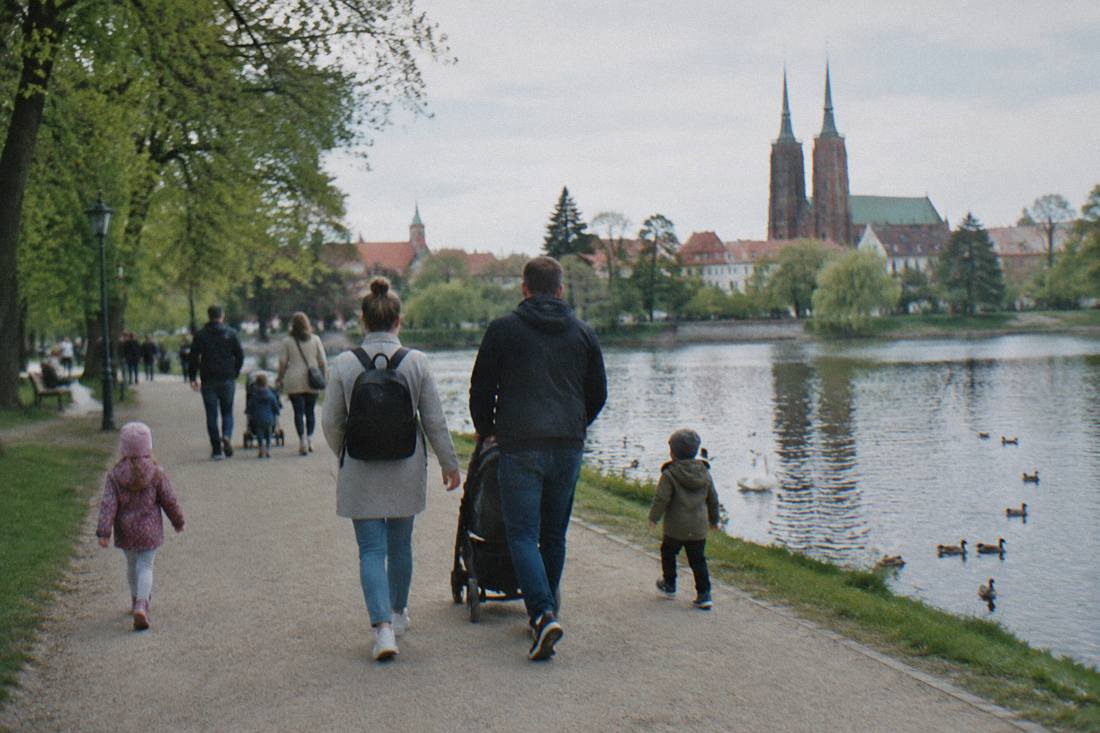
The weekend question is decided by geometry. Wroclaw's core sights sit close enough together that a two-day weekend absorbs the square, Ostrow Tumski, one major museum and the zoo without a single long ride, and the Wroclaw weekend itinerary sequences exactly that. A weekend in Gdansk spends most of its time along the single main axis, which is a great walk but a narrower one.
With children, the dwarf hunt is Wroclaw's ace: hundreds of small bronze figures hidden across the center turn a walk into a scavenger hunt, and several tours are built entirely around it. The Afrykarium, an oceanarium-style pavilion at the zoo, is included in the ordinary zoo ticket rather than sold as a premium add-on, which is the kind of detail that quietly makes a family day cheaper.
The safety picture in both cities is broadly similar: standard Central European city-break precautions apply, and neither city has any sourced elevated-risk reputation. The Wroclaw safety guide covers the local specifics, and the accessibility guide covers cobblestones, trams and step-free routes, which matter equally to families with strollers.
What Day Trips Work Best From Wroclaw?
Wroclaw's day-trip roster is its decisive advantage over Gdansk's beach-bound geography: Ksiaz Castle (72 zl adult with audioguide and terraces, owned by the Walbrzych municipality), the UNESCO Church of Peace in Swidnica (18 zl adult, inscribed 2001), the Giant Mountains and the underground Project Riese complex all sit in Lower Silesia, while Gdansk's strongest trips run to Malbork and the coastal strip, so the choice is between castles and mountains inland or fortress-and-coast days north.
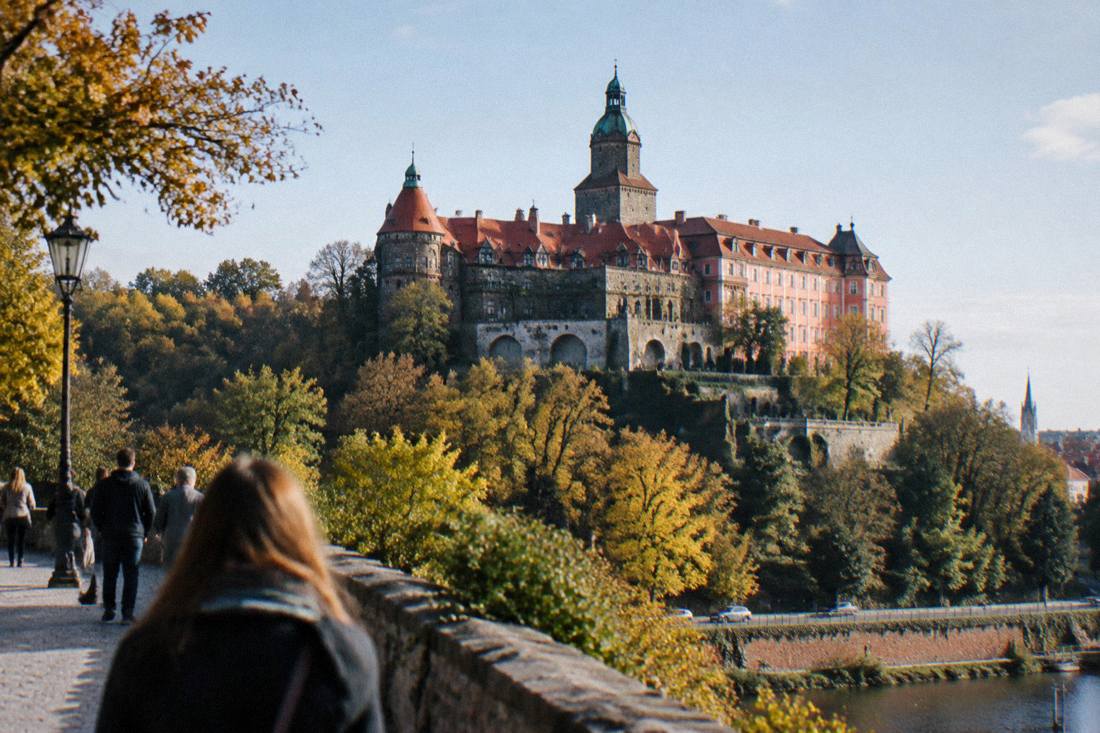
The table below collects the figures for Wroclaw's four strongest inland day trips. Note what it deliberately does not print: rail journey times to Walbrzych or elsewhere, because no stable public timetable figure is sourced; Ksiaz Castle is commonly reached by regional train to Walbrzych plus a bus or taxi connection.
| Day trip from Wroclaw | Entry cost (sourced) | Key verified fact |
|---|---|---|
| Ksiaz Castle, Walbrzych | Castle + audioguide + terraces 72 zl / 62 zl reduced; All Day Ticket 104 zl / 94 zl | Owned by the Walbrzych municipality, operated by its municipal company; terraces open only 15 April to 30 September |
| Church of Peace, Swidnica | Adult 18 zl, reduced 15 zl, family 45 zl | UNESCO "Churches of Peace in Jawor and Swidnica", inscribed 2001 |
| Giant Mountains (Karkonosze) | Not sourced this page | The major mountain range of the region; tours run as full-day products |
| Project Riese, Osowka | Underground tour at Ksiaz 45 zl / 39 zl | The wartime underground complex network linked to the castle |
The comparisons Gdansk can make on this axis are real but different: its day trips are maritime and monumental rather than castles-and-mountains. If your image of a Poland trip is hilltop castles, timber-framed UNESCO churches and hiking, Wroclaw is the base that delivers it. If it is the largest brick castle in the region and Baltic beach towns, Gdansk is. Both are correct answers to different questions.
For the mountain day specifically, the Karpacz and Karkonosze guide covers the range, and the Ksiaz Castle guide breaks the Walbrzych complex down floor by floor. These sit alongside the full Wroclaw vs Krakow and Wroclaw vs Warsaw comparisons if you are weighing a third or fourth city.
Because these day trips involve long drives and, for Project Riese, prearranged underground access, many travelers start their trip with the city center first and save the castle days for later in the stay. That is exactly the split the featured private walk serves: a guide-led sweep of the market square, the islands and the top attractions on day one, so the cathedral quarter and the Rynek are already understood before you head inland.
Which Polish City Should You Actually Pick?
Pick Wroclaw if your trip is two to four days, built around walking, and you want a dense island old town, strong museums, a family-friendly dwarf trail and castle-and-mountain day trips; pick Gdansk if the sea itself is a requirement, if your trip is a week or longer, or if one grand merchant street plus beach days sounds better than a loop of bridges. Travelers who can take both should do both, because they answer different cravings rather than the same one.
The tiebreaker questions, in order of how much they actually decide:
| Question | Answer points to Wroclaw | Answer points to Gdansk |
|---|---|---|
| Is the sea a must-have? | No | Yes |
| Trip length under four days? | Yes, density wins | No, spread out |
| Traveling with young kids? | Zoo, Afrykarium, dwarf hunt | Beach and amber |
| Want castle and mountain day trips? | Yes, Lower Silesia delivers | No, prefer coastal trips |
| Visiting in deep winter? | Compact indoor circuit, Christmas market | Stormier coast, also festive |
| First trip to Poland overall? | Strong, walkable sampler | Also strong, if coastal |
One practical note for anyone landing on Wroclaw: Wroclaw Airport handled 4,473,945 passengers in 2024, the airport is open today, and its renovation closure finished ahead of schedule, so the old "airport closed" question you may find in search results is outdated. The Wroclaw airport guide covers current access from the terminal.
And whichever city wins your dates, the deciding factor is rarely the sights list: it is whether you want to spend your evenings on bridge-lined river islands with a beer garden culture, documented in the craft beer guide, or on a waterfront promenade with the Baltic beyond it. Wroclaw gives you the islands; Gdansk gives you the sea. Poland, fortunately, is small enough by train that the honest advice is to see the one that fits this trip and leave the other for the next one.
Common Questions About Wroclaw Vs Gdansk
Is Wroclaw Or Gdansk Better For Tourists?
Wroclaw is better for a dense, walkable city break of two to four days with museums, islands and inland day trips. Gdansk is better when the Baltic is part of the plan. Both are among Poland's most rewarding cities and neither is a wrong choice, only a different one.
Is Wroclaw Cheaper Than Gdansk?
Both cities price everything in zloty and both are inexpensive by Western European standards. Wroclaw's sourced entry prices run from 18 zl at the Church of Peace in Swidnica to 50 zl at the Panorama Raclawicka, with free Saturday entry to the National Museum's permanent exhibitions. No sourced Gdansk price table appears here, so check Gdansk's own museum pages before assuming either way.
Which City Is Bigger, Wroclaw Or Gdansk?
Wroclaw's verified population is 672,601 per GUS figures. No sourced Gdansk population figure appears on this page, so no head-to-head number is claimed. Both are among Poland's largest cities; neither comparison affects a visit, since both historic centers are compact.
How Many Days Do You Need In Wroclaw Compared With Gdansk?
Two days covers Wroclaw's core; three lets you add the zoo, Centennial Hall and the museum quarter comfortably. Gdansk needs two days for the Old Town plus more if beach towns are included. The how many days in Wroclaw is enough answer breaks the sequencing down in detail.
Does Wroclaw Have Good Weather Compared With Gdansk?
Wroclaw's IMGW 1991-2020 normals run from a January mean of 0.0C to a July mean of 19.7C, with July the wettest month at 91.4 mm and April the driest at 31.2 mm. Gdansk's Baltic position generally means cooler summers and milder, windier winters, but no sourced Gdansk normal is printed here, so compare on what you plan to do rather than on degrees.
Can You Visit Both Wroclaw And Gdansk On One Trip?
Yes, and it is a popular pairing: both are on Poland's rail network and both sit in the Schengen area, so there are no border formalities. Fares and journey times between Polish cities vary by date and are best checked live when booking. A sensible split is two or three nights in each, seeing the islands first and the coast second.