Getting Around Wroclaw
Wroclaw, the largest city in Lower Silesia in southwestern Poland, packs its main sights onto a walkable set of river islands and squares, so most visitors never need a car at all.
Short answer
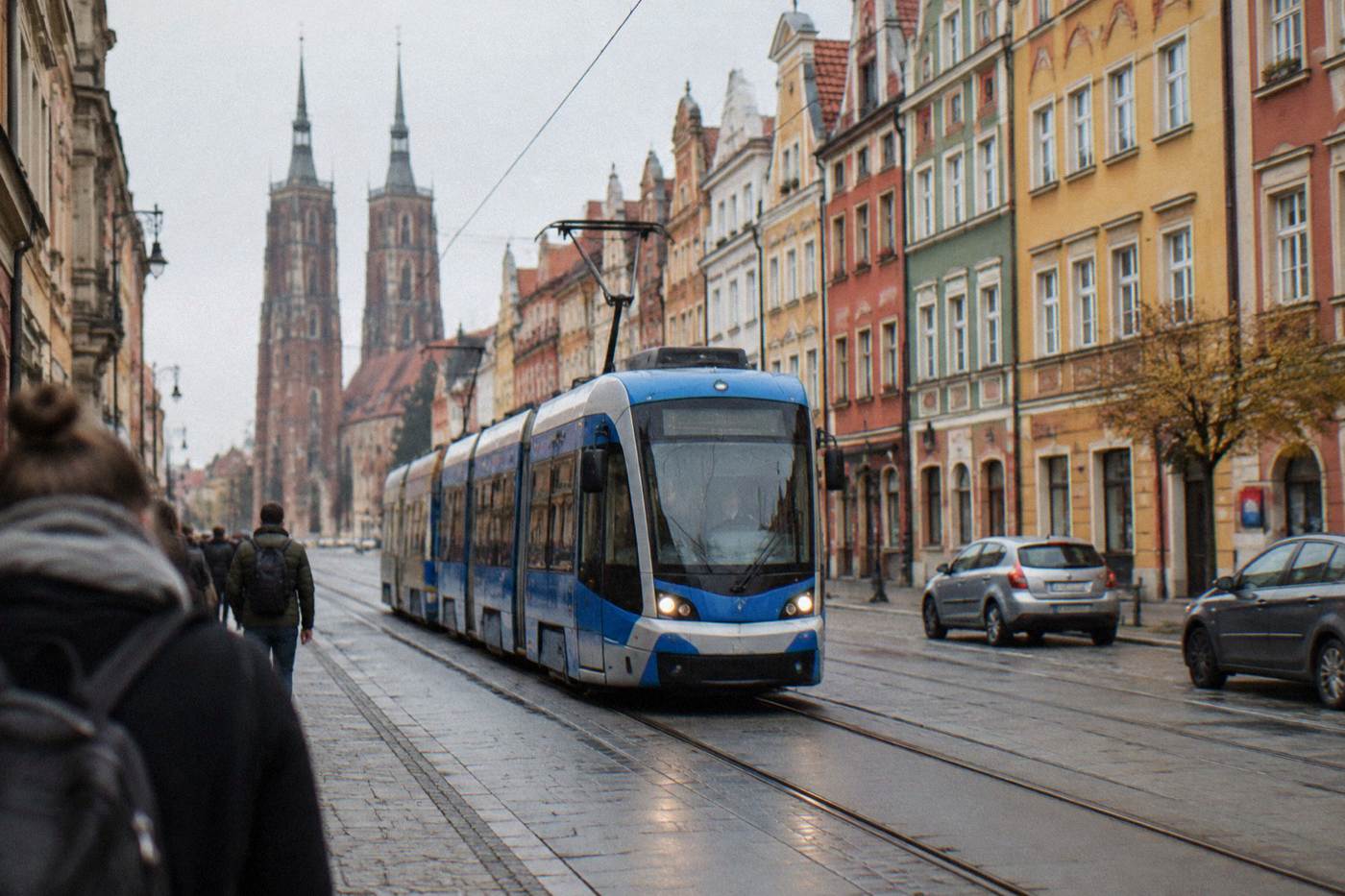
Most visitors get around Wroclaw entirely on foot and by tram: the core is walkable, a 15-minute MPK ticket costs 4.60 zl, and the airport connects to the city by bus and taxi. Cars only earn their keep for day trips into Lower Silesia.
Wroclaw, the largest city in Lower Silesia (Dolnoslaskie voivodeship) in southwestern Poland, spreads across a dozen islands in the Odra river, and that geography shapes almost every transport decision a visitor makes. The historic core, from the Market Square to Cathedral Island, sits close enough together that walking covers most of it. Trams and buses fill the gaps, and a base short-hop ticket is cheap. A car mainly pays off when you leave the city for Lower Silesia's castles and mountains, where the public-transport chain gets thinner.
This page lays out what the city's own sources say about fares, what IMGW's climate normals mean for choosing between walking and riding in each season, and how to reach the big day-trip destinations without your own vehicle. The Wroclaw Travel Guide homepage covers the full sight list if you are still building an itinerary.
Do You Need A Car To Get Around Wroclaw?
No, a car is unnecessary for seeing Wroclaw itself, because the main sights cluster on foot and the tram network covers everything beyond walking range. The city's official transport pages price a 15-minute ticket at 4.60 zl, the core districts are contiguous, and paid parking in the center adds cost and friction. A rental car earns its keep only for Lower Silesia day trips, and even those run as organized tours from the city.
The honest framing is this: Wroclaw is a city of 672,601 people (GUS, 31 Dec 2025) with a compact tourist core. The Rynek, Ostrow Tumski, the university quarter, Slodowa Island and the National Museum all sit within a stroll of one another. Beyond that ring sit Centennial Hall, the Zoo with its Afrykarium, Hydropolis and the Japanese Garden, all reachable by tram in minutes.
First-time visitors often overestimate the distances because map views of the river islands look complicated. In practice the bridges that link the islands do the organizing for you: cross one, and you are on Cathedral Island; cross another, and you are back at the Market Square's edge. That loop is the natural shape of a first day, and it needs no timetable at all.
What a car genuinely adds is range. Ksiaz Castle near Walbrzych, the Church of Peace in Swidnica, the Giant Mountains and the Table Mountains all lie in the surrounding region, and the public-transport chain to some of them is patchy. That is the one scenario where driving, or booking a seat on an organized day tour from Wroclaw, beats transit. The airport guide has more on arriving by plane, and the trip cost guide puts these fares into a full budget.
For visitors who want to cover ground without walking every block, an electric-car city tour is a popular middle path, and the site's roster carries one with strong review volume.
What Do Wroclaw Trams And Buses Cost?
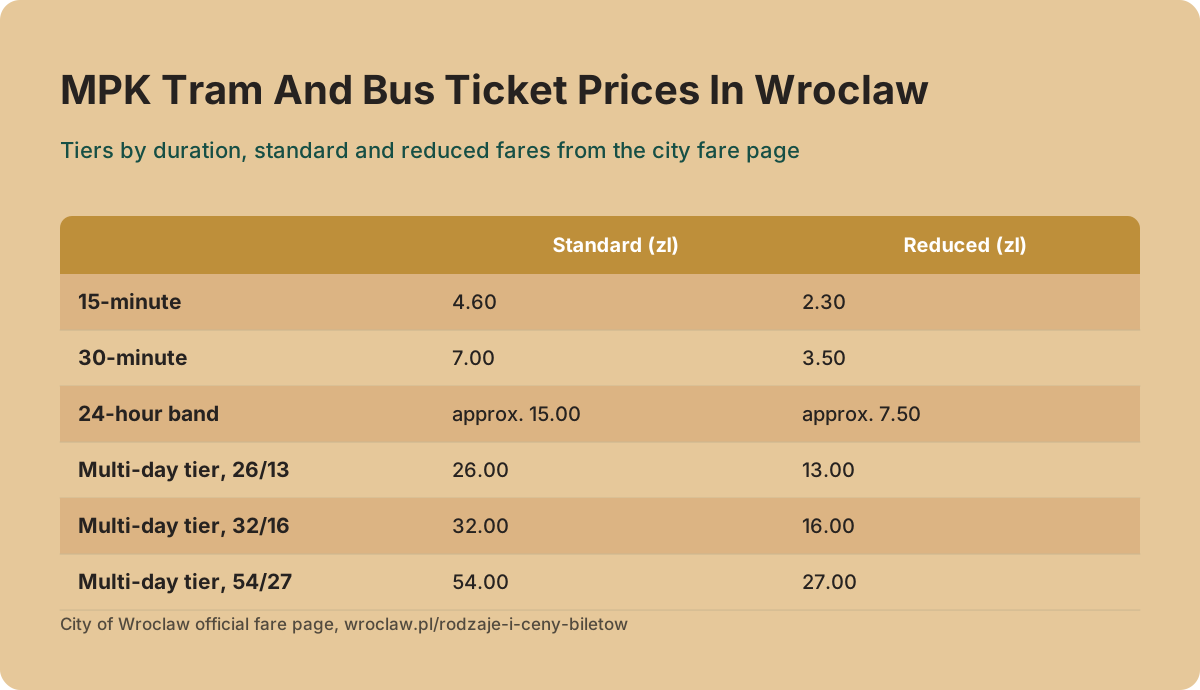
A 15-minute MPK ticket costs 4.60 zl standard and 2.30 zl reduced, and that base fare is the one figure the city's own price page puts front and center. Longer tiers rise to a 30-minute ticket at 7.00/3.50 zl, a 24-hour band around 15.00/7.50 zl, and multi-day tiers at 26/13, 32/16 and 54/27 zl. The city's page lists tiers by duration rather than as a single flat fare.
| MPK ticket tier | Standard (zl) | Reduced (zl) |
|---|---|---|
| 15-minute | 4.60 | 2.30 |
| 30-minute | 7.00 | 3.50 |
| 24-hour band | approx. 15.00 | approx. 7.50 |
| Longer multi-day tier | 26.00 | 13.00 |
| Longer multi-day tier | 32.00 | 16.00 |
| Longer multi-day tier | 54.00 | 27.00 |
Source for every row: the city of Wroclaw's official fare page, wroclaw.pl/rodzaje-i-ceny-biletow, which presents the tiers by duration. Reduced rates apply to eligible riders such as students, and the 15-minute tier is enough for most single hops between the center and Centennial Hall, which matters because the Zoo, the Japanese Garden and Hydropolis cluster together at that end of the tram lines.
How to choose between the tiers comes down to trip count. If you plan two rides in a day, for example a tram out to Centennial Hall in the morning and a return in the afternoon, the 24-hour band starts competing with single tickets fast. If you plan one out-and-back plus an evening ride to the nightlife streets, the math favors the day band even more clearly. Count your expected legs before buying, not after.
One planning note that first-time visitors miss: there is no all-inclusive Go City-style tourist pass sold for Wroclaw. The city's own tourism transport pages describe UrbanCard as a transport-focused fare card with resident discounts, not a sightseeing pass, so nobody should arrive expecting one card to cover museums and attractions. Individual attraction tickets, and small bundles such as the Panorama Raclawicka combined ticket, are the real money-savers here. The where to stay guide helps if you want a base within walking distance of most of this.
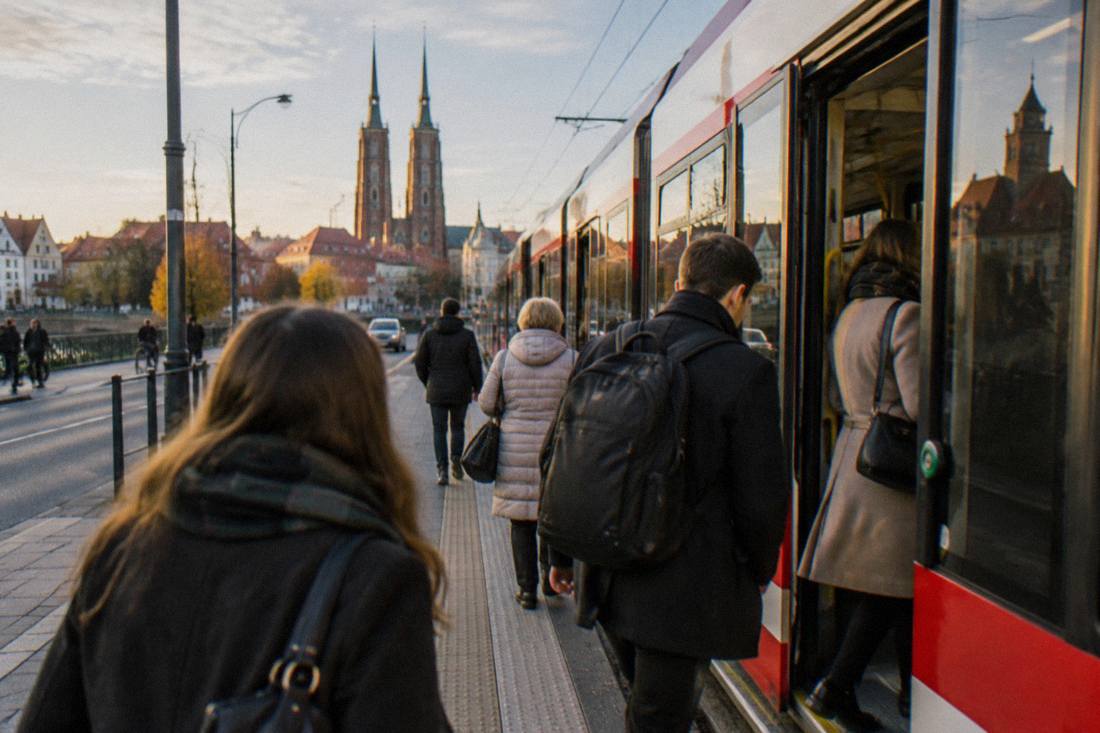
If you would rather someone else handle the route on your first day, guided city tours in various formats, from a retro golf cart with refreshments to a classic walking loop, all operate from the center.
How Do You Get From Wroclaw Airport To The City Center?
Wroclaw Airport sits close to the city and connects to the center by MPK city buses, taxis and pre-booked transfers, with the bus being the budget option under the standard ticket tiers listed above. The airport handled 4,473,945 passengers in 2024, its busiest year on record, per its own release. A full runway-area renovation closed it temporarily from 26 October to 4 December 2025 and finished ahead of schedule in 2026.
The closure is worth naming precisely because search results still surface it. The airport is open today. The renovation was the airport's largest investment, and reporting on its early completion was followed by new passenger records in 2026. Anyone reading an older forum thread about a "closed airport in Wroclaw" is reading about that finished 2025 works window, not a current state.
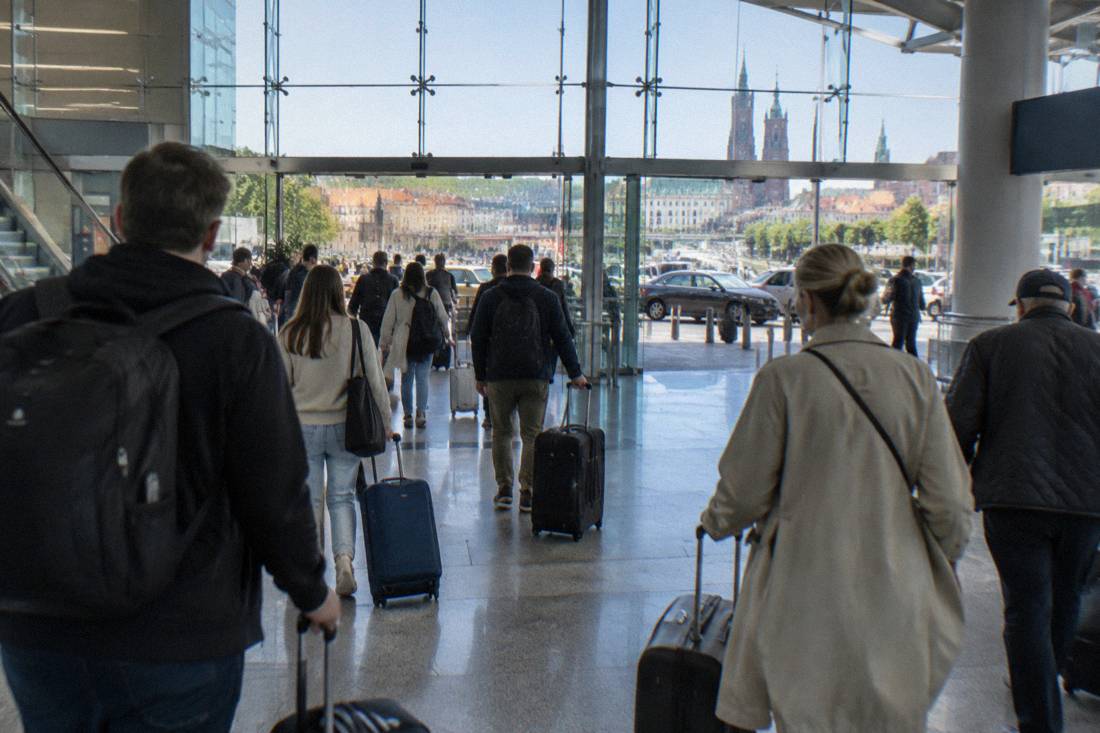
For onward planning, the airport guide covers the terminal in detail and the accessibility guide addresses step-free routes, while the safety guide answers the usual late-arrival questions. Fares into town follow the same MPK tiers as any other city ride, so a short-hop ticket and a longer tier depending on traffic are the two figures to compare against a taxi quote.
Visitors landing with a full Lower Silesia plan often book their first big outing before they even check in, which is where a guided option saves a morning of route research.
Is Wroclaw A Walkable City?
Yes, Wroclaw's core is one of the more walkable city centers in Poland, with the Market Square, Ostrow Tumski, the university quarter and the river islands linked by bridges and mostly flat streets. Krakow, not Wroclaw, is the larger city with the larger main square, roughly 4 hectares against Wroclaw's roughly 3.64 to 3.79 hectares, so distances here stay shorter. Allow a comfortable half-day for the core loop on foot.
That square-size comparison matters for planning because it explains why Wroclaw is easy to walk: the Rynek and its adjoining lanes compress the main sights. The Odra's islands, including Slodowa Island with its riverside lounging lawns, sit just off the north edge of the center, and the chain of bridges between them makes a natural walking circuit rather than a detour.
Weather shapes how pleasant that circuit is. IMGW's 1991-2020 climate normals for the Wroclaw station (code 12424) give a July mean of 19.7C and a January mean of 0.0C, with an annual mean of 9.7C, so summer walking days are warm without being extreme and winter days are around freezing. The best time to visit guide and the month-by-month weather guide break this down in detail, and the rainy day guide handles the wetter months.
| Walkable sight pair | One ticket covers | Standard price (zl) |
|---|---|---|
| Panorama Raclawicka | 30-minute screening, plus National Museum permanent exhibitions, Ethnographic Museum and Four Domes Pavilion within 3 months | 50 adult / 35 reduced |
| National Museum, standalone | Permanent exhibitions | 20 adult / 15 reduced, free every Saturday |
The Panorama's own practical-info page states the combined-coverage rule, which turns a walkable museum afternoon into the best-value sightseeing ticket in the city. Both museums sit inside or just off the walkable core, so no transit leg is needed between them. The National Museum's own hours give winter closing on Mondays and summer hours from 10:00, with the ticket office shutting 30 minutes before the museum itself, so a Saturday visit doubles as the free-entry play.
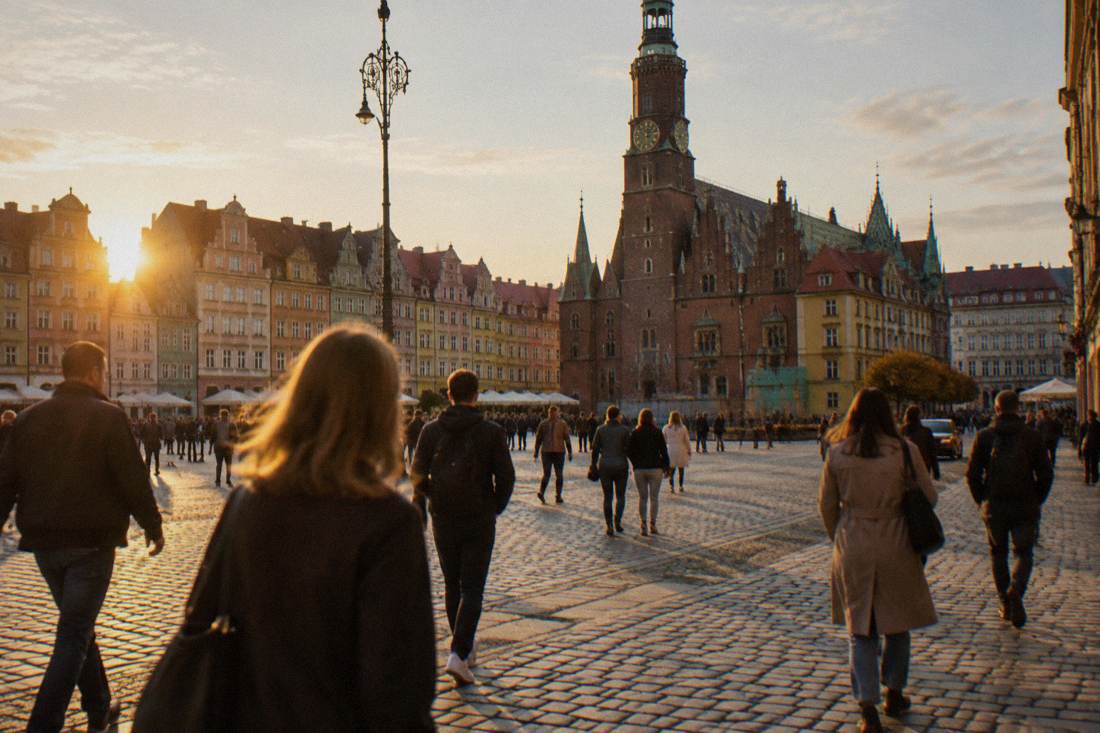
A guided walk is the cheapest way to learn the bridge-and-island geography, and small-group options run daily from the center.
Can You Get Around Wroclaw By Bike Or Boat?
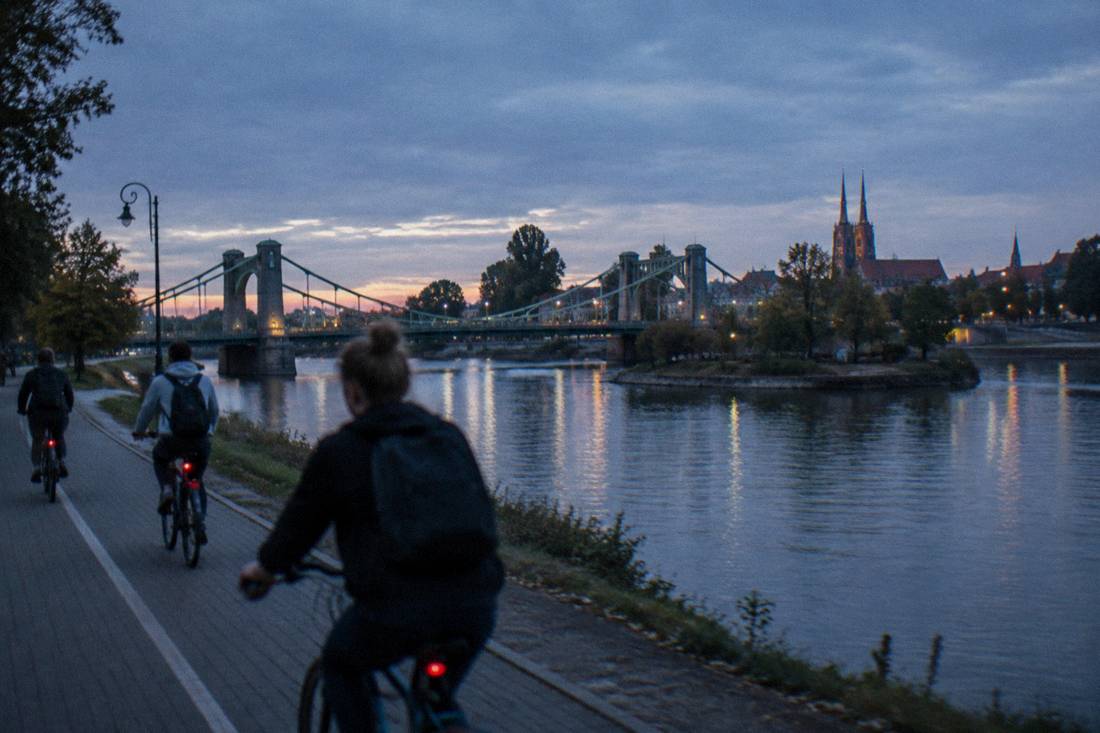
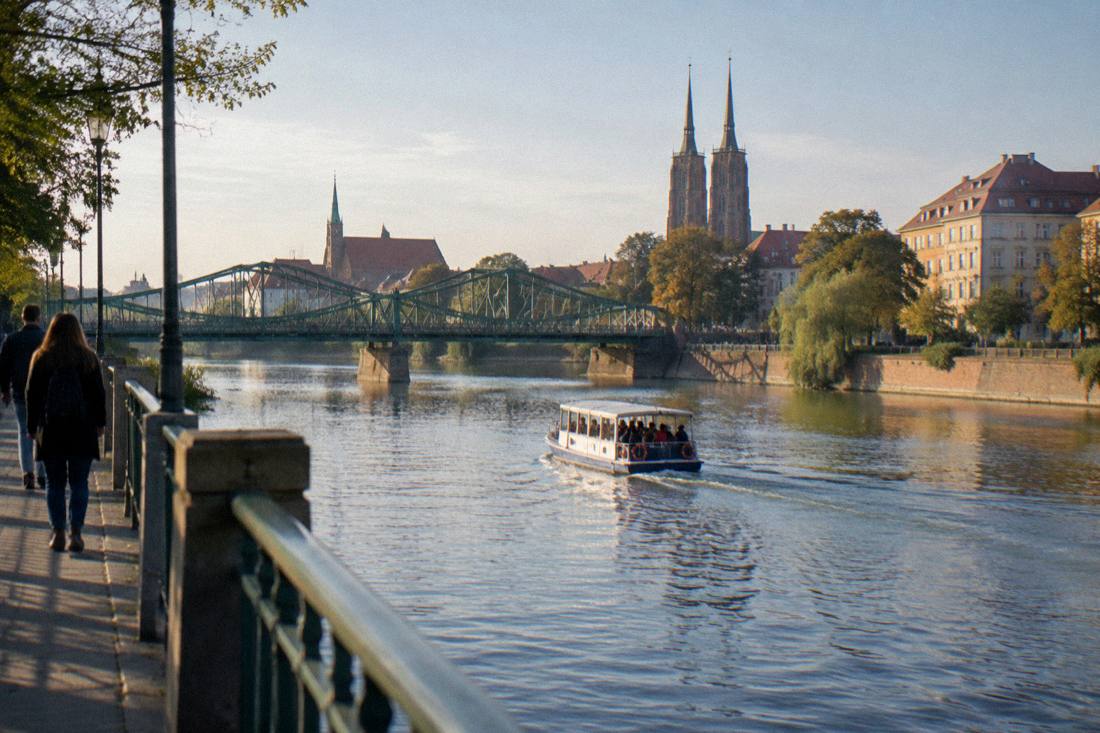
Yes, cycling works well in Wroclaw because the river islands and the routes out to Centennial Hall are flat and separated from traffic in most places, and the city's live Nextbike city-bike feed lets you check availability in real time. IMGW's normals put July at 19.7C and May at 14.3C, making late spring through early autumn the comfortable cycling window. Boat sightseeing on the Odra runs as a leisure activity rather than a commuting method.
The bike-frame decision is seasonal. The climate table below shows why May, June and September, with means of 14.3C, 17.7C and 14.5C, are the months locals pick for riverside rides, while July's 91.4 mm of rain is the wettest of the year. This is drawn directly from the IMGW 1991-2020 normals for station 12424.
| Month | Mean temperature (C) | Precipitation (mm) |
|---|---|---|
| Jan | 0.0 | 28.3 |
| Feb | 1.1 | 25.6 |
| Mar | 4.3 | 35.0 |
| Apr | 9.7 | 31.2 |
| May | 14.3 | 59.6 |
| Jun | 17.7 | 65.4 |
| Jul | 19.7 | 91.4 |
| Aug | 19.3 | 59.5 |
| Sep | 14.5 | 48.4 |
| Oct | 9.6 | 37.6 |
| Nov | 4.8 | 31.4 |
| Dec | 1.1 | 27.9 |
For a structured ride with a guide narrating the stops, a dedicated bike tour covers the islands and out to the Centennial Hall quarter in one loop.
The Zoo end of town rewards the bike or tram decision: its own price table shows adult tickets from 69 zl online against 99 zl at the gate, reduced from 59 zl online against 89 zl at the gate, and the Afrykarium is included in the standard ticket rather than sold separately. Buying online before the tram ride out therefore saves real money per person. The odra river boat cruise guide covers the water side of the city.
The Zoo's own hours page rounds out the planning picture: it is open every day of the year including public holidays, with April-September grounds running 9:00-18:00 Monday to Thursday and 9:00-19:00 on Fridays, Saturdays, Sundays and holidays, and the winter months trimming back to 9:00-16:00. That every-day-of-the-year detail is unusual among major European zoos and removes the "is it open today" guesswork entirely. The homepage also carries a live city-bike availability block and current Odra river levels, which is the tool to check before committing to a riverside cycling afternoon.
How Do You Get From Wroclaw To Ksiaz Castle And Lower Silesia?
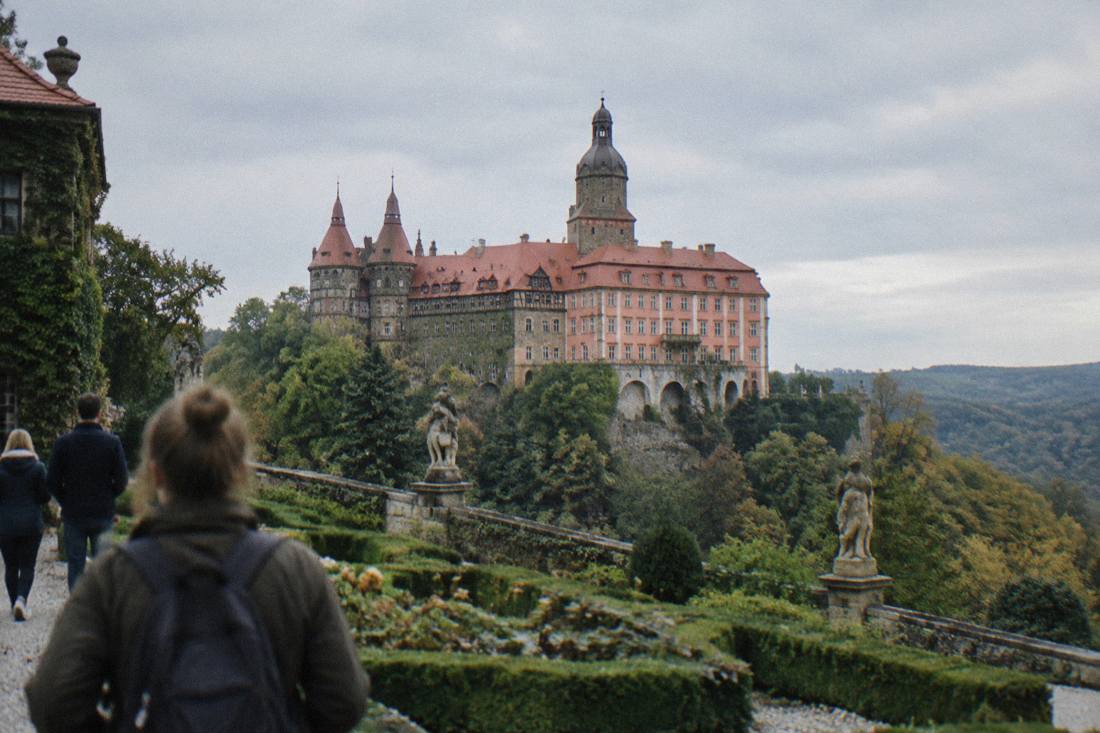
Ksiaz Castle is commonly reached by a regional train to Walbrzych plus a bus or taxi connection, or far more simply by an organized day tour from Wroclaw, several of which pair the castle with the Church of Peace in Swidnica. The castle's own cennik, effective 6 May 2026, prices the castle with audioguide and terraces at 72 zl adult and 62 zl reduced, and the terraces open only 15 April to 30 September.
The castle is owned by the Walbrzych municipality and operated by the municipal company Zamek Ksiaz w Walbrzychu Sp. z o.o., which is why its prices are published as an official municipal tariff. Here is what that tariff gives for the main combinations:
| Ksiaz Castle ticket | Adult (zl) | Reduced (zl) |
|---|---|---|
| Castle with audioguide + terraces | 72.00 | 62.00 |
| Castle + terraces + underground tour | 92.00 | 82.00 |
| Castle + terraces + stud farm | 79.00 | 69.00 |
| All Day Ticket (castle, terraces, underground, Palm House, stud farm, mausoleum) | 104.00 | 94.00 |
| Underground tour alone | 45.00 | 39.00 |
| Mausoleum alone (open 1 Apr-15 Oct) | 13.00 | 8.00 |
| Palm House alone | 27.00 | 21.00 |
| Ksiaz Castle period | Castle interiors and Palm House hours |
|---|---|
| April-September, Mon-Fri | 9:00-18:00 |
| April-September, Sat-Sun | 9:00-19:00 |
The terraces date window is the trap: the 15 April to 30 September rule is stated on the castle's own visitor page, and the All Day Ticket only makes sense inside that window because several of its components are seasonal. Getting there independently means the regional train to Walbrzych and then a local bus or taxi up to the castle, a chain whose exact timetable details remain unconfirmed, so check the connection on the day rather than trusting a fixed figure.
The Church of Peace in Swidnica, the usual second stop on these tours, is UNESCO-inscribed since 2001 as part of the Churches of Peace in Jawor and Swidnica, and its own visitor page prices it as follows:
| Church of Peace, Swidnica ticket | Price (zl) |
|---|---|
| Adult | 18 |
| Reduced (students, seniors, adult groups) | 15 |
| Children and youth | 10 |
| Family (2 adults + children under 18) | 45 |
If the train-and-bus chain sounds like a lot of moving parts, the guided option is the stress-free route: the 8-hour Ksiaz and Peace Church tour pairs both sites in one day, Check availability for your dates on the operator's live listing. For other regional angles, the Krakow train guide covers the intercity rail option east, though no specific journey time or fare for that route is published as a stable figure: PKP Intercity runs it, and fares and times vary by date, so check live at the booking engine.
When Does Driving In Wroclaw Make Sense?
Driving in Wroclaw makes sense mainly for day trips into Lower Silesia and for visitors continuing on to the mountains, Prague or Dresden, not for sightseeing inside the city itself, where the walkable core and tram network beat a car on both cost and convenience. Poland is in the EU and Schengen, so there are no border formalities driving in from Germany or Czechia. The currency at Polish tills is the zloty, never the euro.
Renting at the airport and dropping the car before the city portion of your trip is the pattern that works: use the vehicle for Ksiaz, the Giant Mountains or the Table Mountains, then hand it back and finish on foot. The car rental at the airport guide and the driving in Poland guide cover the mechanics, and the shopping guide and restaurant guide cover what to do with the hours you save by not circling for parking in the center.
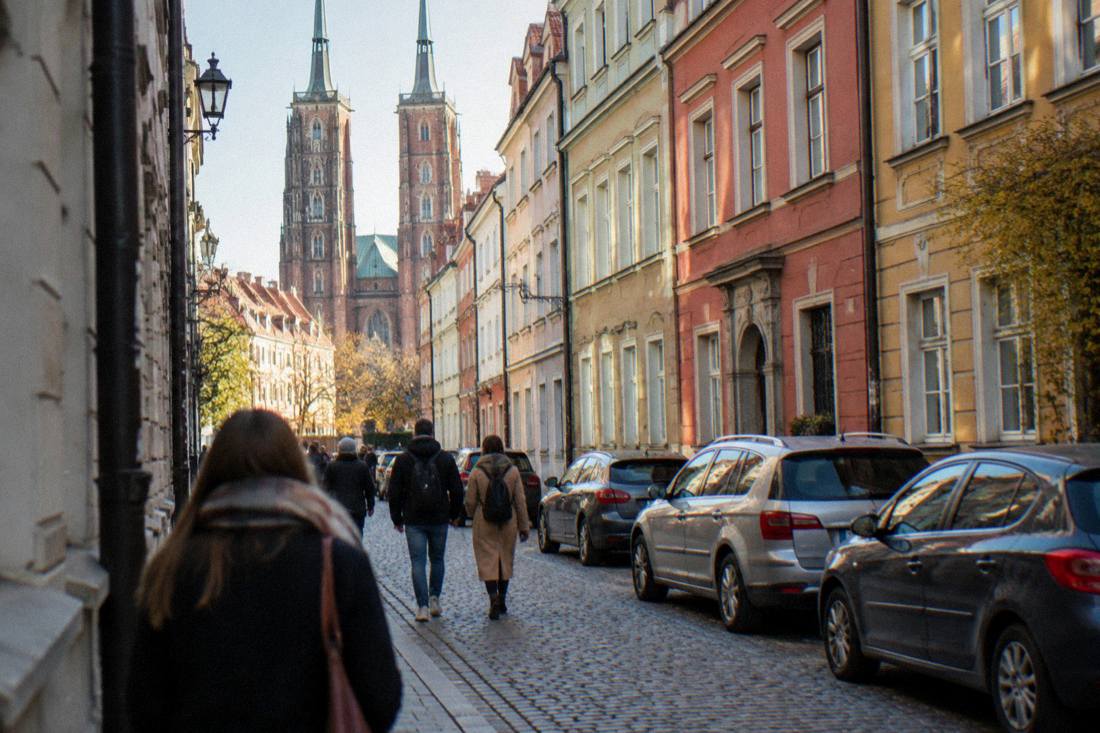
For everyone else, the honest summary of this whole page is short. Walk the core, buy a 15-minute ticket at 4.60 zl for anything beyond it, ride a tram out to Centennial Hall and the Zoo, buy Zoo tickets online where the price table starts at 69 zl rather than 99 zl at the gate, and let a tour operator handle Lower Silesia. That combination covers getting around Wroclaw for the overwhelming majority of visitors, and it leaves nothing on the table.
Common Questions About Getting Around Wroclaw
Is Wroclaw easy to get around without a car?
Yes. The historic core from the Market Square to Ostrow Tumski is walkable, and MPK trams and buses cover Centennial Hall, the Zoo and everything else, with a 15-minute ticket at 4.60 zl standard or 2.30 zl reduced per the city's fare page.
How much does public transport cost in Wroclaw?
The city's official price page lists a 15-minute ticket at 4.60/2.30 zl, a 30-minute ticket at 7.00/3.50 zl, a 24-hour band around 15.00/7.50 zl, and longer multi-day tiers at 26/13, 32/16 and 54/27 zl.
Is there a tourist pass for Wroclaw?
No all-inclusive Go City-style pass is currently sold for Wroclaw. UrbanCard is a transport-focused fare card with resident discounts, not a sightseeing pass. The best value bundle is the Panorama Raclawicka ticket at 50 zl, which also covers the National Museum's permanent exhibitions, the Ethnographic Museum and the Four Domes Pavilion within 3 months.
How do I get to Ksiaz Castle from Wroclaw without a car?
The common independent route is a regional train to Walbrzych plus a bus or taxi connection. The simpler option is an organized day tour from Wroclaw, several of which pair the castle with the Church of Peace in Swidnica. The castle's cennik prices the castle with audioguide and terraces at 72 zl adult, 62 zl reduced.
Is Wroclaw Airport open?
Yes, it is open today. A temporary full closure for a runway-area renovation ran from 26 October to 4 December 2025 and finished ahead of schedule in September 2026, after which the airport set new passenger records. It served 4,473,945 passengers in 2024.
When is the best season for walking and cycling in Wroclaw?
IMGW's 1991-2020 climate normals give May, June and September means of 14.3C, 17.7C and 14.5C, which are the comfortable months for covering the city on foot or by bike. July is the warmest at 19.7C but also the wettest at 91.4 mm of rain, and January sits at 0.0C.