Wroclaw Street Food
Street food in Wroclaw is a compact, walkable affair centered on the Old Town, the market square, and the warming traditions of pierogi, milk bars, and seasonal market stalls. Here is how to eat your way across the largest city in Lower Silesia.
Short answer
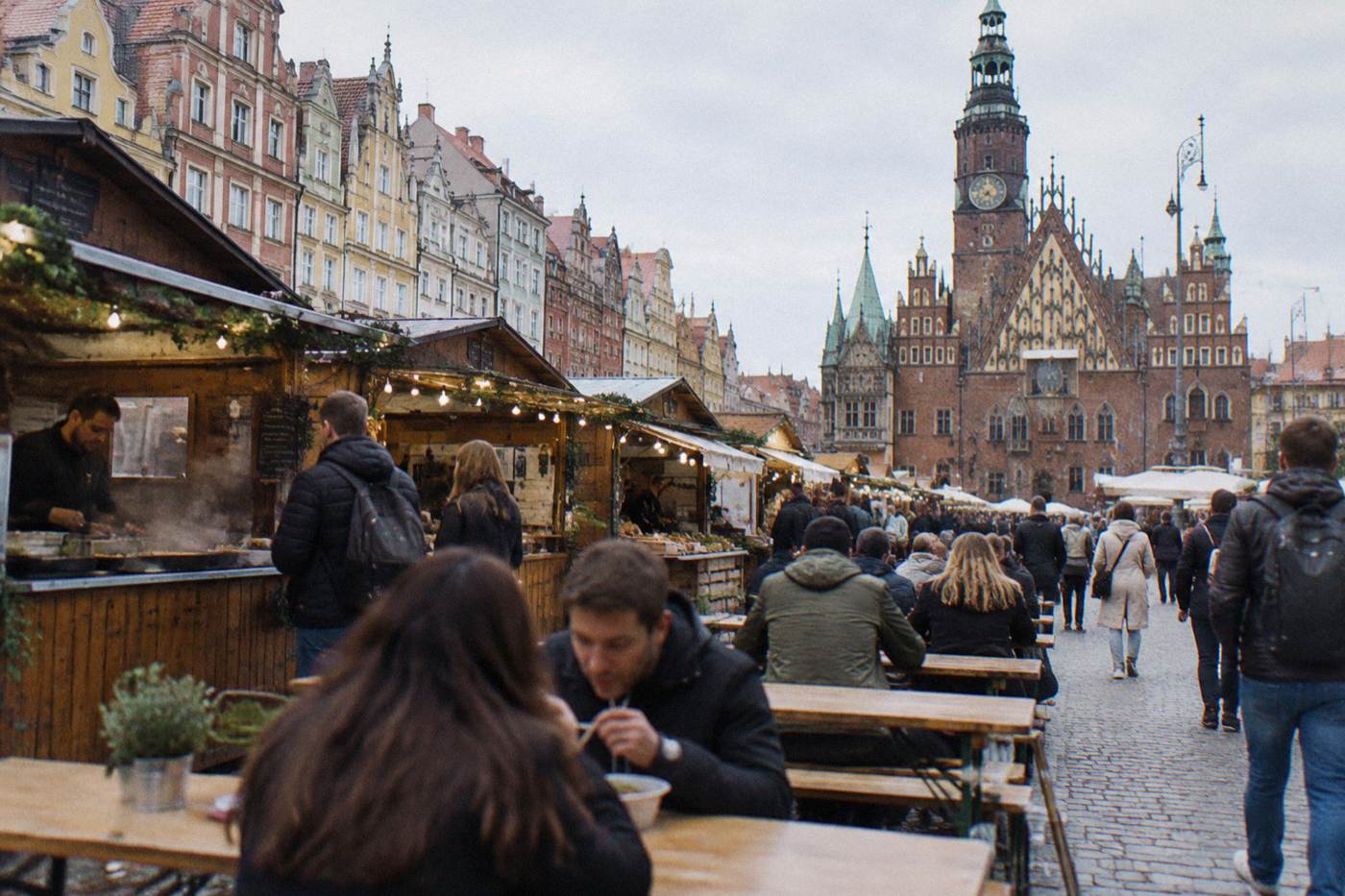
Wroclaw street food revolves around pierogi, milk-bar classics, and market stalls around the Rynek and Old Town. The city center is compact, the currency is the zloty, and a food crawl pairs naturally with free walking routes, museum stops, and Ksiaz Castle day trips.
Street food in Wroclaw, the largest city in Lower Silesia (Dolnoslaskie voivodeship) in southwestern Poland, is less about a single famous snack district and more about a compact Old Town where everything worth eating sits within a short walk of the market square. The city of 672,601 people (GUS, 31 December 2025) runs on the zloty, not the euro, and its food culture leans toward the warming, dough-based, and slow-simmered: pierogi, milk-bar lunches, and seasonal market stalls rather than a skyscraper of food halls. This guide from Wroclaw Travel Guide maps what to eat, where the stalls cluster, what the surrounding day costs, and how to pair a food crawl with the city's walks and day trips.
Where To Find Street Food In Wroclaw, Poland
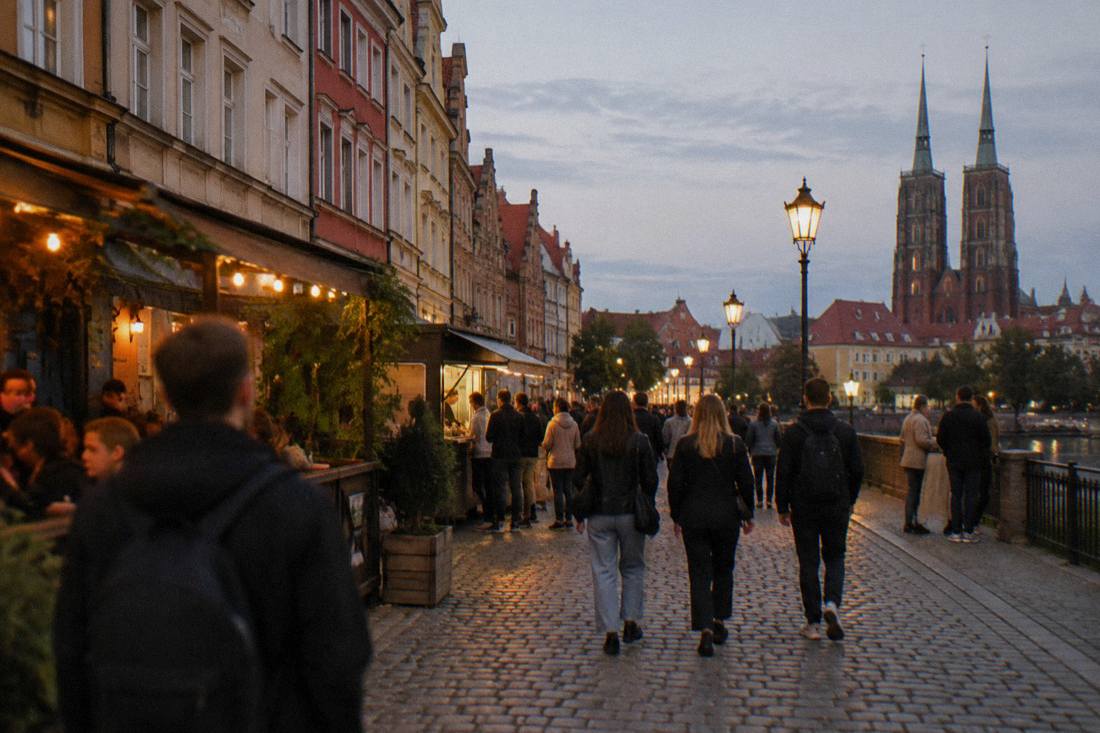
The practical answer is the Old Town and the Rynek itself: Wroclaw's street food clusters around the market square, the lanes running off it, and the market stalls that appear there on scheduled days, with the Nadodrze district adding a creative-quarter alternative a short tram ride north. Everything central is walkable, and the compact footprint is what makes a food crawl realistic here.
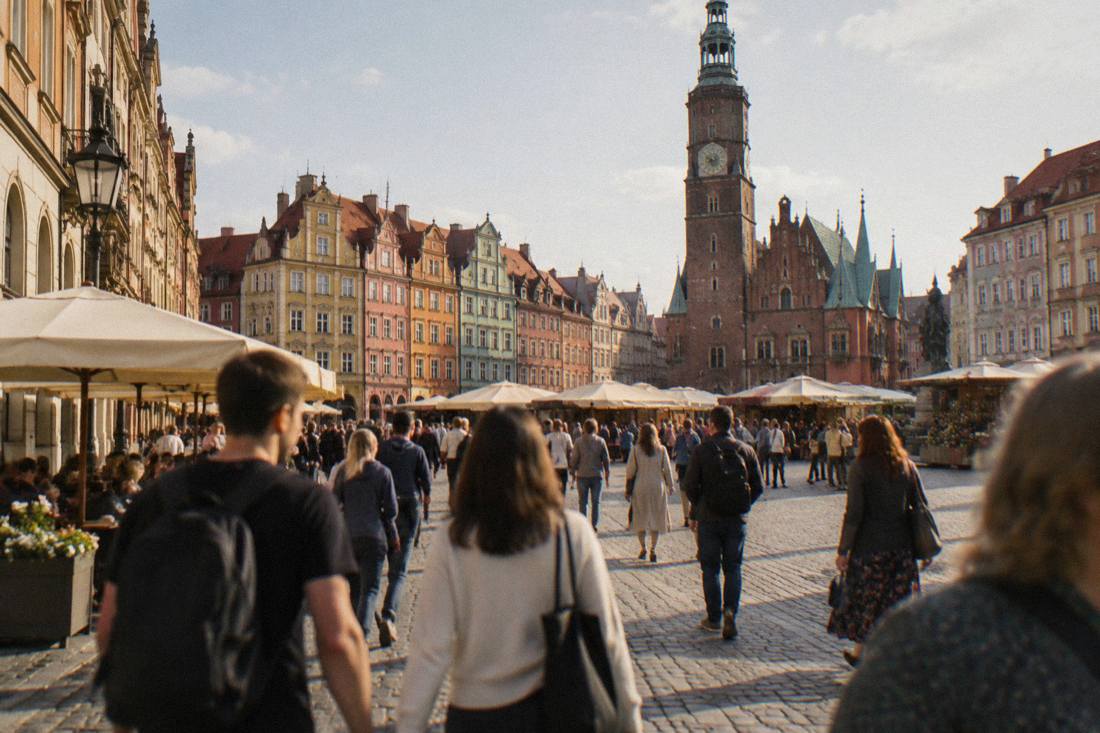
The Rynek is the anchor. Roughly 3.64 to 3.79 hectares in size, smaller than Krakow's Rynek Glowny, it is still a full ring of townhouses, taverns, and stall space, and the streets feeding it carry the highest density of quick-eat options in the city. When stalls are not running, the permanent shops around the square do the same job.
Nadodrze, just north of the center, is the district worth knowing about beyond the square. Recent reporting describes it as a revitalized street-art and creative quarter with community-driven murals and courtyard projects, and its food scene has grown alongside that revival. It trades the Rynek's polish for a rougher, more local feel.
Evening changes the rhythm more than location does. Counter windows that were quiet at noon develop queues after dark, especially on the lanes between the Rynek and the university quarter, and the walk home past the Odra is when visitors realize how small the eating geography really is.
For the wider eating landscape beyond street food, our best restaurants in Wroclaw guide covers the sit-down side, and shopping in Wroclaw covers the markets where ingredients and snacks overlap.
What Should You Eat First On A Wroclaw Street Food Crawl?
Start with pierogi, then work outward through milk-bar classics: these two categories define eating on the streets and counters of Wroclaw more than anything else. Pierogi are the headline, milk bars are the honest everyday backbone, and seasonal market stalls add whatever the calendar is doing, from Christmas market fare to summer grills.
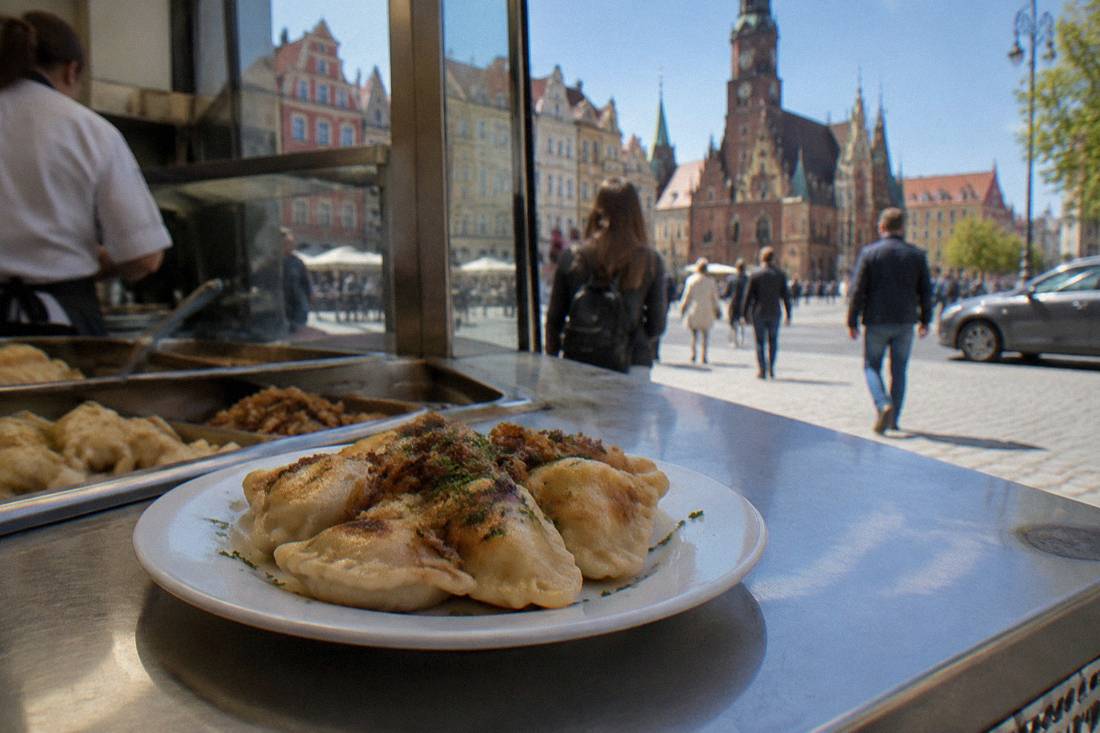
Pierogi are the dish visitors arrive asking about, and the city answers with both quick-service counters and full restaurants. Our pierogi in Wroclaw guide covers where they matter most, but the short version for a crawl is simple: eat them early, because they are the item most likely to anchor a food day.
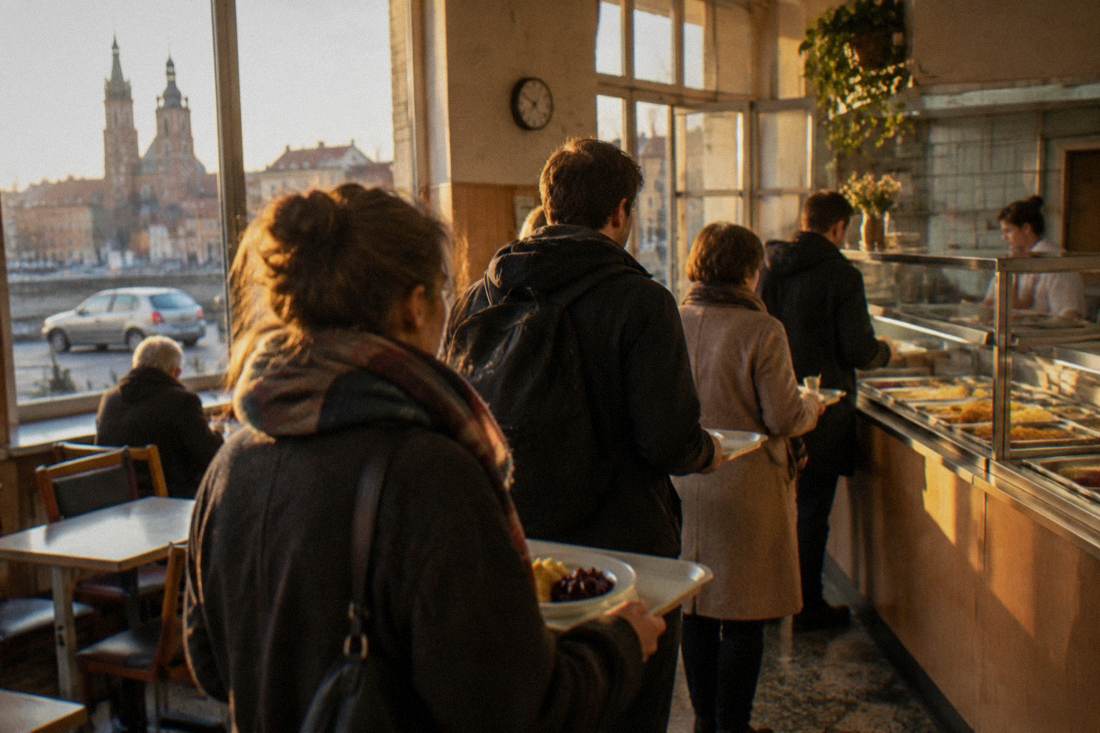
Milk bars, the cafeteria-style carryovers from Poland's postwar decades, are the other pillar. They are fast, filling, and inexpensive by design, and they sit closer to the spirit of street eating than most restaurant menus do. The milk bars in Wroclaw guide lists the ones worth queueing for.
Beyond those two, the Christmas market season transforms the Rynek's food geography entirely, and the stalls that appear then are covered in our Wroclaw Christmas market guide. Pairing food with what you drink is not optional either: the Wroclaw craft beer guide maps the local brewing side.
How Do Milk Bars And Pierogi Fit Into Wroclaw Street Food?
Milk bars are the everyday-budget core of Wroclaw street eating, and pierogi are the dish that bridges street counter and restaurant table. Neither is a tourist invention: both are long-standing Polish food traditions, and in Wroclaw they cluster where foot traffic already exists, around the Old Town, the university quarter, and the lanes just off the Rynek.
A milk bar lunch is the closest thing Wroclaw has to a guaranteed cheap eat, and the tradition is precisely why budget guides keep recommending them. The setup is cafeteria service, a short menu of soups, dumplings, and cutlets, and prices set for locals rather than visitors. The trade is comfort: these are functional rooms, not dining destinations.
Pierogi run the opposite direction, appearing everywhere from the cheapest counter to the most polished kitchen. On a crawl, that range is useful: it means you can sample the same dish at two price levels in one afternoon and learn something about the city's food economics in the process.
The honest caveat on prices: this page does not print specific food-item prices, because no verified per-dish figures were sourced for Wroclaw. For what a whole trip costs, including eating, see the Wroclaw trip cost guide, and for the morning side of the day, the best cafes in Wroclaw guide covers the coffee-and-pastry layer.
What Does A Wroclaw Street Food Day Trip Look Like?
The strongest food-anchored day trip from Wroclaw runs to Ksiaz Castle and the UNESCO Churches of Peace at Swidnica, combining Lower Silesia's two heavyweight sights with a day out of the city. Ksiaz's castle-with-audioguide-and-terraces ticket is 72 zl (62 zl reduced), and the Church of Peace in Swidnica charges 18 zl adult, 15 zl reduced, so the sights themselves are the budget line, not the transport.
Ksiaz Castle, owned by the Walbrzych municipality and run by its municipal company, is the region's flagship. The castle is commonly reached by regional train to Walbrzych plus a bus or taxi connection, and a tour handles that transfer for you. The full tariff is worth knowing before you choose a ticket:
| Ksiaz Castle Ticket | Adult (zl) | Reduced (zl) |
|---|---|---|
| Castle + audioguide + terraces | 72.00 | 62.00 |
| Castle + terraces + underground tour | 92.00 | 82.00 |
| Castle + terraces + stud farm | 79.00 | 69.00 |
| All Day Ticket (all attractions) | 104.00 | 94.00 |
| Underground tour alone | 45.00 | 39.00 |
| Mausoleum alone | 13.00 | 8.00 |
| Palm House alone | 27.00 | 21.00 |
One detail the tariff's own terms make clear: the terraces are open only from 15 April to 30 September. Plan an off-season trip around the interiors, not the view.
The Church of Peace in Swidnica, a UNESCO World Heritage site since 2001 as one of the "Churches of Peace in Jawor and Swidnica", is the other half of the standard pairing:
| Church Of Peace In Swidnica Ticket | Price (zl) |
|---|---|
| Adult, individual | 18 |
| Reduced (students, seniors, adult groups) | 15 |
| Children and youth | 10 |
| Family (2 adults + children under 18) | 45 |
The full background for both sits in our Ksiaz Castle and Church of Peace in Swidnica guides.
Is Wroclaw Good For Vegan And Vegetarian Street Food?
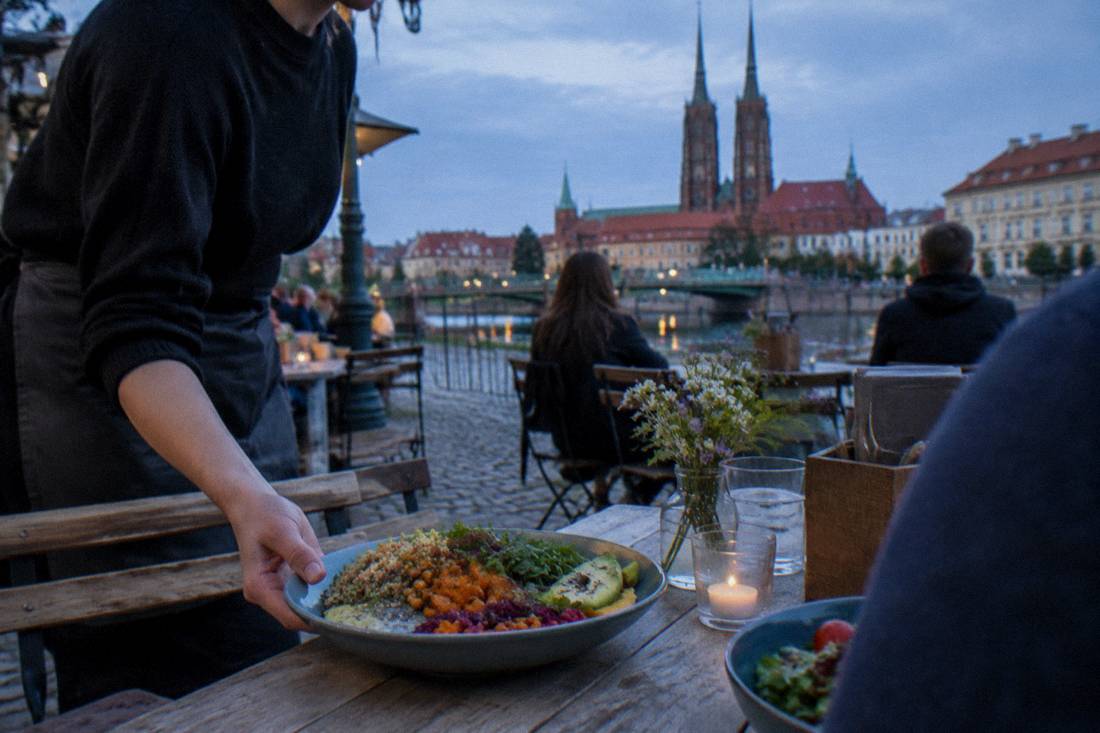
Wroclaw has a solid, compact vegan and vegetarian scene, but it is not Poland's vegan capital, and no current ranking says so. Recent reporting gives that title's international attention to Warsaw, with older per-capita data favoring Poznan and Krakow. What Wroclaw genuinely offers is a well-developed plant-based layer across restaurants, bakeries, and market stalls, covered citywide in our dedicated guide.
The distinction matters because the superlative travels widely and wrongly. Wroclaw's real, sourced food-and-culture claims are narrower and better: a 2016 European Capital of Culture year, the New Horizons film festival, and the Nadodrze district's creative-quarter revival. None of those is a vegan crown, and none needs to be.
Practically, a plant-based visitor eats well here. The vegan and vegetarian food in Wroclaw guide maps the dedicated restaurants and the omnivore kitchens with real options, and milk bars, with their emphasis on dumplings, soups, and potatoes, include vegetarian items by default even where the menu is otherwise old-fashioned.
When Is The Best Season For Street Food In Wroclaw?
The warm months, May through September, are the best street food season in Wroclaw: mean temperatures run from 14.3C in May to 19.7C in July, the warmest month, and outdoor stalls and market tables are the whole point of the season. December's Christmas market is the counter-season exception, and IMGW's 1991-2020 climate normals show why the shoulder months are a gamble.
The full picture from IMGW's station 12424 normals for Wroclaw:
| Month | Mean Temp (C) | Precipitation (mm) |
|---|---|---|
| Jan | 0.0 | 28.3 |
| Feb | 1.1 | 25.6 |
| Mar | 4.3 | 35.0 |
| Apr | 9.7 | 31.2 |
| May | 14.3 | 59.6 |
| Jun | 17.7 | 65.4 |
| Jul | 19.7 | 91.4 |
| Aug | 19.3 | 59.5 |
| Sep | 14.5 | 48.4 |
| Oct | 9.6 | 37.6 |
| Nov | 4.8 | 31.4 |
| Dec | 1.1 | 27.9 |
Read the table before booking. July is the warmest month and also the wettest, at 91.4 mm, and May and June carry their own rainfall. Summer heat does not mean dry pavement.
For the deeper seasonal breakdown, see best time to visit Wroclaw and Wroclaw weather by month. And if your trip lands in the cold half of the year, the rainy day Wroclaw guide covers the indoor eating that carries an off-season visit.
How Do You Get Around Wroclaw Between Food Stops?
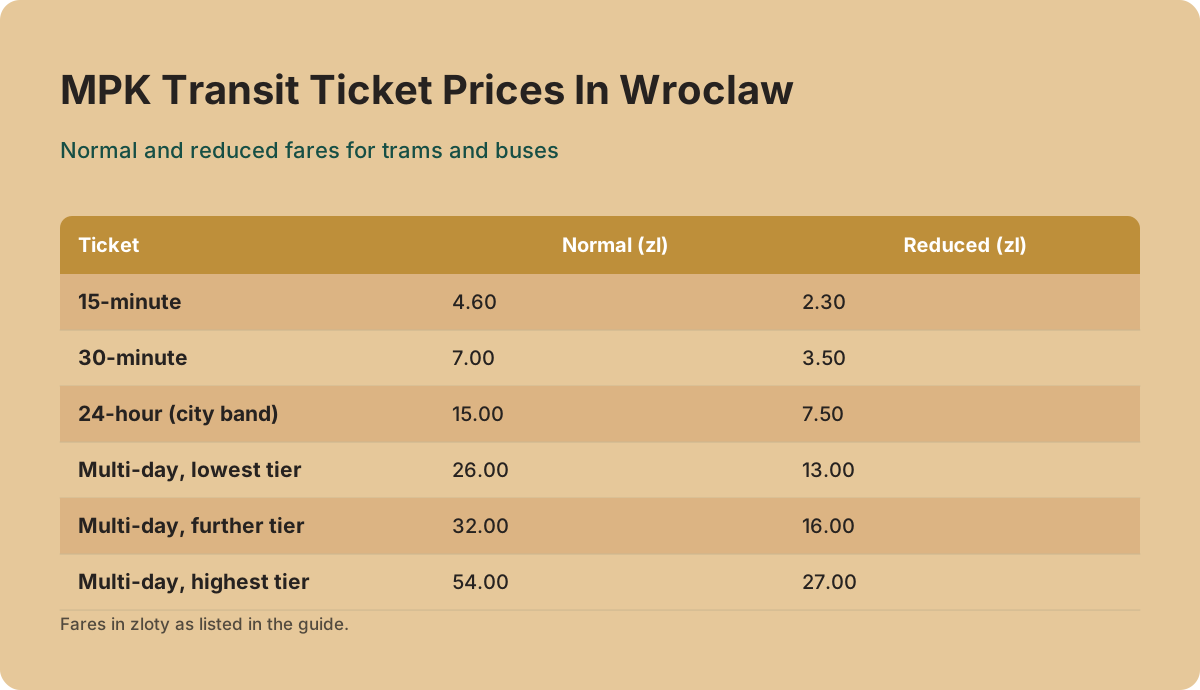
You walk: the central food stops of Wroclaw sit close enough together that the 15-minute MPK ticket at 4.60 zl (2.30 zl reduced) is the base transit fare, and a 24-hour city ticket band runs around 15.00 zl normal, 7.50 zl reduced, for the days you range further. Trams and buses cover Nadodrze and the suburbs when feet give out.
The MPK fare structure, from the city of Wroclaw's official portal:
| MPK Ticket | Normal (zl) | Reduced (zl) |
|---|---|---|
| 15-minute | 4.60 | 2.30 |
| 30-minute | 7.00 | 3.50 |
| 24-hour (city band) | 15.00 | 7.50 |
| Multi-day, lowest tier | 26.00 | 13.00 |
| Multi-day, further tier | 32.00 | 16.00 |
| Multi-day, highest tier | 54.00 | 27.00 |
Two honesty notes. First, there is no all-inclusive Go City-style sightseeing pass for Wroclaw; the UrbanCard is a transport-focused fare card with resident discounts, not a museum pass, so nobody should sell you one. Second, the transit side of a visit is covered properly in getting around Wroclaw, which handles tickets, trams, and the practicalities in one place.
How Much Does A Wroclaw Food Trip Cost Beyond The Food Itself?
The non-food costs of a Wroclaw eating trip are the museums and attractions you slot between meals: the National Museum charges 20 zl adult (15 zl reduced) with free permanent exhibitions every Saturday, the Panorama Raclawicka costs 50 zl (35 zl reduced), and the zoo runs from 69 zl online to 99 zl at the gate for adults. Those three lines, plus transit, frame the whole day budget.
The headline admissions, from each institution's own pricing:
| Wroclaw Attraction | Adult (zl) | Reduced (zl) |
|---|---|---|
| Panorama Raclawicka | 50 | 35 |
| National Museum, permanent exhibitions | 20 | 15 |
| Wroclaw Zoo, online | from 69 | from 59 |
| Wroclaw Zoo, at the gate | 99 | 89 |
One ticket detail most guides miss: a Panorama Raclawicka ticket also covers the National Museum's permanent exhibitions, the Ethnographic Museum, and the Four Domes Pavilion within three months of the visit date. If the Panorama is on your list, buy it first and let the rest follow. The Afrykarium at the zoo is likewise included in the standard zoo ticket, never a separate charge.
Opening hours matter as much as prices when you are threading food stops between sights:
| Attraction | Season | Hours |
|---|---|---|
| Panorama Raclawicka | Winter (1 Nov-31 Mar) | Closed Mon; Tue-Fri 9:30-16:00; Sat 9:30-17:00; Sun 9:30-16:00 |
| Panorama Raclawicka | Summer (1 Apr-31 Oct) | Daily 8:30-19:00 |
| National Museum | Winter (1 Oct-31 Mar) | Closed Mon; Tue-Fri 10:00-16:00; Sat-Sun 10:00-17:00 |
| National Museum | Summer (1 Apr-30 Sep) | Closed Mon; Tue-Fri 10:00-17:00; Sat-Sun 10:30-18:00 |
| Wroclaw Zoo | Apr-Sep | Mon-Thu grounds 9:00-18:00; Fri-Sun 9:00-19:00 |
| Wroclaw Zoo | Nov-Dec | Grounds 9:00-16:00 daily |
The National Museum's free-Saturday rule is the single best budget lever on this list. The full costing picture, food included, is in the Wroclaw trip cost guide, and the wider money questions, currency and tipping, are covered there too.
Can You Combine A Street Food Walk With A Wroclaw Tour?
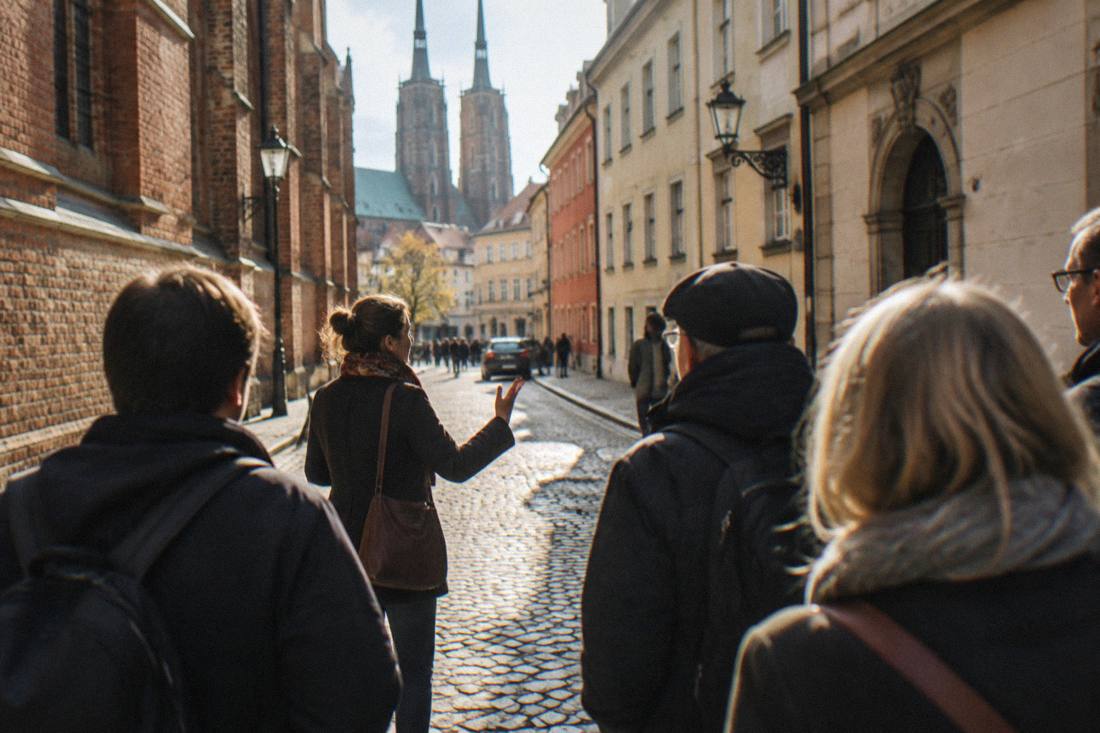
Yes, and the pairing works best in that order: a guided Old Town walk first maps the lanes and squares where the food stops live, then you eat your way back through them. A private Old Town highlights walk is this site's featured pick for exactly that job, and the small-group Old Town walking tour is the budget alternative. The Ksiaz and Peace Church half-day tours then take the day-trip slot on a second day.
The logic is simple. A food crawl with no geography wastes steps; a walk that ends near the Rynek puts you exactly where the pierogi counters and milk bars already are. Our featured private option, which you can check via Check availability on the operator's live listing, is one way to anchor that first afternoon.
If you would rather join a group, the small-group Old Town walk fits the same slot:
For the second day out of the city, the half-day Ksiaz and Swidnica pairing carries the Lower Silesia side of the trip:
And for visitors who want both Peace Churches, Jawor included, the two-church half-day covers the full UNESCO pairing in one run:
The broader landscape of guided options, including the free-walk scene, sits in our best walking tours in Wroclaw guide, and the nightlife that follows a food evening is mapped in the Wroclaw nightlife guide.
Where Does Street Food Fit Into A Longer Wroclaw Trip?
Street food in Wroclaw works best as the spine of a two-or-three-day visit rather than a single afternoon: one day for the Rynek and Old Town counters, one for Nadodrze and the museum-and-Panorama pairing, one for a Ksiaz or Peace Churches day trip, with food stops threaded between all three. The city rewards the slow version.
The itineraries exist for exactly this. Start with one day in Wroclaw if that is the whole budget, then two days in Wroclaw or three days in Wroclaw as the trip grows. A Wroclaw weekend itinerary is the middle option.
Festival timing can reshape the food calendar too: the Wroclaw events calendar and the festivals guide, including the New Horizons film festival, tell you when the city is at its busiest and best fed.
Two practical notes close the planning. Most out-of-town food trips now arrive through Wroclaw Airport, which handled 4,473,945 passengers in 2024 and has run record years since its 2025 renovation finished ahead of schedule; the Wroclaw airport guide covers the transfer into the center. And late-evening crawls around the Rynek and the bar lanes are covered from a safety angle in the Wroclaw safety guide.
Common Questions About Wroclaw Street Food
What street food is Wroclaw known for?
Wroclaw's street and counter food is anchored by pierogi and milk-bar classics, supplemented by seasonal market stalls around the Rynek, including the Christmas market period. The city's food identity is warming and dough-based rather than snack-cart-based, and milk bars are the traditional budget backbone.
Is street food in Wroclaw cheap?
Wroclaw's budget eating rests on milk bars, which are inexpensive by long-standing design rather than by tourist discount. This page does not print specific food prices because no verified per-dish figures were sourced; the Wroclaw trip cost guide covers the overall budget, including the verified museum and transit fares in zloty.
Where is the best place to eat street food in Wroclaw?
The market square and the lanes running off it carry the densest concentration of quick-eat options, and Nadodrze offers a more local, creative-quarter alternative a short tram ride north. The pierogi in Wroclaw and milk bars in Wroclaw guides cover the specifics.
Does Wroclaw have good vegan street food?
Wroclaw has a solid, compact vegan and vegetarian scene across restaurants, bakeries, and market stalls, though it is not Poland's vegan capital and no current ranking claims it is; recent international attention has gone to Warsaw. The vegan and vegetarian food in Wroclaw guide maps the options.
When is street food season in Wroclaw?
May through September, when IMGW's 1991-2020 normals put mean temperatures between 14.3C and 19.7C, is the outdoor-stall season. December's Christmas market is the winter exception. July is the warmest month but also the wettest at 91.4 mm, so pack for rain even midsummer.
Can you do a food tour of Wroclaw with a guide?
Yes. A guided Old Town walk maps the food geography before you eat through it, and day-trip tours to Ksiaz Castle and the Churches of Peace handle the Lower Silesia side. Check the tour picks on this page for the current options and prices on the operators' live listings.
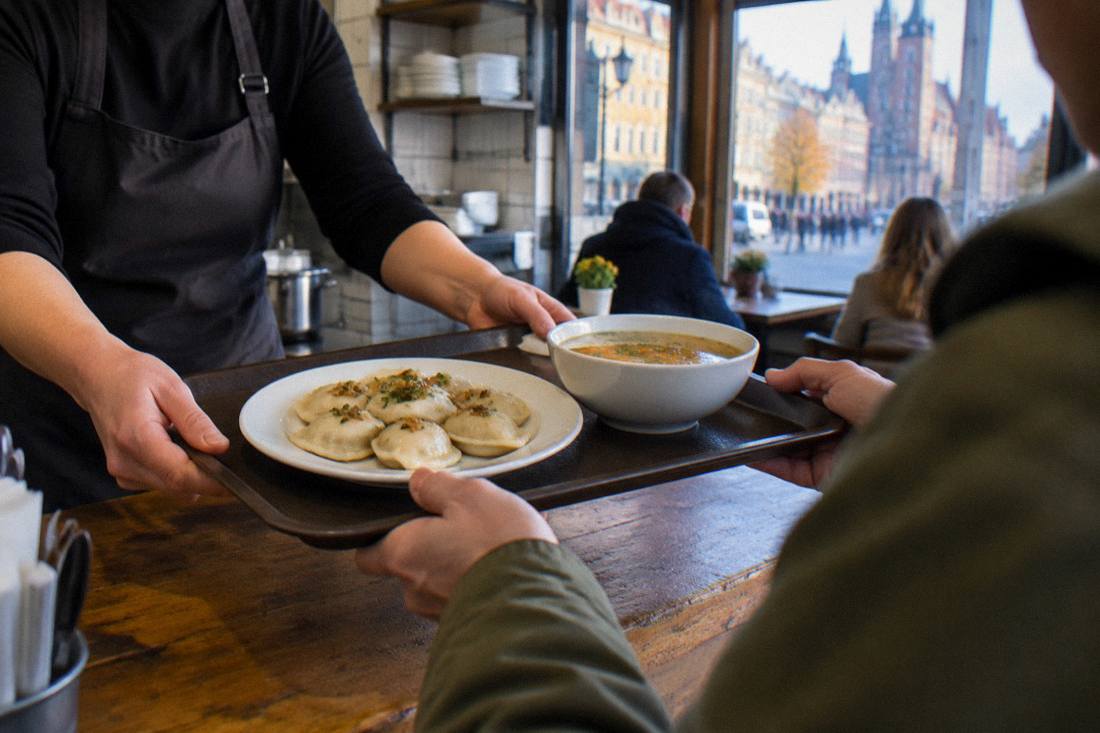
Eat the pierogi first, queue at a milk bar second, and let the market square decide the rest.