Vegan And Vegetarian Food In Wroclaw
Wroclaw, the largest city in Lower Silesia in southwestern Poland, has a solid, compact vegan and vegetarian scene. This guide covers the dishes, the districts, the transport and the honest national context.
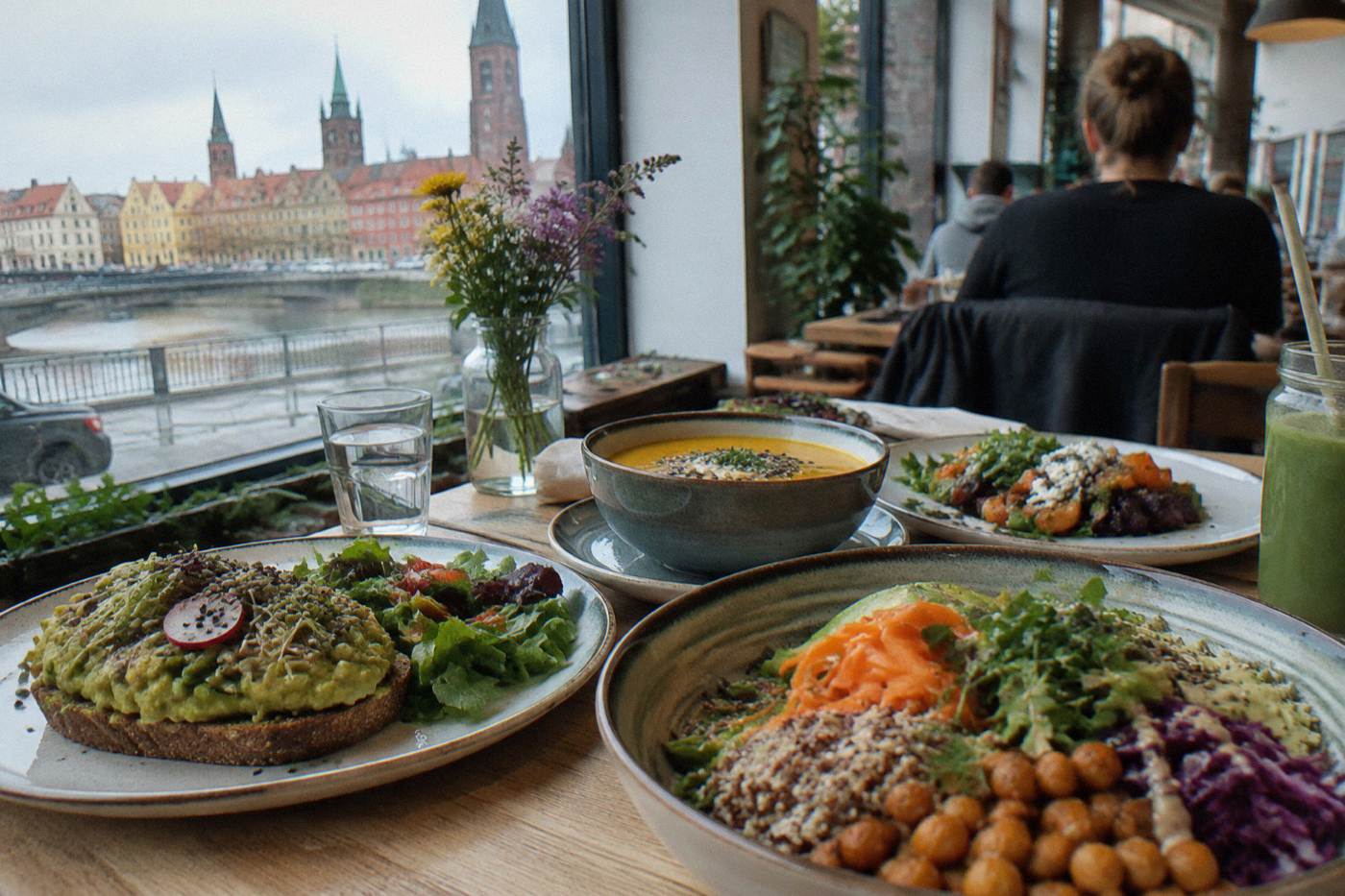
Short answer
Wroclaw has a real, established vegan and vegetarian scene with dedicated restaurants, plant-based versions of Polish classics and veg-friendly cafes, best explored in the Old Town, Nadodrze and the student districts. It is one of several strong options in Poland rather than the national leader; Warsaw holds that reputation internationally, and older per-capita rankings favored Poznan and Krakow.
Wroclaw, the largest city in Lower Silesia (Dolnoslaskie voivodeship) in southwestern Poland, is a city of 672,601 people (31 Dec 2025, GUS/Statistics Poland) that eats well and walks a lot. For vegan and vegetarian travelers, that combination matters: the plant-based options here are concentrated in a compact, walkable core, and the city's Polish classics translate unusually well to meat-free versions. This guide lays out what to order, which districts carry the scene, how to move between them on public transport, and how to fold meals into museums, market squares and riverbanks without inventing hype. The honest starting point is that Wroclaw's vegan reputation is real but regional, not national: it is one of several strong options in Poland, not the leader.
What Makes Vegan And Vegetarian Food In Wroclaw Worth Planning Around?
Wroclaw's vegan and vegetarian scene is a solid, compact network of dedicated restaurants, plant-based takes on Polish staples and veg-friendly cafes, concentrated in walkable central districts and supported by a large student population. It is not the biggest or most celebrated scene in the country, and the city's own tourism materials make no such claim, so plan around variety and convenience rather than a national title.
The honest framing comes first because the internet gets it wrong. No current 2026 news or ranking calls Wroclaw "the most vegan city in Poland". Older per-capita data from around 2021 placed Poznan and Krakow ahead of Wroclaw, and Warsaw has drawn the recent international attention, including coverage in the Guardian and National Geographic, as Poland's standout vegan hub. Wroclaw sits comfortably in the tier below: a real, well-established scene, dense with dedicated venues and plant-friendly menus, in a city small enough to cross on foot between meals. That is a genuinely good deal for a visitor, because you spend your time eating rather than commuting.
The scene also rests on cultural bedrock that predates the vegan boom. Polish home cooking has always leaned heavily on vegetables, grains, mushrooms and dairy, and several of its flagship dishes are vegetarian by default or convert with a single swap. The full context of that culinary inheritance is covered in Wroclaw street food and classic eats, while the broader question of how Polish cities compare on plant-based dining is tackled in the answer page which Polish city is the most vegan.
For the rest of this page, the editorial desk at Wroclaw Travel Guide sticks to what verified sources and primary listings say: no invented restaurant prices, no invented rankings, no invented review counts. Where a figure matters, it comes from an official tariff or a verified fact file, and where it does not exist, the page says so.
Which Vegan Dishes Should You Look For In Wroclaw?
The core vegan and vegetarian dishes to hunt in Wroclaw are pierogi (dumplings) filled with potato, buckwheat, mushroom, cabbage or lentils, plus placki ziemniaczane (potato pancakes), mushroom-based soups such as barszcz and grzybowa, and the grain-and-vegetable plates common in the city's milk bars. Every one of these exists in a meat-free form as a standard part of Polish cooking, not as a special-order afterthought.
Pierogi are the headline. The potato-and-onion filling (ruskie) is the classic vegetarian order, though visitors should note it traditionally carries cheese, so strict vegans should ask for the potato, buckwheat, mushroom or lentil versions that dedicated vegan kitchens prepare. The wider world of these dumplings, including where they fit in Wroclaw's restaurant landscape, has its own deep dive in a pierogi guide for Wroclaw. Alongside them sit placki ziemniaczane, crisp potato pancakes usually served with a cream sauce that vegan kitchens swap for plant-based alternatives, and the autumn mushroom dishes built around Polish forest mushrooms rather than cultivated buttons.
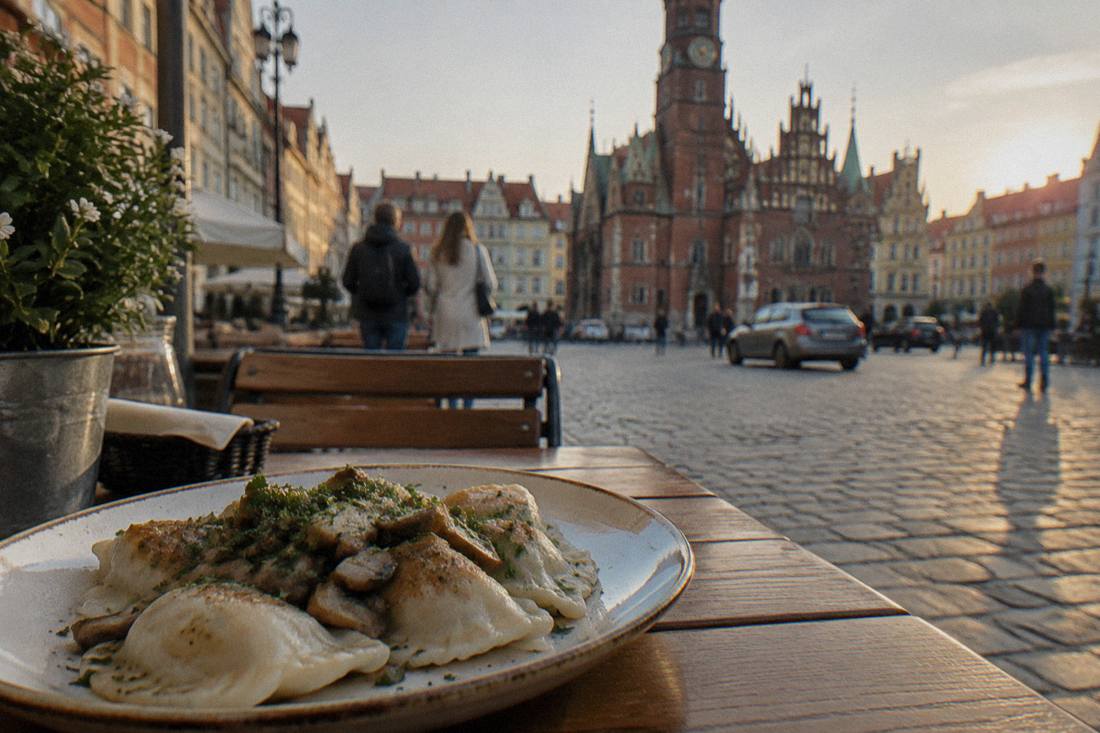
The milk bar tradition deserves its own mention. These self-service canteens, a holdover from the communist era when workers needed cheap hot meals, have always carried a rotating band of vegetarian dishes: potato pancakes, dumplings, soups, buckwheat groats with vegetables and cheese-based plates. They are not vegan restaurants, and many items contain dairy or egg, but a vegetarian traveler eats well in them for canteen prices, and the experience is as close as modern Poland gets to everyday food history. The full milk-bar picture, including how they work and what to expect at the counter, is in the Wroclaw milk bars guide.
What changes the game in Wroclaw versus a generic Polish city is the density of dedicated venues. A visitor does not need to triangulate between one vegan restaurant and a lot of compromises. The city's plant-based kitchens run from quick lunch spots to sit-down dinner places, and the cafe layer, covered in the best cafes in Wroclaw, includes a strong share of venues with plant milks and vegan cakes as a matter of course. Coverage of the broader restaurant scene, including where vegetarian kitchens sit inside the city's full dining map, is in the best restaurants in Wroclaw.
How Do You Get Between Wroclaw's Vegan Neighborhoods?
The vegan and vegetarian scene clusters in and around the Old Town, the Nadodrze district north of the river, and the areas feeding the university population, and MPK Wroclaw's 15-minute ticket at 4.60 zl normal (2.30 zl reduced) is the base fare for hopping between them, with 30-minute tickets at 7.00/3.50 zl and longer tiers up to roughly 15.00 zl for a 24-hour city ticket. Most of the core, though, is walkable, and a single tram ride usually covers the rest.
The city's official portal, wroclaw.pl, publishes the fare tiers by duration, and the verified schedule below reproduces them exactly as the official price guide lists them. Note the reduced fares, which apply to students and other eligible riders and roughly halve every tier.
| MPK ticket | Normal (zl) | Reduced (zl) |
|---|---|---|
| 15-minute | 4.60 | 2.30 |
| 30-minute | 7.00 | 3.50 |
| 24-hour city ticket (approx.) | 15.00 | 7.50 |
| Multi-day tier 1 | 26 | 13 |
| Multi-day tier 2 | 32 | 16 |
| Multi-day tier 3 | 54 | 27 |
Nadodrze deserves the detour. The district north of the old Oder channel is widely recognized as Wroclaw's street-art and creative quarter, with community murals, courtyard revitalization projects and an "art district" reputation that grew out of a formerly neglected area, as reporting on its turnaround describes. That creative-quarter energy is exactly the soil a young food scene grows in, and visitors combining murals with lunch will understand why the neighborhood anchors the city's newer eating spots. The district's fuller picture, including how it fits a walking route, is in the Nadodrze guide.
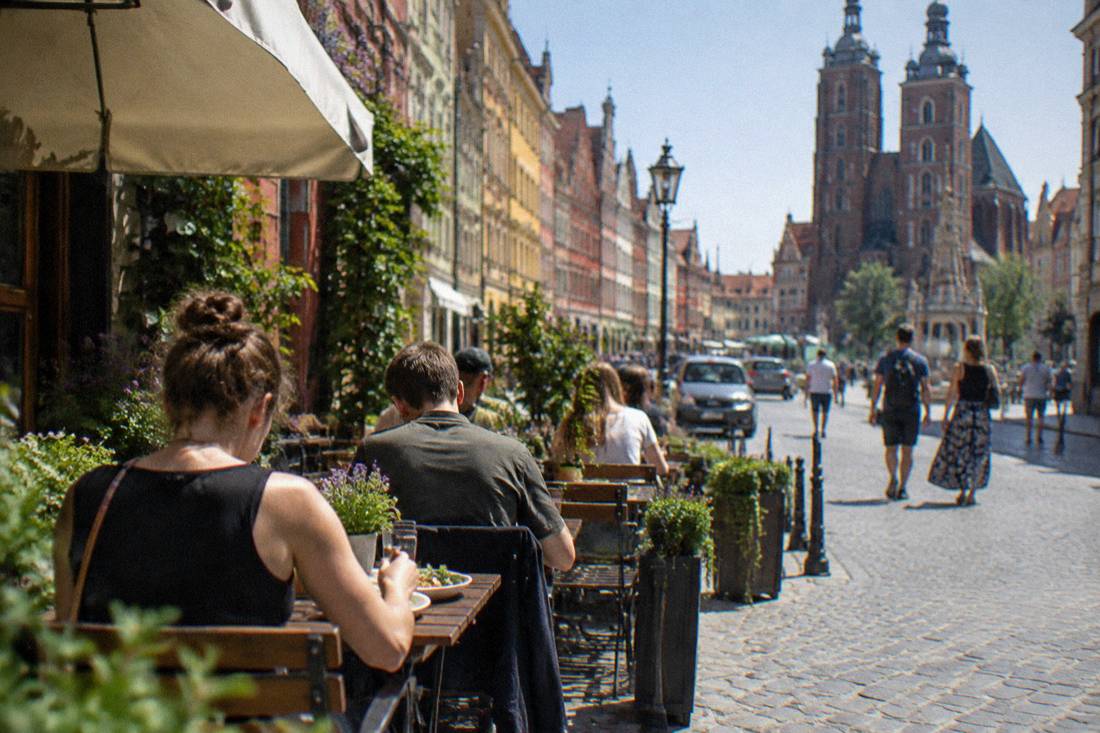
For travelers who prefer structure over self-navigation, a guided walk is the efficient first move. The Wroclaw Old Town guided walking tour covers the central streets where most meals happen, and the operator's live listing carries current availability: Check availability.
The reasoning behind pairing a walk with the food plan is simple: the guided Old Town routes pass the streets where the densest cluster of vegan kitchens sits, so a visitor finishes the walk already oriented, with the evening's dinner options a few steps away. Free-cancellation terms on this kind of tour mean the plan stays flexible if a lunch runs long or the weather turns.
The practical advice beneath the table is simple. Eat, walk, repeat. The Old Town and Ostrow Tumski are a comfortable walking distance apart, Nadodrze is one short tram hop from the Rynek, and the student-heavy areas around the university buildings are on the same central tram spine. The transport essentials, including ticketing details and how the system fits a short visit, are covered in full in getting around Wroclaw.
Can You Combine Vegan Eating With Wroclaw's Museums In One Day?
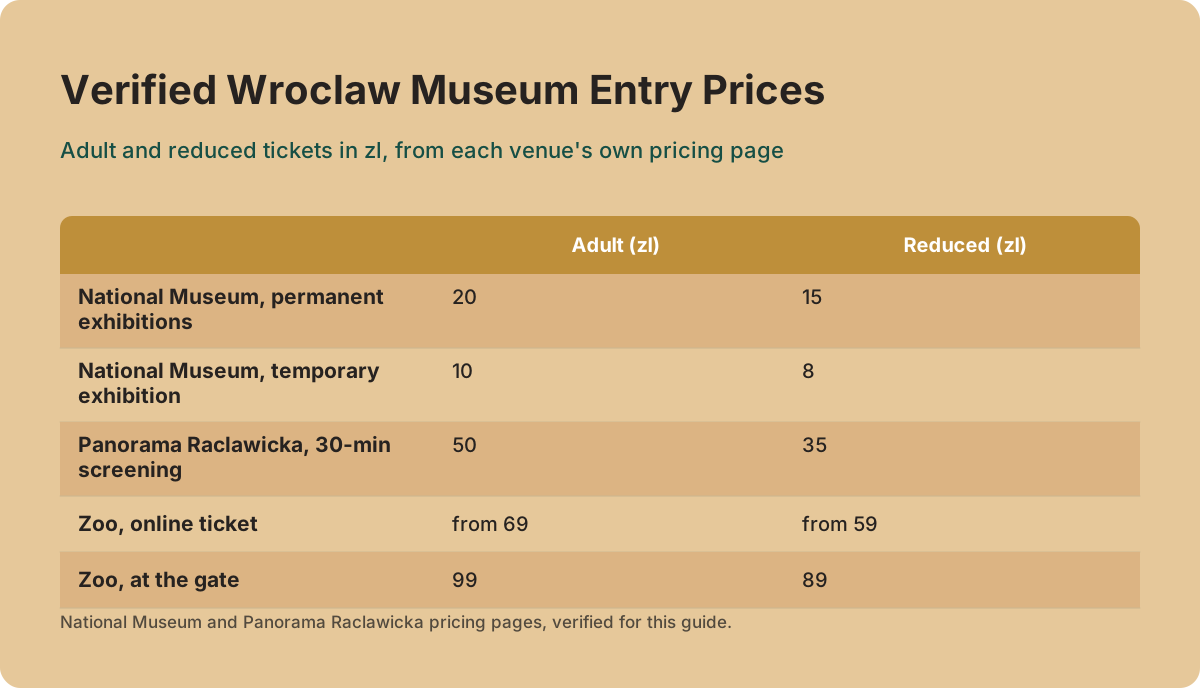
Yes, easily, because Wroclaw's major museums sit within a short walk of the plant-based dining core, and the National Museum in Wroclaw's own pricing page lists a standalone permanent-exhibition ticket at 20 zl adult (15 zl reduced) with free entry to permanent exhibitions every Saturday. A day of culture and food is the natural Wroclaw itinerary, not a forced one.
The National Museum's practical-information page, fetched and verified for this guide, gives the full standalone tariff: adult 20 zl, reduced 15 zl, group and family 10 zl per person, a 3 zl special student/pupil rate, a 1 zl "Museum for a zloty" ticket for students and pupils under 26, and free entry for children under 7. The temporary exhibition on the second floor prices separately at 10 zl adult and 8 zl reduced. Winter hours (1 Oct to 31 Mar) run Tue-Fri 10:00-16:00 and Sat-Sun 10:00-17:00; summer hours (1 Apr to 30 Sep) run Tue-Fri 10:00-17:00 and Sat-Sun 10:30-18:00, closed Mondays year-round, with the ticket office closing 30 minutes before the museum.
The Panorama Raclawicka adds the city's single most famous indoor experience to the same day. Its own tickets-and-practical-information page lists the adult ticket at 50 zl, reduced at 35 zl, family at 35 zl per person and a group-guide rate of 10 zl, for a 30-minute screening. Winter hours close Mondays; summer hours run daily 8:30-19:00. The information that is easy to miss is that one Panorama ticket also covers the National Museum's permanent exhibitions, the Ethnographic Museum and the Four Domes Pavilion within three months of the visit date, which turns a single afternoon's culture budget into a multi-venue pass.
| Verified Wroclaw museum entry (zl) | Adult | Reduced |
|---|---|---|
| National Museum, permanent exhibitions | 20 | 15 |
| National Museum, temporary exhibition | 10 | 8 |
| Panorama Raclawicka, 30-min screening | 50 | 35 |
| Zoo, online ticket | from 69 | from 59 |
| Zoo, at the gate | 99 | 89 |
The zoo rows belong in the same table because the zoo's own price page gives them, and a zoo day is a family food day too: the Afrykarium aquarium is included in the standard ticket with no separate charge, per the zoo's own cennik. Plan a morning among the animals, then return to the center for a late lunch. The full zoo-and-Afrykarium visit plan is in the Wroclaw Zoo and Afrykarium guide, and the museum deep dive is in the National Museum in Wroclaw guide.
Which Season Suits Outdoor Vegan Eating In Wroclaw Best?
IMGW's 1991-2020 climate normals for the Wroclaw station (station code 12424) show the warmest months are July at 19.7C mean and August at 19.3C, with an annual mean of 9.7C, so the outdoor-dining window runs roughly May through September, and May to June offers warm temperatures before the July rainfall peak of 91.4 mm. Wroclaw is mild for Poland, never Mediterranean.
The table below reproduces the monthly means for the months that matter for terrace eating, exactly as the IMGW normals give them. July is both the warmest and the wettest month; the shoulder months are the smart play for long lunches outdoors.
| Month | Mean temperature (C) | Precipitation (mm) |
|---|---|---|
| April | 9.7 | 31.2 |
| May | 14.3 | 59.6 |
| June | 17.7 | 65.4 |
| July | 19.7 | 91.4 |
| August | 19.3 | 59.5 |
| September | 14.5 | 48.4 |
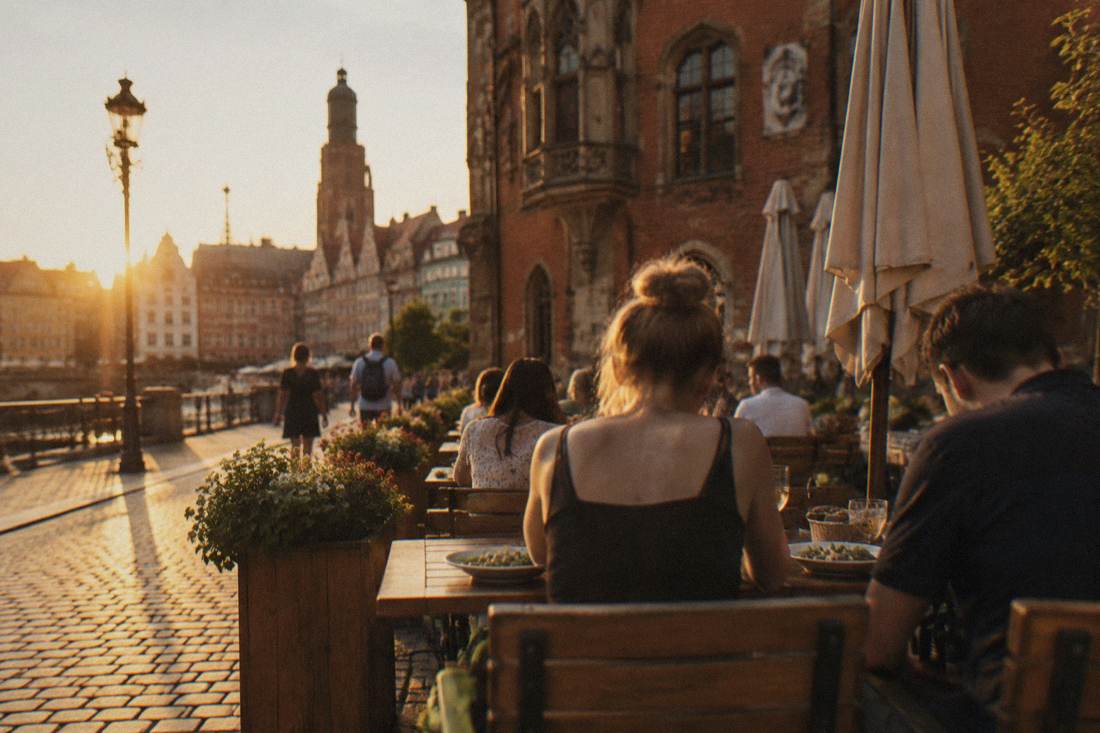
Two seasonal anchors shape food-focused trips. The Christmas market season brings its own vegetarian classics to the Rynek, which the Wroclaw Christmas market guide covers in detail. And winter eating, when the terrace scene closes and the dumpling count rises, has its own logic in Wroclaw in winter and the best time to visit Wroclaw. The month-by-month breakdown, including the full climate table, lives in Wroclaw weather by month.
Where Do You Find Vegan Options Beyond Restaurants In Wroclaw?
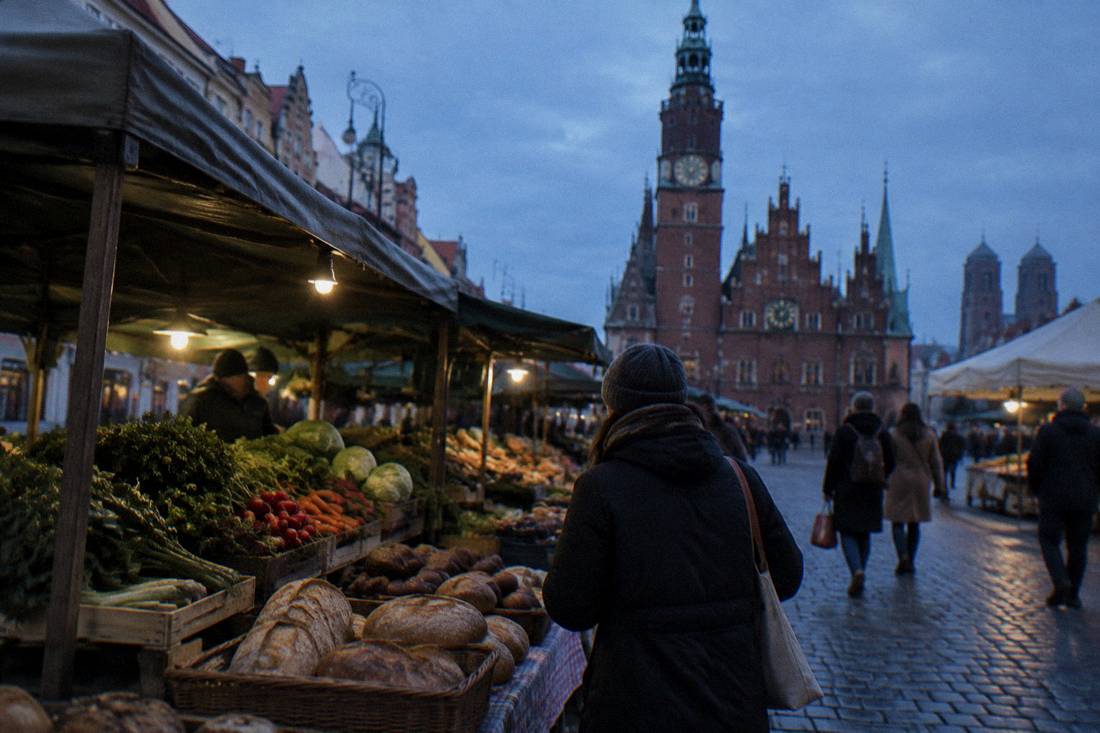
Beyond dedicated restaurants, Wroclaw's vegan options live in the milk-bar canteens and their rotating vegetarian dishes, the cafe layer with plant milks and vegan cakes, supermarkets with developed plant ranges, and the city's markets and craft events, where street-food vendors increasingly carry vegan versions of Polish staples. The fresh-sweep sourcing for this page found all major Polish cities, Wroclaw included, have well-developed scenes with dedicated venues, bakeries and supermarket options.
The market layer deserves attention. Wroclaw's craft market days and flea markets, covered in the flea markets guide, are where the street-food carts cluster, and the city's broader event calendar, in Wroclaw events and Wroclaw festivals, sets the rhythm of outdoor eating from spring through autumn. The craft-beer layer, incidentally, pairs naturally: the Wroclaw craft beer guide covers a scene where bars routinely serve food, and plant-based options follow the same generational wave.
One caution the fact file insists on, and this page repeats without softening: do not arrive expecting Wroclaw to be Poland's vegan capital. That title is not supported by any current ranking, and the phrase belongs to no Polish city in 2026 sourcing. What Wroclaw actually offers is density and convenience, a compact scene you can traverse on foot, anchored by Polish dishes that happen to be plant-friendly at their core. Travelers comparing cities will find the honest head-to-heads in Wroclaw versus Krakow, Wroclaw versus Gdansk and Wroclaw versus Warsaw.
What Does A Vegan Day Of Eating In Wroclaw Look Like?
A realistic plant-based day in Wroclaw runs morning coffee in the Old Town cafe layer, a milk-bar or vegan-kitchen lunch of pierogi and potato pancakes, an afternoon split between the Panorama Raclawicka and the free-Saturday National Museum, and an evening in Nadodrze, with one tram fare at most between the whole plan. Every element above is drawn from verified tariffs, official hours and the sourcing in this guide's fact file, not from an idealized itinerary.
Morning first. The cafe layer opens early and the plant-milk question is routine by now. From the Rynek, the walking route across the Old Town, which the Wroclaw walking tour route guide maps in full, passes the university quarter and the riverside islands before lunch. The midday meal is where Polish vegetarian cooking shows its depth: the dumpling and potato-pancake canon, the soups, and the groats. If the day is a Saturday, the National Museum's permanent exhibitions are free, which frees the budget for dinner.
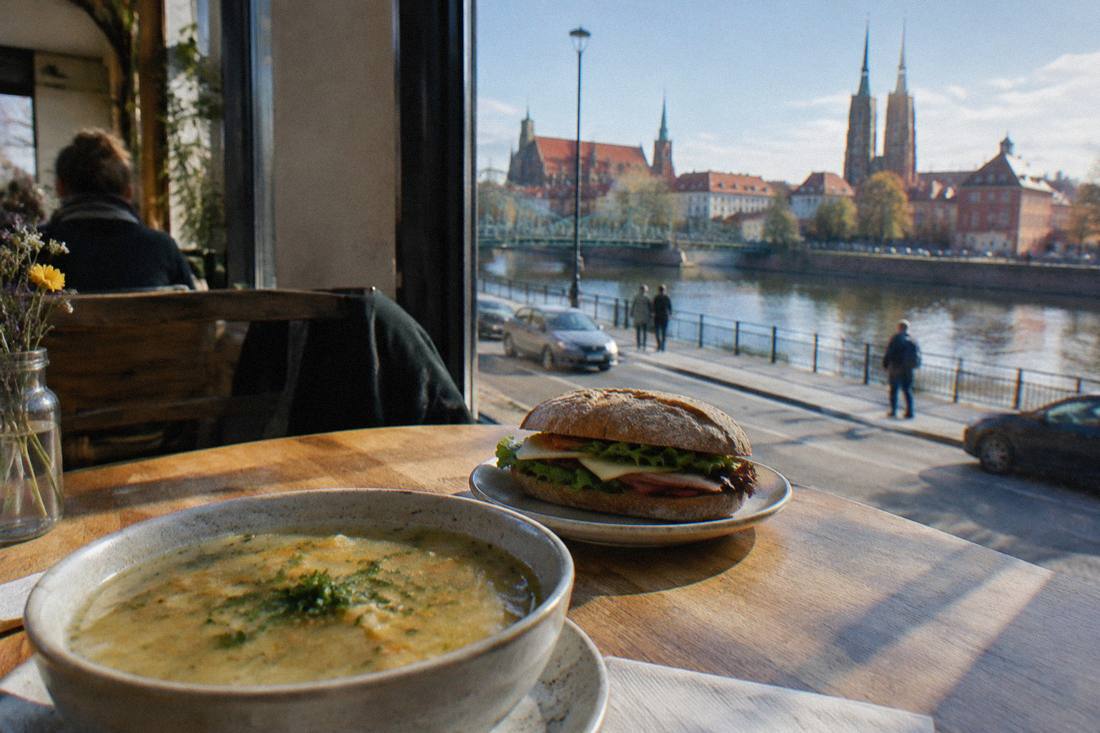
Afternoon options split by weather. On wet days, the museum and aquarium pair carries the plan, and the rainy day Wroclaw guide lists the full indoor set. On dry days, the Odra riverbank and Slodowa Island are where the city picnics, and a market haul becomes lunch. Evening belongs to Nadodrze or the Old Town, and if the night extends, the Wroclaw nightlife guide covers the bars where kitchens stay open late.
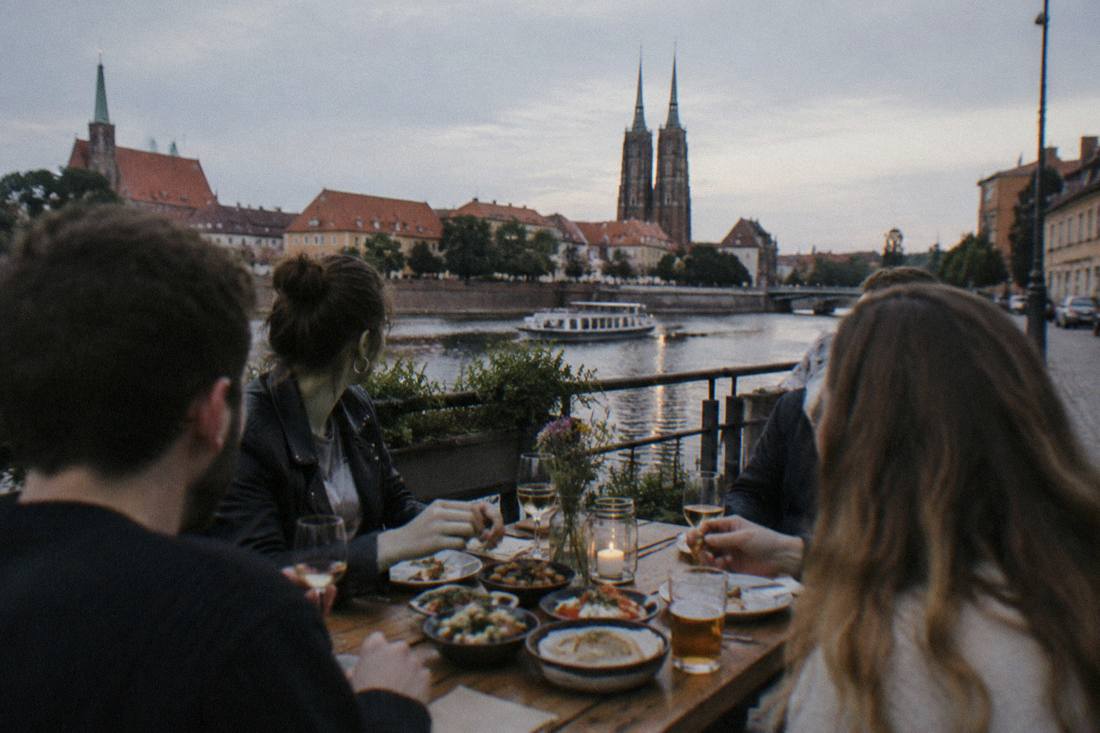
Budgeting the day is straightforward when the reliable figures are separated from the ones nobody should type. Museum and transport costs are published officially and listed above. Restaurant meal prices, however, are not in this site's verified fact file, so this page does not print them: check the menu at the door, which is standard practice in Wroclaw. The full cost-planning framework, including what a multi-day visit realistically adds up to, is in the Wroclaw trip cost guide.
For visitors with more than a day, the honest pairing is food in the city and one big excursion out. Lower Silesia's headline day trips, including the Ksiaz Castle and Church of Peace circuits, are covered in the Ksiaz Castle guide and the Church of Peace in Swidnica guide, and returning to a vegan dinner in Wroclaw is the natural close to either. A castle-and-church circuit is a long day on its own, so the smart sequence is the excursion first and a relaxed plant-based dinner in the Old Town afterward rather than the reverse.
Common Questions About Vegan And Vegetarian Food In Wroclaw
Is Wroclaw the most vegan city in Poland?
No. No current 2026 ranking or news report uses that phrasing for Wroclaw. Older per-capita data from around 2021 placed Poznan and Krakow ahead of it, and Warsaw is the Polish city drawing recent international attention as a vegan hub. Wroclaw's scene is solid and compact, best described as one of several strong options in the country.
Can vegans eat well in Wroclaw's milk bars?
Partially. Milk bars carry many vegetarian dishes, including potato pancakes, dumplings and vegetable soups, but plenty of items contain dairy or egg. Vegetarians eat well there; strict vegans should treat milk bars as a cultural experience with options rather than a guarantee, and lean on the city's dedicated vegan kitchens for fully plant-based meals.
What vegan Polish dishes should I order in Wroclaw?
Look for pierogi with potato, buckwheat, mushroom, cabbage or lentil fillings (ask which versions skip the cheese in the classic ruskie filling), placki ziemniaczane potato pancakes, mushroom soups such as barszcz and grzybowa, and grain-and-vegetable plates. All of these exist in meat-free forms as standard Polish cooking, not special orders.
Which Wroclaw districts have the vegan restaurants?
The scene concentrates in the Old Town around the Rynek, in the Nadodrze creative quarter north of the river, and in the student-heavy areas around the university buildings. All three connect through the central tram spine, and the 15-minute MPK ticket at 4.60 zl covers a single hop between them.
Are there vegan options at Wroclaw markets and street food stalls?
Yes. The city's markets, craft market days and street-food vendors increasingly carry plant-based versions of Polish staples, and the cafe layer routinely offers plant milks and vegan cakes. The scene is part of the same generational wave that built Wroclaw's craft-beer bars, where kitchens also serve food.
Is Wroclaw expensive for vegan eating?
This site does not publish restaurant prices it cannot verify, and no verified Wroclaw meal-price table exists in its fact file. The verified costs on this page are the official ones: 4.60 zl for a 15-minute tram ticket, 20 zl for the National Museum's permanent exhibitions, free entry there every Saturday. Check menus at the door, which is standard practice, and use the trip-cost guide for the overall budgeting framework.
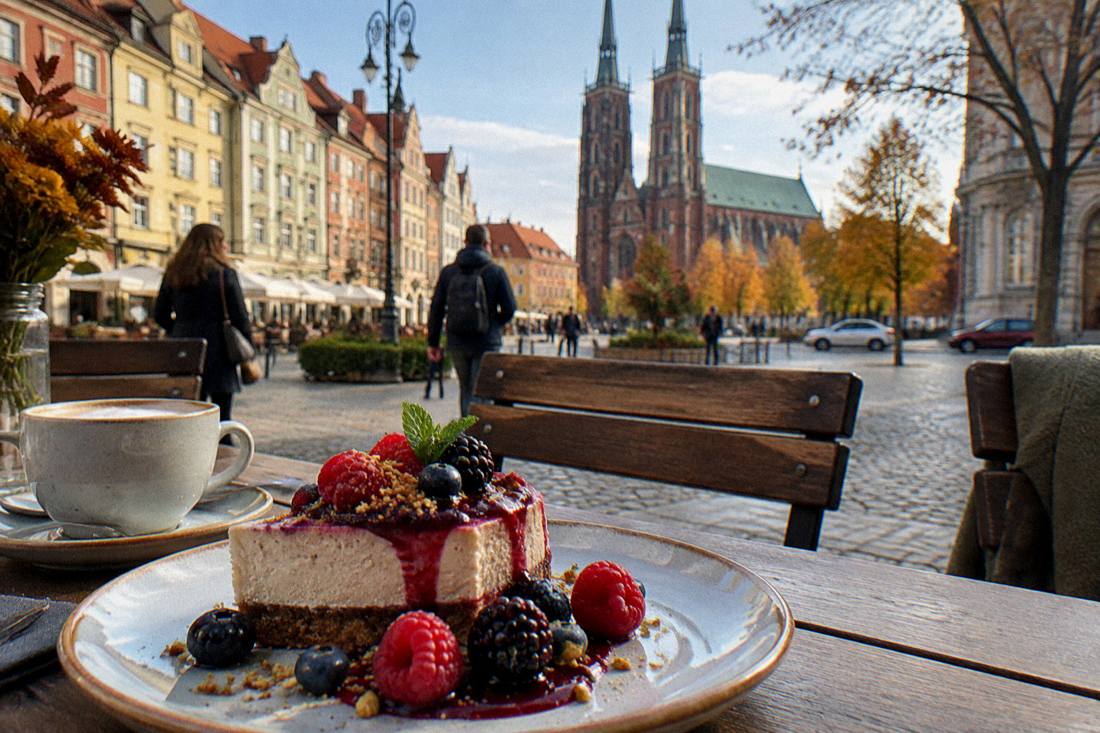
Wroclaw rewards plant-based travelers who arrive with the right expectations: not a national vegan capital, but a compact, walkable city where the dumplings are central, the cafes are covered, and a single tram fare joins the whole map together. Eat in the Old Town, detour through Nadodrze, and let the free-Saturday museum entry pay for dessert.