Nadodrze District
Nadodrze is the former working-class quarter just north of Wroclaw's Old Town, now the city's recognized street-art and creative district. Here is how to plan a visit.
Short answer
Nadodrze is the district immediately north of Wroclaw's Old Town, across from the Odra river's northern channels, known for community murals, courtyard revitalization projects and a creative-quarter reputation that grew out of a formerly neglected area.
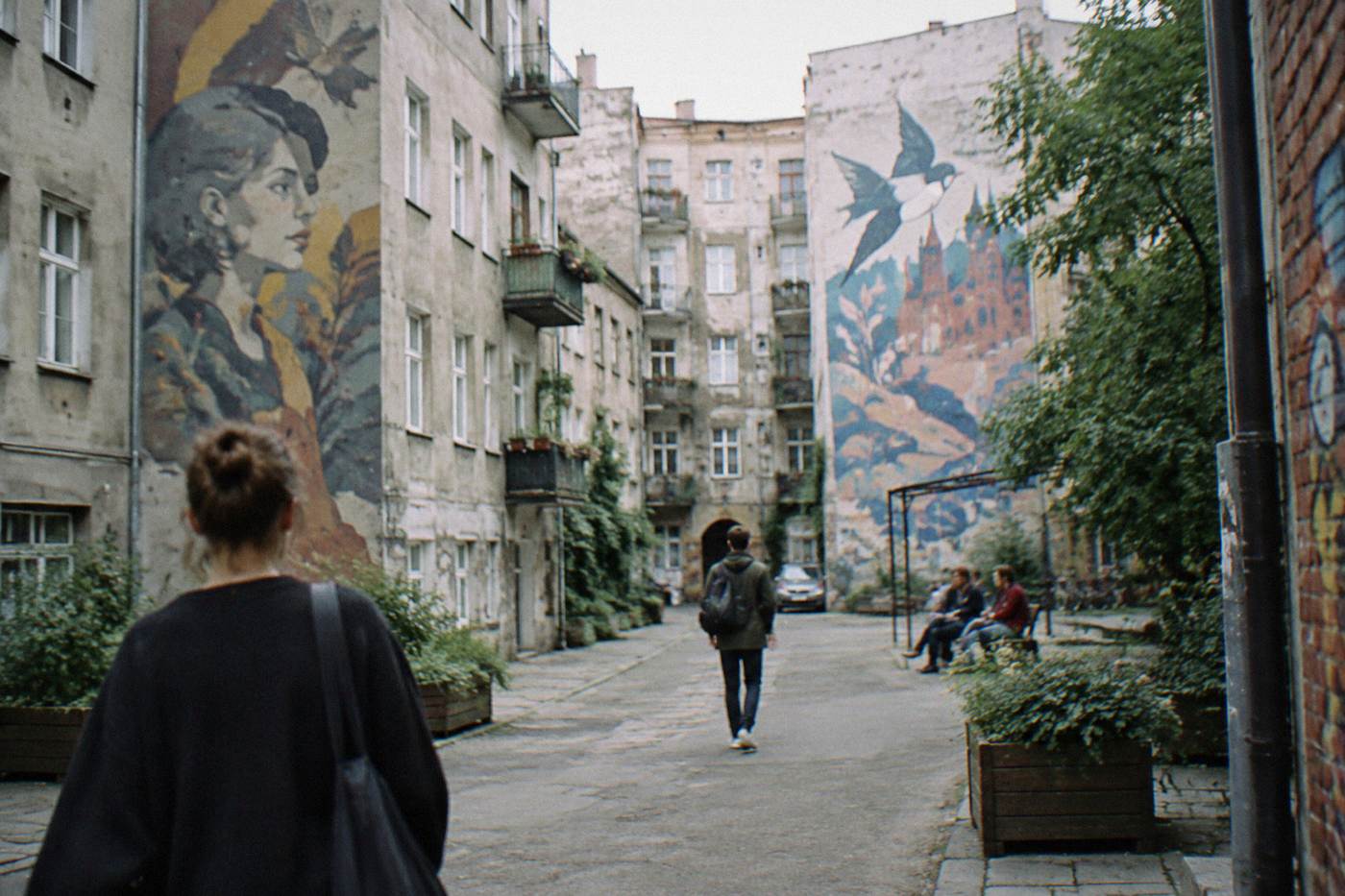
Nadodrze is a district in the northern-central part of Wroclaw, the largest city in Lower Silesia (Dolnoslaskie voivodeship) in southwestern Poland, and it has become the city's recognized street-art and creative quarter. The name means "on the Odra", and the area sits across the river's northern channels from the Old Town, close enough that a walk between the two takes minutes. Once a largely working-class neighborhood of tenement courtyards, Nadodrze has been transformed by community-driven mural projects and revitalization work, with the courtyards around Roosevelt Street the most-cited example. Recent English-language reporting, including TVP World's coverage of the district, describes it as having come back from a period of serious decline into one of Wroclaw's most distinctive areas. This guide covers where exactly the district sits, what it is known for, how to get there on Wroclaw's transit system, what a self-guided street-art walk looks like, what it costs, how safe it is, and how it fits into a wider Wroclaw itinerary.
Where Exactly Is The Nadodrze District In Wroclaw?
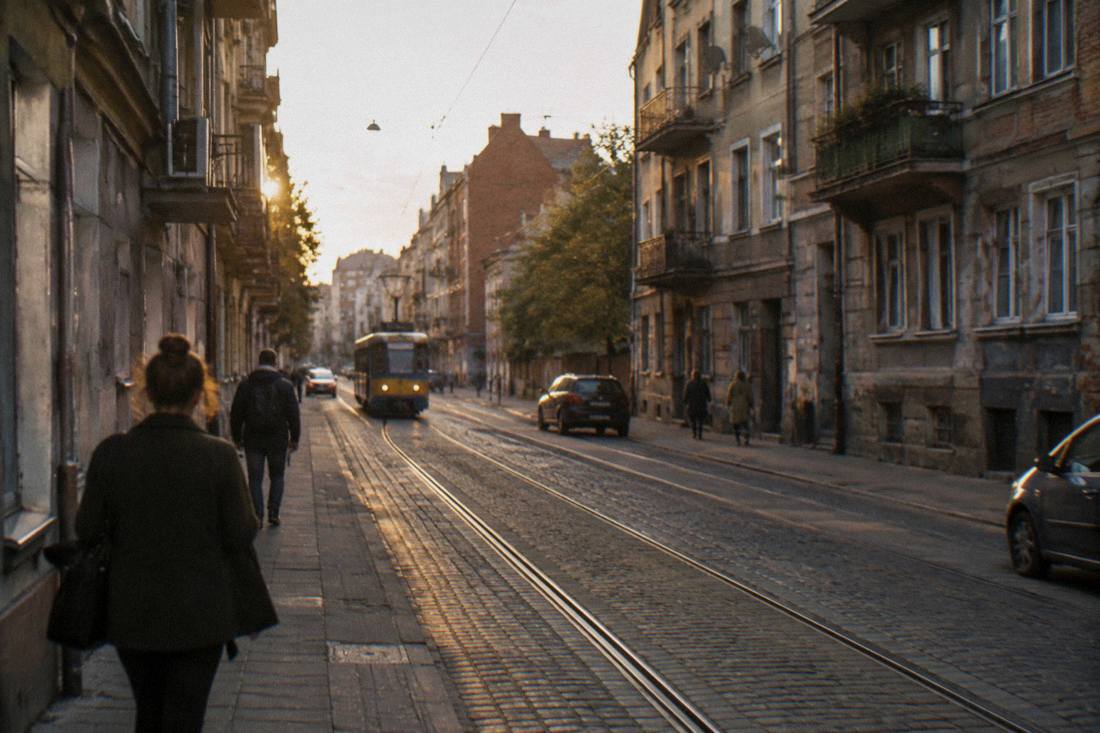
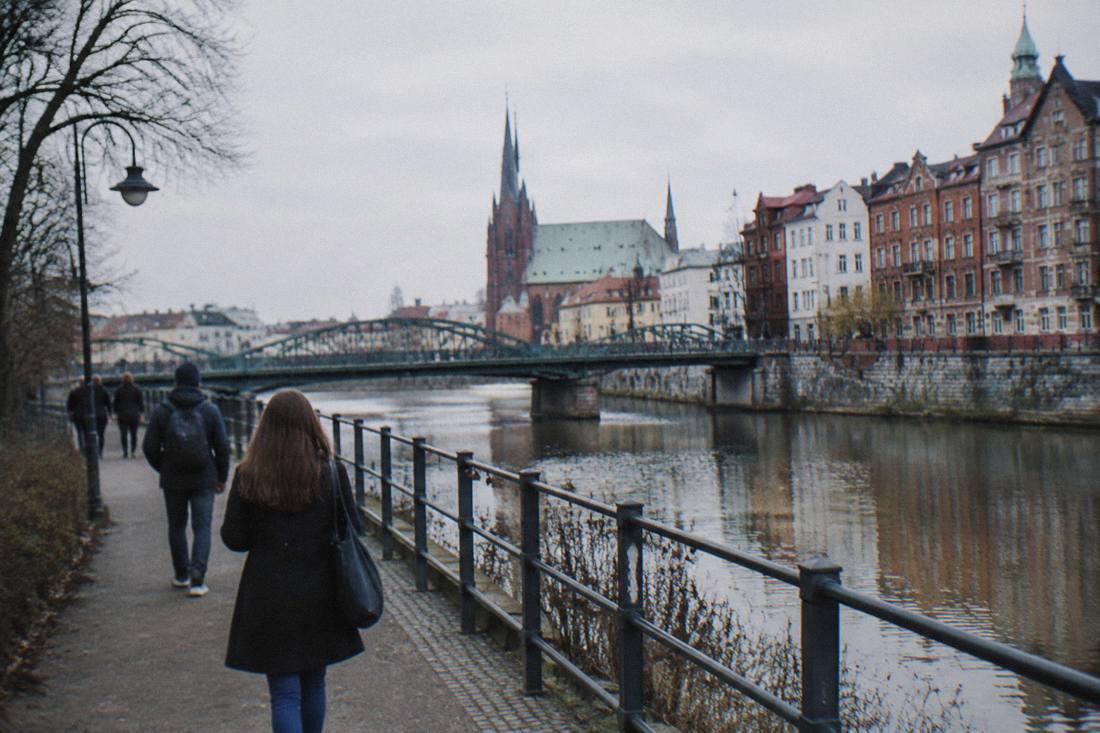
Nadodrze occupies the north-central part of Wroclaw, Poland, immediately across the Odra river's northern channels from the Old Town and the city's market-square core. Its name translates from Polish as "on the Odra", the river that runs through Wroclaw, and the district functions as a near-downtown neighborhood rather than a distant suburb, sitting within easy walking and tram distance of the Rynek.
That geography matters more than it first appears. Wroclaw is a city of islands and river branches, and Nadodrze's position on the north side of those channels put it historically outside the showpiece medieval core while keeping it tied to the center. The tenement fabric, courtyard layout and pre-war street pattern that survived there are part of what later made the district interesting to artists and community groups once revitalization money and energy arrived. The Wroclaw Travel Guide homepage maps how the districts stack up around the river, and reading Nadodrze against the Old Town and the city centre is the fastest way to understand why this one developed so differently from its polished neighbors.
The contrast is genuinely stark. Walk south across the river from Nadodrze and within a few blocks you are in the tourist heart of Wroclaw's Market Square area; walk north and you are in quiet residential streets where the revitalization is still visibly in progress. That in-between character is the district's whole appeal for many visitors, and it is why the area rewards a slightly slower pace than the checklist sights of the Old Town.
What Is The Nadodrze District Known For?
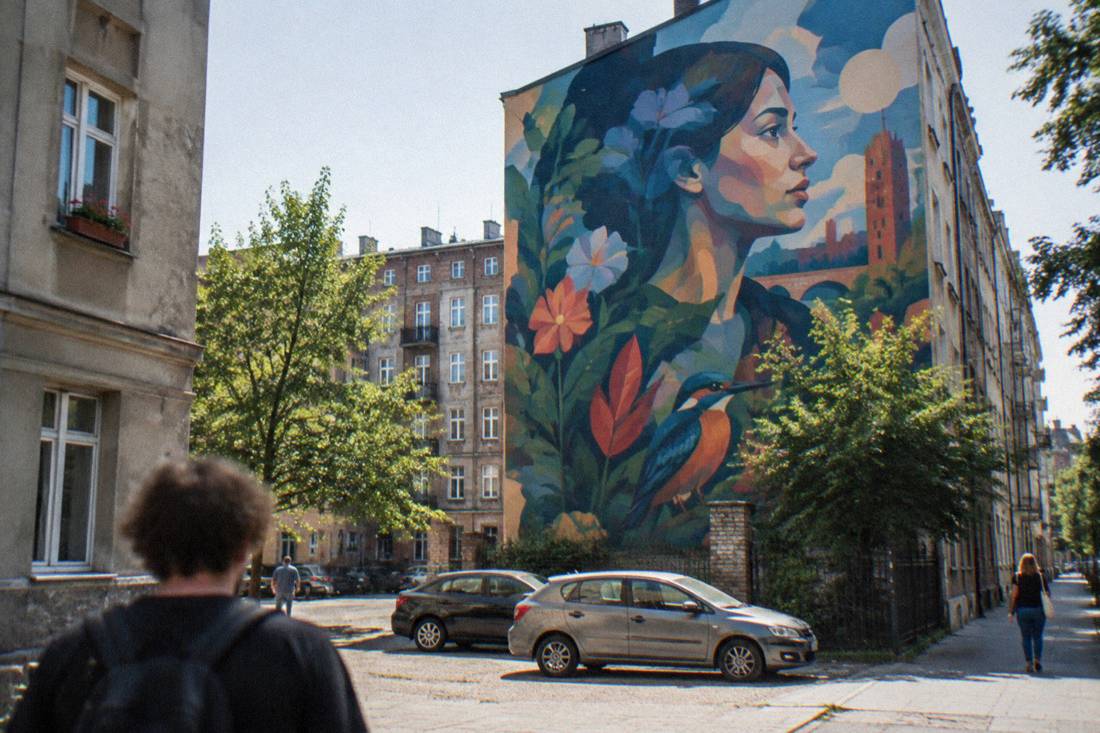
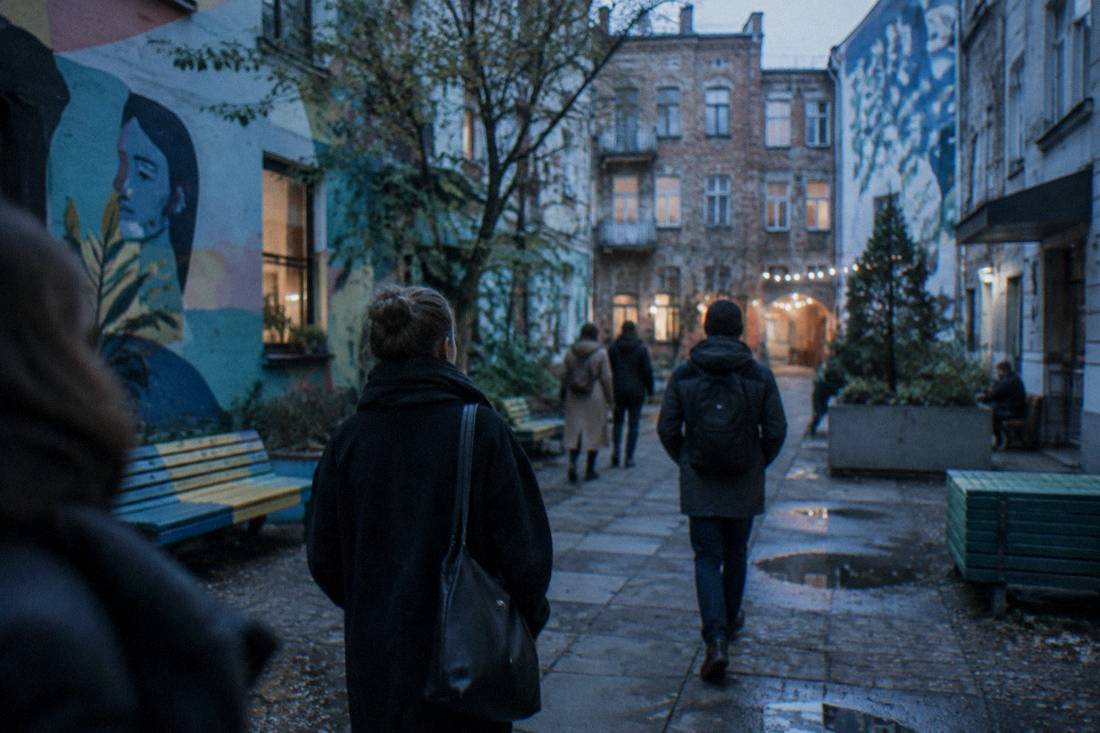
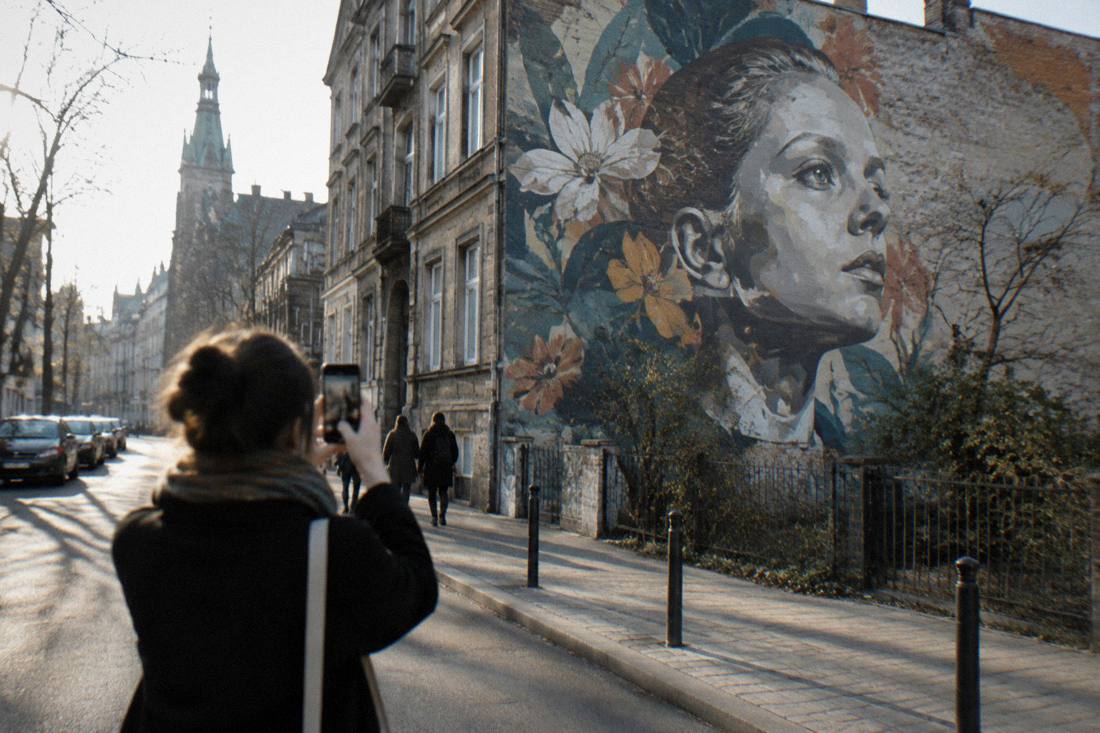
Nadodrze is known as Wroclaw's street-art and creative quarter, a reputation built on community-driven murals, courtyard revitalization projects such as those around Roosevelt Street, and the transformation of a formerly neglected neighborhood into an art-district destination. TVP World and other recent English-language reporting describe exactly this turnaround.
It is important to be precise about what that reputation is, and what it is not. Lodz, not Wroclaw, is the Polish city internationally recognized as the arts and film hub: it holds the UNESCO City of Film designation, hosts the historic Polish National Film School whose alumni include Polanski, Wajda and Kieslowski, and carries the "HollyLodz" nickname. Wroclaw's verified arts identity rests on specific, sourced claims instead: the Nadodrze district's street-art and creative-quarter reputation, the New Horizons film festival, and its year as a European Capital of Culture in 2016. State the district's fame through those facts and it stays honest.
The murals themselves are the draw. The community-led model is what distinguishes Nadodrze from cities where street art arrives as a top-down festival; here the reporting describes courtyard projects driven by residents, with the Roosevelt Street courtyards repeatedly named as the flagship. Visitors who want the same creative energy indoors rather than on walls can also build a museum day out of the area, and the table below shows what the nearby institutions cost.
| Institution | Adult Ticket | Reduced Ticket | Notes |
|---|---|---|---|
| National Museum in Wroclaw (permanent exhibitions) | 20 zl | 15 zl | Free entry to permanent exhibitions every Saturday |
| Panorama Raclawicka | 50 zl | 35 zl | 30-minute screening; ticket also covers the National Museum, Ethnographic Museum and Four Domes Pavilion within 3 months |
| National Museum temporary exhibition | 10 zl | 8 zl | Second floor of the main building |
The bundled Panorama ticket deserves its own sentence: the Panorama Raclawicka's own practical-information page states that a single ticket also covers the National Museum's permanent exhibitions, the Ethnographic Museum and the Four Domes Pavilion, valid within three months of the visit date. For a visitor basing themselves near Nadodrze, that is effectively a multi-museum pass for one 50 zl adult purchase.
How Do You Get To Nadodrze On Wroclaw Public Transport?
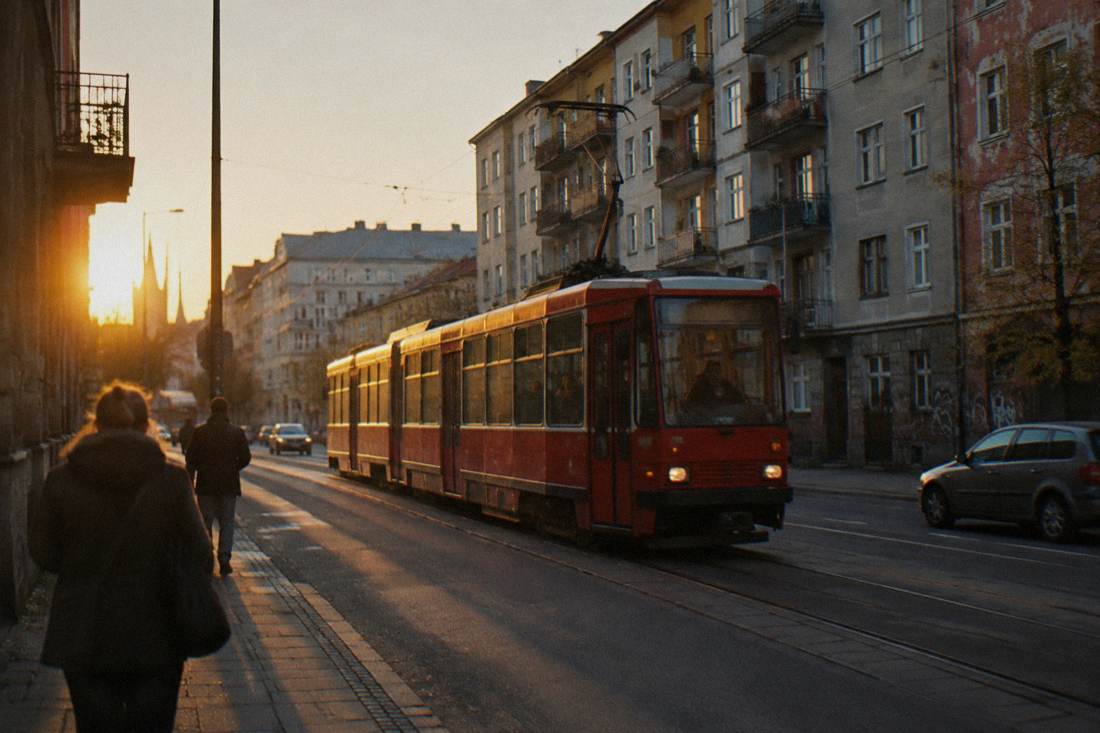
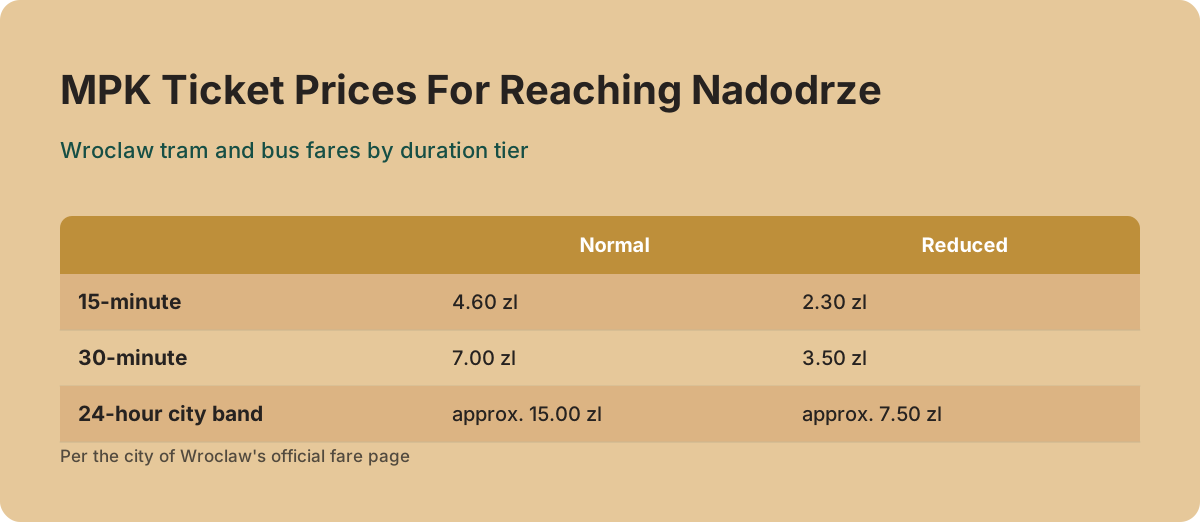
Wroclaw's MPK tram and bus network serves the Nadodrze district with the city's standard fare structure: a 15-minute ticket costs 4.60 zl normal or 2.30 zl reduced, and longer tiers rise to 7.00 zl for 30 minutes and around 15.00 zl for a 24-hour city ticket, per the city's official fare page. There is no separate tourist pass; UrbanCard is a transport-focused card, not a sightseeing pass.
The base 15-minute ticket is usually enough for the hop from the Old Town area across the river into the district, and the 24-hour band suits a day spent drifting between Nadodrze, the Old Town and Ostrow Tumski. The city of Wroclaw's official portal publishes the full tier list, and the practical detail worth knowing is that fares are bought per duration, not per line, so a single validated ticket covers any combination of trams and buses until its clock runs out.
| MPK Ticket Tier | Normal | Reduced |
|---|---|---|
| 15-minute | 4.60 zl | 2.30 zl |
| 30-minute | 7.00 zl | 3.50 zl |
| 24-hour city band | approx. 15.00 zl | approx. 7.50 zl |
There is no all-inclusive Go City-style tourist pass for Wroclaw at all. No such product is currently sold or prominently marketed for the city, so any page offering you one should be treated with suspicion. The honest options are ordinary MPK tickets, the museums' own admission prices, and individual paid tours, which is a genuinely simple system once you stop looking for a pass that does not exist.
For visitors arriving by air, the Wroclaw airport guide covers the transfer into the center, from which the district is a short tram ride or a walk across the river. Wroclaw Airport handled 4,473,945 passengers in 2024, its busiest year on record to that point, and a temporary full closure for a renovation of the operational area ran from 26 October to 4 December 2025, finishing ahead of schedule; the airport is open today.
If you would rather have a guide lead you across the river lanes than navigate them yourself, the district pairs naturally with a guided walk. The dwarf walk themed "Following the Dwarfs, See the City Differently" explores the city from street level, Check availability.
What Does A Self-Guided Nadodrze Street-Art Walk Look Like?
A self-guided walk through Nadodrze works as a slow loop of the district's residential streets and courtyards, anchored on the Roosevelt Street courtyard murals, with no ticket, no fixed route and no set duration; the district is free to wander, and the art is on exterior walls, so daylight hours matter more than opening hours do.
The practical starting point is the river's edge. Cross from the Old Town side, and you enter the district's grid of tenement streets almost immediately. The reporting on Nadodrze's revival consistently highlights the Roosevelt Street courtyards as the emblematic site, so treat that as the walk's anchor and let the surrounding blocks unfold around it. Community murals, courtyard cleanups and small-scale creative reuse are the texture of the area, and unlike a museum, none of it has a queue or a closing time beyond dusk.
Season changes the experience more than in most of Wroclaw. Murals and courtyards are outdoor sights, and IMGW's 1991-2020 climate normals for the Wroclaw station show why late spring through early autumn is the comfortable window: July averages 19.7C and August 19.3C, while January sits at 0.0C. The full monthly picture is below, and the Wroclaw weather by month guide unpacks it in detail.
| Month | Mean Temperature (C) | Precipitation (mm) |
|---|---|---|
| Jan | 0.0 | 28.3 |
| Feb | 1.1 | 25.6 |
| Mar | 4.3 | 35.0 |
| Apr | 9.7 | 31.2 |
| May | 14.3 | 59.6 |
| Jun | 17.7 | 65.4 |
| Jul | 19.7 | 91.4 |
| Aug | 19.3 | 59.5 |
| Sep | 14.5 | 48.4 |
| Oct | 9.6 | 37.6 |
| Nov | 4.8 | 31.4 |
| Dec | 1.1 | 27.9 |
Read the table before packing: July is the warmest month but also the wettest at 91.4 mm, while April is the driest at 31.2 mm. May and September are the sweet spots for a walking-focused district, warm enough for hours outdoors without the peak-summer downpours. Winter visits are perfectly possible, and the murals photograph well against grey skies, but the courtyard experience loses the lingering that makes the district feel alive.
For structure, a guided option removes the guesswork entirely. A private top-attractions walk of Wroclaw can be routed to include the riverside districts, and a hidden-gems walking tour covers exactly the kind of non-flagship neighborhoods Nadodrze represents.
A private guide is the choice to make when the schedule is tight or the group wants a route built around specific interests, because the itinerary flexes rather than following a fixed script. It also costs more than a shared group walk, so the trade-off is real and worth weighing before booking either way.
A small-group Old Town walk is the natural complement, since it covers the polished core first before you cross the river into the rougher-edged creative quarter, and the two together give a fuller picture of the city than either alone.
How Much Time Should You Spend In Nadodrze?
Plan on two to three hours for a focused Nadodrze visit: enough time to walk the main mural streets, spend unhurried time in the Roosevelt Street courtyards, pause for coffee somewhere local and still be back across the river for the afternoon. A full half-day is worthwhile if you are photographing seriously or want to extend the walk along the Odra riverside toward the islands.
The honest answer depends on what you want from a district whose whole point is that it is not a checklist. Visitors who treat it as a photo stop, tram in, ten murals, tram out, will be done in an hour and will have missed the atmosphere. Visitors who let the courtyards and corner streets dictate the pace get the version of Wroclaw that earned the district its reputation in the first place.
Nesting Nadodrze inside a wider itinerary works well. The one day in Wroclaw plan keeps the focus on the core sights and fits a short Nadodrze detour into the late afternoon, while two days in Wroclaw gives the district its own morning. The table below positions it against the city's other major areas.
| Area | Character | Best For | Time Needed |
|---|---|---|---|
| Nadodrze | Street-art and creative quarter, revitalizing | Murals, courtyards, local atmosphere | 2-3 hours |
| Old Town | Medieval core, market square, tourist heart | First-time sightseeing, evening life | Half day or more |
| Ostrow Tumski | Cathedral island, historic lanes | Gothic architecture, quiet walks | 1-2 hours |
| Biskupin-Sepolno | Garden-city suburb, villas and greenery | Architecture walks, calmer exploring | Half day |
One timing note that matters for combining Nadodrze with museums: the National Museum in Wroclaw is closed on Mondays year-round, open Tuesday to Friday 10:00-17:00 and weekends 10:30-18:00 in its summer season (1 April to 30 September), with a winter schedule of 10:00-16:00 midweek and 10:00-17:00 on weekends. The museum's own practical-information page carries the full hours, and the ticket office closes 30 minutes before the museum itself. Saturdays are free for the permanent exhibitions, which pairs neatly with a weekend morning in the courtyards.
Is Nadodrze Safe To Visit?
Nadodrze is a normal central-city district for safety purposes: Wroclaw overall is regarded as a safe city by Polish standards, and the specific safety question for Nadodrze is ordinary urban common sense, daylight timing and the usual care with valuables, not a documented crime problem. No source in this site's verified research attaches an elevated risk to the district.
The honest framing is that the district's gritty visual texture, peeling plaster next to fresh paint, reads rougher than it behaves. Revitalization changed the street life substantially, and the reporting on the area's comeback describes renewal, not lingering danger. That said, a district mid-transformation has quieter corners than the Old Town, so the standard advice applies: keep evenings for the better-lit core, and use the trams rather than long dark walks if you finish late.
For city-wide context, the Wroclaw safety guide covers neighborhoods, night hours and practical precautions in detail, and the question of walking at night is answered specifically in is it safe to walk in Wroclaw at night. The short version relevant here: the areas around Nadodrze are ordinary, and the same rules you would apply in any city of 672,601 people are the ones that apply.
Daylight solves most of it, and daylight is plentiful in the visiting season. Plan the street-art walk between late morning and mid-afternoon, when the courtyards are busiest with residents and other visitors, and you get both the best light for photographs and the most lived-in version of the district.
What Else Is Near Nadodrze Worth Combining Into One Day?
The closest headline sights to Nadodrze are the Old Town and Market Square to the south, Ostrow Tumski's cathedral island just downstream, and the Odra riverside itself between them; all sit within short tram rides or walks of the district, so a single well-planned day can cover a morning of murals, an afternoon of core sights and an evening back in the center.
The Riverside combination is the classic move. Walk or tram south into the Old Town, spend the afternoon around the Rynek, and finish on Slodowa Island or the riverside quays as the evening starts. The Old Town area guide details what the core holds, and for the question of whether the city justifies the trip at all, why Wroclaw is famous and is Wroclaw worth visiting are the two answers pages worth reading first.
Beyond the city, the district also makes a sensible base point for day trips, since the regional trains leave from the main station a short hop south. The two flagship destinations in the region are Ksiaz Castle and, further out, the mountains at Karpacz and the Karkonosze. The costs below are the sites' own published figures.
| Day-Trip Site | Adult Ticket | Reduced Ticket |
|---|---|---|
| Ksiaz Castle (castle with audioguide and terraces) | 72.00 zl | 62.00 zl |
| Ksiaz Castle underground tour alone | 45.00 zl | 39.00 zl |
| Church of Peace in Swidnica | 18 zl | 15 zl |
Two cautions travel with those numbers. Ksiaz Castle's terraces open only from 15 April to 30 September, per the castle's own tariff, so the 72 zl castle-with-terraces ticket is effectively a warm-season product. And the Church of Peace in Swidnica is a UNESCO World Heritage site, inscribed in 2001 as part of the "Churches of Peace in Jawor and Swidnica" listing, so its 18 zl adult ticket buys a genuinely world-class interior, the largest timber-framed religious building of its kind in Europe. If a guided day covering the two Peace Churches in Swidnica and Jawor appeals, the tour options listed further up this page include exactly that trip, with transport handled.
Common Questions About The Nadodrze District In Wroclaw
Is Nadodrze worth visiting?
Yes, if you have already seen the Old Town or you prefer lived-in neighborhoods over polished ones. The district's verified reputation as Wroclaw's street-art and creative quarter, with the Roosevelt Street courtyards as its flagship, makes it the city's clearest example of a neighborhood revival. If you have only one day in Wroclaw, the core sights come first and Nadodrze is a strong add-on rather than a substitute.
How far is Nadodrze from Wroclaw's Market Square?
Nadodrze sits immediately north of the Old Town across the Odra's channels, within short tram rides or a walk of the market-square core. A 15-minute MPK ticket at 4.60 zl covers the hop, and the district is genuinely near-downtown rather than suburban.
Do you need a tour to see Nadodrze's street art?
No. The murals and courtyards are on exterior walls, free to view and explorable without a guide or a ticket. Guided walks add context and route you efficiently, and the two-hour dwarf walk themed around seeing the city differently is one option that approaches Wroclaw from street level, but a self-guided wander is a perfectly good way to see the district.
Is there a tourist pass that covers Nadodrze's museums?
No all-inclusive city tourist pass is currently sold for Wroclaw. The closest thing is the Panorama Raclawicka ticket, which the Panorama's own page states also covers the National Museum's permanent exhibitions, the Ethnographic Museum and the Four Domes Pavilion within three months. UrbanCard is a transport fare card, not a sightseeing pass.
When is the best time of year to walk around Nadodrze?
May and September, going by IMGW's 1991-2020 climate normals for the Wroclaw station. May averages 14.3C and September 14.5C, comfortably between the 0.0C January mean and the 19.7C July peak, and both avoid July's heaviest rainfall month at 91.4 mm. The street art is visible year-round, but it is an outdoor experience.
Is Nadodrze the same as Wroclaw's Old Town?
No, they are distinct areas. Nadodrze is the revitalized creative quarter north of the river channels; the Old Town is the medieval core around the Market Square. The two pair naturally in a single day, with the Old Town covered on the main walking-tour route and Nadodrze as the counterpoint across the water.
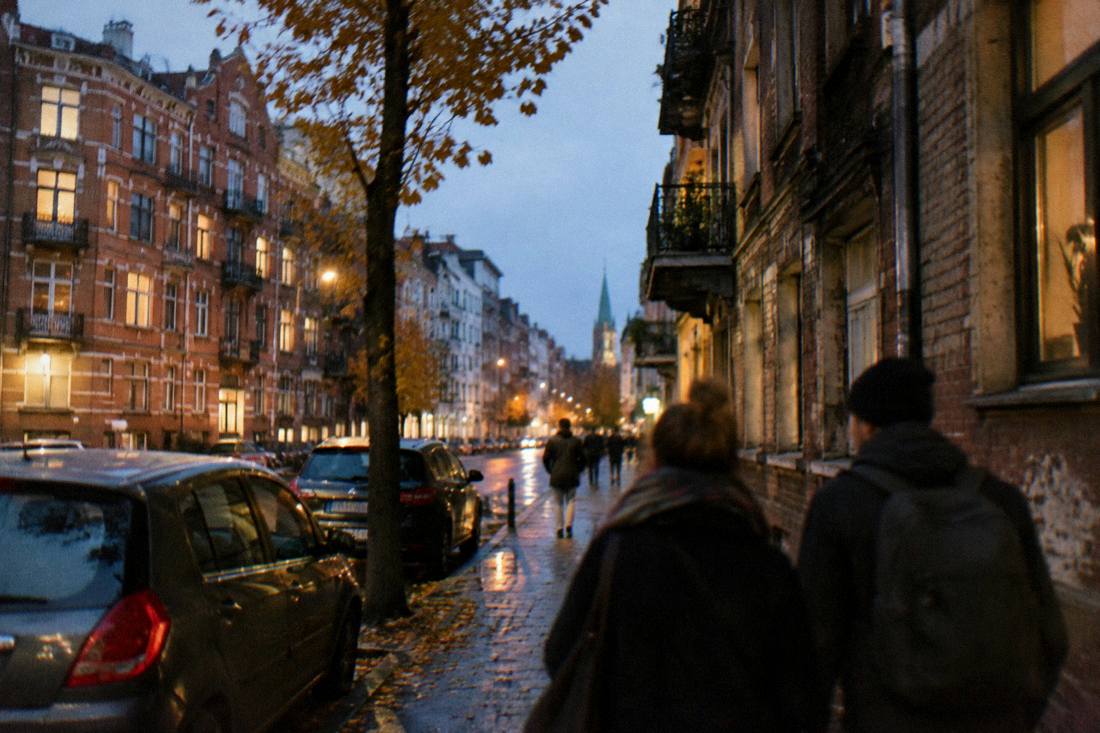
The Nadodrze District is the part of Wroclaw where the city's recent story is written on its walls, and it earns its place on an itinerary precisely because it looks nothing like the Rynek. Give it a slow morning, a transit ticket and a little curiosity, and it repays all three.