Wroclaw City Centre
The Wroclaw city centre packs a market square, a cathedral island, a UNESCO-listed hall and several hundred bronze dwarfs into a compact walkable core on the Odra river. Here is what to see, what tickets cost, and how to plan the time.
Short answer
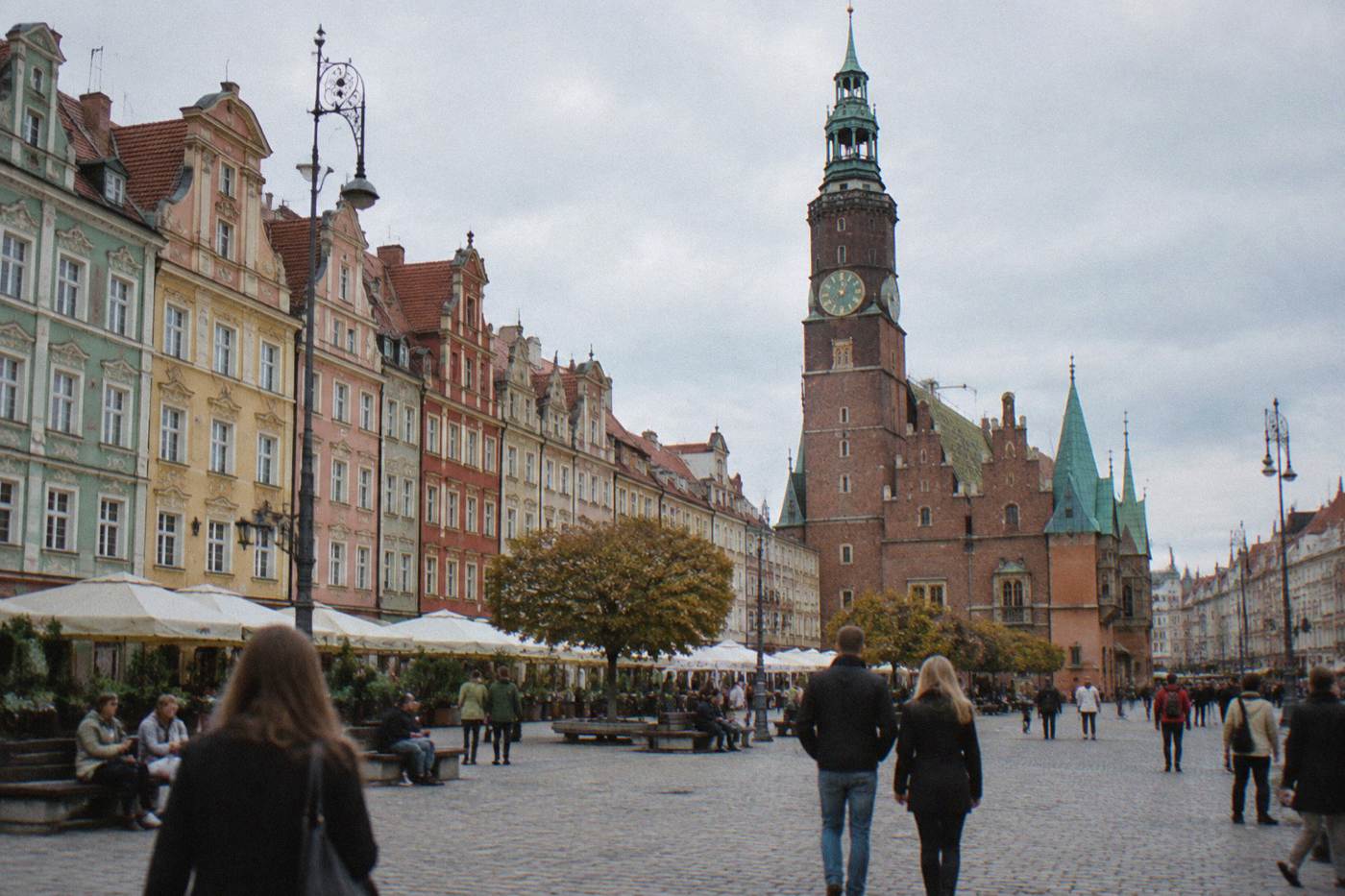
The Wroclaw city centre is the compact core around the Market Square (Rynek) and Ostrów Tumski, walkable end to end, anchored by the Market Square, Cathedral Island, the Panorama Raclawicka and the bronze dwarfs. The city's population is 672,601 (GUS, 31 Dec 2025), and most central sights sit within a short tram ride or walk of each other.
Wroclaw, in southwestern Poland, is the largest city in Lower Silesia (Dolnoslaskie voivodeship), strung across a dozen islands of the Odra river, and its city centre is one of the most compact and rewarding old-town cores in the country. The population stands at 672,601 as of 31 December 2025, according to GUS, Poland's statistics office, which makes Wroclaw smaller than Krakow in both population (816,614) and in the size of its main market square. That smaller footprint is good news for visitors. Almost everything worth seeing in the centre sits within an easy walk, and the whole area holds together as a single, browsable district rather than a sprawl of disconnected sights.
This page, part of the Wroclaw Travel Guide collection, covers the centre as a place: where its boundaries really sit, which sights sit inside them, what the verified ticket prices are, how the MPK transport fares work, which free GuruWalk tours operate in the core, and how many days to give it. It links out to the deeper pages on the Market Square, Cathedral Island, the dwarfs and the surrounding quarters, so use it as the hub and those as the detail.
Where Exactly Is The Wroclaw City Centre?
Most definitions of the Wroclaw city centre start at the Market Square (Rynek) and stretch north across the Odra branches to Ostrów Tumski, the cathedral island, with the ring of planty parkland marking the historic edge of the core. In practice, visitors treat everything inside that green ring plus the islands as the centre, and the walk from the Market Square to the cathedral is under twenty minutes at a relaxed pace. The Rynek itself measures roughly 3.64 to 3.79 hectares, smaller than Krakow's Rynek Glowny, but it is larger than most first-time visitors expect and is ringed by painted townhouses, the gothic town hall and the glass-and-steel inset of the small market square (Plac Solny) at its southeast corner.
The river is what makes Wroclaw's centre unusual among Polish cities. The Odra splits into multiple channels here, and the centre is stitched together by bridges, islands and riverbanks. Ostrów Tumski, the oldest part of the city, sits on one of those islands to the north, connected by the stone Tumski Bridge. To the south and east of the old ring lie the streets of the expanded city, including the Nadodrze district just north of the station, which has turned from a neglected quarter into the city's recognized street-art and creative area, widely described in recent reporting as its art district.
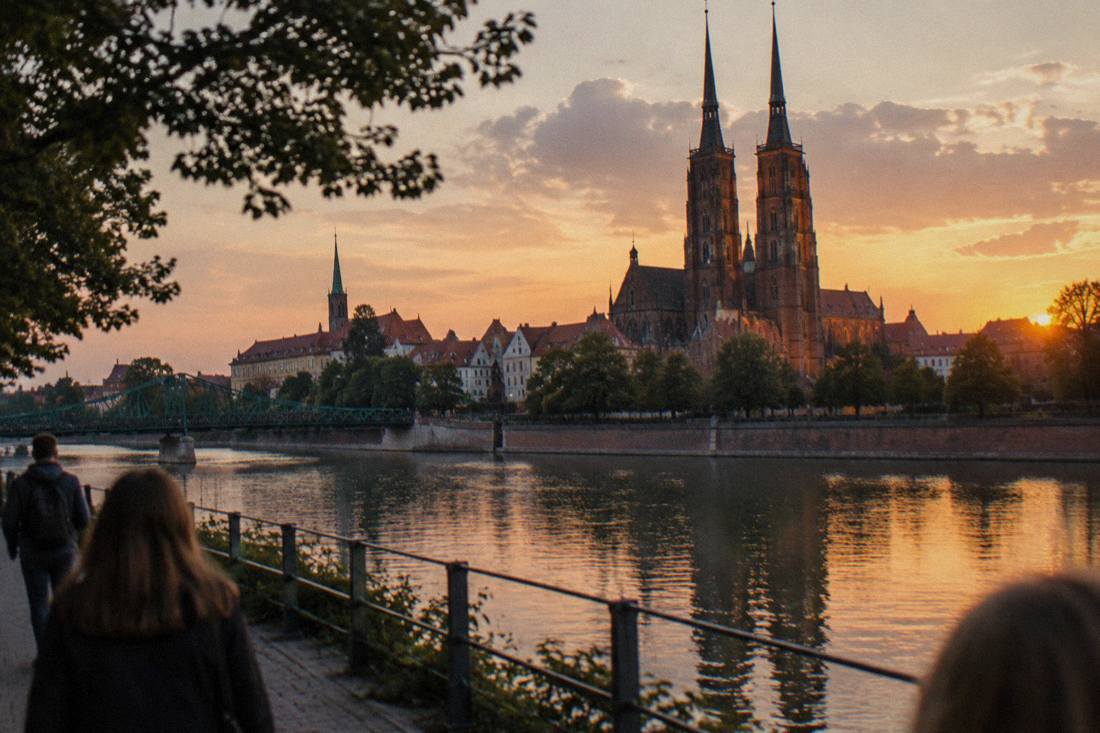
Two more anchors define the practical centre for most trips. The first is Wroclaw Glowny, the main railway station, a grand landmark building a fifteen-minute walk from the Rynek, which is where most arriving visitors start. The second is the cluster of islands just west of the old town, Slodowa Island and the surrounding sandbars, which function as the city's communal living room in warm weather. The Old Town guide covers the historic streets in more depth, while the Nadodrze guide and the Biskupin and Sepolno guide cover the quarters just beyond the ring.
How The Centre Divides Up
| Part Of The Centre | What Sits There | Best For |
|---|---|---|
| Market Square (Rynek) and Plac Solny | Town hall, painted townhouses, flower market | First stop, photos, evening |
| Ostrów Tumski | Cathedral of St John the Baptist, cathedral gardens, lantern-lit lanes | Early morning, quiet walks |
| The Odra islands | Slodowa Island, botanical garden side, riverbank lawns | Warm afternoons, picnics |
| The station quarter | Wroclaw Glowny, Nadodrze edges, growing cafe scene | Arrival, street art |
| The southern ring | Shopping streets, National Museum, Opera | Rainy days, evenings |
Which Sights Sit Inside The Wroclaw City Centre?
The essential sights of the Wroclaw city centre are the Market Square with its town hall, Ostrów Tumski with the cathedral, the Panorama Raclawicka rotunda, the National Museum, and the bronze dwarf figurines scattered across the whole core, with the botanical garden and Slodowa Island as the green counterweight. Centennial Hall, the UNESCO-listed concrete dome built 1911-1913 to the design of architect Max Berg, sits just outside the historic ring in Szczytnicki Park and is usually reached by tram. Each of these has its own page on this site with fuller detail, and the paragraphs below give the centre-level view with the verified prices attached to each one.
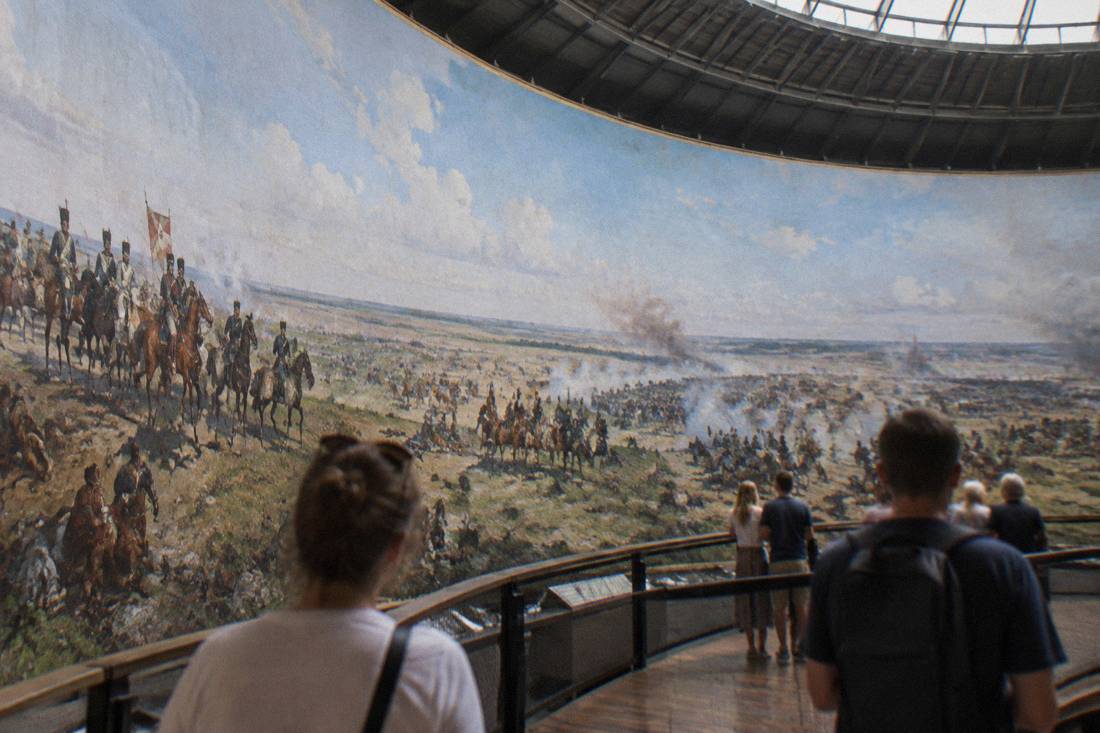
The Panorama Raclawicka is the single most distinctive indoor sight in the core: a vast panoramic painting of the battle of Raclawice displayed in a purpose-built rotunda, viewed from a central platform over a 30-minute screening. The National Museum's own site lists the adult ticket at 50 zl, reduced 35 zl, family at 35 zl per person, and the same ticket also covers the National Museum's permanent exhibitions, the Ethnographic Museum and the Four Domes Pavilion within three months of the visit date. That bundling makes the Panorama a better value than its headline price suggests, and its hours are split seasonally: daily 8:30-19:00 in summer (April-October), closed Mondays in winter with 9:30-16:00 weekday hours.
The National Museum itself sits a short walk south of the Rynek and, unlike many Polish state museums, opens its permanent exhibitions free of charge every Saturday, a detail worth building a weekend itinerary around. Full coverage of the Market Square, the Panorama and Cathedral Island lives on their own pages, as does the story of the dwarfs. The zoo and Afrykarium sit east of the centre on the river and are covered in the zoo and Afrykarium guide.
Seeing the centre on foot works, but a structured introduction saves time on a short visit, and these are the tours this site rates most for the core:
What Do Tickets And Transport Cost In The Wroclaw City Centre?
Attraction admission inside the Wroclaw city centre is inexpensive by western European standards: the Panorama Raclawicka costs 50 zl adult and 35 zl reduced, the National Museum 20 zl adult and 15 zl reduced, and the base MPK tram or bus ticket is 4.60 zl normal or 2.30 zl reduced for a 15-minute ride. Poland's currency is the zloty (PLN), not the euro, and every figure below is a till price in zl, not an online tour price. The city's official portal, wroclaw.pl, publishes the transport fare tiers, and its price guide lists higher bands for longer rides: a 30-minute ticket at 7.00/3.50 zl, a 24-hour city ticket band around 15.00/7.50 zl, and multi-day bands at 26/13, 32/16 and 54/27 zl.
Because the historic centre is so walkable, many visitors never buy more than one or two transport tickets. The trams earn their keep in three situations: reaching Centennial Hall and the Japanese Garden in Szczytnicki Park, crossing from the main station to the Rynek with luggage, and getting out to the zoo on a hot day. Tickets are time-based rather than distance-based, so a single 15-minute ticket covers a tram ride plus a connection as long as the clock holds, and this site's transport coverage explains the machines, validation and night lines in detail.
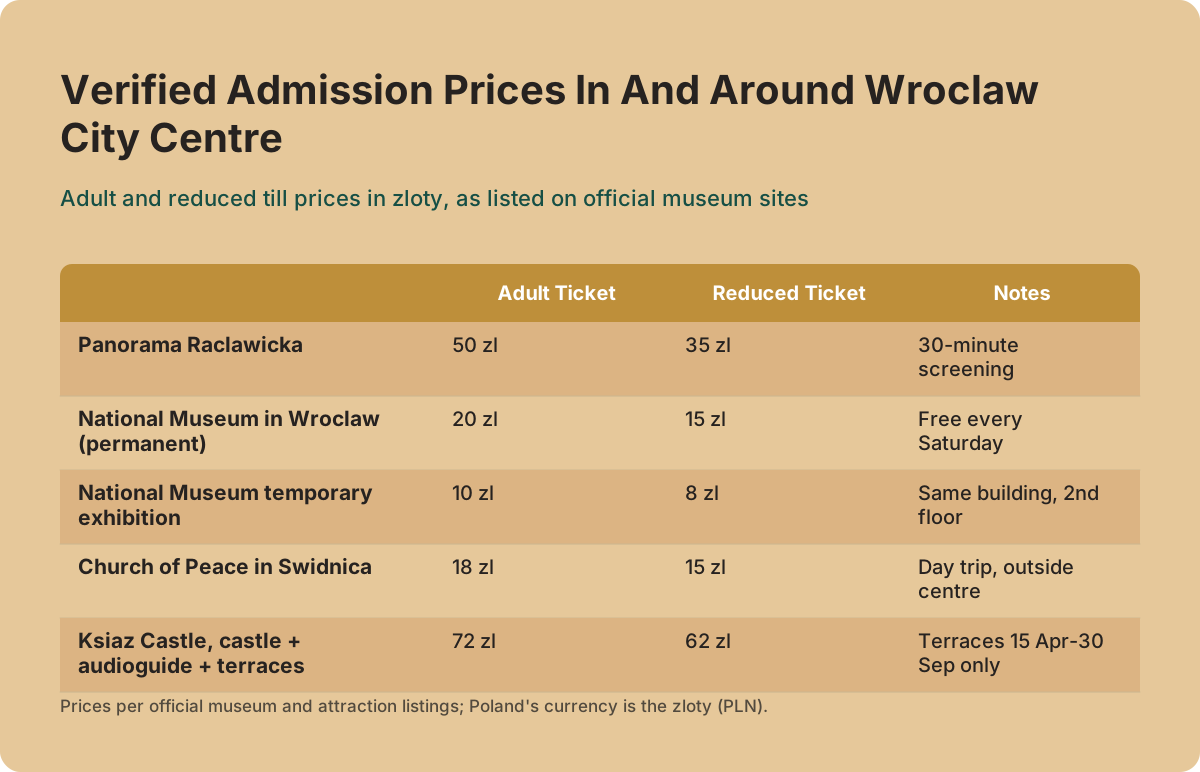
Verified Admission Prices In And Around The Centre
| Sight | Adult Ticket | Reduced Ticket | Notes |
|---|---|---|---|
| Panorama Raclawicka | 50 zl | 35 zl | 30-minute screening; also covers 4 other museums within 3 months |
| National Museum in Wroclaw (permanent) | 20 zl | 15 zl | Free to permanent exhibitions every Saturday |
| National Museum temporary exhibition (2nd floor) | 10 zl | 8 zl | Same building |
| Church of Peace in Swidnica (day trip) | 18 zl | 15 zl | Outside the centre, listed for comparison |
| Ksiaz Castle, castle + audioguide + terraces | 72 zl | 62 zl | Day trip, not central; terraces 15 Apr-30 Sep only |
The day-trip rows are there because the two biggest headline sights outside the city, Ksiaz Castle and the UNESCO-listed Churches of Peace, are the ones visitors most often confuse with central sights, and both are covered properly in the Ksiaz Castle day-trip guide. The castle is owned by the Walbrzych municipality and run by the municipal company Zamek Ksiaz w Walbrzychu Sp. z o.o., a fact the castle's own site states plainly and which settles a question that turns up in many travel articles that assume a private owner.
For a paid, guided introduction to the core, the featured option on this site is the guided city tour with a local, which the Wroclaw city tour page tracks in full. It fits well as a first-day orientation before the museums, and the panel below shows what the operator's live listing currently carries.
It is the tour this page recommends most often, because a walk with a local is enough to cover the Rynek, the islands and the back streets in one loop, and it pairs naturally with a free GuruWalk walk on a different day. If the timing or group size does not suit, the box below gives the direct booking route.
MPK Ticket Tiers
| Ticket | Normal | Reduced |
|---|---|---|
| 15-minute | 4.60 zl | 2.30 zl |
| 30-minute | 7.00 zl | 3.50 zl |
| 24-hour city band | approx. 15.00 zl | approx. 7.50 zl |
| Multi-day band 1 | 26 zl | 13 zl |
| Multi-day band 2 | 32 zl | 16 zl |
| Multi-day band 3 | 54 zl | 27 zl |
One warning repeated across this site because it matters: there is no all-inclusive Go City-style tourist pass for Wroclaw, and no source in the city's official channels supports one. The UrbanCard is a real product but it is a transport-focused fare card with resident discounts, not a sightseeing pass, and describing it as covering museum admission would simply be wrong. Budget for the individual tickets in the tables above and skip the pass-hunting.
What Are The Best Free Things To Do In The Wroclaw City Centre?
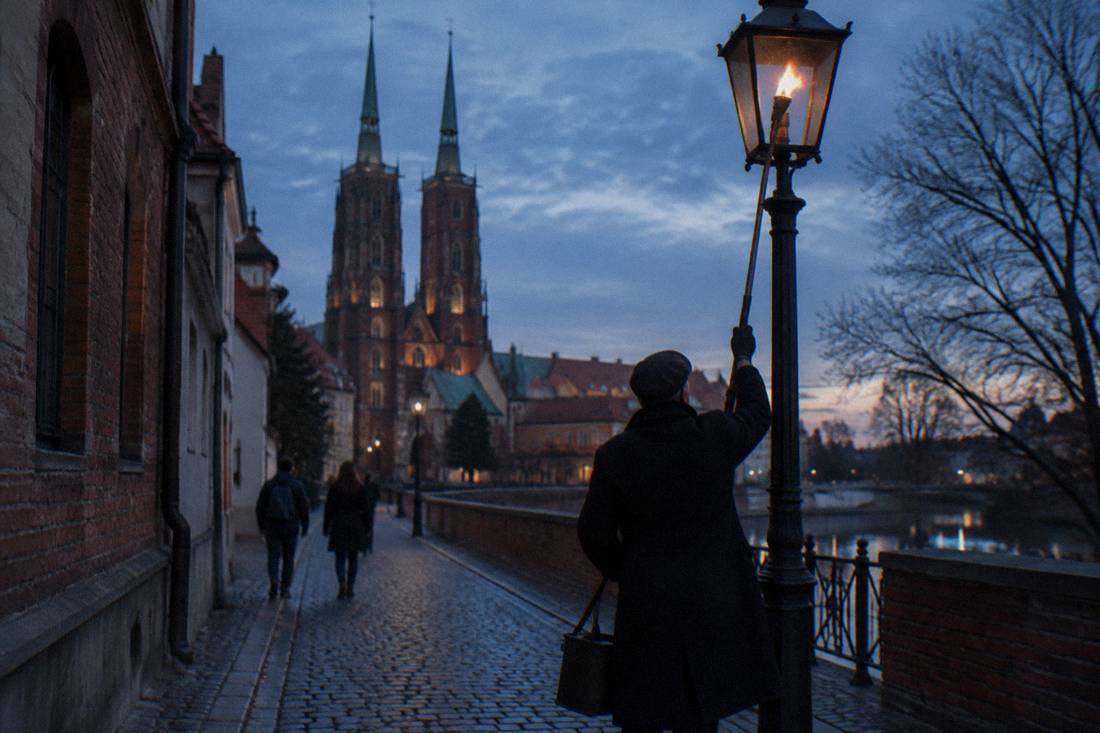
The best free things to do in the Wroclaw city centre are walking Ostrów Tumski at dusk when the lamplighter lights the gas lanterns, hunting the bronze dwarf figurines across the Rynek and beyond, sitting on Slodowa Island with a drink, and joining one of the free, tip-based GuruWalk tours of the old town, which are genuinely free to join and need only a booking and a tip at the end. The National Museum's permanent exhibitions are also free every Saturday, and the market square itself, the flower market on Plac Solny and the riverbank walks cost nothing at all.
The GuruWalk platform is worth naming here because these walks are not this site's products: they are free, tip-based tours run by independent guides, and the honesty requirement is the opposite of the usual anonymity rule. Four of them are confirmed live. "Tour in Wroclaw (Wroclaw) Given by a Historian" is a history-led walk, "Legends of Wroclaw: Free Tour Around Ostrów Tumski & Market Square" leans on the city's legends, "Wroclaw Through Ages: Old Town & Cathedral Island Walking Tour" is the broadest sweep of the core, and "Old Town Wroclaw by Walkative!" is the best-known, run by the Walkative! group. For anyone on a first visit who wants the centre decoded at zero upfront cost, one of these is the obvious starting move, and you can See This Free Tour On GuruWalk to check the schedule.
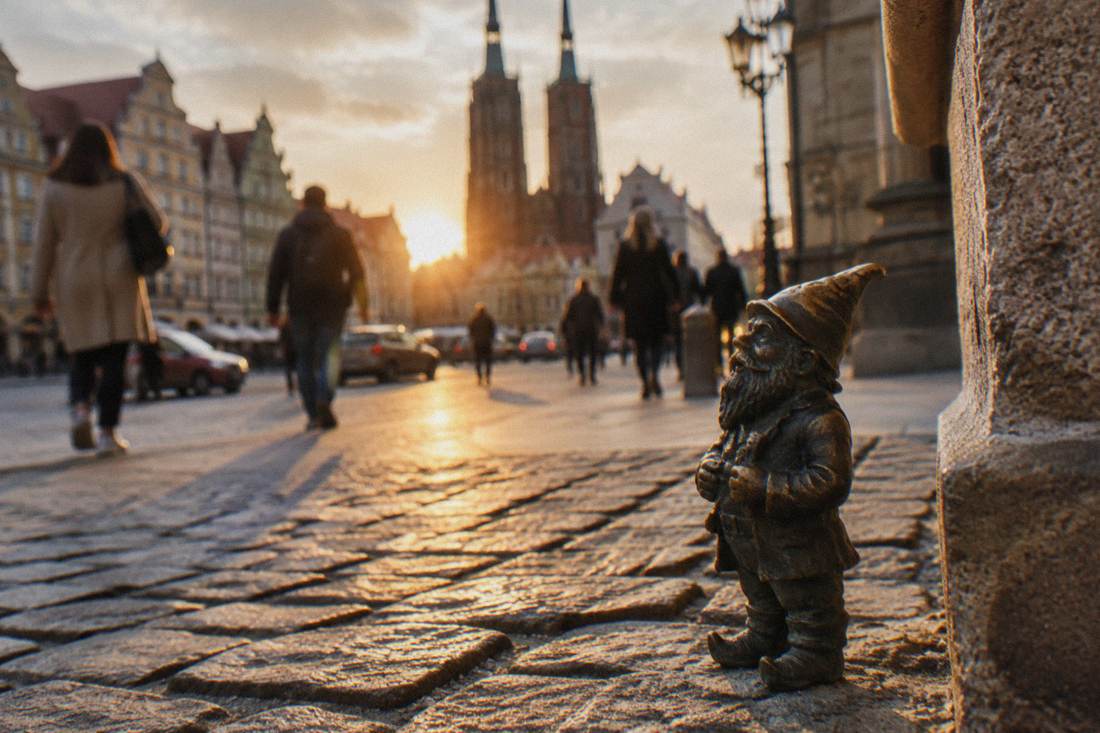
The dwarf hunt deserves its own sentence of advice, because it is easy to do wrong. The figurines number in the hundreds across the city, and the temptation is to photograph the first five on the Rynek and move on. The better version is to treat them as a route: pick a handful with a story attached, such as the ones marking the city's institutions, and use the search as an excuse to walk into courtyards and side streets you would otherwise skip. The dwarfs guide lists the notable ones and this site's free-things-to-do coverage collects the rest of the zero-cost day, from the cathedral gardens to the street art of Nadodrze.
When Is The Best Time To Visit The Wroclaw City Centre?
The best time to visit the Wroclaw city centre is May through September, when IMGW's 1991-2020 climate normals put mean temperatures between 14.3C and 19.7C and the islands, riverbanks and beer gardens are in full use, with July the warmest month at 19.7C and January the coldest at 0.0C. The annual mean of 9.7C means the city has a proper four-season climate, and winter visitors get a different but worthwhile centre: frosted cobblestones, the gas lanterns of Ostrów Tumski, and the Christmas market on the Rynek, which the Wroclaw Christmas market guide covers in detail.
Rain is moderate and spread evenly through the year, which surprises visitors expecting an eastern-European dry summer. July is the wettest month in the normals at 91.4 mm, followed by June at 65.4 mm, while the shoulder months of February, April and December are drier. In practical terms, pack a light rain layer for any summer visit, and plan the indoor sights, the Panorama, the National Museum and Hydropolis, as the fallback for a wet afternoon.
| Month | Mean Temp (C) | Precipitation (mm) |
|---|---|---|
| Jan | 0.0 | 28.3 |
| Feb | 1.1 | 25.6 |
| Mar | 4.3 | 35.0 |
| Apr | 9.7 | 31.2 |
| May | 14.3 | 59.6 |
| Jun | 17.7 | 65.4 |
| Jul | 19.7 | 91.4 |
| Aug | 19.3 | 59.5 |
| Sep | 14.5 | 48.4 |
| Oct | 9.6 | 37.6 |
| Nov | 4.8 | 31.4 |
| Dec | 1.1 | 27.9 |
The month-by-month breakdown, including what opens and closes by season, sits in the Wroclaw weather by month guide, and the timing of specific events such as the New Horizons film festival is covered in the events pages. Arriving by air, note that Wroclaw Airport handled 4,473,945 passengers in 2024 and is open today; a temporary full closure for a runway-area renovation ran from 26 October to 4 December 2025 and finished, with the airport setting new passenger records in 2026. The Wroclaw airport guide has the transfer details.
Where Should You Eat And Drink Around The Wroclaw City Centre?
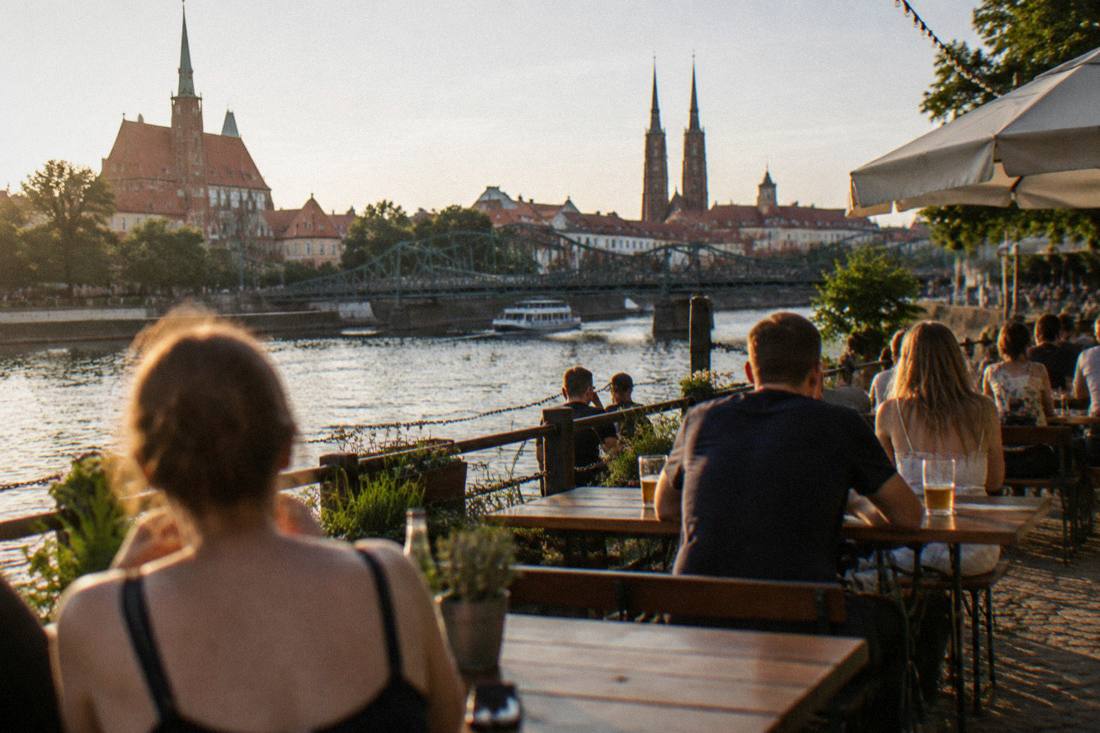
Eating in the Wroclaw city centre runs from milk-bar canteens serving cheap traditional plates to pierogi restaurants around the Rynek, to the craft beer bars of the old town and the cafe culture of the streets south of the market square, with the islands and riverbanks filling up with drinkers on any warm evening. The centre is small enough that location barely matters, but the character of each cluster does: the Rynek ring for tourist-facing classics, the side streets for the food the locals actually eat, and the station-adjacent streets for the newest openings.
Two site guides carry the detail. The best restaurants in Wroclaw guide covers where to book and what signature dishes to order, and the Wroclaw nightlife guide covers the bars, the riverside drinking on Slodowa Island and the later-night venues. The pierogi trail and the milk bars, the cheap lunch spots that survived from the communist era into the present, both have their own pages too.
One comparison worth making before booking anything: Wroclaw is sometimes described online as Poland's most vegan city, and the evidence does not support that claim. Older per-capita data ranked Poznan and Krakow higher, and Warsaw is the city that has drawn international attention as the country's vegan hub. Wroclaw's scene is solid and compact, not nationally leading, and this site's vegan and vegetarian food coverage lists what is actually there without the invented superlative.
Is The Wroclaw City Centre Safe And Easy To Walk?
The Wroclaw city centre is broadly safe to walk day and night by the standards of Poland's major cities, with the usual city caveats about pickpockets in the busiest squares and around the station, and it is one of the easiest city cores in the country to cover on foot because the historic ring, the islands and the museum quarter sit within a compact, mostly flat walk of each other. The dedicated Wroclaw safety guide and the answer page on whether it is safe to walk in Wroclaw at night cover the specifics, from the streets around the main station to the late-night tram etiquette.
The walking layout deserves its own note because it shapes every itinerary. The core is flat, the cobblestones are uneven in the old streets, and the bridges between the islands are short. The main friction points are not distance but two practical ones: the seasonal closure of the Ksiaz Castle terraces (April-September only, a fact the castle's own cennik states) if you are heading out of town, and the Monday closures that hit the Panorama and the National Museum in winter, which the museum's own practical-information pages list. Time museum days around those and the centre itself never blocks you.
For visitors who find long walks hard, the electric-car tours and the tram network cover the same ground, and the accessibility pages on this site cover the cobblestone and bridge situation in more detail. The centre's lanes on Ostrów Tumski are the roughest surface; the Rynek is repaved and smooth, and the modern streets south of the ring are flat pavement throughout.
How Many Days Should You Spend In The Wroclaw City Centre?
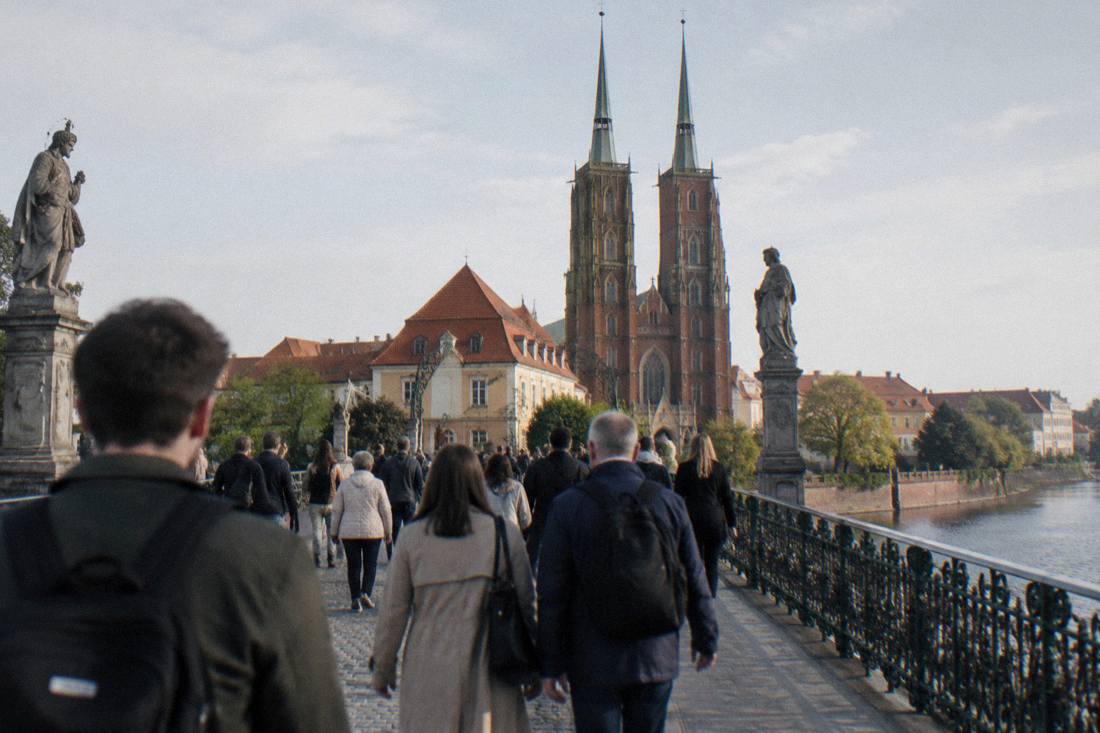
Two full days is the sweet spot for the Wroclaw city centre, enough for the Market Square, Ostrów Tumski, the dwarfs, the Panorama Raclawicka, the National Museum and an evening on the islands without rushing, with a third day if you want to add Centennial Hall, the Japanese Garden or the zoo on the eastern edge. A single day works for the absolute highlights, and the site's one day in Wroclaw itinerary is built for exactly that squeeze. The fuller version, two days in Wroclaw, slows the pace and adds the food stops the first-day visitor skips.
The honest framing for the choice is this: the centre itself rewards two unhurried days more than three packed ones, and anything beyond that is better spent leaving town. Ksiaz Castle, the Churches of Peace, the Giant Mountains and the Table Mountains are all realistic trips from the city, and each is covered in a dedicated day-trip page, with Ksiaz Castle and the Karkonosze and Karpacz guide the two most popular.
For the third-day-in-town options that stay near the centre, this site rates these three tours across guided city exploration, cycling the flat river paths, and a half-day run to the UNESCO Churches of Peace:
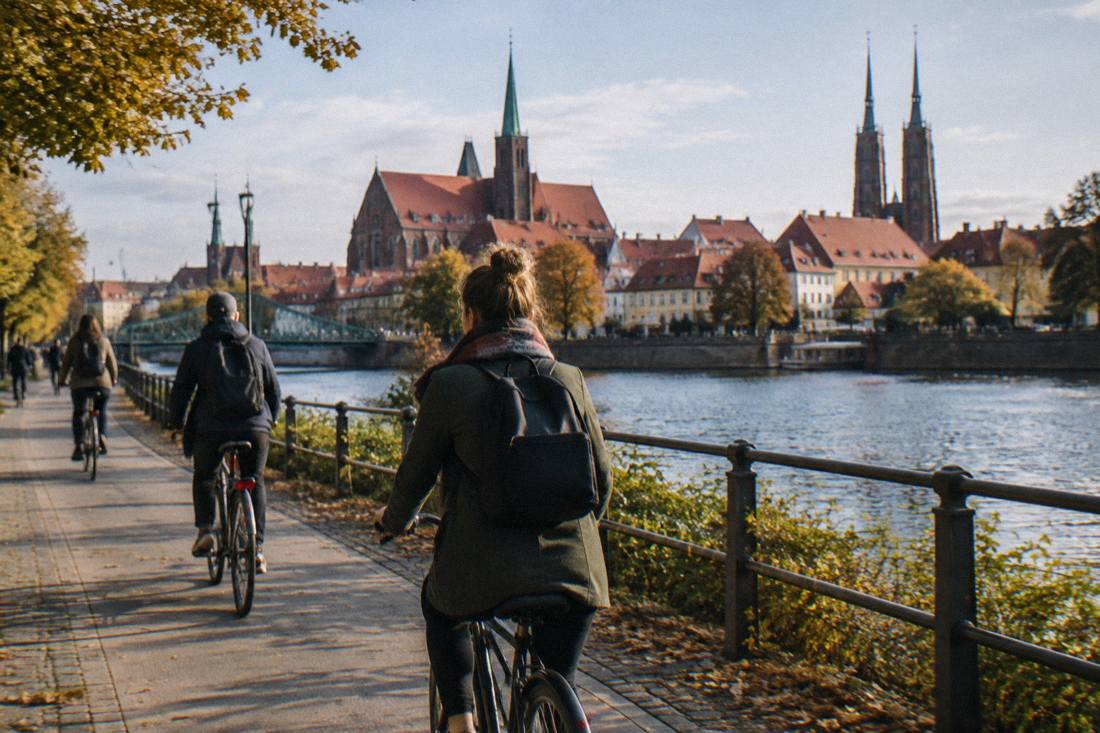
The bike tour earns its place for one reason specific to this city: Wroclaw is flat, and the river paths make cycling the fastest pleasant way to see the islands end to end. The e-car option below suits anyone who wants the same coverage sitting down, and it is a favorite with families on the dwarf hunt.
For the classic first-visit walk with a professional guide, the guided old town walking tour below is the strongest rated option on this site's roster for that exact job.
Common Questions About The Wroclaw City Centre
Is The Wroclaw City Centre Walkable?
Yes, highly walkable. The historic ring, the Market Square, Ostrów Tumski and the islands sit within a compact, mostly flat area, and the walk from the Rynek to the cathedral takes under twenty minutes at a relaxed pace. Cobblestones in the old streets are the main obstacle for wheels or reduced mobility.
What Is The Main Square In The Wroclaw City Centre Called?
The main square is the Rynek, formally Rynek we Wroclawiu, with the smaller Plac Solny (the old salt market, now the flower market) attached at its southeast corner. It measures roughly 3.64 to 3.79 hectares, smaller than Krakow's Rynek Glowny but among the largest in Poland.
Is There A Tourist Pass For The Wroclaw City Centre?
No. No all-inclusive Go City-style sightseeing pass is currently sold for Wroclaw, and the UrbanCard is a transport fare card with resident discounts, not a museum pass. Buy individual tickets; the Panorama Raclawicka ticket at 50 zl adult already bundles four museums within three months, and the National Museum is free every Saturday.
Which Days Are Museums In The Wroclaw City Centre Closed?
Mondays are the main closure day in the winter season. The Panorama Raclawicka is closed Mondays from 1 November to 31 March and open daily 8:30-19:00 in summer, and the National Museum is closed Mondays year-round but opens its permanent exhibitions free on Saturdays, per the museum's own practical-information pages.
How Do You Get From The Station To The Wroclaw City Centre?
On foot or by a single short tram ride. Wroclaw Glowny station sits about a fifteen-minute walk north of the Market Square, and MPK trams run from the station stops toward the Rynek on the standard time-based tickets, with the 15-minute ticket at 4.60 zl normal or 2.30 zl reduced per the city's official fare page.
Where Should You Stay To Be In The Wroclaw City Centre?
Anywhere inside or just outside the planty ring puts you in the centre, with the streets between the station and the Rynek the most convenient for arrivals and the quieter lanes around Ostrów Tumski best for atmosphere. The site's where-to-stay coverage breaks the districts down by budget and trip style.
The Wroclaw city centre rewards exactly the kind of slow, aimless walking that bigger cities make impractical, and everything on this page, from the 4.60 zl tram ticket to the 50 zl Panorama bundle to the free GuruWalk evenings, is built around that walkability. Pick a base inside the ring, give it two days, and let the dwarfs dictate the route.