Two Days In Wroclaw
Two days is the sweet spot for Wroclaw, the largest city in Lower Silesia in southwestern Poland: long enough for the Market Square, Cathedral Island, the dwarfs and the Panorama Raclawicka, short enough to leave you wanting a third day.
Short answer
Two days is enough for Wroclaw's core sights: the Market Square, Ostrow Tumski, the bronze dwarfs, the Panorama Raclawicka and Centennial Hall, plus an evening on Slodowa Island. It is not enough to add a Lower Silesia day trip such as Ksiaz Castle, which takes a full day by itself.
Wroclaw, the largest city in Lower Silesia (Dolnoslaskie voivodeship) in southwestern Poland, sits on the Odra river and is home to 672,601 people (31 Dec 2025, GUS/Statistics Poland). It rewards exactly the kind of trip a weekend allows: a compact, walkable core of islands, bridges, painted townhouses and small museums, with prices in zloty that stay friendly to almost any budget. This page lays out a full two-day plan, with every admission, fare and opening figure drawn from the official sources listed by this site, so you can copy it day by day or borrow the pieces you like.
Is Two Days In Wroclaw Enough?
Two days is enough to cover Wroclaw's core: the Market Square, Ostrow Tumski, the bronze dwarfs, the Panorama Raclawicka and Centennial Hall, plus an evening on Slodowa Island or among the Old Town pubs. What two days does not cover is a Lower Silesia day trip such as Ksiaz Castle, which takes a full day on its own. For the city itself, two well-planned days are genuinely enough.
That verdict surprises people who expect a city of this size to need more time. Wroclaw's population makes it one of Poland's largest cities, but its tourist core is unusually tight. The Market Square, the cathedral island of Ostrow Tumski, the university quarter and the main museums all sit within roughly half an hour's walk of one another, so the travel time between sights shrinks to almost nothing.
The catch is what you trade away. With only two days you should not plan a Ksiaz Castle excursion, a trip to the Giant Mountains, or an Auschwitz-Birkenau day trip, each of which swallows a full day door to door. The How Many Days In Wroclaw Is Enough? answer on this site breaks the trade-off down in more detail, and the Three Days In Wroclaw itinerary shows what the extra day buys you.
If your two days fall on a weekend, one scheduling fact matters more than any other: several major museums close on Mondays. The National Museum and, in its winter season, the Panorama Raclawicka both shut on Mondays, so a Monday-Tuesday trip should flip the plan and put Monday outdoors.
What To Do On Day One In Wroclaw?
Spend day one on the Old Town core: the Market Square and its surrounding lanes in the morning, Ostrow Tumski and the cathedral island after lunch, and the Panorama Raclawicka or the National Museum in the late afternoon, with the evening given to the riverbank around Slodowa Island. Every one of these stops sits within walking distance of the Rynek, so day one needs no tram ticket at all.
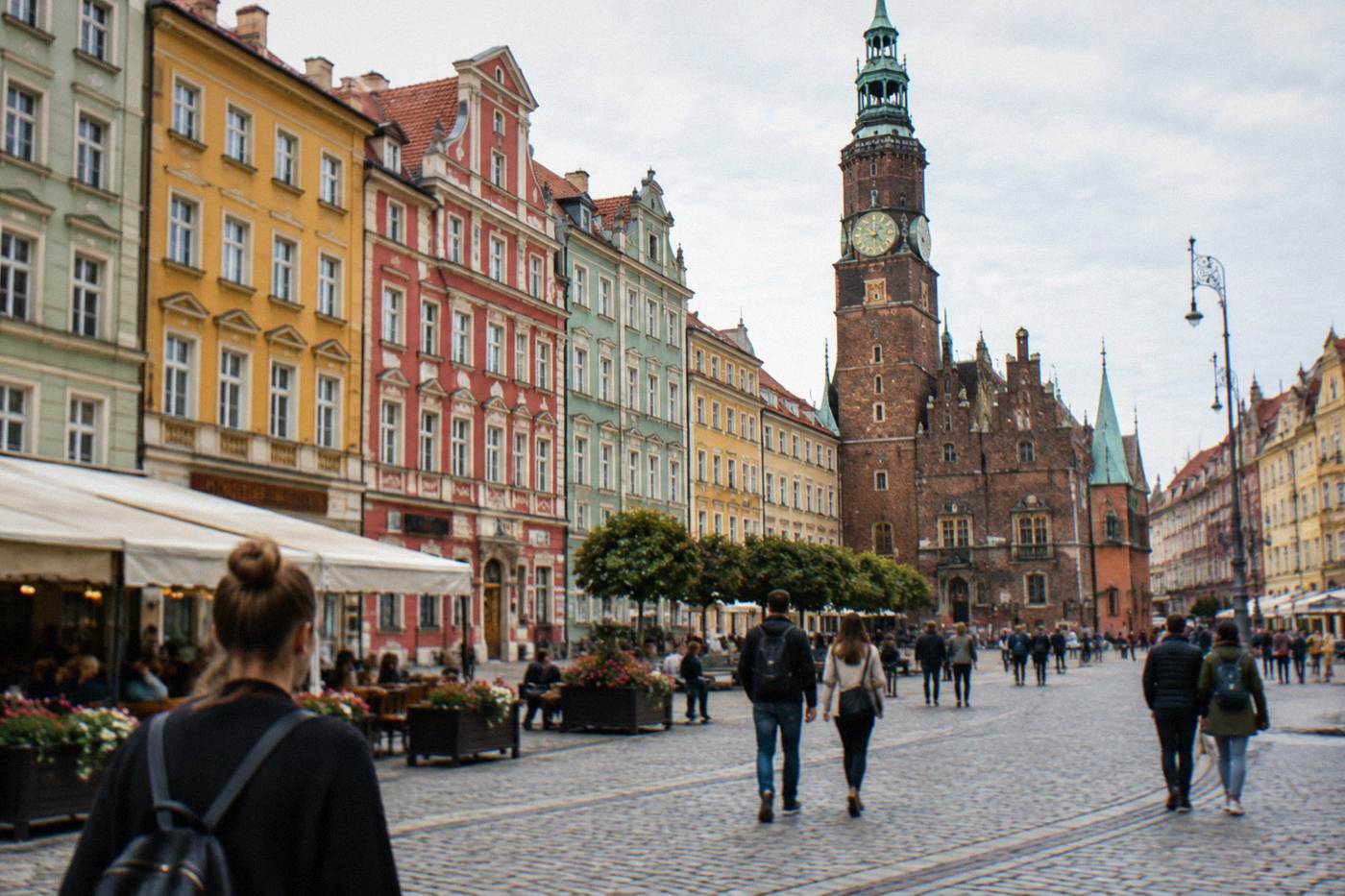
Start at the Wroclaw Market Square, one of the largest medieval squares in this part of Europe. Krakow's Rynek Glowny is the larger of the two Polish landmarks at roughly 4 hectares against Wroclaw's roughly 3.6 to 3.8, but Wroclaw's trades on atmosphere rather than raw size: two town halls, a cloth hall, a ring of painted burgher houses and a dense lace of alleys running off every side. Give the square and its side lanes the full morning, and do not skip the small passages, which hold most of the best photo angles.
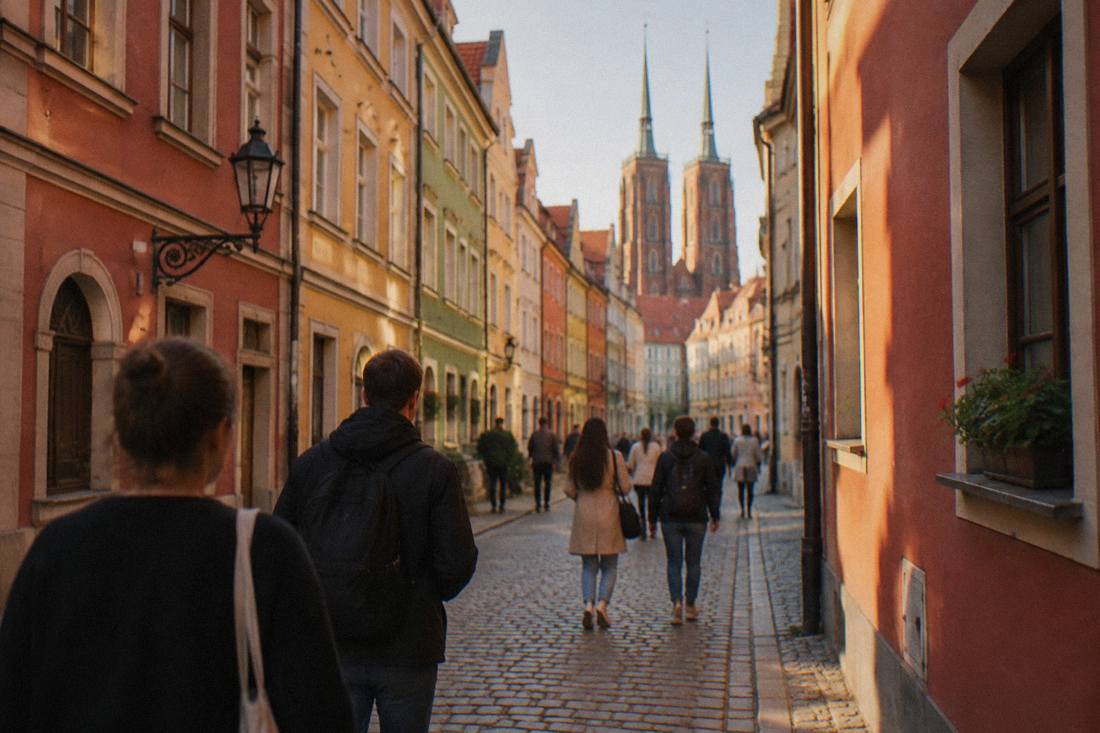
Afternoon belongs to Ostrow Tumski, the cathedral island where the city began. Cross the footbridges from the Old Town, climb the cathedral towers if the weather is clear, and walk the quiet cobbled lanes along the water. Plan on two unhurried hours; the island is small but it repays slowness. A dedicated Wroclaw Walking Tour Route on this site maps the full Old Town to cathedral island line if you prefer a fixed path.
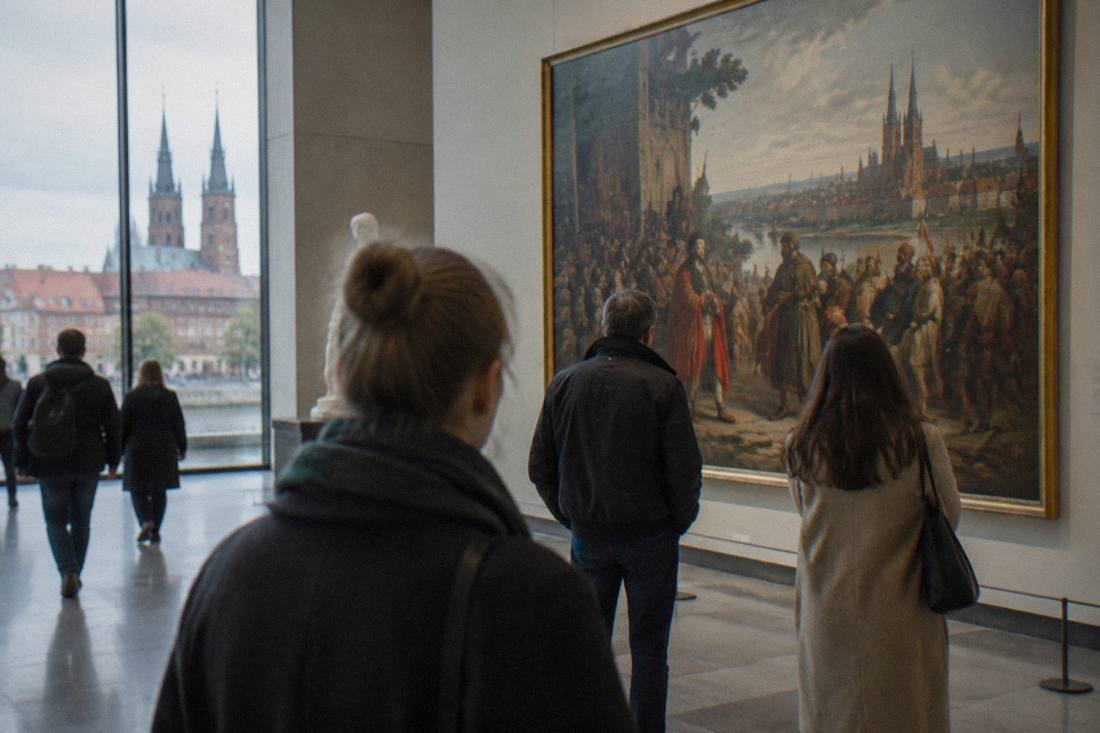
Late afternoon is the museum slot. The Panorama Raclawicka's own site lists the adult ticket at 50 zl, reduced 35 zl, with a screening that lasts 30 minutes, and the same ticket also covers the National Museum's permanent exhibitions, the Ethnographic Museum and the Four Domes Pavilion if used within 3 months. In summer it runs daily 8:30-19:00; in winter it closes on Mondays. Alternatively, the National Museum in Wroclaw's own pricing page lists a standalone permanent ticket at 20 zl adult, 15 zl reduced, with free entry to permanent exhibitions every Saturday.
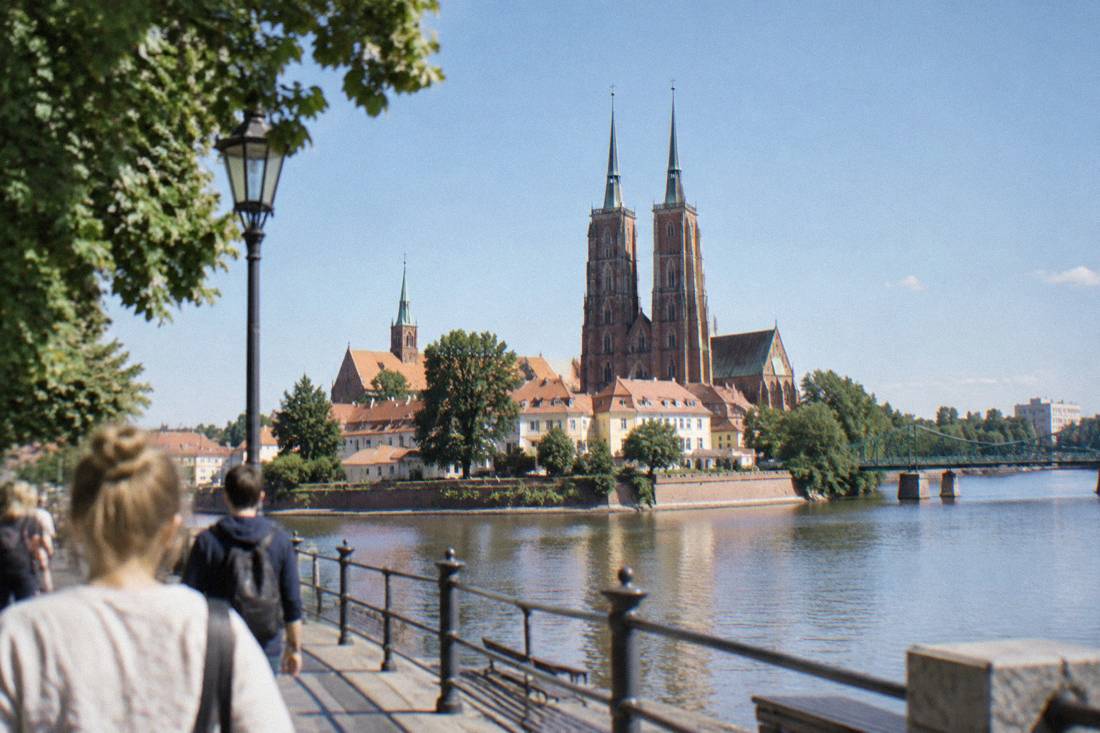
The evening belongs to the river. Slodowa Island, a short walk north of the Market Square, is the city's open-air living room on warm nights, and the Old Town Wroclaw area around it holds most of the bars worth walking to. If you would rather have a local's route on day one, the site's Weekend Itinerary For Wroclaw pairs the same core with a slower rhythm.
| Slot | Day 1 plan | Notes |
|---|---|---|
| Morning | Wroclaw Market Square and side lanes | Free to wander, best light early |
| Lunch | Milk bar or pierogi spot near the Rynek | Walk 2-3 streets out from the square |
| Afternoon | Ostrow Tumski cathedral island | Cross on foot from the Old Town |
| Late afternoon | Panorama Raclawicka (50/35 zl) or National Museum (20/15 zl) | Both closed Mondays in winter season |
| Evening | Slodowa Island and Old Town bars | Open-air, no ticket needed |
For travelers who prefer a guide's eyes over a map's, these three options cover day one and beyond:
What To Do On Day Two In Wroclaw?
Give day two to the east and the south of the city: hunt bronze dwarfs across the center in the morning, then spend midday at the zoo with its Afrykarium or around Centennial Hall and the Japanese Garden, and finish late afternoon in the Nadodrze creative quarter or on a guided walk through the former Jewish quarter. A 15-minute MPK tram ticket costs 4.60 zl, so none of this is more than a short ride away.
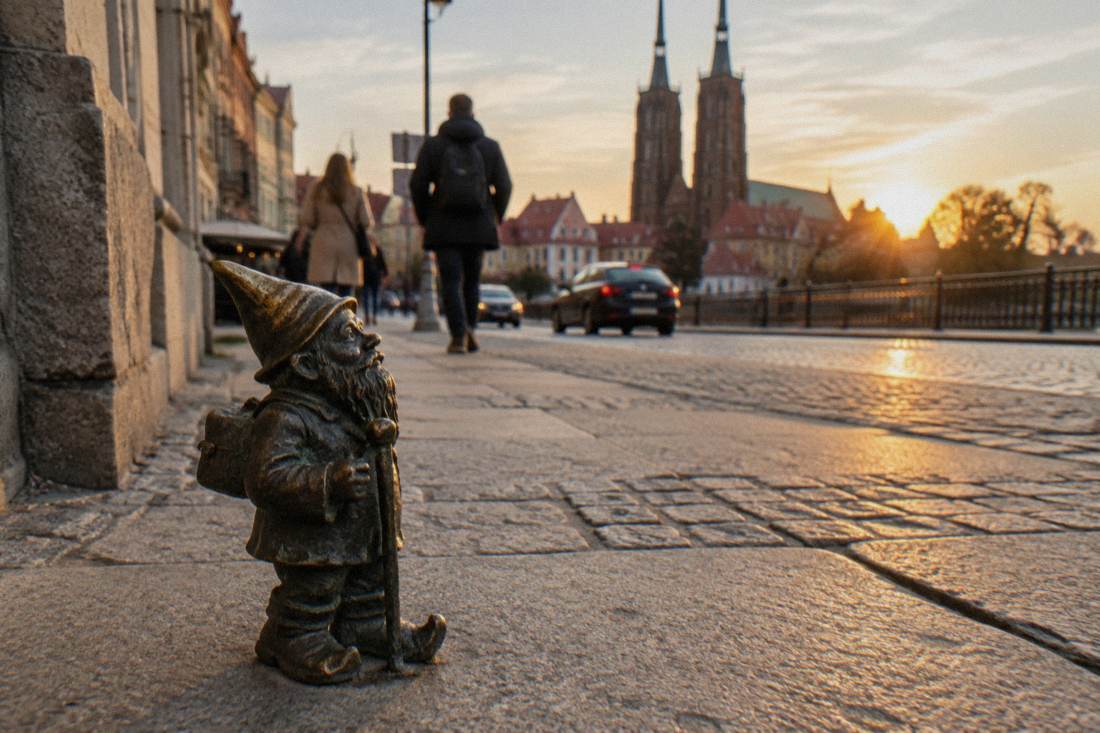
Day two starts with the city's strangest tradition: the Wroclaw dwarfs, small bronze figures scattered across the center, each tied to a piece of local life. Hunting them is free, it drags you through lanes a first-time visitor would otherwise skip, and it is the single best way to notice the city's texture. Give the hunt the morning, either solo or with the site's One Day In Wroclaw plan as a fallback route.
Midday takes you south to the zoo. The zoo's own price table gives the adult ticket at 69 zl online versus 99 zl at the gate, with reduced tickets at 59 zl online and 89 zl at the gate, and the Afrykarium oceanarium is included in the standard ticket rather than sold separately. In the April-September season the grounds run 9:00-18:00 Monday-Thursday and 9:00-19:00 from Friday to Sunday, so an early lunch makes the difference between a rushed visit and a full one. The Wroclaw Zoo and Afrykarium guide on this site covers the seasonal hours in full.
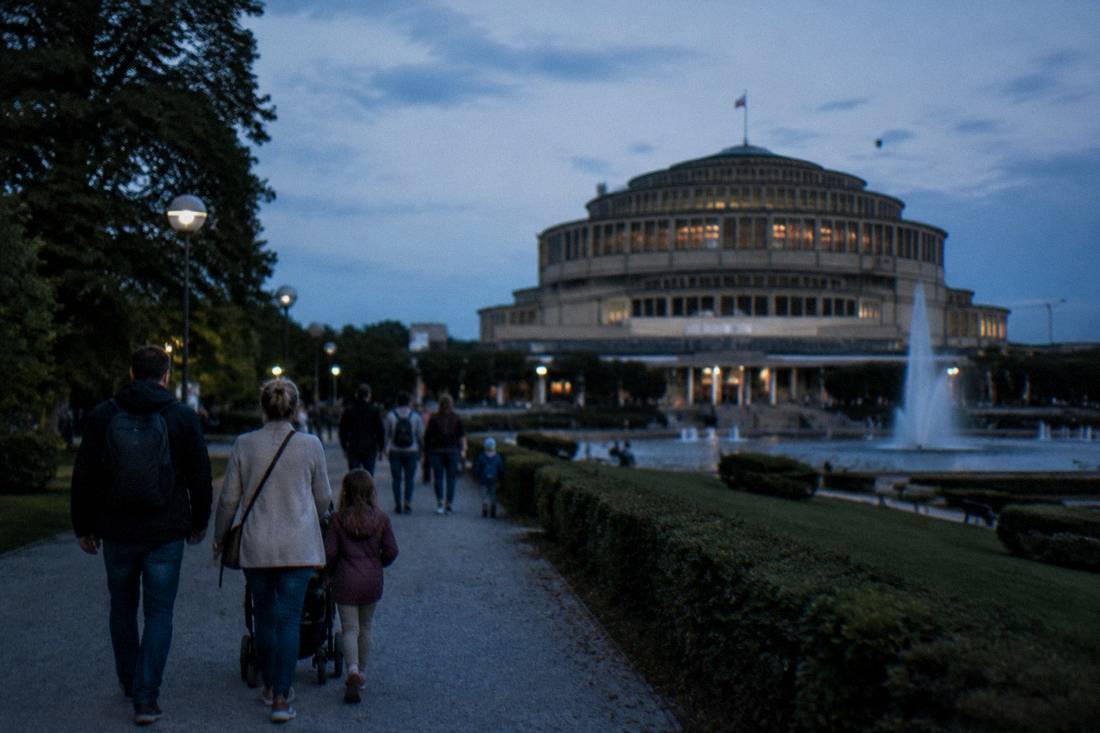
The zoo's neighborhood holds the city's modern landmark. Centennial Hall, UNESCO-inscribed since 2006, was designed by Max Berg and built between 1911 and 1913, with a reinforced-concrete dome over a space that holds up to 10,000 people. The surrounding park and the Japanese Garden make the same trip worthwhile even if you skip the hall's interior.
Late afternoon is where second days usually sag, so spend it in Nadodrze, the district north of the river that has rebuilt itself as the city's street-art and creative quarter. A guided option pays off here, because the quarter's value is in the details a map does not carry. The Hidden Gems of Wroclaw walk devotes itself to exactly these corners, and the operator's live listing shows current availability:
If your interests lean historical rather than contemporary, swap Nadodrze for the city's Jewish heritage. The old Jewish quarter around the White Stork synagogue keeps some of the least-visited and most affecting buildings in the center, and a private Jewish heritage guided tour walks it with a guide. If that tour fits your dates, check the listing directly:
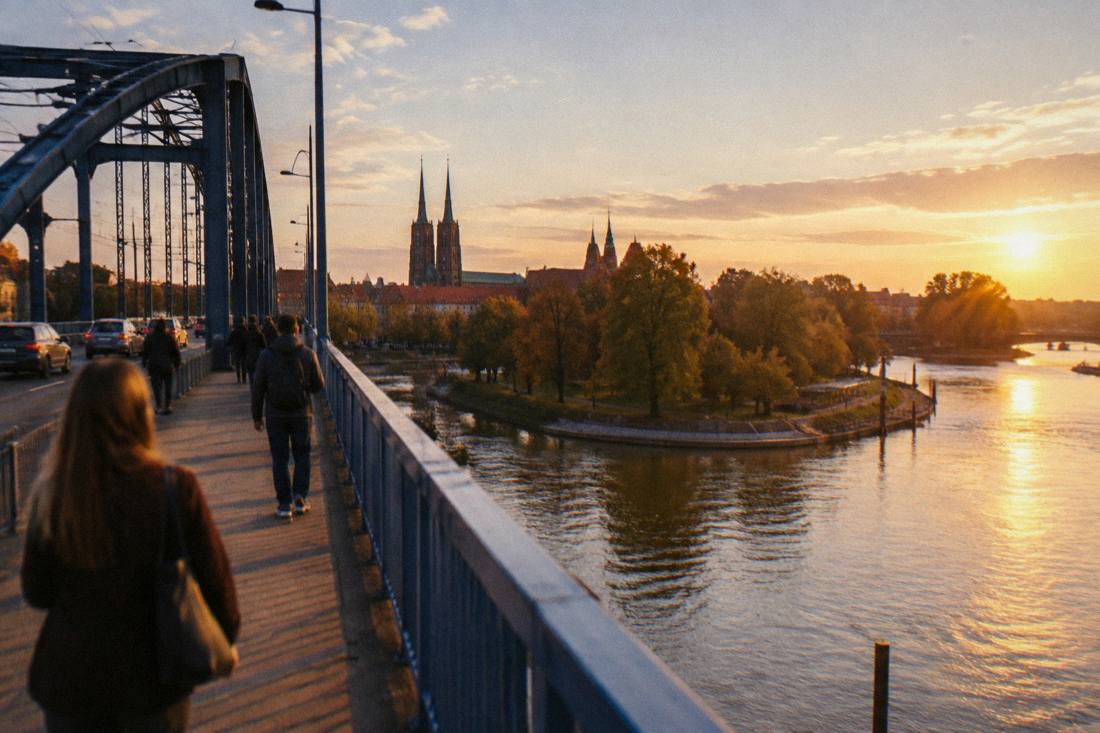
For families, the same second day reshuffles slightly rather than changing, and the site's Wroclaw With Kids Itinerary makes the swaps explicit. Whatever version of day two you choose, end it back at the river: Wroclaw's bridges are the city's free finale, and the light on them in the early evening is the moment to remember longest.
| Slot | Day 2 plan | Notes |
|---|---|---|
| Morning | Dwarf hunt across the city center | Free, self-guided |
| Midday | Wroclaw Zoo and Afrykarium | 69 zl adult online, 99 zl at the gate |
| Early afternoon | Centennial Hall and the Japanese Garden | UNESCO-listed since 2006 |
| Late afternoon | Nadodrze quarter or Jewish heritage walk | Short tram hop from the center |
| Evening | Bridges and riverbank at dusk | Free |
Before you lock the plan, one decision deserves a button rather than a guess:
How Much Does Two Days In Wroclaw Cost?
Two days in Wroclaw is inexpensive by Western European standards: the major city museums charge 20-50 zl for adults, a 15-minute MPK tram ticket is 4.60 zl, and the zoo costs 69 zl online versus 99 zl at the gate. A realistic two-day budget for one person, excluding accommodation and guided tours, sits in the low hundreds of zloty, not the thousands.
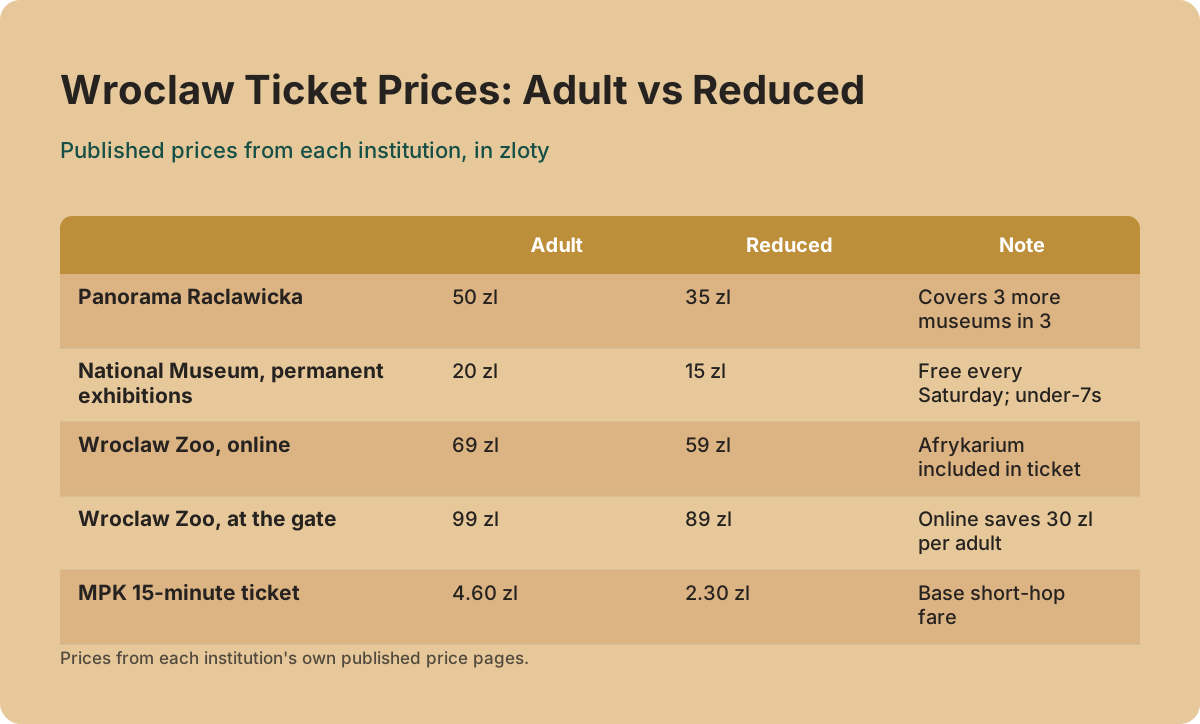
Remember the currency: Poland uses the zloty (PLN), not the euro, even though the country is in the EU and the Schengen area. The figures below come from each institution's own published prices, and they add up fast enough to check your math. The Panorama Raclawicka is the priciest single museum ticket at 50 zl, but note what it bundles: the same ticket covers the National Museum's permanent exhibitions, the Ethnographic Museum and the Four Domes Pavilion within 3 months, so buying it first rather than last can save a separate National Museum ticket.
| Sight | Adult | Reduced | Source note |
|---|---|---|---|
| Panorama Raclawicka | 50 zl | 35 zl | 30-minute screening; ticket covers 3 more museums within 3 months |
| National Museum, permanent exhibitions | 20 zl | 15 zl | Free every Saturday; under-7s free |
| Wroclaw Zoo, online | 69 zl | 59 zl | Afrykarium included in the standard ticket |
| Wroclaw Zoo, at the gate | 99 zl | 89 zl | Buying online saves 30 zl per adult |
| MPK 15-minute ticket | 4.60 zl | 2.30 zl | Base short-hop fare on the city's fare page |
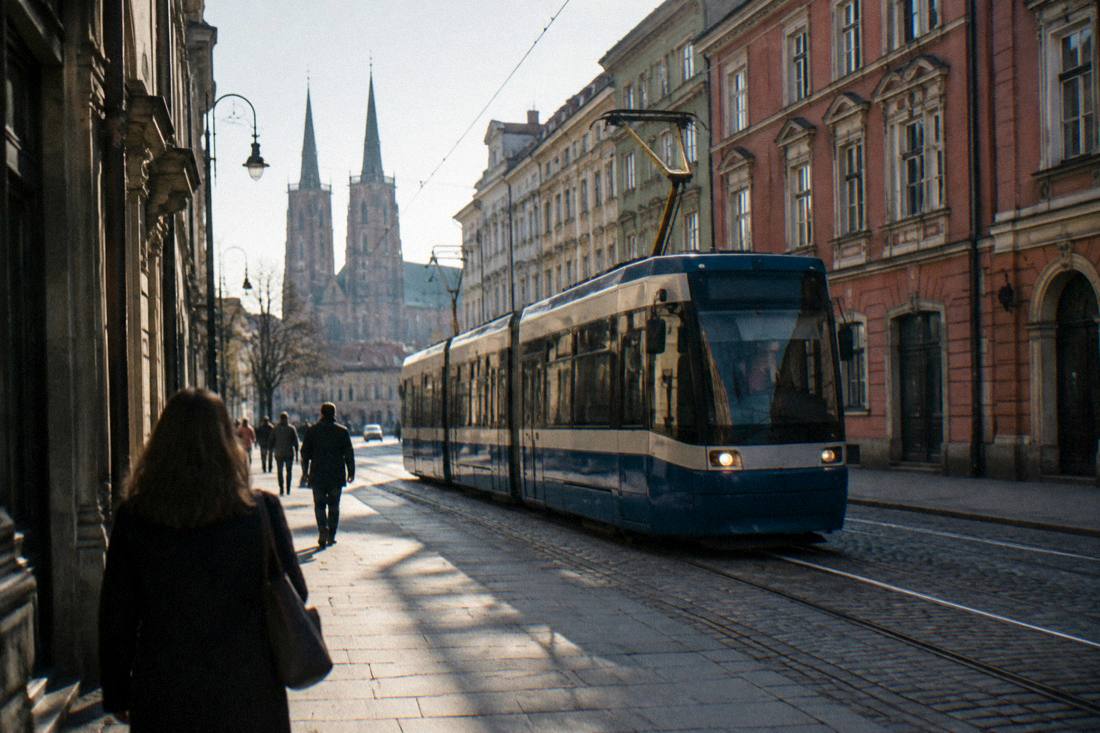
Getting around barely dents the budget. The city of Wroclaw's official fare page lists the 15-minute ticket at 4.60 zl normal and 2.30 zl reduced, with a 30-minute tier at 7.00/3.50 zl and a 24-hour city ticket band around 15.00/7.50 zl. Higher multi-day bands run up to 54/27 zl. Most two-day visitors buy one or two single tickets at most, because day one is entirely on foot and day two needs only the tram hops south.
One money-saving trap to avoid: do not hunt for a Go City-style all-inclusive tourist pass for Wroclaw, because none is currently sold for the city. The UrbanCard is a real product but it is a transport fare card with resident discounts, not a sightseeing pass, and it covers no museum or attraction admission. Budget for the individual tickets above instead of budgeting for a pass that does not exist.
Where To Eat During Two Days In Wroclaw?
Eat where Wroclaw eats: milk bars for fast, cheap traditional lunches, pierogi restaurants in and around the Old Town for the sit-down version of the same food, and the craft beer bars of the Old Town and Nadodrze for the evening. The restaurant rows directly on the Market Square are the tourist seats in the city, so walking two or three streets out tends to buy the same food for less.
The milk bar, a surviving Polish cafeteria tradition, is the backbone of a budget two-day trip: fixed hot meals, quick service and prices aimed at locals rather than visitors. This site's guide to milk bars in Wroclaw explains how they work before you stand in your first line. For the dish many visitors come for, the pierogi guide for Wroclaw covers where the dumpling kitchens cluster, and the broader best restaurants in Wroclaw list carries the sit-down options.
Evenings deserve their own plan. Wroclaw's craft beer scene is strong and mostly concentrated in walkable quarters, and the Wroclaw craft beer guide maps it. If you want one food-specific excursion instead, the street food in Wroclaw guide lists the market and snack options that fit between museum slots on a tight two-day schedule.
What If It Rains During Your Two Days In Wroclaw?
Rain in Wroclaw is best absorbed indoors: the Panorama Raclawicka runs a 30-minute screening under cover, the National Museum is free every Saturday and closed Mondays, and the zoo's Afrykarium is an indoor oceanarium already covered by the standard zoo ticket. Between them, they can soak up most of a wet day without a single wasted ticket.
The sequencing matters as much as the venues. July, the warmest month in IMGW's 1991-2020 climate normals at 19.7C mean, is also the wettest in the normals table at 91.4 mm of precipitation, so summer rain is a planning assumption rather than a surprise. The trick is to keep the flexible indoor slots unbooked until you see the forecast, then shuffle. The full Rainy Day Wroclaw itinerary on this site does exactly that.
| Indoor sight | Season | Hours | Monday |
|---|---|---|---|
| Panorama Raclawicka | Summer (1 Apr-31 Oct) | Daily 8:30-19:00 | Open |
| Panorama Raclawicka | Winter (1 Nov-31 Mar) | Tue-Fri 9:30-16:00, Sat 9:30-17:00, Sun 9:30-16:00 | Closed |
| National Museum | Summer (1 Apr-30 Sep) | Tue-Fri 10:00-17:00, Sat-Sun 10:30-18:00 | Closed |
| National Museum | Winter (1 Oct-31 Mar) | Tue-Fri 10:00-16:00, Sat-Sun 10:00-17:00 | Closed |
| Zoo Afrykarium | April-September | Grounds 9:00-18:00 Mon-Thu, 9:00-19:00 Fri-Sun | Open daily |
Two notes make that table work for you. First, the zoo's own hours page confirms it opens every day of the year, including public holidays, which makes it the safest rainy fallback on any date. Second, the National Museum's free Saturday applies to the permanent exhibitions, so a rainy Saturday is the cheapest possible moment to spend two hours indoors.
Should You Swap Day Two For A Day Trip From Wroclaw?
A day trip from Wroclaw is worth it only if you can stretch past two days, because the headline options, Ksiaz Castle and the UNESCO-listed Church of Peace in Swidnica, each take most of a day door to door. Ksiaz's castle ticket with audioguide and terraces is 72 zl for adults, the Swidnica church is 18 zl, and the Ksiaz terraces open only from 15 April to 30 September.
If you have a third day, the pairing is natural and both sites sit in the same direction. The Ksiaz Castle cennik, effective 6 May 2026, gives the castle with audioguide and terraces at 72.00/62.00 zl adult/reduced, with an All Day Ticket covering castle, terraces, underground, Palm House, stud farm and mausoleum at 104.00/94.00 zl. In the April-September season the castle runs Mon-Fri 9:00-18:00 and weekends 9:00-19:00. The castle is owned by the Walbrzych municipality and run by its municipal company, and it is commonly reached by regional train to Walbrzych plus a bus or taxi connection. The site's Ksiaz Castle day trip guide covers the full plan.
| Day-trip sight | Adult | Reduced | Key detail |
|---|---|---|---|
| Ksiaz Castle, audioguide and terraces | 72 zl | 62 zl | Terraces open 15 Apr-30 Sep only |
| Ksiaz Castle All Day Ticket | 104 zl | 94 zl | Castle, terraces, underground, Palm House, stud farm, mausoleum |
| Ksiaz underground tour alone | 45 zl | 39 zl | Separate from the castle ticket |
| Ksiaz Palm House alone | 27 zl | 21 zl | Same site, separate ticket |
| Church of Peace, Swidnica | 18 zl | 15 zl | UNESCO-listed since 2001; family ticket 45 zl |
If organized transport suits you better than regional trains, a guided option covers both Peace Churches in a single trip:
The same logic applies to the mountains. The Karpacz and Karkonosze trip is a full-day outing into the Giant Mountains and should never be squeezed into a two-day city visit. Treat every day trip as a reason to add a day, not as a squeeze on day two, and the two-day plan above keeps working. These three picks are the ones this site would weigh for that decision:
What Is The Best Time Of Year For Two Days In Wroclaw?
The best months for a two-day Wroclaw trip are May through September, when IMGW's 1991-2020 climate normals show monthly means from 14.3C to 19.7C and the zoo and castle grounds run their long summer hours. July is the warmest month at 19.7C but also the wettest in the normals at 91.4 mm, so May, June and September usually strike the better balance for a walking-heavy two days.
The full monthly picture, from the IMGW normals for the Wroclaw station (station code 12424), is worth reading before you pick dates. January's mean of 0.0C makes it the coldest month, and the annual mean of 9.7C tells you this is a temperate continental city, not a Mediterranean one. Winter brings its own reward, though: the Wroclaw In Winter and Christmas itinerary for Wroclaw plans lean into the market season, which is the one time of year a two-day visit should be booked well ahead.
| Month | Mean temp | Precipitation |
|---|---|---|
| January | 0.0C | 28.3 mm |
| February | 1.1C | 25.6 mm |
| March | 4.3C | 35.0 mm |
| April | 9.7C | 31.2 mm |
| May | 14.3C | 59.6 mm |
| June | 17.7C | 65.4 mm |
| July | 19.7C | 91.4 mm |
| August | 19.3C | 59.5 mm |
| September | 14.5C | 48.4 mm |
| October | 9.6C | 37.6 mm |
| November | 4.8C | 31.4 mm |
| December | 1.1C | 27.9 mm |
For month-by-month detail, including what each season does to the outdoor plan, the site's Wroclaw weather by month guide carries the full breakdown, and the Wroclaw In Summer plan covers the peak-season version of the same two days. Whatever month you choose, the plan on this page holds: day one for the Old Town core, day two for the wider city, and a day trip only if you can afford a third day. For everything else the city offers beyond two days, the Wroclaw Travel Guide homepage is the full index, and the safety guide for Wroclaw answers the practical questions first-time visitors ask most.
Common Questions About Two Days In Wroclaw
Is Two Days In Wroclaw Enough?
Yes, for the city itself. Two days covers the Market Square, Ostrow Tumski, the dwarfs, the Panorama Raclawicka, Centennial Hall and the zoo with time left for evening walks along the Odra. It is not enough to add Ksiaz Castle or another day trip, each of which takes a full day on its own.
How Much Does A Two-Day Wroclaw Trip Cost?
Excluding accommodation and guided tours, expect the low hundreds of zloty per person. The major tickets are the Panorama Raclawicka at 50 zl, the National Museum at 20 zl, and the zoo at 69 zl online or 99 zl at the gate, while a 15-minute tram ticket is 4.60 zl.
What Should I Not Miss In Two Days In Wroclaw?
The Market Square, Ostrow Tumski, the bronze dwarfs and an evening by the river. If you can fit one museum, make it the Panorama Raclawicka, whose 30-minute screening is the city's single most distinctive indoor sight and whose ticket also covers three further museums within 3 months.
Do Wroclaw Museums Close On Mondays?
The National Museum is closed on Mondays year-round, and the Panorama Raclawicka closes on Mondays in its winter season (1 Nov-31 Mar) while running daily in summer. The zoo, by contrast, opens every day of the year, including public holidays.
Can You Visit Ksiaz Castle On A Two-Day Wroclaw Trip?
Only by giving up a full city day. Ksiaz Castle lies near Walbrzych, commonly reached by regional train plus a bus or taxi connection, and the castle with audioguide and terraces costs 72 zl for adults, with the terraces open only from 15 April to 30 September. It is the standard reason to add a third day.