Wroclaw In Summer
Summer is the season when Wroclaw, the largest city in Lower Silesia in southwestern Poland, moves outdoors: onto the Odra river islands, into café tables on the Rynek, and onto the paths of the Botanical Garden. IMGW's 1991-2020 climate normals put July at a mean of 19.7C, the warmest month of the year, and this itinerary is built around exactly that.
Short answer
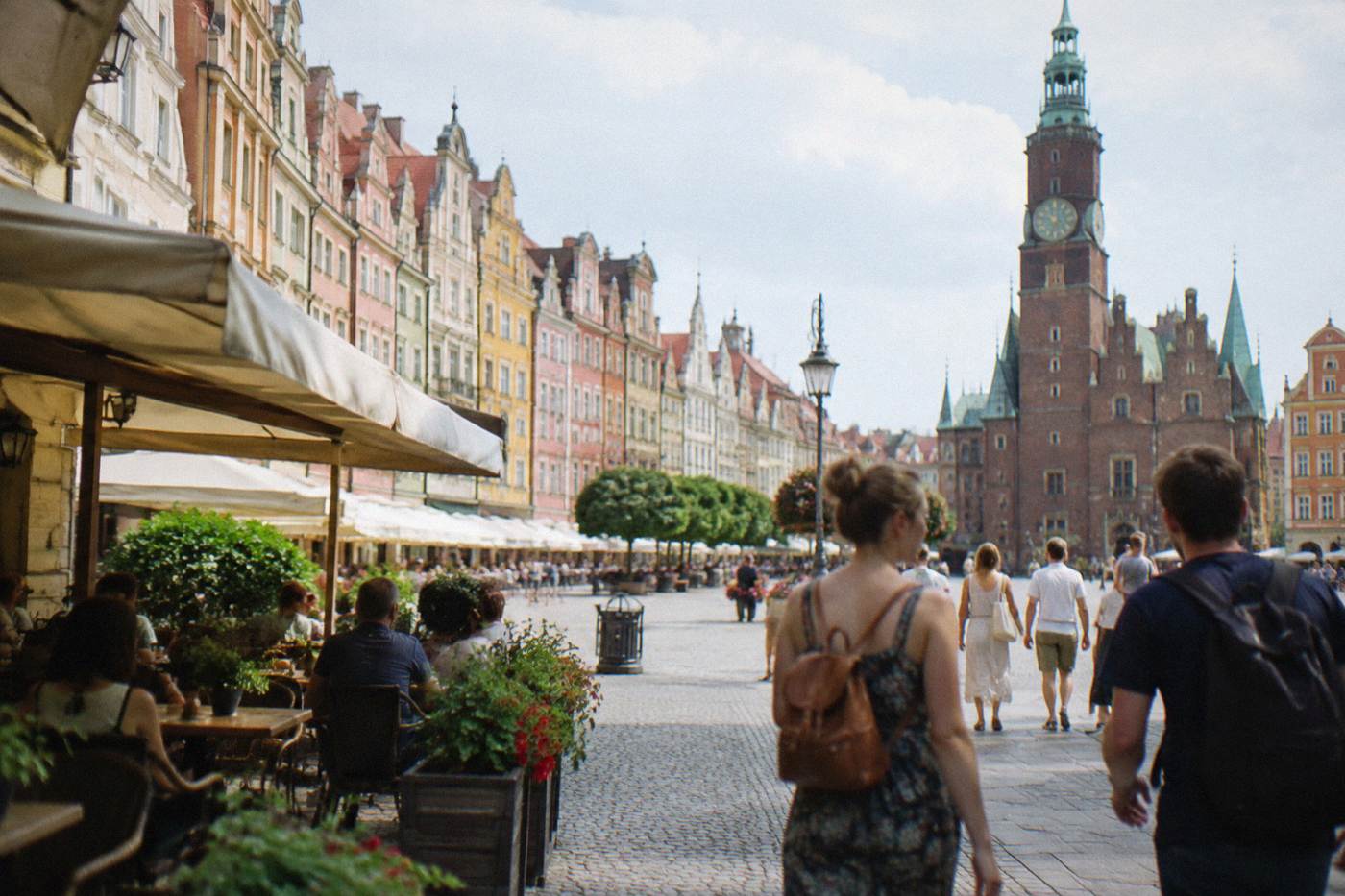
Wroclaw in summer runs from June (17.7C mean) through the July peak (19.7C) and August (19.3C), with long daylight and the zoo, Panorama Raclawicka and the river islands at their best. Plan around the islands and the Rynek in the mornings, museums at midday, and dwarf hunting or an e-car tour in the cooler evening hours.
Wroclaw, the largest city in Lower Silesia (Dolnoslaskie voivodeship) in southwestern Poland, is at its most generous between June and September. The Odra river splits into channels around a dozen islands, café tables spill across the Rynek's flagstones, and the IMGW 1991-2020 climate normals for the city's synoptic station put July at a mean of 19.7C, the warmest month of the year. Summer here is not a Mediterranean scorcher; it is a mild, walkable season that rewards a plan built around mornings on the water and museums at midday.
This page lays out a full summer itinerary: what the climate actually does month by month, which attractions change their hours for the season, where locals go when the afternoon warms up, and which day trips make sense when the mountains are an hour or two away. The numbers come from official sources, the National Museum's own practical-information page among them, and every tour price you see on this page renders live from the operator's listing rather than being typed by hand.
What Is Summer In Wroclaw Actually Like?
Summer in Wroclaw, by IMGW's 1991-2020 climate normals for station 12424, means June at a mean of 17.7C, July at 19.7C (the warmest month), August at 19.3C and September at 14.5C. Rainfall in the same period runs from 31.2mm in April, the driest month, to 91.4mm in July, the wettest. The city's July mean is among the mildest of Poland's major synoptic stations, which is why summer here feels warm rather than baking.
The useful planning detail in those numbers is the July rainfall figure. July is both the warmest and the wettest month of the year in Wroclaw, so a July visit should include at least one indoor anchor, whether that is the Panorama Raclawicka's screening or the National Museum's permanent galleries, both of which sit inside easy walking distance of each other. September, by contrast, is drier than midsummer and still averages 14.5C, which makes it a smart shoulder-season pick for anyone who finds crowded squares tiring.
| Month | Mean Temperature | Precipitation | What It Means For Your Trip |
|---|---|---|---|
| June | 17.7C | 65.4mm | Warm, green, long days; pack a light rain layer |
| July | 19.7C | 91.4mm | Warmest month and the wettest; plan an indoor anchor |
| August | 19.3C | 59.5mm | Nearly as warm, drier than July; peak terrace season |
| September | 14.5C | 48.4mm | Mild, drier, thinner crowds; ideal for walking |
The full month-by-month picture, including the winter months you are skipping, is in the Wroclaw weather by month guide. For a first visit in this season, the practical read is simple: expect warmth, not heat, and expect at least one heavy shower in July.
What To Do In Wroclaw In Summer: The Core Itinerary
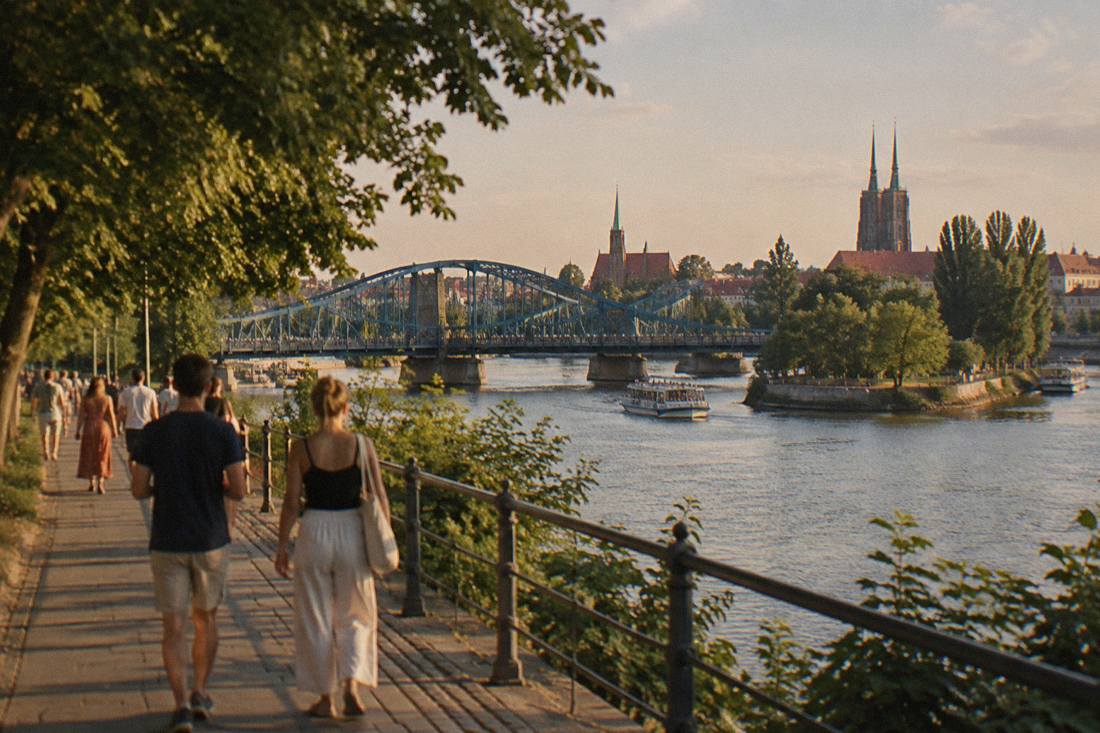
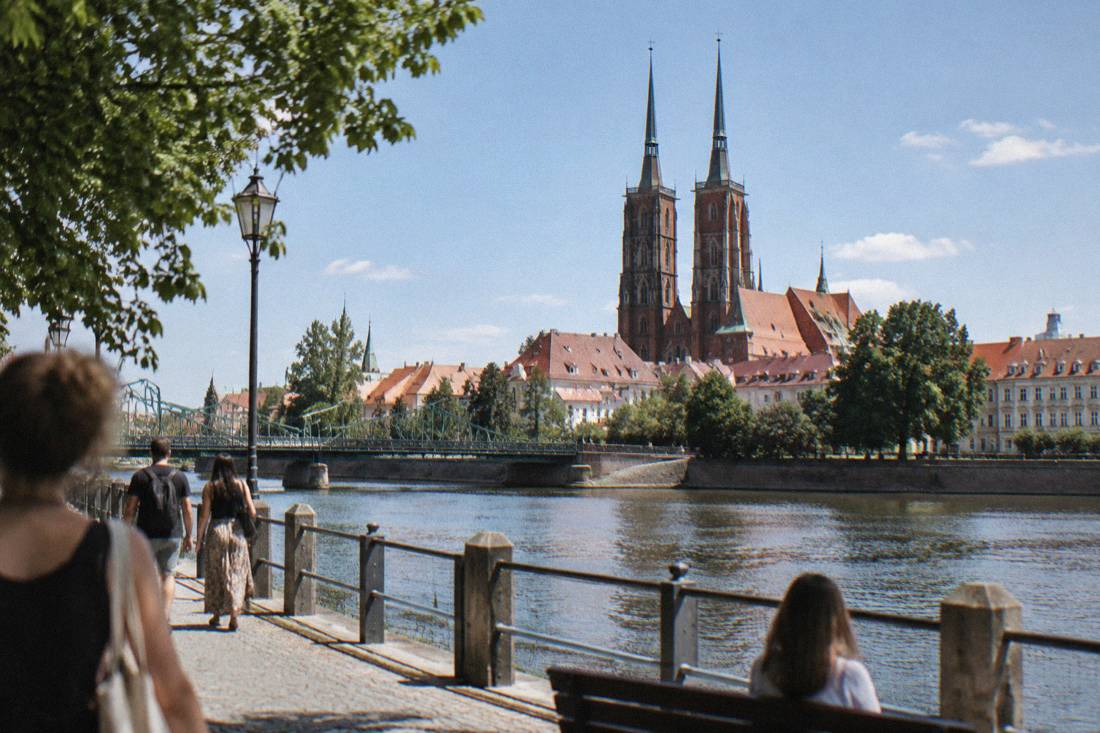
The core summer day in Wroclaw is mornings on Ostrow Tumski and the river islands, midday inside the Panorama Raclawicka or the National Museum when the sun is strongest, late afternoon dwarf hunting around the Rynek and Nadodrze, and evenings on Slodowa Island with the terraces. Two or three days covers this comfortably, and the attractions sit close enough that almost none of it requires transport beyond a 4.60 zl single MPK ticket.
Start on Ostrow Tumski, the cathedral island, while the light is low and the bridges are quiet; the Ostrow Tumski guide covers what to look for on the walk in. Cross back toward the Rynek by late morning. The market square is the city's living room in summer, and the Wroclaw market square page details the townhouse facades, the flower stalls and the lamplighter tradition that still runs here; the question of which Polish cities still employ lamplighters has its own answer, and Wroclaw is one of them.
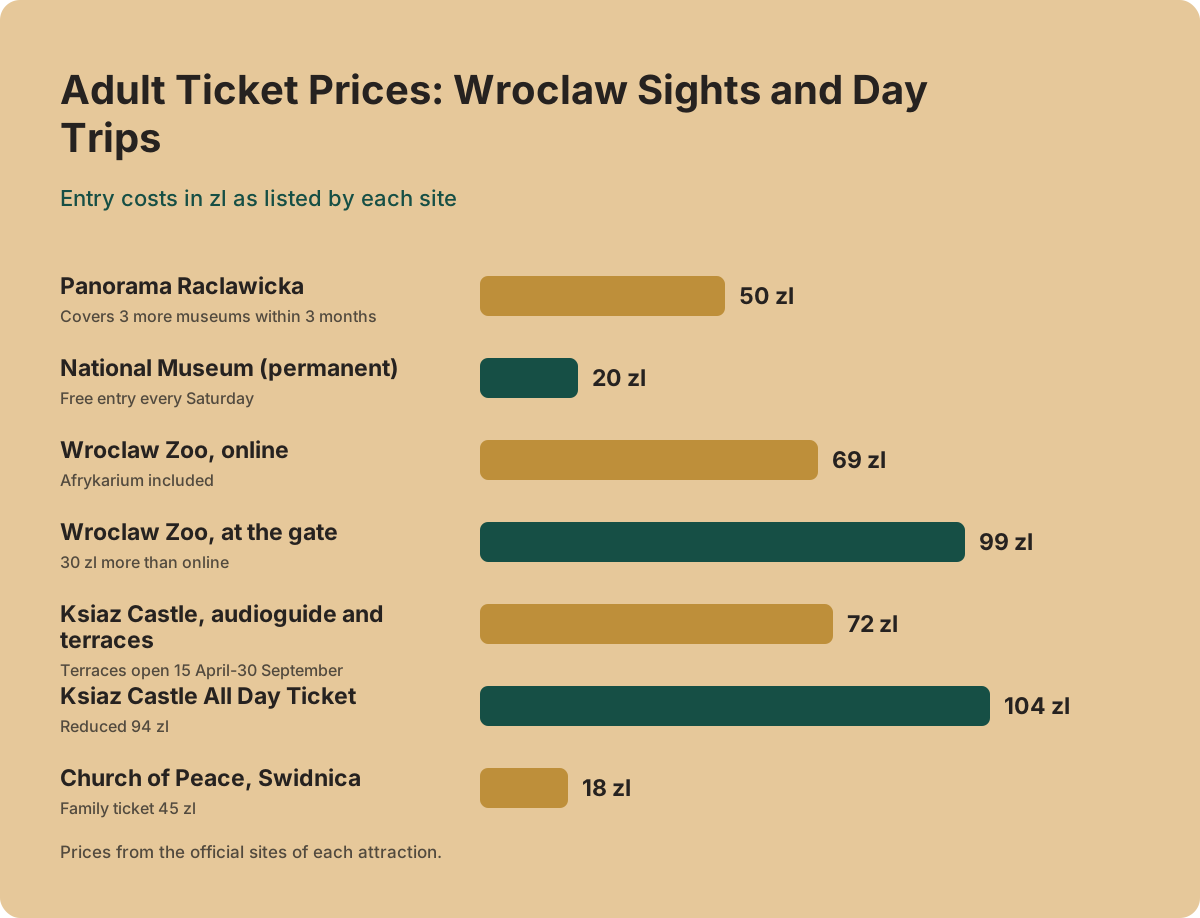
Midday is museum time by design. The Panorama Raclawicka runs its 30-minute screening on summer hours daily from 8:30 to 19:00 (1 April to 31 October), and its 50 zl adult ticket also covers the National Museum's permanent exhibitions, the Ethnographic Museum and the Four Domes Pavilion within three months of the visit date, per the museum's own ticketing page. If your itinerary includes the Four Domes Pavilion or the National Museum's permanent galleries on a Saturday, entry to the permanent exhibitions is free, the museum states. That is a planning lever worth building a Saturday around. Everything else covered here is indexed on Wroclaw Travel Guide.
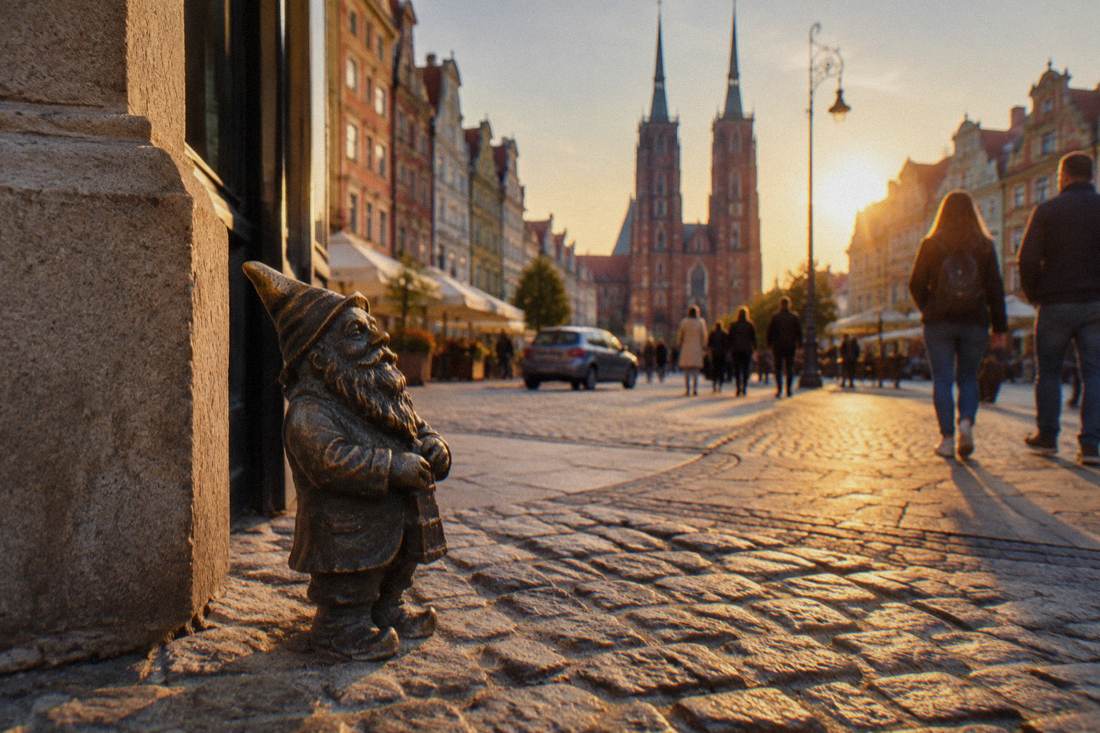
Late afternoon belongs to the dwarfs. Several hundred small bronze figures are scattered across the city, and the Wroclaw dwarfs page explains the hunt, the map and the history behind them. When feet give out, an e-car or cart tour covers the same ground seated; the retro golf cart option, this site's featured summer pick, runs with unlimited beer on board and is a genuinely Wroclaw way to see the Rynek, the islands and the dwarf trail in one loop:
Evening is Slodowa Island time, the student sandbank between the bridges where terraces run late into the dusk. The Wroclaw nightlife guide maps the options from there, and the best restaurants in Wroclaw covers where to eat beforehand.
For comparison, three tours that each fit a different summer afternoon:
How Do You Plan A Day Around The Summer Heat?
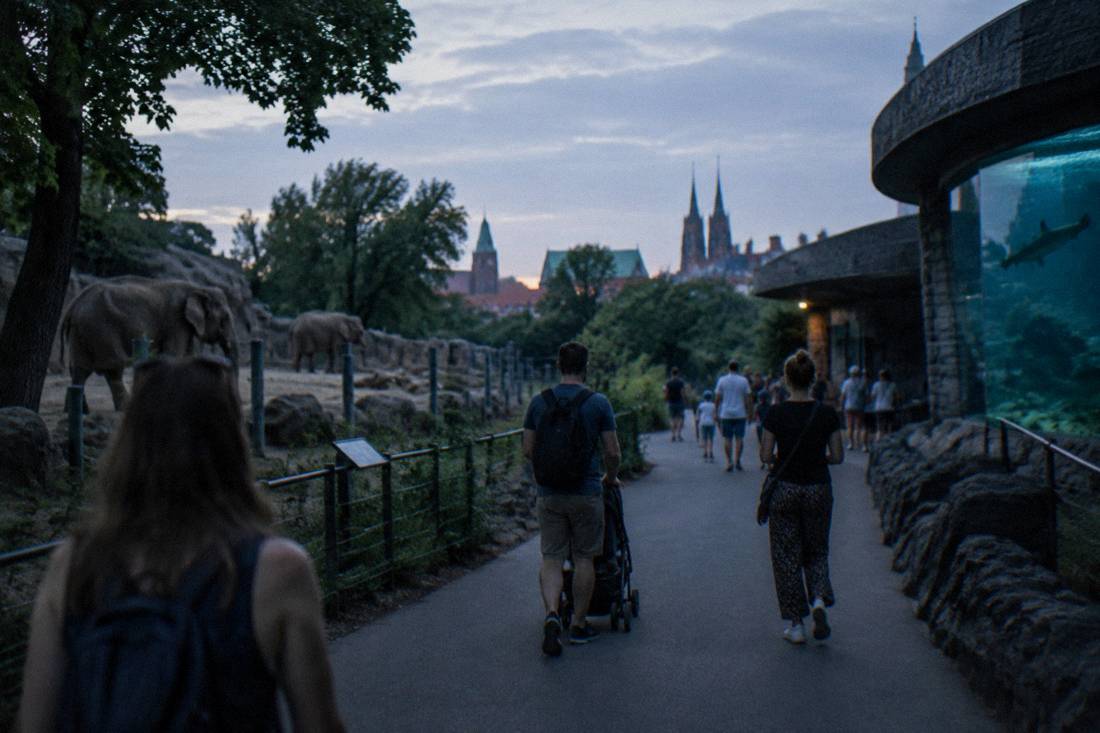
Plan Wroclaw summer days in three blocks: outdoors before 11:00, indoors from midday to 16:00 when the sun and the July rainfall peak both land, and outdoors again after 16:00 when the terraces fill. The zoo's own hours table shows why, in summer the grounds stay open until 18:00 on weekdays and 19:00 on Fridays, weekends and holidays, so the late-afternoon block is also when the big outdoor attractions run longest.
The zoo deserves a full half-day in that late block. Its official price table lists adult tickets online from 69 zl against 99 zl at the gate, and the Afrykarium, the aquarium complex, is included in the standard ticket rather than sold separately, the zoo's own page states. Buying online is not a convenience nicety here; it is a 30 zl per adult difference. The Wroclaw Zoo and Afrykarium guide covers the layout and the summer pavilion hours.
| Attraction | Summer Hours (1 Apr - 31 Oct) | Adult Ticket | Summer Detail |
|---|---|---|---|
| Panorama Raclawicka | Daily 8:30-19:00 | 50 zl | 30-minute screening; ticket covers 3 more museums within 3 months |
| National Museum (permanent) | Tue-Fri 10:00-17:00, Sat-Sun 10:30-18:00, closed Monday | 20 zl | Free entry to permanent exhibitions every Saturday |
| Wroclaw Zoo (Apr-Sep) | Mon-Thu 9:00-18:00, Fri-Sun and holidays 9:00-19:00 | Online from 69 zl, gate 99 zl | Afrykarium included in the standard ticket |
The three-block rhythm is not a workaround for weather Wroclaw does not really have. It is simply how the day stretches in a city where the July mean sits at 19.7C and the terraces open in the afternoon: mornings reward the photographer with low light on the cathedral spires and empty bridges, midday belongs to the interiors, and the evenings run long enough that a 19:00 zoo closing on a Sunday still leaves daylight afterwards. If a full dwarf hunt on foot sounds like more walking than your group wants between the midday museum and the evening terrace, the seated loop is the shortcut that keeps the itinerary intact:
If the day turns wet, and in July it statistically will, the rainy day Wroclaw itinerary slots in without changing hotels or plans. The indoor anchors are the same ones the midday block already uses.
Which Day Trips From Wroclaw Work Best In Summer?
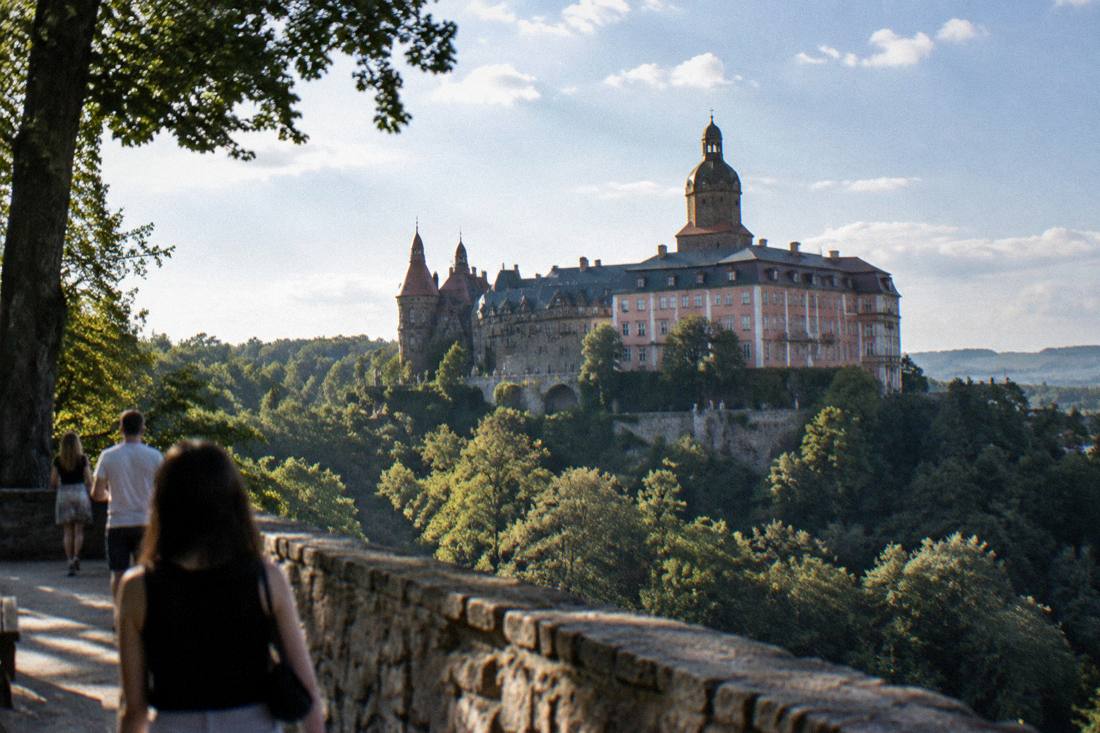
The best summer day trips from Wroclaw are the Giant Mountains and the Valley of Palaces to the south, Ksiaz Castle with its terraces that only open 15 April to 30 September, and the Church of Peace in Swidnica, a UNESCO site since 2001. The castle's own tariff lists the castle with audioguide and terraces at 72 zl adult and 62 zl reduced, and the terraces-only-in-season rule makes summer precisely the time they are accessible.
Ksiaz Castle is Lower Silesia's headline excursion. The municipal operator's price list, effective 6 May 2026, gives the All Day Ticket at 104 zl adult and 94 zl reduced, covering the castle interiors, terraces, the underground tour, the Palm House, the stud farm and the mausoleum. The castle is owned by the Walbrzych municipality and operated by its municipal company, which answers the ownership question travelers increasingly ask. The Ksiaz Castle guide covers how the visit fits together; the standard access from Wroclaw is a regional train to Walbrzych plus a bus or taxi connection, and no specific rail time is quoted here.
The Church of Peace in Swidnica, inscribed by UNESCO in 2001 as part of the "Churches of Peace in Jawor and Swidnica", charges 18 zl adult, 15 zl reduced and 45 zl for a family, per its own visiting page. The timber-framed interior is the point: it is one of the largest timber religious structures in Europe and the reason the site carries World Heritage status. The Karpacz and Karkonosze route south is the pure summer option, with mountain trails and the highest peak in the Giant Mountains; the Karpacz and Karkonosze page breaks down the options. Both can be combined with Ksiaz on a long day, though doing the castle properly with the underground tour is a full excursion on its own.
| Summer Day Trip | Adult Entry At The Site | Key Summer Detail |
|---|---|---|
| Ksiaz Castle (castle, audioguide, terraces) | 72 zl, reduced 62 zl | Terraces open only 15 April-30 September |
| Ksiaz Castle All Day Ticket | 104 zl, reduced 94 zl | Adds underground, Palm House, stud farm, mausoleum |
| Church of Peace, Swidnica | 18 zl, reduced 15 zl, family 45 zl | UNESCO-inscribed 2001, timber interior |
| Wroclaw Zoo (in-city half day) | Online from 69 zl, gate 99 zl | Afrykarium included; grounds to 19:00 on summer weekends |
Organized tours handle the logistics, and two of the strongest summer options from this site's roster are below. The Riese project under the Osowka hills is a cooler-than-it-sounds underground complex that pairs naturally with the castle, and the palaces-and-mountains loop covers the range in a single day:
For families weighing a similar decision, the Wroclaw with kids itinerary separates the zoo-and-Afrykarium day from the dwarf hunt in detail.
Where Do Locals Go When Wroclaw Gets Hot?
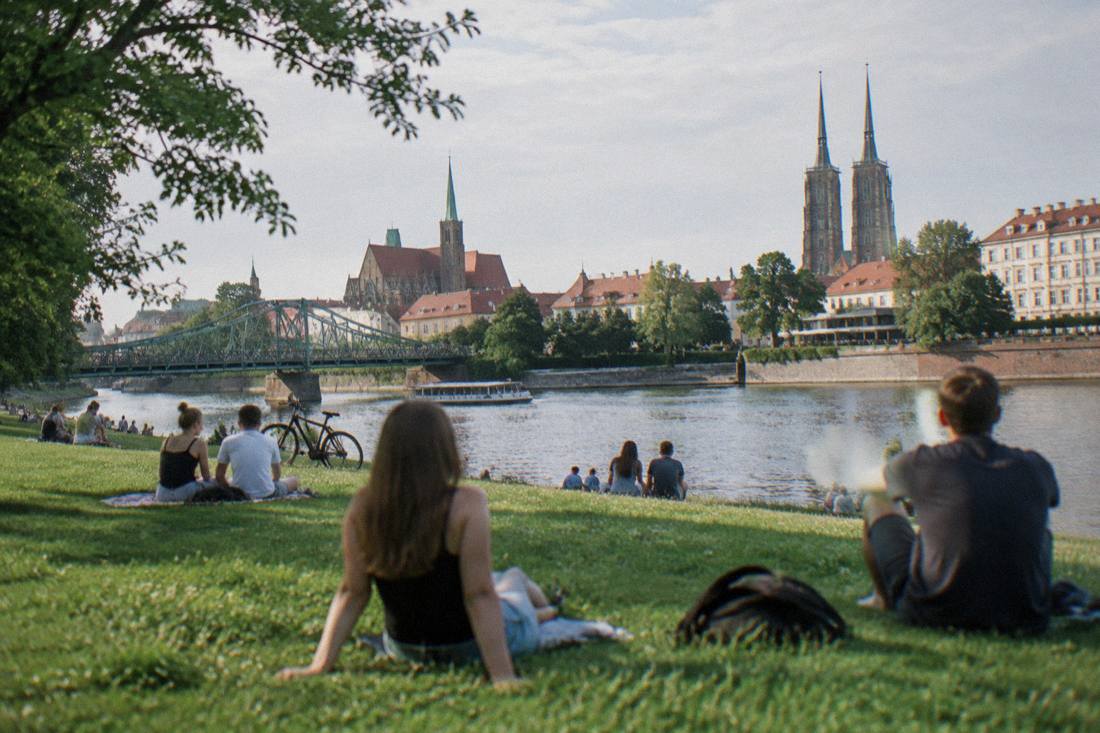
Locals in Wroclaw head for the water and the shade: Slodowa Island and the Odra riverbanks for terraces and evening air, the Botanical Garden for shaded paths, and the Nadodrze district's courtyard street art, which recent reporting describes as a transformed, community-driven art quarter rather than the neglected area it was. The tram network reaches all of it, with a ticket at 4.60 zl normal and 2.30 zl reduced per the city's official fare page.
Nadodrze is the district that rewards curiosity in any season but works best in summer, when the courtyards behind Roosevelt Street host murals and community projects. The city's 2016 European Capital of Culture year started much of the change, and the Nadodrze guide maps the walks. None of this needs a ticket; the free things to do in Wroclaw page collects the rest, including the Saturday free entry at the National Museum's permanent exhibitions.
| MPK Ticket | Normal Fare | Reduced Fare | Best Summer Use |
|---|---|---|---|
| 15-minute | 4.60 zl | 2.30 zl | Single hops between the Rynek and the islands |
| 30-minute | 7.00 zl | 3.50 zl | Reaching Nadodrze or the zoo |
| 24-hour | approx. 15.00 zl | approx. 7.50 zl | A packed one-day itinerary with several legs |
Fares rise by duration, not by distance, which makes the short-hop ticket the workhorse for the compact center. There is no all-inclusive Go City-style tourist pass sold for Wroclaw, and none should be assumed: the UrbanCard is a transport-focused fare card, not a sightseeing pass, and the Wroclaw city pass page explains exactly what does and does not exist.
What Should You Pack For Wroclaw In Summer?
Pack for Wroclaw in summer as a mild, occasionally wet warm season: light layers for days averaging 17.7C to 19.7C, a compact rain layer especially for July's 91.4mm of precipitation, comfortable walking shoes for cobbles, and a swim layer only if your itinerary includes the lakes south of the city. Poland uses the zloty (PLN), not the euro, so arrive with a card that handles PLN or plan a withdrawal on arrival.
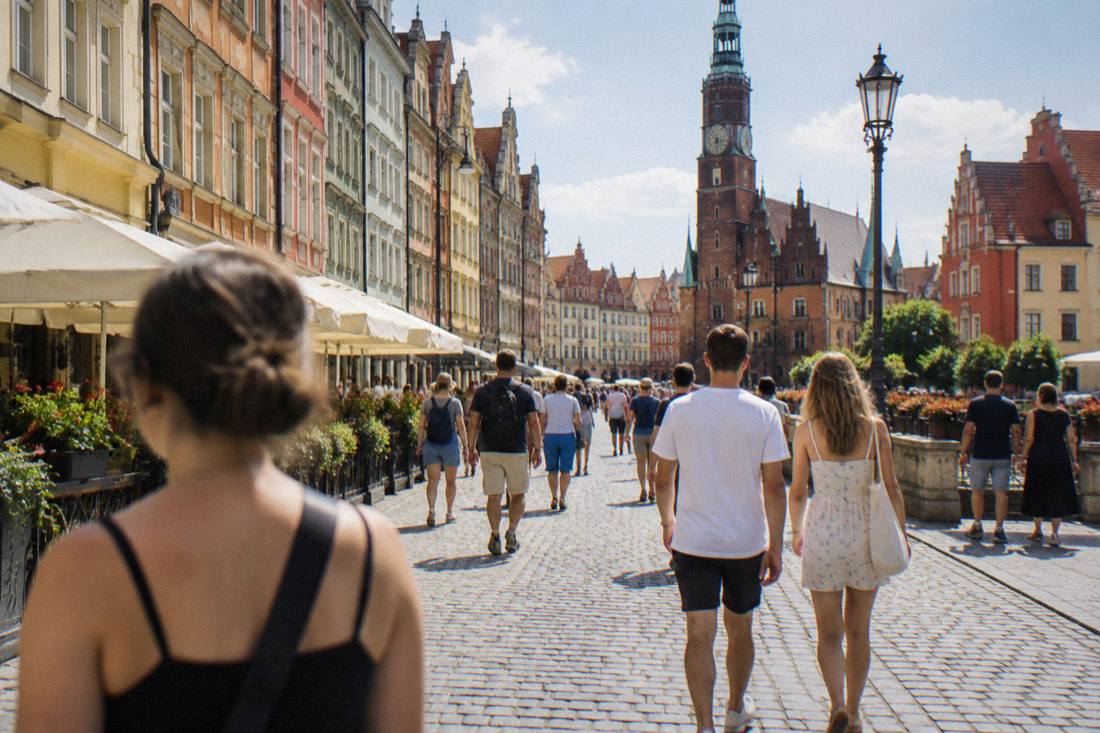
The shoe point matters more than visitors expect. The Rynek, Ostrow Tumski and the old town lanes are cobbled, and a dwarf hunt plus an islands walk plus a cathedral island loop adds up to a full day on foot. The Wroclaw walking tour route page covers the classic loop in order, and the getting around entry from the airport explains the transfer options on arrival.
On money: museum and site entries in this itinerary are quoted in PLN because that is what the tills charge. Tipping and card acceptance have their own page, the currency and tipping guide, and it is worth a read before arrival since expectations differ from Western Europe. For longer stays, the one day in Wroclaw and two days in Wroclaw itineraries can be merged with this one, and the three days in Wroclaw plan adds the day-trip layer.
Sun and evening cooling both deserve a line of their own. July and August sit at 19.7C and 19.3C mean per the IMGW normals, which reads as warm rather than hot, but a full day of cobbled walking under an open sky still calls for a hat, sunscreen and a refillable water bottle, since Wroclaw's Old Town has few shaded stretches between the Rynek and Ostrow Tumski. Evenings cool faster than the daytime numbers suggest, especially by the river after sunset, so a light layer that folds into a day bag is worth more than a second short-sleeve shirt. Laundry is rarely a concern on a trip this length, but anyone stretching the itinerary past a week will find a launderette easier near the student district than in the tourist core, where prices run higher for the same service.
Common Questions About Wroclaw In Summer
Is July A Good Month To Visit Wroclaw?
July is the warmest month in Wroclaw, with a 19.7C mean per IMGW's 1991-2020 normals, and all summer attractions run their longest hours. It is also the wettest month at 91.4mm of precipitation, so plan one indoor anchor, such as the Panorama Raclawicka screening or the National Museum, into each day.
How Hot Does Wroclaw Get In Summer?
By monthly means, Wroclaw runs 17.7C in June, 19.7C in July and 19.3C in August. These are 30-year averages, not daily highs, and the city's July mean is among the mildest of Poland's major synoptic stations. It is a warm, walkable summer rather than a hot one.
Is The Wroclaw Zoo Open Every Day In Summer?
Yes. The zoo's own hours page states it is open every day of the year including public holidays. From April to September the grounds run 9:00-18:00 Monday to Thursday and 9:00-19:00 on Fridays, weekends and holidays, and the Afrykarium is included in the standard ticket.
What Is The Cheapest Way To Get Around Wroclaw In Summer?
The MPK 15-minute ticket at 4.60 zl normal and 2.30 zl reduced, per the city's official fare page, covers most center-to-island hops. For a day with several legs, a 24-hour ticket at roughly 15.00 zl works out cheaper than repeated singles.
Do I Need To Book The Panorama Raclawicka In Advance In Summer?
Summer hours run daily 8:30-19:00 and the screening lasts 30 minutes, so throughput is steady, but July is peak season and timed screenings fill. The adult ticket is 50 zl and it also covers the National Museum's permanent exhibitions, the Ethnographic Museum and the Four Domes Pavilion within three months, so check the museum's own site for current availability before locking your day plan.
Summer in Wroclaw is a season of long evenings on the islands, mild means instead of heat, and the one year-round quirk that makes the city unique: a hunt for bronze dwarfs that turns every walk into a game. Start early, keep a museum card in your pocket for the afternoon shower, and let the terraces on Slodowa close the day.