Wroclaw History: From Breslau To Wroclaw
Wroclaw, the largest city in Lower Silesia in southwestern Poland, spent centuries under a different name, Breslau, and its streets still carry the evidence. This guide traces the transition and shows where to see it.
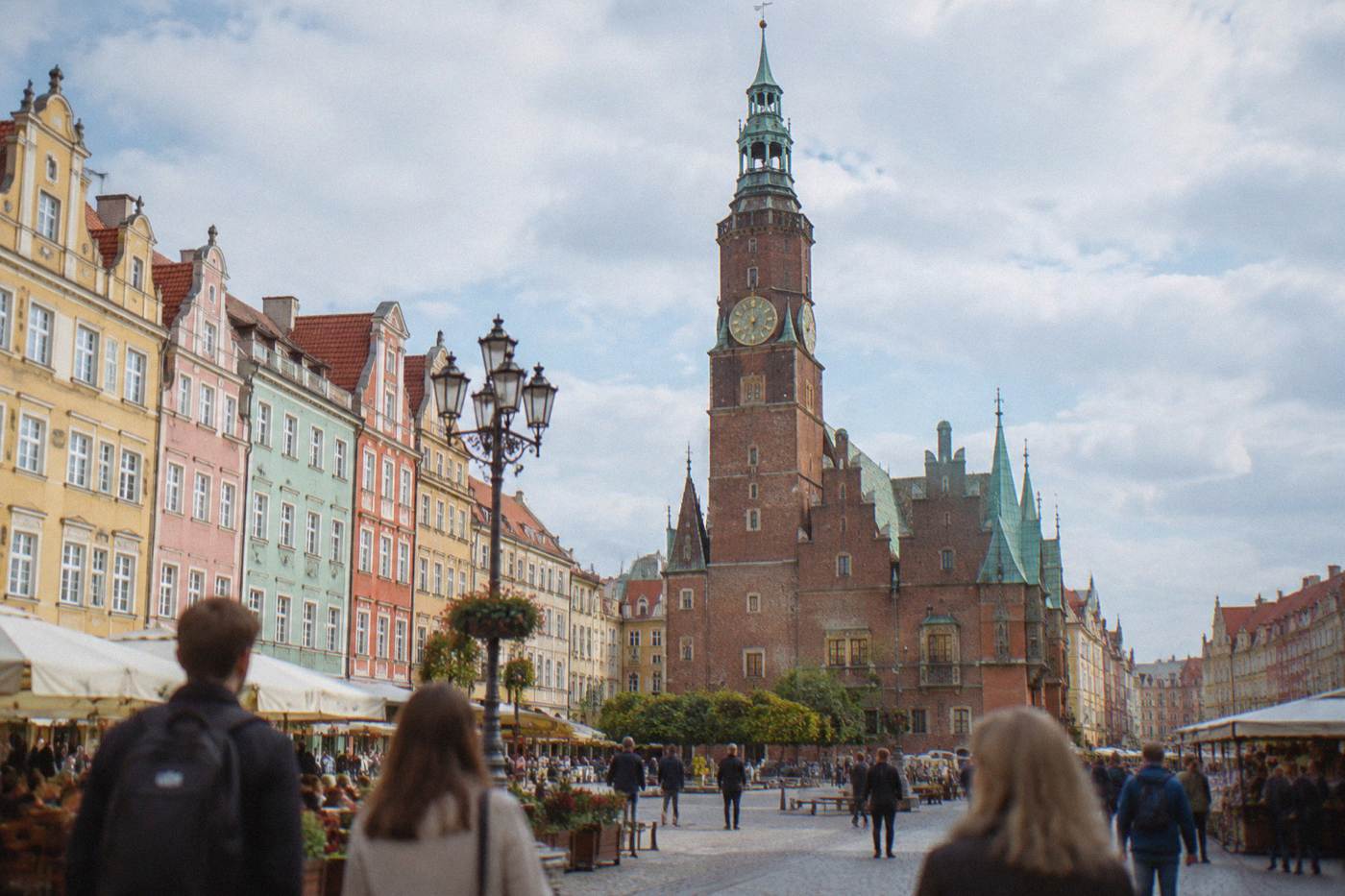
Short answer
Wroclaw is a city on the Odra river in southwestern Poland that was known as Breslau in its German era and became Polish Wroclaw after the Second World War. Its UNESCO-listed Centennial Hall (1911-1913, architect Max Berg) and the Church of Peace in Swidnica still tell that layered story today.
Wroclaw, the largest city in Lower Silesia (Dolnoslaskie voivodeship), in southwestern Poland, sits on the Odra river and carries two names in its own stones. For centuries the city was Breslau, and after the Second World War it became Wroclaw, a Polish city of 672,601 people as of 31 December 2025, according to GUS, Poland's statistics office. The name changed. The buildings largely stayed. That double inheritance is what makes the city fascinating to walk: a German-era domed hall that UNESCO lists, a museum district with some of Poland's most important painting collections, and a market square whose footprint predates both names. This guide follows the thread from Breslau to Wroclaw and shows exactly where to see each layer, what tickets cost, and which guided walks explain it best.
What Does The Name Breslau Have To Do With Wroclaw?
Breslau is the German name for the same city that today calls itself Wroclaw, and both names describe one continuous settlement on the Odra river. The city spent its modern formative centuries as Breslau, the largest city of Lower Silesia, and after the Second World War it became Polish Wroclaw. Today it is home to 672,601 people, and GUS figures show Krakow, at 816,614, is the larger Polish city.
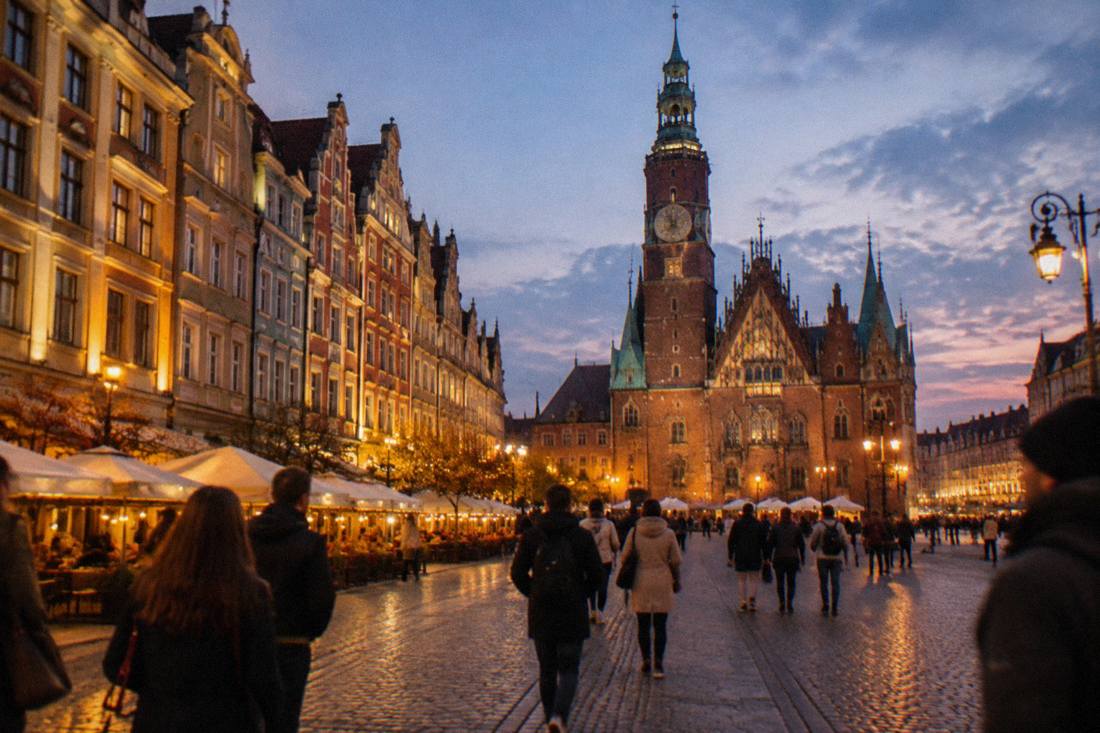
The two names are not two cities, and that is the point most first-time visitors miss. Guidebooks sometimes treat "Breslau" and "Wroclaw" as separate chapters, but the street plan, the bridges and much of the masonry belong to both. When you stand on the market square, roughly 3.64 to 3.79 hectares according to the measurements cited in Polish sources, you are standing in a space that served the city under both names. Krakow's Rynek Glowny is larger, at around 4 hectares, so do not repeat the often-heard claim that Wroclaw's square is Europe's second largest: it was not independently confirmed, and the honest comparison puts Krakow ahead.
For a fuller sense of how the city presents itself today, the Wroclaw Travel Guide homepage gathers the practical side of a visit, from dwarf hunting to transport. For the history itself, the rest of this page stays with the thread.
The honest way to describe the transition is plain: the city's German era ended with the Second World War, the population changed, and the Polish name became the only official one. The architecture, the museums and the street names all record that shift in different ways. Some layers are obvious, like the monumental buildings east of the center. Some are quiet, like the door lintels and inscriptions that survived in the old town. A guide who knows where to look turns a pleasant walk into a readable document.
What Changed In Wroclaw Over The Last Century?
The last century changed Wroclaw more than any period before it: the city that entered the century as Breslau built Centennial Hall between 1911 and 1913, came out of the Second World War as Polish Wroclaw, and in 2016 served as a European Capital of Culture. Each of those dates is visible in the city's fabric today, from Max Berg's reinforced-concrete dome to the Polish cultural institutions that now fill the old buildings.
Centennial Hall is the clearest single artifact of the Breslau era, and it is the city's anchor for understanding the period. The UNESCO World Heritage List inscribes it as "Centennial Hall in Wroclaw" with an inscription year of 2006, designed by architect Max Berg and built between 1911 and 1913, with a capacity of up to 10,000 people. A reinforced-concrete dome of that scale, finished while the city still answered to the name Breslau, tells you the city was once one of Central Europe's serious engineering and exhibition centers. It still hosts events, and the surrounding parkland makes it one of the most pleasant corners of the east bank.
| Landmark | UNESCO inscription | Built / architect | Key figure |
|---|---|---|---|
| Centennial Hall, Wroclaw | 2006 | Max Berg, 1911-1913 | Capacity up to 10,000 |
| Church of Peace, Swidnica (with Jawor) | 2001 | Inscribed as "Churches of Peace in Jawor and Swidnica" | Adult ticket 18 zl, reduced 15 zl |
The post-war turn made the city Polish in name, administration and daily life, and the cultural calendar now reflects that fully. Wroclaw held the European Capital of Culture title in 2016, and its New Horizons film festival is a recognized fixture of the European festival circuit. The Wroclaw events calendar and the guide to Wroclaw's festivals cover what is on in any given season, and both are worth a look if your dates are already fixed.
If you want the whole arc explained while you walk it, guided options help, because the story jumps between neighborhoods.
Why Is Centennial Hall Wroclaw's UNESCO Landmark?
Centennial Hall is Wroclaw's only UNESCO World Heritage property inside the city, inscribed in 2006 for its architecture by Max Berg, built 1911-1913, with a capacity of up to 10,000 people. UNESCO's own listing names it "Centennial Hall in Wroclaw," and its reinforced-concrete dome made it a landmark of modern engineering at the time it rose over Breslau.
The hall's inscription in 2006 was a formal recognition of something the city had known for decades: this is one of the most important early twentieth-century buildings in Europe, and it survives intact. Berg's dome was an engineering statement, and the building still functions as an event venue rather than a museum piece. Visitors who come only for the old town often miss it, which is a mistake, because it is the single most direct way to understand what Breslau was: a wealthy, confident, technologically ambitious city.
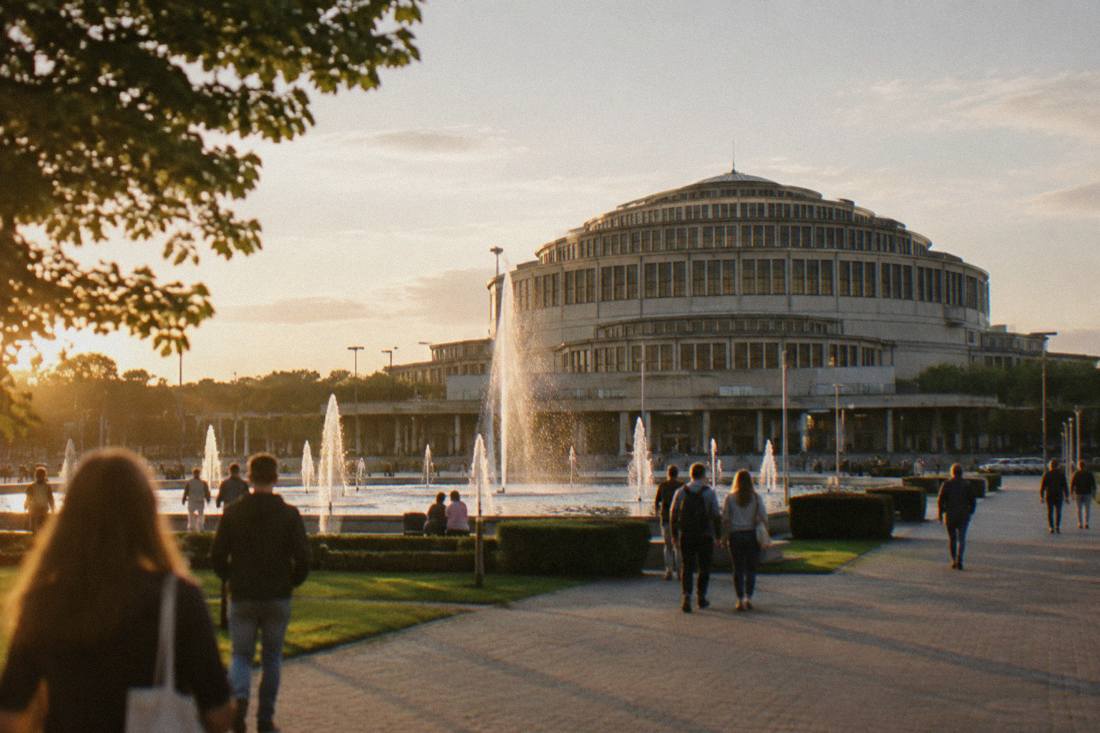
The hall sits in parkland east of the center, close to the zoo and the Japanese Garden, which makes it easy to fold into a day that mixes history with green space. The surrounding exhibition quarter was laid out as a showcase district, and the scale still reads that way a century later. Its story is also the clearest answer to a question visitors often ask on arrival: why does a Polish city have a giant German-era concrete hall at its edge? Because the city's history is not a chapter that was deleted, it is a document that was annotated.
A private old town walk pairs well with a Centennial Hall visit, since the two ends of the story sit in different parts of the city.
Where Can You Still See The Breslau Era In Wroclaw Today?
The Breslau era is easiest to see in Wroclaw's monumental public buildings, its market square townhouses, its bridges over the Odra, and its museum quarter, all of which predate the name change and simply carried on under new ownership. Centennial Hall is the headline example, but the old town's fabric, from the gothic town hall to the streets east of the Rynek, records the same long continuity.
The honest framing for this section is architectural, not anecdotal. The buildings that served Breslau's citizens now serve Wroclaw's, and the change is in the language of the inscriptions, the names on the maps and the institutions inside them, more than in the walls themselves. The market square's townhouses have been restored repeatedly, and their current paintbox colors are a Polish-era presentation of much older structures. The bridges are the same story in steel and stone: crossings that made sense when the city was a German trade hub still make sense now.
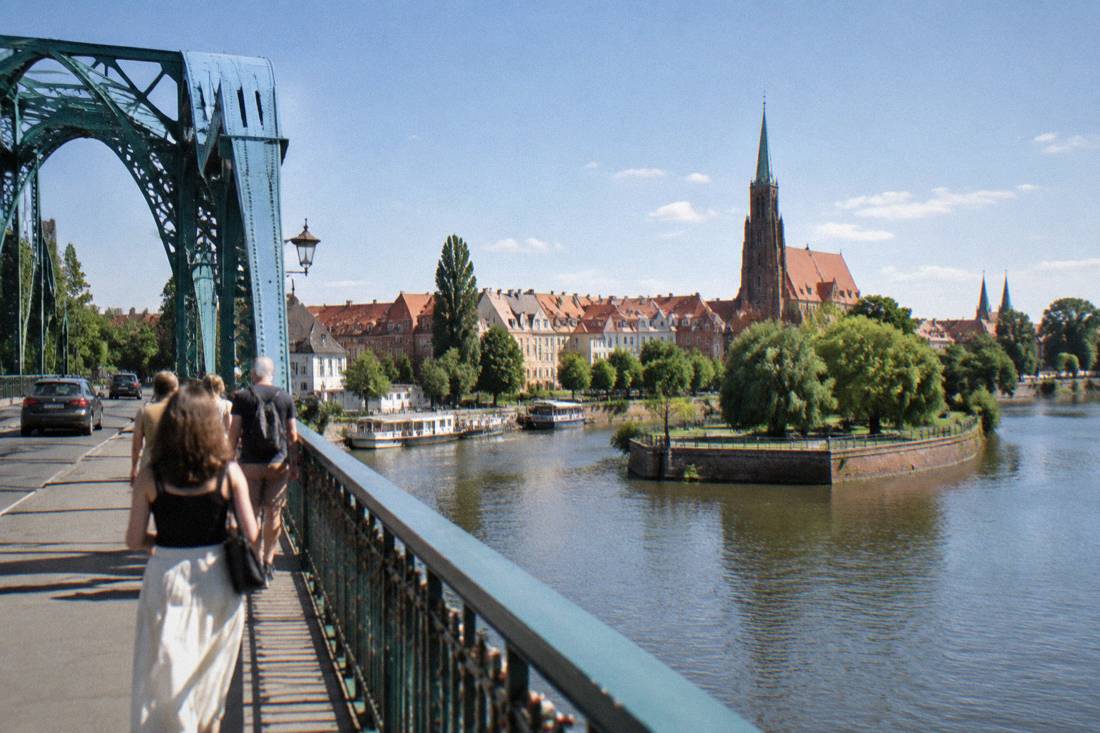
Ostrow Tumski, the cathedral island, is the deepest layer of all, and it is the part of the city where the past feels least like a museum. The island's churches and quiet lanes are covered in their own guide elsewhere on this site. What matters for the history thread is that the island gives you the city's oldest settlement core, while the market square gives you its medieval commercial core, and Centennial Hall gives you its industrial-era confidence, so a single long day can walk the whole arc from oldest to newest.
A private walk of the old town is the most efficient way to have the layers pointed out in order, especially if your time is short.
What Are The Essential Historic Sights Inside Wroclaw Itself?
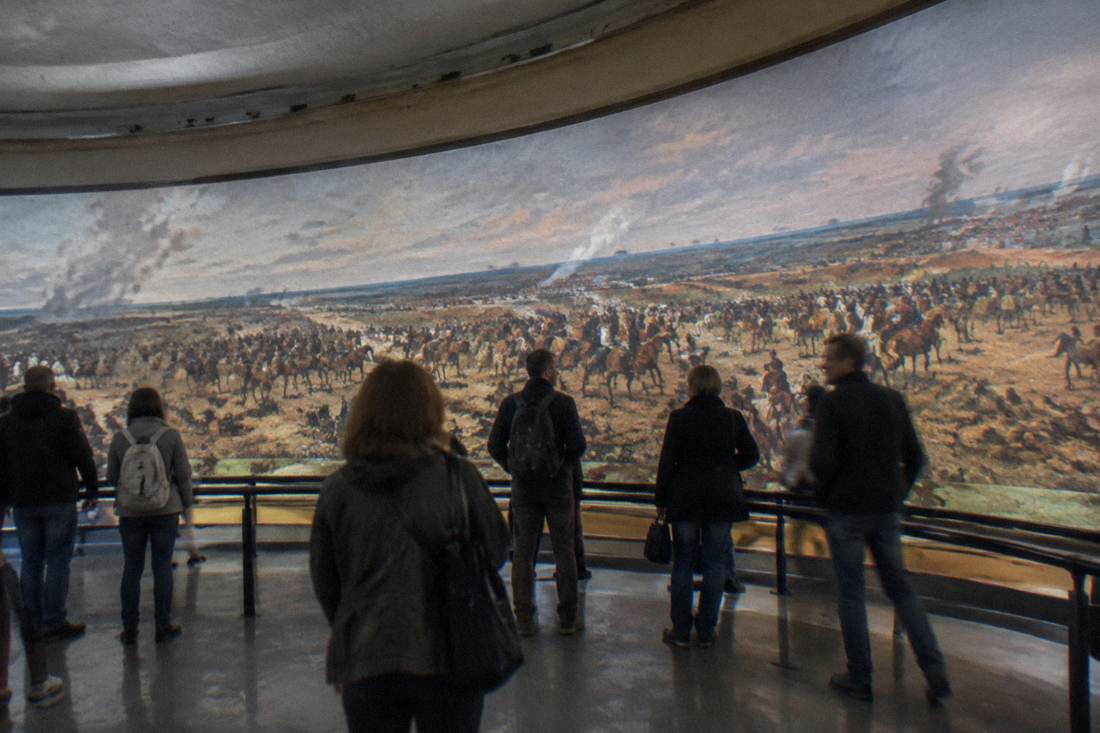
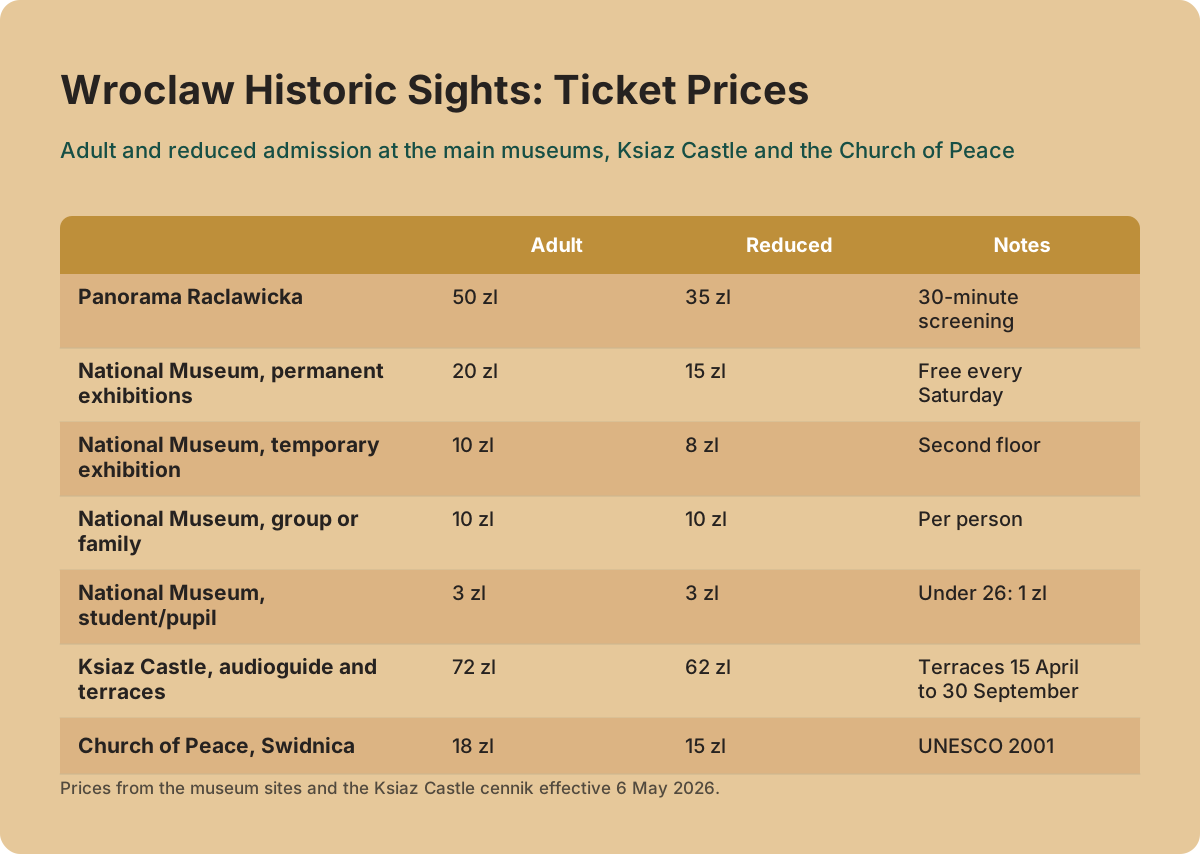
The essential historic sights inside Wroclaw are the market square with its gothic town hall, the Panorama Raclawicka (adult 50 zl, reduced 35 zl, a 30-minute screening), the National Museum (adult 20 zl, reduced 15 zl, free permanent exhibitions every Saturday), and Centennial Hall. The Panorama ticket also covers three further National Museum branches within three months of the visit date.
The Panorama Raclawicka is the city's signature indoor sight, and the museum's own practical page sets the terms: a 30-minute screening, adult 50 zl, reduced 35 zl, family 35 zl per person, and a group-guide ticket at 10 zl. Summer hours, from 1 April to 31 October, run daily 8:30-19:00. In winter, from 1 November to 31 March, it closes on Mondays and otherwise runs 9:30-16:00 weekdays and Sundays, with Saturdays until 17:00. The clever part is the ticket's reach: the same ticket also covers the National Museum's permanent exhibitions, the Ethnographic Museum and the Four Domes Pavilion within three months of your visit date, so it is effectively a multi-site museum pass for the historic-minded.
| Museum / sight | Adult | Reduced | Notes |
|---|---|---|---|
| Panorama Raclawicka | 50 zl | 35 zl | 30-minute screening; family 35 zl/person; group-guide 10 zl |
| National Museum, permanent exhibitions | 20 zl | 15 zl | Free every Saturday; under-7s free |
| National Museum, temporary exhibition | 10 zl | 8 zl | Second floor |
| National Museum, group or family | 10 zl | 10 zl | Per person |
| National Museum, student/pupil special | 3 zl | 3 zl | "Museum for a zloty" under 26: 1 zl |
The National Museum's own practical page is the source for all of those figures, and the free-Saturday rule is the single best saving tip in the city: permanent exhibitions open free of charge every Saturday, no pass required, no Wroclaw-specific tourist card needed, because no all-inclusive city pass of that kind is currently sold for Wroclaw at all. The transport system sells its own fare cards, but those cover trams and buses, not museums.
Beyond the headline sights, the practical side of eating and drinking in the old center has its own pages: milk bars for the communist-era canteen tradition that survived, and the best restaurants in Wroclaw for the contemporary scene. The milk bar tradition is itself a piece of living history, a food system from Poland's socialist decades that still feeds students and workers at prices the market square restaurants cannot match.
How Do You Visit Ksiaz Castle And The Church Of Peace From Wroclaw?
Ksiaz Castle, the region's biggest day trip, is owned by the Walbrzych municipality and operated by the municipal company Zamek Ksiaz w Walbrzychu. Its cennik effective 6 May 2026 prices the castle with audioguide and terraces at 72 zl adult and 62 zl reduced, and the terraces open only from 15 April to 30 September. The Church of Peace in Swidnica, UNESCO-listed since 2001, charges 18 zl adult and 15 zl reduced.
The castle's ownership is a story in itself, and it is a question people genuinely search for. The castle belongs to the Gmina Walbrzych, the Walbrzych municipality, and is run by the municipal company Zamek Ksiaz w Walbrzychu Sp. z o.o. It is not privately owned and not run by a national state agency, whatever older forum threads claim. Its price list, effective 6 May 2026, is more detailed than most Polish castle tariffs, and the full breakdown is worth reading before you decide what to buy, because the combinations differ a lot.
| Ksiaz Castle ticket option | Adult | Reduced |
|---|---|---|
| Castle + audioguide + terraces | 72.00 zl | 62.00 zl |
| Castle + terraces + underground tour | 92.00 zl | 82.00 zl |
| Castle + terraces + stud farm | 79.00 zl | 69.00 zl |
| All Day Ticket (castle, terraces, underground, Palm House, stud farm, mausoleum) | 104.00 zl | 94.00 zl |
| Underground tour alone | 45.00 zl | 39.00 zl |
| Palm House alone | 27.00 zl | 21.00 zl |
| Mausoleum alone (open 1 April-15 October) | 13.00 zl | 8.00 zl |
Two timing rules matter more than the prices. The terraces open only from 15 April to 30 September, so an off-season visit loses one of the castle's best views. And between April and September, the castle interiors and the Palm House open 9:00-18:00 on weekdays and 9:00-19:00 on weekends, per the castle's own visiting page. Access from Wroclaw is commonly a regional train to Walbrzych plus a bus or taxi connection, and a specific rail timetable should be checked live rather than assumed.
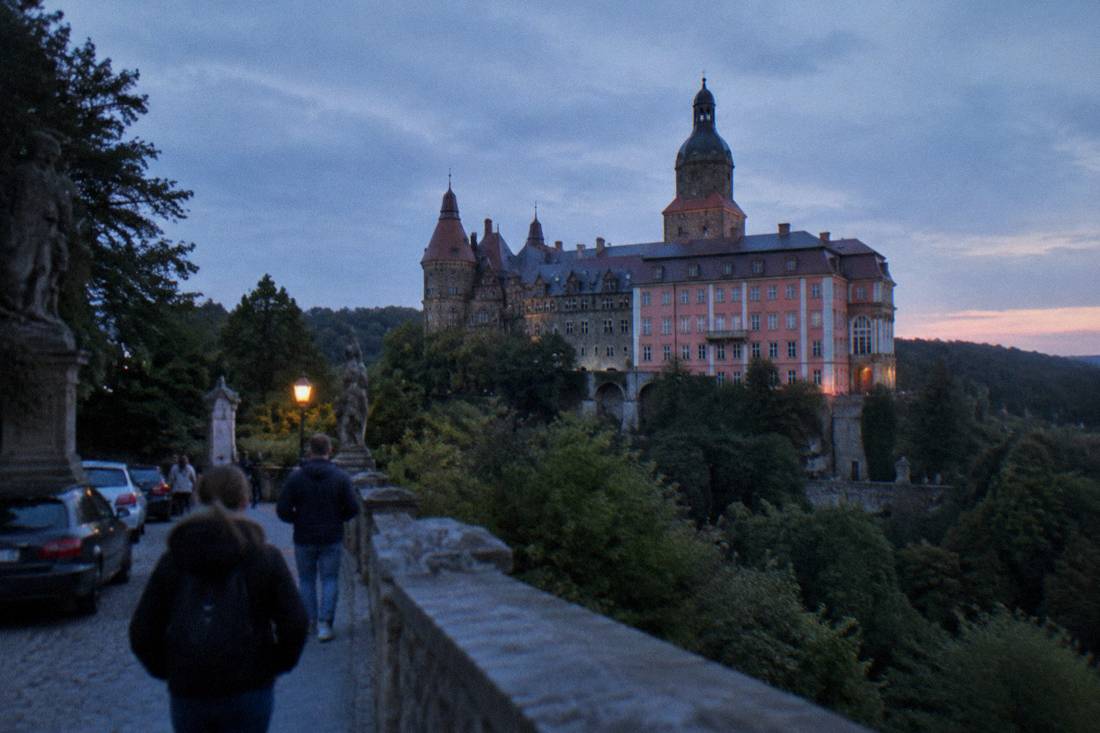
The Church of Peace in Swidnica is usually folded into the same day, and it earns the pairing. UNESCO inscribed the Churches of Peace in Jawor and Swidnica in 2001, and the Swidnica church's own visiting page prices it at 18 zl adult, 15 zl reduced, 10 zl for children and youth, and 45 zl for a family of two adults with children under 18. Half-timbered, vast and built as a statement of religious toleration, it is one of the most remarkable wooden structures in Europe, and it sits an easy drive from the castle.
A combined tour takes the logistics off your plate entirely.
Which Guided Tours Tell Wroclaw's History Best?
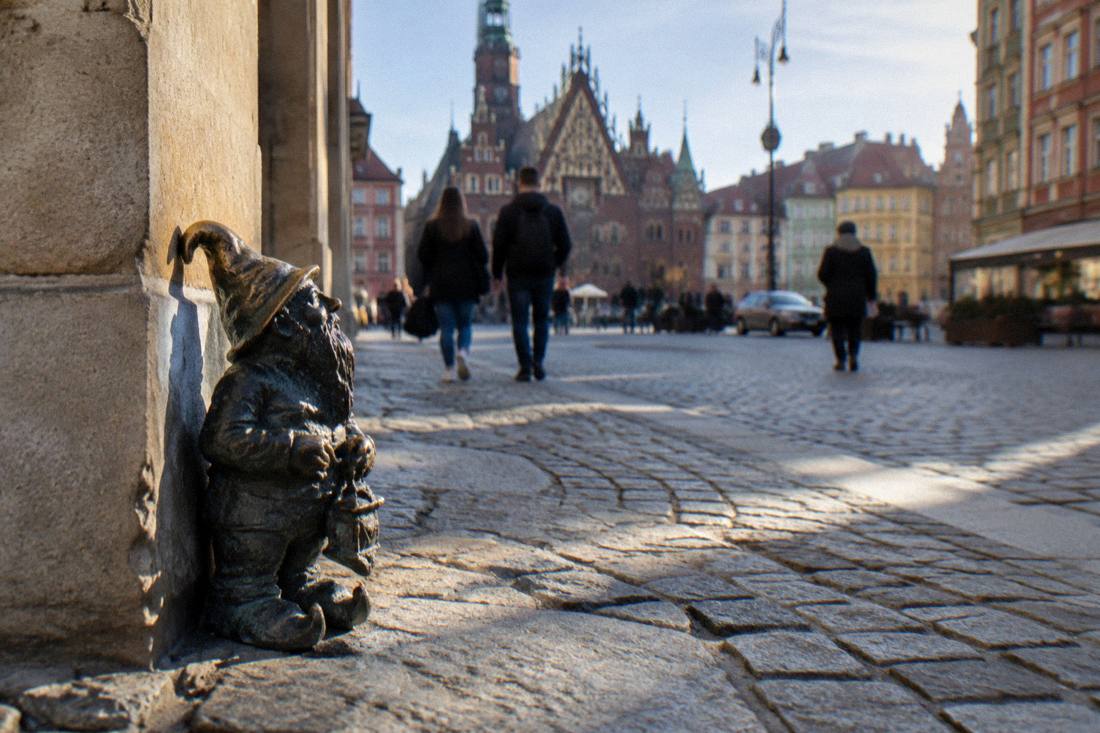
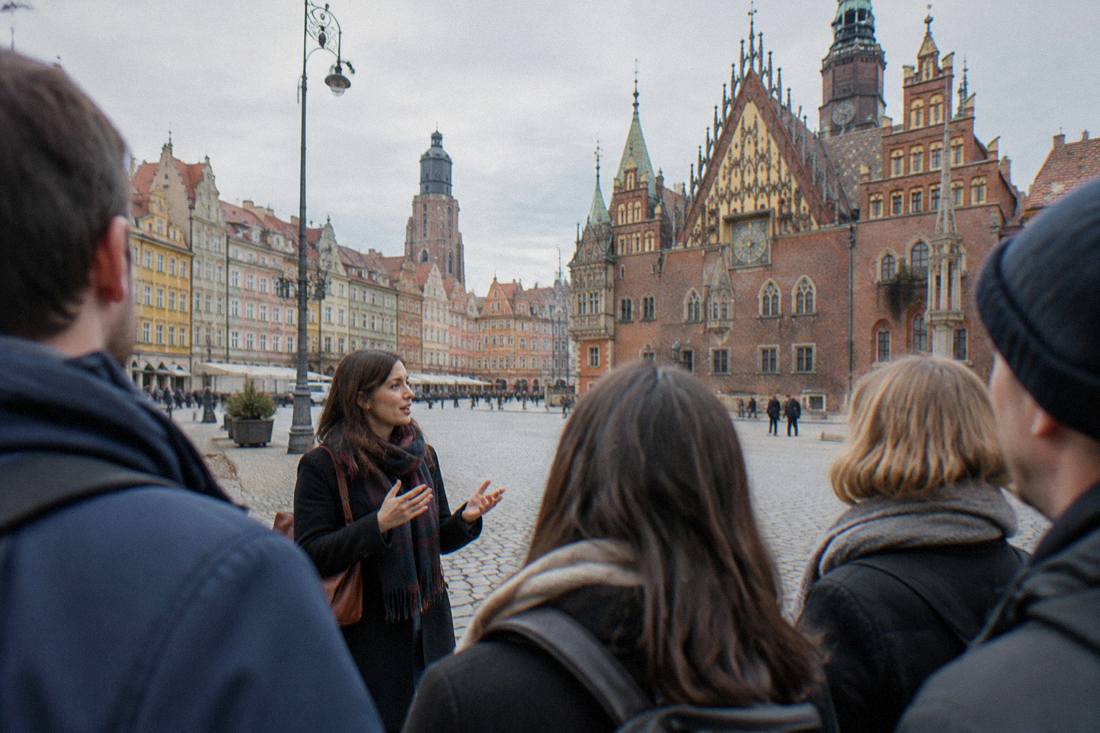
Wroclaw's history is best told by walking tours rather than bus tours, because the evidence sits in streetscapes and details. The roster includes paid private walks of the old town, a two-hour dwarf-themed walk that uses the city's famous bronze figurines as a route through its streets, and genuinely free, tip-based walks on the GuruWalk platform, including Old Town Wroclaw by Walkative!, which runs 2.5 hours.
The dwarf statuettes scattered across the city are a post-war Polish-era invention that has become its most famous treasure hunt, and the two-hour dwarf walk is a surprisingly effective history tour in disguise, because the route strings together the old town's most story-rich corners. You can read more about the figurines themselves in the Wroclaw dwarfs guide and book the walk directly, with a live price and current availability on the operator's own listing:
The free options deserve a specific mention because they invert what most people expect. GuruWalk, a platform for tip-based walking tours, lists four verified live walks in Wroclaw, among them "Legends of Wroclaw: Free Tour Around Ostrow Tumski & Market Square," "Wroclaw Through Ages: Old Town & Cathedral Island Walking Tour," "Tour in Wroclaw Given by a Historian," and "Old Town Wroclaw by Walkative!." These are not our products and we do not sell them, which is exactly why they can be recommended plainly. You book a seat, you walk, and you tip the guide at the end; no price belongs on this page for them because there is none.
When Is The Best Time To Explore Wroclaw's History?
IMGW's 1991-2020 climate normals for the Wroclaw station show a mean monthly temperature of 0.0C in January, the coldest month, rising to 19.7C in July, the warmest, with an annual mean of 9.7C. May to September is the comfortable window for long walking days, while December's Christmas market season rewards visitors who accept cold for atmosphere.
The climate table below is the full monthly picture from the official normals, and it is more even than it might seem: Wroclaw's winter is mild for Poland, and its summer is warm without extremes. July is also the wettest month at 91.4 mm, so the peak of summer pairs the best temperatures with the heaviest rain. April is the driest month in the normals at 31.2 mm of precipitation.
| Month | Mean C | Precip mm | Month | Mean C | Precip mm |
|---|---|---|---|---|---|
| Jan | 0.0 | 28.3 | Jul | 19.7 | 91.4 |
| Feb | 1.1 | 25.6 | Aug | 19.3 | 59.5 |
| Mar | 4.3 | 35.0 | Sep | 14.5 | 48.4 |
| Apr | 9.7 | 31.2 | Oct | 9.6 | 37.6 |
| May | 14.3 | 59.6 | Nov | 4.8 | 31.4 |
| Jun | 17.7 | 65.4 | Dec | 1.1 | 27.9 |
The seasonal sights follow the weather. The Ksiaz Castle terraces run 15 April to 30 September only, the Panorama switches to its long summer hours on 1 April, and the National Museum is closed on Mondays year-round. If your dates fall in late autumn or winter, the Wroclaw in winter guide covers the indoor-heavy plan, and the Christmas market guide covers the season that now draws some of the city's biggest crowds. The month-by-month detail, including what the normals mean for packing, is in Wroclaw weather by month.
Getting between the sights is cheap by the standards of Western Europe. The MPK fare structure prices a 15-minute ticket at 4.60 zl normal and 2.30 zl reduced, with longer tiers rising from there, and the full fare ladder is in the getting around Wroclaw guide.
| MPK Wroclaw ticket | Normal | Reduced |
|---|---|---|
| 15-minute | 4.60 zl | 2.30 zl |
| 30-minute | 7.00 zl | 3.50 zl |
| 24-hour city ticket | around 15.00 zl | around 7.50 zl |
| Multi-day band | 26 / 32 / 54 zl | 13 / 16 / 27 zl |
How Does Wroclaw's History Compare With Krakow's?
Krakow is the larger city, at 816,614 residents against Wroclaw's 672,601 per GUS figures for 31 December 2025, and Krakow's Rynek Glowny at around 4 hectares is larger than Wroclaw's roughly 3.64-3.79 hectare Rynek. But the two cities' histories diverge completely: Krakow's core is a Polish royal capital, while Wroclaw's is a rebuilt Silesian city that was Breslau for centuries.
That divergence is the real answer to the perpetual Wroclaw-versus-Krakow question, and it is why the comparison never resolves into a ranking. Krakow offers the uninterrupted Polish royal story. Wroclaw offers the layered, twice-renamed Silesian story, with a UNESCO dome from its German era and a Polish cultural calendar that now includes a European Capital of Culture year (2016) and the New Horizons film festival. If your interest is Polish state history, Krakow is the deeper dive. If your interest is how a whole city changes hands and identity while its walls stay put, Wroclaw is the better classroom.
The comparison is covered properly in the Wroclaw vs Krakow guide, alongside Wroclaw vs Gdansk and Wroclaw vs Warsaw for travelers weighing several Polish cities. One honest note for planners: do not rank Wroclaw as Poland's arts capital either. Lodz is the recognized UNESCO City of Film and home of the Polish National Film School. Wroclaw's real, sourced cultural claims are the New Horizons festival, the 2016 Capital of Culture year, and the Nadodrze district's street-art quarter, all of which are worth your time and none of which need inflating.
For practical planning across the whole city, the Wroclaw trip cost and best time to visit Wroclaw guides finish the job this history started.
Whichever walk or day trip you choose, the underlying logic is the same: pick the layer of the story you care about, whether that is the Breslau-era engineering of Centennial Hall, the museum district's painting collections, or the Silesian castles beyond the city, and let that choice shape the itinerary rather than trying to collect everything at once.
Common Questions About Wroclaw's History
Was Wroclaw ever called Breslau?
Yes. Breslau is the German name of the same city on the Odra river, and it was the city's official name through its German era. After the Second World War the city became Polish Wroclaw. The buildings, bridges and street plan largely predate the name change, which is why the two histories sit on top of each other in the modern city.
Is Wroclaw older than Krakow?
No ranking of that kind is sourced here, and city-age comparisons are rarely meaningful anyway. What the sources do confirm is that Krakow is the larger city today, 816,614 residents against Wroclaw's 672,601 at 31 December 2025 per GUS, and that Krakow's main market square is larger than Wroclaw's. Both cities have deep medieval cores worth full days.
What is the most historic building in Wroclaw?
Centennial Hall is the city's only UNESCO World Heritage property, inscribed in 2006. It was designed by Max Berg and built between 1911 and 1913, with a capacity of up to 10,000 people. The gothic town hall on the market square is the other candidate, as the historic heart of the city's civic life.
Do you need a tour to understand Wroclaw's history?
You can enjoy the city without one, but the layered story rewards a guide. Paid private walks cover the old town, and free, tip-based walks on the GuruWalk platform, including Old Town Wroclaw by Walkative!, run 2.5 hours. The Ksiaz Castle and Church of Peace day trips are the standard way to reach the region's biggest historic sights outside the city.
What did the Second World War change in Wroclaw?
It ended the city's era as Breslau. The city became Polish Wroclaw, its institutions, language and population changed, and its German-era buildings passed into new Polish uses, from museums to the university. The city's later milestones, including the 2016 European Capital of Culture year, belong to the Polish chapter of that story.