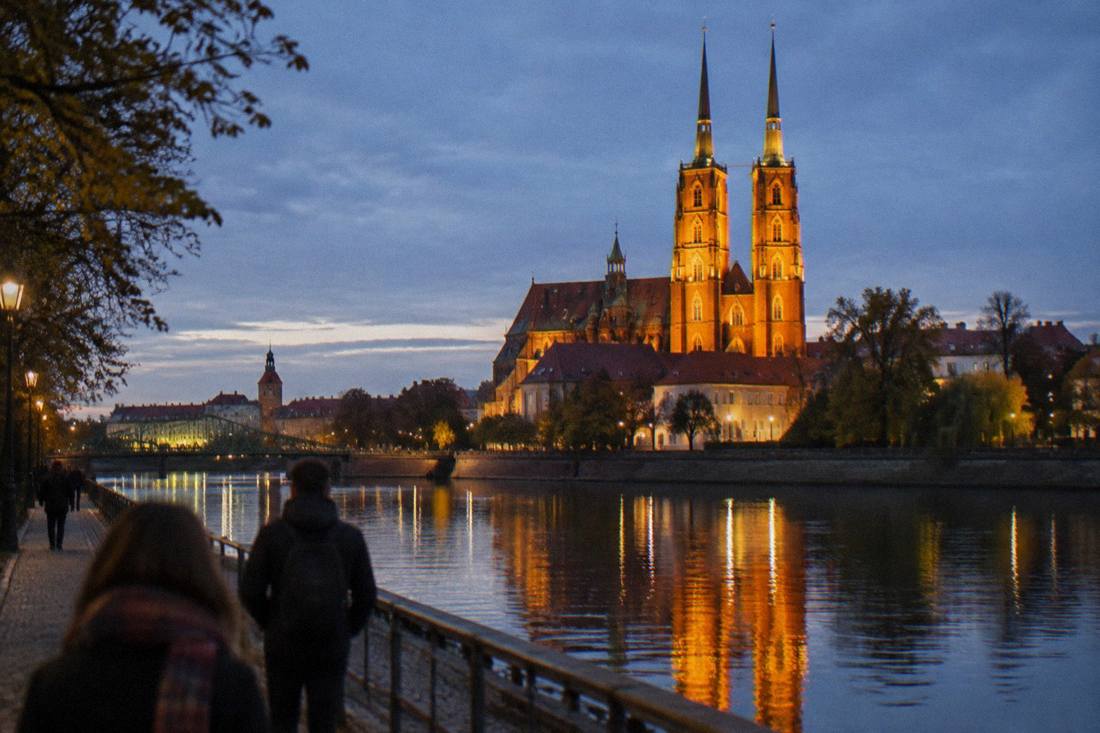
Wroclaw Events Calendar
Wroclaw, in southwestern Poland, runs on a steady rhythm of film festivals, music seasons, markets and museum exhibitions. This calendar lines up the verified anchors of the year with the hours, prices and transport facts that actually decide whether an event weekend works.
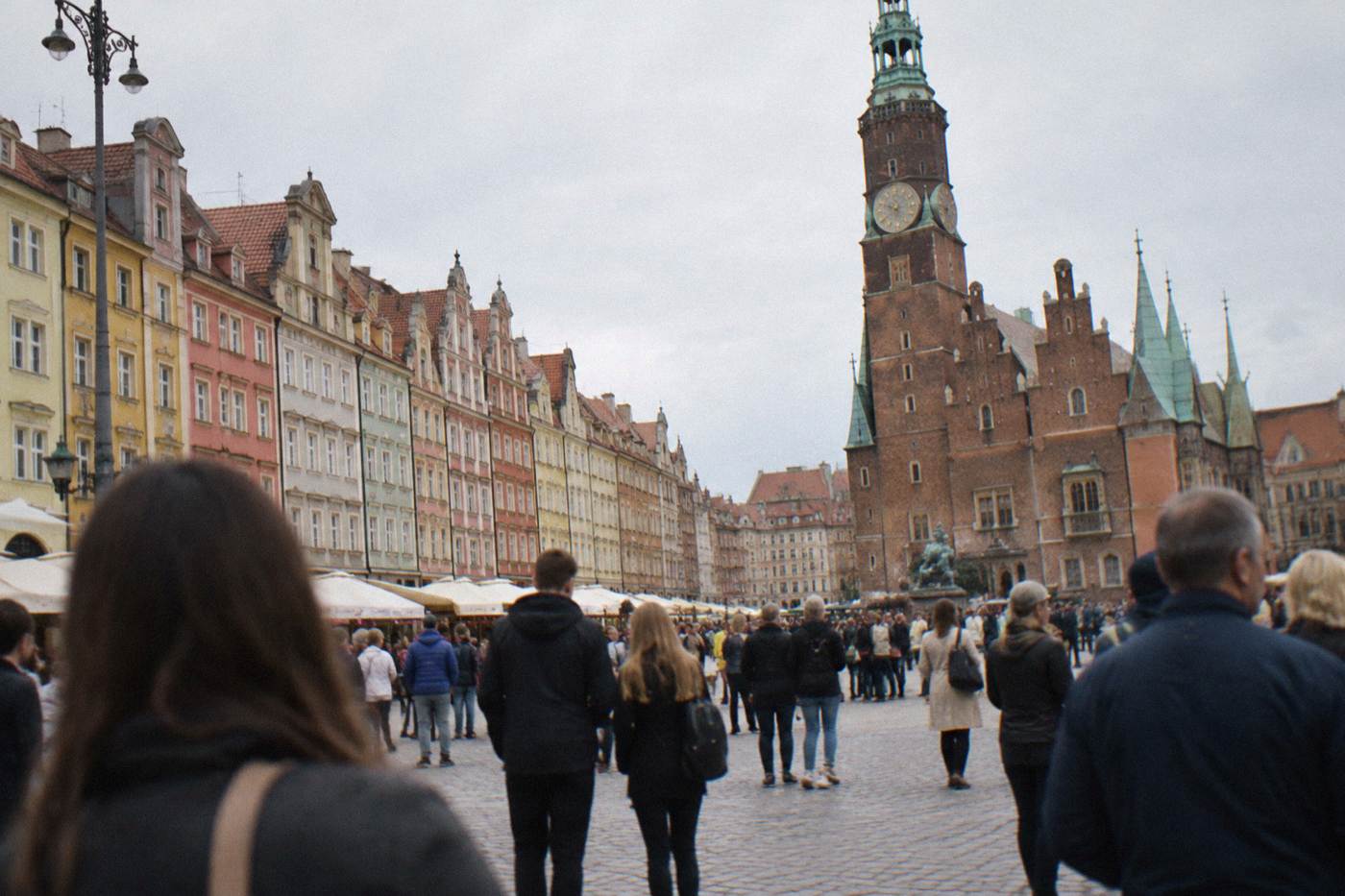
Short answer
Wroclaw's verified cultural year rests on the New Horizons film festival, the Wratislavia Cantans festival, the December Christmas market and the legacy of its 2016 European Capital of Culture year. Museums close Mondays, the National Museum is free on Saturdays, and IMGW's 1991-2020 normals put July at a 19.7C mean.
Wroclaw, the largest city in Lower Silesia (Dolnoslaskie voivodeship) and home to 672,601 residents as of 31 December 2025 by the GUS count, sits on the Odra river in southwestern Poland and packs its year with festivals, market seasons and museum openings. The city's cultural standing is not folklore: its 2016 European Capital of Culture year, the New Horizons film festival and the street-art quarter of Nadodrze are all documented, verifiable parts of its recent record. This page lays out what that means in practice, month by month and venue by venue, using official museum tariffs, IMGW climate normals and MPK fare data rather than guesswork. Nothing here is a promise from an operator; every figure comes from an official Polish source.
What Is The Wroclaw Events Calendar?
The Wroclaw events calendar is the year-round rhythm of festivals, markets and cultural seasons that fills this city of 672,601 people in Lower Silesia, southwestern Poland. Its verified anchors are the New Horizons film festival, the Wratislavia Cantans festival, the December Christmas market and the city's 2016 European Capital of Culture legacy, staged across the Market Square, the Old Town, Ostrow Tumski and Centennial Hall.
The honest starting point is what the record actually supports. The fresh research sweep behind this site confirms Wroclaw's real cultural claims as the New Horizons film festival, its 2016 European Capital of Culture year, and the Nadodrze district's documented reputation as a street-art and creative quarter. Lodz, not Wroclaw, is Poland's recognized film-capital city under UNESCO's City of Film program, so treat Wroclaw's film identity as one strong festival rather than a national crown.
What makes the calendar easy to plan around is geography. The venues cluster tightly. The Market Square, the Old Town and the cathedral island of Ostrow Tumski sit within walking distance of each other, which is why a single well-placed base covers most of the year's happenings. For travelers who want a first orientation before an event weekend gets busy, the festivals overview on this site collects the recurring cultural moments in one place, and the dwarf-spotting walk is a light, themed way to learn the street layout that every event uses.
One structural fact shapes every event visit: Poland uses the zloty (PLN), not the euro, though it is in the EU and the Schengen area. Every price on this page is therefore in zl, drawn from the tariff page of the institution concerned.
Which Festivals Define Wroclaw's Cultural Year?
Wroclaw's cultural year is defined by a small set of documented, recurring events: the New Horizons film festival, the Wratislavia Cantans festival, and the Christmas market that fills the Market Square in December. Around them sit the permanent draws, from the Panorama Raclawicka to the dwarf figurines scattered across the city, and the Nadodrze art district, all supported by official sources rather than tourist-board superlatives.
The list below is deliberately conservative. It names only what this site's verified research or an official source supports.
| Cultural Anchor | What The Verified Record Shows | Season |
|---|---|---|
| New Horizons film festival | A film festival named as a verified Wroclaw cultural claim in this site's research sweep | Varies by year; check the festival's own channels |
| Wratislavia Cantans festival | A recurring Wroclaw festival covered in this site's festival guide | Varies by year; check the current program |
| Christmas market | A December market season in the Market Square, covered in the dedicated Christmas market guide | December |
| European Capital of Culture 2016 | Wroclaw's verified ECoC year, part of its modern cultural record | Year-round legacy |
| Nadodrze art district | A documented street-art and creative quarter with community murals | Year-round |
The 2016 European Capital of Culture year matters more than a nostalgic plaque. It left the city with venues and habits that support a busy event schedule, and the creative-quarter revival of Nadodrze, with its courtyard murals, is part of the same documented story.
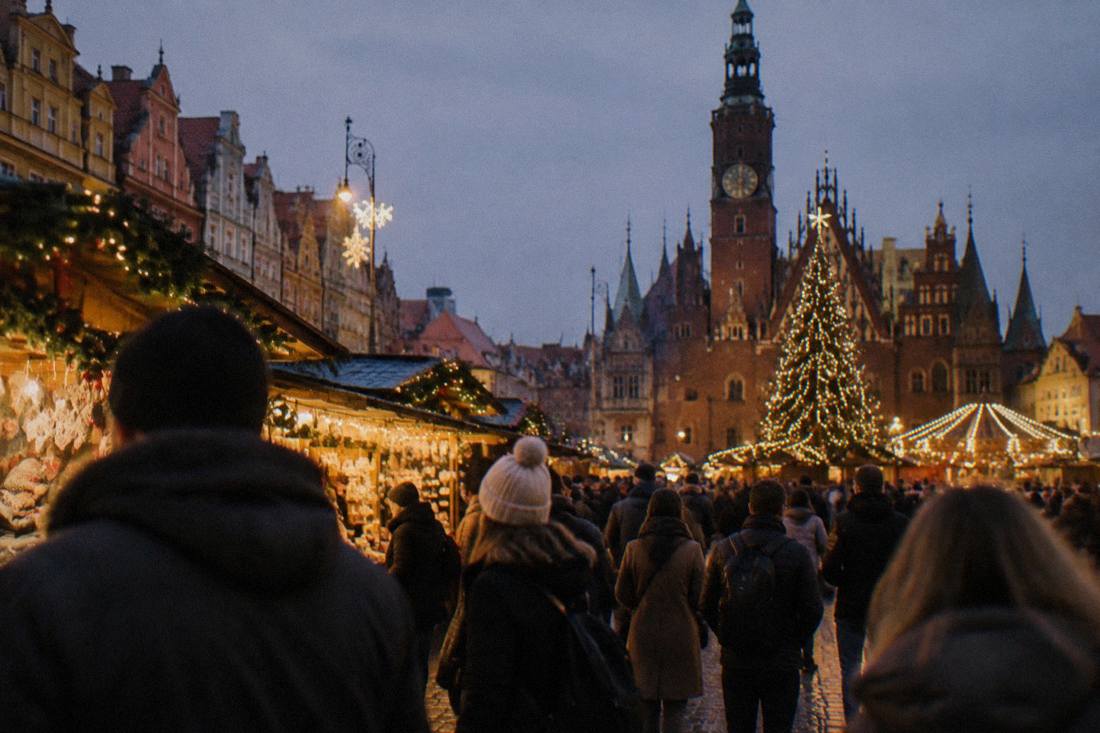
December deserves its own note. The Christmas market is the one moment when the Market Square's capacity visibly fills, and it is the reason many first-time visitors pick this season. The Christmas market guide handles that season in detail, including how it compares with Krakow's. For everyone else, the quieter months are the reward: the same squares, shorter lines, and an IMGW-verified mean of 0.0C in January to plan around.
The dwarfs themselves are a year-round, free event of sorts. Hundreds of small bronze figurines are scattered across the city, and hunting them doubles as a walking tour of the event districts. A guided version saves time: the dwarf walk pairs the hunt with the stories behind it, and its tour page carries the current listing details.
How Much Do Wroclaw Attractions Cost During Event Weekends?
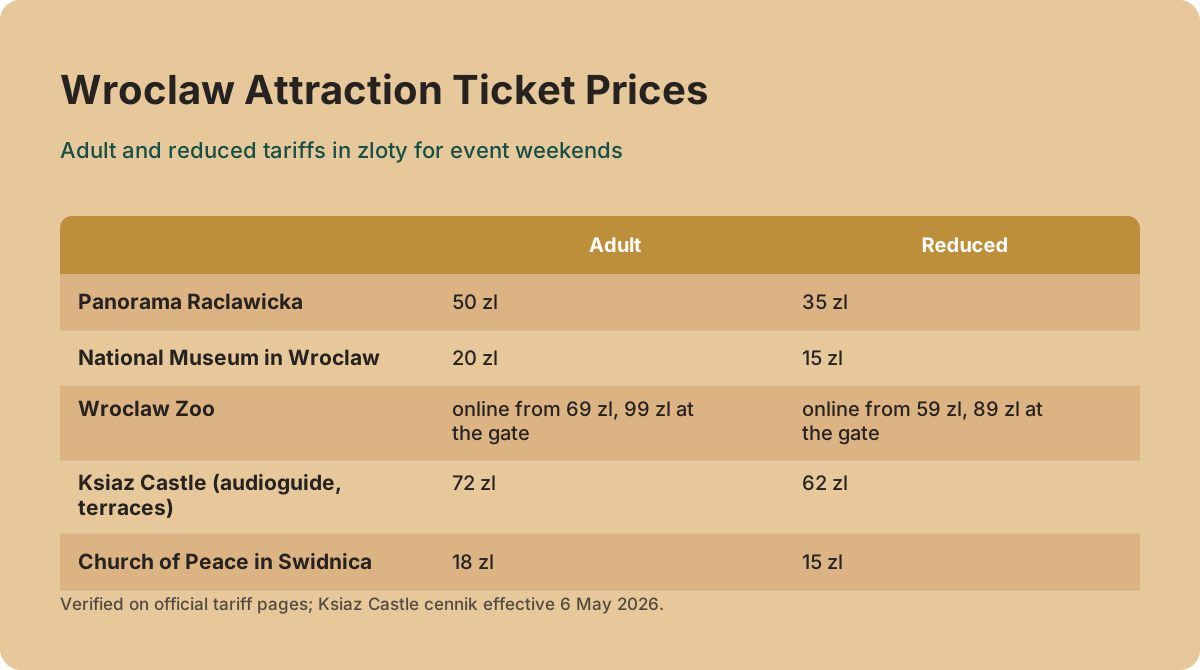
Wroclaw's headline attractions cost between 18 and 72 zl at the adult till, all verified on official tariff pages: the Panorama Raclawicka at 50 zl, the National Museum at 20 zl, the zoo from 69 zl online or 99 zl at the gate, Ksiaz Castle with audioguide and terraces at 72 zl, and the Church of Peace in Swidnica at 18 zl. A museum-heavy event weekend can therefore be planned precisely, in zloty, before leaving home.
The full price picture, straight from each institution's own page:
| Attraction | Adult | Reduced | Official Note |
|---|---|---|---|
| Panorama Raclawicka | 50 zl | 35 zl | 30-minute screening; the ticket also covers the National Museum's permanent exhibitions, the Ethnographic Museum and the Four Domes Pavilion within 3 months |
| National Museum in Wroclaw | 20 zl | 15 zl | Free entry to permanent exhibitions every Saturday; under-7s free |
| Wroclaw Zoo | online from 69 zl, 99 zl at the gate | online from 59 zl, 89 zl at the gate | Afrykarium is included in the standard ticket, never a separate charge |
| Ksiaz Castle (castle, audioguide, terraces) | 72 zl | 62 zl | Terraces open only 15 April to 30 September; cennik effective 6 May 2026 |
| Church of Peace in Swidnica | 18 zl | 15 zl | UNESCO-inscribed since 2001 as part of the Churches of Peace in Jawor and Swidnica |
Two details quietly change budgets. First, the zoo's online-versus-gate gap is large enough that buying ahead is the single easiest saving on this list. Second, the Panorama ticket's three-month museum bundle means one purchase can cover most of a museum-heavy stay, if the dates line up. For a fuller cost model of a whole trip, including food and lodging ranges, the Wroclaw trip cost guide does the arithmetic.
Ksiaz Castle sits outside the city, near Walbrzych, and is commonly reached by regional train to Walbrzych plus a bus or taxi connection. Its ownership is also settled fact: the castle belongs to the Walbrzych municipality and is operated by the municipal company Zamek Ksiaz w Walbrzychu Sp. z o.o. The castle's own cennik gives every combination ticket, from the underground tour at 45 zl to the All Day Ticket at 104 zl, so a day-trip budget can be built exactly rather than estimated.
When Are Wroclaw's Museums Open On Event Days?
Wroclaw's major museums keep seasonal hours and close on Mondays: the National Museum runs Tue-Fri 10:00-16:00 and Sat-Sun 10:00-17:00 in winter (1 Oct-31 Mar), shifting to 10:00-17:00 and 10:30-18:00 in summer, while the Panorama Raclawicka runs daily 8:30-19:00 in summer but closes Mondays in winter. The zoo, by contrast, opens every day of the year, including public holidays.
The full hours picture from the institutions' own pages:
| Institution | Winter Hours | Summer Hours | Closed |
|---|---|---|---|
| National Museum in Wroclaw | 1 Oct-31 Mar: Tue-Fri 10:00-16:00, Sat-Sun 10:00-17:00 | 1 Apr-30 Sep: Tue-Fri 10:00-17:00, Sat-Sun 10:30-18:00 | Monday |
| Panorama Raclawicka | 1 Nov-31 Mar: Tue-Fri 9:30-16:00, Sat 9:30-17:00, Sun 9:30-16:00 | 1 Apr-31 Oct: daily 8:30-19:00 | Monday (winter season only) |
| Wroclaw Zoo | Nov-Feb grounds 9:00-16:00, Mar and Oct 9:00-17:00 or 9:00-18:00 by day | Apr-Sep grounds 9:00-18:00 to 9:00-19:00 by day; pavilions close slightly earlier | Never; open every day including public holidays |
The Monday closure is the single most common planning trap in this calendar. It applies to both headline museums in winter, and the Panorama keeps it even in its off-season, so a long weekend that starts on a Monday should begin outdoors, with the Old Town or the Odra islands, rather than indoors.
The zoo's holiday-proof schedule deserves emphasis because it is unusual: the official hours page states it opens every day of the year, with only shortened hours on specific dates such as 24 and 31 December. Event weekends that coincide with Polish public holidays, when other institutions shut, still have the zoo as a reliable anchor, and the Afrykarium oceanarium is included in the standard ticket.
Saturday is the budget day. The National Museum's own practical-information page states that entry to the permanent exhibitions is free every Saturday, which pairs neatly with any weekend festival schedule: museum in the morning, festival venue in the afternoon, and nothing spent on the first of the two.
What Is The Weather Like In Wroclaw At Event Season?
IMGW's 1991-2020 climate normals for the Wroclaw station show a mean monthly temperature range from 0.0C in January, the coldest month, to 19.7C in July, the warmest, with an annual mean of 9.7C. Precipitation runs from 25.6 mm in February to 91.4 mm in July, and totals 541.3 mm across the year, so the calendar year splits into a warm, wetter summer half and a cold, drier winter half.
The full normals table, which is the backbone of any month-picking decision:
| Month | Mean Temperature (C) | Precipitation (mm) |
|---|---|---|
| Jan | 0.0 | 28.3 |
| Feb | 1.1 | 25.6 |
| Mar | 4.3 | 35.0 |
| Apr | 9.7 | 31.2 |
| May | 14.3 | 59.6 |
| Jun | 17.7 | 65.4 |
| Jul | 19.7 | 91.4 |
| Aug | 19.3 | 59.5 |
| Sep | 14.5 | 48.4 |
| Oct | 9.6 | 37.6 |
| Nov | 4.8 | 31.4 |
| Dec | 1.1 | 27.9 |
Read the table honestly and it reshapes the calendar. July is the warmest month but also the wettest, at 91.4 mm, so an outdoor festival plan for high summer needs an indoor fallback, and the museums' Monday closures make that fallback narrower than it looks. April and May sit at 9.7C and 14.3C means with 31.2 mm and 59.6 mm of rain respectively: shoulder-season months that trade warmth for thinner crowds. December, at a 1.1C mean with 27.9 mm, is the Christmas market's climate context, cold but among the drier months of the year.
For month-by-month planning that goes deeper than the normals, the Wroclaw weather by month guide carries the full breakdown, and the best time to visit Wroclaw guide weighs the seasons against crowd levels. Wroclaw's January and July figures are, for the record, among the mildest of Poland's major synoptic stations in IMGW's table, but no sunshine-hours or sunniest-city ranking was sourced, so none is claimed here.
Where In Wroclaw Do The Big Events Take Place?
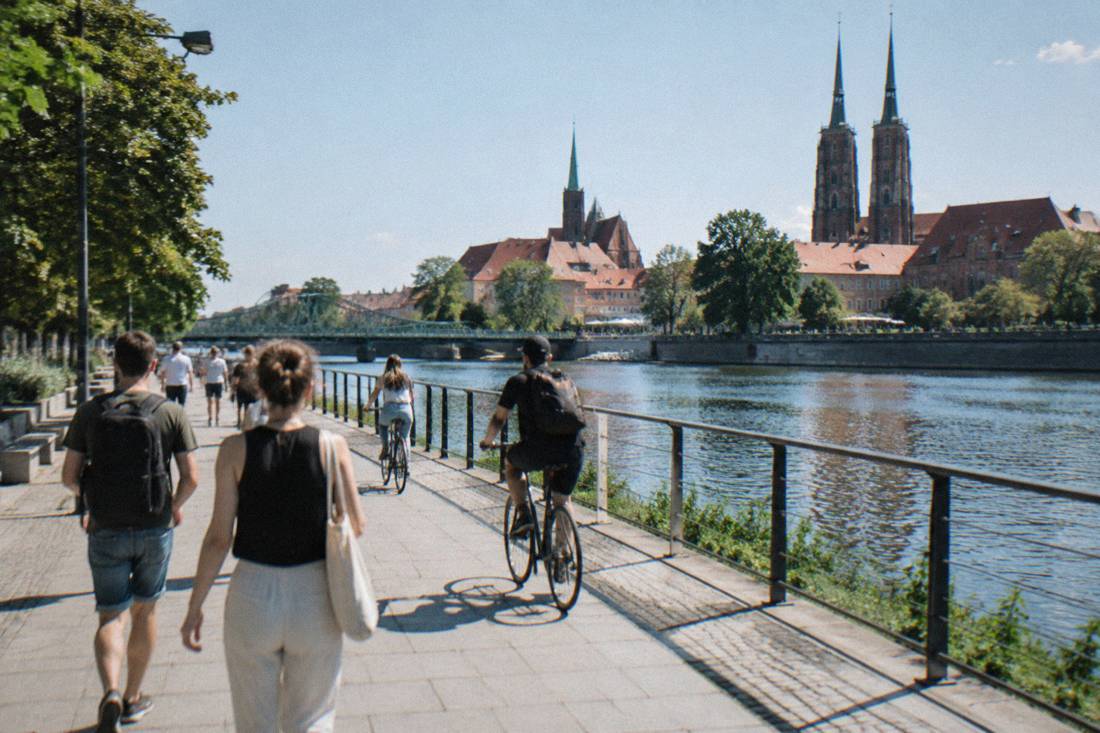
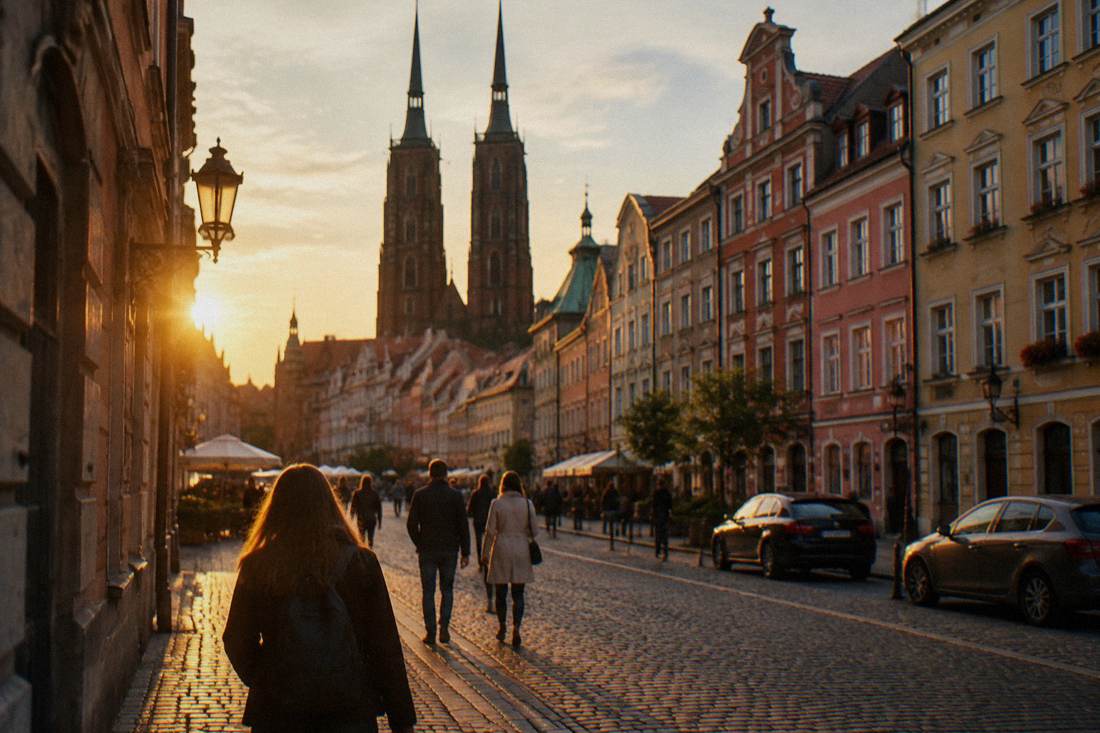
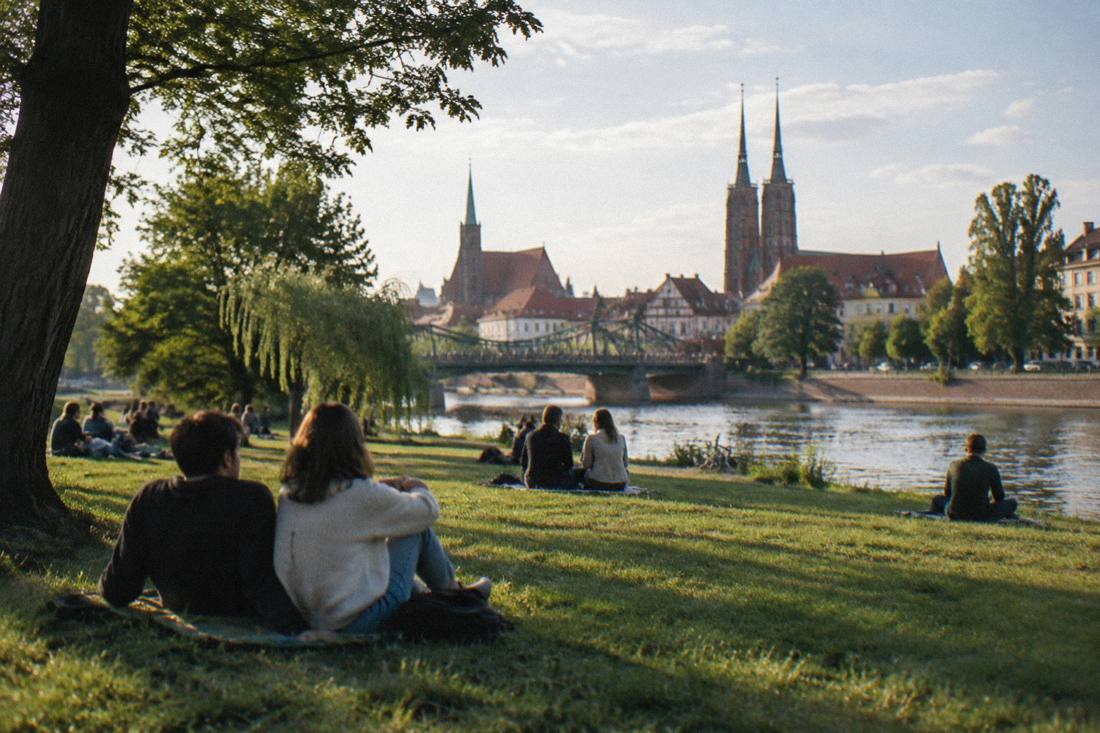
Wroclaw's events concentrate in a compact core: the Market Square and the streets of the Old Town for markets and open-air moments, Ostrow Tumski, the cathedral island, for the quieter historic atmosphere, the Odra river islands for relaxed outdoor gathering, and Centennial Hall, the UNESCO-inscribed 1911-1913 reinforced-concrete hall by architect Max Berg with a capacity of up to 10,000, for the largest indoor occasions.
Centennial Hall is the one venue on that list with global certification. UNESCO inscribed it in 2006 under the exact property name "Centennial Hall in Wroclaw", and the building's scale, a dome over a hall built 1911-1913 to Max Berg's design, makes it the city's natural home for the biggest single events. Around it sit the zoo, with its included Afrykarium, and the Japanese Garden, which turns the same eastern end of the city into a full day out when an event does not fill the schedule.
The Market Square is the default outdoor stage, and its size is worth stating precisely because so many guides get it wrong. Wroclaw's Rynek measures roughly 3.64-3.79 hectares. Krakow's Rynek Glowny is larger, at about 4 hectares, and Krakow itself is the larger city, 816,614 residents against Wroclaw's 672,601 by the 31 December 2025 GUS figures. Wroclaw's square is not "the second-largest in Europe"; that claim was not confirmed in this site's research and does not appear here as fact. What it is, verifiably, is one of the great medieval squares of Central Europe, and the stage for the December market.
The Wroclaw Travel Guide site covers each of these venues in its own guide, because the practical facts, hours, prices and photo spots, differ enough to matter. For event weekends the routing is simple: anything on the square, in the Old Town or on Ostrow Tumski can be walked; anything at Centennial Hall or the zoo means a tram ride east.
That walking core is exactly where a guide earns its fee. The Wroclaw Old Town guided walking tour covers the highlight streets, which is a small investment before a festival weekend fills them, and Check availability for the day before the event itself.
How Do You Get Around Wroclaw During Big Event Weekends?
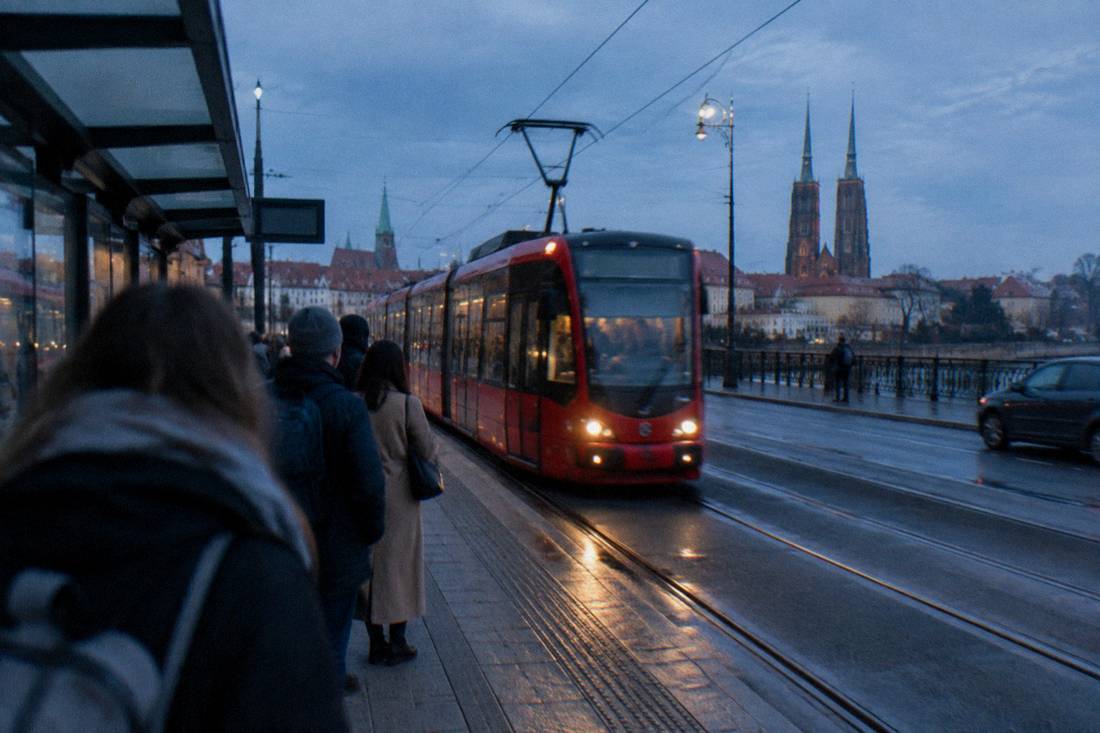
Wroclaw's MPK network sells a base 15-minute ticket at 4.60 zl normal or 2.30 zl reduced, a 30-minute ticket at 7.00/3.50 zl, and 24-hour city tickets around 15.00/7.50 zl, with multi-day bands at 26/13, 32/16 and 54/27 zl. Because the event core is walkable, visitors need only one or two single fares per day, for the tram out to Centennial Hall and the zoo.
The fare tiers from the city's official price page:
| MPK Ticket | Normal | Reduced |
|---|---|---|
| 15-minute | 4.60 zl | 2.30 zl |
| 30-minute | 7.00 zl | 3.50 zl |
| 24-hour city ticket | 15.00 zl | 7.50 zl |
| Multi-day band | 26.00 zl | 13.00 zl |
| Longer multi-day band | 32.00 zl | 16.00 zl |
| Extended multi-day band | 54.00 zl | 27.00 zl |
One warning that matters more here than anywhere else on this site: there is no all-inclusive Go City-style tourist pass for Wroclaw. The 2026 research sweep found none on sale. UrbanCard is a real but transport-focused fare card with resident discounts, and it does not cover museum or attraction admission. Any product promising all-inclusive Wroclaw sightseeing should be treated with suspicion, because the current market does not contain one.
For the practical details beyond fares, ticket machines, night trams and airport links, the getting around Wroclaw guide carries the full picture, including the airport connection after the renovation that finished ahead of schedule in September 2026. Wroclaw Airport handled 4,473,945 passengers in 2024, its latest full-year official figure, and it is open today.
When an event weekend coincides with everything else, some travelers build in a day away from the city. The Prague day trip from Wroclaw is the longest but most dramatic of these, a 12-to-13-hour round trip, and its tour page carries the current listing details, because seats on a 12-hour itinerary go first. For a shorter escape, the Krakow by train guide explains the rail route, noting that PKP Intercity operates it with fares and times that vary by date and must be checked live.
What Can You Do In Wroclaw For Free Between Events?
Wroclaw's best between-events options are free: the National Museum's permanent exhibitions on Saturdays, the Market Square and Old Town streets, the Odra river islands, the hundreds of bronze dwarf figurines, and four verified free, tip-based walking tours on GuruWalk, including Old Town Wroclaw by Walkative!, rated 4.81 from 1,148 reviews, and the Legends of Wroclaw tour of Ostrow Tumski and the Market Square.
The free-and-cheap ledger, with the sources named:
| Between-Events Option | Cost | Source Of The Fact |
|---|---|---|
| National Museum permanent exhibitions, Saturdays | 0 zl | The museum's own practical-information page: free entry to permanent exhibitions every Saturday |
| Market Square and Old Town streets | 0 zl | Public space |
| Odra river islands and riverbanks | 0 zl | Public space; see the getting around guide for riverbank routing |
| Dwarf figurine hunt | 0 zl | Public space; a themed guided version exists |
| Four free, tip-based walking walks on GuruWalk | 0 zl upfront, tips only | The walks' own listings on GuruWalk |
The GuruWalk point deserves the platform's name, because these are genuinely free tours run by independent guides, not this site's products. Four verified walks are live: "Tour in Wroclaw Given by a Historian", "Legends of Wroclaw: Free Tour Around Ostrow Tumski & Market Square", "Wroclaw Through Ages: Old Town & Cathedral Island Walking Tour", and "Old Town Wroclaw by Walkative!". The Legends walk is the natural fit for an event weekend, because it covers Ostrow Tumski and the Market Square, the two stages most events use: See This Free Tour On GuruWalk. Tips are the guides' income, so budget for them as a courtesy rather than a surprise.
Beyond the walks, food is where the between-events hours go. The milk bars guide covers the classic Polish canteens, the pierogi guide handles the dumpling question properly, and the restaurant guide does the full sit-down picture. For evening hours, the nightlife guide maps the student south of the center.
Where Should You Stay In Wroclaw For An Event Weekend?
The practical answer for an event weekend is the Old Town or the streets just north of the Odra, close to the Market Square and Ostrow Tumski, because the verified event geography, the square, the cathedral island and the museum cluster, is walkable from there. Centennial Hall and the zoo lie east of the center, reachable by tram, so a riverside base trades square-side atmosphere for quieter nights at the same commute cost.
Two rules govern the choice. First, Monday museum closures and Saturday free entry mean the weekend shape is fixed: arrive Friday or Saturday, walk the core, museum on the free Saturday morning, and use Sunday for the zoo or a day trip. Second, December changes everything, because the Christmas market pulls the year's biggest crowds into the square itself, and rooms near it price and fill accordingly.
The where to stay in Wroclaw guide compares the districts properly, including the streets around the Market Square, the Sand Island area and the neighborhoods east of the river. Accessibility matters here too: the Wroclaw accessibility guide covers cobbled-street realities, tram boarding and venue access, which large-event weekends make more pressing, not less.
Common Questions About The Wroclaw Events Calendar
The most common planning questions about Wroclaw's event year concern the Christmas market's timing, whether a city pass exists, Sunday museum access, the best month to target, and whether the zoo stays open on public holidays. The short verified answers: no all-inclusive tourist pass is currently sold, museums open Sunday but close Monday, the National Museum is free on Saturdays, and the zoo opens every single day of the year.
Is there a Wroclaw tourist pass that covers events and attractions?
No. This site's 2026 research sweep found no all-inclusive Go City-style sightseeing pass sold for Wroclaw. UrbanCard is a real transport fare card with resident discounts, and it does not cover museum or attraction admission. Attractions are ticketed individually, at the official prices listed in the tables above.
When does the Christmas market run in Wroclaw?
The Christmas market fills the Market Square during the December Christmas season. Exact opening dates vary by year and are not published in this site's verified facts, so check the current season's announcement before booking. The dedicated Christmas market guide covers what to expect, and December's IMGW normal is a 1.1C mean with 27.9 mm of precipitation, so pack for cold, occasionally wet evenings.
Are Wroclaw museums open on Sundays?
Yes. The National Museum's own hours page lists Sat-Sun 10:00-17:00 in winter and 10:30-18:00 in summer, and the Panorama Raclawicka opens Sunday 9:30-16:00 in winter and daily 8:30-19:00 in summer. The closed day is Monday, in both cases. Saturday is the better museum day, though, because the National Museum's permanent exhibitions are free every Saturday.
What is the best month to visit Wroclaw for events?
By climate alone, the data favors late spring and early autumn: May averages 14.3C with 59.6 mm of rain and September 14.5C with 48.4 mm, while July, the warmest month at a 19.7C mean, is also the wettest at 91.4 mm. Festival timing varies by year, so match the festival's own announced dates to the month whose weather suits you, using the weather by month guide.
Is the Wroclaw Zoo open on public holidays?
Yes, every one of them. The zoo's official hours page states it opens every day of the year, including all public holidays, with only shortened hours on 24 and 31 December and a late opening on 1 January. April-September hours run 9:00-18:00 or 9:00-19:00 depending on the day, and the Afrykarium is included in the standard ticket.
Planning a Wroclaw event year comes down to a handful of verified anchors: the festivals that recur, the museum rhythm of Monday closures and free Saturdays, the zoo's never-closed schedule, and an IMGW climate table that tells you what any given month will feel like. Book the walk for orientation, check the tram fare tiers before you ride, keep every budget figure in zloty, and the calendar takes care of itself.