Is Netflix's High Water Based On A True Story?
Yes. Netflix's High Water dramatizes the real Odra river flood that hit Wroclaw on the Odra in southwestern Poland, with fictionalized characters inside a documented catastrophe.
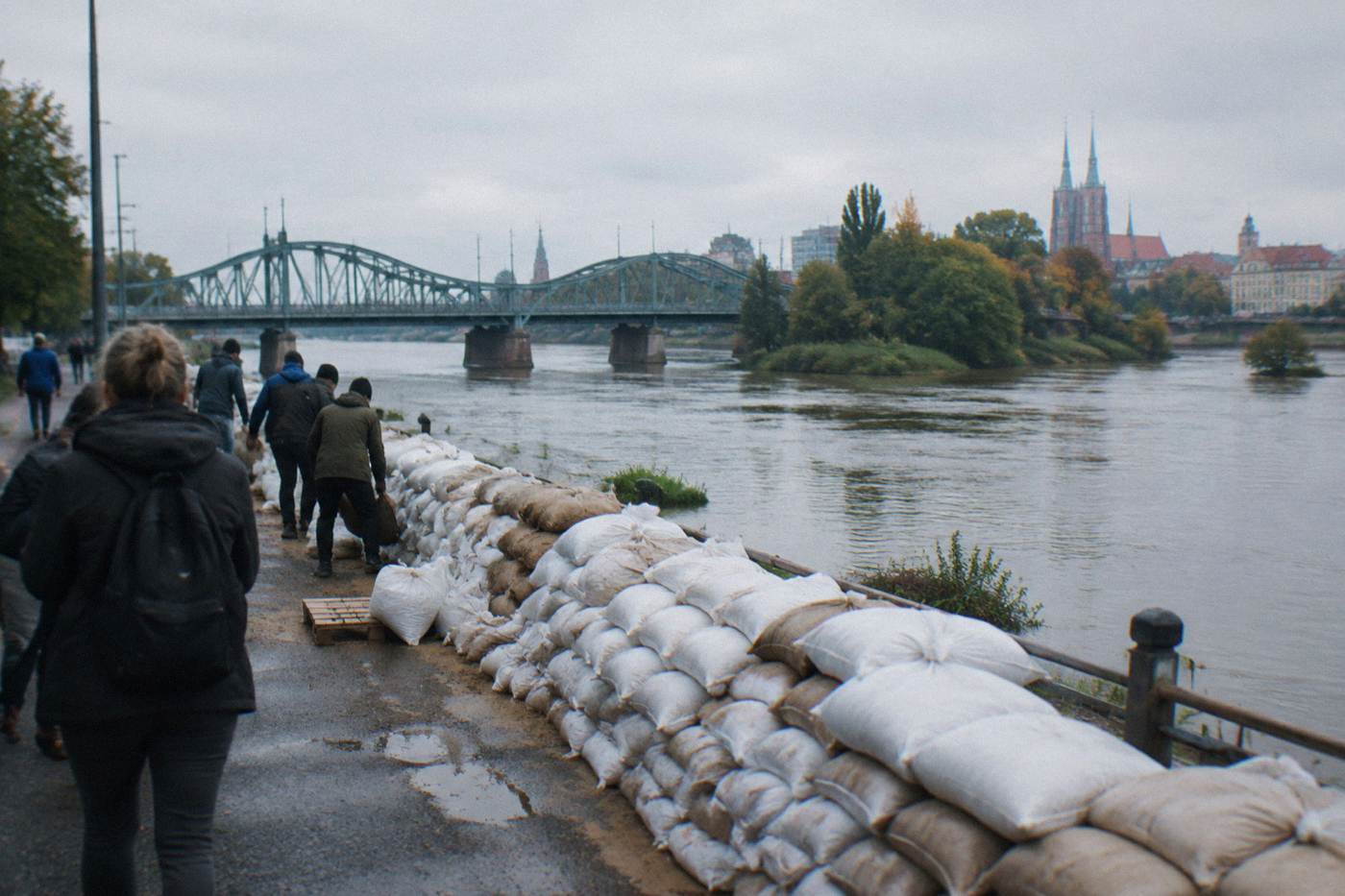
Netflix's High Water, released under its original Polish title Wielka Woda, is based on a true story: the catastrophic summer flooding of the Odra river, which struck Wroclaw, the largest city in Lower Silesia in southwestern Poland, and dominated the national news of that season. The series is a drama, not a documentary, and most of its named characters are invented composites standing in for real officials, scientists and residents. But the event at its center, the water rising on the Odra and a city racing to hold the line with sandbags, is documented history, and Wroclaw still carries its marks today.
Is Netflix's High Water Based On A True Story?
Yes, High Water is based on a true story: the great Odra river flood, one of the worst natural disasters in modern Polish history, which inundated large parts of Wroclaw and other cities in southwestern Poland. The show dramatizes real decisions made under real pressure as the river rose. Its characters, however, are fictionalized composites rather than direct portraits of named individuals, so the series should be read as a drama built around a documented catastrophe.
The scale of what happened that July matters for understanding the show. When the flood came, Wroclaw was a city of roughly the same riverside geography it has now, built across a network of Odra channels and islands that make it both beautiful and exposed. When record rainfall in the upper Odra basin pushed a flood wave downstream, the water arrived at a city whose levees and embankments had not been designed for it. The defense of Wroclaw became a round-the-clock effort of sandbags, evacuations and improvised engineering, and that effort is what the series stages episode by episode.
What the show takes from history is the sequence of events, the geography and the atmosphere of a city mobilizing against water. What it adds is the soap of private lives, office politics and invented subplots, which is standard practice in docudrama. The result sits somewhere between a disaster film and a political drama, and Polish viewers recognized the balance immediately: the flood is remembered, the characters are not.
What Real Event Does High Water Dramatize?
High Water dramatizes the great July flood of the Odra river in Poland, often called the Millennium Flood. Heavy rainfall in the Odra's upstream basin produced a flood wave that moved downstream toward Wroclaw, overwhelming defenses and flooding low-lying districts of the city. The disaster affected a wide stretch of southwestern Poland, with Wroclaw's defense of its riverbanks becoming the defining image of that summer.
The Odra (in German, Oder) runs through Wroclaw in multiple branches, which is why the city center sits on islands in the first place. Cathedral Island, the Sand Island and the network of channels around the old town all exist because the river splits here, and the same geometry that gives Wroclaw its character also makes it a flood-prone city. When the flood wave arrived, the water rose against exactly these embankments, and the low-lying western districts near the river took the worst of the pressure.
Wroclaw's defenders during the flood had limited tools: mainly sandbags, pumps and human chains. The series leans hard on this, and it is faithful to the historical record. Volunteers, soldiers and residents stacked embankments by hand while hydrologists argued about where the next breach would come. The city's own later flood infrastructure, the storage reservoirs and polders built upstream of Wroclaw after the disaster, exists precisely because the flood showed what the river could do when nothing slowed it down.
For viewers coming to this story fresh, the honest framing is this: the catastrophe is real, the city is real, the river is real, and the timeline is broadly real. The people you spend a season with are inventions, or near-inventions, created so the drama has faces to follow. That division is worth keeping in mind, and the table below separates what is history from what is dramatization.
| Element | In the series | Historical record |
|---|---|---|
| The flood event | Central premise of the show | Real: a catastrophic Odra river flood in southwestern Poland |
| The city | Wroclaw, on the Odra | Real: Wroclaw was among the hardest-hit cities |
| Named lead characters | Fictionalized composites | Not direct portrayals of specific people |
| Sandbag defenses | Shown extensively | Real: hand-stacked embankments were the main defense |
| Office politics subplots | Dramatic invention | Narrative device, not documented events |
| Hydrologists' warnings | Fictionalized roles | Real flood-forecasting effort existed |
That balance is what makes the series useful preparation for a visit: it teaches the geography of the river city without pretending to be a documentary about named individuals.
Where In Wroclaw Did The Story Happen?
The series is set and largely filmed in Wroclaw itself, centered on the low-lying districts along the Odra west and north of the old town, the areas that bore the brunt of the flood. The riverbanks, bridges and channels that appear on screen are the real geography of the city. Wroclaw today is a city of 672,601 residents, according to GUS data as of 31 December 2025, and the neighborhoods shown in the drama are ordinary, lived-in parts of it.
Kozanow and the surrounding Odra-side districts are the show's emotional heart, and they are real places a visitor can walk today. During the flood these were among the areas where the water came closest to breaking through, where residents and volunteers spent days on the embankments. The series returns to these streets repeatedly because they are where the history was made: modest housing near the water, not the postcard old town. That choice is itself a kind of honesty about who actually fights a flood.
The old town and Cathedral Island, the parts of Wroclaw that visitors come for, sit on higher ground or behind the main line of embankments, and the show uses them sparingly. This maps to the real flood: the fight was for the flat ground near the river, and the famous squares were never the front line. A viewer who then visits Wroclaw will find the two cities of the show and the guidebook are the same city, just seen from different banks.
How Did The Flood Change Wroclaw?
The flood reshaped Wroclaw's relationship with the Odra in concrete ways: it drove a major program of flood-defense construction, including upstream storage reservoirs and reinforced embankments designed to slow and absorb a future flood wave, and it changed how the city monitors the river. The Odra gauge data that Wroclaw watches today exists in a system built partly in response to what happened that July. The catastrophe became a reference point for every Polish flood since.
The principle behind the post-flood works is simple: a city cannot make a river smaller, but it can buy time and space. Reservoirs upstream of Wroclaw hold back part of a flood wave; polders and green corridors give water somewhere to go; strengthened levees raise the threshold at which the fight begins. None of this makes the city flood-proof, and any claim that it does would be dishonest. What it does is change the math of the next emergency, which is the entire ambition of flood engineering.
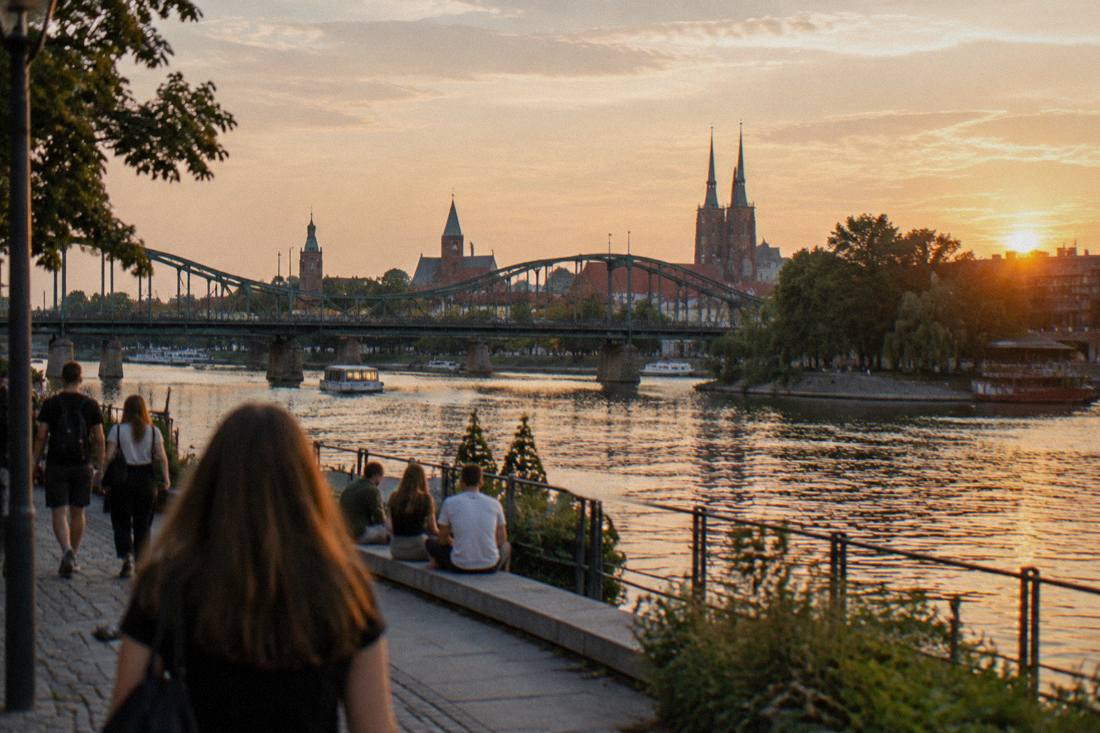
The show ends where the history continues, and that continuation is worth knowing when the credits roll. Wroclaw has also leaned into its river in the other direction, treating the Odra and its islands as public space rather than a threat: riverside walks, boat cruises on the city's channels, and the island parks that make summer Wroclaw one of the pleasantest river cities in Central Europe. The same river that flooded the city within living memory is now one of the main reasons to visit it, and Wroclaw holds both facts without contradiction.
The permanent legacy also lives in how the city talks about itself. Wroclaw's modern identity as a resilient, rebuilt city is usually framed around its changed borders and rebuilding after the war, a story told in depth on why Wroclaw is famous and in how many days in Wroclaw is enough for planning purposes. The flood added a chapter that is genuinely modern, within living memory of most adult residents, and the Netflix series is why international audiences now ask about it.
Can You Visit The Real High Water Locations In Wroclaw?
Yes, nearly all the real locations in High Water are ordinary places in Wroclaw you can walk to in a day: the Odra embankments, the bridges between the islands, and the western riverside districts where the flood defense happened. No site requires a ticket, because the drama's stage is the city's own geography. A walking route through the old town, Cathedral Island and the riverbanks covers the essentials, and guided options exist for travelers who want the layers explained.
A sensible route starts on the main market square, crosses to Cathedral Island, then follows the Odra west along the embankments toward the districts the show centers on. Walking this line makes the drama's logic visible: you see how flat the ground is near the river, how close the housing sits to the waterline, and why sandbags were the only tool that could be deployed fast enough. For structure and stories, a guided city tour with a local guide covers the same ground with context, and the free GuruWalk walks led by Walkative! and other local guides do the same on a tip basis.
Wroclaw's deeper history is where the series' backdrop gets more interesting. The pre-war city, German Breslau, and its Jewish community are part of the layered story of a place that changed hands and was rebuilt, a history covered in is Wroclaw more Polish or German. The Check availability link for the private Jewish heritage guided tour covers that chapter, and its own listing carries the current price and schedule.
Beyond the flood geography, visitors usually fold the show's locations into a normal Wroclaw itinerary rather than treating them as a separate pilgrimage. The riverbank walk is worth it on its own merits, especially in the warm months: IMGW's 1991-2020 climate normals for the Wroclaw station give a July mean of 19.7C and a January mean of 0.0C, so the embankments are at their best in the same season the real drama unfolded. Bring comfortable shoes and let the city do the storytelling.
What Should Viewers Know Before Visiting Wroclaw?
Viewers planning a trip to the Wroclaw of High Water should know that the city they will find is a normal, welcoming Central European city of 672,601 people, not a disaster zone, and that the flood is now history rather than a current event. Poland uses the zloty, not the euro, and is in the EU and Schengen area. The Wroclaw the series shows and the Wroclaw visitors see today are the same place, separated by decades of rebuilding and investment.
Practical planning is straightforward. The city is compact enough that the show's locations, the old town and the islands fit into a single day of walking, and the climate table below gives a fair picture of what to expect through the year. IMGW's 1991-2020 normals show a mild continental pattern: cold winters around a 0.0C January mean, warm summers around a 19.7C July mean, and an annual mean of 9.7C. That July figure matters here, because it is exactly the month the flood and the series' action belong to.
| Wroclaw fact | Figure | Source |
|---|---|---|
| Population | 672,601 | GUS, 31 Dec 2025 |
| January mean temperature | 0.0C | IMGW 1991-2020 normals |
| July mean temperature | 19.7C | IMGW 1991-2020 normals |
| Annual mean temperature | 9.7C | IMGW 1991-2020 normals |
| Currency | Zloty (PLN) | Poland is not in the Eurozone |
| River at the city's heart | Odra | The flood dramatized by High Water struck Wroclaw on this river |
The last thing worth knowing is how Wroclaw itself regards the series. Locally, the flood is shared memory, and many residents lived through it, so the show was received as a dramatization of something the city already owned. For visitors, that means the best experience of High Water's Wroclaw is not nostalgia for the disaster but curiosity about the river: walk the banks, look at the water level, notice how flat the ground is, and the series will explain itself. Wroclaw Travel Guide covers the rest of the city, from the dwarfs to the day trips, for whatever else the trip holds.
Common Questions About High Water And Wroclaw
Is Netflix's High Water based on a true story?
Yes. The series dramatizes a catastrophic flood of the Odra river, which struck Wroclaw and other parts of southwestern Poland. The event, the city and the river are real; the lead characters are fictionalized composites created for the drama.
What was the real flood called?
The flood is commonly called the Millennium Flood in Poland. It followed heavy rainfall in the Odra basin and produced a flood wave that reached Wroclaw in midsummer.
Where is High Water set?
The series is set in Wroclaw, the largest city in Lower Silesia in southwestern Poland, on the Odra river. The low-lying riverside districts west of the old town, including Kozanow and the areas around it, are where much of the action takes place.
Are the characters in High Water real people?
No, not as named individuals. The show's principal characters are fictional or composite figures invented to carry the drama, while the events around them, the sandbag defenses, the evacuations and the official response, follow the documented history of the flood.
Can you visit the places shown in the series?
Yes. The embankments, bridges, islands and riverside districts shown on screen are ordinary parts of Wroclaw, reachable on foot from the center. None requires a ticket; the drama's stage is the city's own geography.
Is Wroclaw still at risk of flooding?
Wroclaw remains a river city, and the Odra remains capable of rising. After the flood, Poland built upstream storage reservoirs and reinforced defenses that changed how a future flood wave would reach the city, but no flood infrastructure makes a city immune, and the city continues to monitor the river.