Is Wroclaw More Polish Or German?
Wroclaw, in southwestern Poland, spent centuries under Bohemian, Habsburg and German rule before becoming Polish again. An honest look at which heritage dominates the city today.
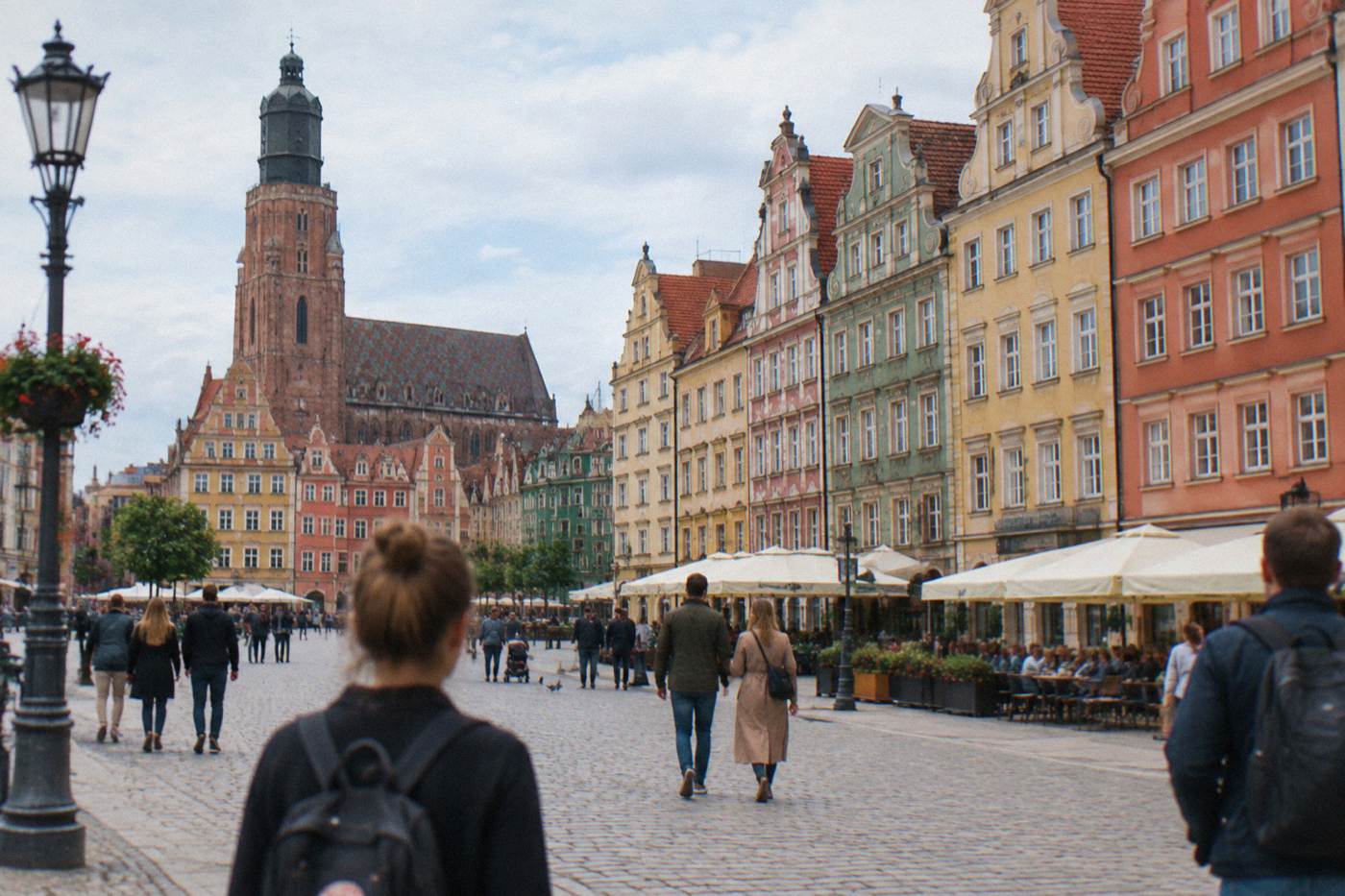
Wroclaw, the largest city in Lower Silesia (Dolnoslaskie voivodeship) in southwestern Poland, is unambiguously Polish today: a city of 672,601 residents (GUS, 31 Dec 2025) where Polish is the language of the streets, the trams and the town hall. Yet almost every visitor notices within an hour that the city does not look like Krakow or Warsaw. The brick and stucco of the Old Town, the scale of the blocks on the river islands, the heavy Prussian-style public buildings: all of that was built when the city was a German-speaking one, under a German name, as part of German states. The question is not really "which is it" but "which layer is on top," and the answer is that the Polish layer is the living city and the German layer is the stage set it stands on. This page walks through what that means in practice, on the ground, street by street.
Is Wroclaw More Polish Or German?
Wroclaw is a Polish city, full stop: Polish is the official language, Poland issues the currency (the zloty, not the euro), and a population of 672,601 lives under Polish law in the Dolnoslaskie voivodeship of southwestern Poland. The German heritage is real but historical, visible in architecture and street layout rather than in daily life. Most of the Old Town you photograph today was rebuilt by Polish hands after wartime destruction.
That last point is the one people miss. Wroclaw's picture-postcard Market Square looks centuries-old, and its buildings are, in their footprints. But the city suffered catastrophic damage at the end of the Second World War, when it was a German city under a German administration, declared a fortress and fought over street by street. What stands now on the Rynek was largely reconstructed afterward, by the Polish city that replaced the German one. So even the "German-looking" part of Wroclaw is, in a literal sense, partly a Polish rebuilding of a German townscape. The nearest thing to the opposite of a simple answer.
For orientation on the ground, the Wroclaw Old Town Guided Walking Tour covers exactly this territory, Market Square to the cathedral island, with a guide who explains which parts are original, which are rebuilt and why the styles shift from block to block. It is the fastest way to make the layered history legible. If you would rather move at your own pace first and take a tour later, read on.
Who Shaped Wroclaw Over The Centuries?
Wroclaw spent most of the last thousand years ruled from somewhere else: Bohemian, Habsburg, Prussian and then German administrations each ran the city in turn, and for several centuries the dominant language and culture of its elites was German. The Polish state, Poland's language and Poland's population are what define the city now, a shift consolidated after the border changes at the end of the Second World War.
The practical consequence for a visitor is that the city is a palimpsest, not a single-style showpiece like Krakow's core. The Rynek's burgher houses carry Central European Gothic and Renaissance forms that would be at home in any historic Silesian or Bohemian town. The grand public buildings, the train station's scale, the tenement districts north of the river, the bridges and embankment walls along the Odra: those carry the fingerprints of Prussian and German civic engineering, which was heavy, brick-built and built to last. The history guide covers the full sequence in detail for anyone who wants the long version.
One monument of the German-building era stands out above the rest, because it is now the city's UNESCO listing. Centennial Hall (Hala Stulecia), designed by architect Max Berg and built 1911-1913 as a reinforced-concrete dome structure with capacity for up to 10,000 people, was inscribed by UNESCO in 2006 under the property name "Centennial Hall in Wroclaw." It was built by a German administration for a German city, and it is now one of Poland's flagship modern monuments and a concert and congress venue run by the Polish city around it. That single building is the whole answer in miniature.
If seeing the German-built layer in person appeals, day trips widen the picture considerably. Two of the strongest options below leave from Wroclaw and reach deep into Lower Silesia's mixed heritage.
What Does Wroclaw Look And Sound Like Today?
Today's Wroclaw looks German-built but sounds, feels and is administered entirely Polish: street names are Polish, signage is Polish, the language on the trams (MPK fares start at 4.60 zl for a 15-minute ticket, reduced 2.30 zl) is Polish, and the zloty, not the euro, is the till currency. German is a tourist's second language here, not a working one, though the architecture keeps the older story visible everywhere.
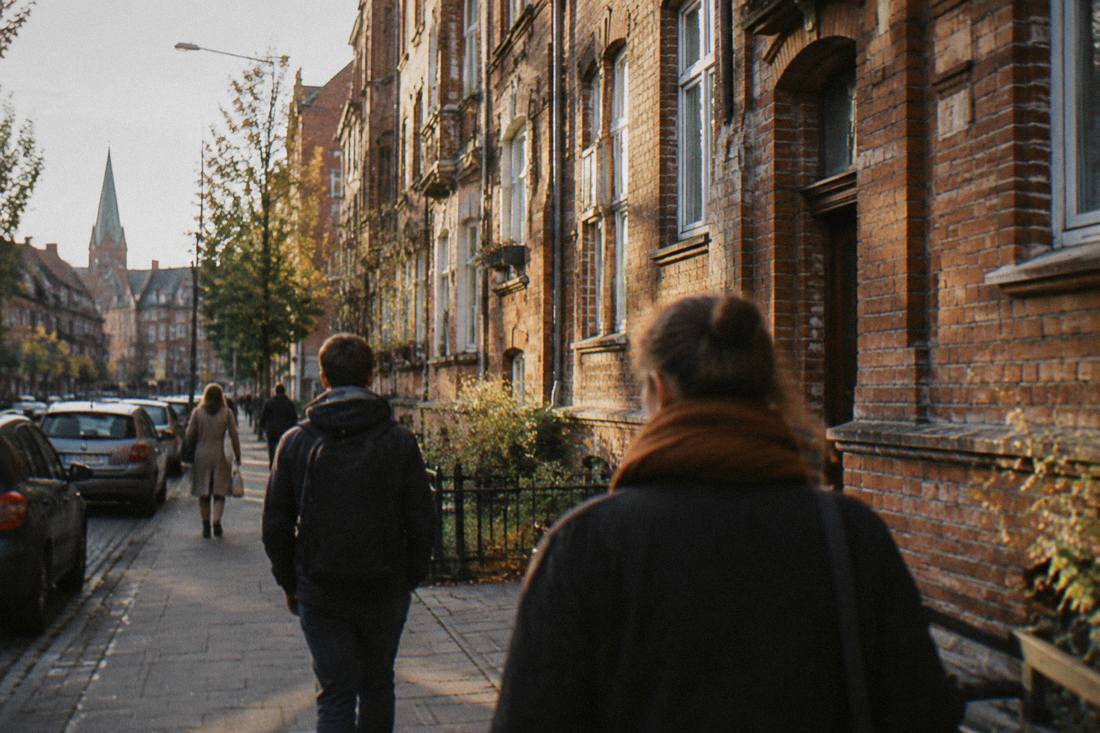
The split is easiest to see in the city's two halves of experience. The built environment, from the Rynek to the riverbank parks to the industrial-brick Nadodrze district, is a German-era inheritance: dense tenement streets, warehouse conversions, embankment promenades. The life inside it, the dwarfs, the student population, the festivals, the café and craft-beer culture, the New Horizons film festival and the legacy of the 2016 European Capital of Culture year, is contemporary Polish urban culture, and specifically Wroclaw's own version of it. The what is Wroclaw famous for page catalogs that present-day identity in full.
A note on a claim you may have read elsewhere: Wroclaw is sometimes described online as "the most vegan city in Poland" or "Poland's artsy city." Neither holds up. Recent rankings and reporting give the vegan-hub reputation to Warsaw internationally, with Poznan and Krakow ahead in older per-capita data, and Lodz, the UNESCO City of Film and home of the Polish National Film School, is Poland's recognized film city. Wroclaw's real, sourced cultural credentials are specific: the New Horizons film festival, the 2016 European Capital of Culture year, and the street-art and creative-quarter reputation of the Nadodrze district. State those, not the superlative. Everything else covered here is indexed on Wroclaw Travel Guide.
Here is the honest side-by-side of the figures that answer the "which city is it" question:
| Layer | What It Gave Wroclaw | Status Today |
|---|---|---|
| Polish state and language | Official language, administration, 672,601 residents (GUS, 31 Dec 2025), zloty as currency | Current and living |
| German-era building (Prussian and German administrations) | Rynek townscape, Centennial Hall (Max Berg, 1911-1913, capacity up to 10,000), tenement districts, river engineering | Standing and central, historical in ownership |
| Post-war Polish rebuilding | Reconstruction of the damaged Old Town and Market Square | The visible "old" city most visitors photograph |
| Silesian regional tradition | Lower Silesian identity, regional foodways, the wider voivodeship's castles and churches | Regional layer beneath both |
That table is why the question has no single-word answer. A German-built city, rebuilt by Polish hands, in a Polish region with its own older Silesian identity, and it all works as one place.
Where To See Both Heritages In Wroclaw?
The German-built heritage is best seen at Centennial Hall and the surrounding park (UNESCO-inscribed 2006, architect Max Berg, built 1911-1913), in the tenement streets of Nadodrze, and along the Odra embankments; the Polish present is everywhere else, in the Market Square's rebuilt burgher houses, the cathedral island of Ostrow Tumski, and the city's museums, priced in zloty, such as the National Museum at 20 zl adult.
Practically, a first-time visitor can cover both layers in two or three days. Day one belongs to the Old Town and Ostrow Tumski: the Rynek, the rebuilt town houses, the bridges to the cathedral island. The one day in Wroclaw and two days in Wroclaw itineraries sequence it all. Day two crosses the river to the Centennial Hall quarter, the Japanese Garden and the zoo, whose adult online tickets start at 69 zl (99 zl at the gate, per the zoo's own price table), a spread worth knowing before you queue. The zoo's Afrykarium aquarium is included in the standard ticket, not sold separately, which is typical of how the modern Polish city runs its institutions.
For the museum-minded, the National Museum in Wroclaw charges 20 zl for an adult permanent-exhibition ticket (15 zl reduced) and opens its permanent exhibitions free every Saturday, per the museum's own practical-information page. The Panorama Raclawicka, the city's single most famous interior sight, costs 50 zl adult and includes, within three months, entry to the National Museum's permanent exhibitions, the Ethnographic Museum and the Four Domes Pavilion. That bundled ticket is itself a nice symbol of the theme: a monumental painting of a Polish patriotic subject, in a German-built rotunda, administered by a Polish national museum, for zloty.
To go deeper than the city limits, Lower Silesia keeps the same double story in its small towns. The Church of Peace in Swidnica, UNESCO-inscribed in 2001 as one of the "Churches of Peace in Jawor and Swidnica," charges 18 zl for an adult ticket and stands as an artifact of the era when Silesia's Protestant congregations were permitted to build their churches under strict conditions. A guided day trip that pairs Swidnica's church with its Jawor sibling is the cleanest way to see that corner of the layered past without renting a car.
And if it is the German-built engineering layer you want most, the Giant Mountains and the Valley of Palaces route out of Wroclaw reaches a landscape of former aristocratic residences below the Karkonosze range, a full-day look at the Silesian world that existed before the borders moved. It is a different register of "German heritage" than the Old Town's facades: rural, aristocratic and scattered across valleys rather than urban and brick.
Whichever of those three formats suits your pace, a guided walk of the rebuilt Old Town remains the best single investment for understanding this question, because it puts the German-built frame and the Polish rebuilding in front of you at the same time, street by street, with someone who can tell you which is which. Pair it with one countryside day trip and you leave with both halves of the answer.
Common Questions About Wroclaw's Polish And German Heritage
The most common follow-ups travelers ask about Wroclaw's identity are whether it was ever fully German, whether Germans still live there, whether the city feels different from Krakow, and what language to expect on menus and signs. The honest answers: it was German-ruled for centuries and German-speaking at its elite level for most of that time, today's city is Polish in language and administration, and the architectural difference from Krakow is the visible residue of that history rather than a living cultural border.
Is Wroclaw more Polish or German?
Wroclaw is a Polish city in every operational sense: Polish language, Polish law, a population of 672,601 in the Dolnoslaskie voivodeship, and the zloty as its currency. Its German past survives in the built environment, most famously Centennial Hall, built 1911-1913 by architect Max Berg and UNESCO-inscribed in 2006, rather than in daily life.
Was Wroclaw ever a German city?
Yes, for centuries the city was ruled by Bohemian, Habsburg, Prussian and German states, and it carried a German name and a German-speaking civic elite through that period. It became the Polish city of Wroclaw after the border changes at the end of the Second World War, and its heavily damaged Old Town was substantially rebuilt under Polish administration.
Do people in Wroclaw speak German?
Polish is the everyday language of Wroclaw: street signs, menus, tram announcements and museum labels are Polish, and the city's own fare page prices a 15-minute MPK ticket at 4.60 zl. German survives in tourist contexts, museum captions and the like, and English is common in the tourist core, but German is not a working language of the city.
Does Wroclaw feel different from Krakow?
It does, and the architecture is the reason. Krakow's Rynek Glowny, at roughly 4 hectares, is larger than Wroclaw's Rynek at roughly 3.64-3.79 hectares, and Krakow's core is a largely intact royal Polish townscape. Wroclaw's core is a rebuilt German-built city on a river-island plan, which gives it brick tenements, embankment walks and a more spread-out, engineered feel. Krakow is also the larger city today, 816,614 residents to Wroclaw's 672,601 per GUS data for 31 Dec 2025.
What is the best place to see Wroclaw's German heritage?
Centennial Hall is the headline: architect Max Berg, built 1911-1913, a reinforced-concrete dome with capacity up to 10,000, UNESCO-inscribed in 2006. Around it sit the park, the Japanese Garden and the zoo quarter. In the city itself, the tenement streets of Nadodrze and the Odra embankments show the German-era engineering layer most clearly, and a guided walk makes the distinction between original and rebuilt fabric easy to follow.
Is Wroclaw part of Germany now?
No. Wroclaw is in Poland, in the EU and the Schengen area, and it uses the zloty (PLN), not the euro. The city is the capital of its own urban region within the Dolnoslaskie voivodeship of southwestern Poland, and its population of 672,601 (GUS, 31 Dec 2025) makes it one of Poland's largest cities, though still smaller than Krakow.
Whichever layer pulls you, the practical bottom line for planning is simple: book in zloty, expect Polish signage with English backup in the center, and use Wroclaw Travel Guide itineraries to sequence a stay that does the rebuilt Polish Old Town and the German-built landmarks in the same two days. The city rewards exactly that kind of double reading.