Is Wrocław Bigger Than Krakow?
No: Krakow is bigger than Wroclaw in both population and main market square. A clear comparison of the two Polish cities using official GUS figures.
Wroclaw, the largest city in Lower Silesia in southwestern Poland, is often described as Krakow's smaller, quieter rival, and on the question of pure size that reputation is correct. Krakow is bigger. It has more residents, a larger main market square, and a heavier international tourist footprint. But the two Polish cities sit close enough together, roughly a few hours apart by rail, that plenty of travelers plan one around the other, and the size gap matters far less than most people assume once you are actually standing in the Old Town. This page compares the two cities on the numbers that can be verified, and then explains what those numbers do and do not tell you about which city deserves your days.
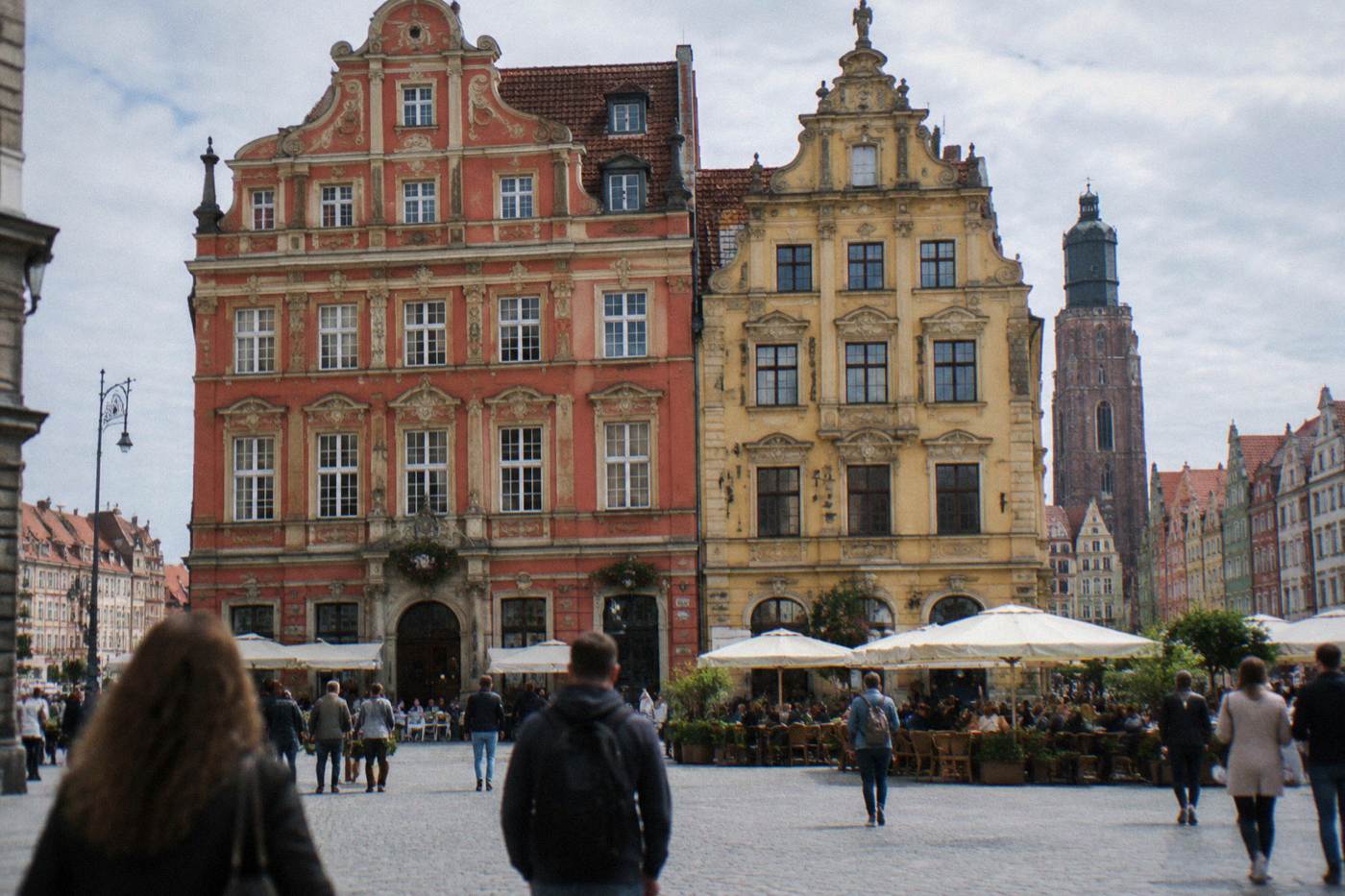
Is Wrocław Bigger Than Krakow?
No: Krakow is bigger than Wroclaw on every measure of city size in the official data. GUS, Poland's statistics office, counted 816,614 residents in Krakow and 672,601 in Wroclaw as of 31 December 2025. Krakow's Rynek Glowny main square, at about 4 hectares, is also larger than Wroclaw's Rynek, which measures roughly 3.64 to 3.79 hectares depending on the source.
That settles the headline question, but the detail is worth a moment. Both cities have grown, and both have strong claims on a traveler's attention that have nothing to do with raw size. Wroclaw's population figure comes from GUS's regional data and reflects the city proper, not the wider metro area; the same is true for Krakow's. Neither figure includes students who register elsewhere, which in both university cities is a meaningful slice of the real street population.
The square comparison deserves its own care, because a widely repeated claim that Wroclaw's Rynek is "the second-largest square in Europe" was not independently confirmed when this site's facts were checked. What can be stated plainly is the sourced comparison: Krakow's main square is larger than Wroclaw's. Both are enormous by the standards of most European old towns, and both are lined with merchant houses, restaurants, and the kind of camera-drawing facades that keep visitors circling them more than once. For a fuller head-to-head that goes well beyond size, read the Wroclaw vs Krakow comparison guide.
How Big Are The Two Cities In Numbers?
GUS counted Krakow at 816,614 and Wroclaw at 672,601 residents on 31 December 2025, making Krakow roughly 21 percent larger by population. Krakow's Rynek Glowny spans about 4 hectares against Wroclaw's roughly 3.64 to 3.79 hectares. Krakow is also Poland's second-largest city by population overall, while Wroclaw, the largest city in Lower Silesia, sits lower in that ranking.
Numbers are clean; cities are not. The population difference sounds like a different order of city, but on the ground both feel like walkable mid-size European destinations where the center is compact enough to cross on foot in under an hour. The difference shows up more in crowd density than in geography: Krakow's Old Town and main square carry a far heavier flow of international visitors, which changes the pace, the restaurant prices near the square, and how early you want to arrive at the headline sights.
For travelers using Wroclaw as a base, the practical takeaway is that Krakow is close enough to be a realistic day trip or an easy second leg of a trip. The Krakow from Wroclaw day trip guide covers the options, and a guided product such as the Krakow and Wieliczka Salt Mine tour from Wroclaw bundles the main square, the old royal capital's core, and the salt mine into one very long, very full day. It is a serious commitment of hours, but it is the most direct way to judge the size comparison with your own feet.
Which City Has The Bigger Market Square?
Krakow does. Krakow's Rynek Glowny covers roughly 4 hectares, about 200 by 200 meters, while Wroclaw's Rynek measures roughly 3.64 to 3.79 hectares, around 204 meters by roughly 170. The gap is real but modest in practice, and both squares rank among the largest medieval market squares in Europe, with Wroclaw's enclosed by the Town Hall, cloth hall, and dense rows of merchant houses.
The "second-largest in Europe" line that circulates about Wroclaw's square should be treated with caution, because this site's fact-checking did not confirm it against a solid source. What the sourced record supports is the narrower claim above. And honestly, the narrower claim is the interesting one: two Polish cities within a few hours of each other both hold main squares of this scale, which says something about the medieval wealth of this part of Central Europe.
| Measure | Wroclaw | Krakow | Larger |
|---|---|---|---|
| Population (GUS, 31 Dec 2025) | 672,601 | 816,614 | Krakow |
| Main market square area | approx. 3.64-3.79 ha | approx. 4 ha | Krakow |
| Approximate square dimensions | approx. 204 m by 170 m | approx. 200 m by 200 m | Krakow |
| Voivodeship | Lower Silesia (Dolnoslaskie) | Lesser Poland (Malopolskie) | depends on measure |
One shape difference worth knowing before you visit: Wroclaw's Rynek is longer than it is deep, with a grid of internal streets, and it contains the heavily rebuilt eastern and western rows that line the square's inner blocks. Krakow's Rynek is closer to a square and feels more like one open arena, with the cloth hall, the Sukiennice, standing in its center. Photographers notice the difference immediately; so does anyone trying to meet a friend "by the fountain."
Does Krakow's Size Make It The Better Trip?
Not automatically. Krakow's size and fame bring bigger crowds and a more visitor-oriented center; Wroclaw's smaller scale brings shorter lines, lower stakes, and a city where the top sights, from the Rynek to Ostrow Tumski to the dwarf statues, sit within easy walking distance of each other. Which city is "better" depends on what you want from a Polish city break, not on the population table.
The honest framing is that they are different products. Krakow is the former royal capital, with Wawel, a vast main square, and one of the most visited old towns in this part of Europe; the density of international tourism that comes with that is the price of the density of sights. Wroclaw spreads its appeal wider across islands, bridges, a UNESCO-listed modernist hall in the form of Centennial Hall, inscribed in 2006, and a scattered, gamified layer of hundreds of small bronze dwarfs that families hunt across the whole city rather than one concentrated core.
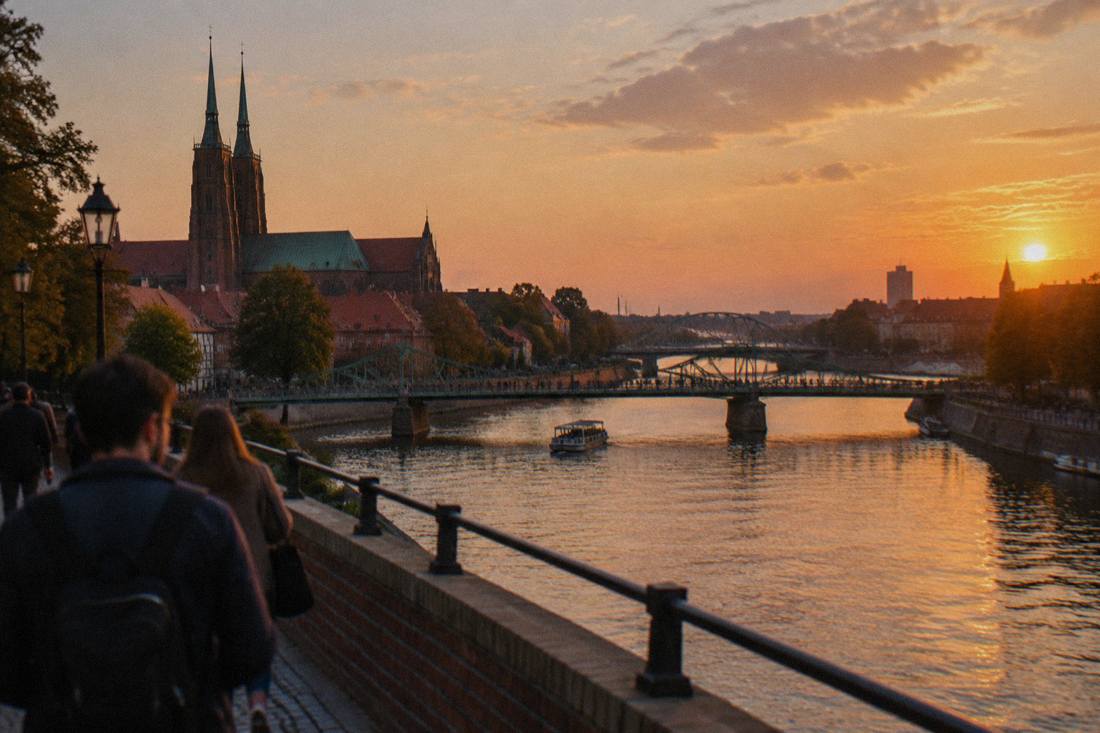
There is also a rhythm difference. Wroclaw's attractions are stitched together by bridges and riverbanks; the city's character is partly its waterscape, with a dozen islands in the Odra and a riverfront that links the Old Town to Cathedral Island. Krakow's core is more radial, organized outward from the Rynek and Wawel. Neither pattern is superior, but they suit different travelers: anyone who likes aimless walking between fragments of a city will feel at home in Wroclaw, while anyone who wants a dense sequence of major monuments within one or two squares will get more from Krakow per hour.
How Do The Two Cities Feel For A Visitor?
Krakow feels bigger in the center, because its crowds and visitor infrastructure concentrate around the Rynek and Wawel; Wroclaw feels smaller and more scattered, with its sights strung along the Odra across islands and bridges. In practice, Wroclaw rewards a slower, wandering pace, while Krakow rewards a planned one, and both cities are compact enough to see entirely on foot.
A useful way to test the difference without a long commute is to walk each city with a guide and compare the shape of what you cover. A guided product such as the Wroclaw Old Town walking tour circuit gives you the Wroclaw version, and the contrast with a similar walk in Krakow is immediate: one square versus many, one river crossing versus a dozen, one famous focal point versus a fan of them.
Two related questions come up in the same breath as this one. At Christmas, the comparison sharpens into a direct market-versus-market contest, and the Krakow or Wroclaw Christmas market comparison covers it head to head. And for anyone planning to string both cities into one trip rather than choosing, the Wroclaw to Krakow train guide explains the rail connection, with fares and journey times varying by date and best checked live at the operator's own booking site, because no stable public figure for that route could be sourced for this site's fact pack.
Common Questions About Wroclaw And Krakow
Is Wrocław bigger than Krakow?
No. Krakow is bigger on the official numbers: GUS counted 816,614 residents in Krakow against 672,601 in Wroclaw as of 31 December 2025, and Krakow's main market square, at roughly 4 hectares, is larger than Wroclaw's Rynek at roughly 3.64 to 3.79 hectares.
Is Wroclaw's market square the second largest in Europe?
That claim circulates widely but was not independently confirmed when this site's facts were verified. What the sourced record supports is narrower: Krakow's Rynek Glowny, at about 4 hectares, is larger than Wroclaw's Rynek, and both are among the largest medieval market squares in Europe.
Which city is older, Wroclaw or Krakow?
Both are medieval cities with long documented histories, and this site's fact pack does not carry a sourced founding-date comparison between them, so no specific age ranking is stated here. What is sourced is that Wroclaw's Rynek and Ostrow Tumski preserve the medieval street pattern still visible today.
Can you visit Krakow from Wroclaw in a day?
Yes. Krakow is a realistic day trip from Wroclaw, and guided full-day products exist that fold in the Wieliczka Salt Mine too. Rail fares and journey times on the route vary by date and should be checked live at the operator's booking site, since this site's fact pack found no stable public figure for that route.
Which city is cheaper to visit, Wroclaw or Krakow?
Both cities use the zloty, not the euro, and no comparative cost figure is given on this page. As a general rule of thumb, prices cluster hardest around each city's main square and soften a few streets away, which holds in both places.
Size is the wrong yardstick for choosing between these two cities. Krakow is the bigger one, on residents and on square meters, and it delivers the bigger, busier, more famous version of a Polish old town. Wroclaw is the smaller one, and it delivers something its rival does not: a river city of islands and bridges, a dwarf hunt that turns the whole map into a game, and a main square you can cross in the time it takes to decide where to eat. This Wroclaw Travel Guide covers both patterns of travel in depth, and the honest answer is that plenty of visitors, given four or five days in the region, do not choose at all.