Krakow From Wroclaw
Krakow sits within comfortable day-trip range of Wroclaw, and this guide covers the realistic ways to do it: the train, the organized Wieliczka combination tour, what a single day in Krakow can hold, and how the two cities actually compare.
Short answer
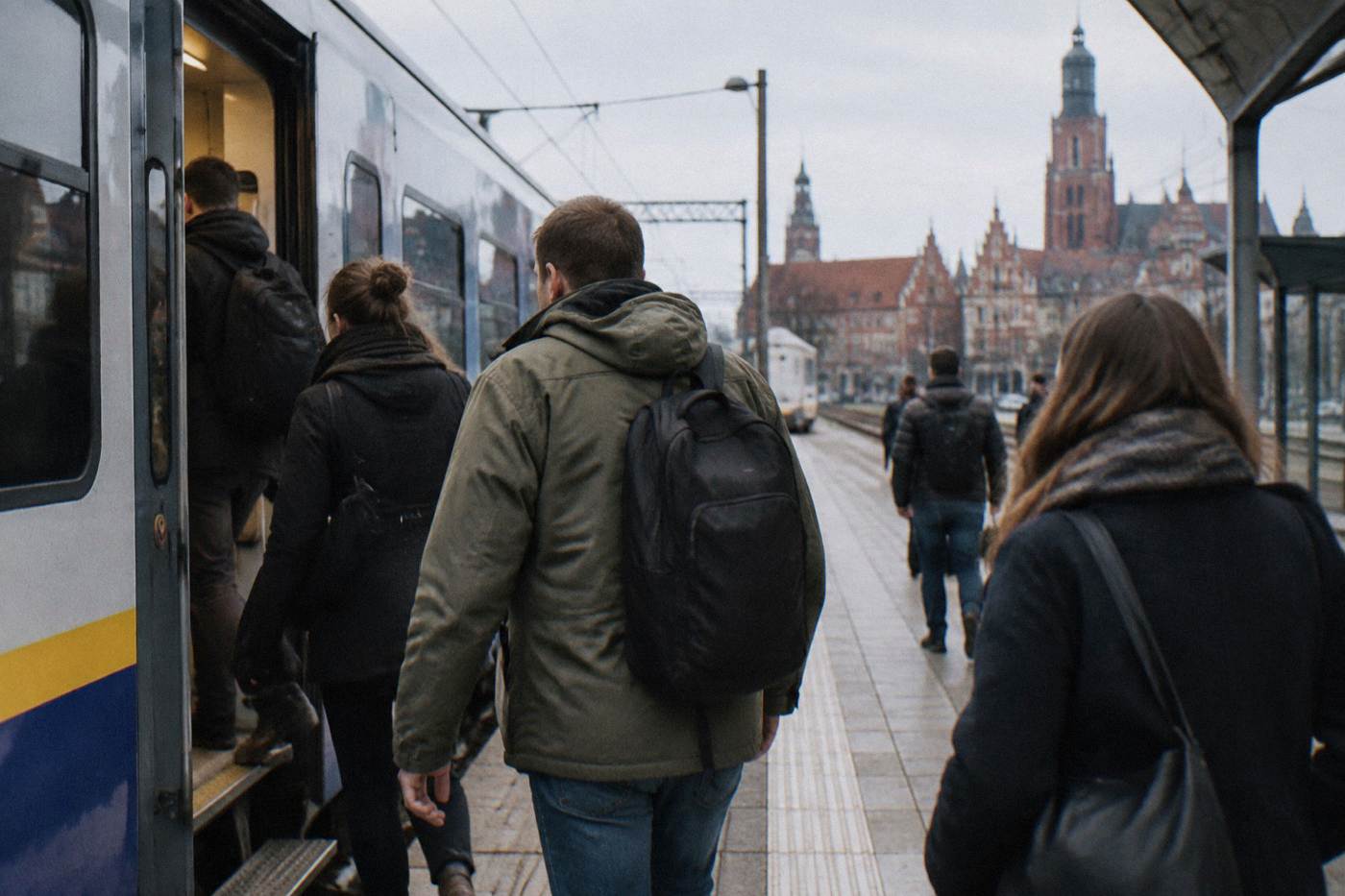
Yes, Krakow works as a day trip from Wroclaw. PKP Intercity operates the route, with fares and journey times varying by date and best checked live at intercity.pl. An organized Krakow and Wieliczka Salt Mine tour from Wroclaw is the efficient alternative, bundling transport and both sites into one booked day.
Krakow, Poland's second-largest city and one of its most visited, sits within genuine day-trip range of Wroclaw, the largest city in Lower Silesia (Dolnoslaskie voivodeship) in southwestern Poland. Travelers based in Wroclaw for the dwarfs, the Market Square, the islands of the Odra and the museums often find themselves weighing the same question: is it worth surrendering one Wroclaw day to see Krakow's Rynek Glowny, Wawel and the Wieliczka Salt Mine instead. The honest answer is that it is one of the most rewarding swaps you can make, and this guide, from Wroclaw Travel Guide, lays out exactly how the day trip works, what the two cities genuinely look like side by side, and where the organized options beat the independent ones.
Is Krakow From Wroclaw A Realistic Day Trip?
Yes, Krakow is a realistic and popular day trip from Wroclaw, and it is the single most requested long-haul excursion from the city. PKP Intercity operates the route, and fares and journey times vary by date, so the live timetable at intercity.pl is the only place to confirm a specific departure. An organized day tour covering Krakow and the Wieliczka Salt Mine exists precisely because demand for this pairing is steady.
Realistic does not mean effortless. This is a long day by any measure, and the further scheduling reality is that a day trip compresses a city that rewards two or three days into a single sprint. The two cities are separated by roughly the width of southern Poland, and every hour spent in transit is an hour not spent under Krakow's arcades. The trade is worth making exactly once, for the highlights, and a second Krakow visit deserves its own overnight.
What makes it work in Wroclaw's favor is the shape of the trip itself. Both cities are compact at their cores, both main squares are pedestrian-first spaces ringed by cafés, and the headline sights of each, from Wawel Hill to the Rynek Glowny, cluster within walkable range of one another. A traveler who lands in central Krakow at mid-morning can cover a great deal on foot before an evening return. The full mechanics of the rail route are covered in the dedicated Wroclaw to Krakow train guide, which goes deeper on ticketing and station practicalities than this page does.
How Do You Get From Wroclaw To Krakow For The Day?
The two practical routes are the PKP Intercity train from Wroclaw Glowny to Krakow Glowny, with fares and journey times varying by date and needing a live check at intercity.pl, or a booked seat on an organized coach-and-guide day tour from Wroclaw. There is no verified stable public fare figure for the rail route, so any specific zloty price quoted for this train elsewhere should be treated as unconfirmed.
The train is the independent traveler's route. PKP Intercity runs the connection, and because its pricing is dynamic, the same journey can cost meaningfully different amounts depending on how far ahead you book and how popular the departure is. The practical method is to fix your date first, then check the live timetable and fares. One discipline matters above all on a day trip: book the return leg at the same time as the outbound. A missed evening train with no reserved seat on the next one is the difference between a tired night and a stranded one.
The organized tour is the other route, and it is not a lazy option so much as a different product. A booked tour removes the timetable risk entirely, because the transport is committed in both directions and the Wieliczka Salt Mine entry, the piece of the day most likely to sell out or eat hours in queues when arranged separately, is handled ahead of your arrival. The flagship option on this route is the Krakow and Wieliczka Salt Mine tour from Wroclaw, described in full in the section below.
There is also a middle path worth naming: the tour as transport only. Some travelers use an organized day trip simply to guarantee the long-distance legs and the mine entry, then peel off from the group in central Krakow for a self-planned afternoon. Whether that works depends on the operator's structure, so it is a question to settle before booking rather than on the coach.
For anyone weighing the drive instead: parking in central Krakow is the classic trap of this day trip, and a hire car buys flexibility at the cost of city-center logistics that both cities make deliberately difficult. The Wroclaw with a car and parking guide covers the Wroclaw end of that decision.
What Do You Actually See In Krakow On A Day From Wroclaw?
A realistic single day in Krakow holds the Rynek Glowny with the Cloth Hall, a walk to Wawel Hill and its castle and cathedral exteriors, one museum or church interior of your choosing, and either the Wieliczka Salt Mine in the afternoon or the Kazimierz district if you skip the mine. Trying to add all four in one day is where day trips from Wroclaw go wrong.
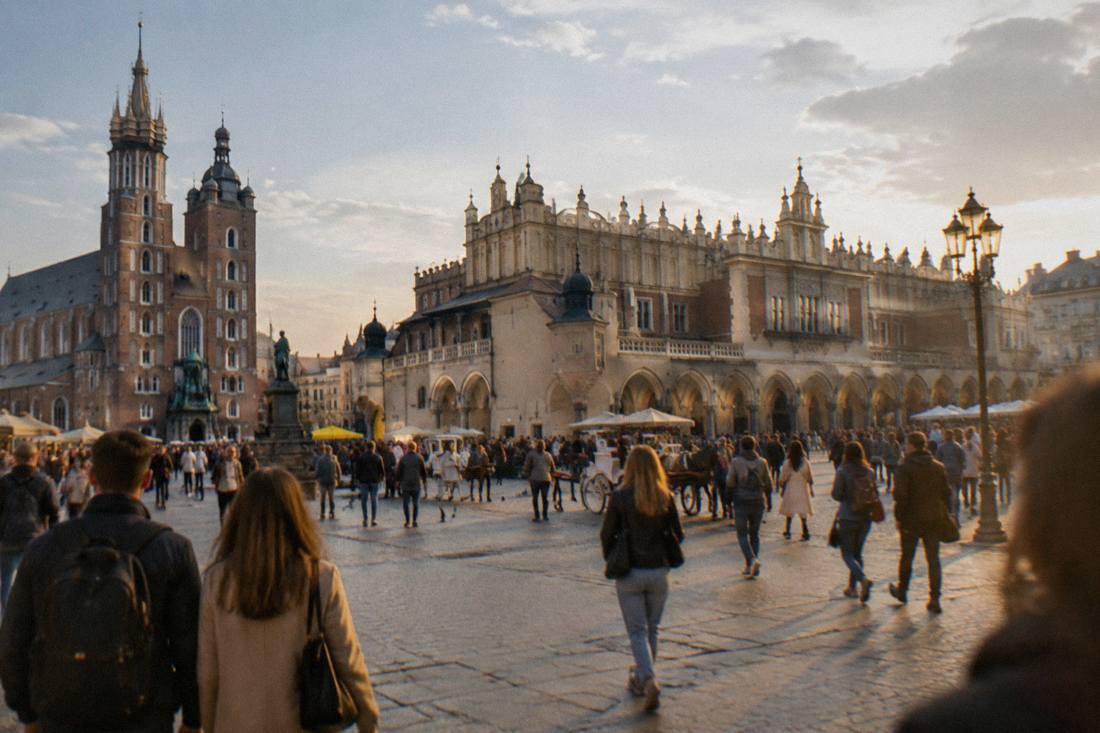
The square comes first, and it deserves its reputation. Krakow's Rynek Glowny runs to roughly 4 hectares, around 200 by 200 meters, which makes it larger than Wroclaw's own Rynek at roughly 3.64 to 3.79 hectares. The Cloth Hall sits at its center like a roofed market spine, and the whole space is framed by townhouses whose facades do a lot of the sightseeing for you. Give it an unhurried loop rather than a photo stop, because the arcades and the side streets peeling off the corners are where the character lives.
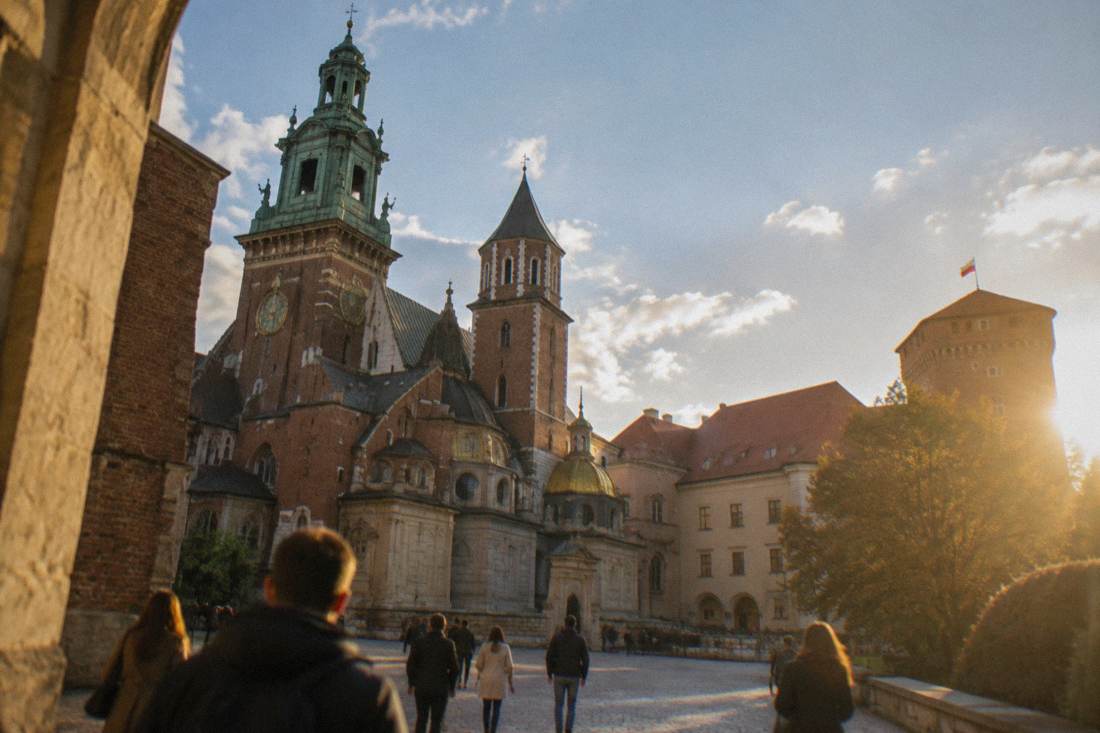
Wawel is the second anchor, a short walk south from the square. The hill carries the castle complex and the cathedral, and even visitors who skip paid interiors will want the courtyard views over the Vistula. The honest day-trip method is exteriors and grounds at Wawel, saving the interior budget for one thing you truly care about, because ticket lines and fixed entry times are what quietly destroy single-day schedules.
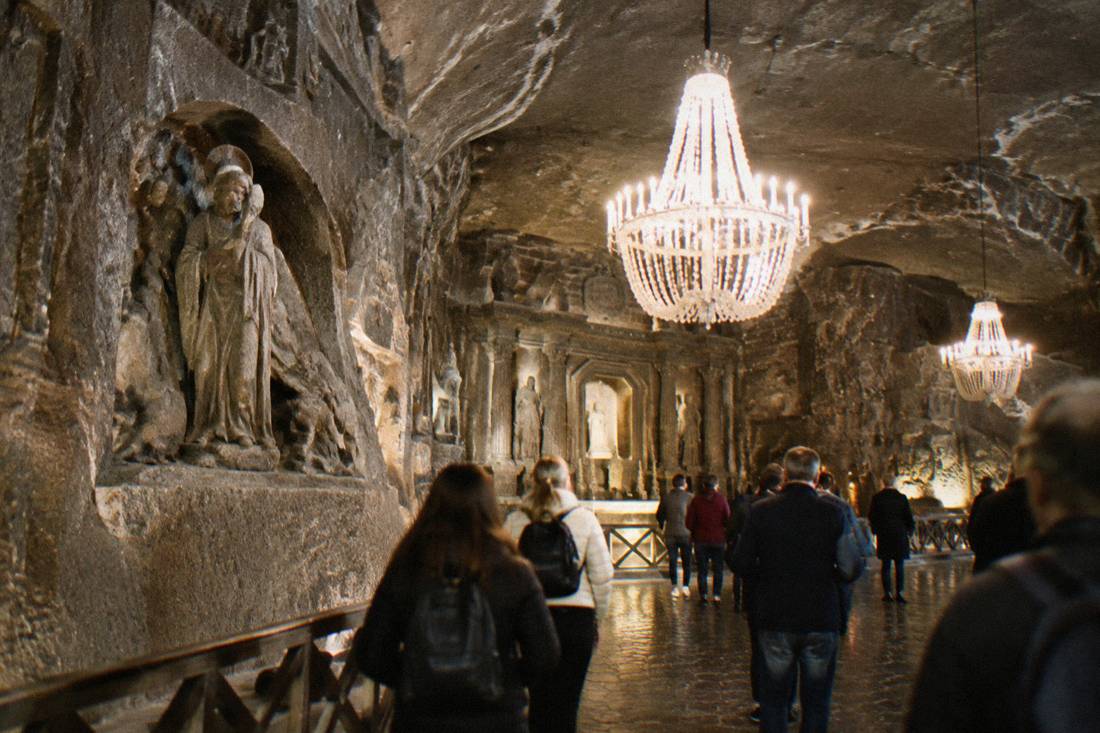
The Wieliczka Salt Mine is the piece that changes the shape of the day. It lies outside central Krakow, its underground route is a guided affair with fixed departures, and combining it with a full morning in the old town is exactly the kind of logistics that the organized tour product was built to solve. The mine's carved chapels and brine lakes are the single most distinctive sight in the Krakow orbit, and for most Wroclaw-based visitors it is the reason to pick the combined tour over a plain train ticket.
This is also the honest place to say what a day trip cannot hold. Auschwitz-Birkenau is a separate direction from Krakow and a separate emotional register; it is not something to bolt onto an already long day, and it has its own dedicated planner in the Auschwitz from Wroclaw day-trip guide. Likewise, Krakow's museums deserve more than a rushed final hour, and the Wroclaw vs Krakow comparison walks through what each city does better when you have more than a day to spend.
The evening return closes the day, and this is where the tour option earns its keep a second time. The coach departs on the operator's clock, not yours, which sounds like a restriction until you have watched a tired traveler sprint for a train they did not book. Either way, plan to arrive back in Wroclaw late, and treat the following morning as a slow one.
How Do Wroclaw And Krakow Actually Compare?
Krakow is the larger city, with a population of 816,614 against Wroclaw's 672,601 as of 31 December 2025 per GUS, and Krakow's Rynek Glowny at roughly 4 hectares is larger than Wroclaw's Rynek at roughly 3.64 to 3.79 hectares. Wroclaw is the largest city in Lower Silesia and southwestern Poland's regional capital, but Krakow outmeasures it on both headline figures.
The comparison matters for day-trippers because expectations need calibrating before the train leaves. Krakow's old-town core is bigger and grander in the classical sense, and its royal-history layer runs deeper. Wroclaw counters with something Krakow does not have: a city of islands and bridges on the Odra, a genuinely quirky dwarf-hunting street game, and a museum density that punches above its size. The honest framing is that they are different products rather than rivals, and the dedicated Wroclaw vs Krakow guide does the full head-to-head.
Here is how the figures stack up:
| Measure | Wroclaw | Krakow | Source |
|---|---|---|---|
| Population (31 Dec 2025) | 672,601 | 816,614 | GUS / Statistics Poland |
| Main market square area | approx. 3.64-3.79 ha (roughly 204 x 169-170 m) | approx. 4 ha (roughly 200 x 200 m) | City-square survey data |
| Region | Dolnoslaskie (Lower Silesia), southwestern Poland | Malopolskie (Lesser Poland), southern Poland | Administrative regions |
| River | Odra (Oder) | Vistula | Geography |
The deeper point for a day trip is about pace, not statistics. Visitors who arrive in Krakow expecting to find "a bigger Wroclaw" are disappointed in both directions, because Krakow's core is more monumental while Wroclaw's is more playful and spread across water. The is Wroclaw bigger than Krakow question comes up constantly in search, and the answer is a clean no on both population and square size, with Wroclaw winning on things that a ruler cannot measure.
Is The Krakow And Wieliczka Tour Worth It Over The Independent Train?
The combined Krakow and Wieliczka Salt Mine tour from Wroclaw is worth it when your day is fixed, your priority is the mine, and you would rather not manage two long-distance transport legs plus a sell-out-prone mine entry yourself. The independent train wins when you want flexibility, a lower base cost, and the freedom to reshape the afternoon on a whim.
The tour's core value is that it converts three separate booking risks, the outbound leg, the mine entry and the return leg, into one committed product. For the mine in particular, entry is a guided, capacity-managed affair, and a Wroclaw-based traveler arranging it solo has to make a timed underground reservation fit a train schedule that can shift. The tour absorbs that problem. Free cancellation on the booked day, where the listing offers it, removes most of the planning risk on the Wroclaw side too.
The independent route wins on other grounds. A traveler who wakes to rain, or falls in love with the Rynek Glowny at noon and wants to linger, can bend an afternoon that a tour cannot. The train also leaves from and returns to Wroclaw Glowny, minutes from the old town, which keeps the day's Wroclaw-side friction near zero. The deciding question is simple: is this day about seeing Krakow, or about being sure the day happens at all? The tour is the certainty product; the train is the freedom product.
When Is The Best Time Of Year To Take This Day Trip?
The best months for the Krakow from Wroclaw day trip are May, June and September, when IMGW's 1991-2020 climate normals for the Wroclaw station show mean temperatures of 14.3C, 17.7C and 14.5C respectively, with July the warmest month at 19.7C and January the coldest at 0.0C. July's 91.4 mm of average rainfall also makes it the wettest month on the Wroclaw record.
The climate table below is the Wroclaw-side record, the departure end of the trip, and it is a fair planning proxy for the whole corridor. Note what it does not say: no sunshine-hours figure and no "sunniest city in Poland" ranking was sourced, so none is claimed here.
| Month | Mean temperature (C) | Average precipitation (mm) |
|---|---|---|
| Jan | 0.0 | 28.3 |
| Feb | 1.1 | 25.6 |
| Mar | 4.3 | 35.0 |
| Apr | 9.7 | 31.2 |
| May | 14.3 | 59.6 |
| Jun | 17.7 | 65.4 |
| Jul | 19.7 | 91.4 |
| Aug | 19.3 | 59.5 |
| Sep | 14.5 | 48.4 |
| Oct | 9.6 | 37.6 |
| Nov | 4.8 | 31.4 |
| Dec | 1.1 | 27.9 |
Seasonality shapes the experience in two further ways. Winter days are short, and a day trip that departs in darkness and returns in darkness compresses usable sightseeing harder than the temperature does; the trade is the Christmas-market season, which the Krakow vs Wroclaw Christmas market comparison covers directly. Summer days are long and warm but July carries the heaviest rainfall of the Wroclaw record at 91.4 mm, which matters when half your day is spent walking open squares. The full monthly breakdown lives in the Wroclaw weather by month guide.
What Should You Budget For Around The Trip?
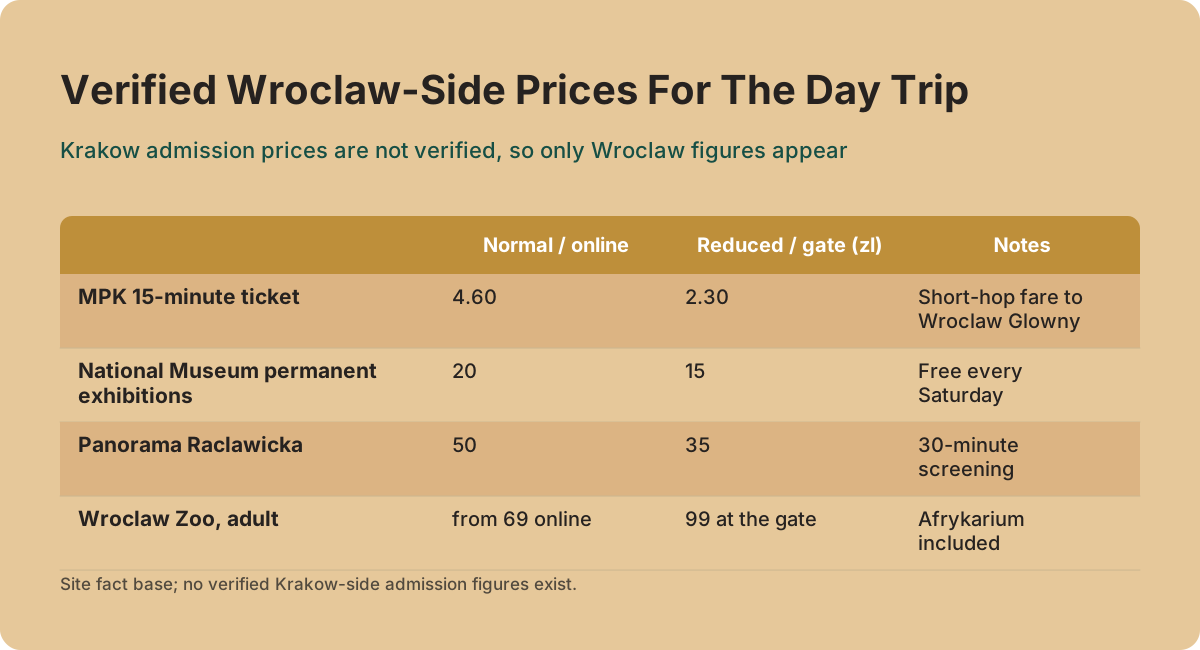
The verified Wroclaw-side figures that shape this day are the 4.60 zl normal MPK 15-minute ticket (2.30 zl reduced) for getting to Wroclaw Glowny, and the city's museum and attraction prices if you spend the day before or after sightseeing, such as the National Museum's 20 zl adult permanent ticket, free on Saturdays. No verified Krakow-side admission figures exist in this site's fact base, so none are printed here.
That last sentence is deliberate honesty, not evasion. Poland uses the zloty, not the euro, and the figure discipline on this site is that a number goes on the page only when an official source backs it. The Wroclaw-side figures below are all verified; anything Krakow-specific should be checked at the attraction itself or on the tour listing.
| Wroclaw-side item | Normal price (zl) | Notes |
|---|---|---|
| MPK 15-minute ticket | 4.60 (reduced 2.30) | Base short-hop fare to reach Wroclaw Glowny |
| National Museum permanent exhibitions | 20 (reduced 15) | Free entry to permanent exhibitions every Saturday |
| Panorama Raclawicka | 50 (reduced 35) | 30-minute screening; ticket also covers three more museums within 3 months |
| Wroclaw Zoo, adult | from 69 online, 99 at the gate | Afrykarium included in the standard ticket |
Two practical money notes close this out. First, no all-inclusive Go City-style tourist pass is currently sold for Wroclaw, so do not build the day around one; the Wroclaw city pass question covers what actually exists, which is transport-focused. Second, the tour price you pay is the listing's price, rendered on the operator's own page, and it should be read there rather than secondhand.
What Other Day Trips From Wroclaw Rival This One?
The strongest rivals to Krakow from Wroclaw are Ksiaz Castle with the Church of Peace in Swidnica, the Giant Mountains and Karpacz, and the Table Mountains, each reachable as a booked day tour and each showing a completely different face of Lower Silesia than Krakow's old-town grandeur.
Krakow is the only one of these that takes you to another great city. The others stay inside Wroclaw's own region, and they are shorter, cheaper days on average because the distances shrink. The table below shows how the headline figures differ:
| Day trip from Wroclaw | Headline verified figure | Season note |
|---|---|---|
| Ksiaz Castle | Castle with audioguide and terraces 72 zl adult, 62 zl reduced (cennik effective 6 May 2026) | Terraces open only 15 April to 30 September |
| Church of Peace, Swidnica | Adult 18 zl, reduced 15 zl; UNESCO-inscribed 2001 | Interior visits most rewarding outside deep winter |
| Centennial Hall, Wroclaw | UNESCO-inscribed 2006; architect Max Berg, built 1911-1913 | A city sight, not a trip, but on the way |
| Auschwitz-Birkenau | A separate direction from Krakow entirely | Its own dedicated planner on this site |
The Ksiaz Castle pairing deserves special mention, because it is the day trip that most directly competes for the same calendar slot as Krakow. The Ksiaz Castle guide and the Church of Peace in Swidnica guide cover it in full; the short version is that Ksiaz gives you scale and history in one dramatic hilltop complex, while Krakow gives you an entire living city. Families and history-focused travelers often prefer Ksiaz's single-site depth; first-time visitors to Poland almost always should see Krakow.
For mountain-minded travelers, the Karpacz and Karkonosze guide covers the Giant Mountains option, and the Table Mountains guide covers the strange rock-labyrinth trails further east. Both are best in the same May-to-September window recommended above for the Krakow run.
How Do You Spend The Evening Back In Wroclaw After The Trip?
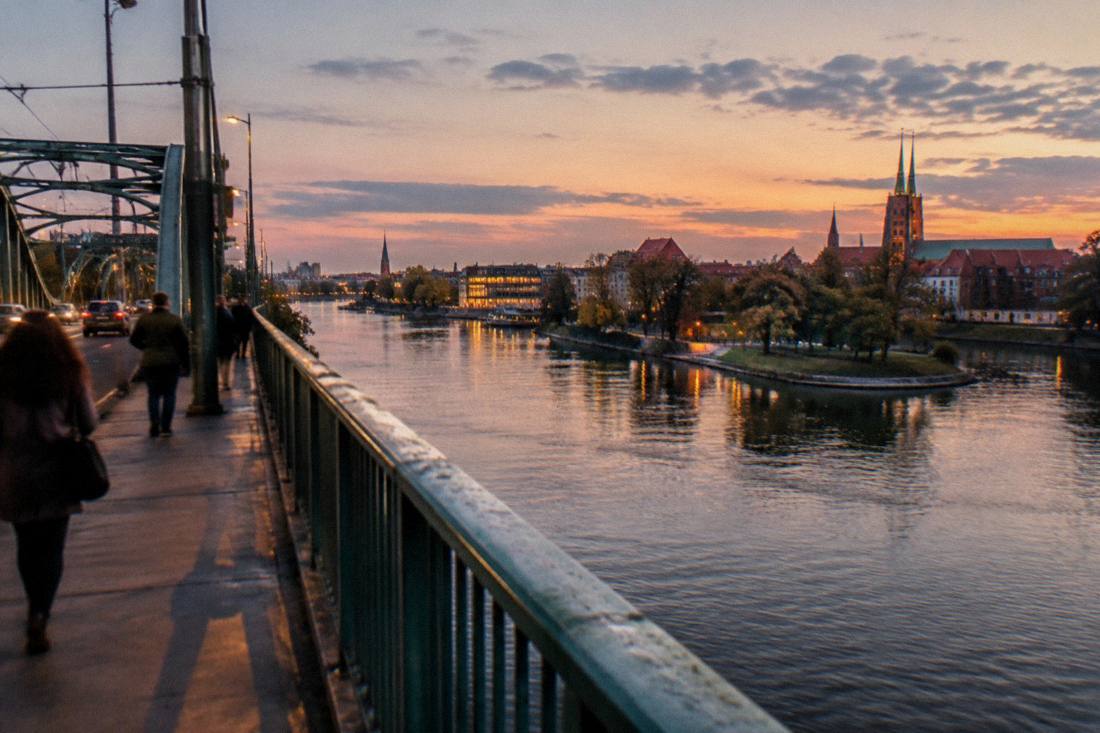
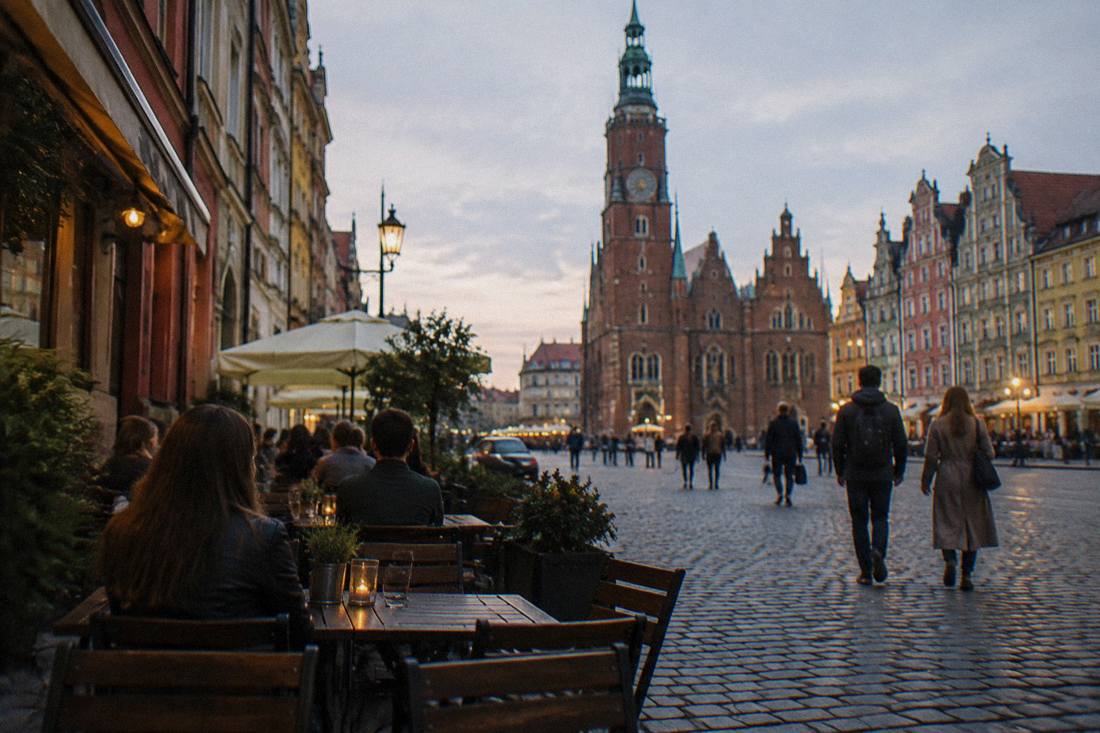
The best post-Krakow evening in Wroclaw is deliberately low-effort: the Market Square's café terraces for food you do not have to plan, a slow loop past the Odra bridges and Ostrow Tumski's lamplit lanes, and an early night, because the day trip to Krakow is one of the longest days you will spend in this region.
Wroclaw rewards the returning day-tripper precisely because it asks so little of you. The old core is compact enough that a tired walker can see the Market Square, the Cathedral Island churches of Ostrow Tumski and a handful of dwarf statues in a single unhurried loop, with a beer or a pierogi stop wherever the legs give out. There is no obligation to do any of it properly; that is what tomorrow is for, and the one day in Wroclaw itinerary will still be here.
If the Krakow day has left you hungry for more of your own base rather than less, two of the city's best-value guided experiences slot neatly into a following morning or a pre-trip afternoon. A small-group old town walk is the efficient orientation play, covering the Market Square, the cathedral island approaches and the best dwarf-hunting streets in a single guided loop.
The bike option covers different ground entirely. Two wheels carry you out along the riverside reaches and across the islands in a way walking tours never manage, and the English-language format suits a pre-trip afternoon when the legs are still fresh and the Krakaw sprint is still ahead of you.
For travelers who want a Wroclaw-focused alternative day with a guide and no long-distance leg at all, the Ksiaz Castle and Church of Peace combination runs as a booked day and is the strongest like-for-like swap for the Krakow tour slot; details and current availability are on the listing.
Common Questions About Krakow From Wroclaw
Is Krakow From Wroclaw Doable In One Day?
Yes. PKP Intercity operates the Wroclaw to Krakow route, and the combined Krakow and Wieliczka Salt Mine day tour from Wroclaw exists as a single booked product covering both. It is a long day, so treat it as a highlights sprint rather than a deep visit, and book any return leg in advance.
Is Krakow Bigger Than Wroclaw?
Yes, on both headline measures. GUS figures dated 31 December 2025 give Krakow 816,614 residents against Wroclaw's 672,601, and Krakow's Rynek Glowny at roughly 4 hectares is larger than Wroclaw's Rynek at roughly 3.64 to 3.79 hectares.
Train Or Tour For The Krakow Day Trip?
Take the train if you want flexibility and a free-form afternoon in Krakow; take the booked tour if the Wieliczka Salt Mine is the priority and you want the transport and mine entry guaranteed in one purchase. Fares and journey times for the train vary by date and are checked live at intercity.pl.
Should You Add Auschwitz-Birkenau To The Same Day?
No. Auschwitz-Birkenau lies in a different direction from Krakow's old town, runs on fixed entry times and deserves its own full day with its own emotional space. This site carries a dedicated Auschwitz from Wroclaw day-trip planner for that visit.
When Is The Worst Time To Do This Day Trip?
Mid-winter, when short daylight compresses the sightseeing day at both ends, and July, which carries the heaviest average rainfall on the Wroclaw climate record at 91.4 mm. May, June and September are the sweet spot on the same record, with mean temperatures of 14.3C, 17.7C and 14.5C.
Does Wroclaw Have A Tourist Pass That Covers Krakow?
No. No all-inclusive Go City-style tourist pass is currently sold for Wroclaw, and none exists covering Krakow attractions from Wroclaw either. Wroclaw's UrbanCard is a transport-focused fare card and does not cover attraction admission.
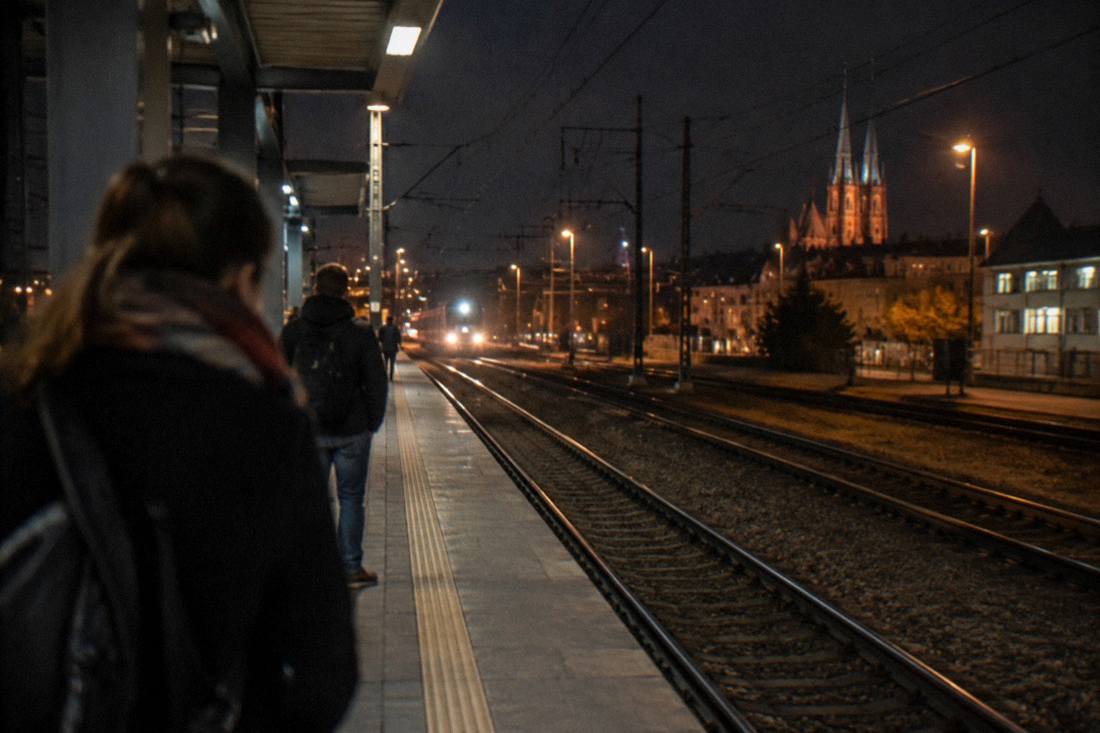
The Krakow from Wroclaw day trip is the one excursion from this city that everyone asks about first, and it earns the attention: one booked day buys you Poland's grandest market square, a royal castle hill and one of the world's most extraordinary underground spaces. Pick the train for freedom or the tour for certainty, aim for late spring or early autumn, protect one slow evening on the Odra afterwards, and the day will repay the effort it asks.