Driving And Parking In Wroclaw
Wroclaw is a compact, walkable city on the Odra river, and in the centre a car is more burden than benefit. This guide covers when driving in Wroclaw makes sense, how parking in the central zone works in general terms, and what a car unlocks across Lower Silesia.
Short answer
You do not need a car for sightseeing in Wroclaw itself: the Old Town, Market Square and Ostrow Tumski are walkable and the MPK tram network covers the rest from 4.60 zl for a single ticket. A car becomes worthwhile for day trips into Lower Silesia, such as Ksiaz Castle, the Church of Peace in Swidnica and the Giant Mountains.
Wroclaw, the largest city in Lower Silesia in southwestern Poland, was built around the Odra river and a lattice of islands, and that geography is the single biggest factor in any driving decision. The core that tourists come for, the Market Square, Ostrow Tumski, the riverside islands and the streets between them, is compact enough to cover on foot, while the wider city spreads across the river in every direction. A car helps at the edges and beyond the city limits; inside the historic centre it mostly costs time and money. This page lays out the honest trade-offs, the general shape of parking in the central zone, and the Lower Silesia destinations where having wheels genuinely pays off.
Do You Actually Need A Car For Sightseeing In Wroclaw?
For the city itself, no: the attractions that draw visitors to Wroclaw sit inside a walkable core, and the MPK tram and bus network covers everything beyond it, with a short-hop ticket at 4.60 zl normal fare or 2.30 zl reduced. The Market Square, Ostrow Tumski, the National Museum and Centennial Hall are all reachable without driving, and the city's own transport pages describe the network as the default way locals move around. A car earns its keep only once you leave town.
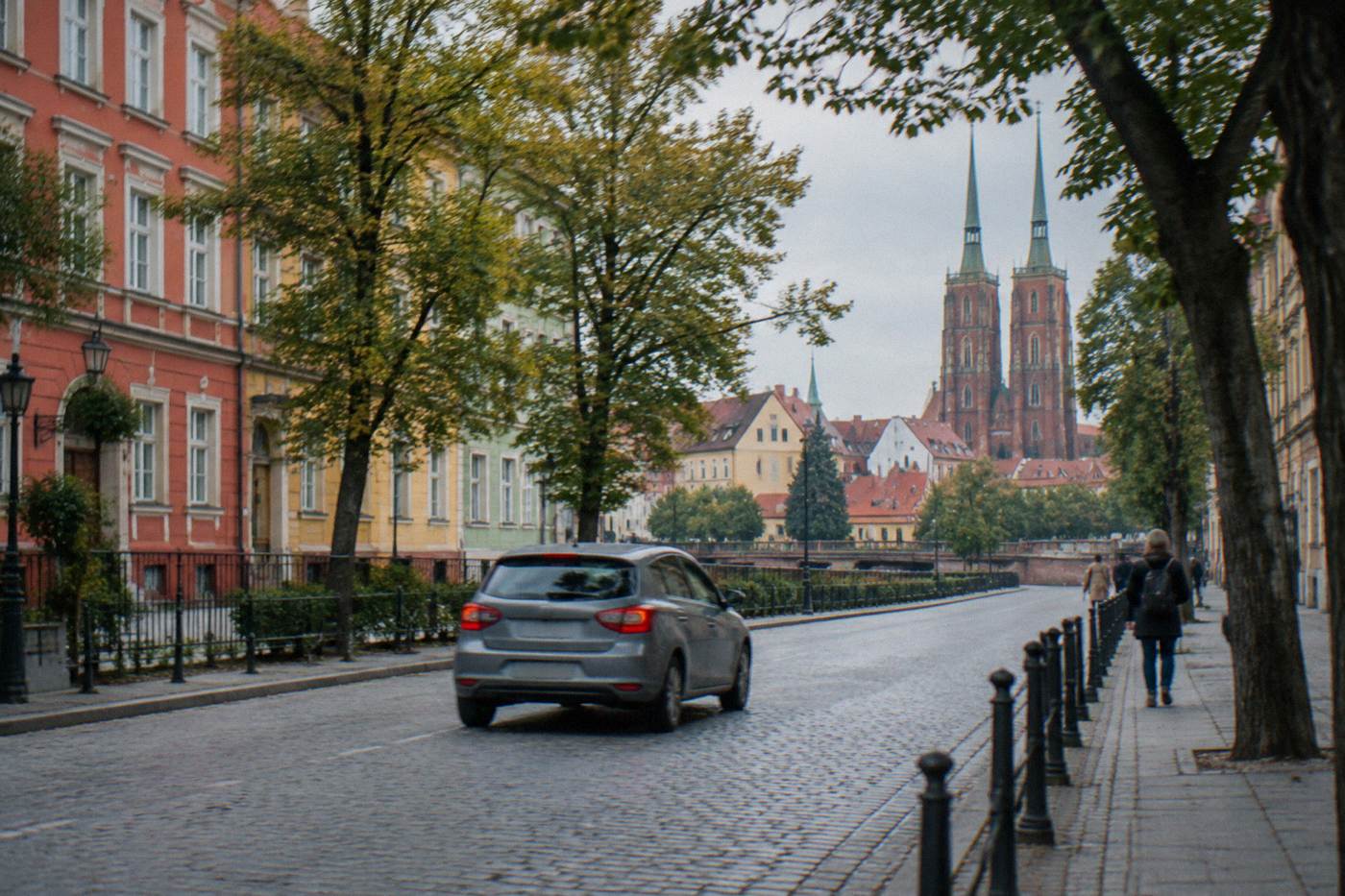
The historic centre is the first thing to understand. The Rynek and the streets radiating from it were laid out long before automobiles, and the city treats them accordingly: pedestrian priority, narrow lanes, deliveries in the early morning. Between the Market Square and the cathedral island of Ostrow Tumski you are walking distance from most of what a first visit covers.
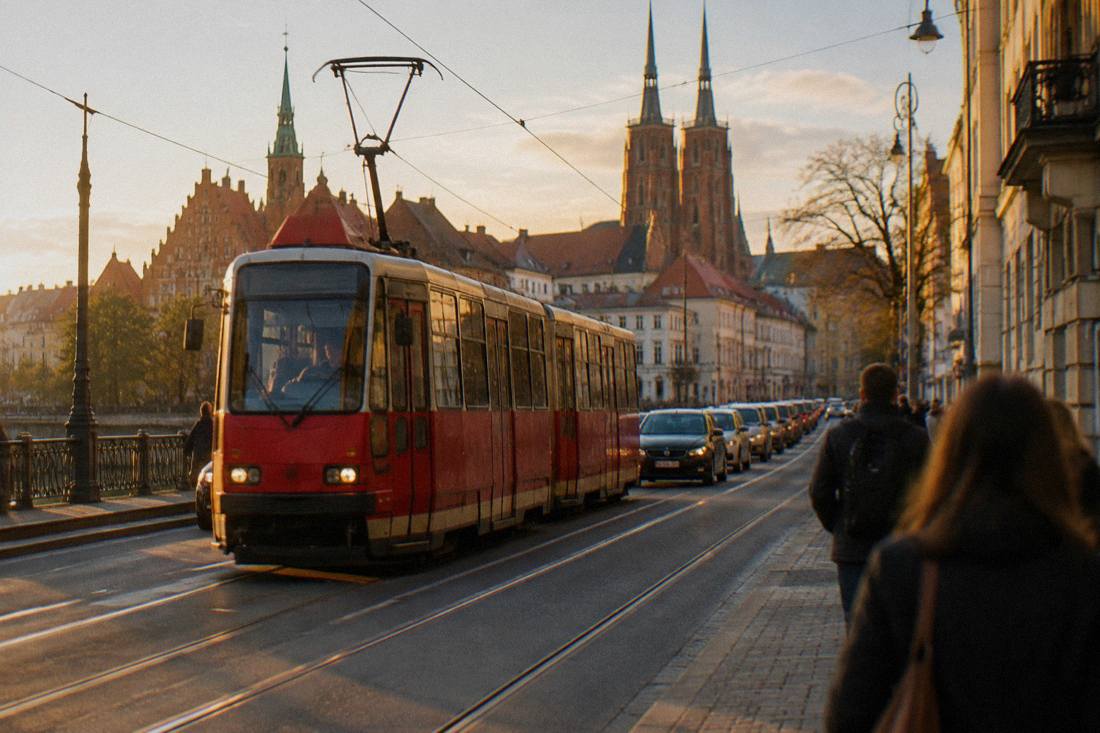
Beyond that core, distances grow but public transport keeps pace. The MPK network of trams and buses runs across the river to the zoo, Hydropolis and Centennial Hall, out to the newer districts, and connects with the main stations. The getting around Wroclaw guide covers the ticketing system in detail; the short version is that even the longest single journeys inside the city are a tram ride, not a drive.
There is also the parking reality, covered in depth below: whatever a car saves you in walking time in the centre, it gives back in hunting for a space. Many visitors who arrive by car end up leaving it parked for their whole stay and riding trams, which is exactly what this guide recommends for a purely city-focused trip.
What Do Polish Driving Rules Mean For A Wroclaw Visitor?
Poland drives on the right, is in the EU and the Schengen area, uses the zloty (PLN) rather than the euro, and applies the same national road law in Wroclaw as everywhere else in the country: headlights on at all times, zero alcohol tolerance, and priority to the right where no signs or markings say otherwise. Wroclaw adds one local layer, a river city with many bridges, so routes that look short on a map can involve crossings and one-way systems.
The national rules are the ones that catch foreign drivers out. Daytime running lights are mandatory in Poland year-round. The alcohol limit is effectively zero for drivers, among the strictest in Europe. Speed limits follow the national scheme, lower inside built-up areas than on open roads, and enforcement is largely automated.
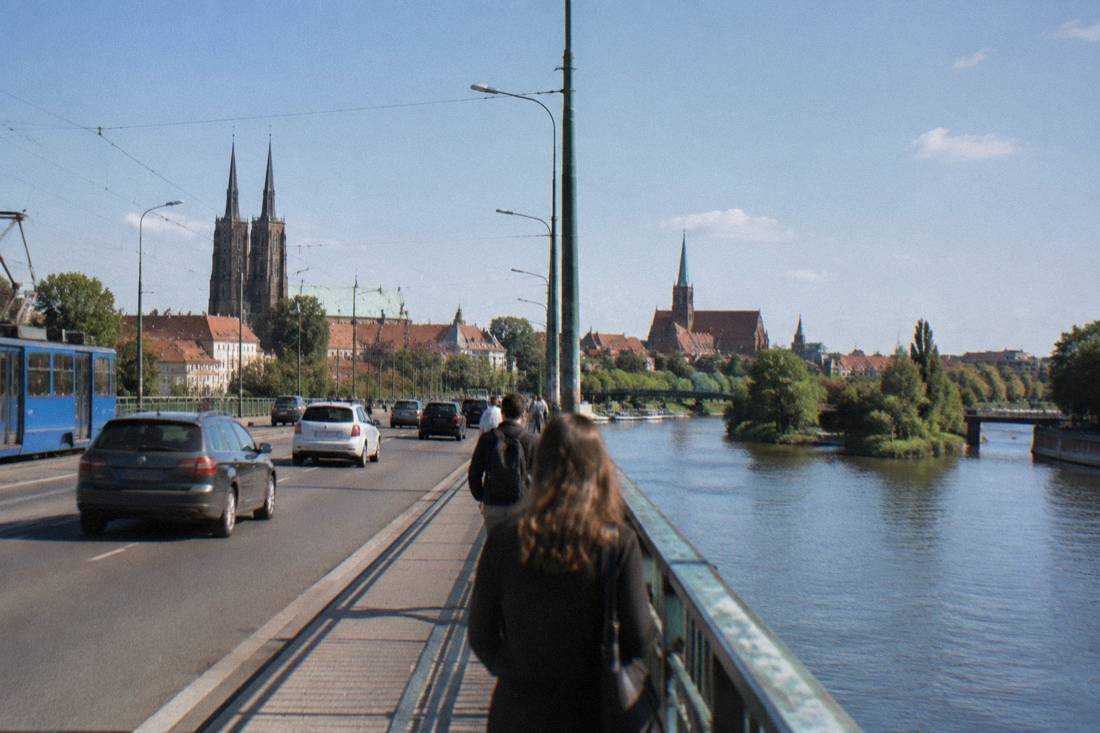
The driving in Poland guide covers licensing, vignettes and motorway rules in full. For Wroclaw specifically, the practical points are the bridges and the one-way grid near the centre: crossing the Odra is unavoidable for almost any north-south journey, and several crossings concentrate traffic at peak hours. Planning routes around a single well-chosen bridge crossing is easier than three improvised ones.
Winter deserves one honest word. IMGW's 1991-2020 climate normals for the Wroclaw station (12424) put January's mean at 0.0C and the annual mean at 9.7C, so snow and ice do occur but deep freeze is not the norm. If you visit between December and February, check the forecast rather than assuming either extreme; the Wroclaw weather by month guide carries the full picture.
| Month | Mean Temperature (C) | Precipitation (mm) |
|---|---|---|
| Jan | 0.0 | 28.3 |
| Feb | 1.1 | 25.6 |
| Mar | 4.3 | 35.0 |
| Apr | 9.7 | 31.2 |
| May | 14.3 | 59.6 |
| Jun | 17.7 | 65.4 |
| Jul | 19.7 | 91.4 |
| Aug | 19.3 | 59.5 |
| Sep | 14.5 | 48.4 |
| Oct | 9.6 | 37.6 |
| Nov | 4.8 | 31.4 |
| Dec | 1.1 | 27.9 |
That is IMGW's own table, the source Polish meteorologists use, and it shapes the driving seasons: spring and early autumn are the comfortable months for long day trips, July is the warmest but also the wettest, and January driving is about ice caution more than snow volume.
How Does Parking In Wroclaw City Centre Work?
The centre of Wroclaw uses metered on-street parking zones plus multi-storey and surface car parks, with tariffs set by the city and displayed at the zone boundary and on meters, so no reliable fixed price can be quoted here: read the signage where you park rather than a guide written weeks earlier. The general pattern, common to Polish cities of this size, is a paid central ring closest to the Rynek, cheaper zones further out, and private car parks as the pricey but reliable fallback.
What this site can state with confidence is the structure, not the tariff. Wroclaw's central paid zone exists, operates on weekdays and Saturday as posted, and is enforced. The practical habits that work:
- Park once, on arrival, and use trams and feet for the whole central day. The MPK base ticket at 4.60 zl makes this cheaper than feeding a meter repeatedly.
- Expect the streets immediately around the Rynek to be the hardest and most restricted; the ring a few blocks out is where locals actually park.
- Hotels inside the old core are the exception: many have arrangements or nearby garages, and booking a room with parking changes the whole calculus. That is a hotel-by-hotel question, not a city rule.
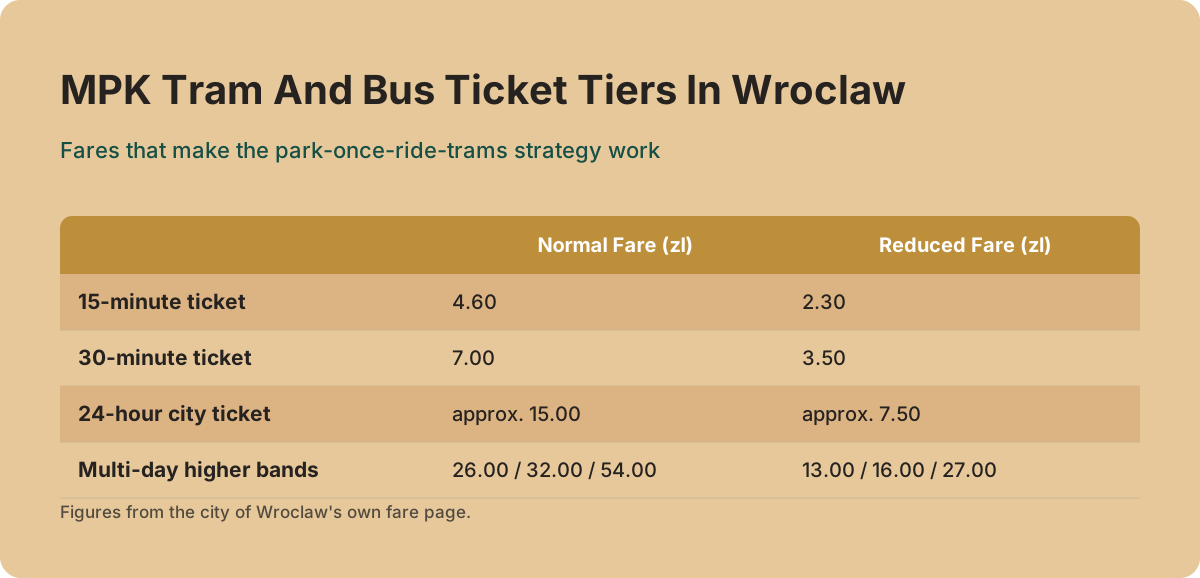
| MPK Ticket Tier | Normal Fare (zl) | Reduced Fare (zl) |
|---|---|---|
| 15-minute ticket | 4.60 | 2.30 |
| 30-minute ticket | 7.00 | 3.50 |
| 24-hour city ticket | approx. 15.00 | approx. 7.50 |
| Multi-day higher bands | 26.00 / 32.00 / 54.00 | 13.00 / 16.00 / 27.00 |
Those figures come from the city of Wroclaw's own fare page, and they are the reason the park-once-ride-trams strategy wins almost every time: a 24-hour tram ticket costs about the same as a couple of hours in a central car park in most comparable Polish cities, and unlike the meter it also gets you home.
One warning worth its own paragraph: this site has not verified any individual car park in Wroclaw, its address, hours or price. Where a guide tells you "the best car park is X for Y zl an hour," treat it as unverified until you see the tariff board yourself. The Wroclaw safety guide has the city's general street-smarts context.
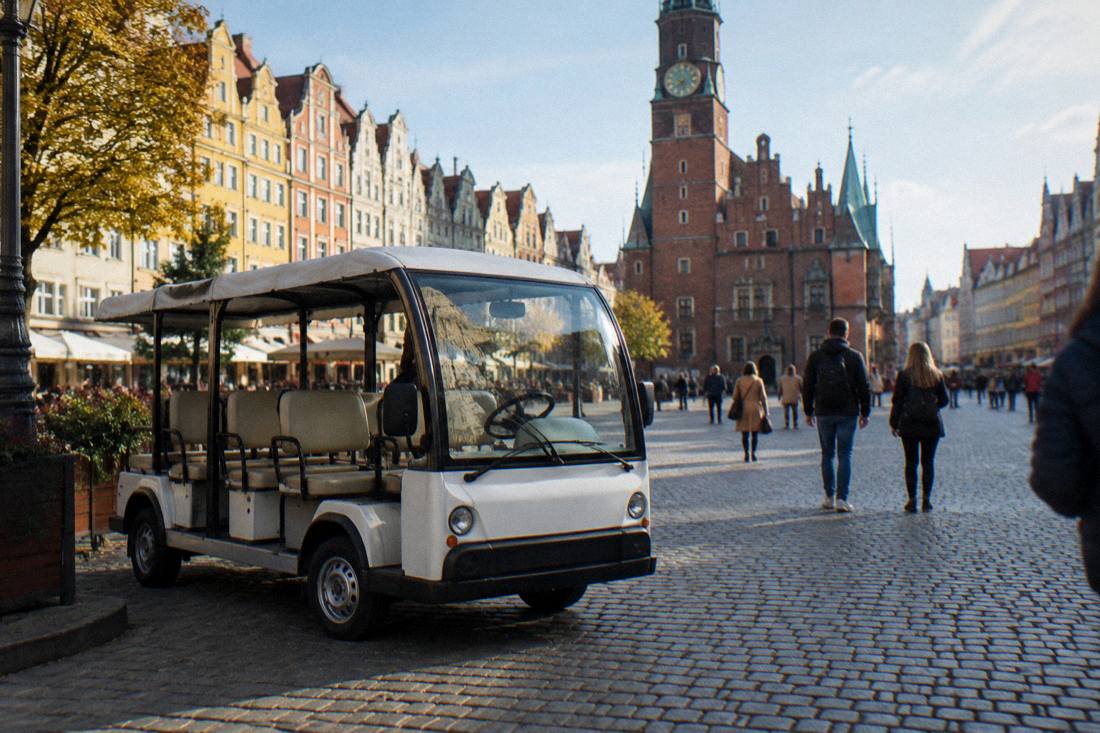
If you would rather skip parking strategy entirely for the day you explore the centre, guided options cover the old core on foot or by electric car.
Those three cover the spectrum: a walking tour of the Old Town for the day you leave the car parked, an electric-cart tour for covering more ground without a steering wheel, and the full-day Giant Mountains excursion for the one day the roads south are the point.
What Does A Car Genuinely Unlock Around Wroclaw?
A car in Wroclaw pays for itself on the day trips: Ksiaz Castle near Walbrzych, the UNESCO Church of Peace in Swidnica, and the Giant Mountains and Valley of Palaces to the south are all awkward or slow by public transport and straightforward by road, and the region's sights sit 1 to 3 hours' drive from the city in different directions. For these routes, driving or joining a tour both beat staying in town.
Ksiaz Castle is the flagship. It sits above Walbrzych, commonly reached by regional train to Walbrzych plus a bus or taxi connection for the last stretch, which is exactly the kind of last-mile friction a car removes. The castle's own tariff (effective 6 May 2026) is worth knowing before you choose a ticket on site:
| Ksiaz Castle Ticket Option | Adult (zl) | Reduced (zl) |
|---|---|---|
| Castle + audioguide + terraces | 72.00 | 62.00 |
| Castle + terraces + underground tour | 92.00 | 82.00 |
| Castle + terraces + stud farm | 79.00 | 69.00 |
| All Day Ticket (all areas) | 104.00 | 94.00 |
| Underground tour alone | 45.00 | 39.00 |
| Mausoleum alone (1 Apr-15 Oct) | 13.00 | 8.00 |
| Palm House alone | 27.00 | 21.00 |
One planning note from the castle's own schedule: the terraces open only from 15 April to 30 September, so a shoulder-season visit gets a different castle than a summer one.
The Church of Peace in Swidnica, UNESCO-inscribed since 2001 as one of the "Churches of Peace in Jawor and Swidnica," pairs naturally with Ksiaz on a single day loop. Admission there runs 18 zl adult, 15 zl reduced, 10 zl for children and youth, 45 zl for a family ticket, per the church's own visitor page. The full index of guides sits on Wroclaw Travel Guide.
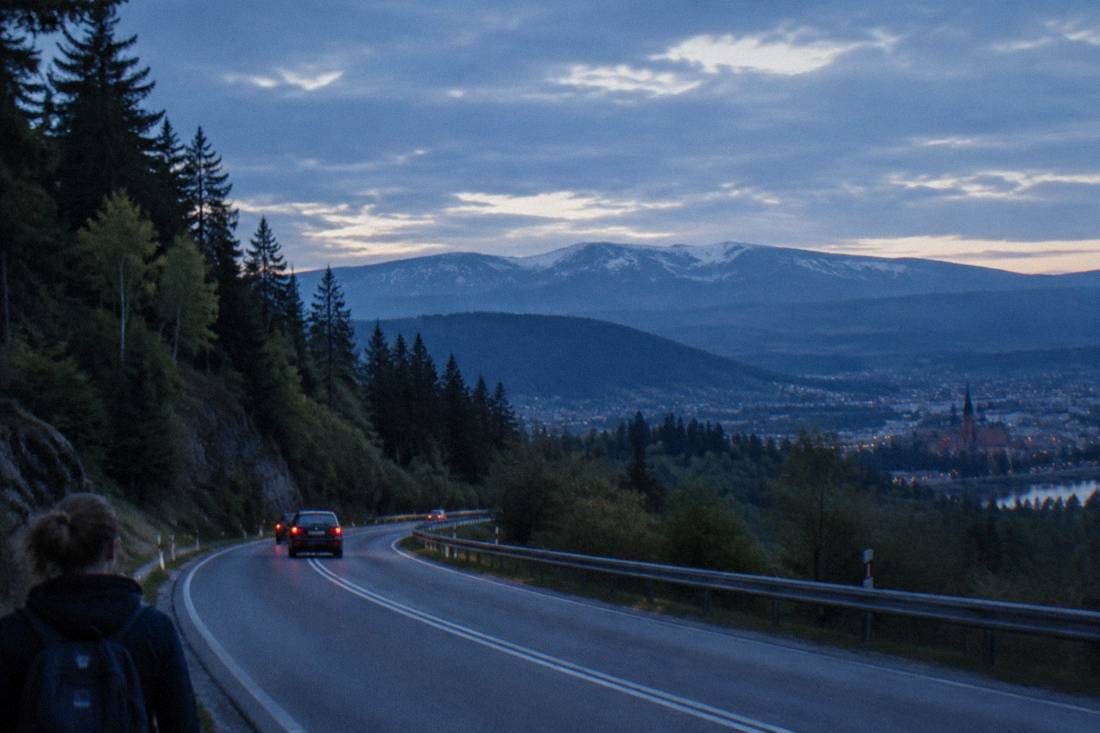
South of the city, the Giant Mountains (Karkonosze) and the Valley of Palaces are the trips where the drive itself is part of the point: winding Lower Silesian roads, palace estates, and the mountain town of Karpacz. This is the one itinerary on this page where this site's featured tour competes directly with driving yourself, because the Giant Mountains and Valley of Palaces day tour covers the loop from Wroclaw with the roads left to someone else. The Karpacz and Karkonosze guide maps the region.
When Is The Best Time Of Year To Drive Around Wroclaw?
April, May, September and October are the best driving months around Wroclaw: IMGW's 1991-2020 normals put April at 9.7C and just 31.2 mm of rain, September at 14.5C, and October at 9.6C, so the mountain and palace routes are dry and open without July's 91.4 mm peak rainfall or winter's ice risk. July and August are the warmest months, at 19.7C and 19.3C, but also among the wettest.
The pattern matters more for the day trips than for the city. Ksiaz Castle's terraces run 15 April to 30 September and the mausoleum 1 April to 15 October, which quietly defines a sweet spot: mid-April through September gives you the full castle, and adding late April to mid-October adds the mausoleum. Karkonosze hiking and the Valley of Palaces are at their best from late spring to early autumn, while December brings a different trip entirely, the Wroclaw Christmas market, which is one occasion when the car should stay parked and the city should take all your attention.
For the shoulder seasons versus high summer, the precipitation column is the tiebreaker. July carries 91.4 mm across the month against April's 31.2 mm, and mountain roads plus rain plus crowds are a worse combination than mountain roads alone. The best time to visit Wroclaw guide extends the same logic to travellers without a car.
What Do Wroclaw's Attractions Cost Once You Arrive?
Once the car is parked, Wroclaw's own attractions are inexpensive by Western European standards, and several are cheaper than a day's parking would be in cities like Amsterdam or London: the National Museum's permanent exhibitions cost 20 zl adult with free entry every Saturday, and the zoo sells adult tickets online from 69 zl against 99 zl at the gate, with the Afrykarium included in the standard ticket rather than sold separately.
The zoo's online-versus-gate gap is the single most useful saving in this list. Buying ahead shaves 30 zl off an adult ticket, and the Afrykarium, the oceanarium complex that anchors the zoo, needs no separate ticket at all.
| Wroclaw Zoo Ticket | Online (zl) | At The Gate (zl) |
|---|---|---|
| Adult, standard | from 69 | 99 |
| Reduced, standard | from 59 | 89 |
| Zoo + Safari Ride add-on, adult | 107 | - |
| Zoo + Safari Ride add-on, reduced | 93 | - |
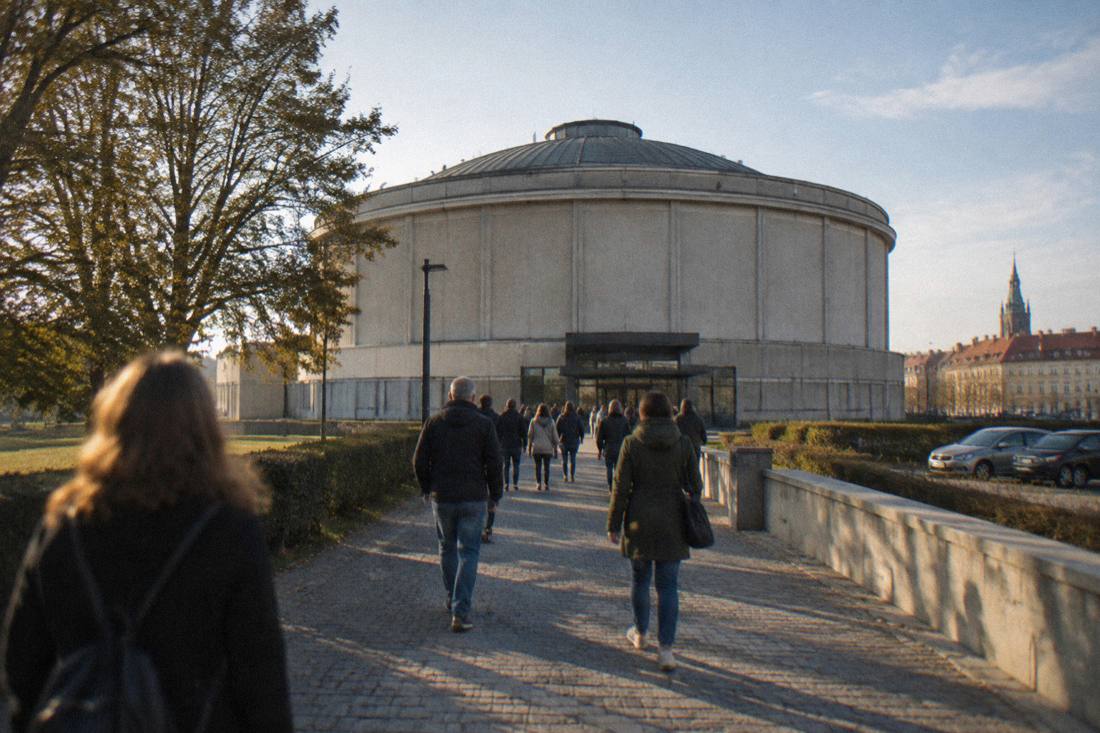
The Panorama Raclawicka, the monumental painting rotunda, is the other ticket worth planning around: adult entry is 50 zl, reduced 35 zl, family 35 zl per person, and the screening lasts 30 minutes. One Panorama ticket also covers the National Museum's permanent exhibitions, the Ethnographic Museum and the Four Domes Pavilion within three months of the visit date, which makes it effectively a multi-museum pass.
| Museum Ticket | Adult (zl) | Reduced (zl) |
|---|---|---|
| Panorama Raclawicka | 50 | 35 |
| National Museum, permanent exhibitions | 20 | 15 |
| National Museum, temporary exhibition | 10 | 8 |
| National Museum group/family per person | 10 | 10 |
The National Museum's own pricing page also lists a "Museum for a zloty" ticket at 1 zl for students and pupils under 26, and free entry to permanent exhibitions every Saturday. Those two facts together can zero out a museum day for under-26 visitors and anyone in town on a Saturday. The zoo, the Panorama and the National Museum all sit in the same eastern riverbank district, which is exactly the kind of cluster that makes the tram-plus-feet strategy unbeatable. See the Wroclaw trip cost guide for the full budget picture.
Arriving By Car From The Airport Or Another City?
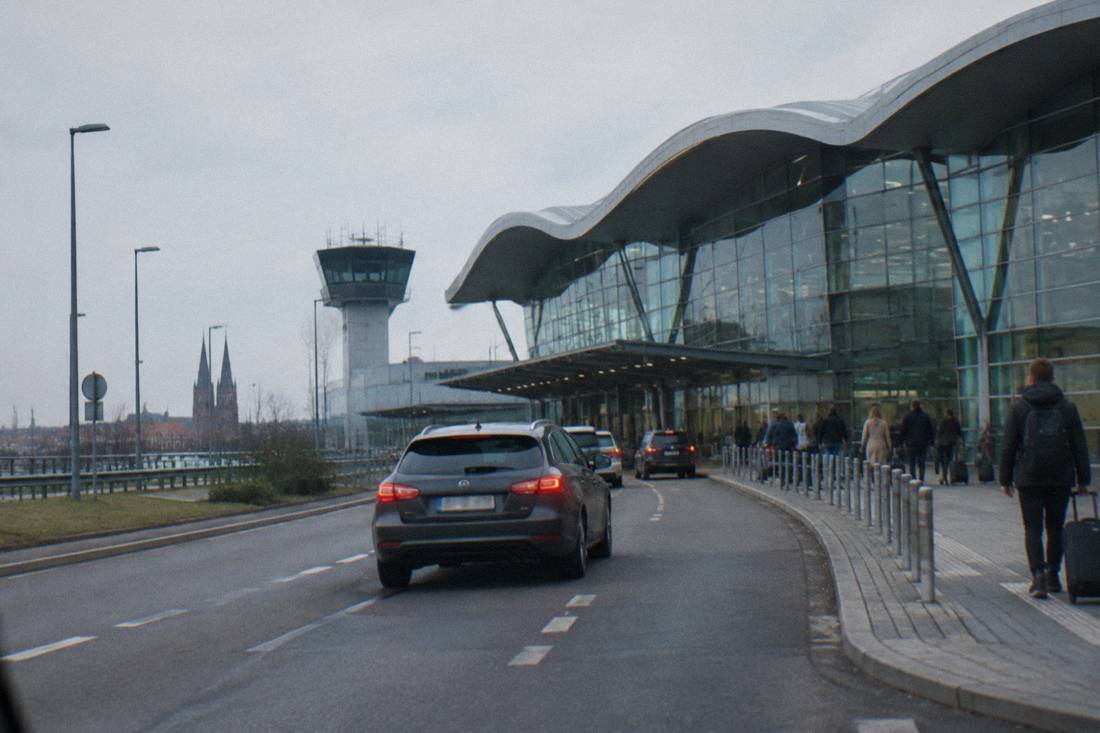
Wroclaw Airport handled 4,473,945 passengers in 2024 and is open, with its largest-ever renovation, a temporary full closure that ran 26 October to 4 December 2025, completed ahead of schedule in September 2026; visitors driving in from another Polish city such as Krakow should note that PKP Intercity also serves the Wroclaw routes, with fares and times varying by date and needing a live check at the operator's site. On four wheels, the airport sits west of the city on the main road corridor.
The airport's recent history is worth spelling out because a rumour still circulates. The 2025 closure was a planned, temporary, full suspension for a runway and operational-area renovation, and it ended early. Since reopening, 2026 has seen passenger records. Anyone who read an "airport closed" headline in late 2025 can book flights normally today.
For inter-city travel, the honest answer on rail versus road: this site will not quote a specific Wroclaw-Krakow or Wroclaw-Warsaw journey time or fare, because no stable public figure could be verified. PKP Intercity operates the routes, fares and times move with the date, and the Wroclaw to Krakow train and Wroclaw airport guides cover the live-check approach. If your Wroclaw leg is the middle of a bigger Polish road trip, the driving decisions in this page still apply: park once, spend your days in the centre without the car, and save it for the Lower Silesia loop.
What Are The Alternatives To Driving In Wroclaw?
Wroclaw's realistic alternatives to a car are its trams and buses, its walkability, guided walking and electric-car tours of the Old Town, and organized day tours for the Lower Silesia highlights; there is no all-inclusive Go City-style tourist pass sold for Wroclaw, so the practical money-saving moves are the zoo's online ticket, the museum bundle on the Panorama ticket, and free Saturdays at the National Museum.
That last point deserves emphasis because many guides get it wrong. No multi-attraction city pass currently exists for Wroclaw. The UrbanCard is a transport fare card aimed at residents, not a sightseeing pass, and no operator currently sells a Go City equivalent. Budget travellers should instead stack the verified savings listed above and lean on the free things to do in Wroclaw options, from the Rynek itself to the riverside islands.
Guided touring covers the ground a car would, minus the parking. A guided walk handles the Old Town and cathedral island in a couple of hours; an electric-cart tour covers the same core plus the riverside for anyone short on time or mobility; and the day tours reach Ksiaz, Swidnica, the Giant Mountains and further afield.
Which of the three fits depends on the day: the small-group walking tour is the deep-dive for the Old Town itself, the electric-car group tour suits anyone covering the wider city in a single window, and the Giant Mountains excursion is the one to book when the mountains, not the Market Square, are the goal.
Common Questions About Driving And Parking In Wroclaw
Do I Need A Car In Wroclaw?
No. The Old Town, Market Square, Ostrow Tumski and the main museum district are walkable or tram-distance, with MPK tickets from 4.60 zl for 15 minutes. A car only earns its keep on day trips into Lower Silesia, such as Ksiaz Castle, Swidnica or the Giant Mountains.
Can You Drive Into Wroclaw Old Town?
The streets around the Market Square are largely pedestrian-priority, narrow and old, with deliveries early in the morning. Day-to-day driving in the core is possible on the ring roads and bridges but parking close to the Rynek is restricted and paid; the common approach is to park once on the outskirts or at the hotel and use trams and feet from there.
How Much Is Parking In Wroclaw?
This site does not publish a Wroclaw parking tariff. Central on-street zones are metered and enforced, with tariffs posted at the zone boundary and on the meters themselves; read the signage where you park rather than any figure quoted in a travel article.
Is It Easy To Drive Around Wroclaw?
Yes, with two caveats: the Odra river forces bridge crossings on nearly every north-south journey, which concentrates traffic at peak times, and the near-centre grid includes one-way streets. Winter driving (January mean 0.0C) calls for normal ice caution rather than special preparation.
Is There A Tourist Pass In Wroclaw That Includes Parking Or Attractions?
No. There is currently no all-inclusive Go City-style tourist pass sold for Wroclaw. The UrbanCard is a transport-focused fare card with resident discounts and does not cover attractions. The best verified bundles are the Panorama Raclawicka ticket, which also covers the National Museum's permanent exhibitions, the Ethnographic Museum and the Four Domes Pavilion within three months, and free Saturdays at the National Museum.
What Are The Best Day Trips From Wroclaw By Car?
Ksiaz Castle near Walbrzych (castle, audioguide and terraces at 72 zl adult, terraces open 15 April to 30 September), the UNESCO Church of Peace in Swidnica (18 zl adult), and the Giant Mountains and Valley of Palaces loop toward Karpacz. All three are straightforward by road and awkward by public transport, which is exactly why a car or an organized day tour wins there.
The honest summary for Wroclaw Travel Guide readers: bring the car or hire one only for the days you leave the city, park it on the edge of the centre for everything else, and let the trams, the riverbank paths and the two hour Old Town circuit do the work the car cannot.