Table Mountains National Park (Gory Stolowe)
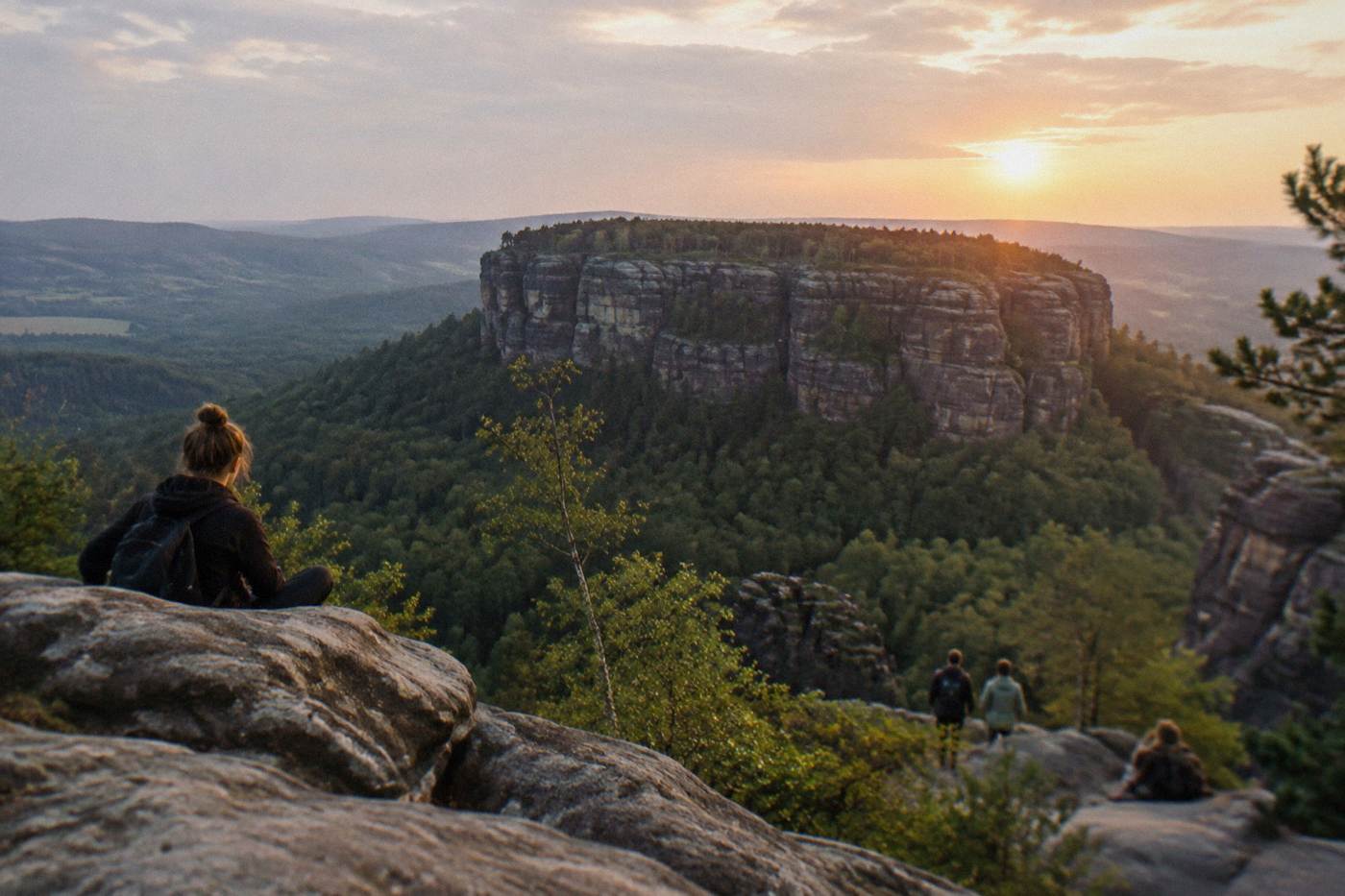
The Gory Stolowe are the odd one out among Poland's mountain ranges: a flat-topped sandstone plateau of rock labyrinths and cliff-edge viewpoints on the Czech border, close enough to Wroclaw for a single long day trip.
Short answer
The Table Mountains (Gory Stolowe) sit on Poland's Czech border in the far southwest of Lower Silesia, the same voivodeship as Wroclaw. The range is walked as short circuits from trail towns such as Karlow, Radkow and Kudowa-Zdroj, and its reliable hiking season runs from May through September, when IMGW's climate normals for the region show the warmest, driest sustained weather.
Wroclaw, the largest city in Lower Silesia in southwestern Poland, sits close to an unusual kind of mountain country. Southwest of the city, beyond Klodzko and the valley that carries its name, the land rises into the Table Mountains, or Gory Stolowe: a range that does not look like the Alps or even like the Tatras, but like a giant, cracked sandstone table whose edges have weathered into labyrinths, corridors, mushroom-shaped boulders and sheer cliff walls. This guide covers how to plan a Table Mountains National Park (Gory Stolowe) day trip from Wroclaw, what the formations are, when to go, what it costs in zloty, and how the range compares with the other big day-trip mountains of the region.
Where Are The Table Mountains (Gory Stolowe) From Wroclaw?
The Table Mountains (Gory Stolowe) lie in the far southwest of Lower Silesia, the same Dolnoslaskie voivodeship as Wroclaw, on Poland's border with the Czech Republic. They are a flat-topped sandstone range rather than a jagged one, and day trippers reach them by road through the Klodzko Valley, entering the park from trail towns such as Kudowa-Zdroj, Karlow and Radkow. The outing is a long but manageable single-day trip from the city, best started early and finished after dark.
The geography is the first thing to get straight. Wroclaw lies on the Odra river in the middle of the Silesian lowlands. The Table Mountains are the opposite kind of landscape: a plateau of horizontal sandstone beds that erosion has sliced into tabletops, ravines and freestanding rock towers. The Czech border runs along the range itself, so the same sandstone scenery continues on the other side, but the Polish national park covers the Polish flank.
Practically, the trip follows the southwest corridor out of Wroclaw toward Klodzko, the historic town that gates the Klodzko Valley, and from there into the valley's string of spa and trail towns: Polanica-Zdroj, Duszniki-Zdroj and Kudowa-Zdroj line up toward the park's southern edge, while Karlow and Radkow sit at its northern entrances. Before leaving the city, it is worth glancing at the practical basics of getting around Wroclaw, because the day starts and ends with city transport.
One warning that belongs up front: do not plan this trip around a fixed timetable copied from an older article. Regional connections in the Klodzko Valley change seasonally, and this site's fact pack deliberately carries no verified journey time between Wroclaw and the park. Check a live route planner for your own travel date, and treat the return leg, which finishes after sunset for much of the year, as the part that decides whether the day works.
What Makes The Table Mountains Different From The Karkonosze?
The Table Mountains offer plateau walking, sandstone labyrinths and forested flats, while the Karkonosze to the west offer the highest, steepest terrain of the Sudetes around the resort town of Karpacz. Gory Stolowe suits families, photographers and walkers who want dramatic rock scenery without alpine effort; the Karkonosze suits hikers chasing big climbs and long vertical days. Both sit within reach of the same Wroclaw day-trip radius, which is why travelers so often have to choose between them.
The two ranges are not interchangeable. The Karkonosze, covered in this site's Karpacz and Karkonosze day trip guide, are proper high mountains: long ascents, exposed ridges and a summit zone that can hold snow well into spring. The Gory Stolowe keep you on top of the table almost from the trailhead. The walking is on paths, stairs and short rock corridors, with the vertical relief concentrated in a few dramatic stairways and cliff-edge platforms rather than spread across hours of climbing.
| Aspect | Table Mountains (Gory Stolowe) | Karkonosze (Around Karpacz) |
|---|---|---|
| Terrain character | Flat sandstone plateau, rock labyrinths, tableland edges | High granite-and-schist mountains, long ridges |
| Walking style | Short circuits, stairs, corridors, viewpoint platforms | Sustained ascents, ridge traverses, alpine zones |
| Best suited to | Families, photographers, half-day circuits | Fit hikers, summit goals, full-day routes |
| Rock scenery | Eroded sandstone mazes and mushroom boulders | Glacial cirques and summit plateaus |
| Crowd character | Concentrated at the two famous rock sites | Spread along many trailheads |
That table is why the honest advice is usually "pick one range per day." Doing both in one outing from Wroclaw is not a real plan; it is a drive with two photo stops. The Karkonosze also pair naturally with a different mood of day trip, the Ksiaz Castle outing, because the castle sits on the same western corridor out of the city, while the Table Mountains anchor the southern one.
If you would rather have someone else handle the driving and the timing, structured tours from Wroclaw cover the region's headline destinations, and the current options look like this:
The tours above are full-day and half-day products across the region, not Table Mountains hikes, so read the itinerary notes before assuming a mountain day. In fact, the choice is between a self-planned Gory Stolowe drive and a guided day elsewhere in Lower Silesia, because the park itself is best explored on foot with a map rather than through a windshield.
How Do You Plan The Day From Wroclaw Without A Car?
A car-free plan starts with an early morning departure from Wroclaw, follows the southwest road corridor toward Klodzko and the Klodzko Valley, and finishes the journey with local connections from the valley's spa towns to the park entrances at Karlow, Radkow or Kudowa-Zdroj. Exact timetables and fares change with the seasons, so check current connections for your travel date rather than trusting any fixed published time.
The skeleton of the day is simple. Leave Wroclaw as early as you can manage. Reach the Klodzko Valley by mid-morning. Walk one or, at most, two of the park's short circuits. Eat in a trail town rather than on the trail. Reverse the whole thing with enough margin that a missed connection in the evening does not strand you in a village whose last bus has gone.
Inside Wroclaw itself, the day starts cheap. The city's official fare table, published on the municipal portal, prices a 15-minute ticket at 4.60 zl normal and 2.30 zl reduced, a 30-minute ticket at 7.00 zl and 3.50 zl, and 24-hour city tickets in a band around 15.00 zl normal and 7.50 zl reduced, with longer multi-day tiers listed above that. That covers getting from your hotel to the departure point for the intercity leg; it has nothing to do with the mountain journey itself.
| MPK Wroclaw Ticket | Normal | Reduced |
|---|---|---|
| 15-minute ticket | 4.60 zl | 2.30 zl |
| 30-minute ticket | 7.00 zl | 3.50 zl |
| 24-hour city ticket (band) | around 15.00 zl | around 7.50 zl |
For the long legs, the honest answer is that the pack behind this site does not carry a verified timetable or fare for the Wroclaw-to-Kudowa corridor, and this guide will not invent one. What is safe to say: the valley towns are served by regional road links from Wroclaw and by local connections between the towns and the park gates, and taxi or ride services fill the last stretch from a spa town to a trailhead if a local bus does not line up with your timing. Check both legs live before committing, and note that the return leg is where plans break.
If that uncertainty is the part of the day you would rather not own, an alternative is to put the driving in someone else's hands on a guided Lower Silesia product and keep the Table Mountains for a future trip when you have a car. The Project Riese and Ksiaz Castle private tour, for example, is a full day of underground and castle history rather than hiking:
Because it runs privately, the timing bends around your group rather than a fixed schedule, which suits travelers who want the region's underground history without any self-drive logistics at all.
Either way, decide the shape of the day the evening before. A Table Mountains day that starts with a debate about buses at 8 a.m. has already lost its best light.
Which Rock Formations Should You Know Before You Go?
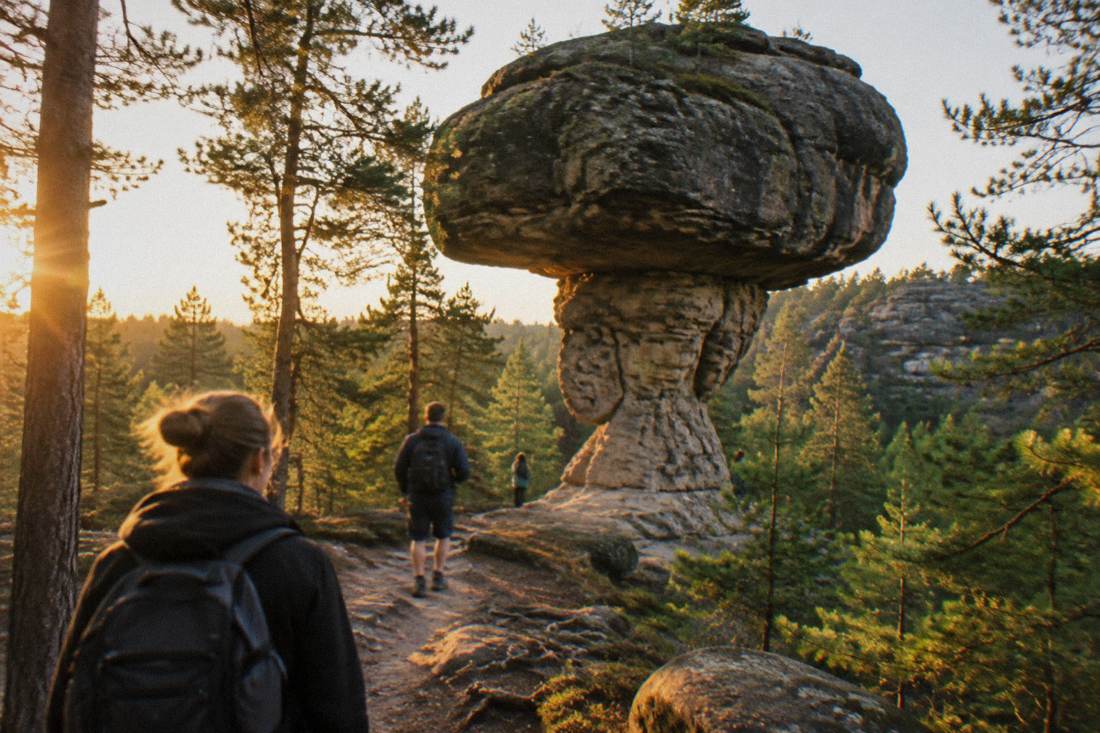
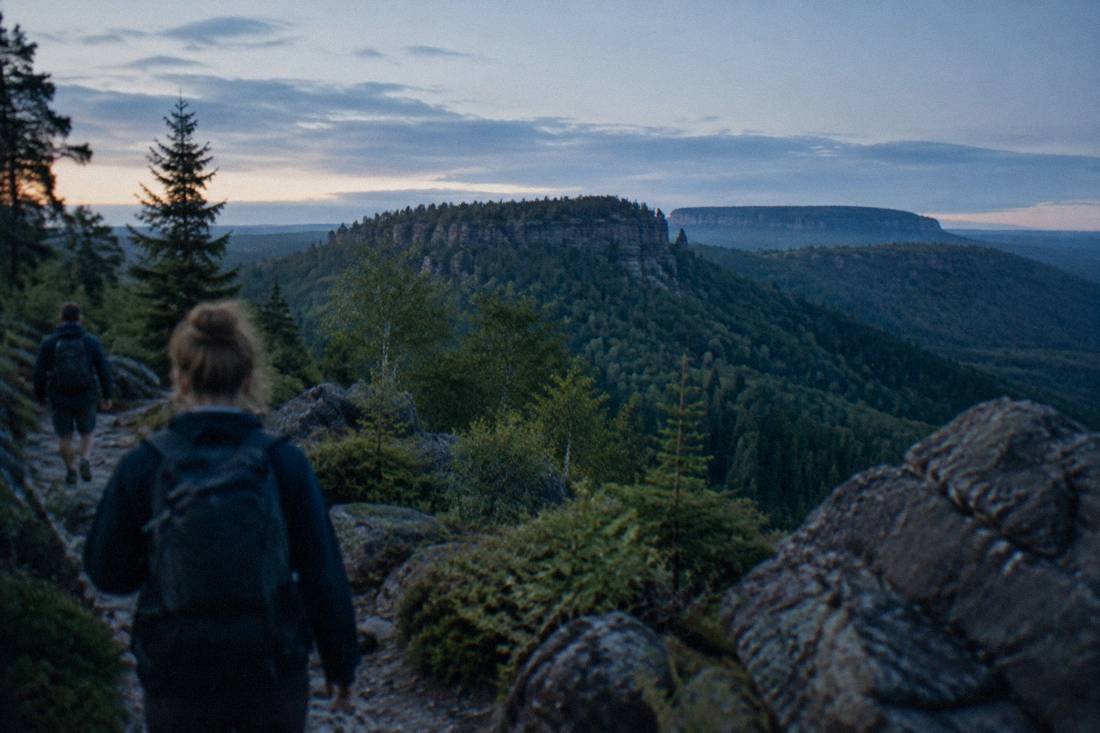
The park's signature sights are Szczeliniec Wielki, the summit plateau reached by a carved stair path and honeycombed with rock labyrinths; Bledne Skaly, an eroded maze of narrow corridors walked on a one-way loop; and Skalne Grzyby, a forested ridge line of mushroom-shaped boulders. Between them they give the range its tableland character, and each is walked as its own short circuit from a nearby trailhead town.
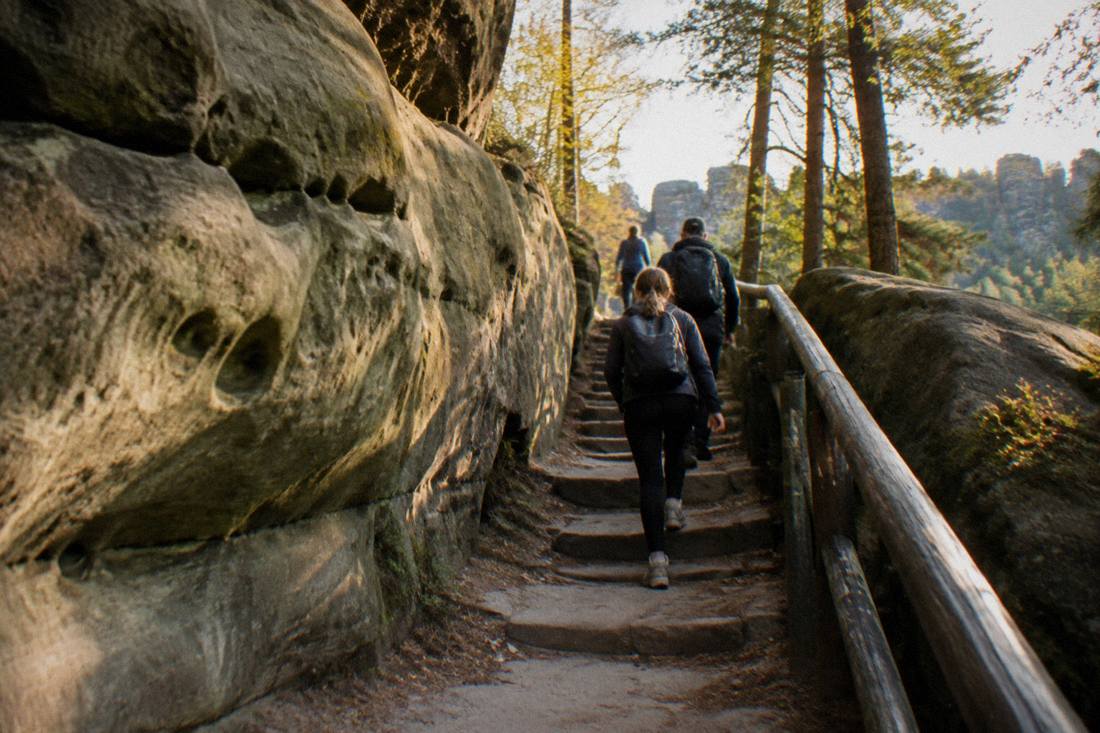
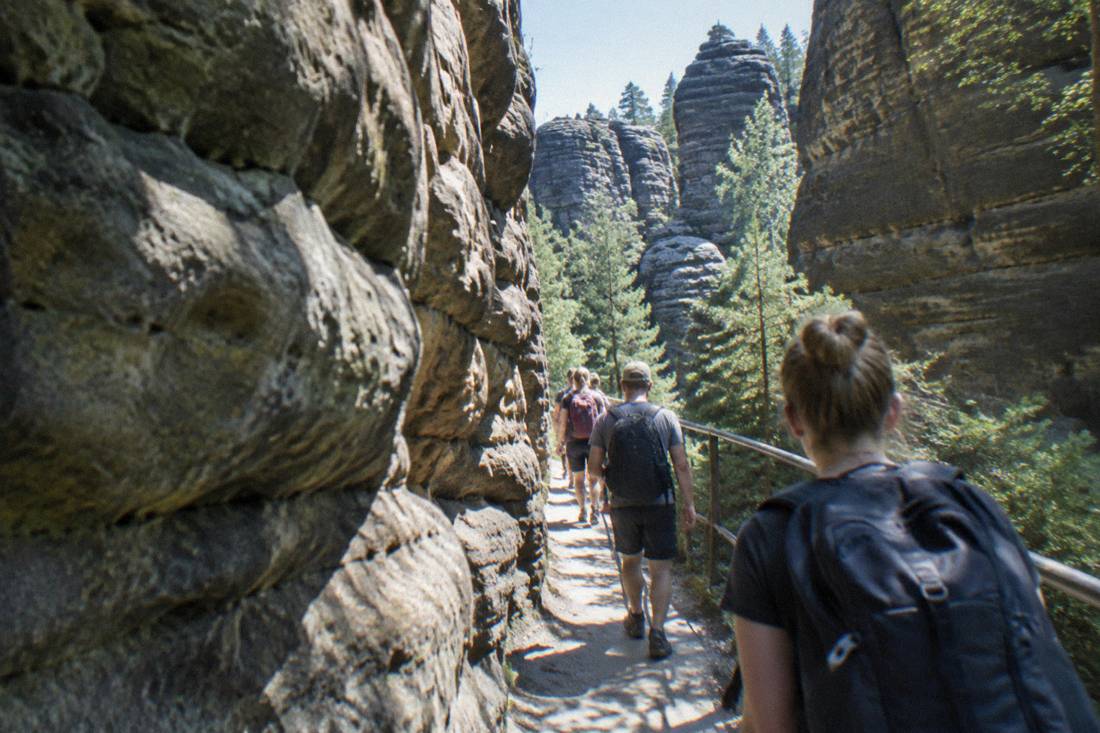
Szczeliniec Wielki is the name many visitors come for. The route climbs a stone stairway cut and built into the rock face, then releases you onto the plateau top, where a marked labyrinth threads between walls, windows and overhangs, with lookout platforms at the cliff edges. Bledne Skaly, whose name translates as the Errant Rocks, is a denser, tighter experience: a grid of corridors worn between sandstone walls, run as a one-direction circuit to keep traffic moving, and genuinely easy to get disoriented inside on a crowded day. Skalne Grzyby, the Rock Mushrooms, is the quiet third act, a forest ridge walk past freestanding boulders shaped like the fungi the name promises.
| Formation | Character | Nearest Trail Town | What To Expect |
|---|---|---|---|
| Szczeliniec Wielki | Summit plateau with historic carved stairway | Karlow | Rock labyrinth, cliff-edge viewpoints, a mountain shelter at the top |
| Bledne Skaly | Narrow eroded corridor maze on a one-way loop | Kudowa-Zdroj | Tight passages between walls, slow walking, timed entry in peak periods |
| Skalne Grzyby | Mushroom-shaped boulders along a forest ridge | Radków | Quieter forest walking, scattered rock formations, fewer crowds |
| Droga Stu Zakretow | Scenic cliff-hugging road across the plateau edge | Kudowa-Zdroj | Driven rather than walked, a famous winding approach to the park |
Two practical notes shape every visit. First, the two famous rock sites concentrate almost all the traffic, so the difference between a contemplative morning and a queue is largely a question of what time you arrive at the stairway. Second, the plateau is not a place for improvisation: the corridors are signposted, the loops are short, but the rock is worn smooth at exactly the points where everyone stops to take photographs.
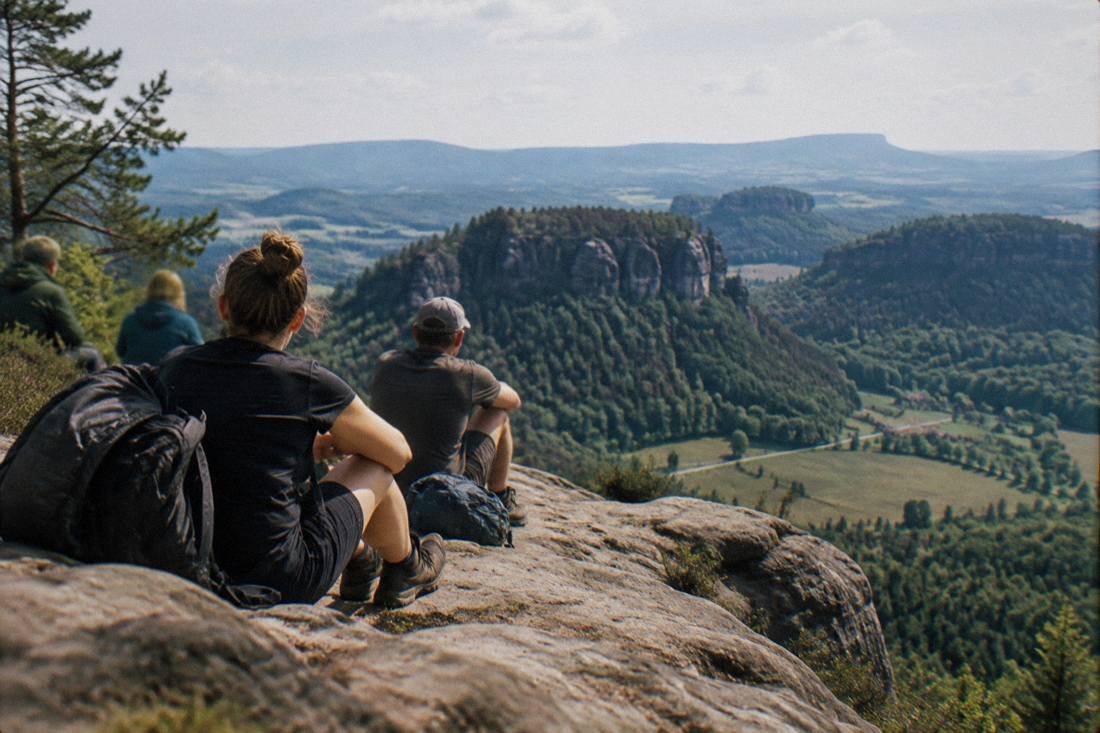
Photographers should plan around light rather than distance. The cliff-edge platforms on Szczeliniec Wielki face open country in two directions, which means an early arrival buys you both low light on the sandstone and thin crowds at the viewpoints, while a midday arrival buys flat light and company. If your day only allows one formation, choose Szczeliniec Wielki; if it allows two, walk Skalne Grzyby second, because Bledne Skaly's one-way corridor is the first place the day starts to feel long.
When Is The Best Season For Hiking The Table Mountains?
IMGW's 1991-2020 climate normals for the Wroclaw station put the coldest month at 0.0C in January and the warmest at 19.7C in July, with an annual mean of 9.7C, and the mountains run cooler and wetter than that lowland baseline. July is also the wettest month of the normals table at 91.4 mm of precipitation. The reliable hiking window runs from May through September; winter brings snow, ice on the sandstone and much shorter days.
The climate table below is the Wroclaw lowland record, not a mountain station, and it still tells you most of what matters. Spring warms from a 4.3C March mean to 14.3C in May. Summer peaks at 19.7C in July and 19.3C in August, and those two months plus June carry the heaviest precipitation of the year. Autumn cools steadily from a 14.5C September to a 4.8C November. The mountain plateau sits above the lowlands, so shave a few degrees off every figure and assume the rock is wet more often than the city is.
| Month | Mean Temp (C) | Precipitation (mm) |
|---|---|---|
| Jan | 0.0 | 28.3 |
| Feb | 1.1 | 25.6 |
| Mar | 4.3 | 35.0 |
| Apr | 9.7 | 31.2 |
| May | 14.3 | 59.6 |
| Jun | 17.7 | 65.4 |
| Jul | 19.7 | 91.4 |
| Aug | 19.3 | 59.5 |
| Sep | 14.5 | 48.4 |
| Oct | 9.6 | 37.6 |
| Nov | 4.8 | 31.4 |
| Dec | 1.1 | 27.9 |
| Annual | 9.7 mean | 541.3 total |
Read that table as a planning instrument, not trivia. May is the sweet spot for most travelers: the trees are fully out, the 59.6 mm month is drier than anything in high summer, and the cliff-edge platforms are warm enough to stand at for more than two minutes. September is the second-best call at 14.5C and 48.4 mm. July and August are the months where the 91.4 mm and 59.5 mm columns translate into afternoon thunderstorms over open plateau, which is exactly where you do not want to be caught, so on summer days the rule is to be off the tops by early afternoon.
Winter is a real option for the right traveler, but it changes the trip. The labyrinths under snow are striking, and crowds vanish, but the carved stairways and smoothed rock hold ice, and the November-through-February light window is short. If you go in that season, traction on your shoes matters more than anything else in your pack.
What Does A Day Trip To Gory Stolowe Cost?
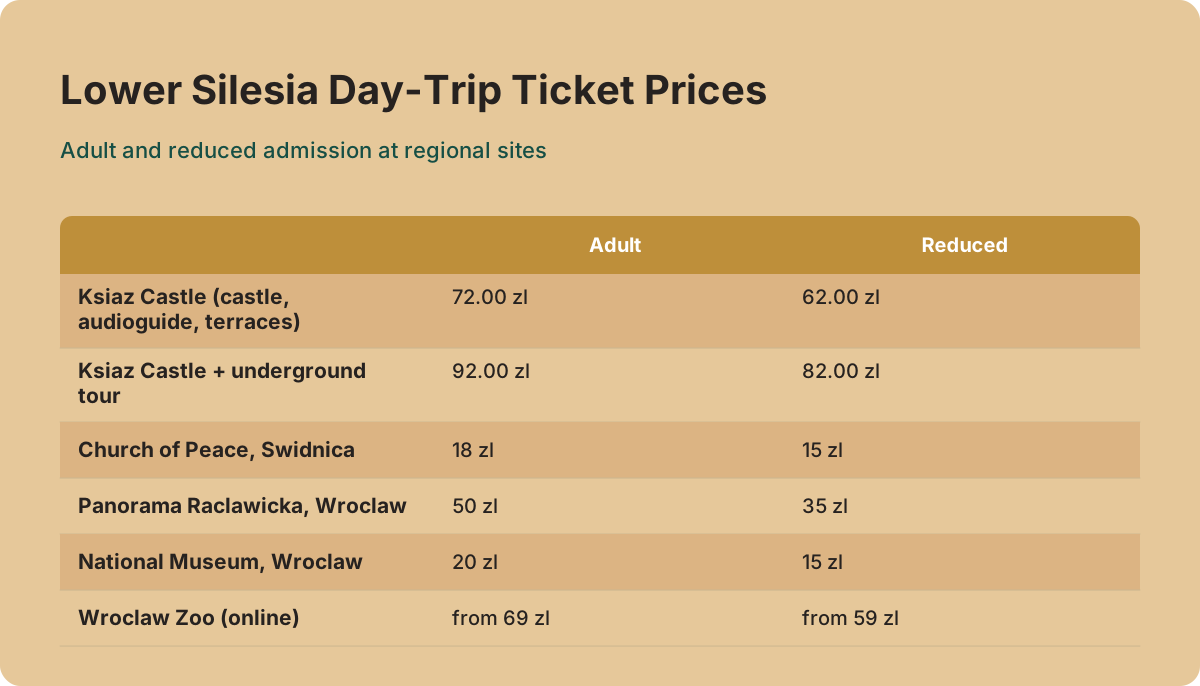
Costs run in zloty, Poland's currency, and the figures in this site's fact pack sit at the region's other day-trip sites: Ksiaz Castle's own cennik lists the castle with audioguide and terraces at 72.00 zl adult and 62.00 zl reduced, the Church of Peace in Swidnica charges 18 zl adult and 15 zl reduced, and back in Wroclaw the zoo starts at 69 zl online and 99 zl at the gate.
The park's own entry tariff is published separately; confirm current prices at the gate before you go.
The honest structure of a Table Mountains budget has three parts: getting there, eating, and the park's own charges. Transport and food are the flexible parts. The park's tariff, like every protected-area price list in the region, is set by the site itself and shifts between seasons, so this guide will not print a figure for it; check the current price when you arrive, or on the park's published tariff before you leave Wroclaw.
What can be verified is the price of everything else you might bolt onto a Lower Silesia day-trip plan, and those figures are worth having in one place, because the surrounding itinerary can cost more than the hike itself:
| Site | Adult | Reduced | Notes From The Source |
|---|---|---|---|
| Ksiaz Castle (castle, audioguide, terraces) | 72.00 zl | 62.00 zl | Terraces open only 15 Apr-30 Sep |
| Ksiaz Castle + underground tour | 92.00 zl | 82.00 zl | Adds the underground route to the base ticket |
| Church of Peace, Swidnica | 18 zl | 15 zl | Family ticket 45 zl, children 10 zl |
| Panorama Raclawicka, Wroclaw | 50 zl | 35 zl | Ticket also covers three more museums within 3 months |
| National Museum, Wroclaw | 20 zl | 15 zl | Free entry to permanent exhibitions every Saturday |
| Wroclaw Zoo | from 69 zl online | from 59 zl online | Gate price 99 zl adult, 89 zl reduced, Afrykarium included |
Two of those rows reward attention. The Panorama Raclawicka ticket is quietly one of the best value buys in Polish culture, because it bundles the National Museum's permanent exhibitions, the Ethnographic Museum and the Four Domes Pavilion into a 50 zl adult price valid for three months from your visit. And the zoo's online-versus-gate spread is large enough that buying ahead is not a marginal saving but a different product price, with the Afrykarium ocean hall included in both.
Food in the trail towns is simple spa-town fare, pierogi and soups, priced for Polish weekenders rather than foreign tourists. If you want the Wroclaw food context before or after the trip, the best restaurants in Wroclaw guide covers the city end of the day, and the milk bar primer explains the cheap-and-honest end of Polish eating, which also exists in the valley towns.
Can You Combine The Table Mountains With Other Lower Silesia Trips?
The Table Mountains sit on the same southwest axis as most of Lower Silesia's headline day trips, so they combine naturally with Ksiaz Castle, the Church of Peace in Swidnica, the Project Riese complex at Osowka, and the Karkonosze around Karpacz, but not all in one day. Ambitious travelers split the region across two or three days; a single day from Wroclaw is best spent on one destination done properly rather than three rushed.
The honest geography is that Lower Silesia is a day-trip region, not a sights-because-they-are-close region. Ksiaz Castle anchors the western corridor, with the castle's All Day Ticket at 104.00 zl adult covering its interiors, terraces, underground, Palm House, stud farm and mausoleum for travelers who want the full site. The Church of Peace in Swidnica, a UNESCO World Heritage timber giant from the 2001 inscription year of the Churches of Peace listing, sits south of the castle on the same axis. The Project Riese complex at Osowka adds the region's darker underground chapter. And the Karpacz and Karkonosze trip covers the high-mountain option to the west.
A two-day plan writes itself: mountains one day, castle-and-peace-church the next, with a night in a Klodzko Valley spa town between them. A three-day plan adds Osowka or a slower Wroclaw day at the market square and the dwarf hunt. Trying to compress all of it into one day produces a vacation-shaped drive rather than a trip, which is the single most common mistake visitors make in this voivodeship.
If you prefer the region through a guide rather than a steering wheel, a full-day product that samples several Lower Silesia highlights in one itinerary is the Jewels of Lower Silesia tour:
Not every Wroclaw day trip is about scenery or castles, either. The other end of the region's range is history tourism of the heaviest kind, and the full-day guided Auschwitz-Birkenau tour from Wroclaw is the book's other cover: a solemn, structured day that has nothing in common with a mountain plateau and everything to do with why so many travelers route through Lower Silesia in the first place. It runs as a long day from the city, and travelers who want it should plan it as its own dedicated date, not as a bolt-on. Check availability if that day belongs in your itinerary.
What Should You Know Before You Hike In Gory Stolowe?
Hiking here is non-technical but still mountain country: wear proper shoes, carry water, start early, and treat the sandstone labyrinths as slow, signposted walking rather than scrambling. Weather in the Sudetes changes faster than Wroclaw's lowland climate normals suggest, and July's 91.4 mm in the normals table is a standing reminder that the warmest month is also the wettest, so a rain layer belongs with you even on a blue-sky morning.
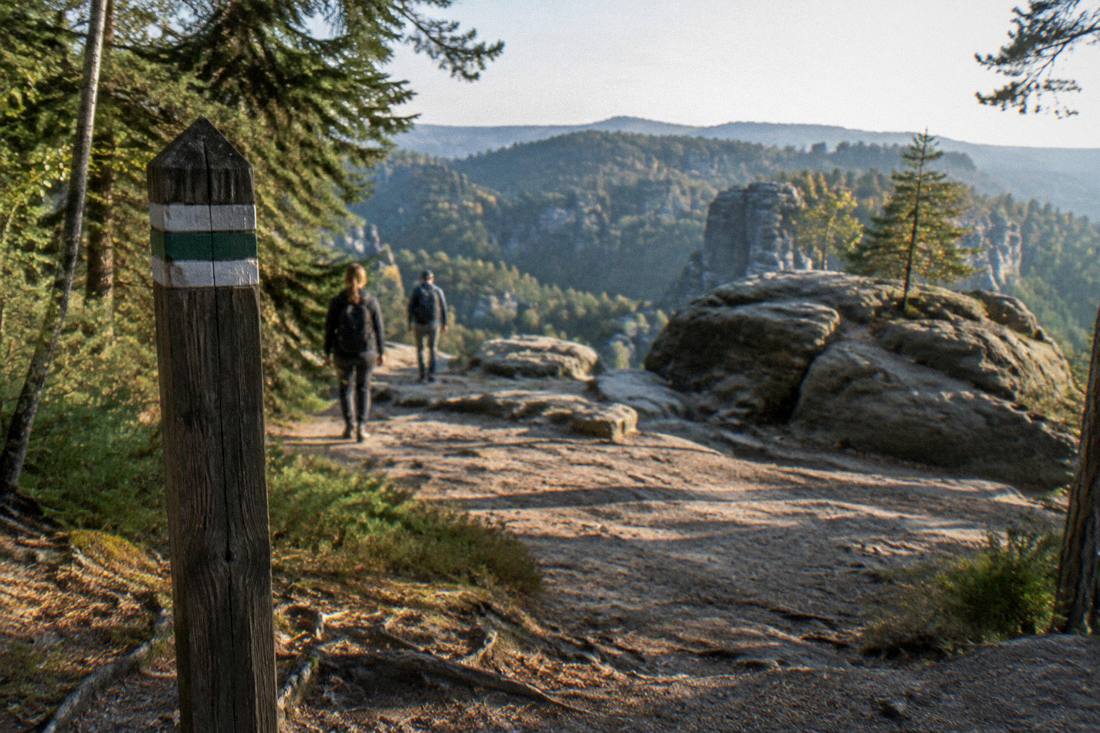
The safety picture is straightforward but worth spelling out. The sandstone is polished smooth on stairs, thresholds and viewpoint edges, and it is at its most dangerous exactly when it looks most photogenic, in the drizzle that follows a summer shower. Good tread matters more than anything else in your kit. The corridors of Bledne Skaly constrict in places, so go at the pace of the slowest person in your group rather than pushing past. And the cliff-edge platforms are exactly that, edges: they are built and maintained for viewing, not for perching.
| Season | Normals Range (Mean C) | What The Table Says | What To Pack |
|---|---|---|---|
| Spring, Mar-May | 4.3 to 14.3 | Warming, May still wet at 59.6 mm | Layers, waterproof, water |
| Summer, Jun-Aug | 17.7 to 19.7 | Warmest and wettest quarter, July 91.4 mm | Sun protection, rain shell, extra water |
| Autumn, Sep-Nov | 4.8 to 14.5 | Cooling steadily, mist on the plateau | Warm layer, grippy shoes, headlamp |
| Winter, Dec-Feb | 0.0 to 1.1 | Cold, short days, ice on smoothed rock | Boots, traction, early turnaround time |
Three habits separate a good day from a mediocre one. Start at the most famous formation first, before the midday crowds thicken, and save the quiet forest stretches for the afternoon. Keep the whole group's turnaround time in your head, especially in the seasons when the return connections are thin. And carry more water than the map's distances suggest, because the plateau is exposed, the summer mean is 17.7C to 19.7C with real heat spikes, and the trail-town shops are not on the trail.
Back in Wroclaw at the end of the day, the city is generous with recovery. The Ostrow Tumski cathedral island walk is flat and slow, the Old Town absorbs tired legs well, and in the warmer months a gentler way to loosen up is a guided city ride; the English-language bike tour is the cycling option that fits the day-after-a-hike energy level:
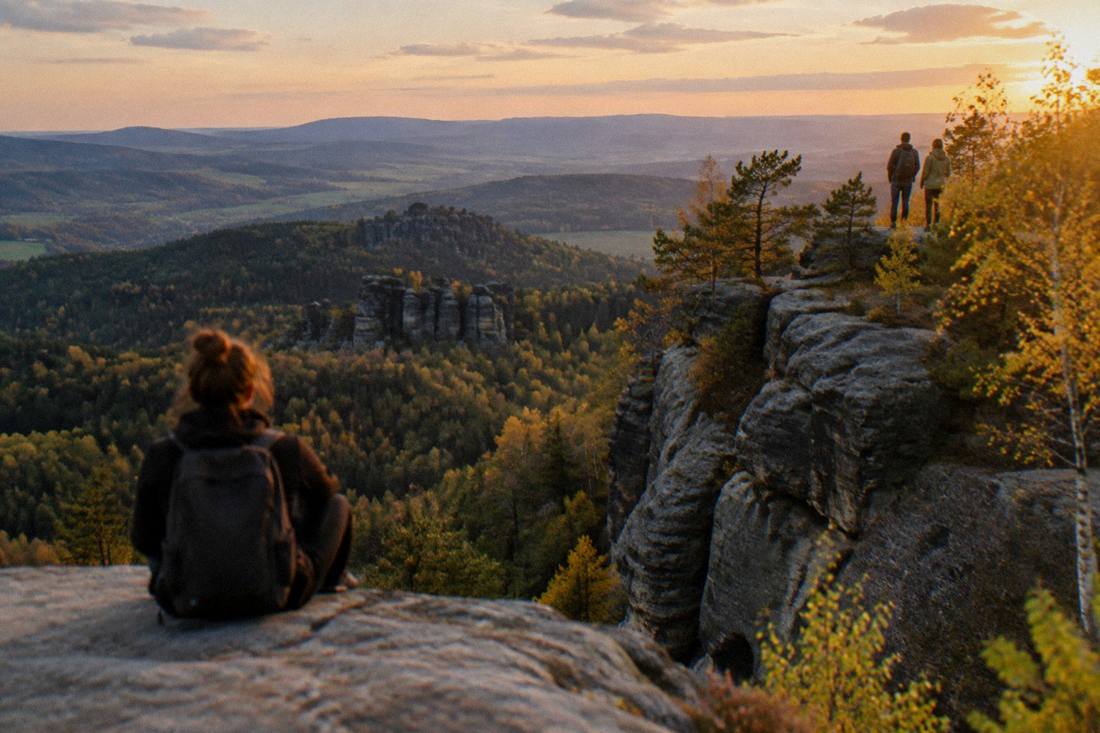
For the trip home, the same advice as the way out applies in reverse: verify the last connection from your trail town before you commit to a sunset at the viewpoint. The valley is beautiful in the evening and unforgiving to travelers who assumed one more bus.
If a structured day sounds better than self-planning after all, these are the current Wroclaw products worth comparing:
Common Questions About The Table Mountains (Gory Stolowe)
The Table Mountains are a Polish national park on the Czech border, walked as short circuits from Karlow, Radkow and Kudowa-Zdroj, best visited from May through September, and paid for in zloty with prices confirmed at the gate. The questions below are the ones travelers actually ask before committing the day.
Are The Table Mountains In Poland Or The Czech Republic?
The Polish national park covers the Polish side of the range in Lower Silesia. The border with the Czech Republic runs along the range itself, and the same sandstone scenery continues on the Czech side, but the formations named in this guide, Szczeliniec Wielki, Bledne Skaly and Skalne Grzyby, are all on the Polish side of the line.
Can You Visit Gory Stolowe As A Day Trip From Wroclaw?
Yes, and that is how almost everyone does it. It is a long day with an early start, and the return leg can finish after dark for much of the year, but the walking circuits themselves are short. The main planning risk is not the hiking but the connections between the trail towns and the park gates, so verify both legs for your travel date rather than relying on a fixed timetable.
Is The Walking Suitable For Children And Casual Hikers?
Yes, with supervision. The circuits are short, non-technical and signposted, which is exactly why the range suits families in a way the Karkonosze does not. The caveats are the polished stone stairs, which are slippery when wet, and the narrow one-way corridors of Bledne Skaly, which move at the pace of the crowd inside them.
Do You Pay To Enter The Rock Sites?
The park publishes its own tariff and its most visited rock sites are fee-charged, with prices changing between seasons. This site's fact pack does not carry the current figure, so check the posted tariff at the gate or the park's official price list before you go, and budget in zloty.
What Should I Wear On The Sandstone Trails?
Shoes with real tread matter more than anything else, because the stairs and thresholds are polished smooth and hold moisture after rain. Beyond that, dress for the season against the IMGW normals in this guide: sun protection and a rain shell in summer, layers and grippy shoes in autumn, and boots with traction in winter, when the smoothed rock holds ice.
When Is The Worst Time To Go?
Late autumn through winter is the hardest window: the November mean sits at 4.8C on the lowland record, the days are short, and ice forms on exactly the stone surfaces everyone has to cross. Midsummer afternoons are the second problem, when July's 91.4 mm of rain in the normals table arrives as storms over an exposed plateau. May and September are this site's top recommendation for the shoulder season.
The Table Mountains reward exactly the kind of traveler who plans: an early start, one honest formation walked properly, a meal in a spa town, and a return leg checked before the light goes. Wroclaw Travel Guide covers the rest of the Lower Silesia day-trip network, from Ksiaz Castle to the Karkonosze, for the days you spend closer to the city.