Where Should I Go For My First Time In Poland?
Wroclaw, in southwestern Poland, is one of the easiest first stops in Poland: compact, affordable and full of dwarfs, islands and market squares, with day trips to castles and mountains.
Poland rewards first-time visitors with a mix that is hard to find elsewhere: medieval market squares, an honest price level in the local zloty, and cities small enough to see on foot. If the question is where to begin, this guide argues for Wroclaw, the largest city in Lower Silesia (Dolnoslaskie voivodeship) in southwestern Poland, home to 672,601 residents as of 31 December 2025 according to GUS, the Polish statistics office. It sits on the Odra river, spread across a dozen islands, with an old town compact enough that a first visitor can cover the highlights between breakfast and dinner without ever needing a car.
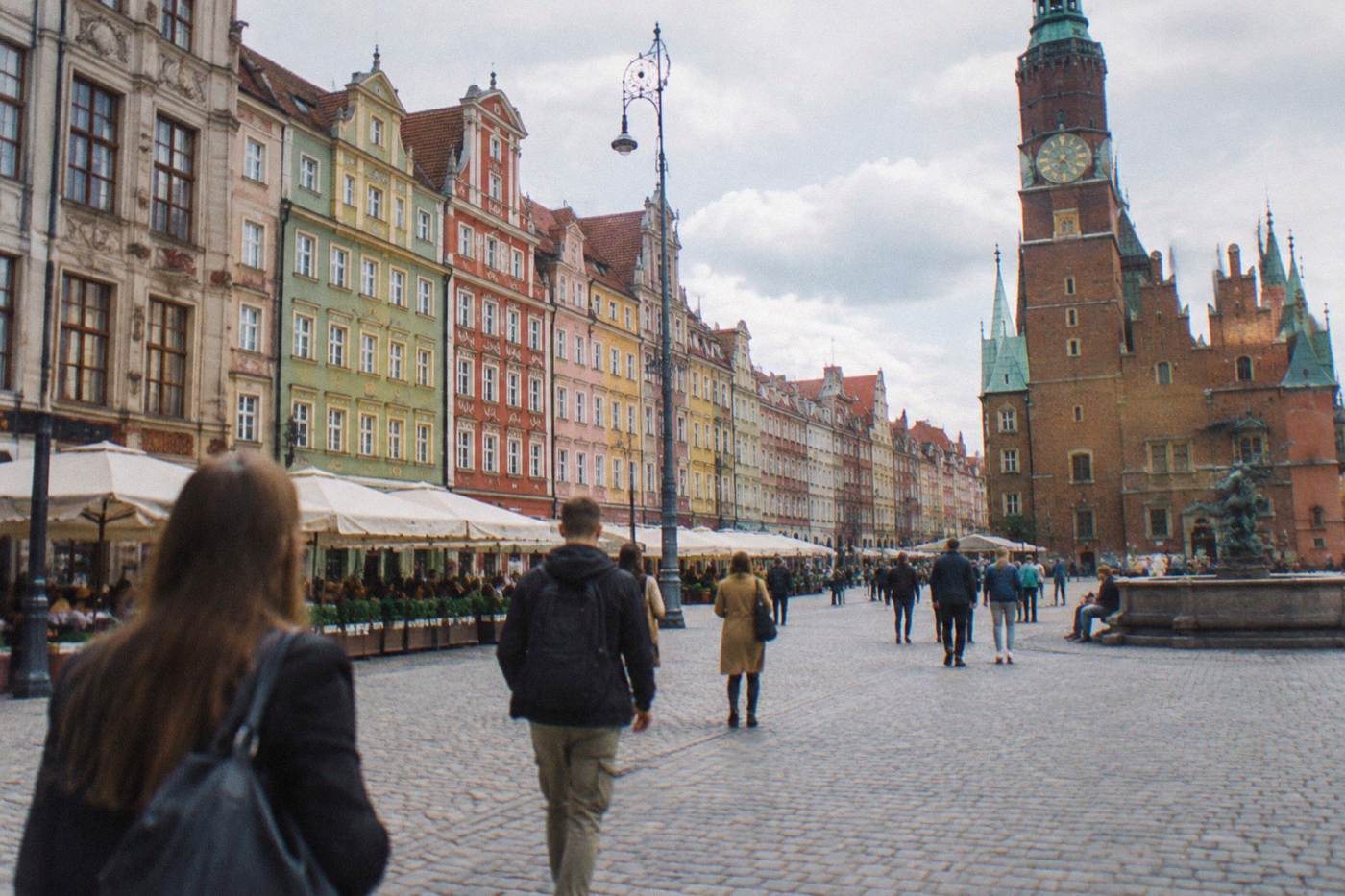
The short version: start in Wroclaw for three or four days, add one day trip, and save Warsaw and Krakow for a second trip. The longer version, with costs, timing and the reasons behind that order, follows below.
Where Should I Go For My First Time In Poland?
Start in Wroclaw, in southwestern Poland, for three to four days, then add a day trip before considering any other city. Wroclaw gives a first-time visitor a compact old town, cathedral islands, dwarf statues to hunt, a UNESCO-listed modernist hall, and easy day trips to Ksiaz Castle and the Church of Peace in Swidnica, all in one low-stress base. Krakow and Warsaw are bigger, and a first trip is easier in a city you can cross on foot.
Wroclaw's case as a first stop is practical rather than romantic. The population figure above comes from GUS's 31 December 2025 data, and the same source makes clear that Krakow is the larger city at 816,614 residents, with a larger main square too. That size difference works in Wroclaw's favor for a first visit: the Rynek, Ostrow Tumski, the university quarter and the river islands sit within a walkable loop, so a newcomer spends the trip seeing things rather than riding trams between them.
The city also answers the classic first-visit anxieties. Is it safe to walk at night? Largely yes, and the is it safe to walk in Wroclaw at night question is worth reading for the honest caveats. Is one day enough? Not really, and the how many days in Wroclaw is enough answer explains why. Wondering why Wroclaw is famous at all? Dwarfs, the Panorama Raclawicka, islands and a European Capital of Culture year in 2016 are the honest answers, not a superlative about squares or vegan food.
A short private walk is a sensible first-morning move, and the Wroclaw Old Town Private Tour is built exactly for that orientation hour. The tour's own listing on this site carries its price and current rating, so check those there rather than trusting any number quoted secondhand: Check availability.
Why Wroclaw Beats Warsaw Or Krakow For A First Landing
For a first trip, Wroclaw is easier to learn than Warsaw or Krakow because everything a newcomer wants sits inside one walkable center, the cost level is set in zloty rather than euro, and the airport is close to the center. Warsaw demands a first-time visitor master trams and districts; Krakow is bigger and busier; Wroclaw's old town, islands and market square form a loop you can walk in a morning.
The comparison is not about beauty rankings. Krakow's Rynek Glowny, at roughly 4 hectares, is larger than Wroclaw's Rynek at roughly 3.6 to 3.8 hectares, and Krakow's population is bigger too. The often-repeated claim that Wroclaw has the second-largest market square in Europe is not something a visitor should rely on, because this site could not confirm it against a primary source. What Wroclaw offers instead is density: the Market Square, Ostrow Tumski, the botanical garden, Slodowa Island and the National Museum cluster around one another.
Practical costs stay in the local currency. Poland uses the zloty (PLN), not the euro, though it is in the EU and the Schengen area, so border formalities are minimal for most European visitors. A 15-minute MPK tram or bus ticket in Wroclaw costs 4.60 zl at the normal rate, or 2.30 zl reduced, per the city's official fare page, which tells you most of what you need to know about the cost of getting around.
For orientation, a guided option does the first-day work for you, and the verified options below range from a short private walk to full day trips into Lower Silesia. Comparing them side by side is faster than piecing together listings:
Whichever you choose, book the walk for day one. The rest of the trip goes better once the geography clicks.
What Should You Actually See On A First Wroclaw Trip?
A first visit to Wroclaw should cover the Market Square, Ostrow Tumski and the cathedral, the dwarf statues scattered across the center, the Panorama Raclawicka, and Centennial Hall with the Japanese Garden and zoo beyond it, in roughly that order. The Panorama costs 50 zl for an adult and the 30-minute screening ticket also covers several National Museum branches for three months, which makes it a natural anchor.
The Panorama detail is the one many visitors miss. The museum's own site states the adult ticket is 50 zl, reduced 35 zl, and that the same ticket admits you to the National Museum's permanent exhibitions, the Ethnographic Museum and the Four Domes Pavilion within three months. Few visitors use that window; almost everyone should, because the National Museum's standalone permanent ticket is 20 zl adult and 15 zl reduced on its own, and its own page notes free entry to permanent exhibitions every Saturday. More of these guides are collected on Wroclaw Travel Guide.
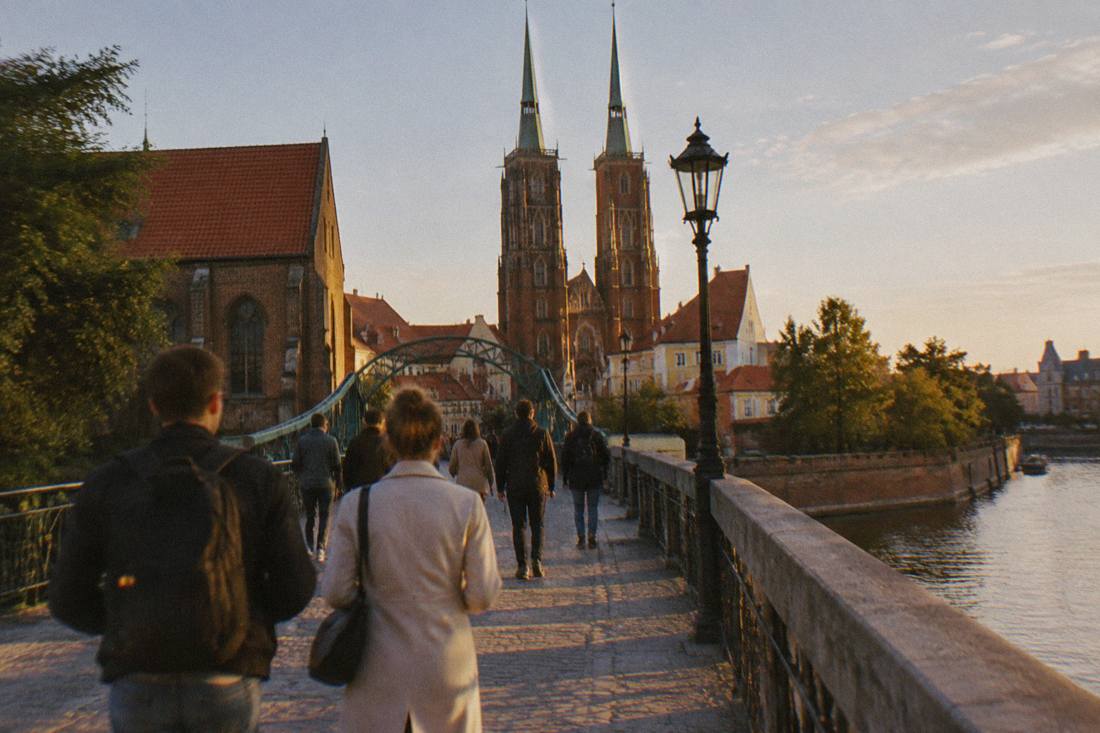
Here is a realistic first-visit budget for the headline sights, using only the official prices verified on each institution's own page:
| Sight | Adult price | Reduced | Worth knowing |
|---|---|---|---|
| Panorama Raclawicka | 50 zl | 35 zl | 30-minute screening; ticket covers 4 museums for 3 months |
| National Museum (permanent) | 20 zl | 15 zl | Free entry to permanent exhibitions on Saturdays |
| Wroclaw Zoo | from 69 zl online, 99 zl at gate | from 59 zl online, 89 zl gate | Afrykarium included, never a separate ticket |
| MPK 15-minute transit ticket | 4.60 zl | 2.30 zl | Base short-hop fare on the city's official fare page |
Centennial Hall, inscribed by UNESCO in 2006, was designed by architect Max Berg and built between 1911 and 1913, with a capacity of up to 10,000, per the UNESCO listing. The zoo next door, with the Afrykarium included in the standard ticket, sits close enough to combine. Families weighing this against other Polish zoos can read the best zoo in Poland answer for the honest comparison rather than a ranking invented here.
For timing the whole trip, the best time to visit Wroclaw guide carries the detail. The headline is simple: IMGW's 1991-2020 climate normals for the Wroclaw station show July as the warmest month at a 19.7C mean and January the coldest at 0.0C, with an annual mean of 9.7C. May through September is the comfortable window; December has its own pull thanks to the Christmas market, and the is Wroclaw worth visiting at Christmas answer covers that trade-off honestly.
If the private old town walk fits your first morning, it is worth locking in early: the busiest summer dates sell out ahead of time, and a first-day orientation is the whole point of booking it.
Should You Add A Day Trip On A First Visit?
Yes, one day trip belongs on a first Wroclaw trip, and Lower Silesia makes the choice easy: Ksiaz Castle, the Church of Peace in Swidnica, or the Project Riese underground complex near Osowka are all within range of a long day. Ksiaz Castle's own tariff lists a castle, audioguide and terraces ticket at 72 zl adult and 62 zl reduced, with the terraces open only from 15 April to 30 September.
The Church of Peace in Swidnica charges 18 zl for an adult and 15 zl reduced, per its own site, and it has been UNESCO-listed since 2001 as part of the Churches of Peace in Jawor and Swidnica. Ksiaz is owned by the Walbrzych municipality and run by a municipal company, a detail covered in the who owns Ksiaz Castle now answer, and reached commonly by regional train to Walbrzych plus a bus or taxi connection, though no specific timetable figure belongs on this page.
Guided day trips remove the train-and-bus puzzle, which matters on a first trip when you would rather not decipher a regional timetable in Polish. These are the three verified options worth weighing for a first visit, from a short city walk to a private castle-and-tunnels day:
The two UNESCO churches can also be taken on their own structured half day, which suits visitors who would rather not spend the whole trip on a coach:
If castles and underground tunnels appeal more, the private round trip to Project Riese is the other natural first-trip choice, and its own listing carries the current price and rating.
What About The Rest Of Poland On Trip Two?
Save Krakow, Warsaw and the Baltic coast for a second trip, and reach them from Wroclaw by PKP Intercity rail, which operates the routes with fares and times that vary by date and must be checked live. A first trip that tries to cover Warsaw, Krakow and Wroclaw in one week ends as a blur of train platforms. Poland rewards returning; Wroclaw rewards lingering.
PKP Intercity runs the Warsaw and Krakow connections from Wroclaw, but this site does not publish a specific journey time or fare for either route, because no stable official figure was verified. Check the operator's own booking engine for your date. The Wroclaw to Krakow train guide covers the practical planning, and the Wroclaw vs Krakow comparison sets out the honest differences in size, cost and feel between the two cities.
For a sense of what you are deferring, the which is the prettiest Polish city answer makes the case without inventing a winner the sources do not support. A second-trip loop of Krakow, the Wieliczka Salt Mine and Warsaw is the classic follow-on; a third can take the mountains from Karpacz or the coast from Gdansk.
Common Questions About A First Trip To Poland
Where should I go for my first time in Poland?
Start in Wroclaw in southwestern Poland for three to four days, with one day trip to Ksiaz Castle or the Church of Peace in Swidnica. The old town, cathedral islands, dwarfs and the Panorama Raclawicka sit inside one walkable center, which makes a first visit low-stress compared with bigger cities.
Is Wroclaw a good first city in Poland?
Yes. It is compact, prices are in zloty, the headline sights are walkable, and the verified entry prices are modest: the National Museum's permanent exhibitions cost 20 zl adult and are free on Saturdays, and the Panorama Raclawicka is 50 zl adult with a 30-minute screening.
How many days do you need in Wroclaw on a first trip?
Three to four days. Two can cover the Market Square, Ostrow Tumski and the dwarfs; a fourth buys the Panorama, Centennial Hall and the zoo without rushing, and a day trip needs one more.
What should you not miss near Wroclaw?
Ksiaz Castle, whose own tariff prices the castle, audioguide and terraces at 72 zl adult and 62 zl reduced, and the UNESCO-listed Church of Peace in Swidnica at 18 zl adult, 15 zl reduced. The terraces at Ksiaz open only from 15 April to 30 September, so time the trip accordingly.
Do you need a tour guide for a first visit?
A guided first-morning walk speeds up the geography lesson, and a guided day trip removes the regional-train puzzle for Ksiaz Castle and Swidnica. Beyond that, Wroclaw is easy to explore alone with this site's guides.
The honest summary for a first-timer: land in Wroclaw, walk until the city makes sense, use the museum ticket's three-month window, take one day trip into Lower Silesia, and leave the rest of Poland for the return visit you will probably be planning on the flight home.