Wroclaw Opera House
The Wroclaw Opera House anchors the cultural life of Wroclaw, the largest city in Lower Silesia in southwestern Poland. This guide covers how to reach it by tram, what an opera day costs in zloty, the city's climate month by month, and the museums, venues and day trips that pair well with an evening performance.
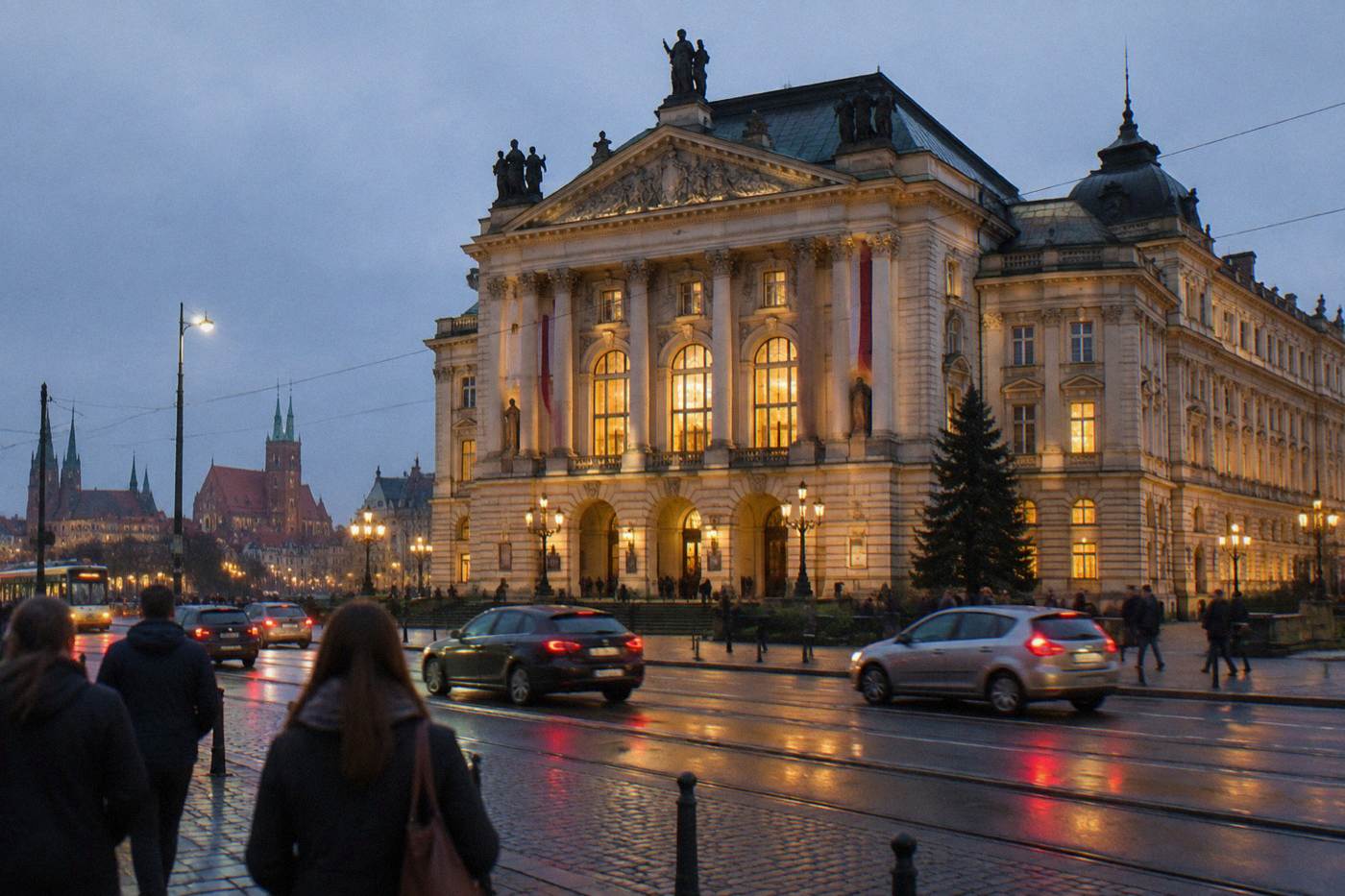
Short answer
The Wroclaw Opera House stands in central Wroclaw, Poland, reachable by MPK tram or bus with a ticket at 4.60 zl (2.30 zl reduced). Performance prices vary by production and seat, so check the venue's box office. Poland uses the zloty, never the euro.
The Wroclaw Opera House sits at the heart of cultural life in Wroclaw, the largest city in Lower Silesia (Dolnoslaskie voivodeship), in southwestern Poland, a city of 672,601 people spread across the islands and bends of the Odra river. An evening here is one of the most atmospheric ways to experience the city: a performance in a proper central-European theatre, followed by a walk through lamplit streets that a first-time visitor rarely forgets. This guide, from the editorial desk behind Wroclaw Travel Guide, lays out how to reach the venue, what a culture day around it costs, and what else belongs on the itinerary.
Every figure below comes from a named primary source: the city's own transport price page, the museums' own tariff pages, IMGW's climate normals for the Wroclaw station, and the castle and church cenniks for the day-trip section. Where a price or a schedule is not in those sources, this page says so plainly instead of guessing. That is the honest way to plan a trip, and it is the only way this site works.
Where Is The Wroclaw Opera House And How Do You Reach It By Public Transport?
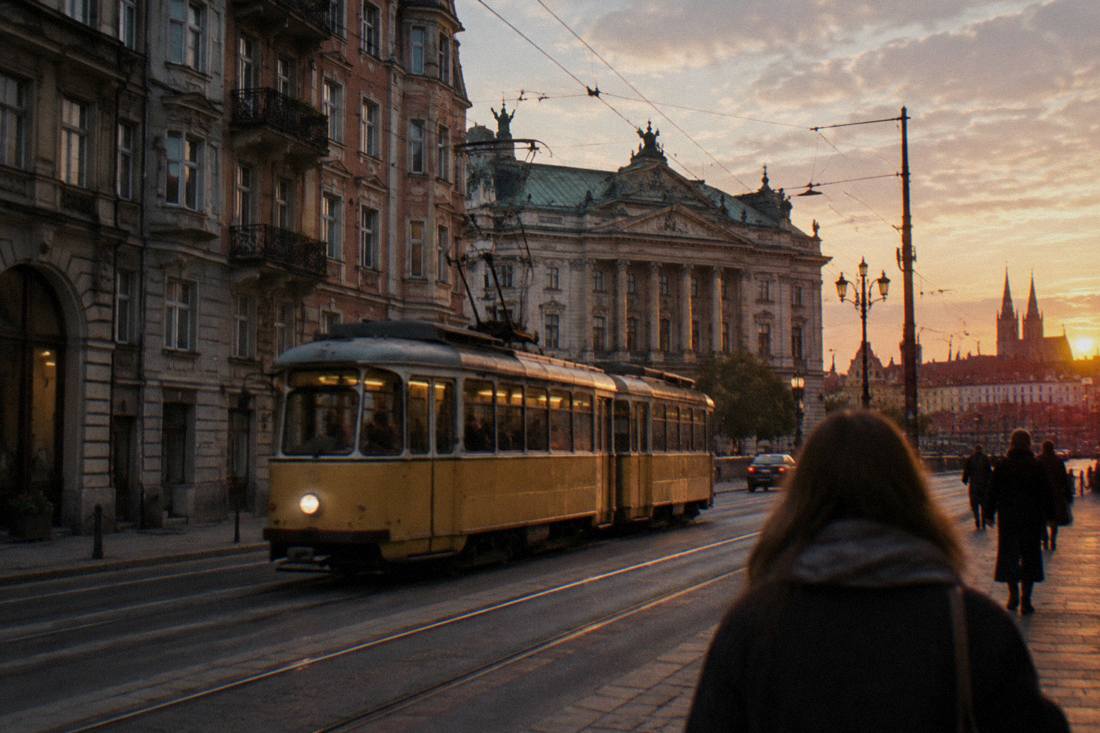
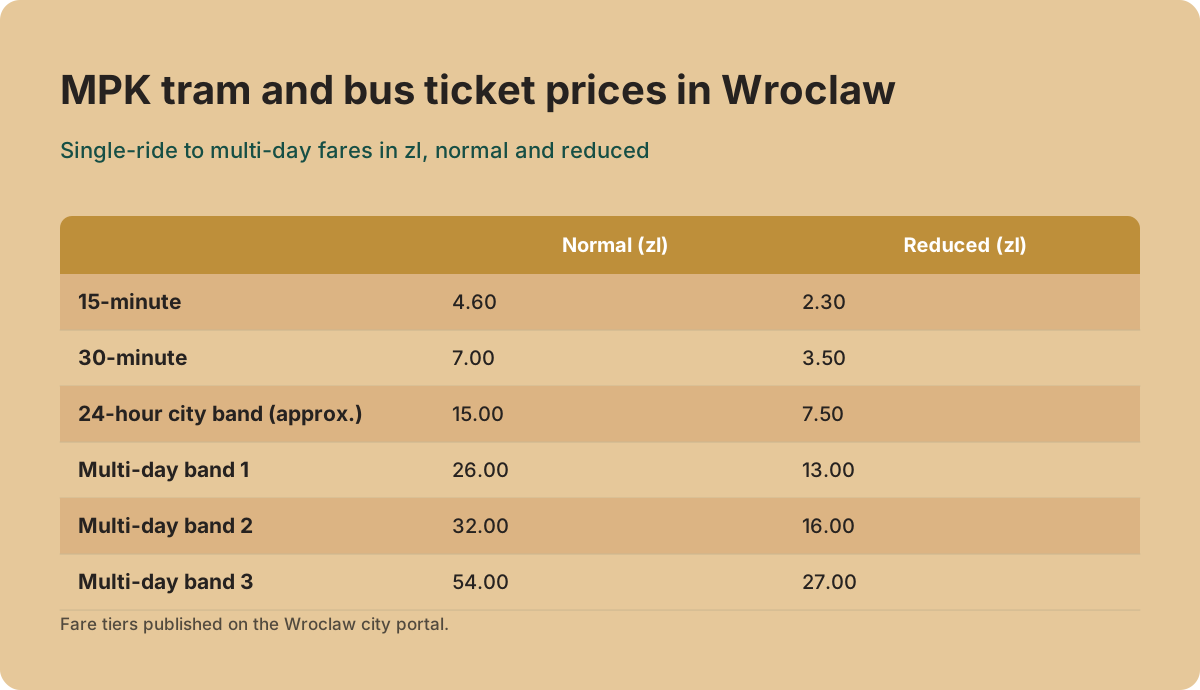
The Wroclaw Opera House stands in central Wroclaw, the largest city in Lower Silesia (Dolnoslaskie voivodeship), in southwestern Poland, in the same compact city centre that holds the Market Square and the Old Town. A single MPK tram or bus ride costs 4.60 zl (2.30 zl reduced), and the city's fare tiers rise to multi-day bands for longer stays.
Wroclaw's tram and bus network, run by MPK, is the practical way to move around the centre, and the city's official portal publishes the full fare ladder. The base short-hop ticket at 4.60 zl covers most central stops to the venues that matter. Higher tiers cost more, and the portal lists an all-day city ticket band around 15.00 zl (7.50 zl reduced) plus higher multi-day bands at 26/13, 32/16 and 54/27 zl. For a two- or three-night opera break, one of the multi-day bands usually beats buying singles, but check the current page before you travel, since tariffs change.
| MPK ticket tier | Normal (zl) | Reduced (zl) |
|---|---|---|
| 15-minute | 4.60 | 2.30 |
| 30-minute | 7.00 | 3.50 |
| 24-hour city band (approx.) | 15.00 | 7.50 |
| Multi-day band 1 | 26.00 | 13.00 |
| Multi-day band 2 | 32.00 | 16.00 |
| Multi-day band 3 | 54.00 | 27.00 |
One practical note on passes: there is no all-inclusive Go City-style sightseeing pass currently sold for Wroclaw. The UrbanCard that locals use is a transport-focused fare card with resident discounts, and it does not cover museum or attraction admission. Anyone promising a single Wroclaw pass that unlocks the opera house, the museums and the zoo is selling something that does not exist. Buy your performance ticket from the venue, your museum tickets from the museums, and your transit ticket from MPK, and you will not go wrong.
How Do You Book Wroclaw Opera House Tickets And What Do They Cost?
No fixed ticket price for the Wroclaw Opera House appears in this site's verified facts, and prices vary by production, seat category and performance date, so the honest answer is to check the venue's own box office before committing. Poland's currency is the zloty (PLN), never the euro, so quotes arrive in zl. Pairing an evening performance with free Saturday museum entry keeps the total cost down.
That last point deserves spelling out, because it is the single best money move on a Wroclaw culture trip. The National Museum's own practical-information page states that entry to the permanent exhibitions is free every Saturday. If your opera evening falls on a Saturday, spend the afternoon in the museum's galleries for nothing, then put the savings toward a better seat for the performance. The museum is closed on Mondays, so plan around that if Saturday does not work.
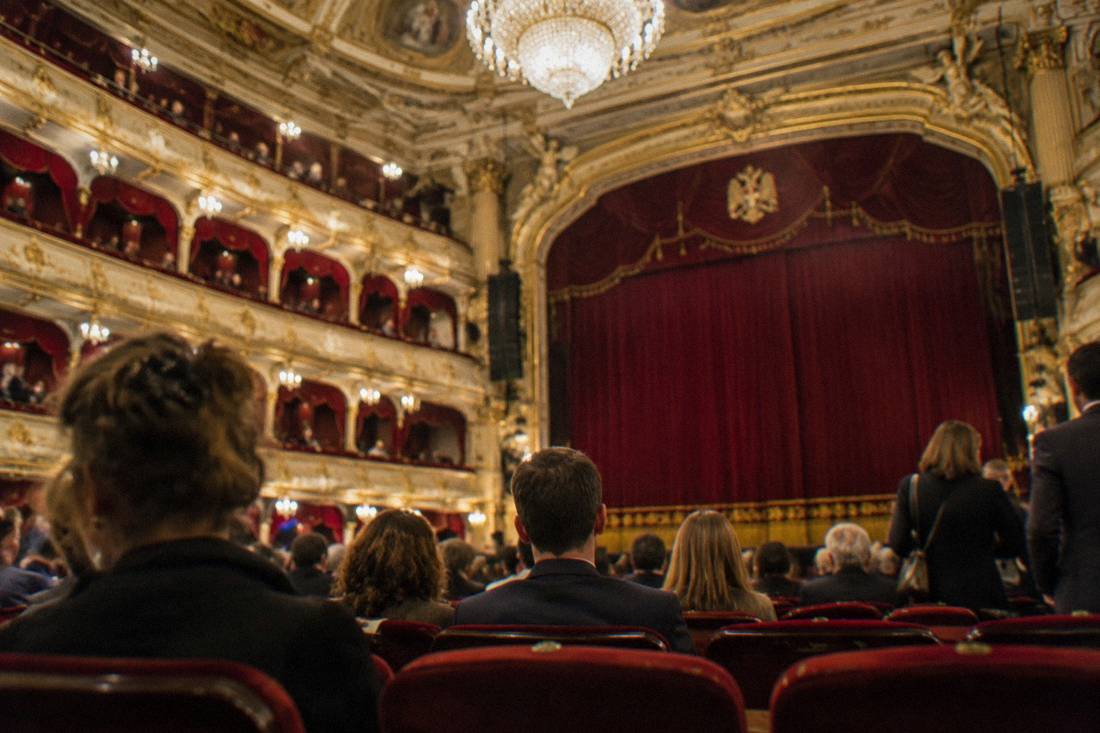
A second planning tip concerns timing. Central-European theatre audiences dress smartly but not formally, and a midweek performance is usually easier to book than a weekend one, though this site cannot verify seat availability for any specific date, so treat that as general guidance rather than a promise. What can be stated with certainty is the currency question, because travelers get it wrong constantly: Poland is in the EU and the Schengen area, but it is not in the Eurozone. Everything you pay for in Wroclaw, from the tram ticket to the theatre programme, is priced in zl.
How Does An Opera Evening Fit Into A Day Of Sightseeing In Wroclaw?
A workable opera day in Wroclaw pairs a morning at the Panorama Raclawicka or the National Museum with an afternoon in the Old Town and an evening performance. The Panorama's adult ticket is 50 zl (35 zl reduced) for a 30-minute screening, and it also covers the National Museum, the Ethnographic Museum and the Four Domes Pavilion within 3 months. The National Museum alone costs 20 zl (15 zl reduced).
The Panorama Raclawicka is the city's signature indoor sight: a giant panoramic painting viewed from a rotating viewing platform, presented in a 30-minute screening. The Panorama's own ticket page lists adult admission at 50 zl, reduced at 35 zl, family at 35 zl per person, and a group-guide special at 10 zl. The quiet information gain most guides miss is that the same ticket also admits you to the National Museum's permanent exhibitions, the Ethnographic Museum and the Four Domes Pavilion within 3 months of your visit date. For an opera break of any length, that makes the Panorama ticket the best-value single purchase in the city, provided you actually use the second and third visits.
| Wroclaw museum ticket | Adult (zl) | Reduced (zl) |
|---|---|---|
| Panorama Raclawicka (also covers 3 further museums for 3 months) | 50 | 35 |
| National Museum permanent exhibitions | 20 | 15 |
| National Museum temporary exhibition | 10 | 8 |
| "Museum for a zloty" (students/pupils under 26) | 1 | 1 |
| Children under 7 | free | free |
Opening hours matter when you are choreographing a day around an evening curtain. The Panorama's own page gives summer hours (1 April to 31 October) as daily 8:30-19:00, and winter hours (1 November to 31 March) as closed on Mondays, with Tuesday to Friday 9:30-16:00, Saturday 9:30-17:00 and Sunday 9:30-16:00. The National Museum keeps winter hours (1 October to 31 March) of Tuesday to Friday 10:00-16:00 and weekends 10:00-17:00, and summer hours (1 April to 30 September) of Tuesday to Friday 10:00-17:00 and weekends 10:30-18:00, always closed on Mondays, with the ticket office shutting 30 minutes before the galleries.
| Venue | Season | Days and hours |
|---|---|---|
| Panorama Raclawicka | 1 Apr - 31 Oct | daily 8:30-19:00 |
| Panorama Raclawicka | 1 Nov - 31 Mar | Tue-Fri 9:30-16:00, Sat 9:30-17:00, Sun 9:30-16:00, Mon closed |
| National Museum | 1 Apr - 30 Sep | Tue-Fri 10:00-17:00, Sat-Sun 10:30-18:00, Mon closed |
| National Museum | 1 Oct - 31 Mar | Tue-Fri 10:00-16:00, Sat-Sun 10:00-17:00, Mon closed |
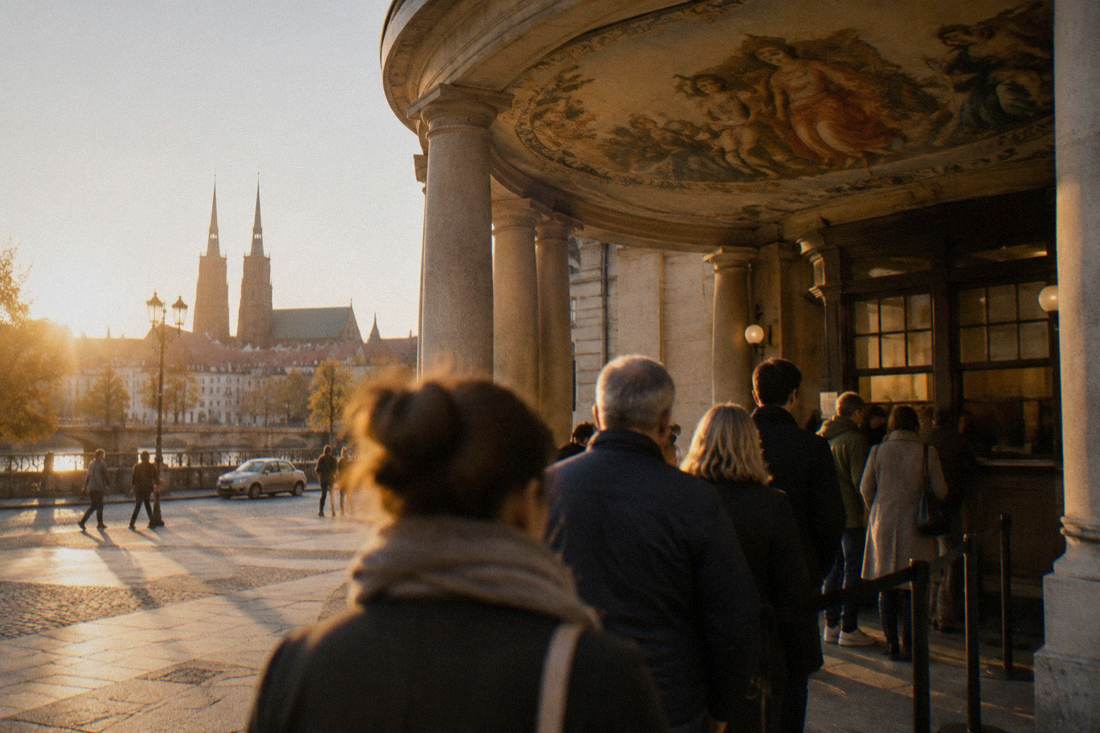
For the afternoon gap between museums and curtain-up, the Wroclaw Market Square guide and the Ostrow Tumski cathedral island walk are the two classic fills, and a slow loop between them with a coffee stop is exactly what the pre-theatre hours are for. If you would rather hand the afternoon to a professional, a private top-attractions walking tour of the city is bookable, and its own listing carries the current price and availability rather than this page freezing a figure that may be stale by the time you read it.
What Is The Best Time Of Year For An Opera Trip To Wroclaw?
Wroclaw's climate, per IMGW's 1991-2020 normals for station 12424, runs from a January mean of 0.0C to a July mean of 19.7C, with an annual mean of 9.7C. July is both the warmest and the wettest month at 91.4 mm of rain, while April is the driest at 31.2 mm. Indoor venues like the opera house make Wroclaw rewarding in every season, including winter.
IMGW, Poland's national meteorological and hydrological institute, publishes the 1991-2020 climate normals for the Wroclaw synoptic station, and its table shows the city's means are among the mildest of Poland's major stations. That does not make Wroclaw Mediterranean: a January mean of 0.0C means coats, gloves and a warm layer for the walk home after a performance. What it does mean is that the city never has an off month for indoor culture. A winter opera trip trades terrace weather for smaller crowds and a real chance of snow on the Old Town rooftops.
| Month | Mean temperature (C) | Precipitation (mm) |
|---|---|---|
| Jan | 0.0 | 28.3 |
| Feb | 1.1 | 25.6 |
| Mar | 4.3 | 35.0 |
| Apr | 9.7 | 31.2 |
| May | 14.3 | 59.6 |
| Jun | 17.7 | 65.4 |
| Jul | 19.7 | 91.4 |
| Aug | 19.3 | 59.5 |
| Sep | 14.5 | 48.4 |
| Oct | 9.6 | 37.6 |
| Nov | 4.8 | 31.4 |
| Dec | 1.1 | 27.9 |
Read the table before packing rather than trusting a rule of thumb. Summer evenings are warm but July carries 91.4 mm of rain in the normals, so an umbrella belongs in the bag even in the warmest month. April is the driest slot on the calendar at 31.2 mm, which makes it a quietly excellent month for a city break built around indoor evenings and dry walking afternoons.
Which Other Wroclaw Venues Belong On A Culture Itinerary?
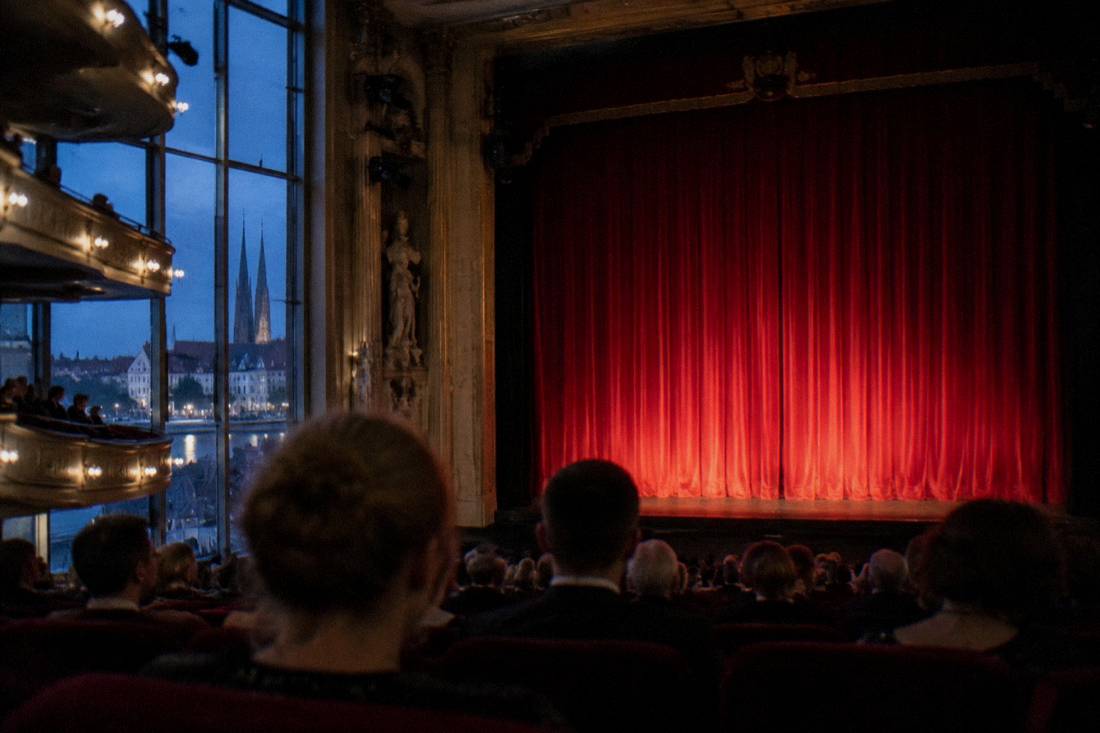
Wroclaw's cultural scene reaches well beyond the opera house: the National Forum of Music, the Wroclaw Puppet Theatre, the Panorama Raclawicka and the National Museum's four sites give the city an unusually dense performance and exhibition calendar for its size, and one Panorama ticket covers three further museums for 3 months. Wroclaw was also a European Capital of Culture in 2016, a distinction its venues still reflect.
The National Forum of Music venue is the city's other headline concert institution, and an opera break can plausibly pair a staged performance one evening with a concert the next. Families should also look at the Wroclaw Puppet Theatre details, which rounds out a theatre-themed trip for younger travelers. Beyond the performance venues, the museum cluster described above, plus the Panorama Raclawicka visitor guide, gives you a full week of culture without ever leaving the city.
The 2016 European Capital of Culture year is the honest superlative to reach for when describing Wroclaw, and it is the one this site will use. Wroclaw is not Poland's recognized film capital: that distinction belongs to Lodz, home of the Polish National Film School and a UNESCO City of Film. Wroclaw's real film credential is the New Horizons film festival, and its real creative quarter is the Nadodrze district, whose street art and revitalized courtyards are widely documented. Claiming more than that would be inventing a ranking nobody issued.
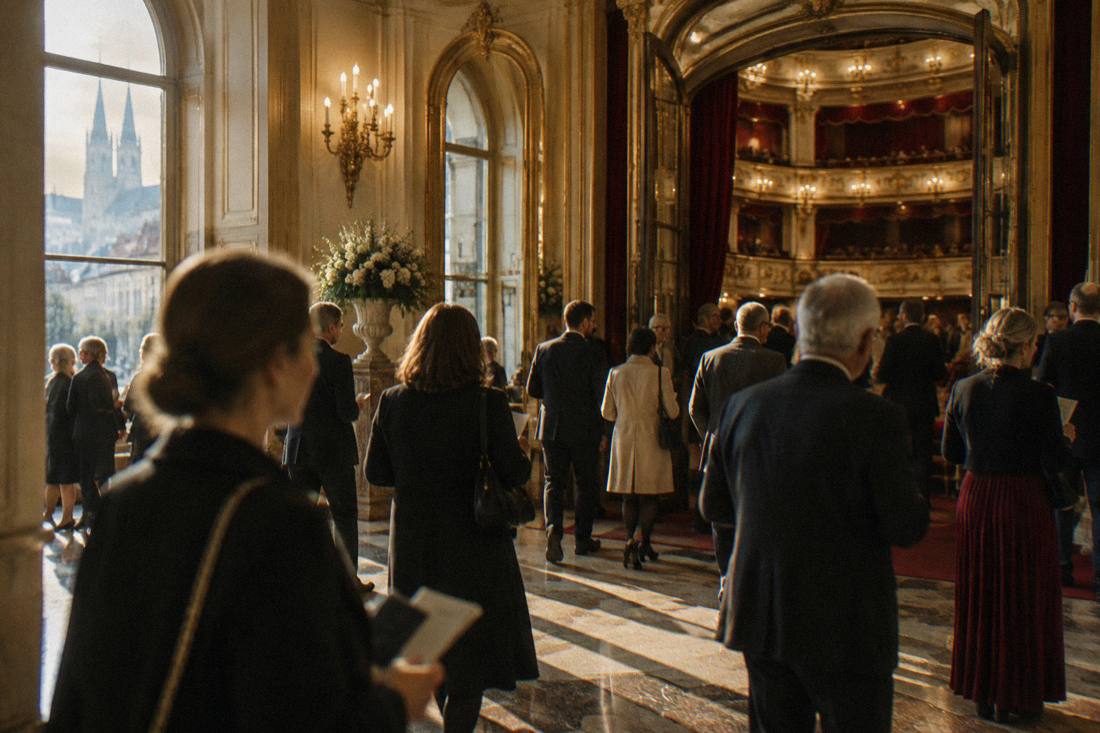
If you would rather have the whole centre unpacked by a professional guide than work it out on your own, there are two strong options. A private top-attractions tour of Wroclaw, the Private Top Attractions of Wroclaw tour, covers the headline sights with a dedicated guide, and Check availability on the operator's live listing for the current price. At the other end of the budget, GuruWalk, a platform for tip-based city walks, lists Old Town Wroclaw by Walkative!, a free walk where you tip the guide what you think the walk was worth. Naming GuruWalk and the company here is deliberate: it is their walk, not this site's, and honesty about who runs what is the point.
Is The Wroclaw Opera House A Good Pick For Families?
Families can build a full Wroclaw day around a performance: the Wroclaw Zoo opens every day of the year, its Afrykarium oceanarium is included in the standard ticket rather than sold separately, and adult admission runs from 69 zl online to 99 zl at the gate (59 zl and 89 zl reduced). A guided city tour designed for children is also bookable, with current details on its live listing.
The zoo's own price page is the source for those figures, and the spread between online and gate prices is worth acting on: buying ahead saves 30 zl per adult and 30 zl per reduced ticket, which adds up quickly for a family. The Afrykarium inclusion is the detail tour sellers sometimes obscure: the zoo's page states plainly that a standard ticket and annual card also entitle you to visit the Afrykarium, so there is no separate oceanarium charge to budget for. Zoo hours run long in the April-to-September season, with grounds open until 18:00 on weekdays and 19:00 on Fridays, Saturdays, Sundays and holidays, so a morning at the zoo still leaves the late afternoon free before an early-evening show.
| Wroclaw Zoo ticket | Online (zl) | At the gate (zl) |
|---|---|---|
| Adult | from 69 | 99 |
| Reduced | from 59 | 89 |
| Adult with Safari Ride add-on | 107 | 107 |
| Reduced with Safari Ride add-on | 93 | 93 |
| Afrykarium | included in standard ticket | included in standard ticket |
For a theatre-focused family day, the puppet theatre covers the younger end of the age range while a classic opera or ballet evening suits teenagers with the patience for it. If a family wants the city itself made into a game, a dwarf-hunting ride is the quintessential Wroclaw option, since the city's hundreds of small bronze dwarf statues scattered on pavements and window ledges turn sightseeing into a treasure hunt. The Wroclaw dwarfs hunting guide explains the tradition, and an electric-car dwarf tour is bookable with details on its own listing.
What Else Should You See Around Central Wroclaw?
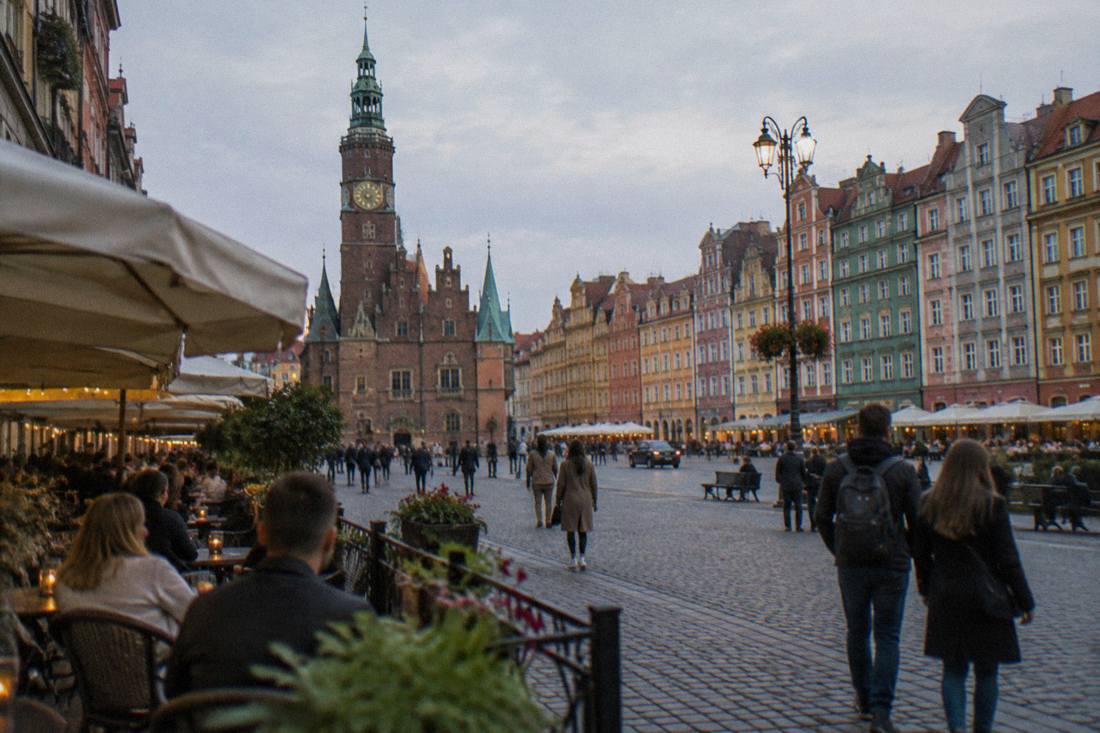
Central Wroclaw stacks a full sightseeing itinerary around the opera house: the Market Square (Rynek), Ostrow Tumski cathedral island, the city's famous dwarf statues and the Odra river islands all belong to the same compact core. Krakow's Rynek Glowny is the larger square at roughly 4 hectares against Wroclaw's 3.64-3.79 hectares, but Wroclaw's Rynek remains the old town's anchor.
That comparison is included because it is one of the most-searched questions about Wroclaw, and it is worth answering correctly: Krakow, not Wroclaw, is Poland's larger city, at 816,614 residents against Wroclaw's 672,601 in the GUS figures for 31 December 2025, and Krakow's main square is the larger of the two. None of that dims Wroclaw. A smaller square ringed by painted townhouses, with an island cathedral quarter a short stroll away and dwarfs underfoot, is a dense, walkable core that punches well above its size.
For travelers building the days around a performance, the one day in Wroclaw itinerary sequences the Market Square, the cathedral island and the river islands into a single loop, and the zoo and Afrykarium guide covers the eastern side of the city if the zoo day tempts you. Arriving by air? The Wroclaw airport guide covers the practicalities, and the airport itself is very much open: it handled 4,473,945 passengers in 2024, and after a temporary full closure for a renovation between 26 October and 4 December 2025, the works finished ahead of schedule in 2026 and the airport has since been setting passenger records.
Which Day Trips From Wroclaw Pair Well With A Culture Break?
Lower Silesia's headline day trips from Wroclaw are Ksiaz Castle, owned by the Walbrzych municipality, and the UNESCO Churches of Peace in Swidnica and Jawor. Ksiaz Castle's cennik effective 6 May 2026 lists the castle with audioguide and terraces at 72 zl (62 zl reduced) and an All Day Ticket at 104 zl (94 zl reduced); the Swidnica Church of Peace charges 18 zl adult (15 zl reduced).
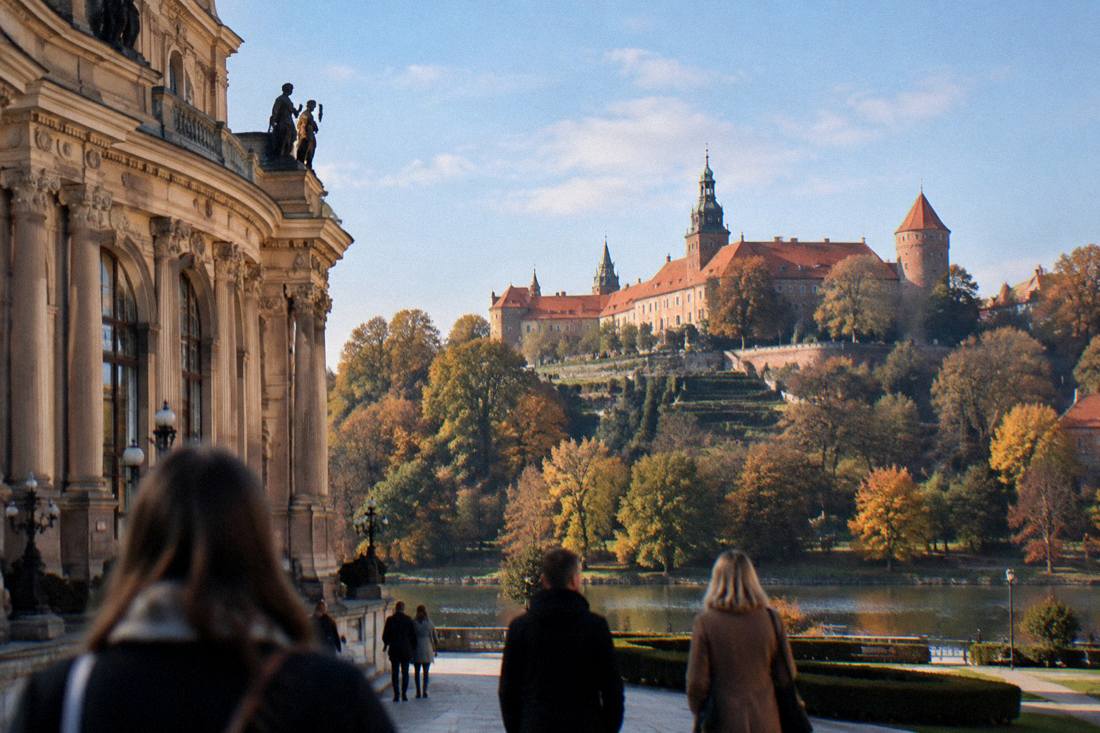
Ksiaz Castle, the region's great hilltop pile, is owned by the Walbrzych municipality and operated by the municipal company Zamek Ksiaz w Walbrzychu Sp. z o.o., a fact worth knowing because ownership disputes about Polish castles generate endless internet noise. The castle's own tariff is precise: the castle with audioguide and terraces costs 72 zl (62 zl reduced), adding the underground tour raises it to 92 zl (82 zl reduced), and the All Day Ticket covering castle, terraces, underground, Palm House, stud farm and mausoleum runs 104 zl (94 zl reduced). One seasonal trap to plan around: the terraces open only from 15 April to 30 September, so an off-season visit loses that part of the experience. The castle's April-to-September hours are 9:00-18:00 on weekdays and 9:00-19:00 on weekends.
| Lower Silesia day-trip site | Ticket | Adult (zl) | Reduced (zl) |
|---|---|---|---|
| Ksiaz Castle | Castle with audioguide and terraces | 72.00 | 62.00 |
| Ksiaz Castle | Castle, terraces and underground | 92.00 | 82.00 |
| Ksiaz Castle | All Day Ticket | 104.00 | 94.00 |
| Ksiaz Castle | Underground tour alone | 45.00 | 39.00 |
| Ksiaz Castle | Palm House alone | 27.00 | 21.00 |
| Church of Peace, Swidnica | Individual visitor | 18 | 15 |
| Church of Peace, Swidnica | Children and youth | 10 | 10 |
| Church of Peace, Swidnica | Family (2 adults plus children under 18) | 45 | 45 |
The Church of Peace in Swidnica, inscribed by UNESCO in 2001 as part of the "Churches of Peace in Jawor and Swidnica", is a timber-framed marvel that pairs naturally with Ksiaz on a single long day, and several organized tours combine them. Getting there independently is commonly done by regional train to Walbrzych plus a bus or taxi connection, though this site will not publish a specific rail time for the route, since none was confirmed on an official source. If that sounds like logistics you would rather skip, a private guided option to the Project Riese tunnels and Ksiaz Castle is bookable, and a combined castle-and-church tour from Wroclaw runs as a small-group day trip; both carry their own current prices and dates on their live listings.
Common Questions About The Wroclaw Opera House
What Currency Does Wroclaw Use?
Poland uses the zloty (PLN), often written "zl". Poland is in the EU and the Schengen area, but it is not in the Eurozone, so every price in Wroclaw, from opera tickets to tram fares, is quoted in zloty rather than euro.
Is Wroclaw Bigger Than Krakow?
No. GUS figures for 31 December 2025 give Wroclaw 672,601 residents against Krakow's 816,614, and Krakow's Rynek Glowny, at roughly 4 hectares, is larger than Wroclaw's Rynek at roughly 3.64-3.79 hectares. Wroclaw is the largest city in Lower Silesia, but not Poland's second city by population.
Does Wroclaw Sell An All-Inclusive Tourist Pass?
No. There is no Go City-style all-inclusive sightseeing pass currently sold for Wroclaw. UrbanCard is a transport-focused fare card with resident discounts and does not cover attraction or museum admission. Buy attraction tickets individually, and use the Panorama Raclawicka's 3-month multi-museum coverage as your de facto culture pass.
Is Wroclaw Airport Open?
Yes. Wroclaw Airport handled 4,473,945 passengers in 2024, its latest full-year official figure. A temporary full closure for a runway and operational-area renovation ran from 26 October to 4 December 2025, and the renovation program finished ahead of schedule in 2026, after which the airport set new passenger records.
How Cold Is Wroclaw In Winter?
IMGW's 1991-2020 climate normals for the Wroclaw station give a January mean of 0.0C and an annual mean of 9.7C, among the mildest of Poland's major synoptic stations. That still means proper winter clothing, especially for the walk home after an evening performance. July, the warmest month at a 19.7C mean, is also the wettest at 91.4 mm.
Can You Visit Ksiaz Castle On A Day Trip From Wroclaw?
Yes, it is the region's most popular day trip. The castle's cennik effective 6 May 2026 lists the castle with audioguide and terraces at 72 zl (62 zl reduced), and an All Day Ticket at 104 zl (94 zl reduced). Note the terraces open only from 15 April to 30 September, so check the season before you build your itinerary around them.
Plan an evening at the Wroclaw Opera House as the anchor of the day rather than an add-on: museums by the ticket terms above, a walk through the Old Town in the afternoon, an MPK multi-day band if your stay runs long, and the Odra islands waiting for the walk home after the curtain falls.