Is Poland Good For Clubbing?
Poland's club scene, seen from Wroclaw: what the country does well after dark, how the cities compare, and what a night out in Lower Silesia's biggest city actually involves.
Poland, seen from the southwestern city of Wroclaw, is a country that takes its nightlife seriously. Wroclaw is the largest city in Lower Silesia (Dolnoslaskie voivodeship), home to 672,601 people as of 31 December 2025 according to GUS, Poland's statistics office, and it carries the two ingredients a good clubbing city needs: a large resident student population and a compact, walkable center where bars, clubs and late-night food sit within a few minutes of each other. The zloty, not the euro, is the currency at the bar, and Poland's membership of the EU and the Schengen area means most European visitors arrive without a visa stop. This page answers the question directly, then gets practical: which Polish cities do what, what a Wroclaw night out involves, and how to plan the evening around everything else a short break here offers.
Is Poland Good For Clubbing?
Yes, Poland is good for clubbing. Its big cities, above all Warsaw, Krakow, Wroclaw and Gdansk, run dense, late and comparatively cheap scenes by Western European standards, built on large student populations and city centers where venues cluster within walking distance of one another. Wroclaw's own scene sits in that national picture: smaller than Warsaw's or Krakow's, but lively, central and easy to navigate on foot.
That answer comes with honest framing rather than hype. Poland is not Berlin or Ibiza, and no sourced ranking in this site's research calls any Polish city Europe's clubbing capital. What the country reliably offers is volume and value: multiple large cities with genuine year-round scenes, a strong beer and cocktail culture, student-driven theme nights, and venues that keep going well past midnight in the bigger centers. Krakow, with 816,614 residents at the end of 2025, is larger than Wroclaw, and its visitor-facing nightlife is bigger too; that comparison is covered in detail on the sibling page about which Polish city has the best nightlife.
For a first-time visitor, the practical difference between Poland and costlier clubbing destinations is that a night out rarely needs a plan beyond picking a district and walking. In Wroclaw the historic core around the Market Square, the streets just off it and the emerging creative quarter of Nadodrze, widely described in recent reporting as the city's revitalized street-art district, hold most of what an evening requires. What you should avoid, how late things run and how to get home safely are covered further down this page.
What Does A Night Out In Wroclaw Actually Look Like?
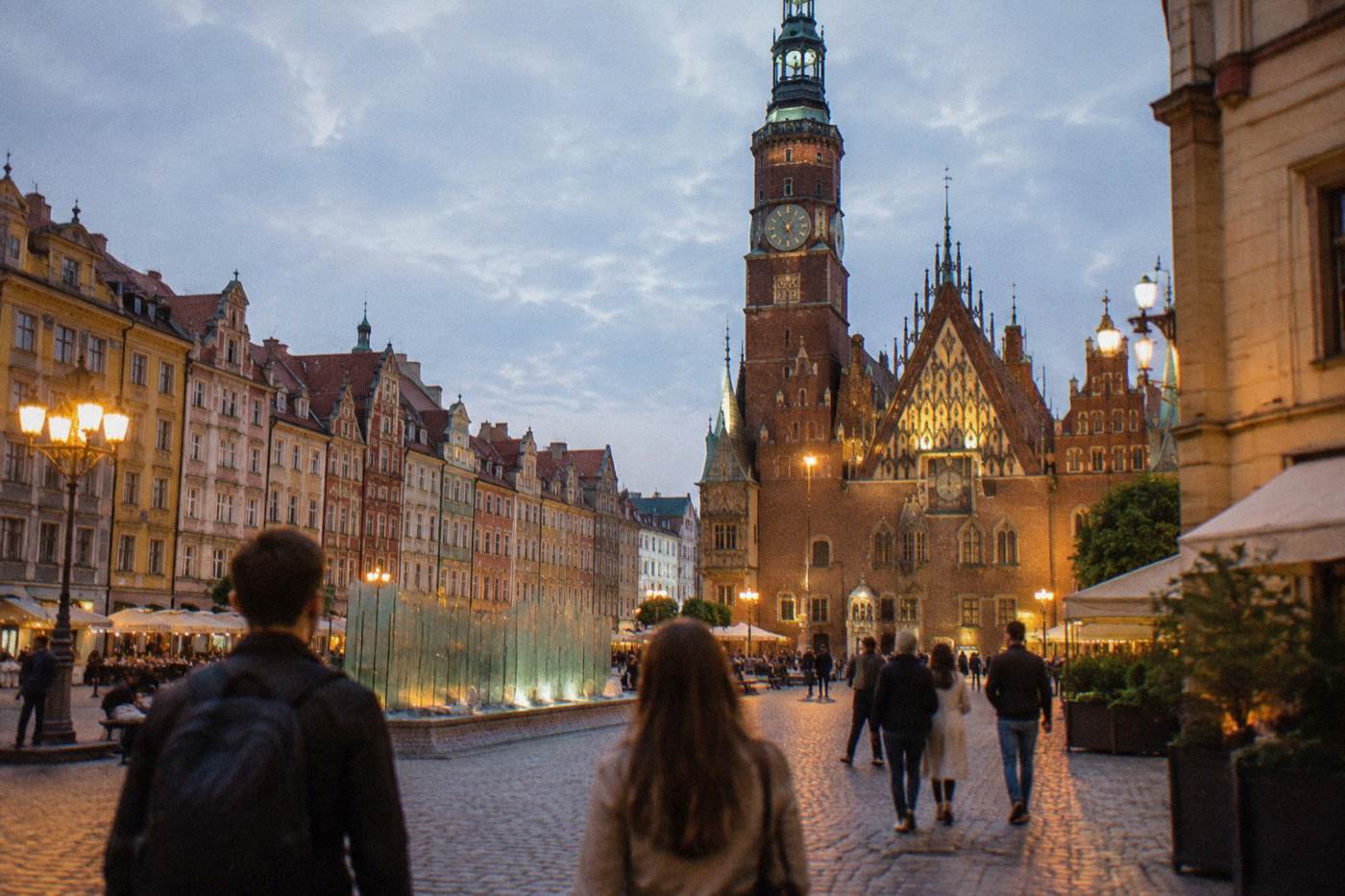
A typical Wroclaw night out runs from a bar or courtyard around the Market Square into late-night venues in or near the Old Town, on foot between stops, with nights peaking later than many visitors expect and running loudest on student-heavy weekends. The city's compact center means the whole evening can unfold without a taxi, and the Odra river islands sit within the same walking radius.
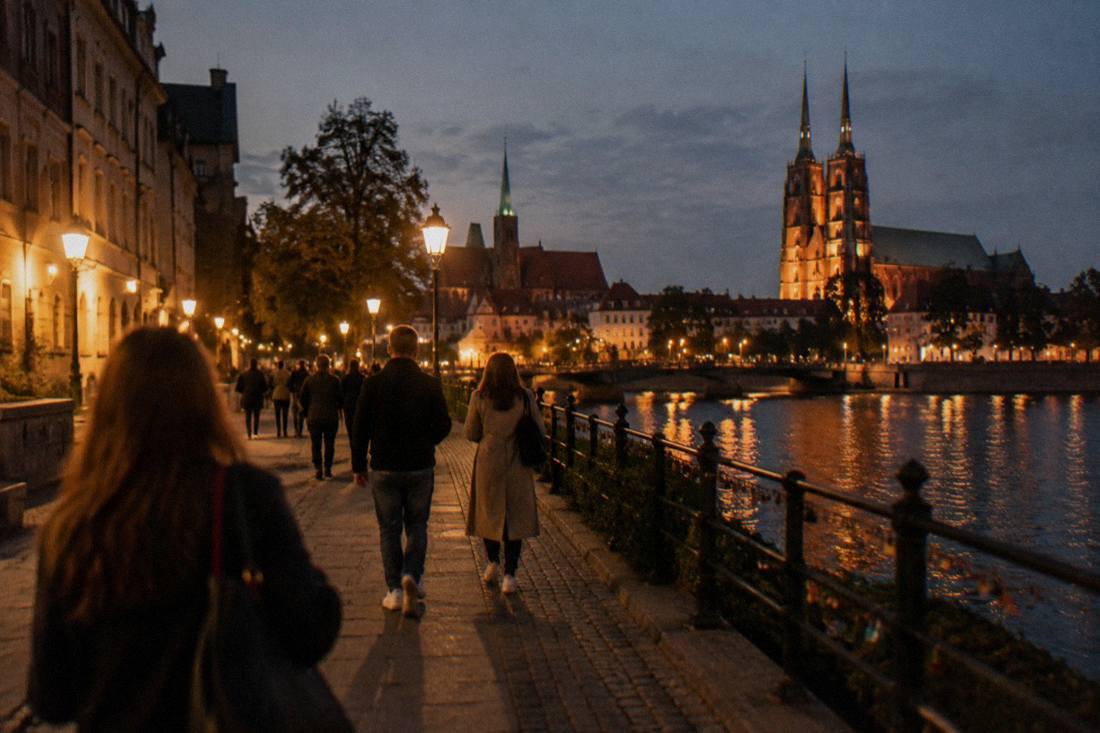
Wroclaw's scene is shaped by its universities. The city has been a university town for centuries, and a large student population keeps demand steady through term time, quieter in summer holidays when many students leave. Practically, that means the calendar matters: a weekend in the academic year feels different from early July. The evening usually starts with drinks around the Market Square or on Slodowa Island, the riverside spot this site's guide to Wroclaw covers among its walking routes, then moves to clubs concentrated in and around the Old Town.
Two planning points deserve emphasis. First, dress codes in Polish nightlife are mostly relaxed but venue-specific; the specifics for this city are set out on the dedicated page about the dress code in Wroclaw nightlife. Second, Wroclaw's center is genuinely safe to walk at night by the standards of the research this site cites, and the honest answer, including the caveats, is on the page about walking in Wroclaw at night.
The one planning mistake visitors make in Wroclaw is treating the night as the whole trip. The same square that fills with people at midnight is, by nine the next morning, the setting for the dwarfs, the painted tenement houses and Ostrow Tumski's cathedral quarter. A night out here costs you a morning unless you pace it, which is why this site's answer to how many days in Wroclaw is enough recommends building the trip around at least a full day of sightseeing on either side of the big night.
How Does Wroclaw Compare With Poland's Other Clubbing Cities?
Wroclaw sits firmly in the second tier of Poland's nightlife cities, behind Warsaw and Krakow in size and scene, alongside Gdansk. Its population of 672,601 (GUS, 31 December 2025) is smaller than Krakow's 816,614, and its Main Market Square is smaller than Krakow's Rynek Glowny too, roughly 3.64 to 3.79 hectares against about 4 hectares.
Those figures matter because nightlife scales with city size and student numbers, and honesty about the comparison serves a visitor better than boosterism. Warsaw is Poland's capital and its largest after-dark market by any measure that counts venues; Krakow combines a huge visitor flow with a resident student body; Gdansk, Wroclaw and Poznan all run substantial scenes of their own. Wroclaw's strength is not being the biggest but being the most convenient: the venues, the river islands, the Old Town hotels and the late-night food are all inside one compact, flat, walkable core. The wider set of guides lives on Wroclaw Travel Guide.
| City | Population (31 Dec 2025, GUS) | Main Square Size | Nightlife Position |
|---|---|---|---|
| Krakow | 816,614 | Rynek Glowny, about 4 hectares | Largest visitor-facing scene after Warsaw |
| Wroclaw | 672,601 | Rynek, about 3.64-3.79 hectares | Strong student-driven scene, compact center |
| Warsaw | Largest city in Poland | n/a for a historic Rynek comparison | Biggest overall venue market in the country |
Note what the table does not claim: no sourced ranking puts Wroclaw first for clubbing, and this site does not either. What is sourced is the population and square-size data, and both point the same way, toward Krakow as the larger city. The comparison page on whether Wroclaw is bigger than Krakow unpacks the common misconception in full.
One more national-frame fact worth knowing: Polish nightlife's reputation is not built on clubbing alone. The country's beer culture, its milk bars and pierogi kitchens as late-night fuel, and its festival calendar all feed into the same after-dark economy. Visitors curious about the wider cultural picture can start with the answer to what makes Wroclaw famous, which sets nightlife in its proper context as one attraction among many.
What Should You Know Before The Night Starts In Wroclaw?
The practical rules are simple: the currency is the zloty (PLN), not the euro; the city's transit runs on cheap time-based tickets rather than per-ride fares; winter nights are cold, with a January mean of 0.0C in the official IMGW 1991-2020 climate normals; and the walkable center means nights often end on foot rather than in a taxi.
Money first. Poland is in the EU and Schengen but keeps the zloty, so a card that works in euros works here too, but the till rings up PLN. This site's page on currency and tipping habits in Wroclaw covers the details. Transit is priced by duration, and the official city fare table gives the base short-hop figures shown below; a night bus or tram ride home sits in the cheapest band.
| MPK Wroclaw Ticket | Normal Fare (zl) | Reduced Fare (zl) |
|---|---|---|
| 15-minute | 4.60 | 2.30 |
| 30-minute | 7.00 | 3.50 |
| 24-hour (city band) | approx. 15.00 | approx. 7.50 |
| Multi-day band 1 | 26 | 13 |
| Multi-day band 2 | 32 | 16 |
| Multi-day band 3 | 54 | 27 |
The source for these fares is the city of Wroclaw's own ticket page. The 15-minute ticket at 4.60 zl is the base fare for a short hop, and the longer bands rise from there; a visitor staying several nights and moving between districts may find a 24-hour or multi-day band the better arithmetic, which the site's guide to getting around the city treats in full.
Weather is the other honest variable. IMGW's 1991-2020 climate normals for the Wroclaw station put July, the warmest month, at a mean of 19.7C, and January, the coldest, at 0.0C, with an annual mean of 9.7C. A July night on a river island and a January night walking between venues are different experiences of the same city; the monthly breakdown lives on the page about Wroclaw's weather by month. Packing for the latter means a real coat, not a jacket.
Finally, the safety question deserves a straight answer rather than a shrug. Wroclaw's center at night is, in the research this site holds, comparable to other large Polish cities for ordinary visitor risk, with the usual caveats about alcohol, unlicensed taxis and pickpocketing in crowds. The page on what to avoid in Wroclaw lists the specific mistakes, and none of them is unique to clubbing.
How Do You Build A Clubbing Trip Around Everything Else Wroclaw Offers?
The efficient shape is one big night bracketed by full days of sightseeing: an afternoon arrival, a walking or Segway loop of the Old Town and Ostrow Tumski before dinner, the night out itself, then a slow recovery morning among the dwarfs, the Market Square and the museums, before either a second night or a day trip out of the city.
The reason the daylight hours earn their place is simple: Wroclaw's core attractions sit inside the same walkable radius as its nightlife, so leaving them out wastes the geography. This site's featured option for the arrival-afternoon slot is the guided Segway tour of the Old Town and Ostrow Tumski, a three-hour loop that covers the cathedral island and the Old Town in one pass, ideal for a visitor who wants the lay of the land before the evening starts. The tour has its own page, and live availability can be checked here: Check availability.
If the trip runs longer than a weekend, the surrounding region does the rest. Ksiaz Castle, the vast Lower Silesian chateau owned by the Walbrzych municipality with an adult castle-and-terraces ticket of 72 zl per the operator's own tariff, is a standard day trip, and the Churches of Peace in Swidnica, UNESCO-inscribed since 2001, pair naturally with it. Krakow itself is reachable for a night in the country's other great clubbing city, and the comparison of the two cities is a whole topic of its own on this site.
Common Questions About Clubbing In Poland
These are the follow-up questions visitors ask after the main one, answered directly and without invention: what a night costs, how late things run, whether Wroclaw's scene beats Krakow's, what to wear, and how to get home. Each answer draws only on figures this site has verified or points to the sibling page that carries the detail.
Is Poland good for clubbing on a budget?
Yes. The zloty prices drinks, entry and late-night food well below Western European levels, and Wroclaw's base 15-minute transit ticket of 4.60 zl shows how far small costs go here. Exact club entry and drink prices vary by venue and are not fixed public figures this site quotes; treat any per-venue number as something to check on the night.
Which is better for nightlife, Wroclaw or Krakow?
Krakow, on size. It is the larger city, 816,614 residents against Wroclaw's 672,601 at the end of 2025, with a bigger visitor-facing scene. Wroclaw's case is convenience: the same density of bars and clubs in a flatter, more compact center. The full comparison lives on this site's page comparing the two cities.
What time do clubs in Wroclaw get busy?
Later than many visitors expect, in line with the rest of Poland: pre-drinks in bars and on the river islands first, clubs filling late and running past midnight. No official per-venue timetable exists in this site's research, so plan the evening loosely and let the square's own crowd be the guide.
Is it safe to walk home after a night out in Wroclaw?
The center is walkable and comparably safe to other large Polish cities at night, with standard caveats about alcohol and crowds. The dedicated answer on walking in Wroclaw at night covers the specifics, and the MPK transit table above covers the cheap ride-home option when walking is no longer appealing.
What should I wear to clubs in Wroclaw?
Mostly relaxed, but venue-specific. The dedicated dress-code page for Wroclaw nightlife gives the honest breakdown by venue type, and the short version is that the big commercial venues care more than neighborhood bars do.
Can I club in Wroclaw and still see the city the next day?
Yes, and that is the recommended shape of the trip. The Old Town, the Market Square, the dwarfs and Ostrow Tumski sit inside the same walkable radius as the nightlife, so one well-paced evening costs far less sightseeing time than it would in a more spread-out city.
The short version of the whole page: Poland earns its clubbing reputation, Wroclaw is one of the better places in the country to test it, and the same compactness that makes the night easy makes the morning after worth staying up for.