What Does Wroclaw Mean In English?
The name Wroclaw is the Polish form of the medieval Slavic personal name Vratislav, usually read as returning with glory, honoring a Bohemian duke. Here is where the name came from, how to say it, and why it also answers to Breslau.
Wroclaw, the largest city in Lower Silesia in southwestern Poland, is easy to pinpoint on a map and famously hard to read aloud. The name itself has a story: it is the Polish form of a medieval Slavic personal name, Wrócisław, which is usually broken down as "returning with glory" or "he who comes back famous." The city did not take its name from a river, a trade or a landscape feature. It took it from a man, a Bohemian duke to whom the early-medieval stronghold on the Odra is attributed in medieval chronicles, and every later spelling, from Latin Wratislavia to German Breslau to the modern English "Wroclaw," is a variation on that one person's name.
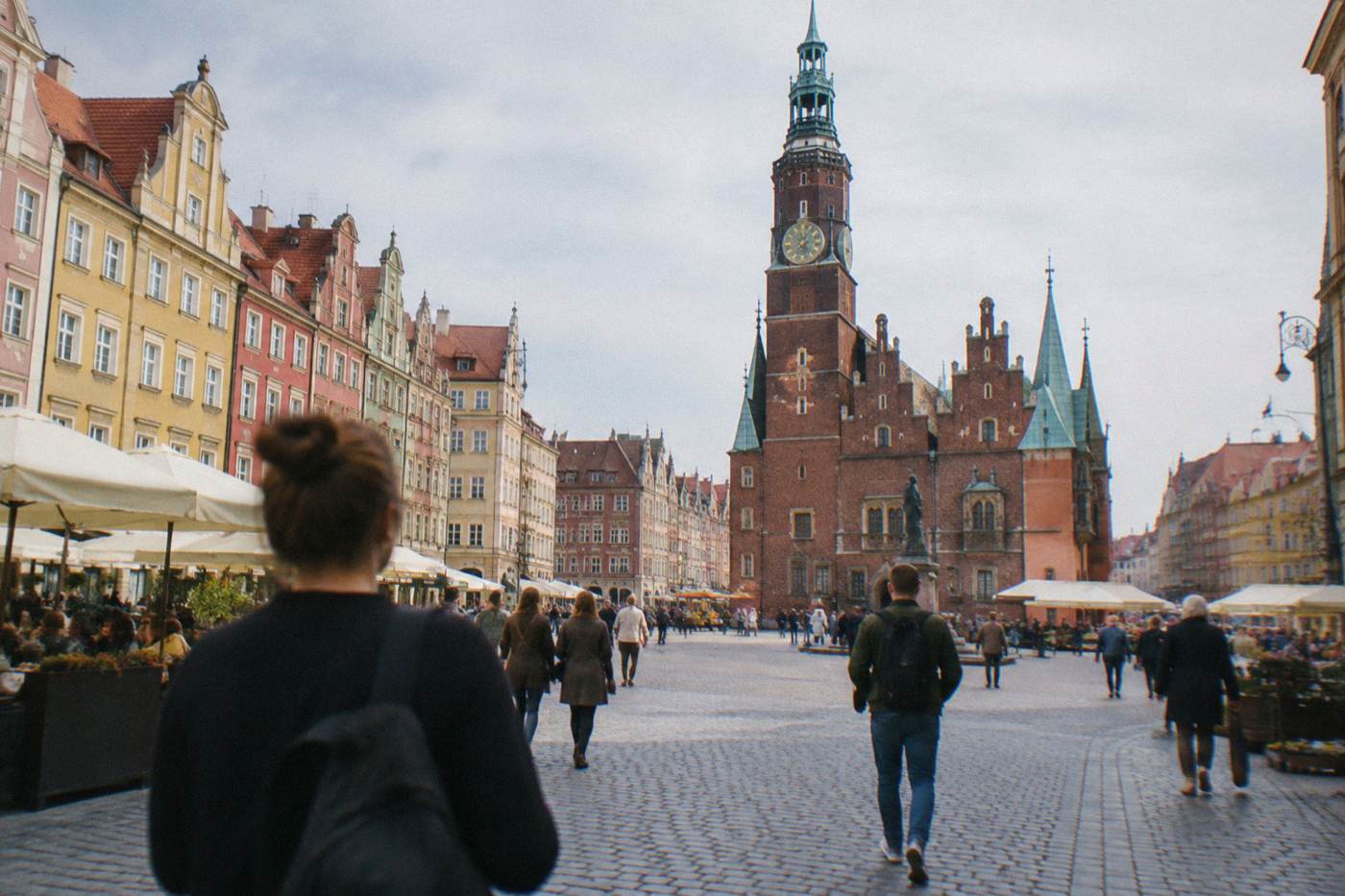
What Does Wroclaw Mean In English?
Wroclaw has no single English word as its meaning, because it is not a common noun: it is the Polish spelling of the medieval Slavic personal name Vratislav (Wrócisław), generally read as "returning with glory" or "one who returns famous," given to the city in honor of Duke Vratislav I of Bohemia, to whom the early-medieval stronghold on the Odra is attributed. In other words, asking what Wroclaw means is closer to asking what "Charleston" means than to asking what "springfield" means.
That distinction is the key to the whole question. Names built from ordinary words, like Novgorod, "new town," can be translated directly. Names built from a person's name cannot, and Wroclaw is firmly in the second group. The best an English speaker can do is unpack the personal name that sits inside the city name, and that unpacking gives the "glory" reading above.
The structure is a classic two-part Slavic name. The first element, in old records spelled variously with a v or a w, carries the sense of returning or coming back. The second element, sław, is one of the most productive name-elements in the whole Slavic world and means glory or fame. It survives in countless Polish and Czech names today: Stanisław, Bronisław, Miroslav, and famously in Wrocław's own medieval form, Wrócisław. Put the two halves together and you get something like "returning with glory," the kind of auspicious name a medieval family gave a son in the hope he would live up to it.
The connection to a specific duke is where most popular accounts land, and it is worth treating with a little care. Medieval chronicles attribute the founding of the stronghold to the Bohemian dukes of the Přemyslid line, and Vratislav I is the name usually attached to it. Written records from that period are thin, so the honest framing is "attributed in medieval chronicles" rather than "proved by documents." Either way, the mechanism is clear: a stronghold, then a settlement, then a city, all named after the ruler who established or held it.
Where Does The Name Wroclaw Come From?
The name comes from the personal name of a medieval Bohemian duke, Vratislav, filtered through a millennium of spelling shifts: the settlement recorded in early-medieval sources as Wratislav or Vratislav became Wrócisław in Polish mouths, was Latinized by church scribes as Wratislavia, and settled into its modern Polish form, Wrocław, after the Second World War. Every spelling is the same name wearing a different century's clothes.
The earliest written traces of the settlement appear in medieval sources, when scribes writing in Latin rendered Slavic names as best their alphabet allowed. That is where forms like Wratislavia come from: a Latin case ending bolted onto a Slavic name. Later Bohemian and then Polish documents kept the core, w-r-at-i-s-l-a-v, while German scribes, once the region's administration shifted, reached for their own phonetic habits and produced the form that would dominate for centuries, Breslau. None of these are different names. They are the same name, a duke's name, heard and written by different linguistic communities in sequence.
| Name element | Old Slavic sense | How it reads in English |
|---|---|---|
| Wrat- / Wroc- | to return, to come back | "returning" |
| -sław / -slav | glory, fame | "with glory" |
| Combined name Wrócisław | a personal given name | "he who returns with glory" |
| City form Wrocław | place named after the person | "Vratislav's town" |
This two-element structure is why the name can feel familiar even to a first-time visitor. Anyone who has met a Stanisław or read about a Miroslav has already handled the "-sław" half. Wroclaw simply hides the same element behind a spelling that English vowels are not built to accommodate, which leads directly to the next question, the one visitors actually ask in the city every day: how on earth do you pronounce it?
For anyone who wants the story told standing where it happened, the free walks around Wroclaw's Old Town and Cathedral Island angle is hard to beat, and a guided route turns name layers into visible architecture. The Bohemian, Polish and German chapters each left buildings behind, from the cathedral quarter on Ostrow Tumski to the rebuilt burgher houses of the Rynek.
How Do You Pronounce Wroclaw And Why Does It Look So Hard?
Pronounce it roughly as "VROTZ-wahf": in Polish, a leading W sounds like an English V, the C sounds like "ts," and the final Ł sounds like an English W, so Wrocław comes out as two syllables, stress on the first, ending in a soft "ow" glide. The spelling only looks hostile because it mixes Polish letters into positions where English readers expect different values.
The trouble comes down to three letters doing jobs English never assigns them. The W at the front is a V sound; Polish does not need a separate V letter because W covers it. The C is always "ts," a habit shared with Czech and other Slavic languages. The Ł, called "el with a stroke," is the deep curve ball: it once sounded like a dark English L but in modern Polish is a glide closer to the W in "water." Add the silent-feeling combination and English readers routinely produce "ro-claw" or "wro-claw," which locals hear the way a New Yorker hears "Hoos-ton Street."
None of this is unusual for Poland. The same letter logic governs Łódź, "WOO-j," and Szczecin, whose opening cluster famously defeats visitors. The reward for getting Wroclaw roughly right is instant goodwill, and the reward for trying is nearly as good: staff at museums and restaurants in this city of 672,601 residents are used to every possible mangling. A useful practice trick is to split the word into "VROT" plus "swahv," said quickly, stress landing hard on the first beat, because Polish stresses the opening syllable of Wrocław without exception.
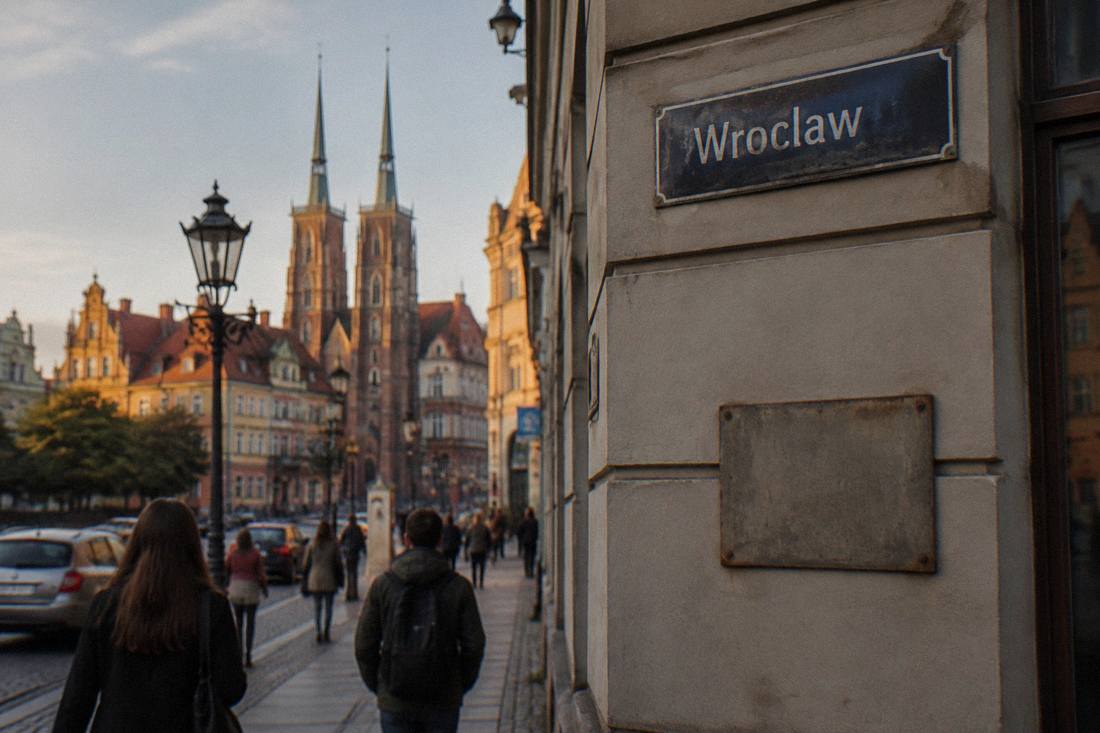
Why Was The City Called Breslau?
Breslau is the German form of the same name, and it was the city's official name during the centuries when Silesia's ruling and administrative language was German, from the medieval period through the end of the Second World War; after the region's borders were redrawn, the city's Polish name, Wrocław, became its only official one, and "Breslau" survives today mainly in historical writing and in German speech.
The two names were not rivals so much as running translations. For centuries the city was genuinely multilingual: church records in Latin, administration in German, streets full of a Polish-speaking population whose own name for their city never lapsed. The German form is not a different word either; it is the same Slavic personal name, Vratislav's name, compressed by German sound habits into Breslau. A German speaker hearing "Vratislav" said quickly, and the middle syllables blur, lands close to Bres-la-u without any deliberate translation at all.
The end of the Second World War is the hinge. The city's population changed almost entirely, the German state lost Silesia, and Wrocław, the Polish spelling of the old personal name, became the sole name on maps, signs and documents. That is also why the question "what does Wroclaw mean" and the question of the city's Polish-versus-German identity keep crossing paths: the name itself is the residue of that whole history, a Bohemian duke's name that Bohemia, Poland and Germany each spelled their own way. Readers who want that cultural story in full can follow the Polish or German heritage question, which unpacks what the city retained from each era.
For visitors today the practical takeaway is simpler than the history. Signage, tickets and announcements use Wrocław only. German tourists say Breslau at home and Wrocław on arrival, and older guidebooks in English sometimes still slip into the German form, which is worth knowing before you puzzle over an outdated map.
What Other Spellings Has The Name Appeared In?
The same city name appears in medieval and modern sources as Latin Wratislavia, Bohemian and Czech Vratislav, Polish Wrócisław and Wrocław, German Breslau, and English Wroclaw without the stroke, and all of these are the same personal name, Vratislav, adapted to each language's spelling habits rather than separate names for separate places.
| Language or context | Form of the name | What changed |
|---|---|---|
| Old Slavic personal name | Wrócisław / Vratislav | the source name itself |
| Latin, medieval records | Wratislavia | Latin ending added for scribes |
| Czech / Bohemian use | Vratislav | Czech spelling of the same name |
| German, until the war's end | Breslau | German compression of the same sounds |
| Modern Polish | Wrocław | current official form |
| Plain-ASCII English | Wroclaw | the Ł stripped for plain keyboards |
One detail in that table deserves a pause. The English "Wroclaw," without the stroke through the L, is not a different city or a misspelling; it is simply the ASCII-friendly way this site, like most English-language publications, renders a letter that standard keyboards cannot type. The official Polish form keeps the ł, and the pronunciation section above explains what that letter actually does to the sound.
Historical sources also show intermediate spellings from the centuries of shifting scribal habits, when a single document could render the name several ways. That variety is normal for any Central European city with a long, multi-lingual documentary record, and it is why etymologists describe the name's history as a chain of forms rather than a single line. The constant across every link in the chain is the personal name at the core.
Why Does The Name Matter For A Visit Today?
The name matters because it hands you the city's whole biography in miniature: an early-medieval Bohemian stronghold named for a duke, a Polish Piast capital, a German-speaking commercial city called Breslau, and a postwar Polish city that kept its layered architecture while restoring its Polish name, so a visitor who knows the etymology reads Wroclaw's buildings, islands and borders with far more understanding.
Consider what the physical city confirms. Ostrow Tumski, Cathedral Island, preserves the church quarter at the old stronghold's heart, the part of the city that carries the founding era most visibly. The Old Town around the Rynek mixes medieval burgher houses with the later reconstruction after wartime destruction. Centennial Hall, inscribed by UNESCO in 2006, represents the industrial-era chapter, built 1911-1913 to the design of architect Max Berg. Each layer belongs to one of the eras the name has passed through, which is why a two-hour circuit of the city doubles as a walk through its name history.
A guided option ties it together efficiently. The group electric-car tour of Wroclaw covers the Old Town and the island quarter in a short loop, and a Check availability link shows the operator's live listing. For deeper layers, the Ksiaz Castle day trips from Wroclaw carry the story into Lower Silesia itself, the region whose name, Silesia, has a tangled etymology of its own, one unpacked in the guide to what Silesia is famous for.
There is also a free option rooted exactly here. The Old Town Wroclaw walk by Walkative!, a tip-based GuruWalk tour, covers the core streets in about two and a half hours, and GuruWalk must be named here because it is a free walk, not a product sold through this site. Its guide service, like the paid group tours, leans on exactly the layered history this name encodes.
Common Questions About The Name Wroclaw
What does Wroclaw mean in English?
It has no direct English translation, because it is a personal name, not a common word. The name inside it, the medieval Slavic Vratislav or Wrócisław, is generally read as "returning with glory," given in honor of a Bohemian duke, so the city's name means essentially "Vratislav's town."
Is Wroclaw a Polish or a German name?
It is a Slavic personal name that both Polish and German speakers adapted. The Polish form Wrocław and the German form Breslau both descend from the same original name, Vratislav; the Polish spelling has been the city's sole official name since the end of the Second World War.
How do you pronounce Wroclaw correctly?
Roughly "VROTZ-wahf." The initial W sounds like an English V, the C sounds like "ts," and the final Ł sounds like an English W. Stress falls on the first syllable, as it does on nearly every Polish word of this shape.
Why do some sources spell it with a stroke through the L?
The stroke marks the Polish letter Ł, which in modern Polish sounds like the W in "water" rather than a standard L. English text often drops it, writing plain ASCII "Wroclaw," which is the same city and the same name in a keyboard-friendly form.
Was Wroclaw ever called something else officially?
Yes. During the centuries of German administration the official name was Breslau, and medieval Latin documents used Wratislavia. All of these are spellings of the one underlying personal name, not separate names for separate settlements.
Does the name relate to Wroclaw's current size or importance?
No. The name predates the modern city by roughly a millennium and honors a medieval duke. The city's current population of 672,601, counted by GUS at the end of 2025, makes it the largest city in Lower Silesia, though Krakow remains Poland's larger city overall.
The Wroclaw Travel Guide homepage carries the full things-to-do picture, from the dwarf-hunt craze to Cathedral Island, for anyone whose next question after the name is what to actually do in the place it belongs to. And if you are still curious whether the city repays the flight, the honest case for whether Wroclaw is worth visiting follows directly from this one: a city whose name encodes a Bohemian duke, a Latin chronicle, a German merchant age and a Polish restoration is a city that will keep explaining itself to you the whole time you are there.