What Is The Artsy City In Poland?
Lodz is the city most consistently called Poland's arts capital: a UNESCO City of Film with the Polish National Film School. Wroclaw's arts claim rests on its 2016 European Capital of Culture year, the New Horizons festival and the Nadodrze street-art quarter.
Ask a film historian which Polish city deserves the artsy label and the answer is Lodz, not Wroclaw, the Lower Silesian hub in southwestern Poland that this site covers. Lodz is a UNESCO City of Film, the seat of the historic Polish National Film School and the home of the Museum of Cinematography. Wroclaw's arts reputation is real, and this article gives it full weight, but it rests on different pillars: a 2016 European Capital of Culture year, the New Horizons film festival and the mural-covered courtyards of the Nadodrze district. Treating those two claims as the same claim is where most guides go wrong.
What Is The Artsy City In Poland?
Lodz is the Polish city most consistently described as the artsy one: it holds the UNESCO City of Film title, hosts the historic Polish National Film School that trained Polanski, Wajda and Kieslowski, and keeps the Museum of Cinematography. Wroclaw's arts claim is real but different: a 2016 European Capital of Culture year, the New Horizons film festival and the street-art quarter of Nadodrze.
The distinction matters because search results blend the two cities into one vague "creative Poland" story. They are not interchangeable. Lodz, in central Poland, built its identity around celluloid: studios, film-school mythology and a museum dedicated to the craft. Wroclaw, on the Odra river, built its modern arts identity around a city-wide culture year, a distinctive cinema festival and the grassroots transformation of a run-down riverside district into an open-air gallery.
Both stories are verifiable. Neither is a superlative contest, and the sections below stick to what primary sources and recent reporting actually say about each city.
Why Is Lodz Called Poland's Film And Arts Capital?
Lodz earned the label through film: it is a UNESCO City of Film, its Polish National Film School counts Roman Polanski, Andrzej Wajda and Krzysztof Kieslowski among its alumni, and the city's Museum of Cinematography preserves that heritage alongside working studios. Recent British newspaper reporting has described Lodz as Poland's film capital. No other Polish city carries that combination of credentials.
The UNESCO City of Film designation is the load-bearing fact. UNESCO's creative-cities network lists Lodz under the film category, and Polish sources commonly refer to the city by its "HollyLodz" nickname, a play on the school-and-studio economy that grew up there. The Polish National Film School is the alma mater most often cited: Polanski, Wajda and Kieslowski all studied there, and that lineage is what gives the city its claim to being the country's film cradle.
The Guardian's travel desk, writing in 2026, framed Lodz as Poland's film capital on exactly those grounds: the school, the Museum of Cinematography and the studios still operating in the city. That is the consensus view, and this site does not undercut it. Wroclaw has a film festival, a good one, but a festival is not a film industry plus a school plus a museum.
For travelers comparing city breaks, the practical takeaway is simple. Go to Lodz for film history and industrial-heritage architecture. Go to Wroclaw for a different kind of creative energy, the one described in the next section. Readers weighing Wroclaw against other Polish cities may also find the site's piece on why Wroclaw is famous useful context.
What Makes Wroclaw Artsy On Its Own Terms?
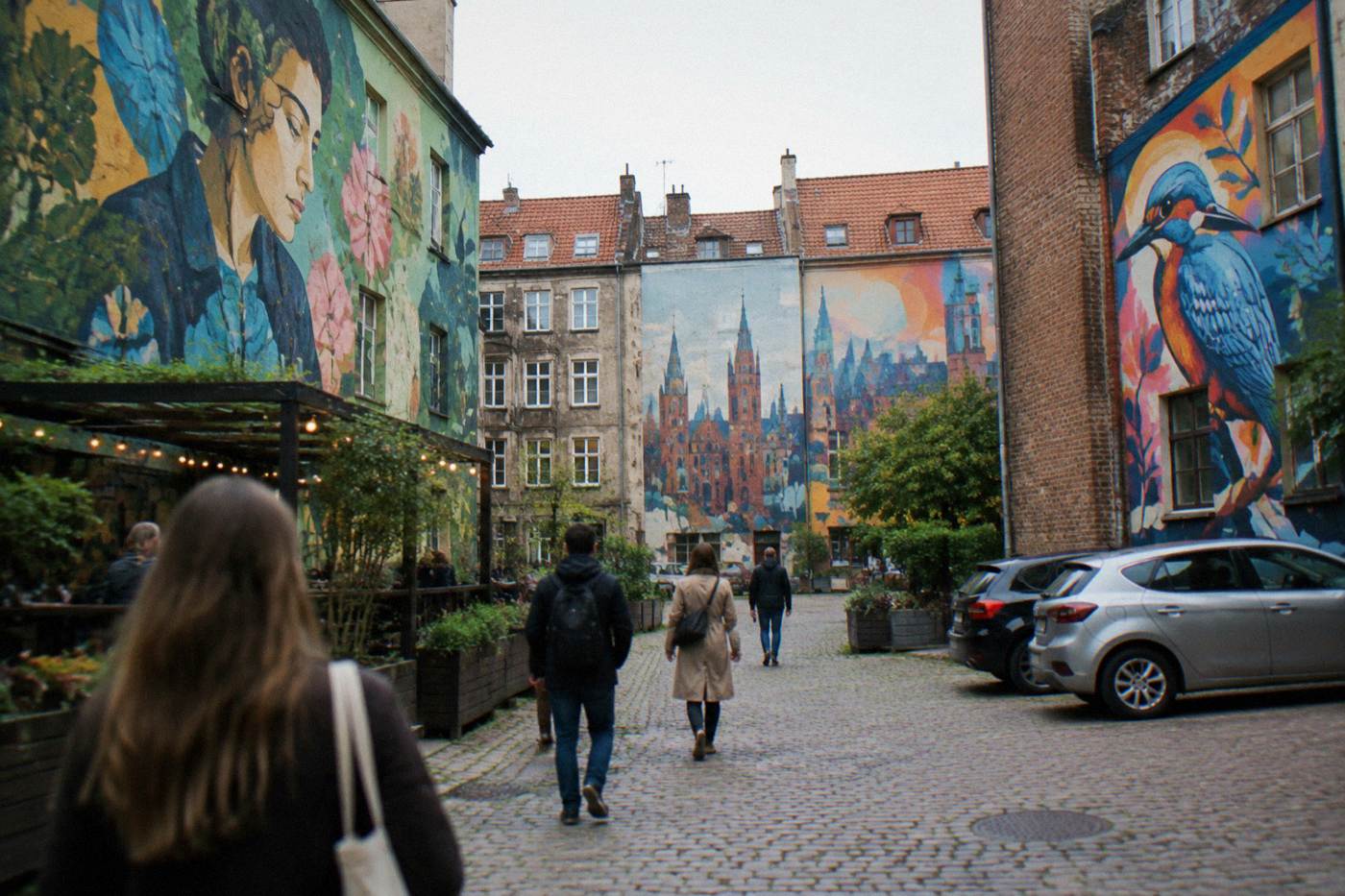
Wroclaw's arts identity stands on three verified pillars: its year as a European Capital of Culture in 2016, the New Horizons film festival, and Nadodrze, a formerly neglected district turned creative quarter whose Roosevelt Street courtyards carry community murals. International broadcaster reporting has covered Nadodrze's revival directly. That is a strong regional arts scene, not the national film capital.
Nadodrze is the most concrete of the three. Polish public television's international channel, TVP World, ran a report on how the district "came back from the dead," tracing its shift from a neglected pocket north of the center to a recognized street-art and creative quarter. The murals are community-driven, the Roosevelt Street courtyards being a frequently cited example, and the change came through revitalization projects rather than a single top-down rebrand. Walking Nadodrze is the closest thing Wroclaw has to a free gallery district.
The 2016 European Capital of Culture year is the credential with institutional weight. Wroclaw held the title jointly with San Sebastián, and the year left the city with a durable festival infrastructure and a habit of programming public art. New Horizons, the film festival, gives cinephiles a reason to time a visit, even if the festival does not make Wroclaw a film-industry town in the Lodz sense. Readers curious about the city's wider regional identity can also read what Silesia is famous for.
The table below puts Wroclaw's verified arts credentials side by side so the claims stay separated.
| Arts credential | What it is | Where it comes from |
|---|---|---|
| European Capital of Culture | Wroclaw held the title in 2016 | The European culture-year program |
| UNESCO listing | Centennial Hall, inscribed in 2006 | UNESCO World Heritage list |
| Signature film event | New Horizons film festival | The city's annual festival calendar |
| Street-art quarter | Nadodrze, including Roosevelt Street courtyards | TVP World reporting on the district's revival |
| Museum anchor | National Museum, adult 20 zl, reduced 15 zl | The museum's own practical-info page |
For visitors who want the museum side of the arts scene, the entry prices below come straight from the institutions' own pages.
| Wroclaw arts venue | Adult | Reduced | Note |
|---|---|---|---|
| National Museum, permanent exhibitions | 20 zl | 15 zl | Free entry every Saturday |
| National Museum, temporary exhibitions | 10 zl | 8 zl | Second-floor galleries |
| Museum for a zloty, students and pupils under 26 | 1 zl | n/a | Special ticket on the museum's own price page |
| Panorama Raclawicka | 50 zl | 35 zl | 30-minute screening; ticket also covers the National Museum's permanent exhibitions, the Ethnographic Museum and the Four Domes Pavilion within 3 months |
How Does Wroclaw's Art Scene Compare With Krakow And Warsaw?
Wroclaw holds its own against Krakow and Warsaw in museums and festivals, but each city's arts identity differs: Krakow is the larger city, with 816,614 residents to Wroclaw's 672,601 at 31 Dec 2025 per GUS, Warsaw draws international attention as a vegan hub, and Lodz owns the film title. Wroclaw's distinctive assets are Centennial Hall, a UNESCO site since 2006, and its compact museum quarter.
The comparison is where honest guides get slippery, so the numbers stay exact. GUS, Poland's statistics office, counted 816,614 residents in Krakow and 672,601 in Wroclaw at the end of 2025. Krakow's Rynek Glowny, at roughly four hectares, is also the larger market square; Wroclaw's Rynek is smaller at roughly 3.64 to 3.79 hectares. None of that diminishes Wroclaw's art scene, it simply keeps the "biggest" and "best" language out of a page that is supposed to be verifiable.
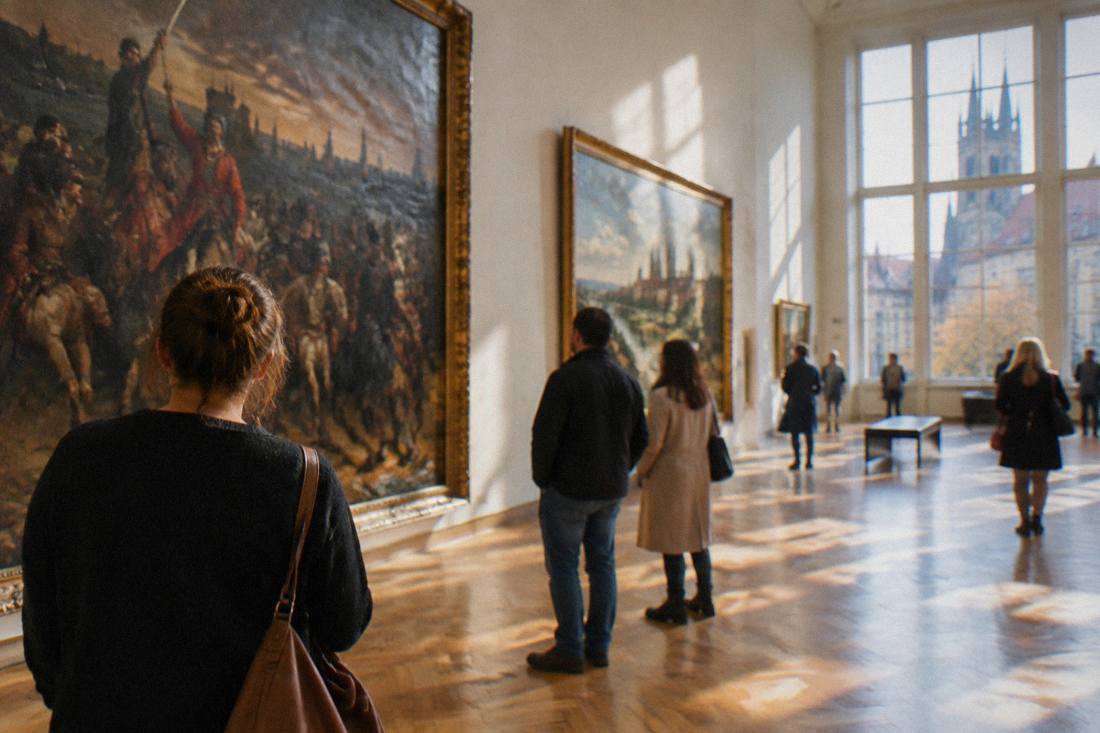
Warsaw's recent international arts-and-culture attention has clustered around its vegan food scene, with British and American outlets describing it as a leading European vegan hub. Older per-capita rankings put Poznan and Krakow ahead of Wroclaw for plant-based dining, so this site does not hand Wroclaw a "most vegan city" title either. The honest comparative picture: Lodz for film, Warsaw for vegan kitchens, Krakow for scale and medieval fabric, Wroclaw for a compact, walkable mix of museums, street art and one genuinely distinctive cinema festival.
Travelers still weighing the whole country can start with the site's overview of which is the prettiest Polish city, or with the practical verdict in is Wroclaw worth visiting.
Can You See Wroclaw's Creative Side In A Day?
Yes: a single day covers Wroclaw's creative core if it opens in the Old Town, spends the middle of the day in the museum quarter and ends in Nadodrze. The National Museum costs 20 zl for an adult, 15 zl reduced, and is free every Saturday, the Panorama Raclawicka screening lasts 30 minutes, and Nadodrze's murals sit just north of the center on the tram network, where a 15-minute ticket costs 4.60 zl.
The morning belongs to the Old Town: the Rynek, the painted tenements and the dwarf sculptures scattered through the lanes, which have their own following and their own tours. The middle of the day works well in the museum quarter, where the National Museum and the Four Domes Pavilion sit close enough to walk between, and the Panorama's one-ticket reciprocity means a morning Panorama visit also covers the other branches on a later day within three months.
Nadodrze is the afternoon. The district's murals and courtyards cost nothing to see, which makes it the budget anchor of any arts itinerary, and the revitalized streets have cafes and small venues worth lingering in. A local guide adds the story the walls do not tell, and a private tour is the most comfortable way to link the Old Town and the creative quarter in one loop. The site's featured pick is the Private Top Attractions Of Wroclaw tour, a private walking tour of the headline sights: Check availability on the operator's live listing if that pace suits.
Wroclaw is a city that rewards a guide's framing, because its arts story is a sequence of specific events rather than one famous street. The 2016 culture year, the festival, the Nadodrze revival: a guide who knows the city can put each in order and show where it shows up in the streetscape.
For readers planning around the arts calendar, spring and early autumn sit in the comfortable middle of the city's temperature range, with IMGW's 1991-2020 normals giving April a 9.7 C mean and September 14.5 C. July is the warmest month at 19.7 C mean, which pairs well with evening walks along the Odra but also with the busiest streets.
Common Questions About Arts Cities In Poland
The short version: Lodz is the artsy city in Poland by consensus, thanks to its UNESCO City of Film title, the Polish National Film School and the Museum of Cinematography. Wroclaw, in Lower Silesia, is the strong second act, with the Nadodrze street-art quarter, the New Horizons film festival and a 2016 European Capital of Culture year. Krakow and Warsaw lead on other measures entirely.
What is the artsy city in Poland?
Lodz. It is a UNESCO City of Film, home to the historic Polish National Film School, whose alumni include Roman Polanski, Andrzej Wajda and Krzysztof Kieslowski, and to the Museum of Cinematography. Recent reporting describes it as Poland's film capital.
Is Wroclaw an arts city too?
Yes, on its own terms. Wroclaw was a European Capital of Culture in 2016, hosts the New Horizons film festival, and has the Nadodrze district, a revived creative quarter with community murals such as the Roosevelt Street courtyards. It is not the national film hub.
Is Wroclaw bigger than Krakow?
No. GUS counted 672,601 residents in Wroclaw and 816,614 in Krakow at 31 Dec 2025, and Krakow's main market square is larger as well. Wroclaw is the largest city in Lower Silesia, not in Poland.
Does Wroclaw have UNESCO-listed art?
Wroclaw's UNESCO inscription is Centennial Hall, listed in 2006. The Max Berg-designed hall was built between 1911 and 1913 and seats up to 10,000. The city's modern arts fame, though, comes from the 2016 culture year and Nadodrze rather than from that listing.
Where do I see street art in Wroclaw?
Nadodrze, north of the center. The district's Roosevelt Street courtyards are the best-known mural cluster, and TVP World has reported on how the area went from neglected to a recognized creative quarter. It is free to explore.
The honest ranking, then: Lodz for the film title, Wroclaw for street art and a festival city's energy. This Wroclaw Travel Guide covers the second half of that sentence in depth, from the museum quarter's Saturday free entry to the murals of Nadodrze, all of it walkable in a city small enough to feel like a single canvas.