Which Is The Prettiest Polish City?
An honest answer to which is the prettiest Polish city, and why Wroclaw, the largest city in Lower Silesia in southwestern Poland, belongs on every shortlist alongside Krakow and Gdansk.
Beauty contests between cities are older than the internet, and Poland supplies one of the hardest fields to judge in Europe. Wroclaw, the largest city in Lower Silesia (Dolnoslaskie voivodeship), in southwestern Poland, on the Odra river, is the candidate this site exists to cover, but honesty comes before promotion: Krakow, Gdansk, Torun and Zamosc all have serious claims. What follows lays out the facts that actually separate the contenders, and then makes the case for Wroclaw using numbers from official sources rather than adjectives.
Which Is The Prettiest Polish City?
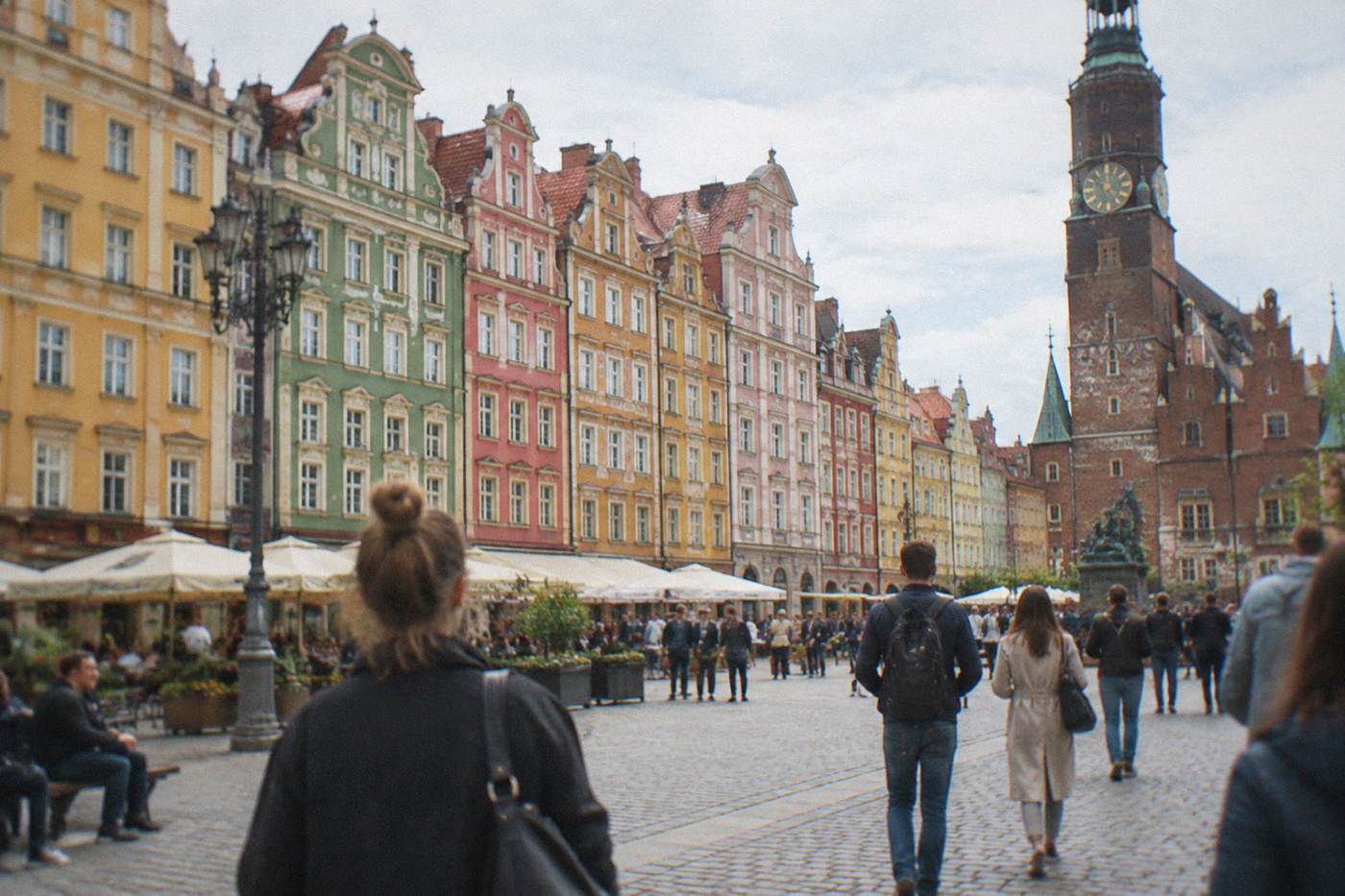
There is no official prettiest city in Poland, and no ranking body crowns one. Ask travelers and guidebooks and the same shortlist recurs: Krakow, Gdansk, Torun, Zamosc and Wroclaw. Wroclaw, the largest city in Lower Silesia in southwestern Poland, earns its place on that list for its painted Market Square townhouses, the cathedral island of Ostrow Tumski and its bridges across the Odra, but the final call is a matter of taste, not a verdict anyone can prove.
The case for each contender is real. Krakow brings the largest main market square of the group and a royal castle on a hill. Gdansk brings a rebuilt merchant-city waterfront in amber and brick. Torun brings Gothic brick and the birthplace heritage of Copernicus, and Zamosc brings a near-perfect Renaissance plan. Wroclaw's pitch is different from all of these: it is a city spread across the branches of a river, where a medieval core, an island cathedral quarter and a cluster of green park islands sit within a short walk of each other.
What Wroclaw also has, and what most first-time visitors underestimate, is variety within a small area. The official record behind that impression is measurable: the city's population is 672,601 as of 31 December 2025 according to GUS, Statistics Poland, and its Rynek, the main market square, covers roughly 3.64 to 3.79 hectares. Krakow's Rynek Glowny, at about 4 hectares, is the larger of the two, a fact worth stating plainly because inflated claims about Wroclaw's square circulate widely and are simply not true. The prettiest-city debate is better won on character than on superlatives.
What Makes Wroclaw A Contender For Poland's Prettiest City?
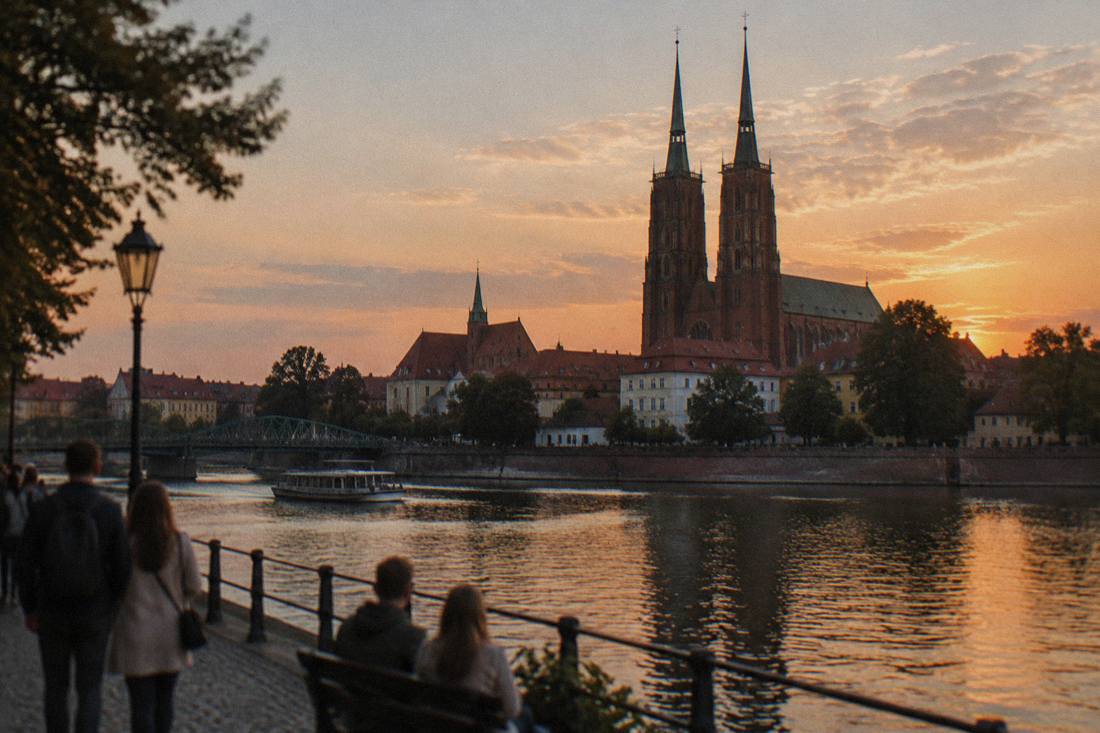
Wroclaw's case rests on three documented strengths: a Market Square lined with baroque and Gothic merchant houses around the largest city hall ensemble of its kind in the region, the cathedral island of Ostrow Tumski reached by footbridges over the Odra, and a UNESCO-listed modernist landmark, Centennial Hall, inscribed in 2006, designed by architect Max Berg and built between 1911 and 1913 with a reinforced-concrete dome seating up to 10,000 people.
Those are the headline items, but the deeper argument is texture. The city's 2016 European Capital of Culture year left a visible legacy of festivals and restored venues, and the Nadodrze district just north of the center has become a recognized street-art and creative quarter, with community-driven murals in courtyard projects such as the Roosevelt Street courtyards turning a formerly neglected area into an art district. Recent reporting, including TVP World's coverage of the district, describes the transformation in exactly those terms. That combination, a monumental old core plus a scruffy-reborn creative quarter, is what puts Wroclaw in the prettiest-city conversation rather than merely the sightseeing one.
The other underrated element is the dwarf sculptures. Small bronze figures hidden around the city have become its signature treasure hunt, and they do something a beautiful square cannot: they pull visitors off the main streets into lanes and courtyards they would otherwise never enter. The city's own promotional apparatus leans on them heavily, and the guided hunts built around them are among the most popular paid activities in the city. Beauty, in Wroclaw, tends to arrive while you are looking down for a dwarf.
For travelers who want the argument settled on foot rather than in words, a guided walk is the most efficient way to see the corners that make the case. The Hidden Gems of Wroclaw Tour, a guided walk, exists precisely for this: it covers the quieter lanes and courtyards beyond the obvious square-and-cathedral circuit, and the operator's live listing carries current times and availability.
How Does Wroclaw Compare With Krakow For Looks?
Krakow is the larger city, with a population of 816,614 against Wroclaw's 672,601 as of 31 December 2025, and it has the larger main market square, roughly 4 hectares against Wroclaw's 3.64 to 3.79 hectares. In pure scale Krakow wins. In compactness, water and variety Wroclaw answers with an island cathedral quarter, river branches and park islands that Krakow's landlocked core cannot match.
The numbers deserve a table, because the comparison is one where both exaggeration and false modesty are common:
| Measure | Wroclaw | Krakow |
|---|---|---|
| Population, 31 Dec 2025 (GUS) | 672,601 | 816,614 |
| Main market square | Rynek, approx. 3.64-3.79 ha | Rynek Glowny, approx. 4 ha |
| Signature water feature | Odra river branches and park islands | Vistula river, at a distance from the old core |
| City UNESCO World Heritage site | Centennial Hall, inscribed 2006 | Historic centre (not assessed in this site's sourced pack) |
What the table cannot show is atmosphere. Krakow's square is a vast medieval stage, grander and more monumental. Wroclaw's is more enclosed, more painted, and, many visitors feel, more playful, with the dwarf hunt threading through it. The two cities are frequently compared on this site, and the fuller treatment lives in the article on Wroclaw versus Krakow for visitors, while the size question specifically is settled in is Wroclaw bigger than Krakow. The short version of both: no, it is not, and the prettiest-city debate does not depend on it being so.
A fair way to frame the choice: Krakow is the city for monumental grandeur on the biggest scale, Wroclaw is the city for intimacy, water and eccentricity, and Gdansk is the city for a waterfront stage set in brick and amber. Anyone calling one objectively prettiest is describing their own taste, not a measurable fact, and any guide pretending otherwise should be read with caution.
When Is Wroclaw At Its Most Beautiful?
IMGW's 1991-2020 climate normals for the Wroclaw station put July as the warmest month at a mean of 19.7C and January as the coldest at 0.0C, with an annual mean of 9.7C. The city looks its best from May through September, when riverbanks and park islands are in full use, while December adds the Christmas market glow that makes the painted facades of the Rynek shine at dusk.
The monthly picture, from the official IMGW normals:
| Month | Mean temperature (C) | Month | Mean temperature (C) |
|---|---|---|---|
| January | 0.0 | July | 19.7 |
| February | 1.1 | August | 19.3 |
| March | 4.3 | September | 14.5 |
| April | 9.7 | October | 9.6 |
| May | 14.3 | November | 4.8 |
| June | 17.7 | December | 1.1 |
Two notes of honesty about that table. First, no sunshine-hours figure was sourced for Wroclaw in this site's research, so no claim about it being the sunniest or warmest city in Poland appears here or anywhere on this site. Second, "most beautiful" is not the same as "warmest": late April and May bring the blossom season on the park islands at comfortable temperatures, and photographers often prefer the low light of October to the crowds of July. Winter has its own following, and the question of whether Wroclaw is worth visiting at Christmas gets its own honest treatment.
How Much Does It Cost To See Wroclaw's Highlights?
The headline sights are inexpensive by western European standards: the National Museum's permanent exhibitions cost 20 zl adult, 15 zl reduced, with free entry every Saturday; the Panorama Raclawicka costs 50 zl adult and 35 zl reduced for a 30-minute screening, with the ticket also covering four partner museums within three months; and Wroclaw Zoo charges from 69 zl online versus 99 zl at the gate, with the Afrykarium aquarium included in the standard ticket.
The zoo's online-versus-gate spread is the single biggest avoidable cost on that list, and the Afrykarium inclusion is a detail that goes unnoticed: it is part of the standard ticket, never a separate charge. There is no all-inclusive Go City-style tourist pass for Wroclaw; this site's research found no such product currently sold, and the UrbanCard that does exist is a transport-focused fare card, not a sightseeing pass. Anyone promising a bundled all-attractions pass for this city is selling something that does not exist.
| Attraction | Adult price | Reduced price | Note |
|---|---|---|---|
| National Museum, permanent exhibitions | 20 zl | 15 zl | Free every Saturday |
| Panorama Raclawicka | 50 zl | 35 zl | Also covers 4 museums within 3 months |
| Wroclaw Zoo, online | from 69 zl | from 59 zl | Afrykarium included |
| Wroclaw Zoo, at the gate | 99 zl | 89 zl | Buy online instead |
All four of those figures come from the institutions' own published price tables, fetched in September 2026. Museum lovers should note the Panorama's bundling rule carefully: buying the 50 zl Panorama ticket first effectively converts the National Museum, the Ethnographic Museum and the Four Domes Pavilion into free follow-up visits within three months, which is the best value arithmetic in the city.
If the walk-led route through the city appeals, the Wroclaw Travel Guide covers the individual quarters in depth, from Ostrow Tumski to Nadodrze, and the paid options span everything from a quick private old town circuit to full-day trips into Lower Silesia's castles. A private guide changes the experience more than a quick walk suggests: the pretty corners of Wroclaw are often a courtyard or a doorway away from the obvious route, and a local guide knows which ones are open on a given day.
For anyone planning around the prettiest-city question specifically, the practical advice is simple. Give Wroclaw at least two days, buy the zoo ticket online, time the museum cluster around a Saturday, and save one evening for Ostrow Tumski after dark, when the lamplighter still lights the island's gas lamps by hand, one of the last places in Europe where this happens and a detail that no other Polish contender can offer.
Booking terms on the operator's live listing, including cancellation windows and payment options, are always the authoritative version; the reassurance worth repeating here is that most city walking products in Wroclaw can be reserved with free cancellation up to a day before departure, which makes locking in a walk early a low-risk move in peak season. The longer comparisons, from how many days in Wroclaw is enough to what Wroclaw is famous for, are covered elsewhere on this site.
Common Questions About The Prettiest Polish City
Which is the prettiest Polish city?
There is no official answer. The recurring shortlist is Wroclaw, Krakow, Gdansk, Torun and Zamosc, and each wins on a different quality: Krakow on monumental scale, Gdansk on its waterfront, Torun on Gothic brick, Zamosc on its Renaissance plan, and Wroclaw on its river islands, painted Market Square and the cathedral quarter of Ostrow Tumski.
Is Wroclaw prettier than Krakow?
Not measurably, and scale is not in Wroclaw's favor: Krakow is the larger city, 816,614 residents to Wroclaw's 672,601 as of 31 December 2025, and holds the larger main square. Wroclaw's argument is character: water, islands, the dwarf hunt and a compact walkable core, which many visitors find more charming, though charm is a matter of taste.
Does Wroclaw have the largest market square in Poland?
No. Krakow's Rynek Glowny, at roughly 4 hectares, is larger than Wroclaw's Rynek, which covers approximately 3.64 to 3.79 hectares. Wroclaw's square is still one of the most striking in the country for its painted facades and town hall ensemble, but the "largest in Europe" claims sometimes attached to it are not supported and should be treated as folklore.
When should I visit Wroclaw for the best scenery?
May through September, when the IMGW 1991-2020 normals show means climbing from 14.3C in May to a July peak of 19.7C, and the riverbanks and park islands are in full use. December is the second peak for the Christmas market glow on the Rynek, with a January mean of 0.0C marking the quiet low season.
Are the pretty parts of Wroclaw walkable in one day?
Largely yes: the Market Square, Ostrow Tumski and the main river islands sit within a compact central area, and the one-day itinerary covers them. To also reach Centennial Hall, the Japanese Garden and the zoo across the river, two days is the more comfortable pace, and a longer stay can add the Nadodrze art district.
Is Wroclaw worth a trip just for how it looks?
Yes, with the honest caveat that its beauty rewards slow looking rather than a checklist. The painted houses, the footbridges onto Ostrow Tumski and the dwarf figures scattered through lanes and courtyards make it one of the most rewarding Polish cities to wander without a plan, which is exactly the kind of city that wins prettiest-city polls.