Wambierzyce Basilica
Wambierzyce is a small pilgrimage village in Lower Silesia, Poland, nicknamed Silesian Jerusalem, and its baroque Visitation basilica and Calvary chapels make one of the region's most distinctive day trips from Wroclaw.
Short answer
Wambierzyce is a pilgrimage village in Lower Silesia in southwestern Poland, about a day trip from Wroclaw, famous for its baroque Visitation basilica and a Calvary path of chapels spread across the surrounding hills. Locals call it Silesian Jerusalem, and it pairs naturally with the Church of Peace in Swidnica on a Lower Silesia church itinerary.
Wambierzyce sits in the hills of Lower Silesia (Dolnoslaskie voivodeship) in southwestern Poland, a short drive into the countryside from Wroclaw, the region's largest city. It is one of the oddest and most atmospheric villages within day-trip range of the city: a place of a few streets that carries the nickname "Silesian Jerusalem", built around a baroque basilica and a landscape of Calvary chapels scattered across the hillsides. Pilgrims have been coming here for generations, and the village's whole layout, its gates, paths and viewpoints, was shaped around that movement of people. For travellers based in Wroclaw, it offers something the city cannot: a walkable religious landscape in open country, a mix of monumental architecture and quiet village streets, and a stop that fits naturally into a broader tour of Lower Silesia's churches and castles. This guide explains what the basilica is, what you actually see on the ground, how the day trip works from Wroclaw, and how it compares with the region's other headline day trips.
What Is The Wambierzyce Basilica And Why Is It Called Silesian Jerusalem?
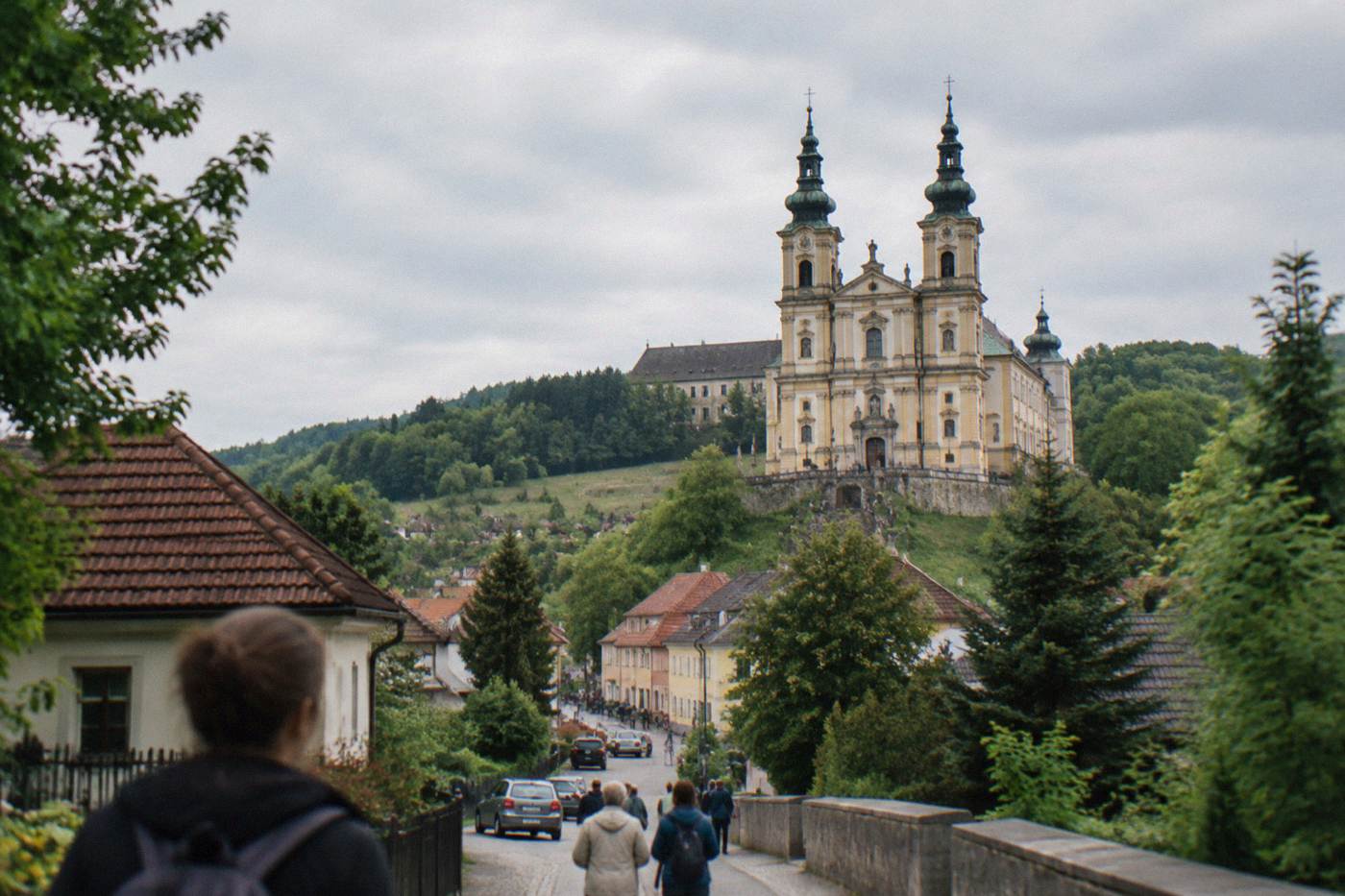
The Wambierzyce Basilica is a large baroque church dedicated to the Visitation of the Virgin Mary, standing at the center of a small pilgrimage village in Lower Silesia, Poland, roughly a day trip from Wroclaw. The village is nicknamed "Silesian Jerusalem" because its founders deliberately recreated a Holy Land geography, with a Calvary path of dozens of chapels and stations laid out across the hills, gates and paths around the church.
The nickname is the key to understanding the place. Wambierzyce was not designed as an ordinary village with a church in the middle. It was laid out as a devotional landscape, a local stand-in for Jerusalem, so that pilgrims who would never see the Holy Land could walk a symbolic version of it. The basilica anchors the composition. Around it, the hills carry a network of chapels and stations that turn a walk through the village into a route with meaning attached to every slope and viewpoint.
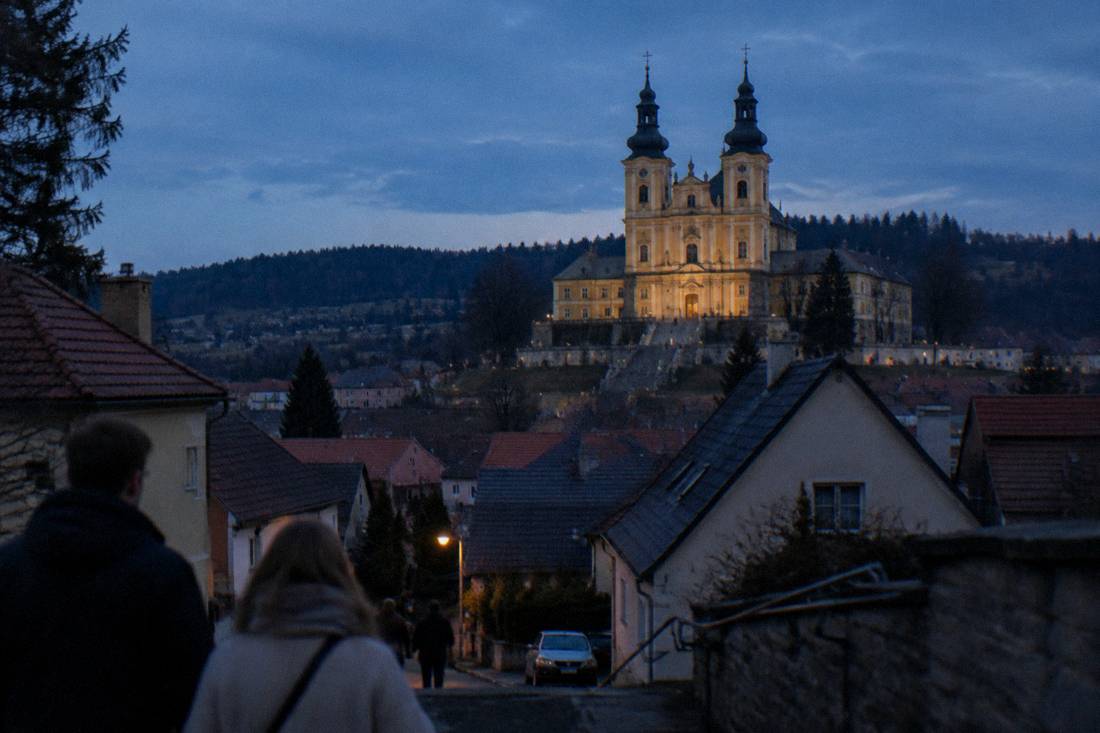
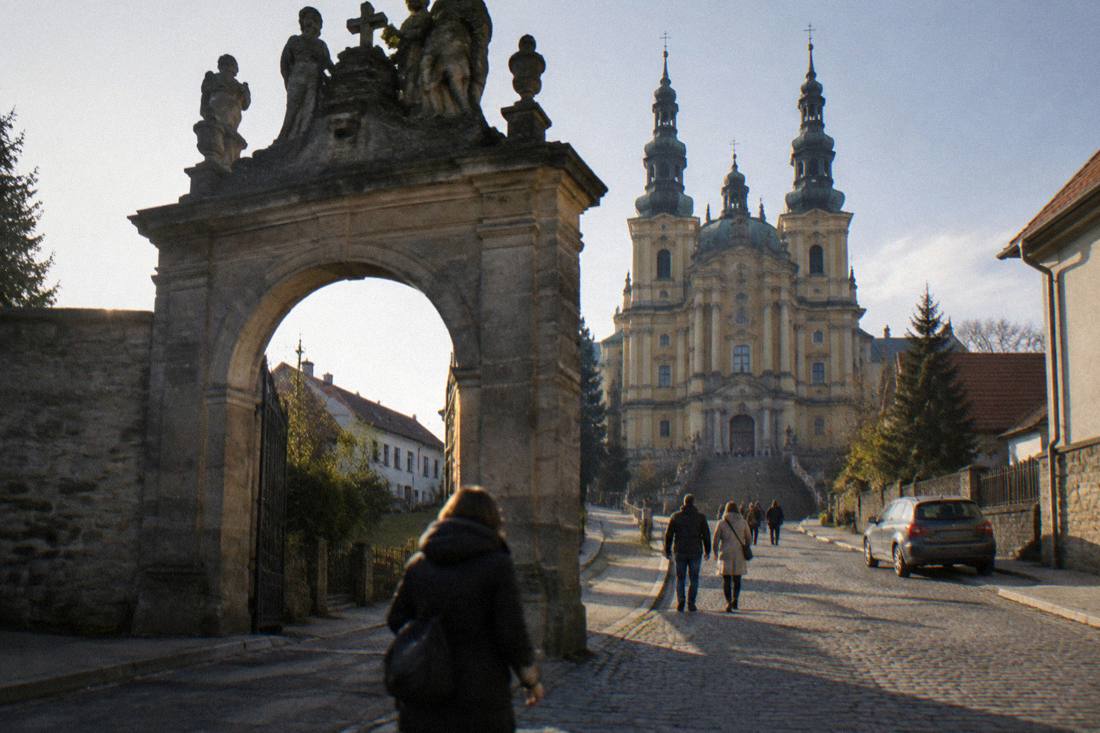
The church itself is the architectural anchor. Its twin-tower facade dominates the village from every angle, and its interior is the reason many visitors make the trip: a fully developed baroque space, dense with ornament, built on a scale that seems oversized for a village of this size. That contrast between a small settlement and a monumental church is precisely the effect the builders wanted. Pilgrimage sites were meant to overwhelm, and Wambierzyce still does.
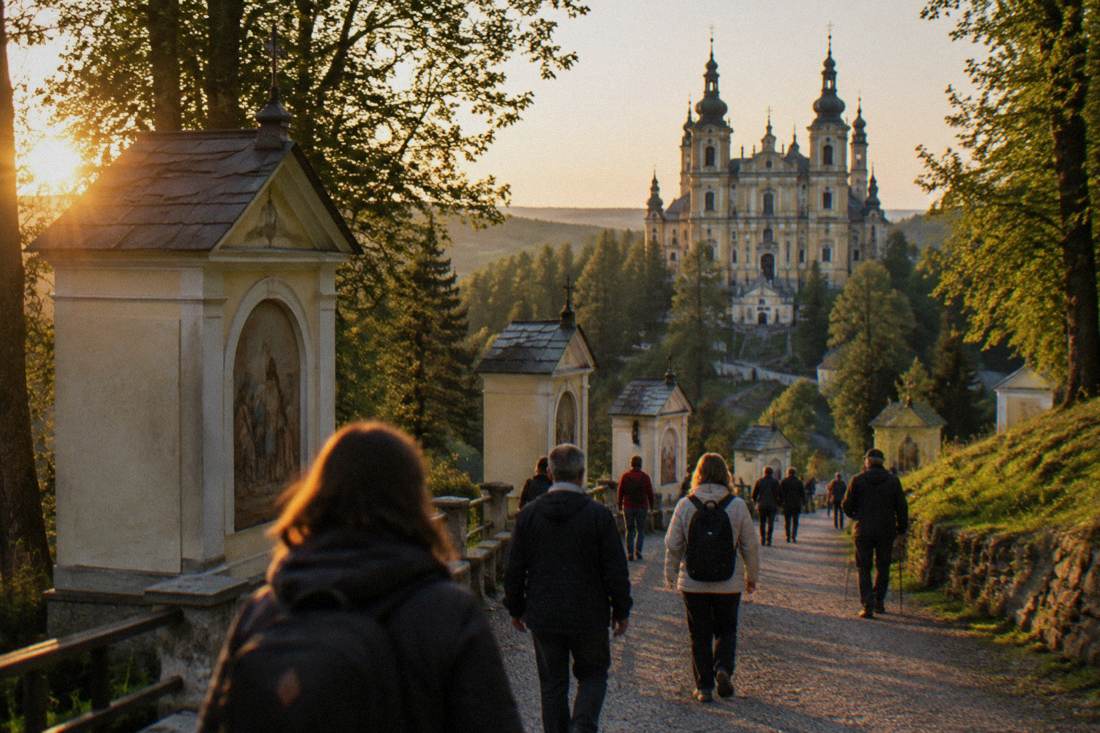
What makes the village work for a modern visitor is that the devotional geography survives. You can still walk the Calvary route, still climb from the village streets to chapels above the rooftops, still stand at viewpoints designed centuries ago for looking back down at the basilica. Whether or not you come for religious reasons, the village reads as a piece of landscape architecture, and that is what separates it from a generic countryside church stop.
What Can You Actually See On The Ground At Wambierzyce?
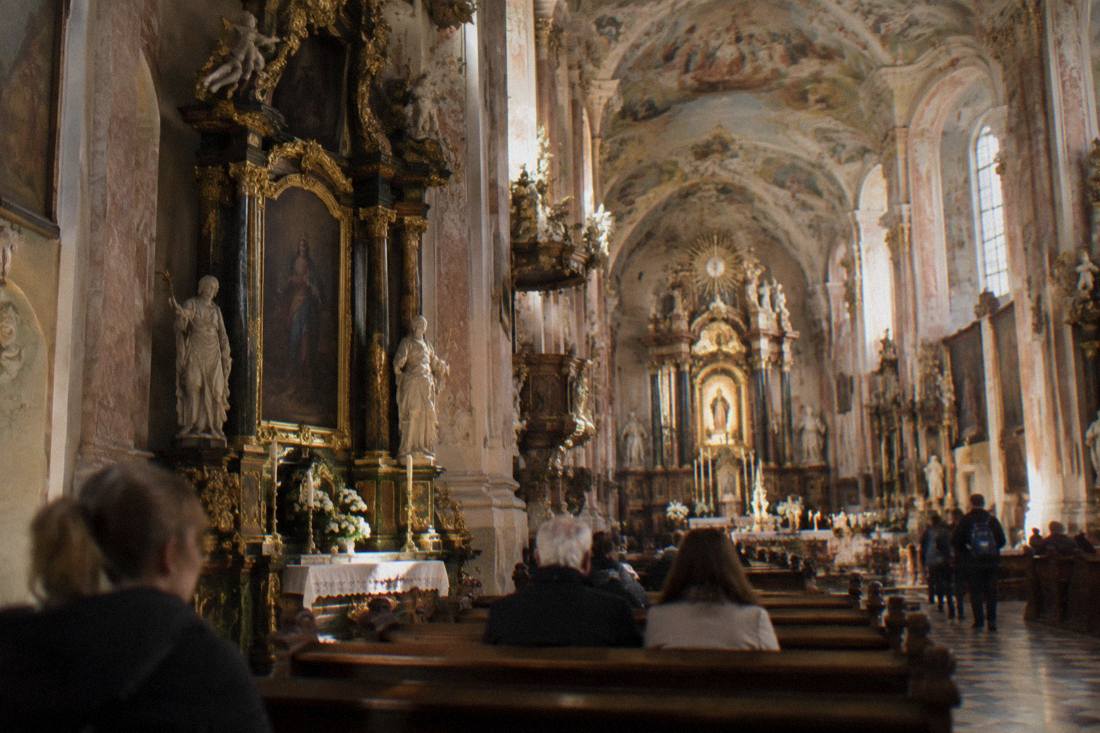
A visit to Wambierzyce covers three things: the baroque basilica interior with its altars and ornament, the Calvary path of chapels climbing the hills around the village, and the village fabric itself, gates, shrines and viewpoints that tie the two together. Most of the experience is outdoors and free to walk, with the church interior as the single enclosed highlight.
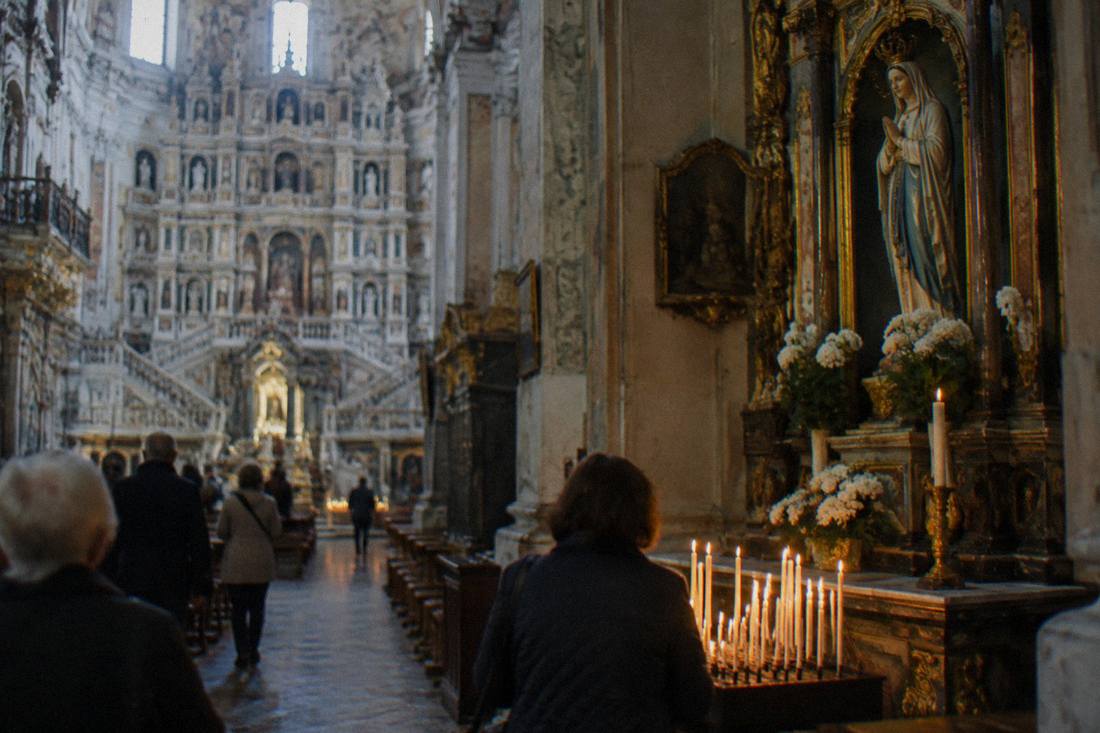
Start with the basilica. The interior is the village's showpiece, a concentrated dose of Silesian baroque: columns, altars, statuary and painted decoration filling a space that feels far grander than its village setting suggests. Give it time rather than a two-minute glance, because the detail rewards slow looking, and because the light through the church changes how the ornament reads depending on the hour.
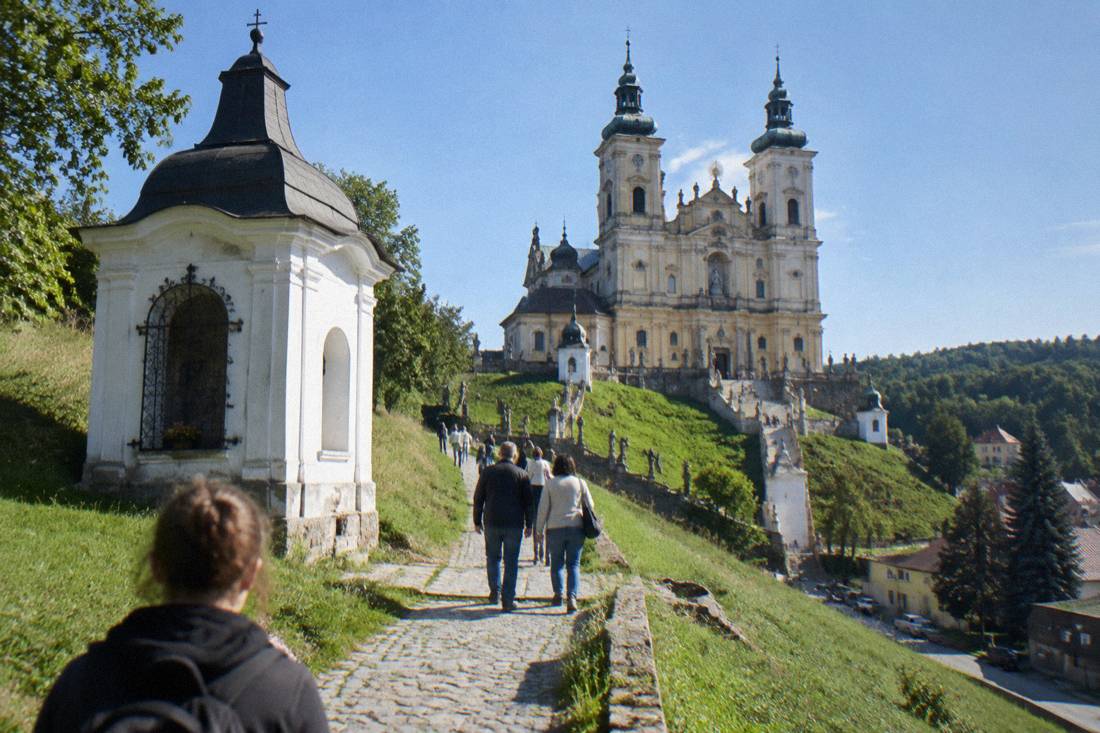
Then take to the hills. The Calvary route is what earns Wambierzyce its nickname, and it is the part of the visit most likely to surprise a first-time visitor. The chapels are spread across the slopes around the village, and walking between them turns the visit from a church stop into a hike with a sequence of small architectural encounters. Some chapels sit in woodland, some open onto views back over the basilica and the village roofs. The route is the reason to wear proper shoes rather than city sandals.
The village itself is the third layer. Wambierzyce's gates, shrines, walls and lanes all belong to the same devotional plan, so even aimless wandering between the church and the hills feels structured. Wambierzyce is also known for its mechanical nativity scene, a traditional moving-figures szopka that has long been one of the village's signature attractions, and it is worth checking locally what its current opening arrangements are before you count on seeing it.
For context on how a baroque devotional interior compares with a secular one inside Wroclaw itself, the guide to the University of Wroclaw's Aula Leopoldina covers the city's own showpiece ceremonial hall, and the Old Town Wroclaw guide sets out the city base most day-trippers leave from.
Practical note for trip design: Wambierzyce is not a full-day destination on its own. It is a half-day stop, best combined with other Lower Silesian sights on a single day out from Wroclaw. The natural pairing is religious architecture, and the strongest option in the region is the UNESCO-listed Churches of Peace, the timber-framed churches in Swidnica and Jawor. The Church of Peace in Swidnica carries a verified adult ticket of 18 zl, a reduced ticket of 15 zl, 10 zl for children and youth, and a family ticket of 45 zl, per the church's own visitor page. Combining Wambierzyce with Swidnica gives you the two most distinctive church experiences in the region in one day.
How Do You Get To Wambierzyce From Wroclaw?
There is no simple one-change public transport answer for Wambierzyce, so visitors reach it in one of three ways: a guided or private day tour that builds it into a Lower Silesia route, a rental car that lets you chain Swidnica, Jawor and Wambierzyce in one day, or a self-planned rail-and-road combination that takes more time. The village is a countryside stop, not a rail destination, and the trip is normally designed around a car or a tour.
The guided-day option is the least work. Lower Silesia day tours from Wroclaw typically bundle the region's headline sights, and the churches are a recurring theme. The half-day Peace Churches trip this page features, for instance, covers Swidnica and Jawor with transport and guidance included, and travellers who want Wambierzyce on the same trip usually arrange a private extension or choose a custom itinerary. That trade matters: an organized tour buys convenience, a custom day buys the exact stop list you want.
The self-drive option is the flexible one. Wroclaw is well placed for exploring Lower Silesia by car, and the airport rental logistics are covered in the Wroclaw airport car rental guide, with broader Polish road rules in driving in Poland. A car lets you set your own order, Swidnica first, Wambierzyce after, or the reverse, and it removes the dependency on tour schedules. Do not plan the day around specific train times: no verified Wroclaw-to-Wambierzyce rail timetable was sourced for this guide, and rural bus connections in this part of Lower Silesia are thin enough that a car or tour is the realistic choice.
Inside Wroclaw before or after the trip, city transport is cheap and simple. The MPK fare structure, published on the city's own portal, starts with a short-hop ticket at 4.60 zl normal and 2.30 zl reduced, rises to a longer tier at 7.00 and 3.50 zl, and continues through all-day and multi-day bands that reach about 15.00/7.50 zl for a full day's travel. The practical takeaway for a day-tripper: a single short-hop ticket covers most point-to-point rides in the center, and an all-day band only pays off if you are riding repeatedly.
For a fuller comparison of the region's day trips and how they chain together, start from this site's Wroclaw Travel Guide homepage and work outward into the day-trip guides.
What Does A Lower Silesia Day Trip Cost, With Real Ticket Prices?
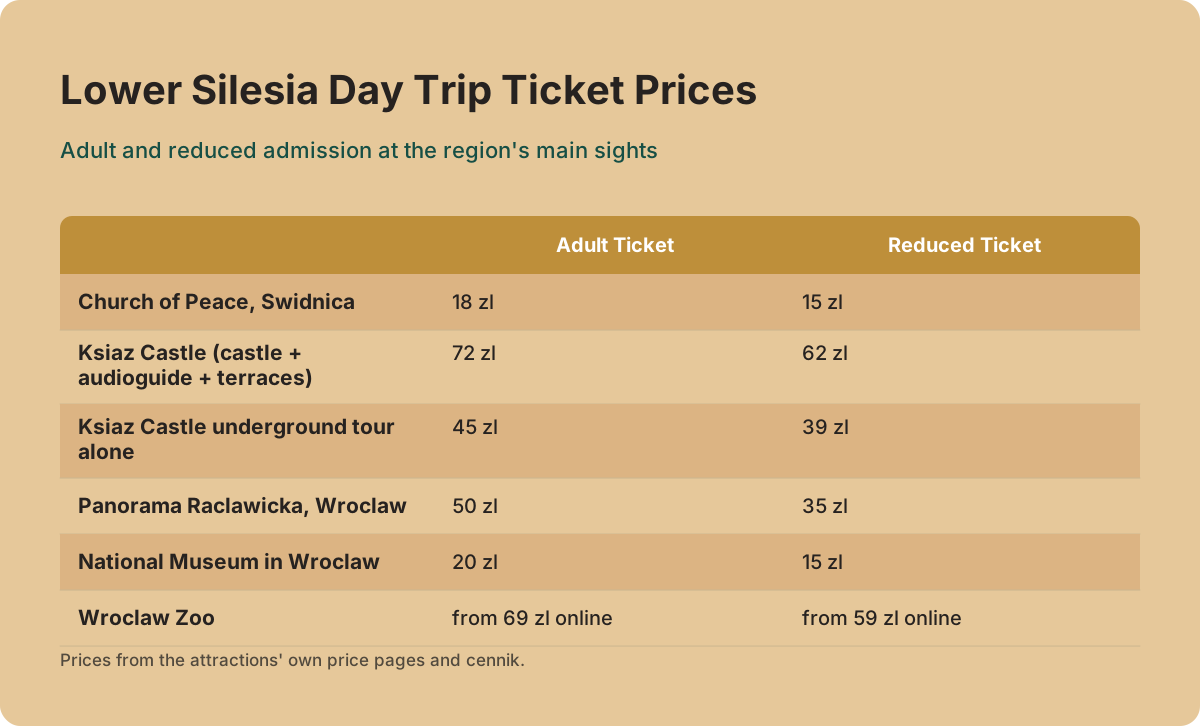
A Lower Silesia day trip from Wroclaw is mostly a transport decision plus a set of small admission tickets: the Church of Peace in Swidnica at 18 zl adult, Ksiaz Castle's castle-plus-terraces ticket at 72 zl adult, and, back in Wroclaw, the Panorama Raclawicka at 50 zl adult and the National Museum at 20 zl adult, all verified on the attractions' own price pages. The table below assembles the region's real, current admissions in one place.
| Attraction | Adult Ticket | Reduced Ticket | Source Note |
|---|---|---|---|
| Church of Peace, Swidnica | 18 zl | 15 zl | Children 10 zl, family 45 zl, per the church's visitor page |
| Ksiaz Castle (castle + audioguide + terraces) | 72 zl | 62 zl | Cennik effective 6 May 2026, terraces 15 Apr-30 Sep only |
| Ksiaz Castle underground tour alone | 45 zl | 39 zl | Same cennik |
| Panorama Raclawicka, Wroclaw | 50 zl | 35 zl | Ticket also covers National Museum permanents, Ethnographic Museum and Four Domes Pavilion within 3 months |
| National Museum in Wroclaw | 20 zl | 15 zl | Free entry to permanents every Saturday |
| Wroclaw Zoo | from 69 zl online | from 59 zl online | 99/89 zl at the gate, Afrykarium included |
Two of those rows deserve attention. The Panorama Raclawicka ticket is the best-value item in the region: one 50 zl adult ticket also covers the National Museum's permanent exhibitions, the Ethnographic Museum and the Four Domes Pavilion for three months from the visit date. And the zoo's online-versus-gate spread is wide enough that buying ahead is a genuine saving, 69 versus 99 zl at the gate for an adult, with the Afrykarium oceanarium included in the standard ticket rather than sold separately.
| Cost Item | Planning Range | Notes |
|---|---|---|
| MPK 15-minute city ticket | 4.60 zl | Base short-hop fare, reduced 2.30 zl |
| MPK 30-minute city ticket | 7.00 zl | Reduced 3.50 zl |
| Church of Peace, Swidnica | 18 zl | Family ticket 45 zl covers 2 adults plus children under 18 |
| Panorama Raclawicka bundle | 50 zl | Covers 4 institutions over 3 months |
| Museum-for-a-zloty ticket | 1 zl | Students and pupils under 26, National Museum permanents |
Note that no all-inclusive Go City-style tourist pass exists for Wroclaw. The UrbanCard sold in the city is a transport-focused fare card with resident discounts, not a sightseeing pass, so budgeting for Wroclaw means budgeting attraction by attraction. Product prices for tours, including the Peace Churches half-day trip this page features, render live in the booking blocks on this site and should be checked there rather than estimated in prose.
What Does The Weather Do Month By Month Around Wroclaw?
Lower Silesia's climate, measured at the Wroclaw station, runs from a coldest mean of 0.0C in January to a warmest mean of 19.7C in July, with an annual mean of 9.7C, according to IMGW's 1991-2020 climate normals for station 12424. Summer means 17.7C to 19.7C across June to August, spring and autumn sit in the middle, and winter months hover at or just above freezing.
The table below is the full monthly normal, and it is the right basis for choosing when to walk the Calvary hills at Wambierzyce, because the chapels route is an outdoor walk and the difference between a dry spring month and a wet summer month matters more than a degree or two of temperature.
| Month | Mean Temp (C) | Precipitation (mm) |
|---|---|---|
| Jan | 0.0 | 28.3 |
| Feb | 1.1 | 25.6 |
| Mar | 4.3 | 35.0 |
| Apr | 9.7 | 31.2 |
| May | 14.3 | 59.6 |
| Jun | 17.7 | 65.4 |
| Jul | 19.7 | 91.4 |
| Aug | 19.3 | 59.5 |
| Sep | 14.5 | 48.4 |
| Oct | 9.6 | 37.6 |
| Nov | 4.8 | 31.4 |
| Dec | 1.1 | 27.9 |
Read the table before generalizing. July is the warmest month at 19.7C mean but also the wettest at 91.4 mm. April is the driest month at 31.2 mm while sitting at a mild 9.7C mean. May through August carries the highest rainfall totals of the year, which is a real consideration for a hillside walk with no shelter between chapels.
| Season | Mean Temp Range | Best For At Wambierzyce | Watch Out For |
|---|---|---|---|
| Spring (Mar-May) | 4.3-14.3C | Hill walking, green countryside, chapel views | Rain picking up in May at 59.6 mm |
| Summer (Jun-Aug) | 17.7-19.7C | Long daylight, full village buzz | July downpours at 91.4 mm |
| Autumn (Sep-Nov) | 14.5-4.8C | Fall color on the Calvary slopes | Cooling fast by November |
| Winter (Dec-Feb) | 0.0-1.1C | Quiet pilgrimage atmosphere, frosty views | Freezing means, short days |
For a month-by-month planning view of the city itself, see best time to visit Wroclaw and the Wroclaw weather by month guide.
How Does Wambierzyce Compare With Other Day Trips From Wroclaw?
Wambierzyce is the region's pilgrimage-village day trip, and its closest rivals are the Church of Peace in Swidnica, a UNESCO-listed timber church, and Ksiaz Castle, the monumental castle near Walbrzych owned and operated by the Walbrzych municipality's own castle company. The three stack cleanly into a single route or split across separate days depending on whether you want churches, castles or both.
The pairing logic works like this. Swidnica and Jawor hold the Churches of Peace, UNESCO-inscribed since 2001, enormous timber-framed Protestant churches built under the constraints of their era, and the Swidnica church's 18 zl adult ticket makes it an easy add-on. Ksiaz Castle, covered in full in the Ksiaz Castle guide, is Lower Silesia's headline castle, and its All Day Ticket at 104 zl adult covers the castle, terraces, underground, Palm House, stud farm and mausoleum in one purchase. Wambierzyce sits between the two, geographically and thematically, a religious landscape rather than a single building.
| Day Trip From Wroclaw | Headline Sight | Verified Figure | Best Combined With |
|---|---|---|---|
| Wambierzyce | Baroque basilica and Calvary chapels | Hillside chapel walk, outdoor route | Swidnica Church of Peace |
| Swidnica | Church of Peace, UNESCO 2001 | Adult 18 zl, family 45 zl | Jawor Peace Church, Wambierzyce |
| Ksiaz Castle | Castle and terraces near Walbrzych | Castle ticket 72/62 zl, All Day 104/94 zl | Project Riese at Osowka |
| Table Mountains | Rock formations at Gory Stolowe | Hiking trails, national park landscape | Ksiaz Castle on a two-stop day |
Further out, the region's bigger-hitters are covered in dedicated guides: the Giant Mountains and Karpacz for mountain walking, the Table Mountains for the rock labyrinths of Gory Stolowe, Project Riese and Osowka for the underground complex near Ksiaz, and the long-haul options to Krakow, Auschwitz-Birkenau, Prague and Dresden. Wambierzyce belongs firmly in the first cluster: short-haul, church-and-countryside, unhurried.
What Should You Know Before You Go To Wambierzyce?
Go expecting a walking village, not a museum: comfortable shoes, weather-appropriate layers based on the IMGW normals above, cash in zloty for small rural expenses since Poland's currency is the PLN, and a plan that treats Wambierzyce as one stop in a half-day or full-day Lower Silesia route rather than a standalone destination. The village's practical infrastructure is modest, and that is part of its character.
A few specifics. The Polish currency is the zloty (PLN), not the euro, though Poland is in the EU and the Schengen area, so a card covers most things in Wroclaw while a rural village rewards having some cash. Wambierzyce's pace is unhurried, and midweek outside pilgrimage season you can have whole sections of the Calvary path to yourself, which is either the appeal or the problem depending on what you want from a day out. Services in the village, food, toilets, parking, are on the small-village scale, so plan lunch around Swidnica or a packed stop if you are combining the two.
Photographers should plan around light rather than crowds. The basilica facade and the hillside viewpoints work best when the sun is not directly overhead, and the best photo spots in Wroclaw guide carries the same logic for the city end of the trip. Anyone flying in and out should know the current airport picture: Wroclaw Airport handled 4,473,945 passengers in 2024, and a temporary full closure for a runway and operational-area renovation ran from 26 October to 4 December 2025, finishing with the works completed ahead of schedule in September 2026 and passenger records set afterwards. The airport is open and operating today, and the details are in the Wroclaw airport guide.
Back in Wroclaw, the evening after a countryside day is best spent low-effort. The Old Town Wroclaw core, the Market Square and a slow loop past the Wroclaw dwarfs need no tickets and no timetable, and the two days in Wroclaw itinerary shows how to balance a city day with a day-trip day.
What Do People Ask When They Plan A Wambierzyce Day?
Most first-time planners ask the same small set of questions: whether Wambierzyce works without a car, whether it justifies its own day versus being bundled with Swidnica or Ksiaz Castle, and whether the village's religious character suits a secular visitor. The honest answers: a car or a tour is the practical choice, it is a half-day stop rather than a full day, and the Calvary landscape rewards walkers regardless of belief.
The questions below are the ones that surface most often when a Wroclaw trip starts turning toward the Lower Silesian countryside, answered with the same figures used throughout this guide. None of them needs a long detour, and each one has a direct answer based on the sources already cited on this page.
What is the Wambierzyce Basilica?
The Wambierzyce Basilica is a large baroque church dedicated to the Visitation of the Virgin Mary, at the center of a small pilgrimage village in Lower Silesia in southwestern Poland. The village is nicknamed "Silesian Jerusalem" for its Calvary path of chapels laid out across the surrounding hills, and it works as a half-day stop from Wroclaw, usually combined with the Church of Peace in Swidnica.
Why is Wambierzyce called Silesian Jerusalem?
The village was deliberately laid out as a symbolic Holy Land: a Calvary route of chapels and stations spread across the hills around the baroque basilica, with gates, paths and viewpoints arranged so that walking the village mirrors walking the sacred geography. Pilgrims who would never travel to Jerusalem could walk a devotional replica of it in Silesia.
How do you get to Wambierzyce from Wroclaw?
Visitors reach Wambierzyce either on a guided or private Lower Silesia day tour that builds it into a route, or with a rental car that chains it with Swidnica and Jawor in one day. It is a countryside stop rather than a rail destination, and no verified public transport timetable for the route was sourced for this guide, so a car or an organized tour is the realistic way to plan it.
Is Wambierzyce worth visiting if you are not religious?
Yes, if you enjoy landscape architecture and quiet countryside. The Calvary path is a walkable sequence of chapels with views back over the village, and the basilica's baroque interior stands on its own as the region's most monumental village church. Treat it as a hike with architectural set pieces rather than a devotional visit and it still delivers.
What else should you combine with Wambierzyce?
The natural pairing is the Church of Peace in Swidnica, a UNESCO-listed timber church with a verified adult ticket of 18 zl, family 45 zl, and the second Peace Church at Jawor completes the set. Ksiaz Castle near Walbrzych, with its castle-and-terraces ticket at 72 zl adult, extends the same day into a full Lower Silesia circuit if you have the hours.
When is the best time of year to visit Wambierzyce?
Spring and early autumn suit the outdoor Calvary walk best. IMGW's 1991-2020 normals for Wroclaw show April as the driest month at 31.2 mm with a mild 9.7C mean, while July, the warmest month at 19.7C, is also the wettest at 91.4 mm. Winter at a 0.0C January mean is atmospheric but cold for hillside walking.
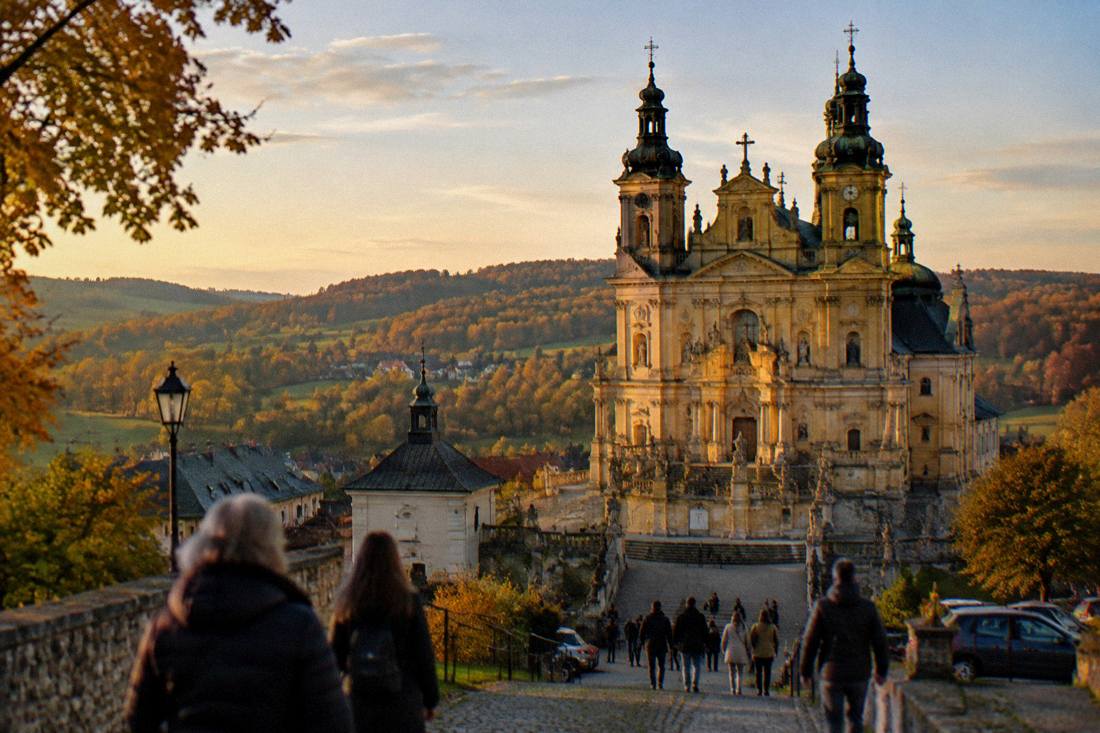
Wambierzyce rewards the traveller who slows down. Walk the hills, give the basilica interior a proper look, and let the village's strange, deliberate geography do what it was designed centuries ago to do: make a simple walk feel like a journey.