What Is Wroclaw University Known For?
What Wroclaw University is known for, from its baroque Aula Leopoldina ceremonial hall to its place in the academic life of Wroclaw, Poland, plus what to see around it.
Wroclaw University, in Wroclaw, the largest city in Lower Silesia in southwestern Poland, is known first and foremost as the city's landmark academic institution, whose baroque main building stands on the Odra riverbank directly opposite the Cathedral Island skyline. Its ceremonial hall, the Aula Leopoldina, is the single most famous university interior in the region and a stop on almost every visitor's route through the city center. Around it sits a compact university quarter of museums, riverside promenades, and dwarf-hunting streets that makes this corner of Wroclaw one of the most walkable in Poland. This page answers the question directly, then explains what the university is famous for, what you can actually see there as a visitor, and how the area fits into a wider trip to Wroclaw.
What Is Wroclaw University Known For?
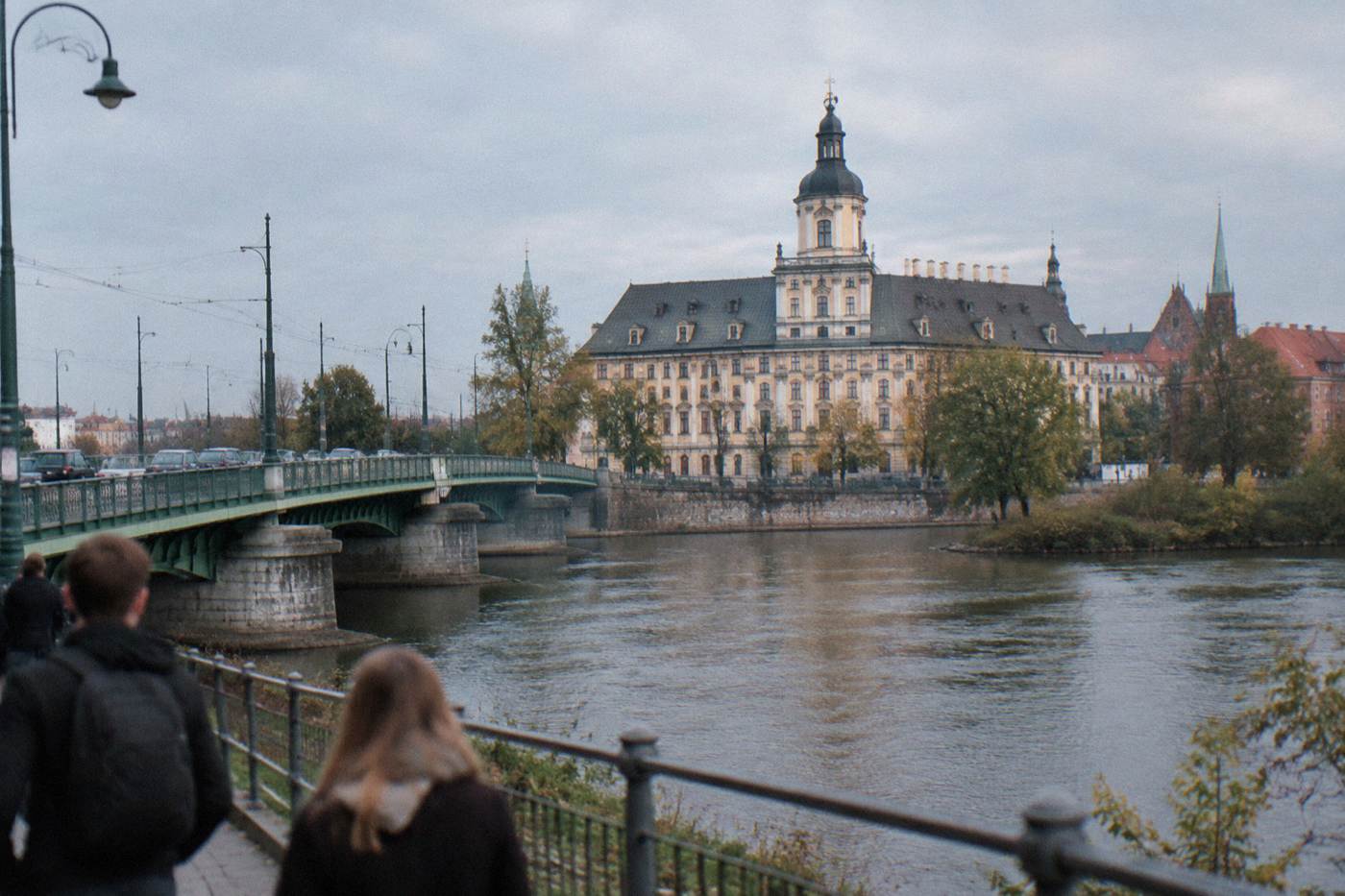
Wroclaw University is best known for its monumental baroque main building on the Odra riverbank in Wroclaw, Poland, and above all for the Aula Leopoldina, its richly decorated ceremonial hall, which is open to visitors and ranks among the city's most-visited interiors. It is also known as the academic heart of a city of 672,601 people, one with a strong student life and a university quarter packed with museums.
That is the short version, and it is the honest one. The university's reputation among travelers rests less on lecture halls than on architecture: the main building's facade and the view of it from the Sand Island bridge are among the most photographed scenes in Wroclaw. For the deeper story of the city as a whole, the companion page on why Wroclaw is famous covers the dwarfs, the market square, and the islands that made the city a destination in the first place.
There is also a longer academic story, and it belongs to the university itself rather than to any single building. Wroclaw has been a university city in one form or another across changing borders and languages, and the institution that stands today is one of the leading research universities in this part of Poland. Visitors who want that story in depth can start with the site's dedicated page on the Aula Leopoldina at the University of Wroclaw, which covers the hall itself, visiting practicalities, and how it fits into a day in the city center.
Why Is The Aula Leopoldina The Most Famous Room At Wroclaw University?
The Aula Leopoldina is Wroclaw University's baroque ceremonial hall, a room of gilded stucco, painted ceilings, and carved decoration that survives as the university's showpiece interior and is open to the public as a visitor attraction rather than only to students and staff. It is the room people mean when they say Wroclaw University is worth seeing.
The hall works as a visit because it is a complete baroque interior in a city better known for gothic churches and postwar reconstruction. Every surface is decorated: the ceiling is painted, the walls carry allegorical figures, and the overall effect is closer to a palace state room than to a modern auditorium. First-time visitors consistently report that photos undersell it, which is about as reliable a compliment as a room gets.
Practically, the Aula sits inside the main university building on the riverbank, so a visit pairs naturally with the Mathematical Tower viewpoint above it and with the walk across the Odra toward Cathedral Island. The tower gives you the city's rooftops and the river bends from above, and the hall gives you the baroque splendor from inside the same building. Budget an hour or so for both, more if the exhibitions on site catch your interest.
The university quarter rewards aimlessness after that. The streets east and south of the main building hold much of what a visitor comes to Wroclaw for: museums, riverbank walks, and a dense scatter of the bronze dwarfs the city is famous for. A guided walk is the efficient way to catch the highlights, and the Following the Dwarfs walk, detailed on its dwarf-walk tour page, threads the Old Town and the university streets together with the dwarf hunt as its backbone. It is a walk for people who want the city explained, not just traversed.
What Can You See Around Wroclaw University In One Visit?
Around the university's main building in Wroclaw you can see the Aula Leopoldina and its tower, cross the Odra to Cathedral Island, walk Sand Island and the riverbank promenades, and visit the National Museum and the Panorama Raclawicka, both within an easy walk of the university quarter and both with verified admission prices.
The density here is the point. In most cities a university building is one stop among many; in Wroclaw it anchors a district where a full day disappears without a taxi or a tram ride. The Odra is never more than a few minutes away, the Old Town's market square is a short walk south, and the museum cluster sits between the two. For readers weighing whether the city justifies the trip at all, the honest answer to is Wroclaw worth visiting runs through exactly this quarter.
Admission prices in the area are genuinely modest, and every figure below is verified from the institutions' own published tariff pages rather than estimated. The Panorama Raclawicka ticket is the standout value, because the National Museum's own practical-information page confirms that one Panorama ticket also covers the National Museum's permanent exhibitions, the Ethnographic Museum and the Four Domes Pavilion within 3 months of the visit date. The wider set of guides lives on Wroclaw Travel Guide.
| Attraction or service | Adult price | Reduced price | Notes from the official source |
|---|---|---|---|
| Panorama Raclawicka | 50 zl | 35 zl | 30-minute screening; ticket also covers the National Museum's permanent exhibitions, the Ethnographic Museum and the Four Domes Pavilion within 3 months |
| National Museum in Wroclaw (permanent exhibitions) | 20 zl | 15 zl | Free entry to permanent exhibitions every Saturday; under-7s free |
| MPK Wroclaw 15-minute transit ticket | 4.60 zl | 2.30 zl | Base short-hop fare on trams and buses |
The Saturday free-entry detail at the National Museum is worth building a weekend around. The museum's own practical-information page states it plainly, and the permanent exhibitions are what people come there to see anyway. Pair a free Saturday museum morning with a paid Panorama screening in the afternoon and the combined ticket logic works in your favor.
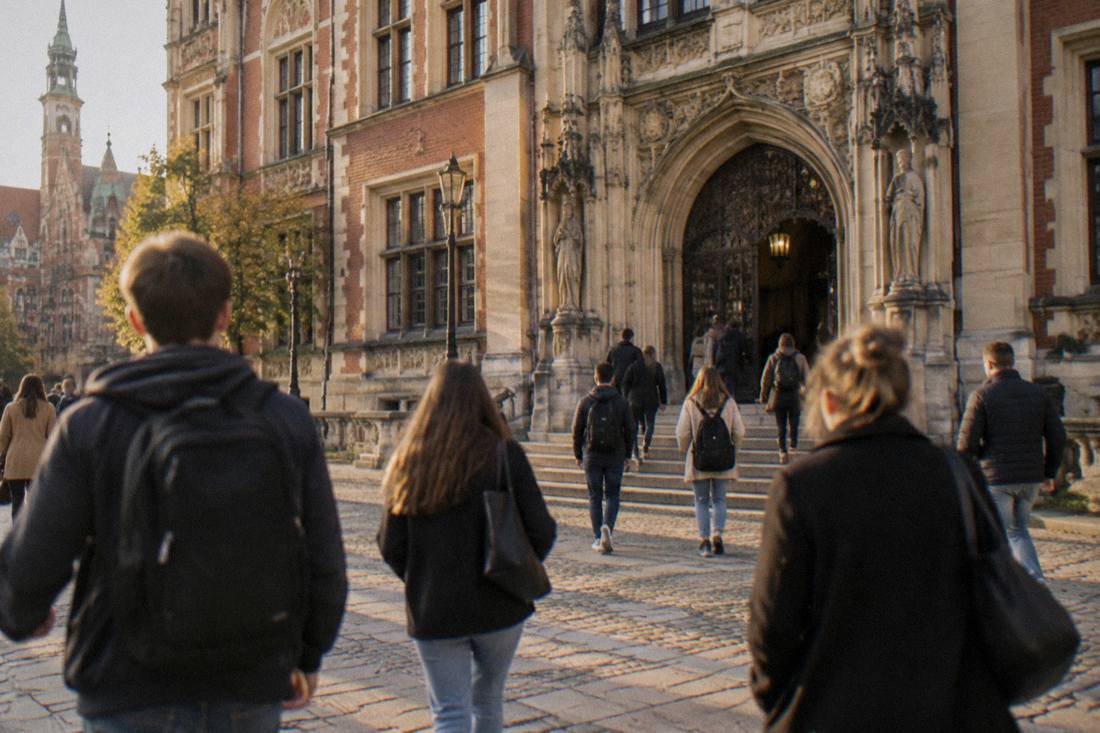
For students rather than tourists, the university is the center of a much bigger picture. The city hosts a large student population across its institutions, and the site's guide to studying in Wroclaw covers that world: student life, costs, and how the academic calendar shapes the city's rhythms. Visitor or not, those rhythms are worth knowing, because term time fills the university quarter's cafes and the holidays empty it.
A solo note on that dwarf walk, because it earns its place twice on this page. The tour's listing describes a guided route built around the dwarfs, and the route covers ground that overlaps neatly with the university quarter's streets. Anyone planning to see the Aula Leopoldina and the Old Town in the same day gets more from both with a guide explaining the city along the way, and the operator's live listing carries the current price and availability details.
Is The University Quarter In Wroclaw Good For a First Visit?
The university quarter in Wroclaw is one of the best areas for a first visit to the city, because it puts the Aula Leopoldina, the riverside, Cathedral Island, and the National Museum within walking distance of each other, with the market square a short walk further south.
The math is simple. A first-time visitor has a limited list, and this quarter clears half of it on foot. Most itineraries start here or on the market square, and the question of how many days in Wroclaw is enough usually resolves to how much time you want beyond this compact core: the dwarfs, the islands, the museums, and a day trip or two into Lower Silesia.
Safety, for what it matters, is a non-issue in practice here. The quarter is central, busy through the day and evening, and well served by the same trams the rest of the city runs on. The site's page on walking in Wroclaw at night covers the city's evening streets in detail, and the university area is among the better-lit and better-trafficked parts of it.
When Is The Best Time To Visit The Wroclaw University Area?
The best time to visit the Wroclaw University area is late spring through early autumn, when the IMGW 1991-2020 climate normals for the Wroclaw station show mean temperatures of 14.3C in May, 19.7C in July and 14.5C in September, making the riverside walks and the viewpoints comfortable; winter visits around the January mean of 0.0C are cold but pair naturally with the city's indoor museums.
The table below is drawn from IMGW's own published 1991-2020 normals for the Wroclaw station, and it shows why the shoulder months are the sweet spot: warm enough for the Odra riverbank, without the July peak's heavier rainfall. July is both the warmest month and the wettest of the summer period at 91.4 mm of precipitation, so a summer visit deserves a museum backup, and the university quarter happens to have exactly that.
| Month | Mean temperature | Precipitation |
|---|---|---|
| January | 0.0C | 28.3 mm |
| April | 9.7C | 31.2 mm |
| May | 14.3C | 59.6 mm |
| July | 19.7C | 91.4 mm |
| September | 14.5C | 48.4 mm |
| October | 9.6C | 37.6 mm |
Winter visitors lose nothing essential, to be clear. The Aula Leopoldina is an indoor interior, the National Museum and the Panorama are indoor museums, and the cold months give the baroque hall a certain additional drama. The month-by-month detail, including the shoulder seasons, is covered on the site's best time to visit Wroclaw page for anyone planning around specific dates.
Common Questions About Wroclaw University
What is Wroclaw University known for?
Wroclaw University is known for its baroque main building on the Odra riverbank and above all for the Aula Leopoldina, its gilded ceremonial hall, which is open to visitors and is one of the most famous interiors in Wroclaw, Poland. It is also the academic heart of a large student city.
Can visitors go inside the Aula Leopoldina?
Yes. The Aula Leopoldina functions as a visitor attraction as well as a university hall, and it is a standard stop on guided routes through central Wroclaw. Check current opening arrangements before you go, as term-time ceremonies can occasionally affect access.
Is the university building near the Old Town in Wroclaw?
Very near. The main university building sits on the Odra riverbank a short walk north of the market square, with Sand Island and Cathedral Island just across the river, so the university, the Old Town and the islands combine easily in one day of walking.
Which museums are close to Wroclaw University?
The National Museum in Wroclaw and the Panorama Raclawicka are both within an easy walk of the university quarter, and the National Museum's own site confirms that a Panorama ticket also covers its permanent exhibitions within 3 months, plus the Ethnographic Museum and the Four Domes Pavilion.
Is Wroclaw a student city?
Yes. Wroclaw has a large student population across its institutions, and the university calendar shapes the city's cafe and nightlife rhythms through the year. The site's studying-in-Wroclaw guide covers that side of the city in detail.
The short answer to the question this page exists for: Wroclaw University is known for the Aula Leopoldina and its riverbank baroque building, and the quarter around it is one of the most rewarding corners of Wroclaw, Poland, to explore on foot.