Wroclaw Botanical Garden
The Wroclaw Botanical Garden is the university-run green space on the edge of the Old Town sand islands, a plant collection in the middle of one of Poland's largest cities.
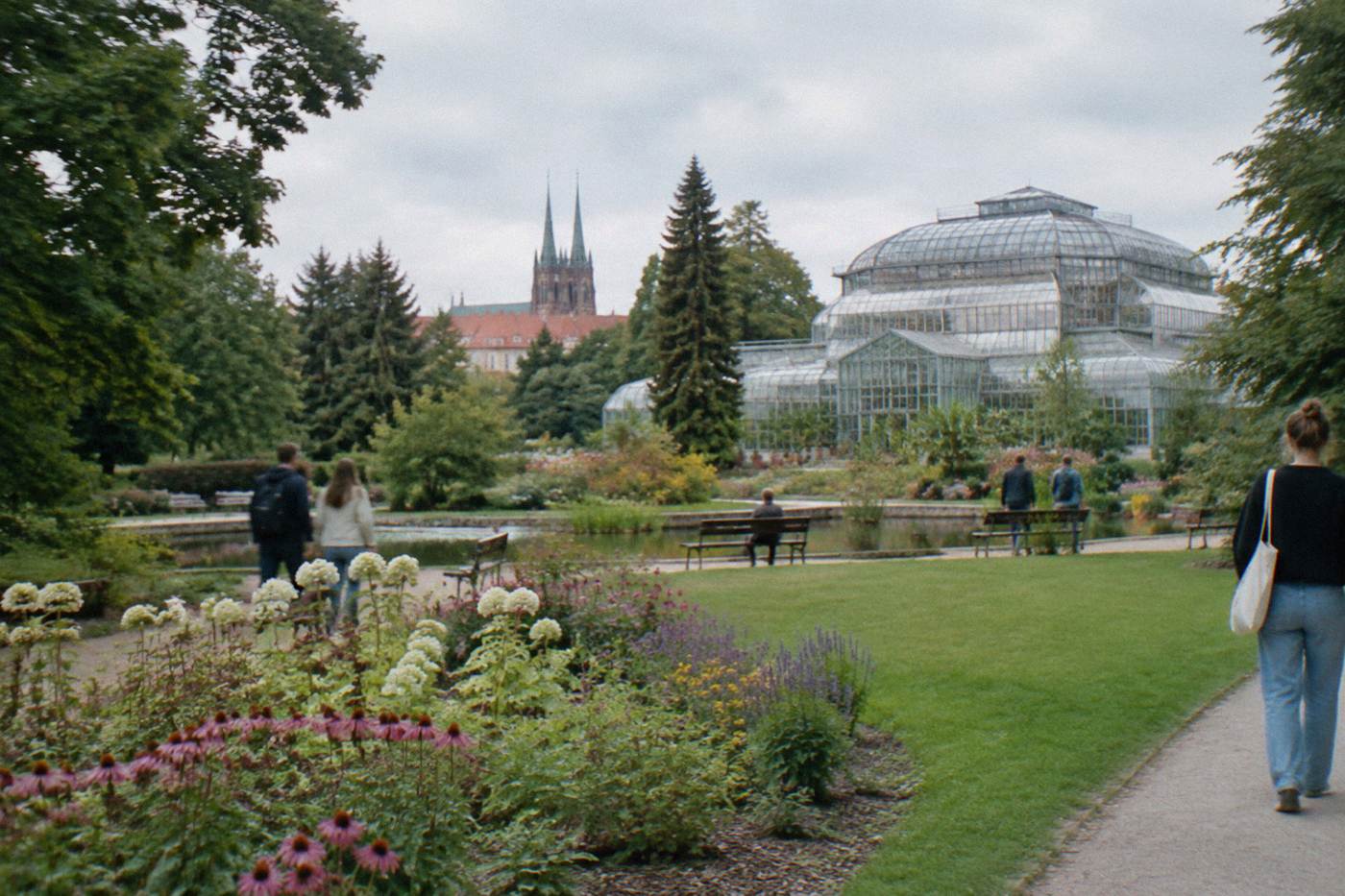
Short answer
The Wroclaw Botanical Garden is the University of Wroclaw's botanical collection, set beside the Ostrow Tumski cathedral island in the center of the city, in Lower Silesia, southwestern Poland.
The Wroclaw Botanical Garden is the botanical garden of the University of Wroclaw, sitting in the city center on the edge of the sand-island district that also holds the cathedral island of Ostrow Tumski. Wroclaw itself is the largest city in Lower Silesia, the Dolnoslaskie voivodeship, in southwestern Poland, a city of 672,601 people as of 31 December 2025 according to GUS, Statistics Poland. The garden is the quiet corner of that city: a working scientific plant collection run by a university, not a commercial park, and that difference shapes everything about a visit, from the planting to the pace. This guide from Wroclaw Travel Guide covers what the garden is, when to go, how to reach it by tram, what it honestly costs, and how to fold it into a day alongside the cathedral island, the market square, and the Panorama Raclawicka.
What Is The Wroclaw Botanical Garden?
The Wroclaw Botanical Garden is the University of Wroclaw's own botanical garden, a living plant collection used for research and teaching, located in the center of Wroclaw, the largest city of Lower Silesia in southwestern Poland, on the edge of the sand islands beside the cathedral island of Ostrow Tumski. It sits within a short walk of the oldest part of the city, which makes it one of the few European botanical gardens you can reach on foot from a medieval core in minutes. Because a university runs it, the planting is organized as a collection rather than as decoration: sections are grouped by plant family, habitat, or scientific purpose. That gives it a different character from the city's show gardens, including the separately managed Japanese Garden in Wroclaw, which is a designed landscape rather than a research collection.
The distinction matters for planning. A designed garden peaks in one season and photographs one way; a scientific collection changes character section by section, so there is usually something in flower, in fruit, or in interesting decline at any point in the growing season. Visitors who expect a theme park of blooms are sometimes disappointed in the shoulder months, while visitors who enjoy reading the collection, label by label, tend to stay longer than they planned.
The garden also functions as green infrastructure for the city. On hot July afternoons, when the mean temperature in Wroclaw runs 19.7C according to the IMGW 1991-2020 climate normals for the Wroclaw station, the shaded paths under the older trees are among the coolest walks in the city center. Locals treat it as a park; the university treats it as a collection; both uses coexist without much friction.
It is worth saying plainly what this page will not do. No admission price, opening hours, or collection size for the botanical garden appears in this site's verified facts pack, so none is printed here. Where a figure is verified, this page states it and names where it comes from. Where it is not, the honest answer is that the garden's own university pages carry the current numbers and they should be checked before a visit.
When Is The Best Time To Visit The Wroclaw Botanical Garden?
The best time to visit the Wroclaw Botanical Garden is late spring through early summer, roughly May to July, when Wroclaw's climate is at its warmest and wettest, with mean temperatures of 14.3C in May, 17.7C in June, and 19.7C in July, according to the IMGW 1991-2020 climate normals for Wroclaw station 12424. July is the single warmest month in the normals and also the wettest, at 91.4 mm of precipitation, so the peak flowering season comes with the highest chance of a shower. April is the driest month in the table at 31.2 mm and still mild at a 9.7C mean, which makes it a good month for visitors who would rather walk in cool air among early spring planting than in summer heat.
The full monthly picture, from the same IMGW 1991-2020 normals, looks like this:
| Month | Mean Temperature | Precipitation |
|---|---|---|
| January | 0.0C | 28.3 mm |
| February | 1.1C | 25.6 mm |
| March | 4.3C | 35.0 mm |
| April | 9.7C | 31.2 mm |
| May | 14.3C | 59.6 mm |
| June | 17.7C | 65.4 mm |
| July | 19.7C | 91.4 mm |
| August | 19.3C | 59.5 mm |
| September | 14.5C | 48.4 mm |
| October | 9.6C | 37.6 mm |
| November | 4.8C | 31.4 mm |
| December | 1.1C | 27.9 mm |
Read the table rather than trusting a generalization about "cold Poland". Wroclaw's January mean of 0.0C and July mean of 19.7C sit among the milder figures for Poland's major stations in the IMGW table, and the annual mean is 9.7C. Winter visits to the garden are therefore not a foolish idea in principle, but a botanical collection in a continental winter is largely dormant, and any seasonal structures such as glasshouses operate on the university's own schedule, which this page will not guess at.
September is the underrated month. The mean of 14.5C is comfortable, precipitation drops to 48.4 mm after the July peak, and the crowd pressure of high summer has passed. Spring bulbs in April and the first herbaceous flowering in May suit photographers better, but September suits people.
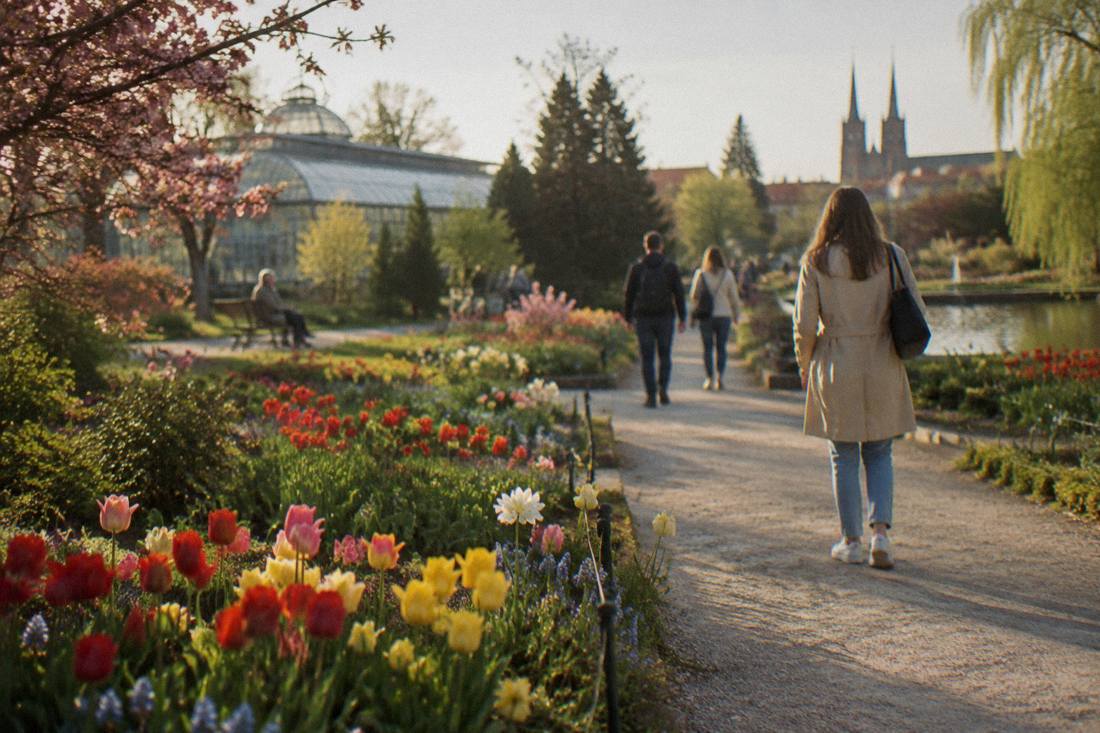
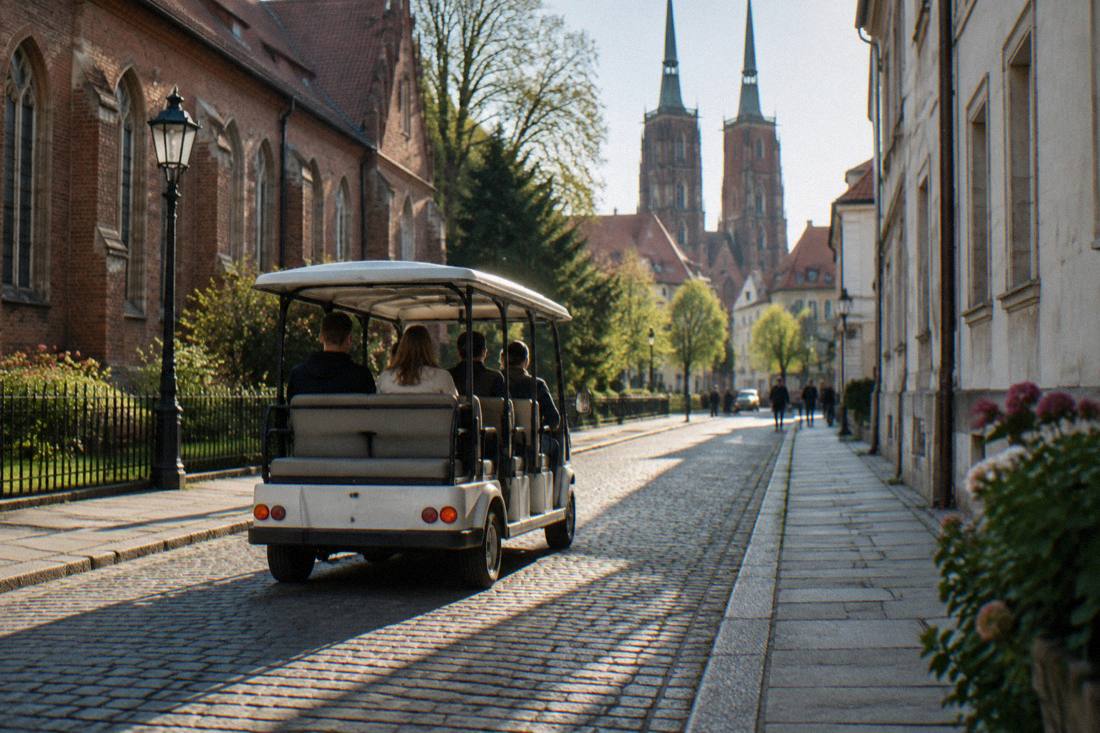
If gardens are the reason for your trip rather than a stop on it, a sightseeing tour that covers the city center in the morning pairs well with an afternoon in the collection. The golf-cart city tour below is the relaxed option for the morning half of that plan.
How Do You Get To The Wroclaw Botanical Garden?
The Wroclaw Botanical Garden is reachable on foot from Ostrow Tumski and the Old Town, and by MPK tram or bus using a 15-minute ticket at 4.60 zl normal fare or 2.30 zl reduced, per the City of Wroclaw's official fare page at wroclaw.pl. Because the garden sits beside the cathedral island, visitors approaching from the market square side can walk there in a few minutes through the sand islands rather than ride, and the walk itself passes two other green stops worth knowing: the cathedral grounds and the riverbank of the Odra. The tram network covers the surrounding streets, and the fare table below comes from the city's own portal, which lists tiers by duration rather than as a single flat fare.
| MPK Ticket Tier | Normal Fare | Reduced Fare |
|---|---|---|
| 15-minute ticket | 4.60 zl | 2.30 zl |
| 30-minute ticket | 7.00 zl | 3.50 zl |
| 24-hour city ticket (approx.) | 15.00 zl | 7.50 zl |
A note on honesty: this page will not name a specific tram stop or line number for the garden, because no stop-by-stop detail for that exact journey appears in this site's verified facts. The city's own journey planner, linked from the same wroclaw.pl fare page, is the reliable way to find the live stop and line for the day you travel. What is verified is the fare you will pay when you board, and the fact that the whole center of Wroclaw, garden included, is compact enough to cover largely on foot.
Cyclists and pedestrians have the easier deal. The Odra riverbank paths run close to the garden's district, and Wroclaw operates a live city-bike map based on the Nextbike system, which this site's homepage carries as a live data block. A visitor can check current bike availability on that map rather than trusting a stale count printed in an article.
If your day is going to be tour-heavy, a vehicle-based sightseeing option saves the legs you will want for the garden's paths. The retro golf-cart tour of the city center is exactly that kind of morning: you ride, you see the layout, and you finish close to where the walking part of the day begins.
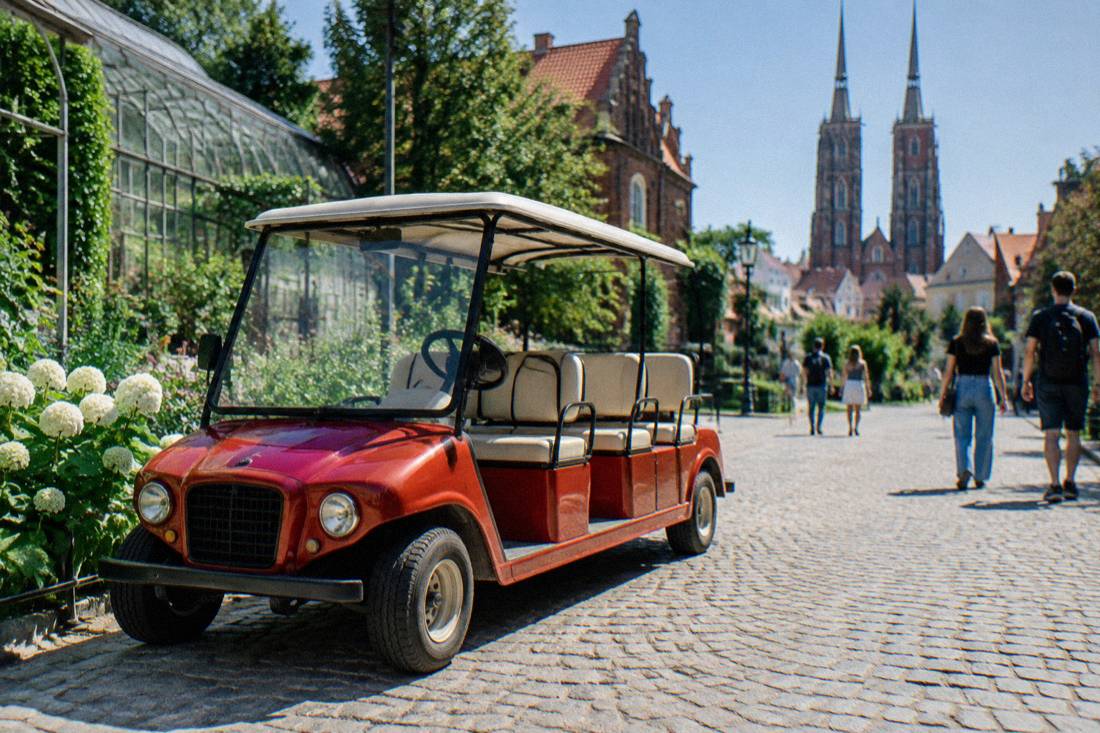
One practical point about pairing that cart tour with a garden visit: the tour covers the city center's streets, while the garden is a place you deliberately slow down inside, so the two halves of the day need different shoes and different expectations. Riders who finish the tour late morning usually walk straight across to the cathedral island and take the garden at lunch-hour pace, when the crowds are thinnest. If the morning runs long, the garden is forgiving, because its collection does not close mid-afternoon the way a timed museum screening does.
What Can You See Inside The Wroclaw Botanical Garden?
Inside the Wroclaw Botanical Garden you walk a university plant collection: trees and shrubs grouped scientifically, themed habitat beds, glasshouse plants where the university opens them, and quiet lawns and paths framed by the historic sand-island setting beside the cathedral. The collection is curated for study rather than spectacle, so the pleasure is in variety and detail: bark, leaf shape, seed heads, and the way each section teaches a different piece of botany. Unlike a municipal park, the planting carries labels and a purpose, and unlike a flower show, nothing is staged for a single weekend.
The tree collection is the part most first-time visitors remember. Mature specimens give the garden its microclimate, the shade that makes a July afternoon bearable when the IMGW normals put the mean at 19.7C. Under and between the trees, the bedded sections rotate through the season, from spring bulbs through summer herbaceous planting to late seed and fruit displays in September and October.
Water is a recurring element in Wroclaw generally, the city being built across the islands of the Odra, and garden water features, ponds, and streams are part of the traditional botanical garden layout. Aquatic and waterside planting sections are standard in university collections of this type, and Wroclaw's garden follows that pattern; what this page will not do is list specific specimen plants or current bed layouts, because a living collection changes with the seasons and no snapshot in an article stays true for long.
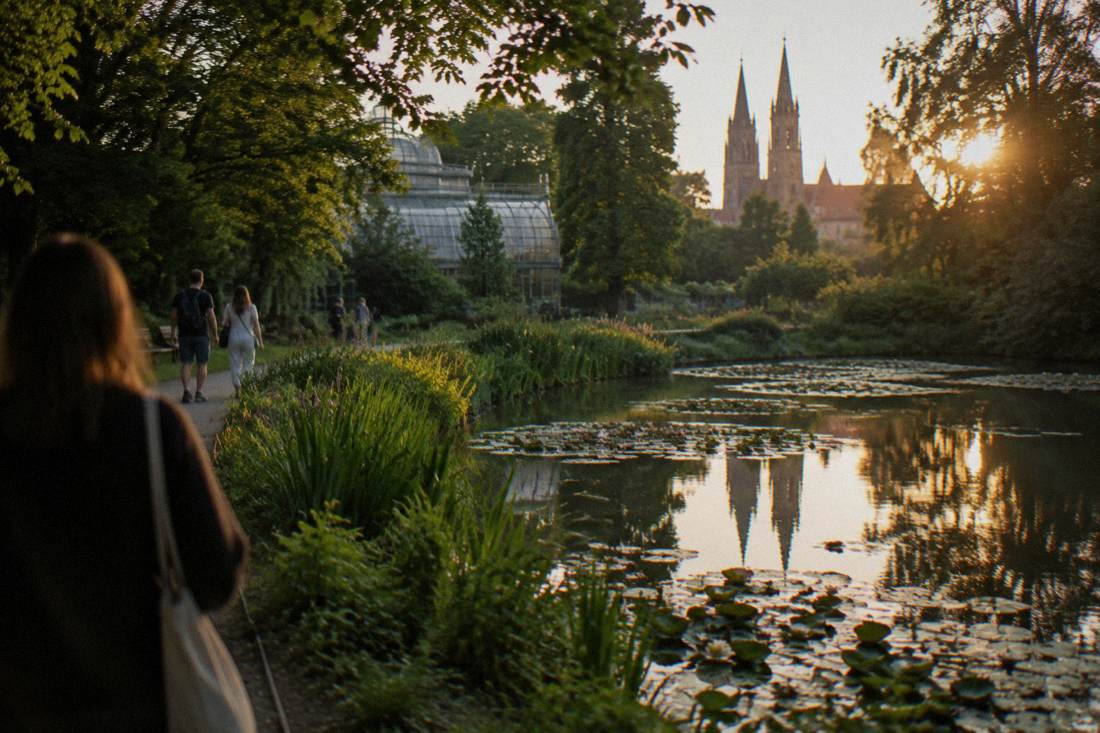
Photographers should plan around light rather than flowers. Early morning and late afternoon give the low, warm light that works in a woodland collection, and midday in summer is flat and deep in shade contrast. The best photo spots in Wroclaw are mostly river and market-square locations, and the garden earns its place on that list specifically in the first and last hours of the day.
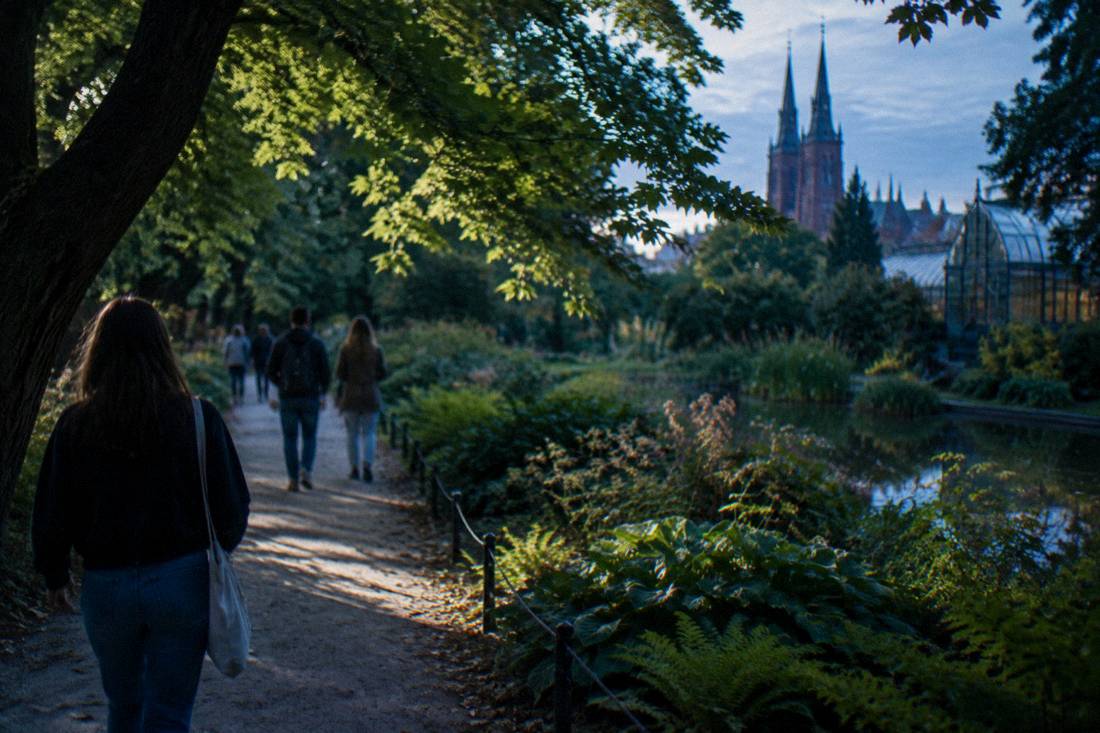
Families get a calm, contained space where children can run on grass without traffic, though the garden is a plant collection first, so it rewards a slow pace and a bit of preparation about what a botanical garden actually is. Pairing it with the Wroclaw Zoo and Afrykarium on a different day balances the quiet and the loud halves of a family itinerary; the zoo's own price table gives adult tickets from 69 zl online versus 99 zl at the gate, with the Afrykarium included in the standard ticket.
What Does A Visit To The Wroclaw Botanical Garden Cost?
No verified current admission price for the Wroclaw Botanical Garden exists in this site's facts pack, so this page prints none: the University of Wroclaw's own pages for the garden are the source that carries the current ticket figure, the reduced categories, and the seasonal hours, and they should be checked before your visit. That answer is deliberately blunt. Travel writing fails readers most often on small municipal prices, which change quietly and then sit wrong in articles for years. This site's policy is to print only figures verified against an official source, and for this particular garden no verified number exists.
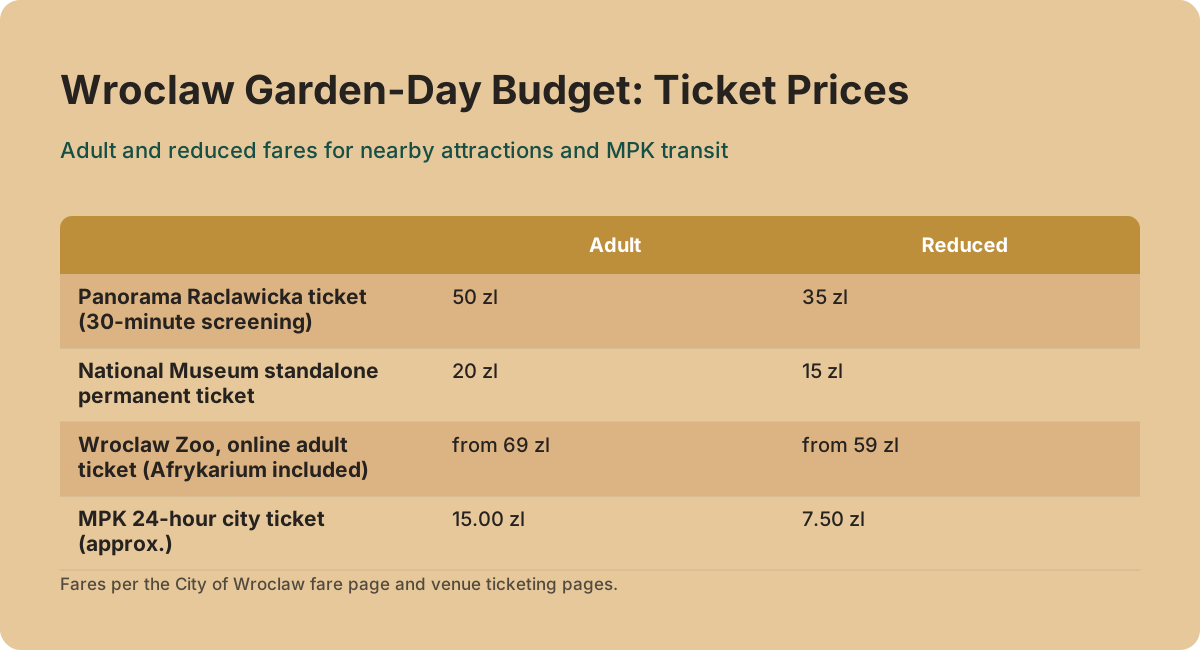
What can be stated with a source is the cost of everything around the garden, and that is often the more useful budget. A day built around the garden's district, the cathedral island, and one major museum stop looks like this, using only figures verified against their official sources:
| Item On A Garden-Day Budget | Adult | Reduced |
|---|---|---|
| Panorama Raclawicka ticket (30-minute screening) | 50 zl | 35 zl |
| National Museum standalone permanent ticket | 20 zl | 15 zl |
| Wroclaw Zoo, online adult ticket (Afrykarium included) | from 69 zl | from 59 zl |
| MPK 24-hour city ticket (approx.) | 15.00 zl | 7.50 zl |
Two of those figures deserve a second look. The Panorama Raclawicka's own ticketing page states that one ticket also covers the National Museum's permanent exhibitions, the Ethnographic Museum, and the Four Domes Pavilion within three months of the visit date, which makes the 50 zl adult ticket one of the best values in the city if you will use the extras. And the National Museum's own page states that entry to permanent exhibitions is free every Saturday, so a weekend visitor can convert a paid stop into a free one without changing the itinerary at all.
The garden itself, historically, has sat at the cheap end of city attractions, but "historically cheap" is not a figure and this page will not launder it into one. Check the university's page, budget a small amount for the till, and treat any surprise as a pleasant one.
Which Other Green Spaces In Wroclaw Are Worth Your Time?
The green spaces worth planning around in Wroclaw are the Botanical Garden itself, the Japanese Garden, the Szczytnicki Park woodland around Centennial Hall, the Odra riverbank and its islands including Slodowa Island, and the Zoo grounds with the Afrykarium, each with a different character and a different best hour of the day. Wroclaw is a low-rise, water-heavy city built across the Odra's islands, so green space is not an afterthought here; it is the connective tissue between the sights. Choosing between them is mostly a question of mood and season rather than quality.
| Green Space | Character | Best Season | Pairs Best With |
|---|---|---|---|
| Botanical Garden | University plant collection, scientific grouping | May to July flowering, September calm | Ostrow Tumski cathedral island |
| Japanese Garden | Designed landscape, one strong aesthetic | Late spring and early summer | Centennial Hall and Szczytnicki Park |
| Slodowa Island | Open riverside lawn, informal | Warm evenings, May to September | Old Town evening walk |
| Zoo and Afrykarium | Animal collection plus a large aquarium hall | April to September full hours | A family one-day itinerary |
| Hydropolis | Water-themed museum in a historic waterworks | Any season, mostly indoors | Grunwaldzki Bridge crossing |
The pairing column is the point. Wroclaw is compact enough that a green space is never a standalone trip; it is always one stop on a walk. The Botanical Garden pairs most naturally with Ostrow Tumski because they are neighbors in the sand-island district, and a morning that does cathedral island, garden, and then lunch on the way back toward the market square is the classic local version of a good day.
The Japanese Garden deserves its own honesty note too. It is a separate attraction from the Botanical Garden even though both sit in the university-and-park world of Wroclaw's green plan, and it is priced and scheduled separately. Its dedicated page on this site carries the detail, and visitors who try to treat the two as one combined ticket will be planning on a fiction.
For visitors who want greenery with a wider radius, the day-trip tier changes the game. Lower Silesia outside the city holds the Ksiaz Castle grounds at Walbrzych, where the castle's own tariff gives a castle-with-audioguide-and-terraces adult ticket at 72 zl, reduced 62 zl, with the terraces open only from 15 April to 30 September, and the Church of Peace in Swidnica at 18 zl adult, inscribed by UNESCO in 2001. A guided day trip bundles those without the logistics:
How Does The Wroclaw Botanical Garden Fit Into A One-Day Wroclaw Itinerary?
The Wroclaw Botanical Garden fits best in the late-morning or early-afternoon slot of a one-day Wroclaw itinerary, after the market square and Ostrow Tumski cathedral island and before the Panorama Raclawicka or an evening on Slodowa Island, because it sits geographically between the cathedral island and the riverside walk back toward the center. The logic is purely spatial. Wroclaw's center is walkable, the garden is on the cathedral-island side of it, and inserting it after Ostrow Tumski costs almost no extra walking. A full day built this way looks something like:
| Slot | Stop | Verified Cost Notes |
|---|---|---|
| Morning | Market square and the dwarfs hunt | Free, map costs nothing to enjoy |
| Mid-morning | Ostrow Tumski, cathedral island | Free to walk |
| Late morning | Wroclaw Botanical Garden | Check the university's own page for the current ticket |
| Afternoon | Panorama Raclawicka, 30-minute screening | Adult 50 zl, reduced 35 zl, covers four museums within 3 months |
| Late afternoon | National Museum permanent exhibitions | Adult 20 zl, reduced 15 zl, free every Saturday |
| Evening | Slodowa Island riverside | Free |
Notice how the Panorama and the museum interact. Because the Panorama ticket covers the National Museum's permanent exhibitions within three months, the afternoon and late-afternoon rows of that table can collapse into one 50 zl spend if you visit the museum on a later day, or the same day, within the window. That is the kind of planning detail a first page of search results rarely assembles, and it comes straight from the Panorama's own ticketing page.
The one day in Wroclaw itinerary on this site carries the full walkable version with timings, and the two-day version moves the garden into a more relaxed second morning alongside the zoo. Families should read the dedicated kid-focused itinerary instead, because a botanical collection and a zoo are very different propositions for a six-year-old, and the zoo's Afrykarium-included ticket at 69 zl online is usually the winner in that contest.
Tours slot into the same skeleton. A morning e-car or cart tour of the center replaces nothing in the table above; it front-loads the geography so the walking part of the day is informed rather than random. The e-car option with an audio guide below is the version that suits a one-day visitor who wants coverage without a guide's timetable.
What Else Is Near The Wroclaw Botanical Garden?
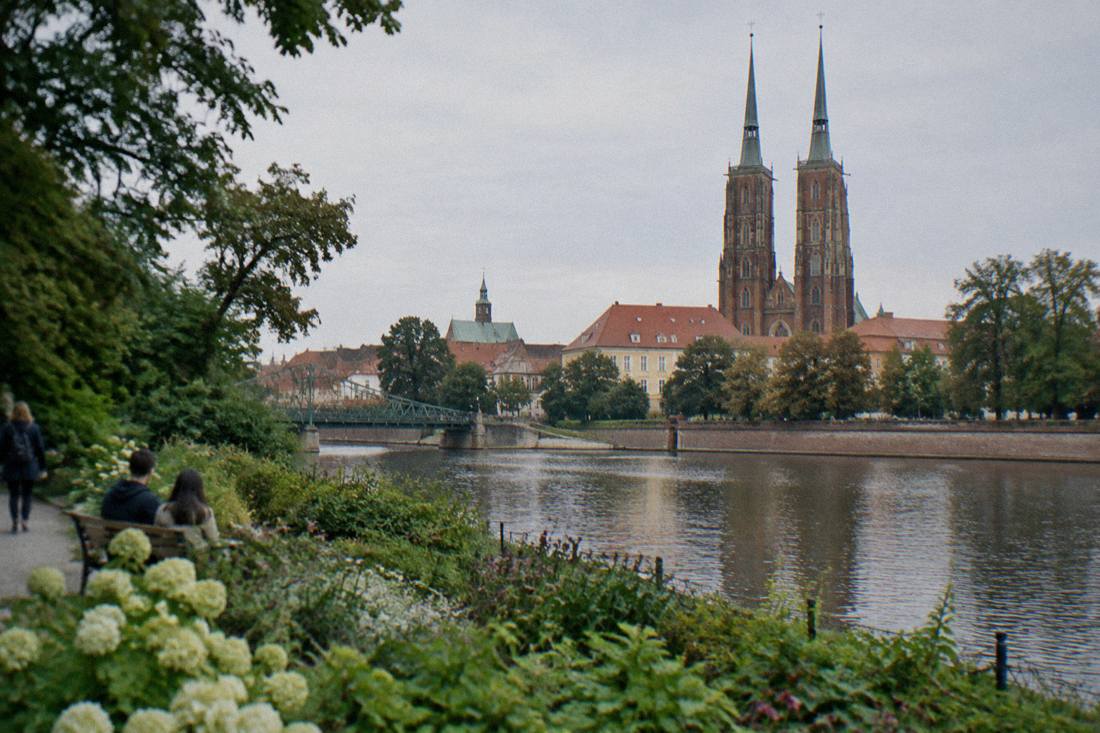
The sights nearest the Wroclaw Botanical Garden are Ostrow Tumski's cathedral island itself, the Odra riverbank and bridge crossings, the Panorama Raclawicka across the district, the University of Wroclaw's Aula Leopoldina and main building, and the market-square core a short walk beyond, which places the garden inside the densest cluster of Wroclaw's headline sights. Few botanical gardens anywhere sit this close to a city's medieval core and its two biggest museums. The practical consequence is that the garden is never a detour; it is on the way to almost everything.
The order that minimizes backtracking is: cross into the sand-island district, take Ostrow Tumski first while the cathedral island is quiet, then the garden, then walk back over the bridges toward the university quarter, and finish at the market square or the Panorama. Along that route the river crossings themselves are minor sights, and Grunwaldzki Bridge is the standout for photos, on this site's list of best photo spots in Wroclaw.
The Aula Leopoldina, the University of Wroclaw's ceremonial hall, is the interior counterpart to the garden's outdoor calm, and both belong to the same institution. This site carries a dedicated page for the Aula Leopoldina, and a university day, hall in the morning, garden after, is one of the more civilized ways to spend a Wroclaw afternoon.
Even the dwarfs reach this district. The bronze dwarfs scattered across the city, which have their own guide on this site, turn the whole center into a scavenger hunt, and a dwarf-hunting child walking toward the garden will spot more of them than an adult walking the same route twice as fast. The Wroclaw dwarfs guide explains the backstory, which is political and older than the figurines.
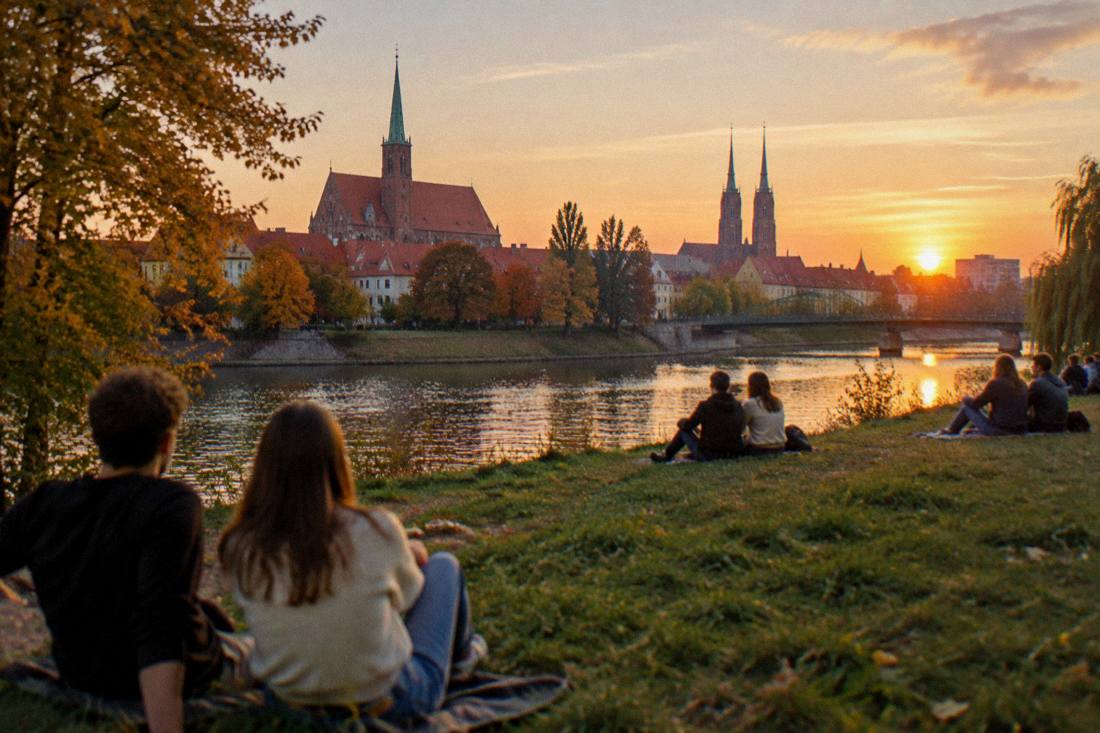
If the district wins your whole day, the evening options are close too. Slodowa Island is the informal riverside lawn where students and families gather on warm evenings, and the National Forum of Music is the venue for anyone who wants the evening to be seated and amplified rather than grassy and quiet. The garden, in other words, sits at the center of a district that can carry a full day on its own.
For a second look at the city from a vehicle rather than the footpaths, this final trio of tours covers the three most useful ways to see Wroclaw with someone else doing the route-planning:
Common Questions About The Wroclaw Botanical Garden
Is the Wroclaw Botanical Garden the same as the Japanese Garden?
No. The Wroclaw Botanical Garden is the University of Wroclaw's scientific plant collection beside Ostrow Tumski, while the Japanese Garden is a separate designed landscape in the Szczytnicki Park area near Centennial Hall. They are managed separately, priced separately, and sit in different parts of the city's green network.
How much does the Wroclaw Botanical Garden cost to visit?
This page prints no figure for the garden's admission because no verified price appears in this site's facts pack. The University of Wroclaw's own pages for the garden carry the current ticket price, the reduced categories, and the seasonal schedule, and they should be checked before your visit. Everything around the garden, from the 4.60 zl MPK short-hop ticket to the 50 zl Panorama Raclawicka admission, is verified and listed in the tables above.
What is the best month to visit the Wroclaw Botanical Garden?
May, June, and July are the warmest months in the IMGW 1991-2020 climate normals for Wroclaw, at means of 14.3C, 17.7C, and 19.7C respectively, which puts peak growth and peak warmth together. July is also the wettest month at 91.4 mm, so September, at 14.5C with only 48.4 mm of rain, is the calmer alternative for visitors who prefer fewer showers and fewer people.
Can you walk from the market square to the Wroclaw Botanical Garden?
Yes. The garden sits in the sand-island district beside Ostrow Tumski, the cathedral island adjacent to the Old Town, and the market square connects to it through walkable central streets. This page does not print a specific walking time for that exact route, but the route is standard, flat, and signposted through the city center.
Is the Wroclaw Botanical Garden good for children?
It is a calm, traffic-free green space with lawns and shade, which works well for a slow family stop, but it is a university plant collection rather than a playground, so it rewards preparation and a gentle pace. Families with younger children usually pair it with the Wroclaw Zoo, where the Afrykarium is included in the standard zoo ticket at adult prices from 69 zl online.
What else should you see near the Wroclaw Botanical Garden?
Ostrow Tumski's cathedral island comes first, then the Odra riverbank and its bridges, then the Panorama Raclawicka, whose 50 zl adult ticket also covers the National Museum's permanent exhibitions, the Ethnographic Museum, and the Four Domes Pavilion within three months of the visit date. The University of Wroclaw's Aula Leopoldina rounds out a university-themed day.
The Wroclaw Botanical Garden is not the loudest attraction in a city famous for its dwarfs and its market square, and that is exactly its value: a scientific collection, kept green and quiet, in the middle of one of Poland's most walkable city centers. Check the university's own page for the current ticket, pick a month from the climate table above, and give the garden the unhurried late morning it deserves.