Best Souvenirs From Wroclaw
The best souvenirs from Wroclaw, the largest city in Lower Silesia in southwestern Poland, are dwarf figurines, amber and ceramic crafts, museum-shop art books, and food gifts from the city's Old Town markets. This guide maps what to buy, where to buy it, and which figures are actually verified.
Short answer
The best souvenirs from Wroclaw are dwarf (krasnal) figurines, Polish amber, local ceramics, museum-shop prints and books from the National Museum and Panorama Raclawicka, and packable food gifts such as pierogi dumplings and regional sweets bought around the Market Square and Old Town.
Wroclaw, the largest city in Lower Silesia (Dolnoslaskie voivodeship) in southwestern Poland, is a city of 672,601 residents (GUS, 31 Dec 2025) built on a dozen islands of the Odra river, and its souvenir scene is unusually good for one simple reason: almost everything worth buying sits within a short walk of the Market Square. The dwarfs are the headline. The city's small bronze statuettes scattered across the Old Town have spawned an entire cottage industry of figurines, magnets, T-shirts and mugs, and they are the one gift that genuinely cannot be bought anywhere else in Poland. Beyond the dwarfs there is amber from the Baltic trade, Silesian ceramics, museum-shop art prints tied to the Panorama Raclawicka, and a food scene that produces packable gifts from pierogi to craft beer, all covered in more depth in this Wroclaw Travel Guide companion piece to the main shopping in Wroclaw guide.
What this page does differently from most souvenir lists: every price that appears here is a verified till price from an official source (a museum cennik, a city fare page, a castle tariff), and every bookable-tour price and rating renders from live data rather than being typed by hand. Where a figure is not verified, it is not stated.
What Are The Best Souvenirs From Wroclaw?
The best souvenirs from Wroclaw are dwarf figurines in every size, Polish amber jewelry, Silesian ceramics and pottery, art prints and books from the National Museum and Panorama Raclawicka gift shops, and food gifts bought around the Market Square, from pierogi and regional sweets to Lower Silesian craft beer. The dwarf figurine is the one item unique to the city; the rest are best-in-class Polish goods with a Wroclaw address attached.
Start with the dwarfs, because they are the only souvenir category with no substitute. The city's bronze krasnale began as a playful street-art phenomenon and now appear all over the Old Town as statuettes to be hunted, and the gift shops around the Rynek sell the same characters as pocket-sized figurines. They are cheap, packable, instantly recognizable to anyone who has visited, and completely mysterious to anyone who has not, which is exactly what a good souvenir should be.
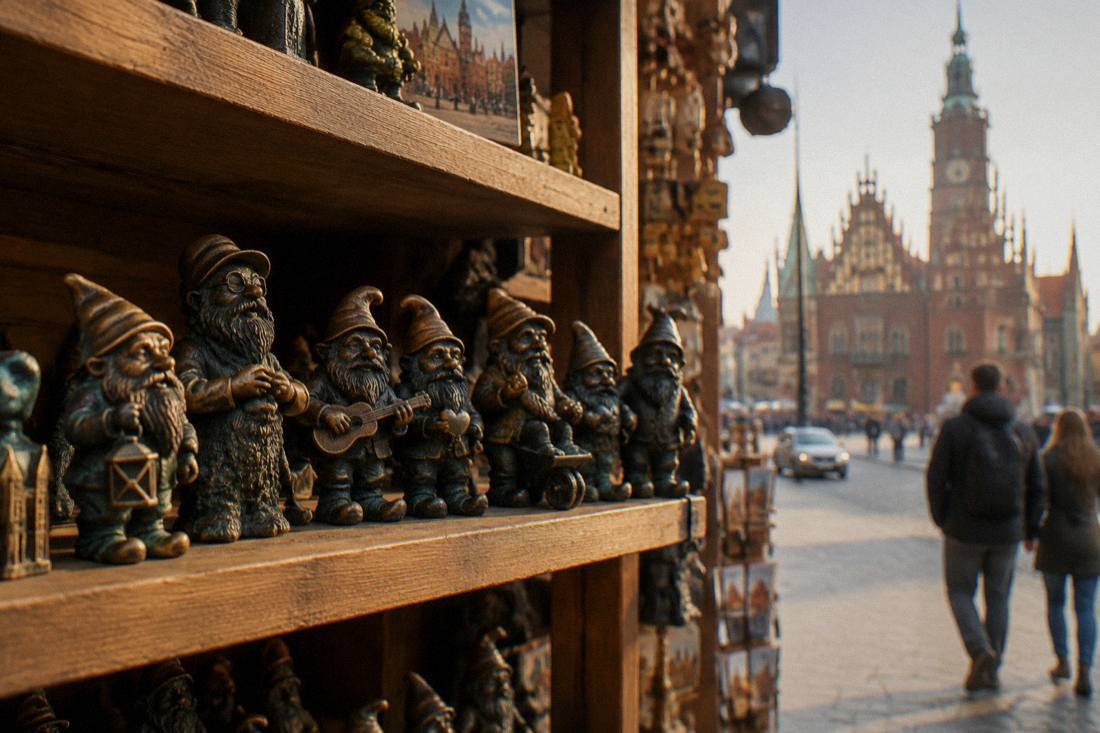
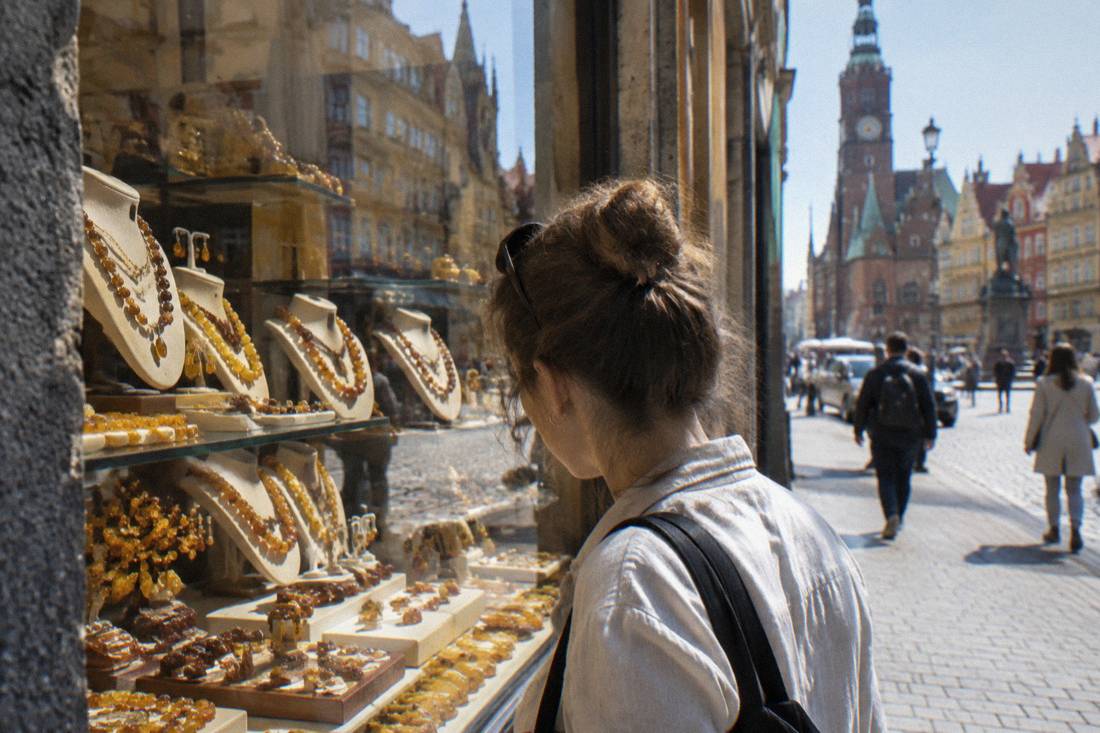
Amber is the second tier. Poland is one of the world's major amber sources and Polish amber jewelry, from simple pendants to set pieces, appears in many of the jewelry and gift shops on and around the Market Square. Look for pieces sold as natural Baltic amber rather than reconstituted material, and buy from a shop that labels the stone honestly.
The third tier is craft: ceramics, glass, textiles and prints. Silesia has a strong ceramics tradition, and gift shops in the Old Town carry Polish pottery alongside locally made goods. The craft beer scene has also produced its own take-home category, with bottled local brews sold in bars and specialist shops around the city, and the best cafes in Wroclaw often sell bags of Polish-roasted coffee alongside their cakes.
Where To Buy Souvenirs In Wroclaw?
Buy souvenirs in Wroclaw in three zones: the Market Square and its side streets for dwarf figurines, amber and craft stalls; the Old Town lanes between the Rynek and the university for independent design shops and bookshops; and the museum gift shops for art prints and exhibition-linked gifts. The Market Square itself, roughly 3.64-3.79 hectares, concentrates more gift shops in one walkable space than anywhere else in Lower Silesia.
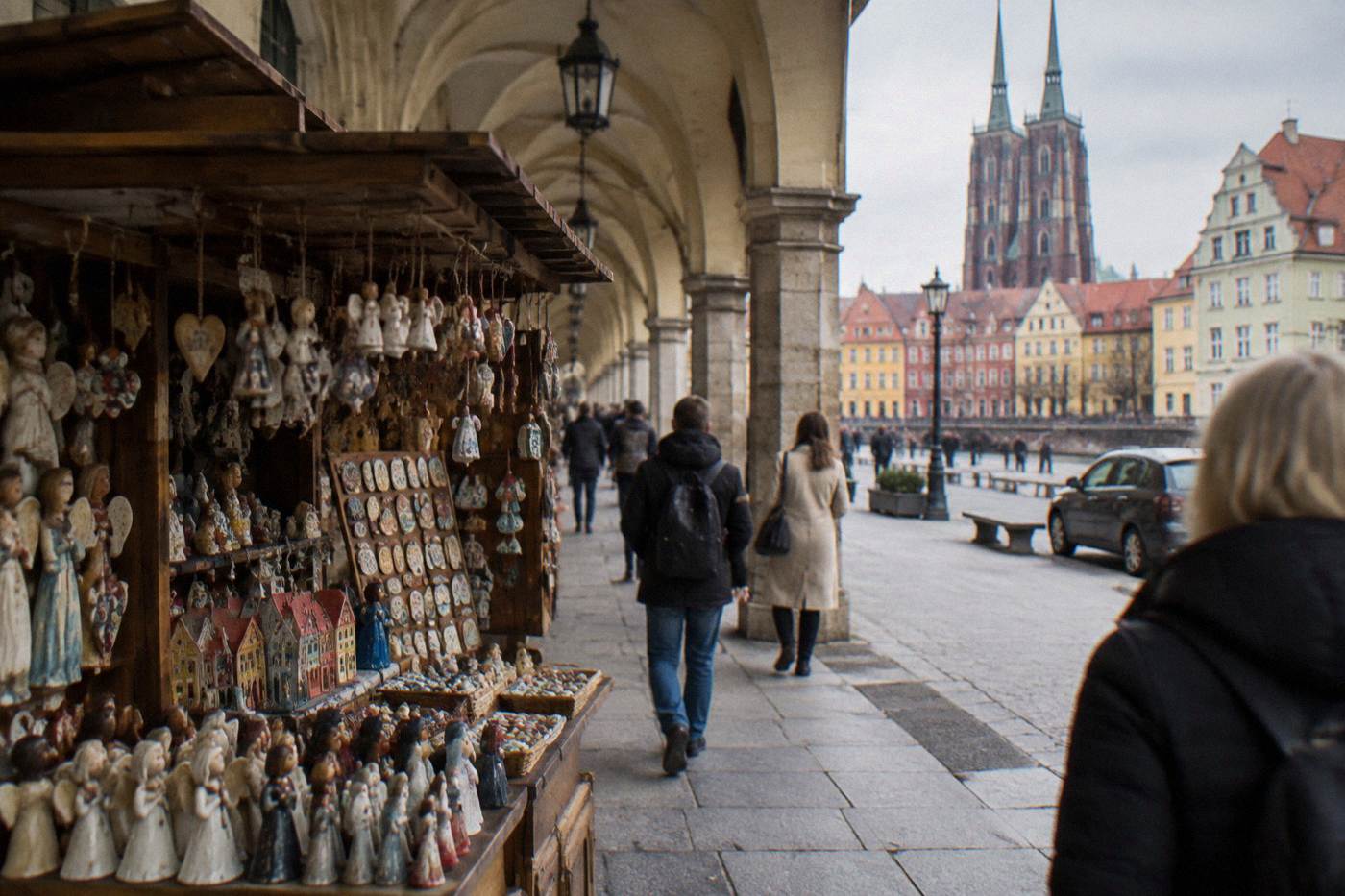
The Rynek is the natural starting point. Its arcades and side streets hold a dense cluster of gift shops selling dwarfs, magnets, amber and souvenirs, and the Old Town guide covers the layout street by street. Stalls and shops here suit the one-hour souvenir dash, because everything is within a few minutes' walk and the trams (a 15-minute ticket costs 4.60 zl, reduced 2.30 zl, per the city's official fare page) drop you right at the edge of the pedestrian zone.
The second zone is the design-and-craft layer. Independent shops selling Polish ceramics, prints and jewelry sit in the lanes around the university and up toward Swidnicka street, and they reward browsing in a way the Rynek stalls do not. If your trip includes the run-up to Christmas, the Wroclaw Christmas market guide covers the seasonal market version of the same hunt, when the Rynek fills with craft and food stalls.
The third zone is covered in the next section: museum shops, which are the best place in the city for gifts that are not kitsch.
If you want the shopping preceded by context, a guided walk of the Old Town is the efficient way to do it, and the small-group Old Town walking tour doubles as a survey of the streets you will come back to with shopping bags. Check availability if that fits your first day.
Which Museum Shops In Wroclaw Sell The Best Souvenirs?
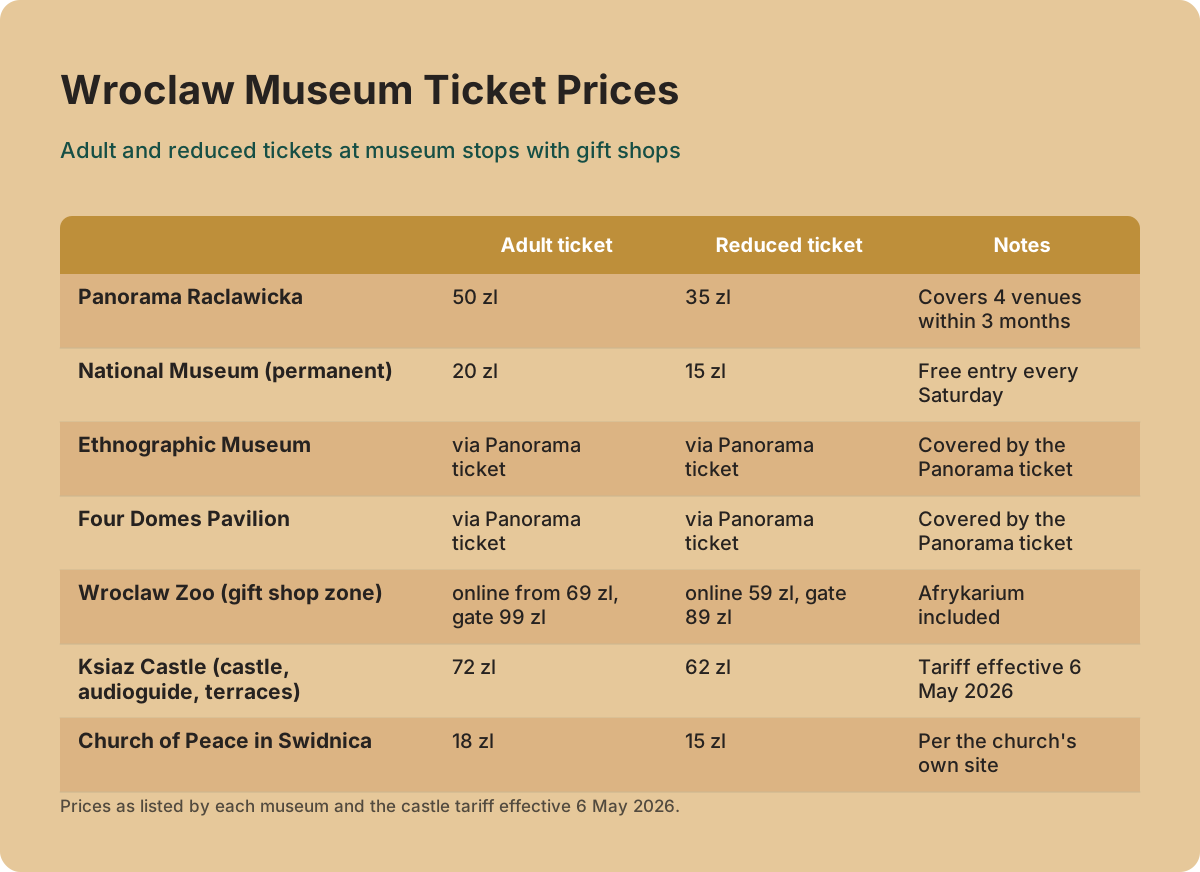
The strongest museum shops for souvenirs in Wroclaw belong to the National Museum (adult permanent-exhibition ticket 20 zl, reduced 15 zl, free entry to permanent exhibitions every Saturday) and the Panorama Raclawicka (adult 50 zl, reduced 35 zl, 30-minute screening). Both sell art books, prints and exhibition-linked gifts, and the Panorama ticket also covers four more museum branches within three months, which turns a souvenir stop into a multi-venue art trip.
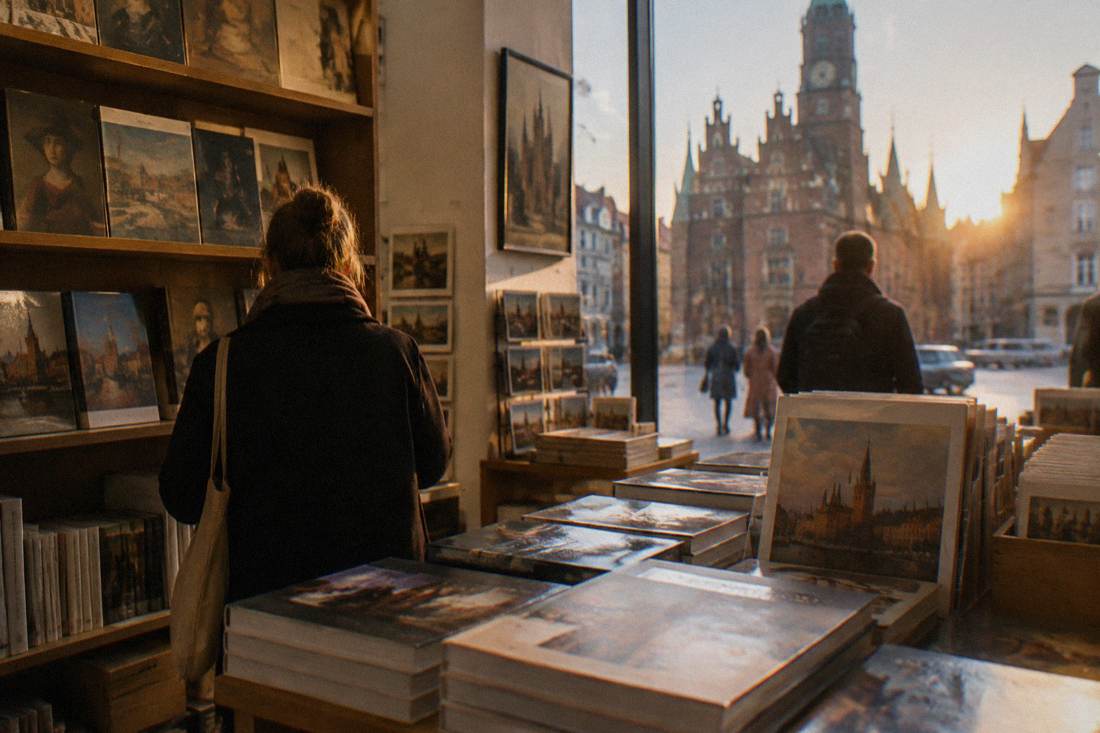
Museum shops are where Wroclaw's souvenir quality jumps a level. The National Museum's own pricing page lists the standalone ticket at 20 zl adult and 15 zl reduced, with a group/family rate of 10 zl per person, a 3 zl student and pupil special, and a 1 zl "Museum for a zloty" ticket for students and pupils under 26, with under-7s free. Its shop carries catalogues and prints tied to one of Poland's major art collections, a gift that outlasts any fridge magnet.
The Panorama Raclawicka is the other obvious stop. The giant painting is Wroclaw's single most famous indoor sight, the screening lasts 30 minutes, and its ticket doubles as a three-month pass: the museum's own site states that one Panorama ticket also covers the National Museum's permanent exhibitions, the Ethnographic Museum and the Four Domes Pavilion within three months of the visit date. For a souvenir shopper, that means one ticket funds four gift shops.
| Museum stop | Adult ticket | Reduced ticket | Shop worth the stop | Extra notes |
|---|---|---|---|---|
| Panorama Raclawicka | 50 zl | 35 zl | Prints and panorama-themed gifts | Ticket also covers 4 venues within 3 months |
| National Museum (permanent) | 20 zl | 15 zl | Art books, catalogues, prints | Free permanent-exhibition entry every Saturday |
| Ethnographic Museum | via Panorama ticket | via Panorama ticket | Folk-craft and textile gifts | Covered by the Panorama ticket |
| Four Domes Pavilion | via Panorama ticket | via Panorama ticket | Contemporary art catalogues | Covered by the Panorama ticket |
| Wroclaw Zoo (gift shop zone) | online from 69 zl, gate 99 zl | online 59 zl, gate 89 zl | Zoo-themed gifts, Afrykarium included | Afrykarium needs no separate ticket |
Plan museum-shop days with the Monday closures in mind: the National Museum's own site lists Monday closures in both winter and summer seasons, and the Panorama's winter season also closes Mondays. Saturday is the smart day for the National Museum, since permanent exhibitions are free.
One practical pairing: book a guided morning walk, shop the Rynek at midday, and finish at a museum. The small-group Old Town walk is the natural fit.
What Food Souvenirs From Wroclaw Survive The Trip Home?
The best food souvenirs from Wroclaw are hard cheeses and cured goods in sealed packaging, Polish chocolate and sweets, jars of preserves and honey, bags of Polish-roasted coffee, bottled craft beer, and pierogi bought frozen from a milk bar or restaurant for cooking at home. Fresh pierogi and market bread are for the hotel room, not the suitcase; frozen ones travel in a cool bag and freeze again on arrival.
Food is the most honest souvenir category, and Wroclaw's food scene gives you plenty to work with. The pierogi guide and the milk bar guide cover the dumpling and canteen culture in detail; for gifts, the trick is knowing which formats cross a border. Frozen pierogi from a milk bar, packed in a cool bag, are the classic move. Sealed jars, chocolates and coffee are the safe bets for a flight.
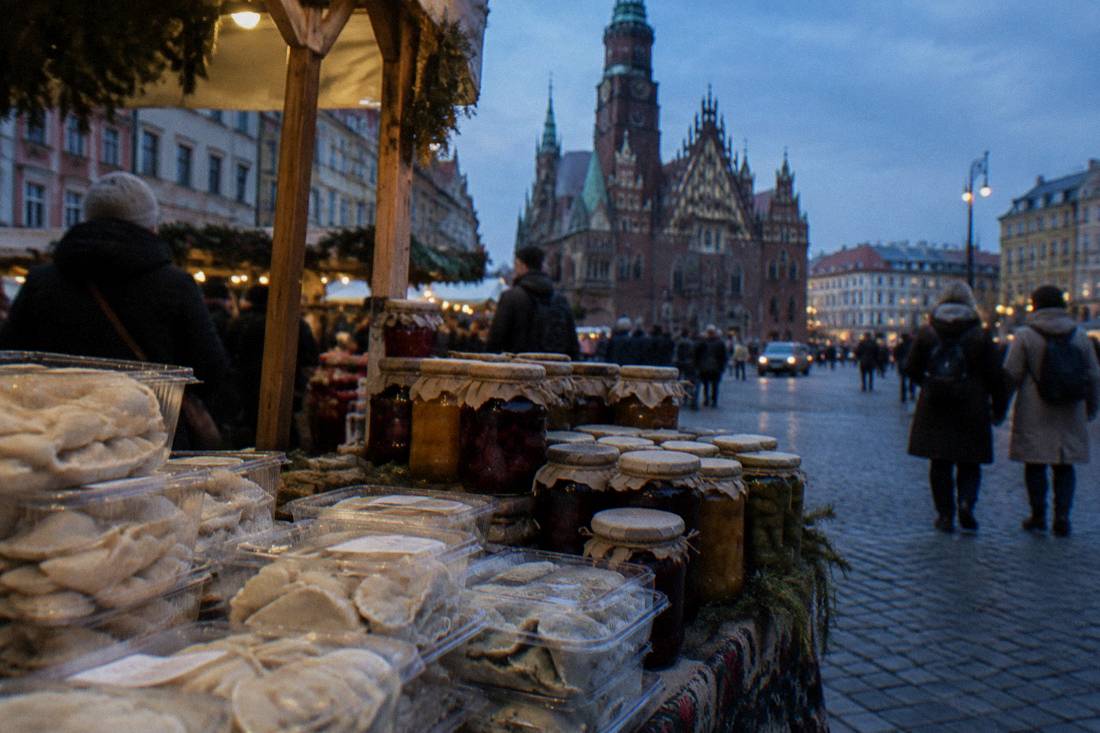
The street food guide and the restaurant guide list where to eat your way through the decision. The craft beer guide covers the bottled-beer gift angle: Lower Silesian breweries sell take-home bottles, and beer travels well in a padded bag or in checked luggage.
| Food gift | Travels by plane | Travels by car or train | Where to buy it in Wroclaw |
|---|---|---|---|
| Frozen pierogi, sealed | In a cool bag, check airline rules | Yes, cool bag | Milk bars and pierogi restaurants |
| Chocolate and sweets | Yes | Yes | Rynek gift shops and confectioners |
| Preserves, honey in jars | Yes, padded | Yes | Market stalls and food shops |
| Roasted coffee beans | Yes | Yes | Cafes across the Old Town |
| Bottled craft beer | Checked luggage only | Yes | Craft beer bars and bottle shops |
| Fresh bread and market pastries | No | Same day only | Rynek bakeries |
Nothing in that table is a price promise, because food prices move with the season and the stall; the trip cost guide covers what a Wroclaw budget realistically looks like overall.
Is The Wroclaw Dwarf Figurine The Souvenir That Actually Matters?
Yes, the dwarf figurine is the souvenir that matters in Wroclaw, because it is the only one tied to something the city alone invented: the scattered bronze krasnale that residents and visitors hunt across the Old Town. An amber pendant could come from any Polish city; a dwarf figurine could only come from Wroclaw. Buy at least one, in whatever size your luggage permits.
The dwarfs work as a souvenir because they work as an activity first. Families and solo travelers alike spend afternoons spotting the statuettes, and the Wroclaw dwarfs guide explains the phenomenon and how to hunt them properly. Once you have spotted a dozen, the figurine in the shop window stops being kitsch and becomes a trophy.
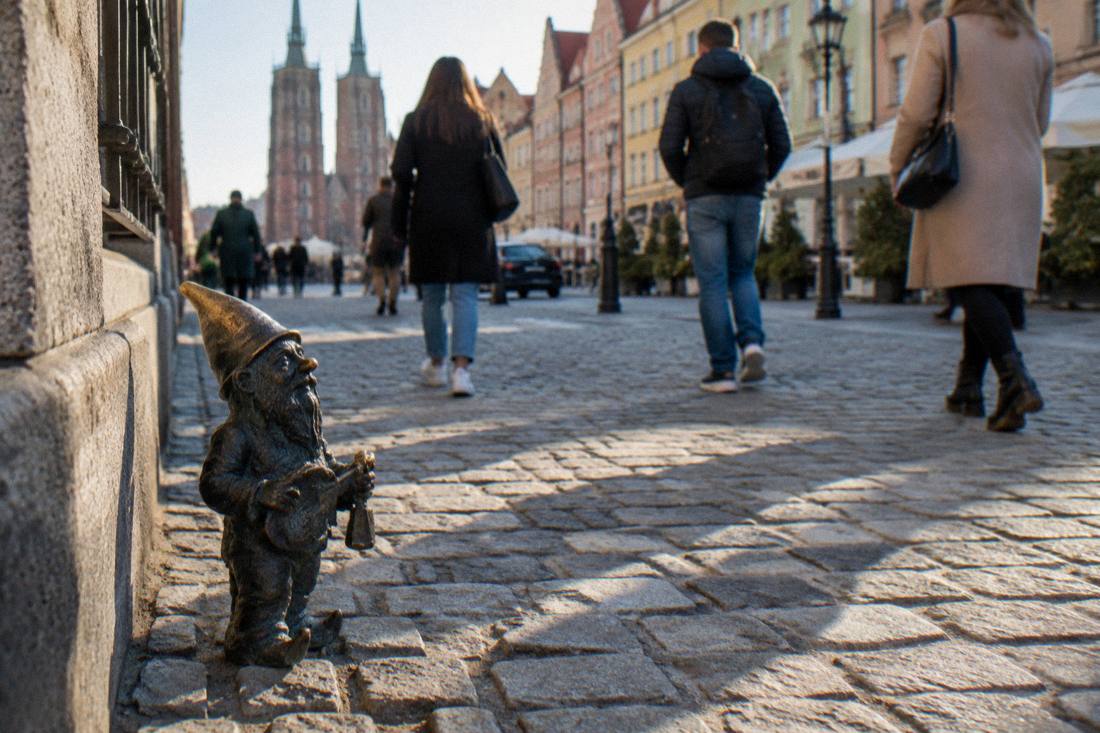
If you want the hunt led rather than improvised, dwarf-themed tours exist in several formats, from short e-car rides to walking tours built around the statuettes. The city walk below is the general-purpose version that covers the same streets:
What Souvenirs Can You Bring Back From Day Trips Around Wroclaw?
The best day-trip souvenirs from around Wroclaw come from Ksiaz Castle (castle, audioguide and terraces at 72 zl adult, 62 zl reduced, per the castle's own tariff effective 6 May 2026) and the UNESCO-listed Church of Peace in Swidnica (adult 18 zl, reduced 15 zl, per the church's own site), where the gift shops sell castle and heritage items unavailable in the city center. Both are Lower Silesia destinations reachable on organized tours from Wroclaw.
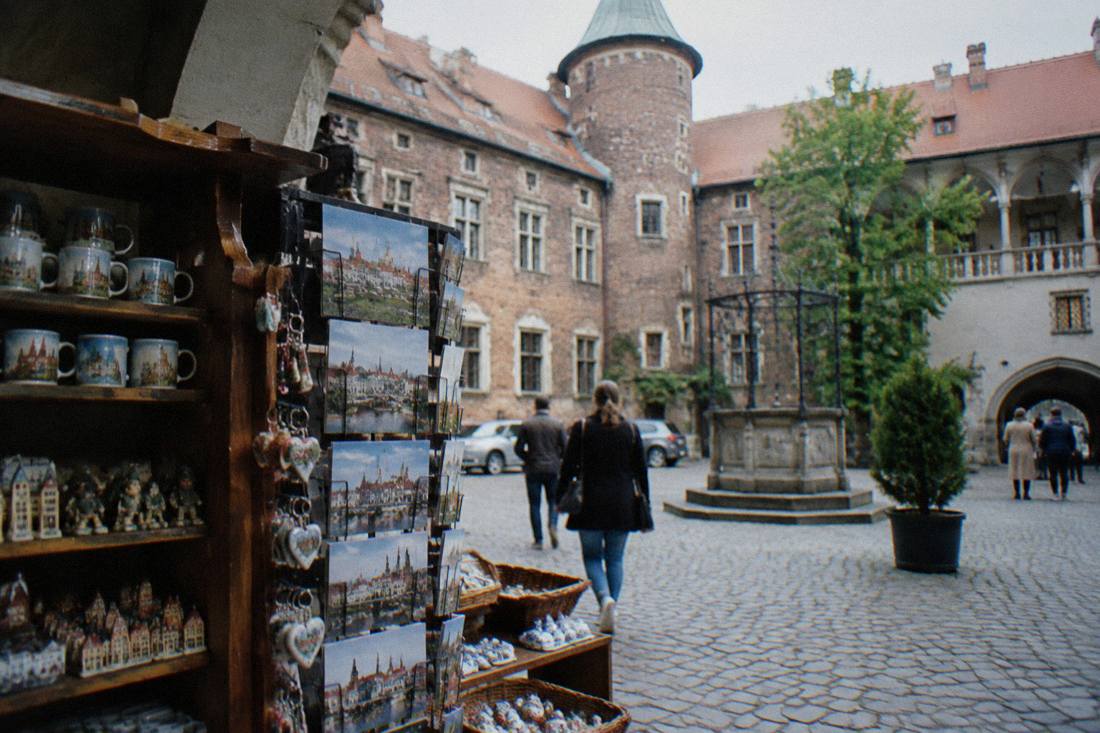
Ksiaz Castle, owned by the Walbrzych municipality and operated by the municipal company Zamek Ksiaz w Walbrzychu Sp. z o.o., is Lower Silesia's flagship attraction, and its shop inventory reflects the castle's own history rather than generic Polish souvenirs. The castle's tariff lists a full ladder of ticket options, shown below, and the All Day Ticket is the one that turns the visit into a full souvenir-and-sightseeing day. Note one seasonal catch: the terraces open only from 15 April to 30 September, per the castle's own site.
| Ksiaz Castle ticket option | Adult | Reduced | What it includes |
|---|---|---|---|
| Castle with audioguide + terraces | 72.00 zl | 62.00 zl | Castle interiors, audioguide, terraces |
| Castle + terraces + underground tour | 92.00 zl | 82.00 zl | Adds the underground route |
| Castle + terraces + stud farm | 79.00 zl | 69.00 zl | Adds the stud farm |
| All Day Ticket | 104.00 zl | 94.00 zl | Castle, terraces, underground, Palm House, stud farm, mausoleum |
| Underground tour alone | 45.00 zl | 39.00 zl | Underground route only |
| Palm House alone | 27.00 zl | 21.00 zl | Palm House only |
The Church of Peace in Swidnica, inscribed by UNESCO in 2001 as part of the "Churches of Peace in Jawor and Swidnica" listing, is the second day-trip souvenir stop. The church's own site lists adult tickets at 18 zl, reduced at 15 zl, children and youth at 10 zl, and a family ticket at 45 zl, and its shop carries heritage items tied to one of Europe's extraordinary timber churches. A combined Ksiaz-plus-Swidnica itinerary is the classic Lower Silesia day out, and several organized versions run from Wroclaw:
The two Peace Churches pairing, Swidnica and Jawor together, is its own tour format and arguably the best gift-shopping angle for anyone interested in heritage crafts, because both churches sit in small towns whose shops sell nothing you will find on the Rynek. The organized version runs as a half-day trip:
The Ksiaz Castle guide and the Church of Peace guide cover both destinations in full detail if you would rather travel independently; access is commonly reached by regional train to Walbrzych plus a bus or taxi connection, and the getting around Wroclaw guide explains the city-side transport you will use to reach the station.
When Is The Best Time Of Year To Shop For Souvenirs In Wroclaw?
The best time of year for souvenir shopping in Wroclaw is late spring through early autumn, because the Market Square and open-air stalls operate fully then; IMGW's 1991-2020 climate normals for the Wroclaw station put July at a 19.7C mean and May at 14.3C, against 0.0C in January. December is the exception worth making: the Christmas market season turns the Rynek into the city's densest gift-shopping environment of the year.
The climate data matters more than you would think for a shopping trip, because the outdoor stall layer of Wroclaw's souvenir scene shrinks in the cold months while the indoor layers, museum shops, arcades, malls, stay constant. IMGW's climate normals (station 12424, 1991-2020) show the monthly means below, and the weather by month guide unpacks what each month actually feels like for visitors.
| Month | Mean temperature (C) | Precipitation (mm) | Souvenir shopping conditions in Wroclaw |
|---|---|---|---|
| Jan | 0.0 | 28.3 | Indoor layer only; museum shops open |
| Mar | 4.3 | 35.0 | Stalls return gradually |
| May | 14.3 | 59.6 | Full outdoor market layer |
| Jul | 19.7 | 91.4 | Peak season, busiest Rynek |
| Aug | 19.3 | 59.5 | Full season, slightly quieter than July |
| Oct | 9.6 | 37.6 | Comfortable browsing, thinning stalls |
| Dec | 1.1 | 27.9 | Christmas market season on the Rynek |
Note the honest reading of that table: July is both the warmest month and the wettest by volume (91.4 mm), so the peak shopping month carries the highest rain risk of the year. October and May are the connoisseur months, warm enough for everything, thin enough in crowds to browse properly. The best time to visit Wroclaw guide weighs the same trade-offs across the whole trip.
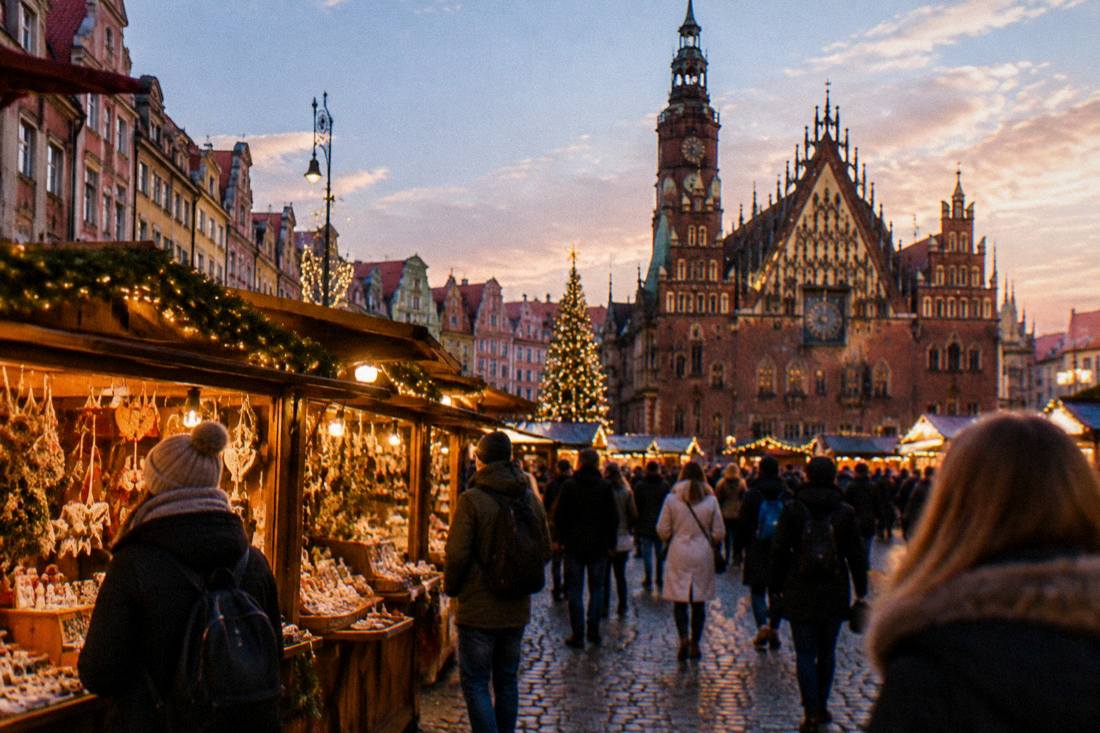
For the December angle specifically, the Christmas market guide covers the seasonal stalls, and the events calendar lists the festivals and markets that pop up across the year, several of which bring craft sellers you will not find in permanent shops.
Common Questions About Souvenirs From Wroclaw
What is the most typical souvenir from Wroclaw?
The dwarf figurine. The city's bronze krasnale statuettes scattered around the Old Town are a phenomenon specific to Wroclaw, and the figurines sold in Rynek gift shops are the pocket-sized version. Nothing else on the souvenir list is as uniquely tied to the city.
Are museums in Wroclaw good places to buy souvenirs?
Yes. The National Museum (permanent exhibitions free every Saturday, standard adult ticket 20 zl) and the Panorama Raclawicka (adult 50 zl, reduced 35 zl, a 30-minute screening) both run gift shops with art books and prints, and the Panorama ticket also covers the Ethnographic Museum and the Four Domes Pavilion within three months, per the museum's own site.
Can you bring pierogi home as a souvenir from Wroclaw?
You can bring frozen pierogi home in a cool bag; many milk bars and pierogi restaurants sell them this way. Fresh-cooked pierogi are for eating on the spot. Sealed Polish chocolates, preserves and roasted coffee are the safer flight-friendly food gifts.
Is amber cheaper in Wroclaw than elsewhere?
No verified price comparison supports that claim, and this guide does not state one. Poland is a major amber source and Wroclaw's shops sell it broadly alongside other Polish cities' shops; buy based on honest labeling of natural Baltic amber rather than on an assumed local discount.
Do I need a tourist pass to shop in Wroclaw?
No all-inclusive Go City-style tourist pass is currently sold for Wroclaw, and none should be assumed. UrbanCard is a transport-focused fare card with resident discounts, not a sightseeing pass. A 15-minute MPK tram ticket costs 4.60 zl (reduced 2.30 zl) per the city's official fare page, which covers most hops between the station and the Rynek.
What souvenirs can you only get on a day trip from Wroclaw?
Heritage gifts tied to Ksiaz Castle (castle, audioguide and terraces, adult 72 zl per the castle's tariff) and the UNESCO-listed Churches of Peace in Swidnica and Jawor (Swidnica adult 18 zl per the church's own site). Both destinations' shops carry items tied to those specific sites, and organized tours from Wroclaw cover both in a single day.
A final word on process: buy the dwarf first, on day one, so the pressure is off; browse the museum shops on a Saturday morning when the National Museum's permanent exhibitions are free; and leave the food gifts to the last day so the pierogi spend the minimum possible time out of a freezer. Souvenir shopping in Wroclaw rewards the same instinct the city itself rewards, which is to walk slowly around the Market Square, look into the arcades, and pick the one object that could not have come from anywhere else.