Is Tap Water Safe To Drink In Wroclaw?
Wroclaw, the largest city in Lower Silesia in southwestern Poland, treats its tap water to EU drinking-water standards, and locals drink it every day. This guide covers what that means in practice for visitors.
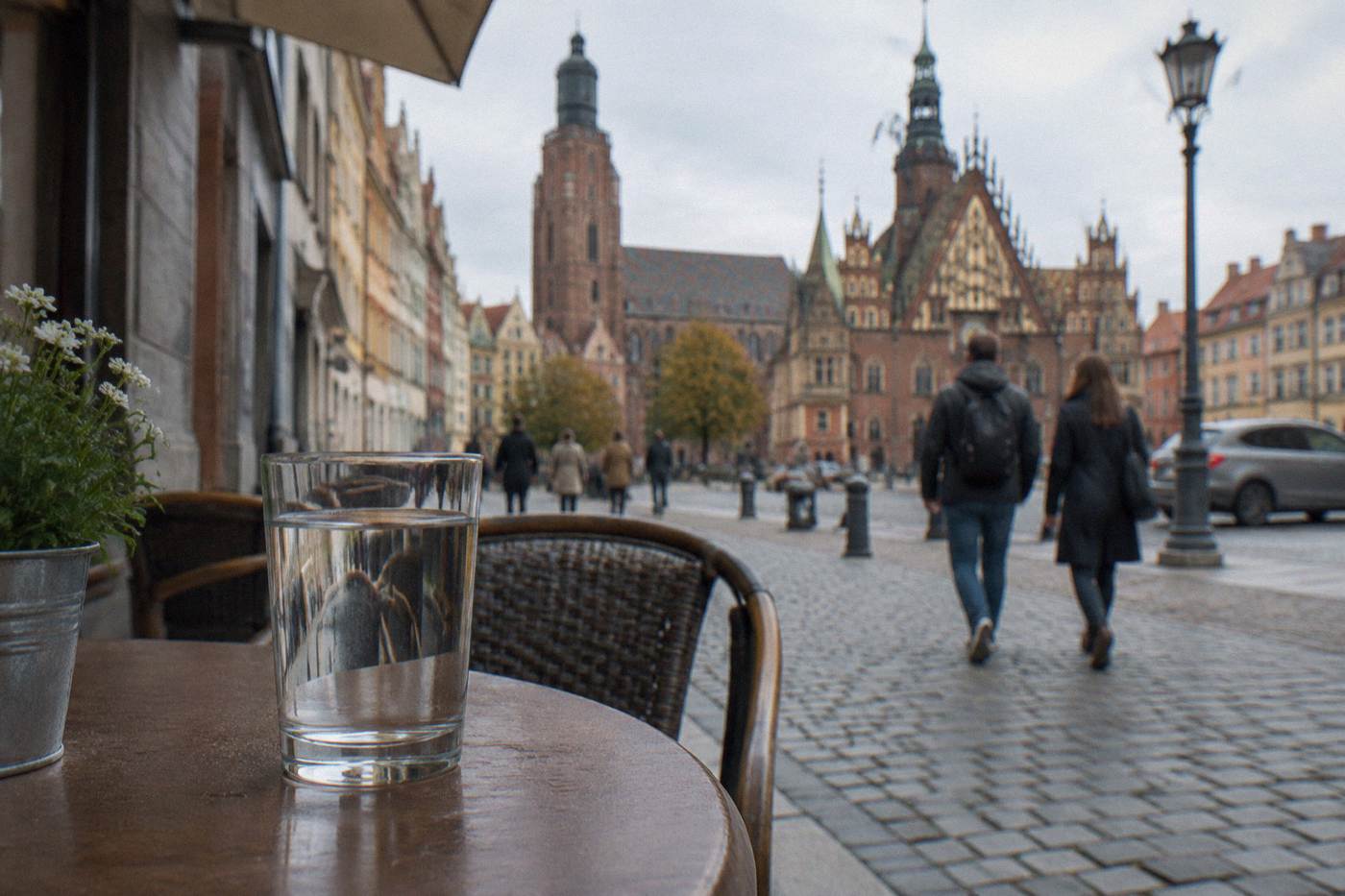
Short answer
Yes, tap water in Wroclaw is treated to EU drinking-water standards and is safe to drink. The taste takes some visitors by surprise, but safety is not the question.
Wroclaw, the largest city in Lower Silesia (Dolnoslaskie voivodeship) in southwestern Poland, sits on the Odra river and serves tap water that is treated to the drinking-water standards Poland follows as an EU member state. The short version for anyone packing a refillable bottle: the water that comes out of the tap in a Wroclaw hotel, apartment or cafe is treated municipal water, and the question visitors actually notice in practice is not safety but taste. This guide from Wroclaw Travel Guide takes the question apart properly: what the standards mean, why the flavor surprises people, what to do in restaurants, which fountains to leave alone, and how to plan a day of sightseeing around staying hydrated.
Is Tap Water Safe To Drink In Wroclaw?
Yes, tap water in Wroclaw is safe to drink. Poland is an EU member state, and municipal drinking water in Wroclaw is treated to the EU drinking-water directive's standards before it reaches taps in homes, hotels and restaurants. Locals drink it, cafes serve it, and no visitor needs to boil or filter it for safety reasons. The honest caveat is about taste and temperature, not health: the water runs cool from the mains and the flavor differs from bottled water.
That distinction, safety versus taste, is where most confusion comes from. Online travel threads about Polish tap water mix the two together, and a visitor who takes one sip of unfamiliar-tasting water sometimes walks away believing the water was unsafe when nothing of the sort was true. Treated water that meets a legal standard and water that tastes like the still bottle you buy at home are two different things.
Practically, this means the refillable bottle you packed is genuinely useful in Wroclaw. It is also the cheapest hydration strategy in a city where the currency is the zloty (PLN), not the euro, and where every zloty you do not spend on single-use plastic is a zloty for something better. The Wroclaw trip cost guide breaks down where a realistic daily budget goes; drinks are one of the small line items that quietly add up when you buy them three times a day instead of refilling.
One more framing point. Nothing about Wroclaw's water requires special equipment, tablets or a filter bottle. If you already own a filter bottle for flavor reasons, bring it, but leave space in the luggage logic for the simpler truth: the tap works.
Where Does Wroclaw's Tap Water Come From?
Wroclaw draws its municipal water from the Odra river system and regional groundwater, which then passes through the city's water treatment plants before distribution. The city of Wroclaw's own portal is the authority on the supply network and publishes the consumer information about its waterworks. Treated water arrives via the mains network that serves homes, hotels, restaurants and public buildings across the city.
The Odra, the river Wroclaw stands on, shapes the city in more ways than one, and its role in the regional water system is part of that. The river itself is not something to drink from directly; the treatment stage between the river and the tap is exactly the point. For a sense of how central the Odra is to the city's identity, from the islands to the riverside walks, the Odra river boat cruise guide covers the waterway from the visitor's side of the question.
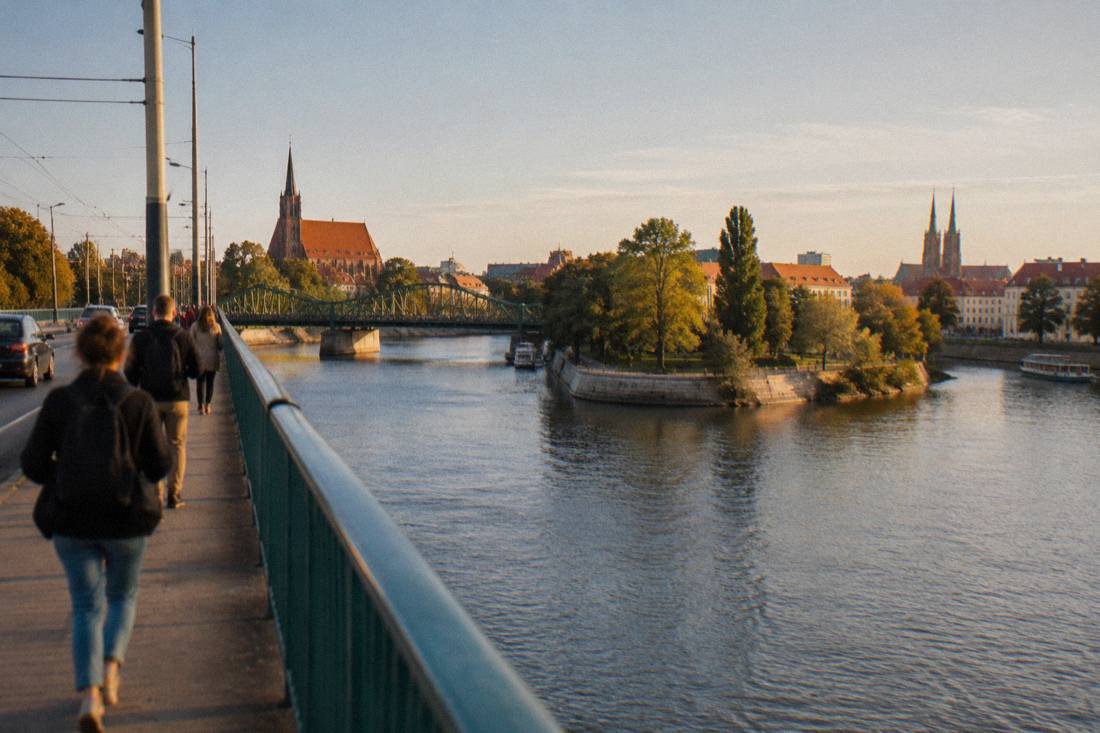
What the treatment chain means for a visitor is consistency. The water at a hotel near the market square, an apartment in Nadodrze and a cafe by the cathedral island comes through the same regulated municipal supply, so the answer to the safety question does not change by neighborhood. Old buildings can have old internal plumbing that affects taste at the very end of the chain, which is a plumbing quirk rather than a supply problem, and letting the cold tap run for a few seconds in an older building is ordinary practice anywhere in Europe, not a Wroclaw-specific warning.
If a tap is explicitly marked as non-drinkable, in a public restroom or on a public fountain, that marking is the thing to respect. Marked taps exist across Europe precisely because the default, unmarked municipal supply is the drinkable one.
Water aside, the city around it is worth planning for too, and these three experiences cover Wroclaw and its region well:
Why Does Tap Water In Wroclaw Taste Different From Bottled Water?
Wroclaw's tap water tastes different from bottled water for two ordinary reasons: the treatment process leaves trace levels of chlorine that some palates pick up, and the mineral content of the source water differs from the low-mineral profile of most bottled still water. Neither has anything to do with contamination. Filter jugs and simply chilling the water in a fridge both knock the flavor difference down for people who notice it.
Chlorine is the taste most often mentioned. Water utilities across Europe use it as part of keeping the distribution network safe, and Wroclaw's supply is in that category. The flavor is most noticeable in a glass of water drunk at tap temperature in an unfamiliar room; it fades substantially when the water is cold, which is why the fridge trick works. A slice of lemon does the same job with more style.
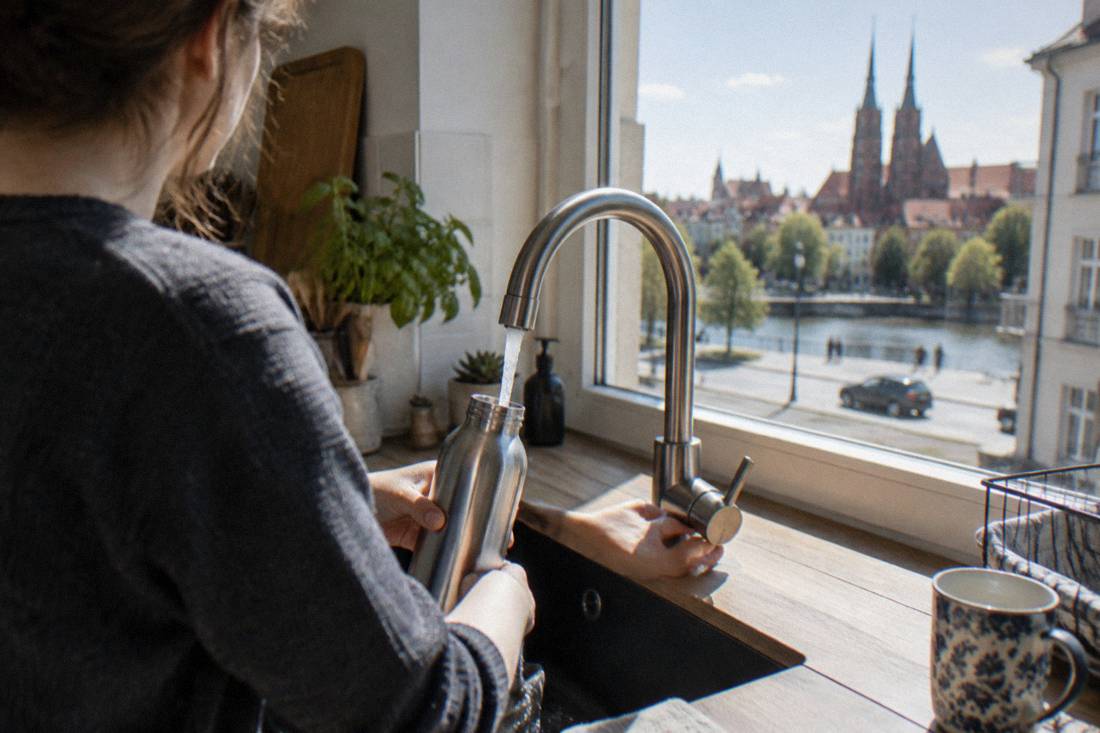
Mineral content is the subtler factor. Water from a river-and-groundwater system carries a mineral signature from the geology it passes through, and bottled still water is often deliberately low-mineral for a neutral taste. People who drink mostly bottled water at home have trained their palate on that neutral profile, and any treated municipal water tastes "different" against it. Different, again, is not the same as bad.
The practical move on arrival: fill a glass, chill it, drink it, and decide. Visitors tend to stop noticing within a day or two, which is roughly how long it takes to stop noticing a lot of things about any new city.
If a long day of walking the old town sounds like the moment the bottle earns its place in the daypack, a guided hunt for Wroclaw's famous dwarfs covers the same streets with a purpose, and there is a version led by a local guide:
Should You Ask For Tap Water In Wroclaw Restaurants And Cafes?
Asking for tap water in a Wroclaw restaurant is legal and increasingly normal, and Poland's consumer rules entitle a seated customer to be served tap water with a meal on request, but many restaurants still default to selling bottled water and some will push back politely. The reliable phrasing is a simple request for a glass of tap water with the meal, made when ordering. Expect the answer to vary by venue rather than by neighborhood.
The cultural gap is real. In much of Poland, ordering "water" at a restaurant has historically meant ordering a bottle from the menu, and staff may assume a visitor means the same thing. A clear, friendly request for water from the tap removes the ambiguity. Venues in the tourist core are now well used to visitors asking, and the best restaurants in Wroclaw guide includes plenty of places where a request for tap water alongside a meal is routine.
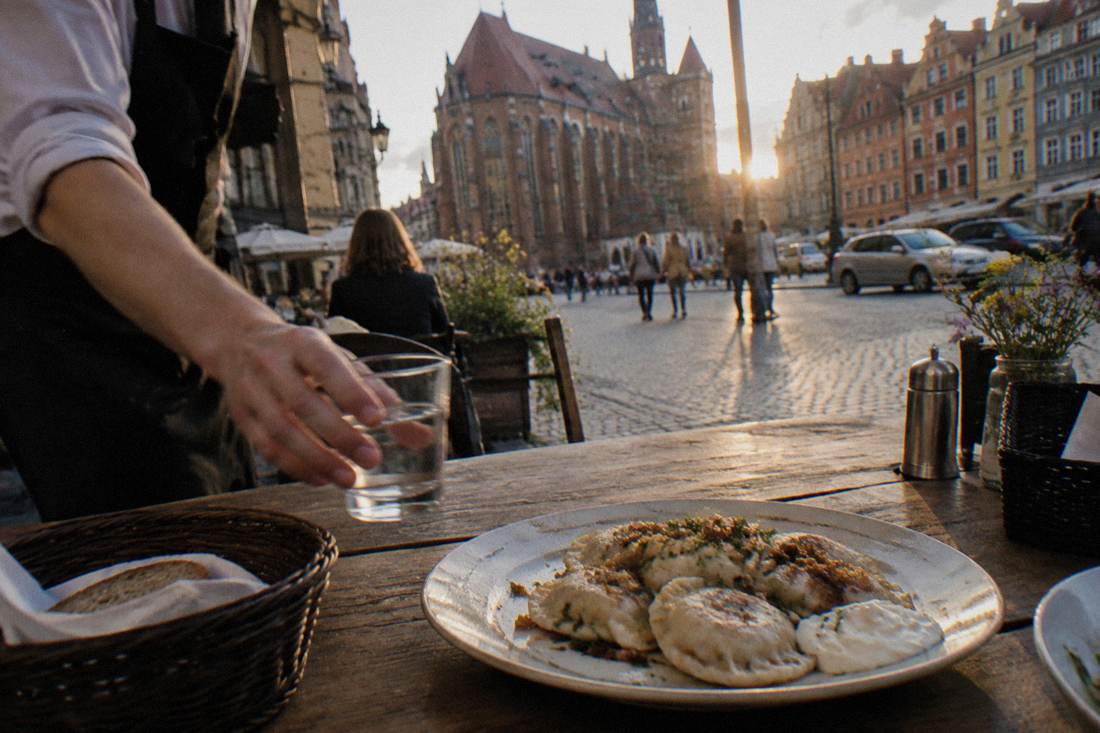
Cafes follow the same logic with one addition: many Wroclaw coffee shops will fill a customer's own bottle on request, and asking at the counter is normal. The best cafes in Wroclaw guide points at the ones where lingering with a laptop and a refill is part of the business model. None of this requires tipping for the water; the general tipping culture in Poland rounds up rather than calculates a percentage, and the currency and tipping guide covers that ground properly.
A sensible expectation, stated honestly: a venue may say yes instantly, may bring a small carafe, or may explain that it only serves bottled. All three happen in Wroclaw. None of them tells you anything about the water supply; they tell you about the venue's habits.
Can You Drink From Public Fountains In Wroclaw?
Most public fountains in Wroclaw are decorative features on a separate recirculating system, not drinking fountains, and the safe default is to treat any fountain as non-drinkable unless it carries an explicit marker saying its water is potable. Decorative fountain water is not part of the treated municipal drinking supply. Drinking from an unmarked fountain anywhere in Europe is a gamble on plumbing you cannot see, and Wroclaw is no exception.
The distinction sounds pedantic until you stand in front of a big ornamental fountain on a hot afternoon. The water in a display fountain circulates through pumps and basins, sits outside, and collects whatever the air and the pigeons contribute. It is not the same water as the kitchen tap, even when both ultimately involve the same utility. Cities across Europe have started installing dedicated public drinking fountains with clear signage; where Wroclaw has them, they are marked as such, and the marker is what matters, not the shape of the fixture.
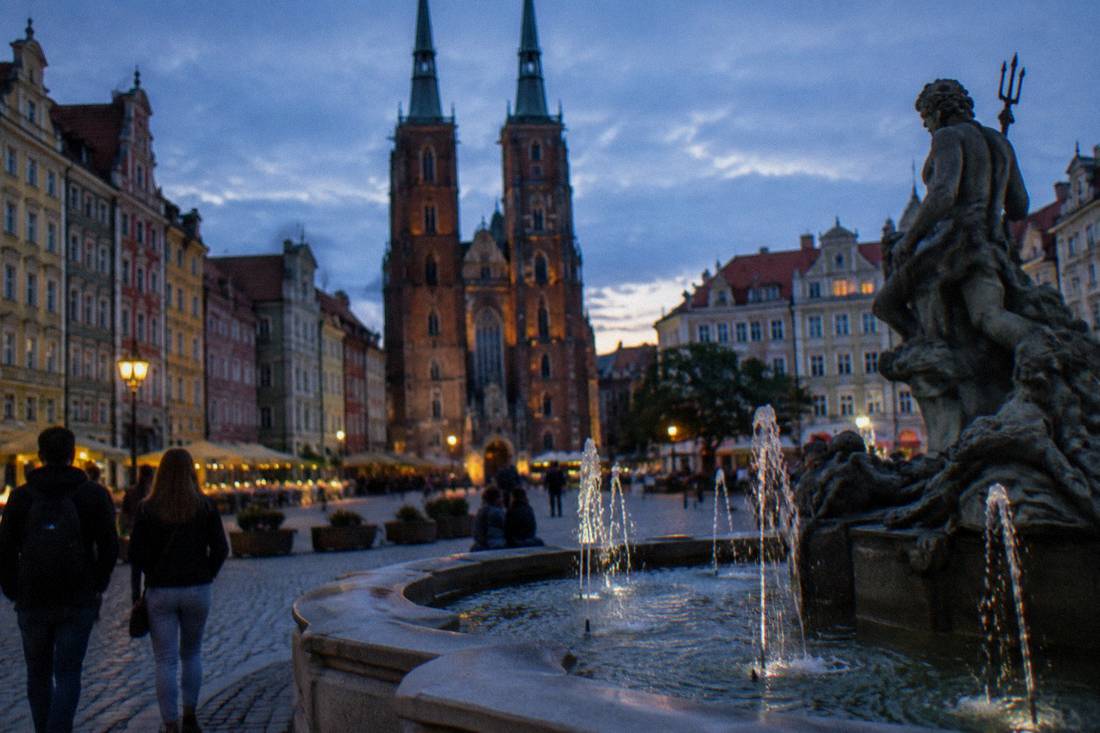
For filling up on the go, cafes and restaurants are the dependable route, as the previous section describes. Municipal and institutional buildings, like the main railway station's waiting areas, are another place where visitors report finding usable taps and fountains; treat signage as the deciding factor each time rather than assuming from the building type.
The fountains question also has a seasonal flip side. In winter the ornamental ones are often switched off entirely, and the question answers itself. If a winter trip is on the cards, the Wroclaw in winter guide covers what the city is like when the fountains sleep and the Christmas market takes over the Rynek.
Is Bottled Water Still Worth Buying In Wroclaw?
Bottled water in Wroclaw is worth buying for convenience rather than safety: it is safe, it is everywhere, and its price varies by shop and venue, so no single figure is honest to quote here. What is certain is the arithmetic of habit: three bought bottles a day across a multi-day stay costs a genuinely silly amount compared with refilling from a tap that supplies the same standard of water. The bottle's remaining advantages are cold-on-demand and mineral taste.
Every supermarket, kiosk and convenience store in Wroclaw stocks still and sparkling water in the usual sizes, and hotel fridges are stocked accordingly. That availability is exactly why the habit forms: it is easier to buy the bottle than to think about the tap. If taste is the reason, a filter jug or a filter bottle solves it once instead of per purchase.
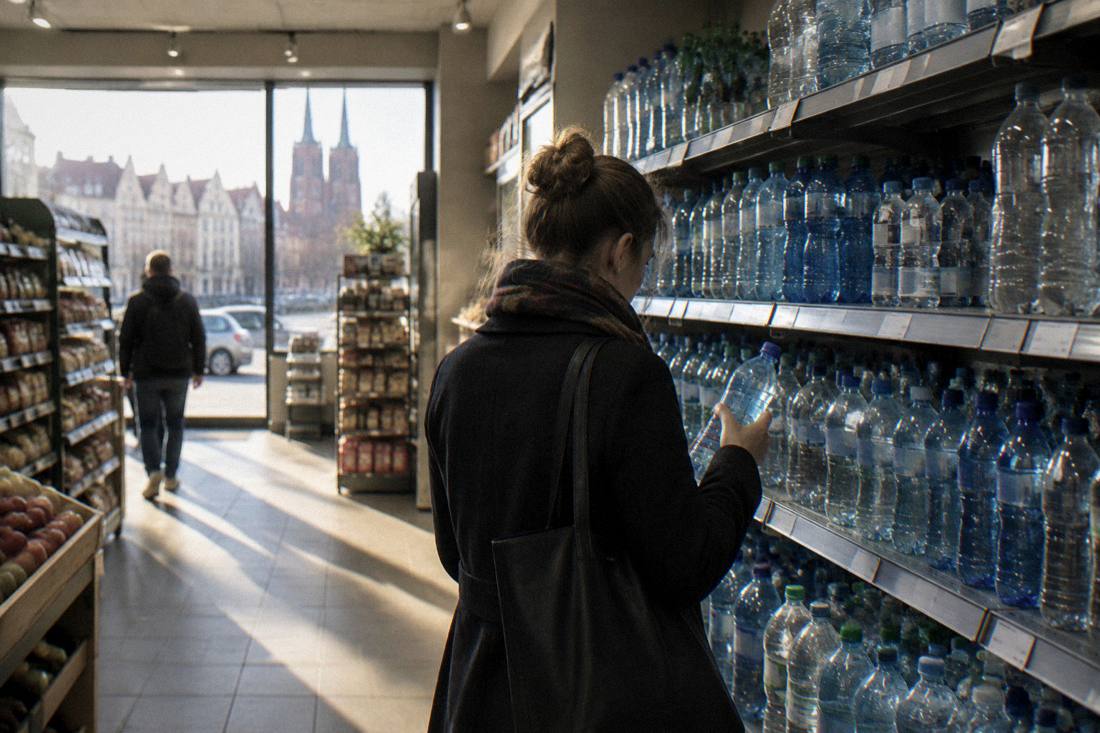
One place the bought bottle still makes sense: a long day trip. Tours to the region's bigger sights run for hours, and the availability of a tap is not guaranteed at every stop. The Wroclaw to Krakow train guide and the day-trip pages each cover journeys where carrying a sealed bottle from the start is simply the practical move.
A half-day or full-day excursion works the same way. For anyone heading out of the city to Ksiaz Castle and the UNESCO-listed Church of Peace in Swidnica, this is the version with the strongest reviews:
How Does Wroclaw's Weather Change How Much Water You Need?
IMGW's 1991-2020 climate normals for the Wroclaw station show mean monthly temperatures running from 0.0C in January to 19.7C in July, with an annual mean of 9.7C, and the warm half of the year from May through August is when hydration planning actually matters. July is both the warmest month and the wettest in IMGW's precipitation normals at 91.4 mm. A summer sightseeing day in Wroclaw is a two-bottle day; a January day is not.
The full normals tell the story month by month, and they come straight from the Polish meteorological institute's own tables for the Wroclaw station:
| Month | Mean Temperature (C) | Precipitation (mm) |
|---|---|---|
| Jan | 0.0 | 28.3 |
| Feb | 1.1 | 25.6 |
| Mar | 4.3 | 35.0 |
| Apr | 9.7 | 31.2 |
| May | 14.3 | 59.6 |
| Jun | 17.7 | 65.4 |
| Jul | 19.7 | 91.4 |
| Aug | 19.3 | 59.5 |
| Sep | 14.5 | 48.4 |
| Oct | 9.6 | 37.6 |
| Nov | 4.8 | 31.4 |
| Dec | 1.1 | 27.9 |
Two readings off that table matter for the water bottle. July and August, the peak of the visitor season, are the two warmest months at 19.7C and 19.3C mean, and the long daylight walks across the Rynek, Ostrow Tumski and the islands feel warmer still on pavement. June through August also carries the heaviest rainfall of the year, so the same months that call for the most water are the ones where a shower can interrupt a walk. The Wroclaw weather by month guide turns the same normals into month-by-month travel advice, and the best time to visit Wroclaw guide weighs them against crowds and prices.
Winter inverts the problem. A January day with a 0.0C mean is not a dehydration emergency, but hot tea replaces cold water as the drink of choice, and Wroclaw's cafe culture takes over naturally. Either way, the water strategy follows the thermometer rather than any fixed rule.
Where Can Free Tap Water Save You The Most In Wroclaw?
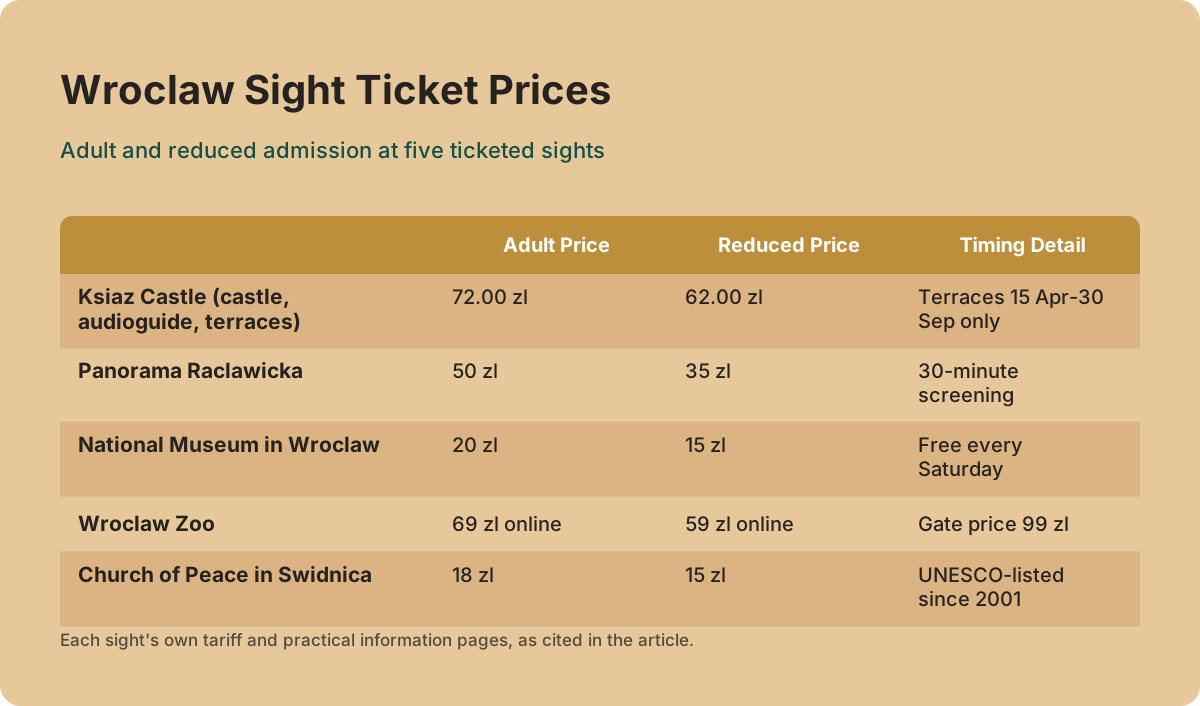
Free tap water saves the most in exactly the places you stay the longest: at your accommodation, where the tap is unlimited, and at long cafe sessions, where one refill request covers hours. The savings compound against the paid-entry side of a Wroclaw day, where the big ticketed sights charge real money: Ksiaz Castle's castle-with-audioguide-and-terraces ticket is 72 zl adult, the Panorama Raclawicka is 50 zl adult and the Wroclaw Zoo starts at 69 zl online versus 99 zl at the gate.
That comparison is the entire argument for the refillable bottle in one table. Every zloty not spent on a bought bottle is available for the entries that actually define a trip:
| Sight | Adult Price | Reduced Price | Note |
|---|---|---|---|
| Ksiaz Castle (castle, audioguide, terraces) | 72.00 zl | 62.00 zl | Terraces open 15 Apr-30 Sep only |
| Panorama Raclawicka | 50 zl | 35 zl | 30-minute screening; ticket also covers National Museum branches within 3 months |
| National Museum in Wroclaw | 20 zl | 15 zl | Permanent exhibitions free every Saturday |
| Wroclaw Zoo | 69 zl online | 59 zl online | Gate price 99 zl adult; Afrykarium included |
| Church of Peace in Swidnica | 18 zl | 15 zl | UNESCO-listed since 2001 |
Timing matters as much as price on that list, because several of these sights change their hours or access by season, and a water plan built around a long outdoor stretch needs to know which days the indoor refuges are open:
| Sight | Seasonal Or Timing Detail | Source |
|---|---|---|
| Panorama Raclawicka | Winter (1 Nov-31 Mar) closed Monday; summer (1 Apr-31 Oct) daily 8:30-19:00 | The museum's own practical information page |
| National Museum in Wroclaw | Closed Monday year-round; free permanent exhibitions every Saturday | The museum's own practical information page |
| Wroclaw Zoo | Open every day of the year, including public holidays; Apr-Sep grounds to 18:00 or 19:00 by day | The zoo's own opening hours page |
| Ksiaz Castle terraces | Open only 15 Apr-30 Sep; castle interiors Apr-Sep Mon-Fri 9:00-18:00, weekends 9:00-19:00 | The castle's own tariff page |
| Church of Peace in Swidnica | UNESCO "Churches of Peace in Jawor and Swidnica" inscribed 2001 | UNESCO's World Heritage listing |
The Saturday detail is the quiet star of those tables. The National Museum's own practical information page states free entry to the permanent exhibitions every Saturday, which pairs neatly with a day otherwise spent walking between free sights with a bottle refilled at a cafe stop. The free things to do in Wroclaw guide and the one day in Wroclaw itinerary both build days around the no-ticket side of the city, and water stops slot naturally into those routes.
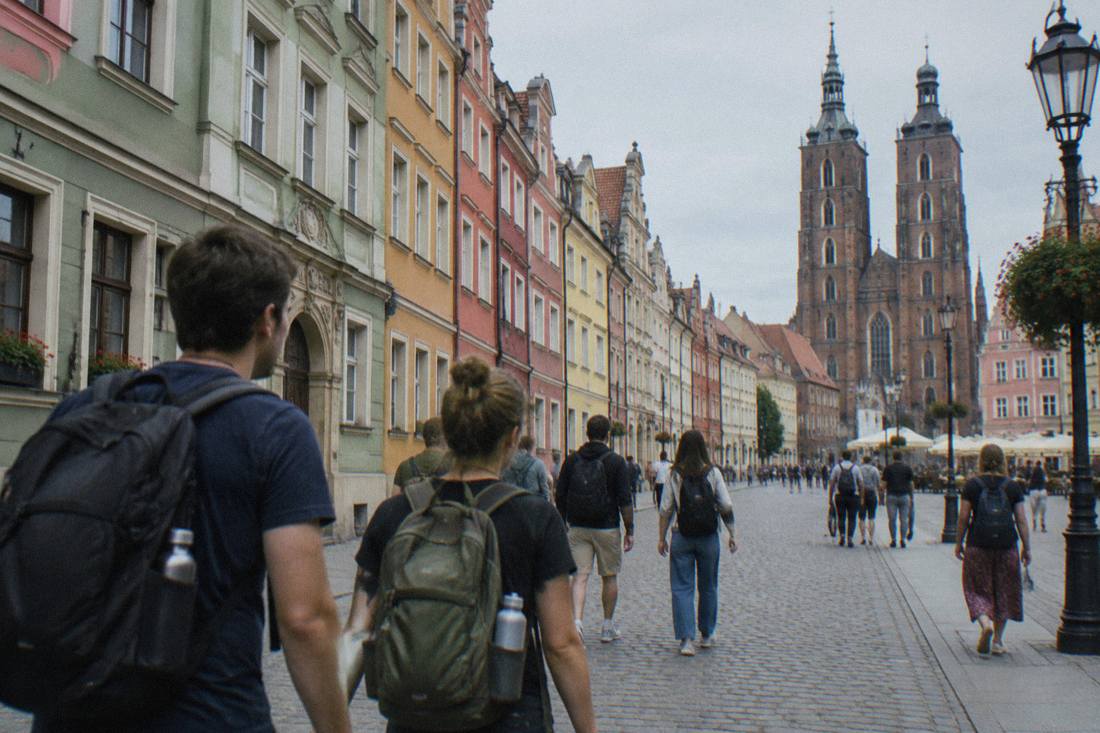
For the walks themselves, a guided route turns the same streets into something with a narrative attached, and the small-group old town version is the one with hundreds of reviews behind it:
If the day stretches into the evening, hydration keeps mattering later than people expect. Late-night walking is its own topic in Wroclaw, and the honest answer on safety after dark is covered in the is it safe to walk in Wroclaw at night guide; the water question at midnight is simply whether any cafe is still open to fill the bottle, and the Wroclaw nightlife guide knows which ones are.
What Is The Smartest Water Strategy For A Wroclaw Trip?
The smartest water strategy for Wroclaw is a single refillable bottle filled from the tap at your accommodation each morning, topped up at cafe stops through the day, with a bought sealed bottle reserved for long day trips where a tap is not guaranteed. Refill at breakfast, ask for tap water with meals, respect fountain signage, and carry more capacity from May through August when IMGW's normals show the warmest months. That is the entire system, and it costs almost nothing.
It fits every travel style on this site. Families doing the zoo and Afrykarium, which the zoo's own price table says is included in the standard ticket, will want more capacity than a solo traveler because the zoo is a full-day, mostly outdoor visit. The Wroclaw with kids itinerary plans exactly that kind of day. Rainy-day visitors moving between the Hydropolis water museum and the aquarium-style indoor stops need less water and more umbrella; the rainy day Wroclaw guide handles that scenario.
And if the whole point of the trip is to cover as much of the city and region as possible, the three most useful ways to spend the money saved on bottled water look like this:
The bottom line on the question that started this guide: Wroclaw's tap water is treated to the standards Poland follows as an EU member, the taste is the only real adjustment, and the refillable bottle is the one piece of kit that pays for itself on the first day. Fill it at the tap, chill it if the chlorine bothers you, ask for tap water with your meals, and save the buying for the day trips. The emergency number 112 works everywhere in Poland for the rare occasion it does not, and the rest of the time the tap does the work.
Common Questions About Tap Water In Wroclaw
Is tap water safe to drink in Wroclaw?
Yes. Wroclaw is a Polish city and Poland follows EU drinking-water standards, so the municipal supply reaching taps in hotels, apartments and restaurants is treated drinking water. The taste differs from bottled water, but safety is not the issue visitors sometimes assume it is.
Does Wroclaw tap water taste of chlorine?
Some visitors notice a trace of chlorine in water served at tap temperature, which is standard for European municipal supplies. Chilling the water in a fridge or using a filter jug reduces the flavor noticeably. Most people stop noticing it within a day or two.
Can I get free tap water in Wroclaw restaurants?
You can ask, and many venues will serve it, but Polish restaurants have historically defaulted to selling bottled water and some still do. Make the request clearly when ordering, a glass of tap water with the meal, and expect the answer to vary by venue rather than by district.
Can you drink from public fountains in Wroclaw?
Treat public fountains as decorative and non-drinkable unless a sign explicitly states the water is potable. Ornamental fountains run on recirculating systems that are separate from the drinking supply. Fill bottles at cafes and accommodation instead.
Do I need a water filter in Wroclaw?
No filter is needed for safety. A filter jug or filter bottle is purely a taste preference for people sensitive to chlorine or mineral flavor. A plain refillable bottle filled from the tap covers everything the trip requires.
Is water free at Wroclaw cafes?
Cafes differ, and none of it is guaranteed. Many will fill a customer's own bottle on request at the counter, and seated customers can ask for tap water with an order. Some venues only sell bottled, and that is a house policy rather than a statement about the water supply.