Drone And Photography Rules In Wroclaw
Wroclaw, the largest city in Lower Silesia in southwestern Poland, is one of the most photographed cities in the country, and its rules for cameras and drones are friendlier than expected, provided you know where the lines sit.
Short answer
Everyday photography on Wroclaw's streets and squares is free and unrestricted, museums set their own indoor policies, and drone flights follow Poland's national regulations under the EU framework: register as an operator where required, keep the drone in sight, stay away from crowds and airport zones, and never fly over people.
Wroclaw, the largest city in Lower Silesia (Dolnoslaskie voivodeship) in southwestern Poland, is a city built for a camera: a market square of painted burgher houses, a cathedral island reached by bridges, dwarf statues hiding at ankle height and an Odra river that splits into a dozen channels. The practical question most photographers arrive with is not what to shoot but what is allowed. The answer splits into three layers: street photography, which is free and unrestricted; indoor photography at museums and viewpoints, which each set their own policy; and drone flying, which is governed by national Polish regulations under the European Union framework rather than by anything specific to Wroclaw. This guide walks through all three, with verified hours and prices for the places you are most likely to want to photograph, and seasonal light planning drawn from the official IMGW climate normals.
Where Can You Freely Photograph Wroclaw On Foot?
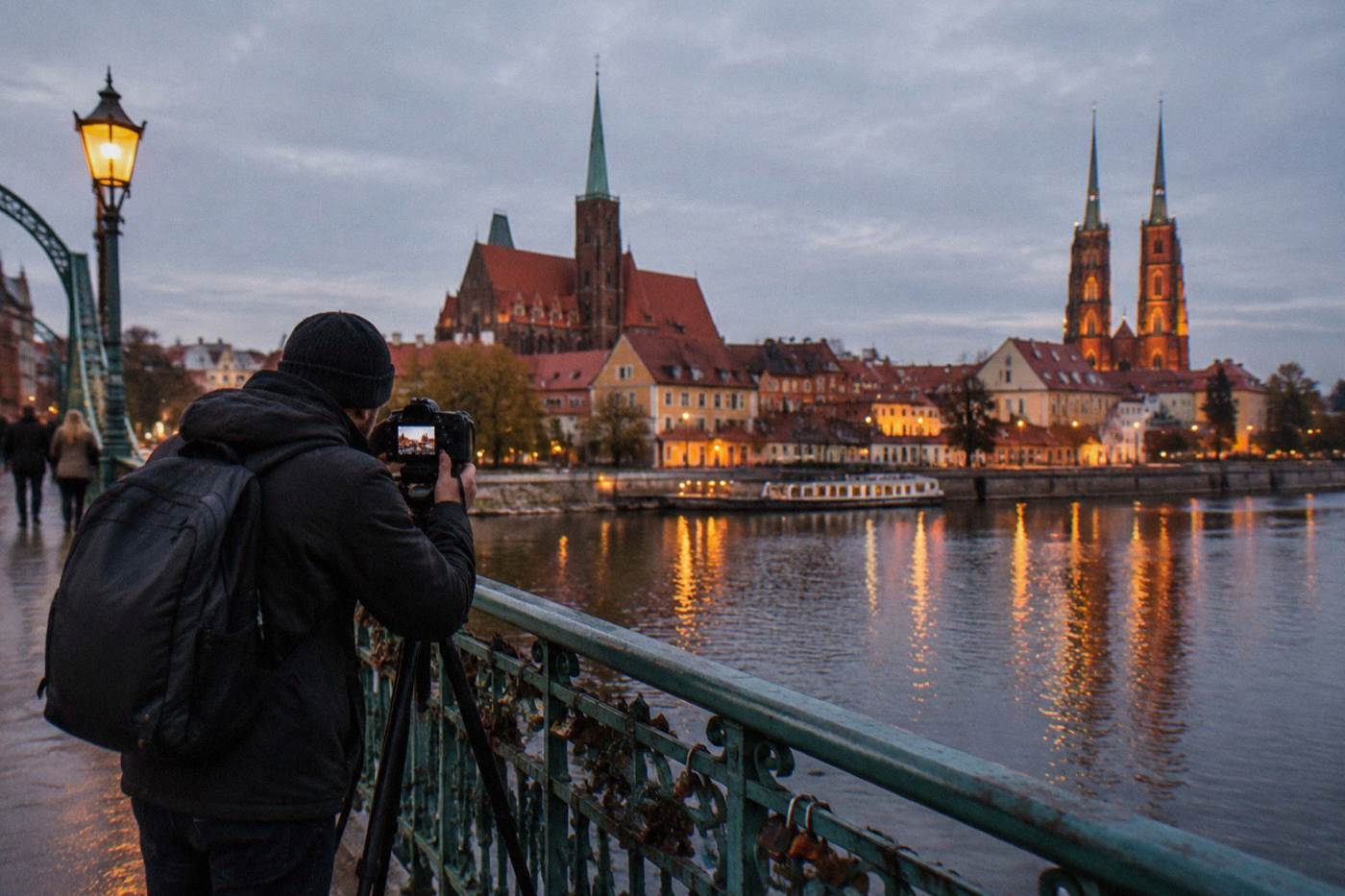
Street and outdoor photography in Wroclaw needs no permit at all: the market square, Ostrow Tumski, the riverside islands, Nadodrze's street art and every public street are open to photograph from public ground, day or night, free of charge, and nobody will ask you to stop. The same applies to the dwarf statues scattered across the city, which sit in public space by design and exist precisely to be found and photographed. The only real constraints are courtesy and common sense: ask before pushing a camera into someone's face, be aware that some performance artists on the Rynek work for tips, and respect private interiors such as shops and restaurants, where a quick word with the staff settles any doubt. A guide like Wroclaw Travel Guide exists partly because the city's best angles are not always the obvious ones.
The distinction that matters legally is public ground versus private property. A bridge, a park, a square and a riverbank are public. A hotel lobby, a courtyard behind a locked gate and a shop interior are not, and the owner decides. For visitors this rarely causes friction in Wroclaw; the city is used to photographers. Tripods are generally tolerated on public streets, though in the busiest hours on the Rynek a tripod becomes a trip hazard rather than a legal question, and moving to the quieter edges of the square or onto a bridge solves both problems at once.
Night photography deserves a specific note. Wroclaw's old town is well lit, and the lamplighter tradition on Ostrow Tumski, one of the few still operating in Europe, makes the cathedral island the single most rewarding night subject in the city. The narrow lanes there are public, so there is no permission question at all, only the patience to wait for the lamplighter's round. If planning a wider first visit, the one day in Wroclaw itinerary routes these angles in a workable order.
What Are The Drone Rules For Wroclaw And Poland?
Drone flying in Wroclaw is governed by Poland's national aviation authority under the European Union drone framework, not by any Wroclaw-specific ordinance, and the core duties are the same as across the EU: register as an operator where your drone requires it, keep visual line of sight, never fly over assemblies of people, and stay outside airport protection zones and other restricted airspace. Wroclaw Airport is an active commercial airport that served 4,473,945 passengers in 2024, and its surrounding area carries exactly the kind of controlled and restricted airspace that ends a flight before it starts. The practical takeaway for a visitor with a small camera drone is simple: the old town's towers and bridges look tempting from above, but the area above and around crowds, and anywhere near airport approach paths, is off limits, and checking the official Polish drone map before every flight is the habit that keeps you legal.
There is no Wroclaw city hall permit you can buy that unlocks flights over the Rynek or the cathedral. What exists instead is the standard European structure. The open category covers small drones, split into subcategories that depend on the drone's class marking and weight and on how far you keep it from people; the specific and certified categories cover heavier aircraft and professional use and involve formal authorization rather than a default right to fly. Registration as an operator, and in many cases a minimum age and an online competency test for the pilot, sit on the operator side of the rules and apply before the first takeoff, not after.
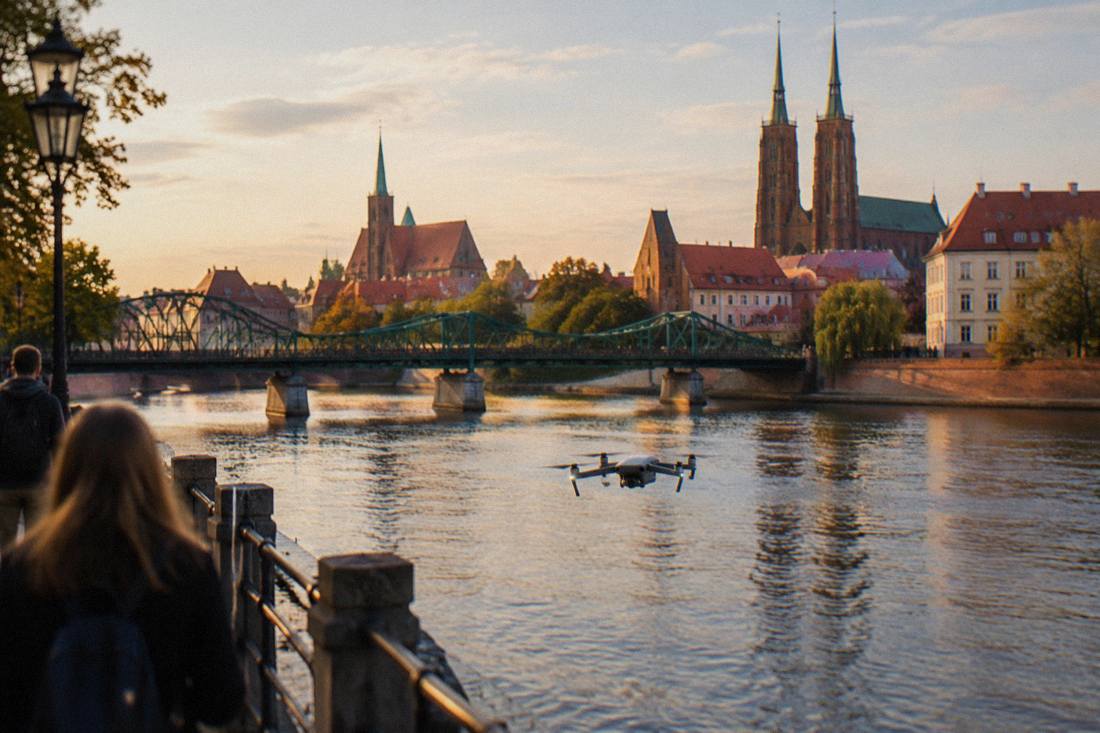
Two practical notes finish the picture. First, the safest flying around Wroclaw is not in the center at all but over the wider river landscape, parks and the meadows along the Odra, away from people and buildings, in line of sight. Second, if an aerial view of the city is the goal rather than the flying itself, the Sky Tower observation deck delivers the panorama without a single rule to satisfy, and the Sky Tower guide covers it in detail. For photographers who want ground-level coverage without hauling a drone through airport security, a guided loop beats walking every angle by hand.
Which Wroclaw Museums And Attractions Allow Cameras Inside?
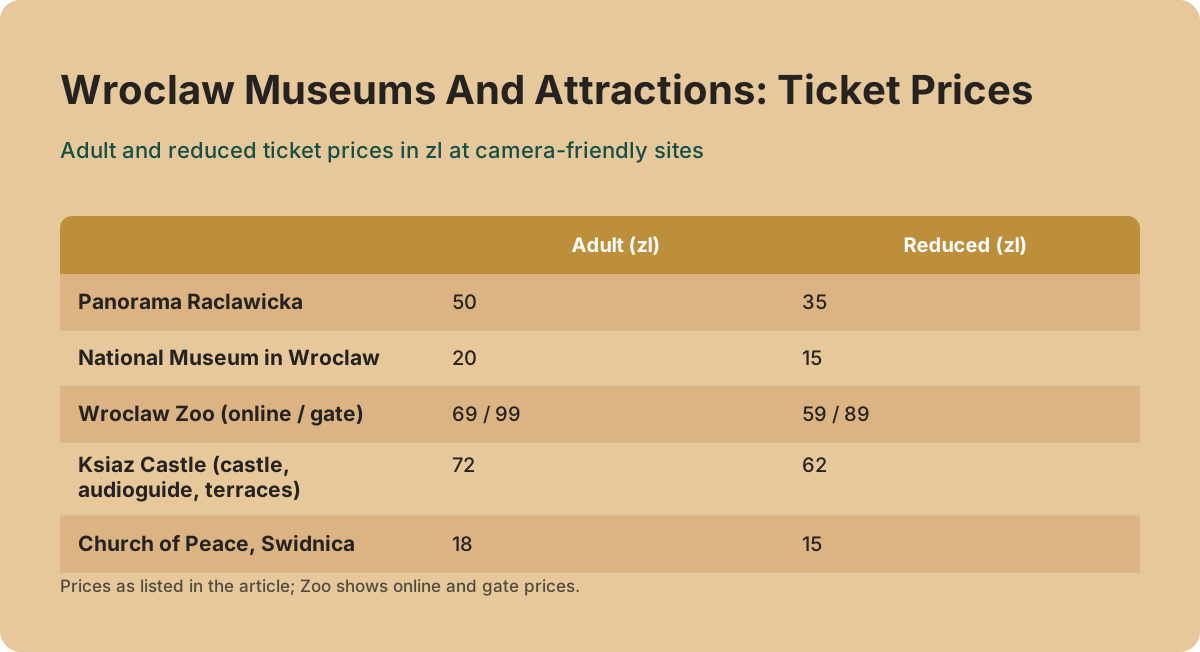
Indoor photography policy in Wroclaw is set attraction by attraction: the major state museums, the Panorama Raclawicka, the zoo and Centennial Hall's grounds are all publicly accessible with a normal ticket, and the common pattern across Polish state museums is that handheld photography without flash is allowed unless a specific exhibition posts otherwise, so the rule of thumb is to buy your ticket, look for the camera symbol at the entrance, and ask staff when a room is unclear. What you should plan around is not permission but schedules, because the institutions that photograph best are the ones with short winter days and Monday closures. The table below gathers the verified hours and prices for the interiors most photographers want, all from the institutions' own published pages.
| Attraction | Adult ticket (zl) | Reduced (zl) | Hours (main season) | Closed |
|---|---|---|---|---|
| Panorama Raclawicka | 50 | 35 | Daily 8:30-19:00 (1 Apr-31 Oct) | None in summer |
| National Museum in Wroclaw | 20 | 15 | Tue-Fri 10:00-17:00, Sat-Sun 10:30-18:00 | Monday |
| Wroclaw Zoo (online / gate) | 69 / 99 | 59 / 89 | Grounds 9:00-18:00 weekdays, 9:00-19:00 weekends (Apr-Sep) | None |
| Ksiaz Castle (castle, audioguide, terraces) | 72 | 62 | Mon-Fri 9:00-18:00, Sat-Sun 9:00-19:00 | None |
| Church of Peace, Swidnica | 18 | 15 | Varies by season | None |
Three of these deserve a photographer's attention beyond the price row. The Panorama Raclawicka runs a 30-minute screening, so there is no lingering for a second composition; you get one viewing window and the light inside is fixed. The National Museum is free to enter for its permanent exhibitions every Saturday, which makes it the best budget interior in the city, and one Panorama ticket also covers the National Museum's permanent exhibitions, the Ethnographic Museum and the Four Domes Pavilion within three months of the visit date, a bundle photographers can exploit across multiple shoots. The zoo's Afrykarium is included in the standard zoo ticket, not a separate charge, which matters because it is the single most atmospheric indoor photographic space in the city.
Centennial Hall deserves its own line of thought. It is a UNESCO World Heritage property, inscribed in 2006, designed by architect Max Berg and built 1911-1913, with a reinforced-concrete dome over a hall that seats up to 10,000 people. The surrounding grounds and the Four Domes Pavilion beside it are freely photographable outside, but the hall's interior is an event venue: when a concert or fair is running, entry is by event ticket, and when the hall is empty, interior access can be limited. Photography from the outside, including the pergola and the historic cascade framing it, has no restriction at all. The Centennial Hall guide covers visiting logistics in full.
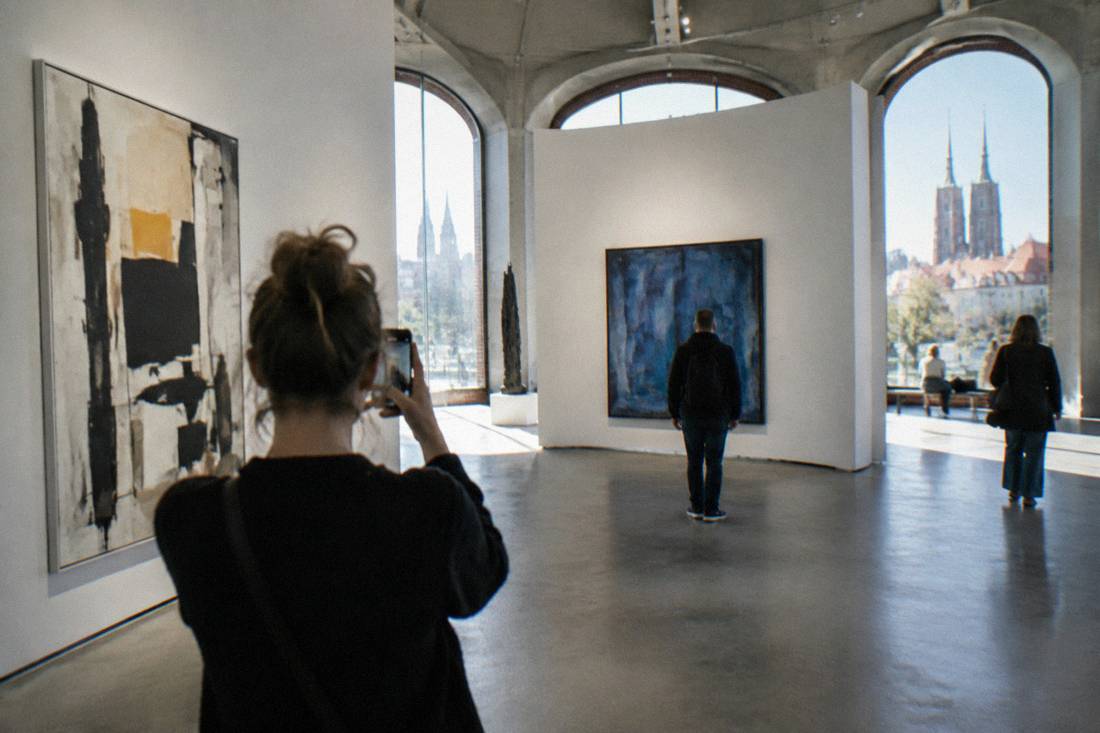
For interiors when the weather turns, the rainy day Wroclaw guide lists more options, and the city's compact center means two museum interiors and a cafe are walkable inside an hour even in December.
When Is The Best Light For Photographing Wroclaw?
The best photographic light in Wroclaw runs from May through September, when IMGW's 1991-2020 climate normals for the Wroclaw station show monthly means of 14.3C in May, 17.7C in June, 19.7C in July (the warmest month), 19.3C in August and 14.5C in September, giving long evening sessions and the reliable blue-hour window over the Odra that the city's bridges are built for. Winter is a different discipline rather than a lost cause: January averages 0.0C, February 1.1C and December 1.1C, cold enough for river fog on the Odra that turns the cathedral island into something otherworldly, but short enough on daylight that a December shoot has to start before lunch. The full monthly picture, from the official normals, is below.
| Month | Mean temp (C) | What it means for photographers |
|---|---|---|
| Jan | 0.0 | Short days, possible river fog on the Odra, frozen-bare trees |
| Feb | 1.1 | Snow chances, quiet squares, warm layers essential |
| Mar | 4.3 | Thaw, grey skies, indoor interiors as the safe bet |
| Apr | 9.7 | Spring greenery returning, terraces reopening at Ksiaz |
| May | 14.3 | Long evenings, market square cafe season begins |
| Jun | 17.7 | Peak blue hour, river life, longest working days |
| Jul | 19.7 | Warmest month, festival and outdoor event season |
| Aug | 19.3 | Warm evenings, stable conditions for night work |
| Sep | 14.5 | Golden autumn light starting, quieter old town |
| Oct | 9.6 | Autumn color on the islands, misty mornings |
| Nov | 4.8 | Short grey days, museums and interiors |
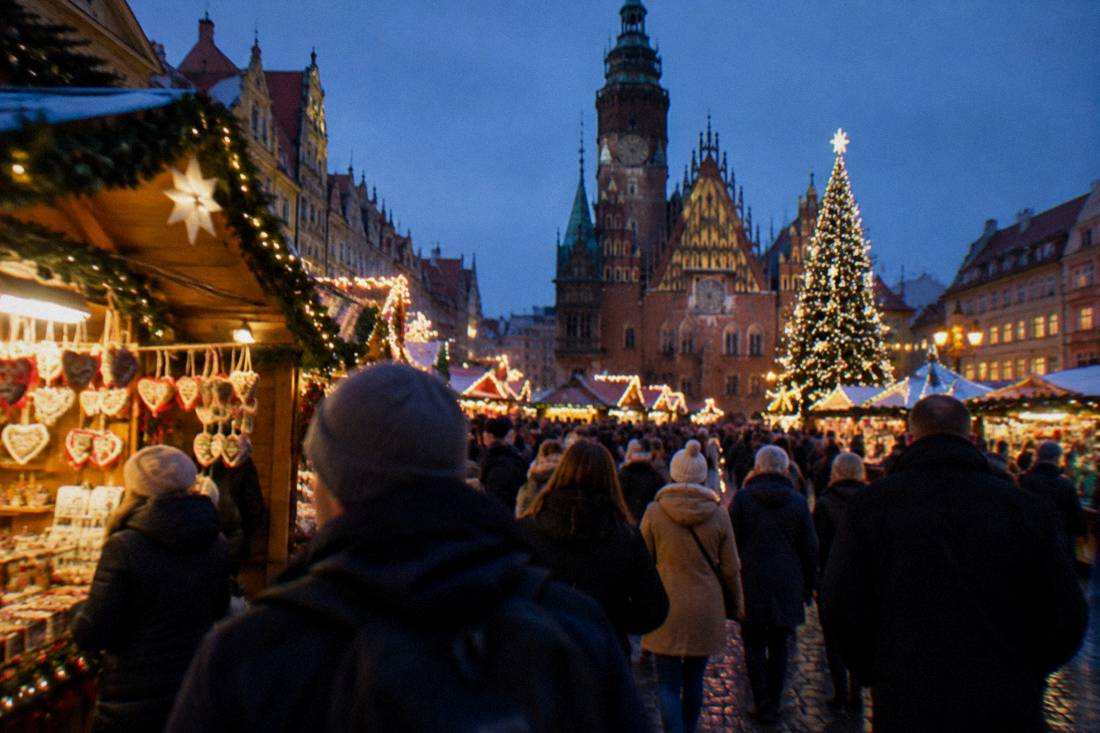
| Dec | 1.1 | Christmas market lights, the best night season of the year |
The one Wroclaw-specific scheduling fact photographers should build a trip around is that Ksiaz Castle's terraces, the best exterior vantage over the castle and the Pelcznica valley, open only from 15 April to 30 September. Outside that window the interiors are visitable but the terrace shots are gone, so a spring-to-early-autumn visit is the only window for that classic composition. The best time to visit Wroclaw and Wroclaw weather by month guides carry the full planning detail.
How Do Festivals And Markets Change Photography In Wroclaw?
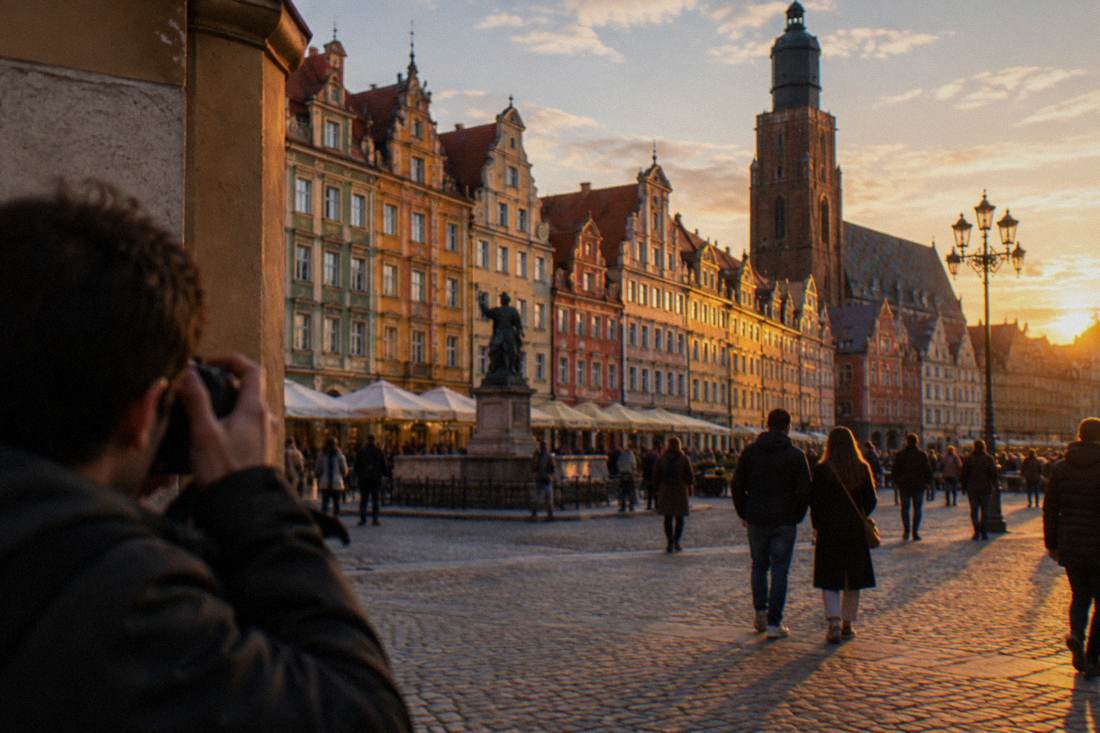
Festival and market photography in Wroclaw is street photography under different lighting: the Christmas market, the seasonal events calendar and festival crowds all sit on public ground where photography is unrestricted, but the working conditions change completely, because crowds thin your space, market stalls introduce artificial light you cannot control, and during the Christmas season the Rynek becomes the single most crowded and most rewarding frame in the city. The Christmas market's light strings and the lamplighter's Ostrow Tumski round together make December the strongest night-photography month of the year, at the cost of January's arrival and the year's coldest working conditions. The Wroclaw Christmas market guide covers that season in depth.
The events side of the year matters for a different reason: Wroclaw's calendar includes the New Horizons film festival and the Wratislavia Cantans music festival, and both change the texture of the city for photographers. The Wroclaw events calendar and Wroclaw festivals guides track what runs when. Two cautions apply. First, ticketed events inside venues like the National Forum of Music or the Opera House are private performances even when the building is public, and house rules on photography at performances are set by the venue and usually prohibit it; shooting the buildings themselves is unrestricted. Second, crowds at any event are the drone no-go zone described earlier, and a festival afternoon is precisely when the temptation to launch over the Rynek peaks.
A planning table for the shooting year:
| Season | Signature photographic subject | Main constraint |
|---|---|---|
| Dec-Jan | Christmas market lights, river fog, lamplighter | Cold (0.0-1.1C means), short daylight, dense crowds |
| Feb-Mar | Snow-dusted squares, quiet museum interiors | Grey light, some Monday closures |
| Apr-May | Spring on the islands, Ksiaz terraces reopen 15 Apr | Changeable weather |
| Jun-Aug | Long blue hours, river life, festival season | Peak visitor numbers |
| Sep-Oct | Autumn color, misty Odra mornings | Terrace closes 30 Sep |
| Nov | Indoor museums, free Saturdays at the National Museum | Shortest practical days |
What Should You Pack For A Wroclaw Photo Trip?
Pack for walkability and weather, not for weight limits: Wroclaw's photographic core is compact and pedestrian, so one body with a wide lens and a fast standard covers the squares, lanes and bridges, and the additions that earn their place are a tripod for blue hour, weather sealing for the Odra riverside, spare batteries for winter cold, and the lightest possible bag because the city's best angles involve stairs, bridges and cobbled lanes rather than car parks. The city's transport network, with a base MPK short-hop fare of 4.60 zl normal or 2.30 zl reduced, means you can reposition quickly and cheaply between districts when the light moves, so there is no case for hauling a full kit bag all day. The getting around Wroclaw guide covers the fare tiers and the seasonal tourist lines.
A few practicalities specific to camera users. The zloty (PLN) is the currency, not the euro, and museum tickets, transit and cafe stops are all priced in zl; the Wroclaw trip cost guide breaks down a realistic budget. Luggage storage in the old town means a full bag between checkout and an evening shoot is a solved problem, and the Wroclaw luggage storage guide lists the current options. Wroclaw is a safe city by the standards of any comparable European destination, and the Wroclaw safety guide covers late-night areas, which for photographers mostly resolves to: the riverside and Ostrow Tumski are calm, and the market square's bar strip late at night is about crowds, not crime.
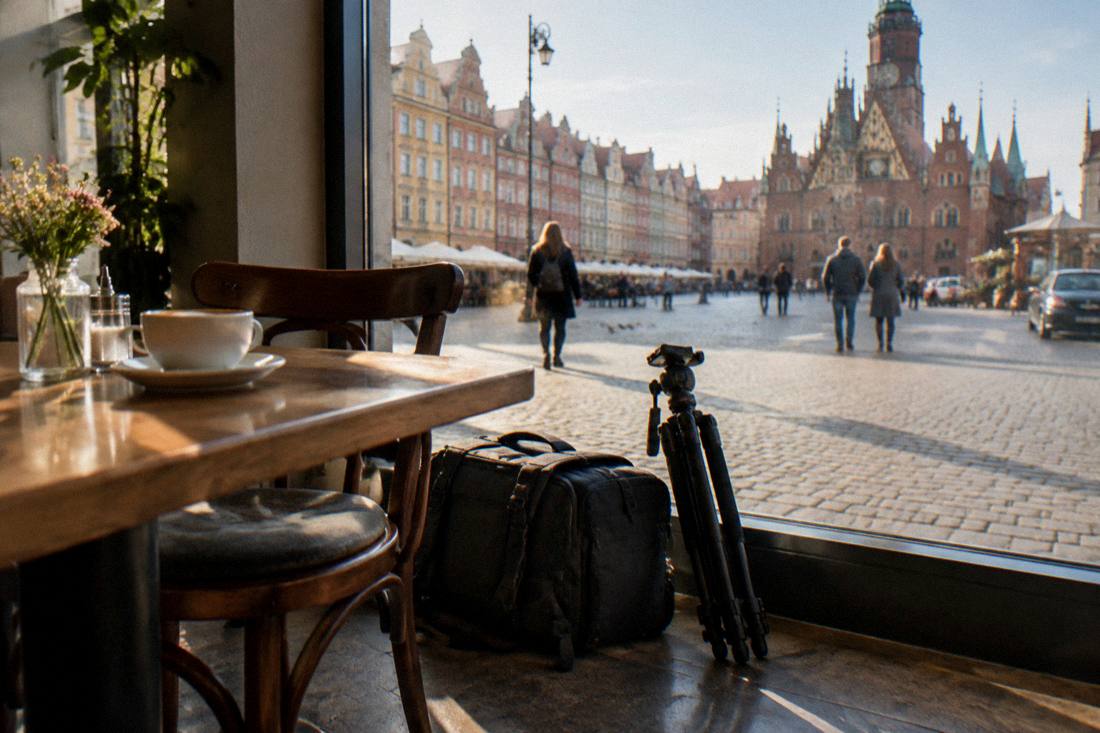
A kit table by trip type:
| Trip type | Core kit | Why |
|---|---|---|
| City break, 2-3 days | One body, wide zoom, fast prime | Compact center, everything walkable |
| Night/blue hour focus | Add tripod, remote, spare batteries | Bridges and lamplighter lanes need long exposures |
| Winter visit | Weather sealing, lens cloths, gloves | 0.0-1.1C means, river fog, condensation indoors |
| Drone-focused | Registered drone, current maps loaded | Rules are airspace-based, not city-based |
| Festival season | Fast prime, minimal bag | Crowded stalls and venues, fast-moving light |
Which Day Trips From Wroclaw Reward A Camera Most?
The day trips from Wroclaw that reward a camera most are the Lower Silesia UNESCO circuit: Ksiaz Castle, whose terraces are open only 15 April-30 September, the Church of Peace in Swidnica, inscribed by UNESCO in 2001 as part of the Churches of Peace in Jawor and Swidnica, and the Giant Mountains and Table Mountains landscapes, all reachable as organized tours or independently by regional transport, with Ksiaz commonly reached by a regional train to Walbrzych plus a bus or taxi connection. For photographers these trips solve the problem the city poses: Wroclaw is urban and flat, while an hour or two south the terrain climbs into castles, timber-framed churches and real mountains. The Ksiaz Castle, Church of Peace Swidnica and Giant Mountains guides cover each in detail.
The fee picture at these sites, all from their own published tariff pages, is worth a table of its own because it drives what you can shoot and when:
| Site | Adult / reduced (zl) | Photographic constraint |
|---|---|---|
| Ksiaz Castle: castle, audioguide, terraces | 72 / 62 | Terraces closed 1 Oct-14 Apr |
| Ksiaz Castle: underground tour alone | 45 / 39 | Separate route, limited light |
| Ksiaz Castle: Palm House alone | 27 / 21 | Glasshouse interiors, humid conditions |
| Ksiaz Castle: All Day Ticket | 104 / 94 | Everything including mausoleum |
| Church of Peace, Swidnica | 18 / 15 | Working church interior, check services |
| Church of Peace, Swidnica: family | 45 | 2 adults plus children under 18 |
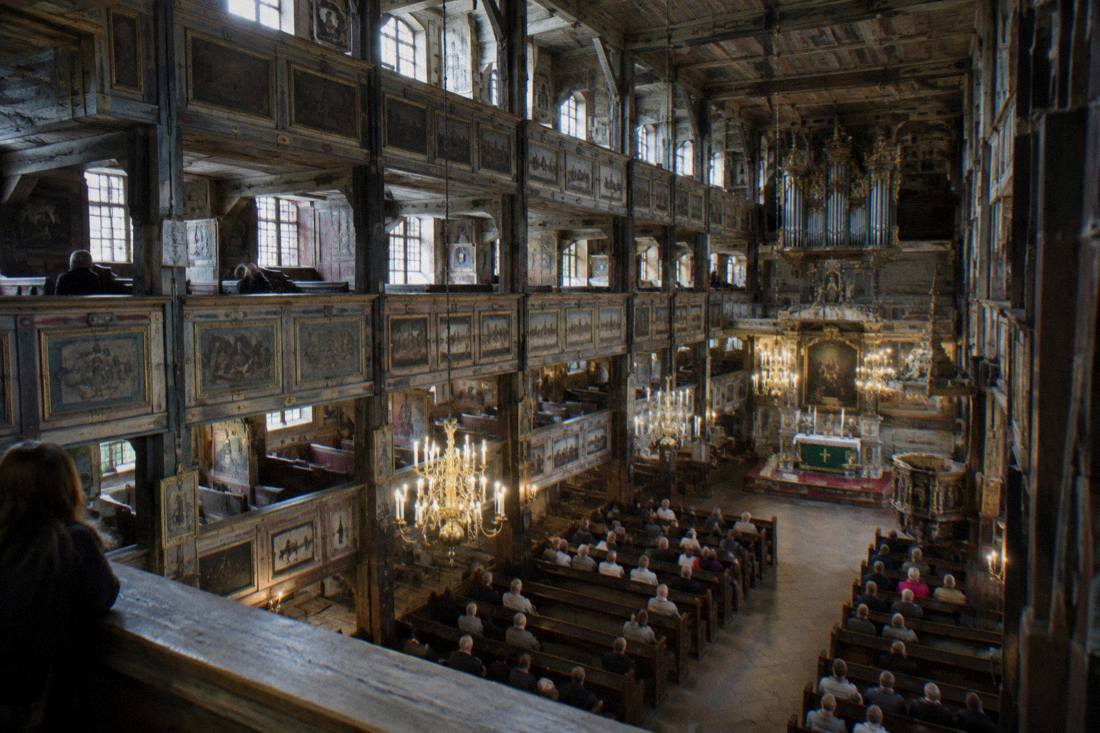
The Church of Peace interiors are the photographic prize of the region: enormous timber-framed baroque halls built without towers or bells, and the Swidnica church's gallery level delivers the wide interior frame easy to miss from the ground. Ksiaz is the opposite discipline, a castle of scale and setting, and its best frames are from the terraces in the April-September window. One ownership fact that resolves a question visitors sometimes raise: Ksiaz Castle is owned by the Walbrzych municipality and operated by the municipal company Zamek Ksiaz w Walbrzychu Sp. z o.o., so it is a public municipal institution, and its published tariff is the public tariff, with no private-operator pricing surprises.
Getting to these sites with a serious camera bag is where organized transport earns its cost. The regional rail connection to Walbrzych is real but its exact timetable details remain unconfirmed, so treat a train-plus-taxi plan as the common route rather than a scheduled one, or let a tour handle the transfer entirely. A private tour of Project Riese and the castle is the version photographers tend to choose when the underground complexes are the priority, since the light and access conditions there reward a guide who knows the route.
Do You Need A Permit To Photograph The Wroclaw Dwarfs?
No dwarf statue in Wroclaw requires any permit to photograph: the dwarfs are small bronze figures installed in public space across the city center and beyond, they were placed there deliberately as a public art trail, and photographing them from the pavement is exactly the use they were created for, with no restriction on personal, editorial or social-media use of the pictures. The same is true of the lamplighter on Ostrow Tumski, the street art across Nadodrze, and the bridges over the Odra. The only categories of photography that ever need paperwork are commercial shoots with models, crews and equipment blocking public space, which involve the city administration like anywhere else, and drone flights, which are covered by aviation rules rather than a city permit. A traveling photographer with one camera never crosses either line.
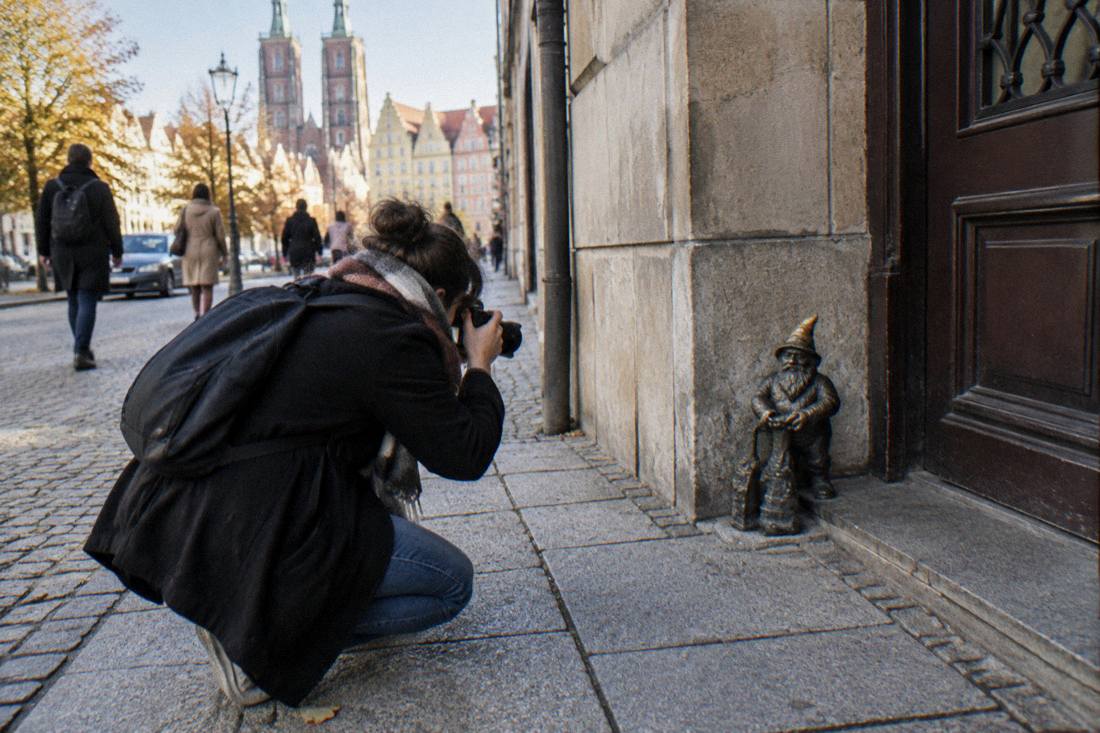
Finding the dwarfs efficiently is its own small project, since they are scattered across dozens of locations, and the Wroclaw dwarfs guide maps the trail. The dwarfs are also the clearest case for a guided loop: an electric car circuit with a local guide covers the market square, the islands and a curated set of dwarf locations in the time a self-directed hunt would spend on the first three. An organized hunt with a guide who knows the locations is covered on the best walking tours in Wroclaw page, and the electric car option below is the one most photography-minded visitors choose because it keeps camera bags dry and batteries for walking instead.
For photographers whose interest runs past the city limits toward the full Lower Silesia circuit, the combined Ksiaz and Church of Peace excursion is the group option that pairs the castle with the timber church in one day, covering the two headline exteriors of the region in a single run. Between the castle terraces in season and the church gallery in Swidnica, that trip produces more portfolio-grade frames per hour than anything else within reach of the city.
Common Questions About Photography And Drones In Wroclaw
Can I fly a drone in Wroclaw city center?
Flying over the old town is effectively ruled out in practice: the center combines dense crowds, assembly points and an active commercial airport's airspace within reach, all of which are no-go areas under the EU-wide rules Poland enforces. Legal drone flying around Wroclaw happens away from people, buildings and restricted airspace, in line of sight, over open river and parkland. Check the official Polish drone map before every flight.
Do I need to register my drone to fly it in Poland?
Most consumer camera drones require operator registration under the European framework Poland applies, and in many cases a minimum pilot age and an online competency test for the open category. Registration is done before the first flight, through the national aviation system, and applies to visitors the same as residents. The exact requirements depend on your drone's class and weight, so confirm against the official requirements before traveling.
Is photography allowed inside Wroclaw museums?
Generally yes for handheld photography without flash, which is the common pattern at Polish state museums including the National Museum in Wroclaw, but each institution and some temporary exhibitions set their own policy, so check the camera signs at the entrance and ask staff when a room is unclear. The National Museum's permanent exhibitions are free every Saturday, making it the best-value interior shoot in the city.
Do I need a permit to photograph the Wroclaw dwarfs?
No. The dwarfs are public art installed in public space, deliberately placed to be found and photographed, and there is no permit, fee or restriction on photographing them from the pavement for personal or social-media use. The only photography that ever needs paperwork in Wroclaw is a commercial shoot with crews and equipment occupying public space.
What is the best month for photography in Wroclaw?
May through September, when IMGW's 1991-2020 climate normals show means of 14.3C to 19.7C and the blue-hour windows over the Odra are long. December runs it close for night photography specifically, because the Christmas market lights and the lamplighter tradition on Ostrow Tumski make the best-lit month of the year, at the cost of cold and short daylight.
Can I photograph Ksiaz Castle from the terraces year-round?
No. The terraces at Ksiaz Castle are open only from 15 April to 30 September, per the castle's own published visiting information. The castle interiors, Palm House and underground tour run outside that window, but the terrace view over the valley, the classic exterior photograph, exists only in the April-to-September season.
The short version of everything above: in Wroclaw your camera is welcome almost everywhere on foot, your drone is welcome almost nowhere in the center, and the museum interiors that photograph best are the ones whose hours and seasons you check before you go. Plan around the free Saturdays at the National Museum, the April-to-September terrace window at Ksiaz, and the lamplighter's round at dusk, and the city hands you its best frames without a single form to fill in.