Basic Polish Phrases For Visiting Wroclaw
You do not need fluent Polish to enjoy Wroclaw, but a handful of phrases opens doors in this city of 672,601 people in southwestern Poland. This guide covers the words that actually come up on a trip here, with pronunciation an English speaker can use.
Short answer
Learn about twenty Polish words and you cover nearly every interaction on a Wroclaw trip: hello and thank you, please and excuse me, the numbers one to ten, and the phrases for ordering and paying. English is common in the Old Town, but Polish is what you hear on trams, in milk bars and at railway ticket windows.
Wroclaw, the largest city in Lower Silesia in southwestern Poland, is a city of 672,601 residents who speak Polish at tram stops, in queues at milk bars, and across the market stalls of the Rynek. Visitors who arrive with no Polish at all still manage fine in the Old Town, where restaurant menus in English are the norm and hotel staff switch languages without being asked. But the city rewards even a small effort. A waiter in a pierogi place off the square, a ticket inspector on the 15-minute tram ride, a shopkeeper in Nadodrze: these are the moments when a handful of words, said with a smile, changes the tone of an exchange from transaction to conversation.
This guide is a working phrasebook, not a grammar course. It gives you the Polish that actually comes up on a Wroclaw trip: greetings, restaurant vocabulary, transport words, numbers, and the pronunciation rules that make printed phrasebooks useless to English speakers. It also tells you honestly where English carries you and where it does not, because a guide that claims everyone here speaks English is as misleading as one that claims nobody does.
Do You Actually Need Polish In Wroclaw?
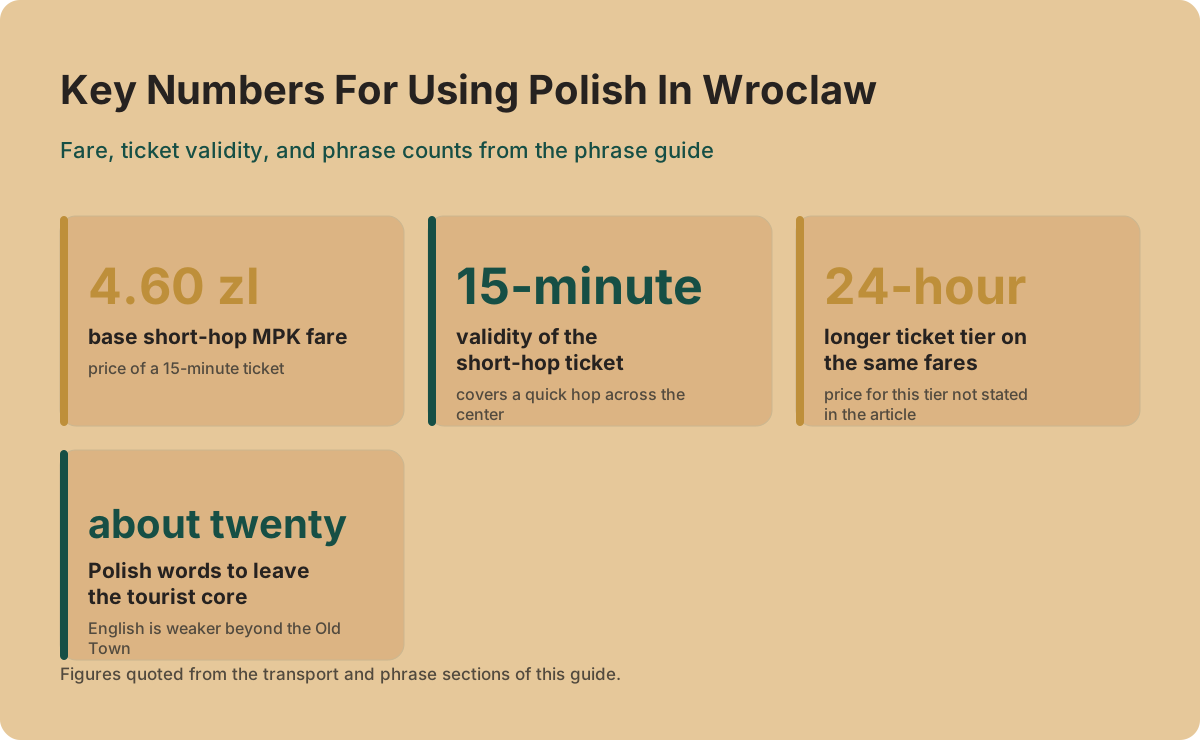
You do not need Polish to visit Wroclaw, but you need about twenty words to leave the tourist core, and you need more than that if you eat where locals eat, ride trams, or shop outside the center, because English is strong in the Old Town and weaker beyond it, a pattern set by the city's role as a university and visitor hub. English is strong in hotels, main attractions and Old Town restaurants, weaker in milk bars, suburban shops and on public transport. The city's own visitor infrastructure assumes foreign visitors, and the 4.7 million passengers who passed through Wroclaw Airport in 2024 did not all arrive speaking Polish.
Start with realistic expectations. The Panorama Raclawicka, the National Museum and the zoo all run signage and ticket systems that work for visitors without a word of Polish. A solo traveler eating on the Rynek might go three days without needing anything beyond "hello" and "thank you". The same traveler standing at a milk bar counter on a weekday lunchtime, where the menu is a chalkboard in Polish and the queue behind them is locals on a short break, will want to know how to say "one of those, please".
The honest framing is this: Polish buys you access, and a few phrases buy you goodwill. Wroclawites, like most Poles, are direct with visitors who expect English everywhere, and warm with visitors who try even badly. Nobody will expect fluency from you. A mispronounced "dzien dobry" is received far better than an English sentence delivered at speed, on the assumption it will be understood.
For context on how the city fits together, the Wroclaw Travel Guide homepage maps out the main districts and attractions, and it is worth reading before you decide how deep into the city your itinerary goes.
How Do You Pronounce Polish Words In Wroclaw?
Polish is pronounced almost exactly as it is spelled, once you learn about eight letter rules: sz is "sh", cz is "ch", rz is a soft "zh", w is "v", l-with-stroke sounds like "w", j is "y", and stress lands on the second-to-last syllable of every word. Those rules explain nearly every Polish word a visitor will see on a street sign or hear from a guide, and they are why written Polish looks harder than it sounds.
The single most important rule for this city's own name: Wroclaw is pronounced roughly "VROTS-wahf". The opening W is a V sound, the c before l is a "ts", and the final w softens toward an "f". The same logic explains Wrocławska, the adjective form you will see on street names, and Dlaczego, the word for "why", which starts with a "d-v" cluster that trips up English speakers.
| Polish letter or cluster | English sound | Example you will see in Wroclaw |
|---|---|---|
| w | "v" as in van | Wroclaw, dworzec (station) |
| cz | "ch" as in church | czesc (hi), Rynek Glowny |
| sz | "sh" as in ship | prosze (please) |
| rz | "zh" as in vision | Wroclaw's river, Odra, and dziękuję |
| l-with-stroke | "w" sound | Wroclaw's own spelling on official signs |
| j | "y" as in yes | jak (how),projekt signs around Nadodrze |
| u and ó | same "oo" sound | ulica (street), godzina (hour) |
| Stress | second-to-last syllable | dzien DOB-ry, KO-men-tarz |
Practice the two stress patterns that matter. Dzień dobry, good day, puts weight on the second word's first syllable: "jane DOH-bry". Dziękuję, thank you, is "jen-KOO-yeh", with the stress on the middle. Say those two and "proszę", pronounced "PRO-shay", and you already sound better than most guidebooks suggest is possible in a weekend.
A small honesty note on this site's orthography: in English copy, including this page, the city's name is written as plain "Wroclaw", without the l-with-stroke. On official Polish signs you will see Wrocław. They are the same city and, once you know the rule above, the same word.
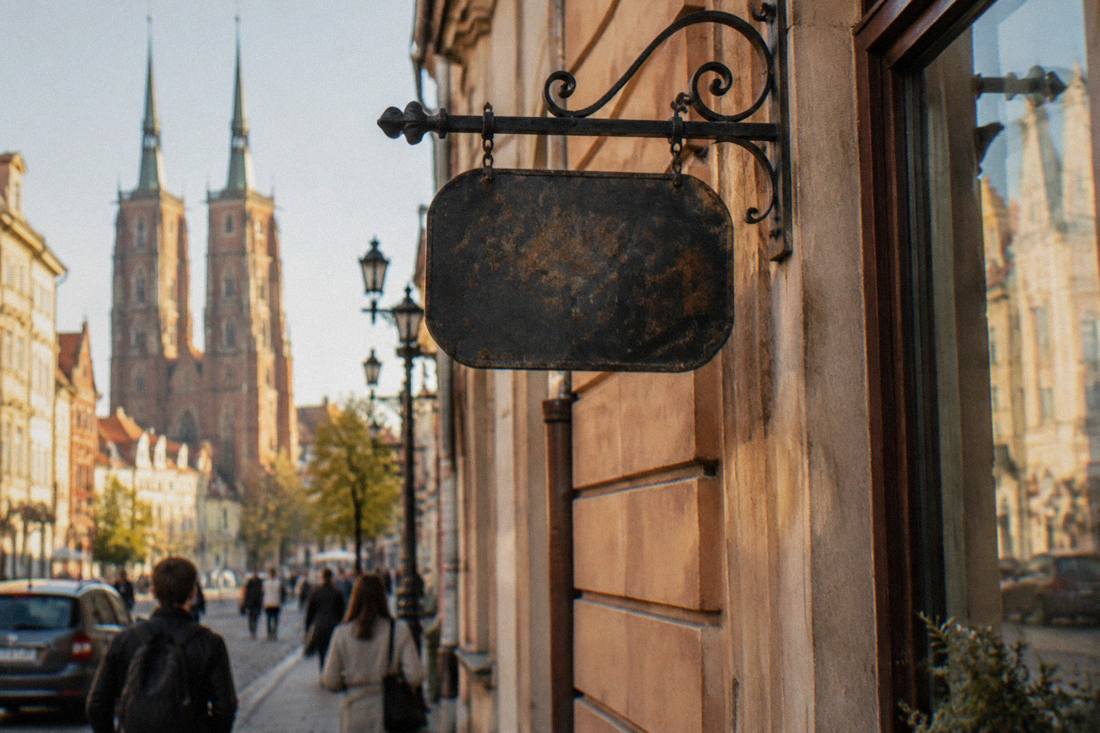
One of the best places to test your pronunciation is with a guide who lives here, because a local will correct you gently and explain the words behind the sights. The Check availability link for the full Old Town and Ostrow Tumski segway tour shows what a local-led experience costs, and gliding between the cathedral island and the Rynek gives you street names and church names repeated until they stick.
What Are The Essential Greetings In Polish?
The essential greetings are dzien dobry (good day, "jane DOH-bry") for most daytime situations, dobranoc (good night) only when parting in the evening, czesc (hi, "chesht") for informal settings, do widzenia (goodbye, "doh vee-DZEH-nya") when leaving shops and counters, and przepraszam (excuse me, "psheh-PRAH-sham") as the opener for every interaction with a stranger. Greetings matter in Poland more than in much of Western Europe: walking into a small shop without acknowledging the staff is noticed, and greeting first is a basic courtesy, not a formality.
The greeting system runs on a time-of-day logic. Dzień dobry covers morning until roughly early evening, and dobranoc, good night, is a farewell used after dark. Cześć, the informal hi, is for peers, young people and casual settings; using it with an older shopkeeper is too familiar, and dzien dobry is the safe default for visitors in every situation. There is no separate formal "hello", so dzien dobry does all the work.
| English | Polish | Pronunciation | When to use it in Wroclaw |
|---|---|---|---|
| Good day / hello | Dzien dobry | jane DOH-bry | Default greeting, shops, restaurants, hotel staff |
| Hi (informal) | Czesc | chesht | Young people, casual bars, hostels |
| Goodbye | Do widzenia | doh vee-DZEH-nya | Leaving any shop, counter or restaurant |
| Good night | Dobranoc | doh-BRAH-nots | Parting in the evening, at a hotel |
| Excuse me / sorry | Przepraszam | psheh-PRAH-sham | Approaching strangers, apologizing, getting attention |
| Please / here you go | Prosze | PRO-shay | Handing over money, saying please |
| Thank you | Dzienkuje | jen-KOO-yeh | After any service or exchange |
| You're welcome | Nie ma za co | nyeh mah zah tso | Response to thank you |
| Yes / no | Tak / Nie | tahk / nyeh | Everyday, everywhere |
Two usage notes English speakers get wrong. First, proszę is not only "please": it is also what a server says putting a plate down, what a shopkeeper says inviting you to the counter, and what you say handing over your ticket. Second, przepraszam doubles as both "excuse me" and "sorry", so one word covers bumping into someone on a packed tram and starting a conversation at a ticket window.
How Do You Order Food In Polish In Wroclaw?
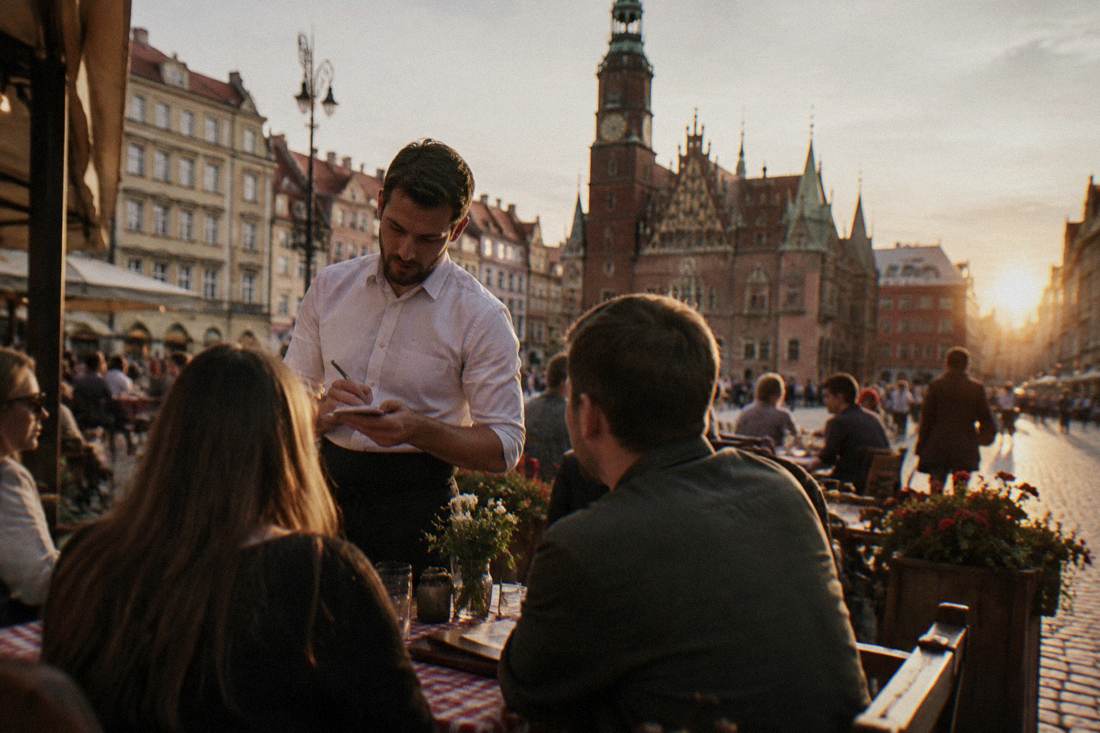
To order food in Wroclaw you need poprosze (I'd like, "poh-PRO-shay") plus the dish name, numerically "one" or "two" (jeden, "YEH-den", or dwa), the word for the bill, poprosze rachunek ("poh-PRO-shay ra-HOO-nek"), and the phrase czy mozna placic karta, "can I pay by card", pronounced "chih MOH-znah PWAH-cheech KAR-tah". Those four tools cover a milk bar counter, a pierogi restaurant and a craft beer bar equally well, because Polish service culture is direct and appreciates a clear order.
The pattern is simpler than English small talk. You say poproszę followed by the item: poproszę pierogi, poproszę zupę (soup), poproszę kawę (coffee). You do not need to construct a full sentence, and nobody expects you to. If you want to specify quantity, add the number: dwa pierogi, trzy piwa (three beers). For water, woda is "VOH-dah", and the phrase czy jest woda gazowana asks whether sparkling water is available.
| English | Polish | Pronunciation | Where it comes up |
|---|---|---|---|
| I'd like... | Poprosze | poh-PRO-shay | Ordering anything at any counter |
| One / two / three | Jeden / dwa / trzy | YEH-den / dvah / tshih | Quantities at counters and markets |
| The bill, please | Poprosze rachunek | poh-PRO-shay ra-HOO-nek | End of any restaurant meal |
| Can I pay by card? | Czy mozna placic karta? | chih MOH-znah PWAH-cheech KAR-tah | Small bars, market stalls |
| Menu | Menu / karta | MEH-noo / KAR-tah | Sitting down anywhere |
| Water | Woda | VOH-dah | Every restaurant |
| Coffee / tea | Kawa / herbata | KAH-vah / her-BAH-tah | Cafes and milk bars |
| Soup of the day | Zupa dnia | ZOO-pah DNIA | Lunch menus across the city |
| Delicious | Pyszne | PISH-neh | Complimenting a meal |
Milk bars, the cheap state-era canteens, are the best place to test this vocabulary, because the format is fast, the chalkboard is in Polish, and the reward is a full plate for a few zloty. The milk bars in Wroclaw guide explains how the format works and where the good ones are, and the pierogi in Wroclaw guide covers the dish you will most often be ordering with your new phrase.
The restaurant scene deserves a whole trip of its own, and the best restaurants in Wroclaw guide sorts the city's tables by neighborhood and budget. In the tourist core you can order in English everywhere; on the side streets of Nadodrze or near the university, your poproszę and rachunek will earn you better service than a point-and-hope.
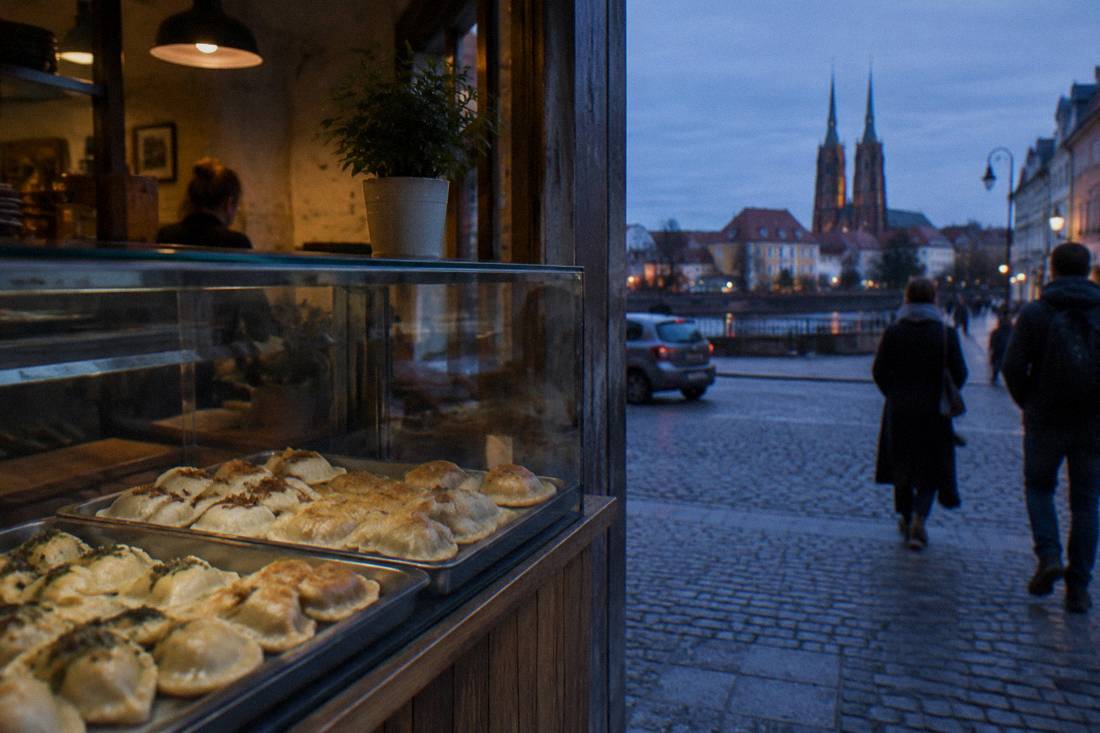
A food-focused walk or ride is the most forgiving place to try out your restaurant Polish, because ordering stops mid-tour and the guide can rescue you. Many visitors book their first guided experience precisely for this reason: it is a low-pressure rehearsal for the rest of the trip, and cancellation terms on tour listings are typically flexible.
What Polish Do You Need For Trams And Transport In Wroclaw?
For Wroclaw transport you need bilet (ticket, "BEE-let"), the question gdzie jest przystanek, "where is the stop", pronounced "gjeh yest pshih-STAH-nehk", and the names of the two main rail stations, Wroclaw Glowny for the main station and dworzec for the generic word station. The base short-hop fare on MPK city transport is 4.60 zl for a 15-minute ticket, so the phrase jeden bilet normalny, one regular ticket, is the single most useful transport sentence you can learn.
Tickets are bought before boarding, at machines on most stops and in kiosks, and validated once you are on the tram. Inspectors do spot checks, and pointing at an English-language assumption of innocence does not work. The 15-minute ticket covers a quick hop across the center; longer tiers, including a 24-hour band, exist on the same fare structure, and the getting around Wroclaw guide lays out which one fits which kind of stay.
| English | Polish | Pronunciation | Where it comes up |
|---|---|---|---|
| Ticket | Bilet | BEE-let | Kiosks, machines, inspectors |
| One regular ticket | Jeden bilet normalny | YEH-den BEE-let nor-MAHL-ny | Buying at a kiosk |
| Where is the stop? | Gdzie jest przystanek? | gjeh yest pshih-STAH-nehk | Finding your tram or bus stop |
| Main train station | Dworzec Glowny | DVOH-zets GWOV-ny | Rail trips, airport buses |
| Left / right / straight | Lewo / prawo / prosto | LEH-vo / PRAH-vo / PROS-toh | Asking directions |
| Is this the tram to...? | Czy ten tramwaj jedzie do...? | chih ten TRAM-vye YEH-dzheh doh | Confirming you are on the right line |
| Validation | Kasowac | kah-SO-vach | The machine you stamp your ticket in |
| I don't understand | Nie rozumiem | nyeh roh-ZOO-myeh | Any interaction that goes too fast |
Rail trips out of the city follow the same vocabulary. Dworzec Główny is the main station, and a day trip to Ksiaz Castle and the Church of Peace in Swidnica begins there or with a pre-booked tour vehicle, because the castle is commonly reached by regional train to Walbrzych plus a bus or taxi connection, not a direct tram-like link. The half-day Ksiaz Castle and Church of Peace tour is one option worth checking availability on, since it bundles the two hardest-to-reach Lower Silesian sights into one pickup-and-return package.
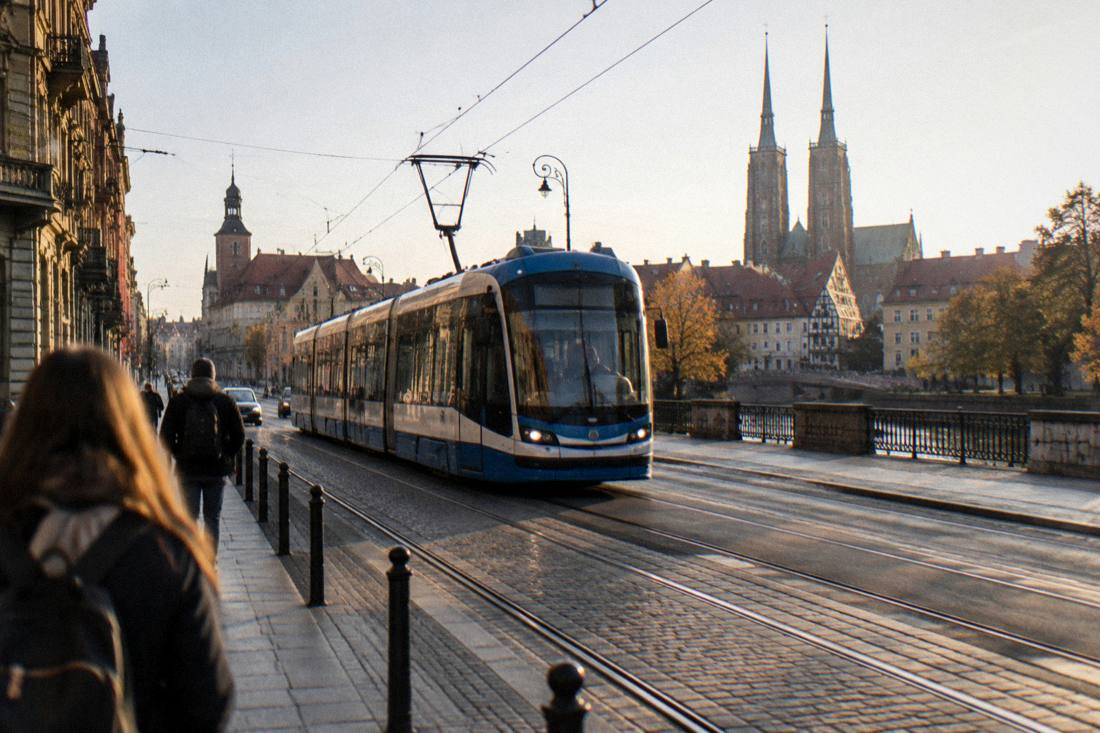
For a fuller picture of train travel from the city, the Wroclaw to Krakow train guide covers the country's rail booking system, and the Wroclaw airport guide handles the arrival end. Neither requires Polish, but both go better with dworzec and bilet in your pocket vocabulary.
What Numbers Do You Need In Wroclaw?
You need one through ten (jeden, dwa, trzy, cztery, piec, szesc, siedem, osiem, dziewiec, dziesiec) plus sto for hundred and zloty for the currency, and you need them because prices in shops and menus in local places are quoted in Polish number words, not always digits. The zloty, abbreviated zl and PLN, is the till currency everywhere in the city: Poland is in the EU and Schengen but not the Eurozone, so every price you see on a museum tariff, a zoo ticket table or a tram fare sign is in zloty.
| Number | Polish | Pronunciation | Number | Polish | Pronunciation |
|---|---|---|---|---|---|
| 1 | jeden | YEH-den | 6 | szesc | sheshch |
| 2 | dwa | dvah | 7 | siedem | SHYEH-dem |
| 3 | trzy | tshih | 8 | osiem | OH-shem |
| 4 | cztery | CHTEH-rih | 9 | dziewiec | JEH-vyech |
| 5 | piec | pyench | 10 | dziesiec | JEH-shench |
Money phrases sit right on top of the numbers. Ile to kosztuje, "how much does this cost", is pronounced roughly "EE-leh toh kahsh-TOO-yeh" and is the market-stall question. Czy można płacić kartą works in shops, and cash still matters at market stalls, in some milk bars and at flea markets, so ile złotych, "how many zloty", is worth knowing as a follow-up when the answer comes back fast.
For what everyday sightseeing costs, the figures are public and stable: the National Museum's standalone adult ticket is 20 zl with free entry to permanent exhibitions every Saturday, the Panorama Raclawicka adult ticket is 50 zl, and the zoo's standard adult ticket starts at 69 zl online against 99 zl at the gate, with the Afrykarium included in both. The Wroclaw trip cost guide assembles all of these into a realistic daily budget, and it is the page to read before you set yours.
What If Your Polish Fails: Useful Fallback Phrases
The fallback phrases are czy mowi pan po angielsku, "do you speak English", said to a man, or czy mowi pani po angielsku to a woman, plus nie rozumiem, "I don't understand", and nie wiem, "I don't know", all three delivered slowly and with przepraszam in front of them. Asking directly is not rude in Wroclaw; assuming is. A slow, clear question in basic English after an apology lands far better than rapid-fire speech with no preamble.
The gender distinction in pan and pani trips up visitors, but the rule is simple: pan addresses a man, pani addresses a woman, and both are the polite default with strangers. With younger people, in hostels and in bars, the distinction softens and the informal ty forms take over, but a visitor cannot go wrong defaulting to pan and pani everywhere.
| English | Polish | Pronunciation | Notes |
|---|---|---|---|
| Do you speak English? (to a man) | Czy mowi pan po angielsku? | chih MOH-vee pahn poh ahn-GYEL-skoo | Polite, to any male stranger |
| Do you speak English? (to a woman) | Czy mowi pani po angielsku? | chih MOH-vee PAH-nee poh ahn-GYEL-skoo | Polite, to any female stranger |
| I don't understand | Nie rozumiem | nyeh roh-ZOO-myeh | Honest, works everywhere |
| I don't speak Polish | Nie mowie po polsku | nyeh MOH-vyeh poh POHL-skoo | Sets expectations instantly |
| Help! | Pomocy! | poh-MOH-tsih | Genuine emergencies |
| Police | Policja | poh-LEE-tsiyah | On every patrol car in the city |
| Where is the toilet? | Gdzie jest toaleta? | gjeh yest toh-ah-LEH-tah | Museums, stations, bars |
For deeper context on how safe the city feels and how to handle yourself late at night, the Wroclaw safety guide covers the practicalities, and the Wroclaw nightlife guide explains which districts to head for after dark. Neither requires fluent Polish, but both are easier with the fallback phrases above memorized.
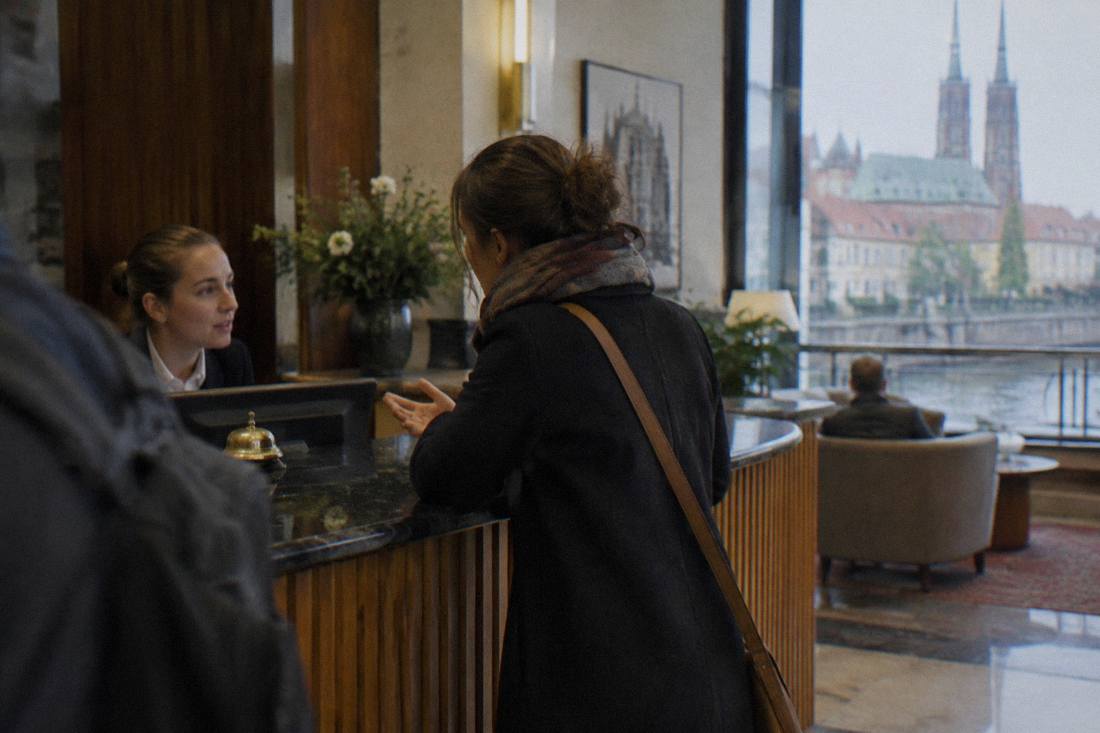
Where Can You Practice Polish In Wroclaw?
The best places to practice Polish in Wroclaw are milk bars at lunch, market stalls on craft market days, small neighborhood cafes off the Rynek, and guided tours with local guides, because each puts you in a repeated, low-stakes exchange with a patient listener rather than a busy stranger. The worst place is a crowded tram at rush hour, where nobody has time and your attempt becomes an obstacle.
Guided tours deserve special mention, and not only for convenience. A local guide hears you try the city's street names and corrects you on the spot, which is how pronunciation actually sticks. The retro golf cart city tour is an easy, low-effort option where the guide does the talking between stops and you handle greetings and thanks, and checking availability on the operator's live listing tells you what a seat costs before you commit.
Beyond tours, free walking walks are the classic language-exchange format: they run on tips, the guide's patter is the content, and you can listen along and try your dzien dobry and dziękuję at the end. GuruWalk lists several real free walks in the city, including "Old Town Wroclaw by Walkative!", a tip-based Old Town walk, and "Wroclaw Through Ages: Old Town & Cathedral Island". A free walk is also the cheapest way to test how much of a guide's Polish you can parse by the end of a morning.
For timing your practice sessions around the city's rhythms, the best time to visit Wroclaw guide and the Wroclaw weather by month guide cover the climate picture, from the 0.0C January mean to the 19.7C July mean in IMGW's 1991-2020 normals. The Wroclaw events calendar lists what is on in the city month by month, and the Wroclaw festivals guide is the deeper dive on the calendar's anchors.
How Much Polish Can You Learn Before The Trip?
You can learn all the phrases on this page in a weekend, because roughly forty words and eight pronunciation rules cover every situation a short visit creates, and anything beyond that is a bonus rather than a requirement, so a realistic pre-trip plan is a single focused hour rather than a course. Vocabulary learned the night before a flight does not survive contact with a real tram conductor.
The distinction that matters is between active and passive Polish. Active, what you can say, is the twenty-word core: greetings, please, thank you, the bill, one ticket, excuse me. Passive, what you can recognize, grows fast once you know the letter rules, because you start reading street signs, tram destination boards and market chalkboards as pronounceable strings rather than noise. The passive skill is what makes the city feel legible by day two.
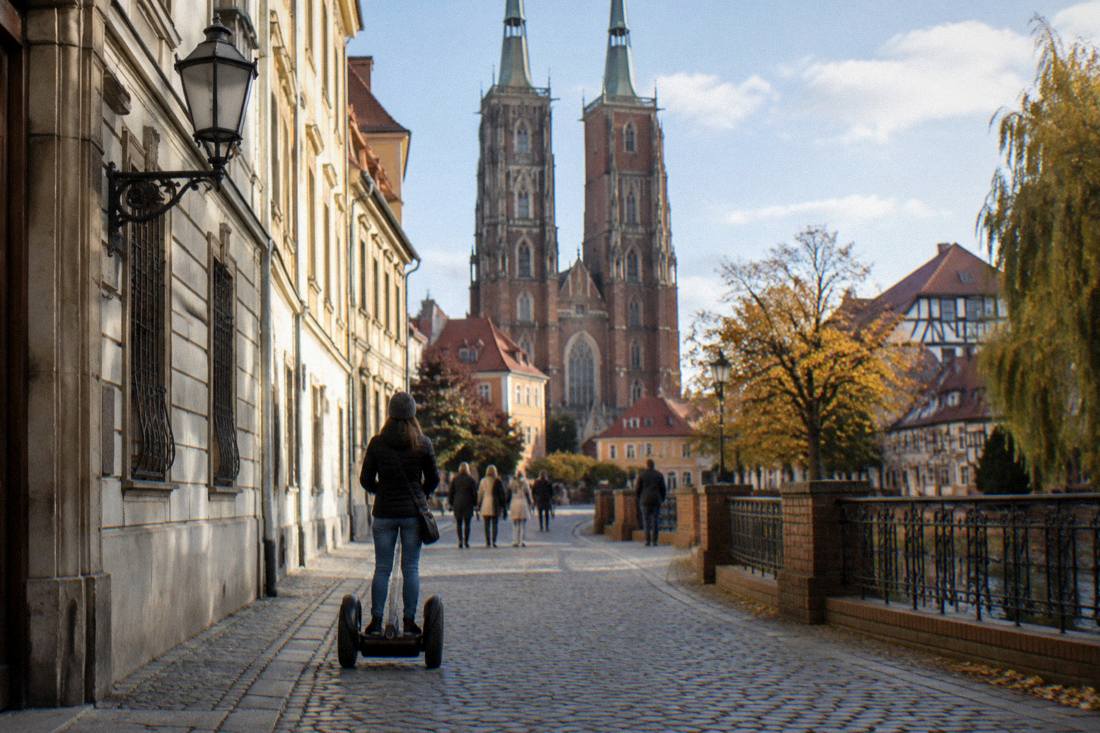
If you want one structured rehearsal, a segway tour of the Old Town and Ostrow Tumski covers both cores of the city with a guide narrating names and history the whole way, and every gate, church and square you glide past comes with its Polish name repeated.
Finally, a note on scale. Wroclaw is a university town with a large student population, and a place where foreign visitors have been arriving in growing numbers, the airport's 2024 figure of 4,473,945 passengers being the latest full-year count. None of that makes it an English-first city. It makes it a Polish-first city that is used to visitors trying, which is the ideal environment for a first attempt at the language.
Common Questions About Polish Phrases For Visiting Wroclaw
Do People In Wroclaw Speak English?
Many do, especially in hotels, main attractions, Old Town restaurants and among younger residents, but English coverage thins out in milk bars, local shops and on public transport. The practical rule is to open with dzien dobry, then ask czy mowi pan po angielsku. Trying Polish first is received well everywhere in the city.
How Do You Pronounce Wroclaw?
Roughly "VROTS-wahf". The W is a v sound, the c before l is a ts, and the final w softens toward an f. In English copy the name is written as plain "Wroclaw"; on official Polish signs you will see Wrocław with an l-with-stroke, which sounds like a w.
What Is The Most Important Polish Phrase To Learn?
Dziekuje, thank you, pronounced roughly "jen-KOO-yeh". It fits every interaction from a museum ticket desk to a tram exit, and Poles notice it. Pair it with prosze, please, and przepraszam, excuse me, and you have the three words that carry the most weight per syllable.
Is Polish Hard To Learn For A Short Visit?
Polish grammar is genuinely difficult, but a short visit does not need grammar. The phrasebook approach on this page, about forty set phrases plus the pronunciation rules, skips grammar entirely and covers restaurant ordering, transport, shopping and emergencies.
Should I Learn Formal Or Informal Polish For Wroclaw?
Formal. The pan and pani forms are the safe default with every stranger, shopkeeper and server in the city, and informal czesc is only for peers and casual settings. A visitor defaulting to formal Polish is never wrong; a visitor defaulting to informal occasionally is.
Do I Need Polish For The Trams In Wroclaw?
No, but you need the word bilet, ticket, because tickets are bought at kiosks and machines before boarding and validated on the tram. The base 15-minute fare is 4.60 zl per MPK's official price page. One ticket, jeden bilet, is enough Polish for the whole ride.
A last piece of advice: say dzien dobry when you enter, dziękuję when you receive, and do widzenia when you leave, and Wroclaw will open itself to you a degree wider than it does to visitors who do not.