How To Pronounce Wroclaw
Wroclaw, the largest city in Lower Silesia in southwestern Poland, defeats almost every first-time visitor at the same moment: the first syllable. The name is far easier than it looks, and this guide breaks it down letter by letter.
Short answer
Wroclaw is pronounced roughly VROTS-wahf, with stress on the first syllable. Polish w sounds like v, c sounds like ts, the slashed l sounds like w, and the final w softens to an f.
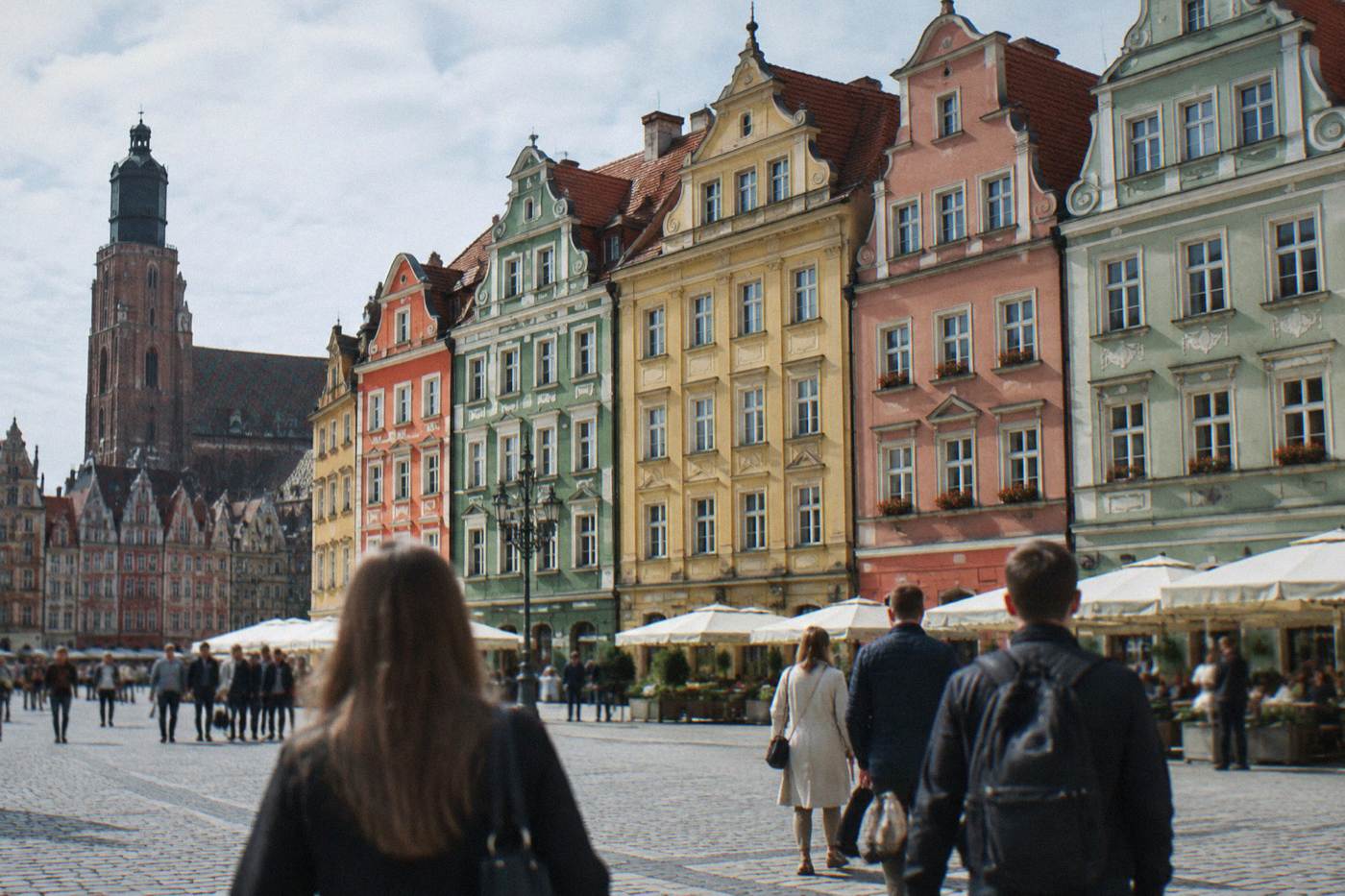
Wroclaw, the largest city in Lower Silesia (Dolnoslaskie voivodeship) and the main city of southwestern Poland, sits on the Odra river with a population of 672,601 as of 31 December 2025, according to GUS, Poland's statistics office. It is a city of islands, bridges, dwarfs and one genuinely awkward problem for visitors: the name. Almost nobody arrives saying it right, and almost everybody leaves saying it correctly, because once the Polish spelling rules are explained, the difficulty evaporates. This guide walks through the pronunciation letter by letter, then covers the other Polish names, city words and traveler phrases that trip English speakers up in the same way.
How Do You Pronounce Wroclaw?
Wroclaw is pronounced roughly "VROTS-wahf": two syllables, stress on the first. The Polish spelling is Wroclaw, where the letter c sounds like English "ts", the l-with-a-stroke sounds like English "w", and the final w softens toward an "f". Say "VROTS-wahf" and locals in Wroclaw, Poland will recognize it instantly, even from a hesitant first attempt.
Break the word into its two syllables and the intimidation factor drops. The first syllable, "Wro", rhymes with the English word "throw" if you replace the t with a v: "vro". The second syllable, "claw", is not the English word claw at all. It is "ts-wahf", where the c does the ts work, the special Polish l does the w work, and the final letter w fades out as a soft f. Put together: VROTS-wahf, first syllable strong, second syllable quick and trailing off.
Stress matters as much as the letters. Polish words almost always carry stress on the second-to-last syllable, and Wroclaw happens to be short enough that the stress simply lands on the front. Many English speakers instinctively emphasize the second half, "wrots-WAHF", which sounds odd to Polish ears the same way "a-LOO-mini-um" confuses an American. Keep the weight forward and the word clicks.
Practice with a rhythm trick that language teachers use for Polish names: clap once on "VROTS", then let "wahf" fall away almost like a sigh. VROTS-wahf. VROTS-wahf. After three or four repetitions the mouth stops fighting the letter combination, because every individual sound in the name already exists in English. There is no throat sound, no rolled r required for a Polish listener to accept it, and no tone to master. The r is a lightly tapped r, closer to the r in "brr" than the English r in "run", but even a plain English r will be understood.
Why Is Wroclaw So Hard For English Speakers To Say?
The difficulty comes from five letters that do different jobs in Polish than in English: Polish w is pronounced "v", c is "ts", the l-with-a-stroke is "w", and a word-final w devoices to "f". English reading habits apply none of these rules, so "Wroclaw" comes out as "RO-claw". Every sound in the city's name exists in English once the mapping is known.
The root of the problem is that English borrows its alphabet shapes with one set of habits and Polish uses the same shapes with another. A Polish child reading "Wroclaw" aloud for the first time says it correctly without hesitation, because the rules are completely consistent in Polish. English is the inconsistent language here. Once you accept that four letters in this one word are doing unexpected work, the name stops being a puzzle and becomes a short phonics lesson.
Here is each letter of the city's Polish spelling and the sound it actually makes:
| Letter | Polish sound | English approximation |
|---|---|---|
| W | like English "v" | the v in "van" |
| R | lightly tapped r | the r in "brr" or Scottish "loch" lightened |
| O | short "o", as in "pot" | the o in "off" |
| C | like English "ts" | the ts in "cats" |
| Ł (l with a stroke) | like English "w" | the w in "water" |
| A | "ah" | the a in "father" |
| W (word-final) | softened toward "f" | the f in "leaf" |
Notice the trickiest pair: the consonant that looks like a w is a v, and the consonant that looks like an l is a w. The two letters essentially swap jobs compared with English expectations. That single swap explains nearly every mangled attempt at the city's name heard at Wroclaw airport and in hotel lobbies across the city. It also explains why "Wroclaw" written down looks so much harder than it is: the eye sees an English word shape and reads "ROCK-claw" or "WRO-claw", while the mouth only needs two ordinary syllables.
The same letter rules apply across the whole Polish language, so the effort is reusable. The c-equals-ts rule explains the city of Lodz ("woodge", roughly), the w-equals-v rule explains why Warsaw's Polish name is "Warszawa" said "var-SHA-va", and the slashed-l rule shows up in words like "łódka", a small boat. Learning four letters buys you most of Polish pronunciation. That is a better return on effort than most languages offer.
How Do You Say Wroclaw's Main Squares, Islands And Streets?
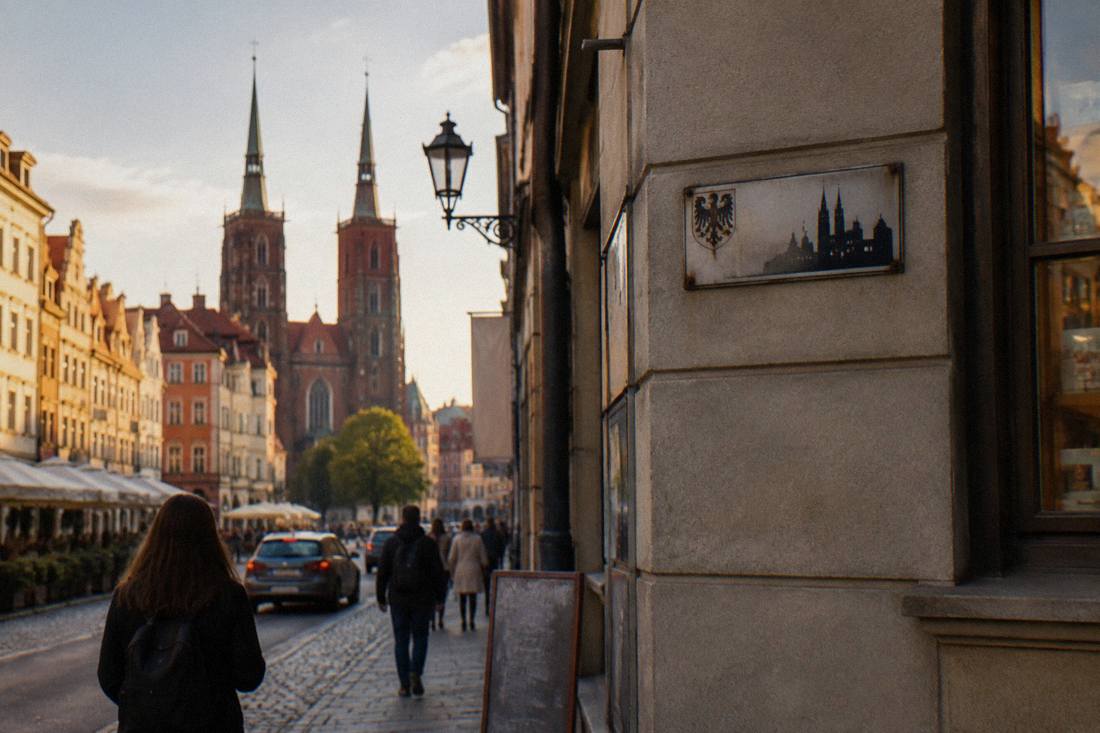
Most of Wroclaw's key place names follow the same handful of rules as the city's own name: Rynek is "RIN-ek", Ostrow Tumski is "OSS-troff TOOM-skee", the Odra river is "OD-ra", and Nadodrze is "na-DO-dzhe". None of them contains a sound English lacks. The names look dense on a map because of consonant clusters, not because of difficult sounds.
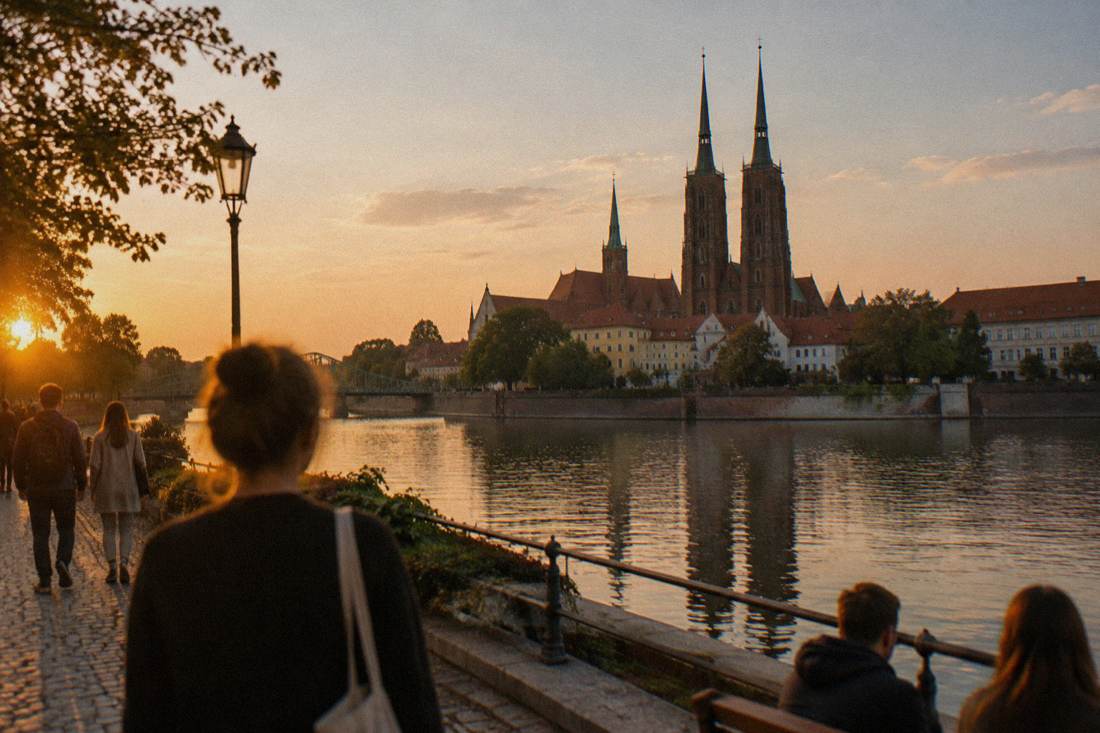
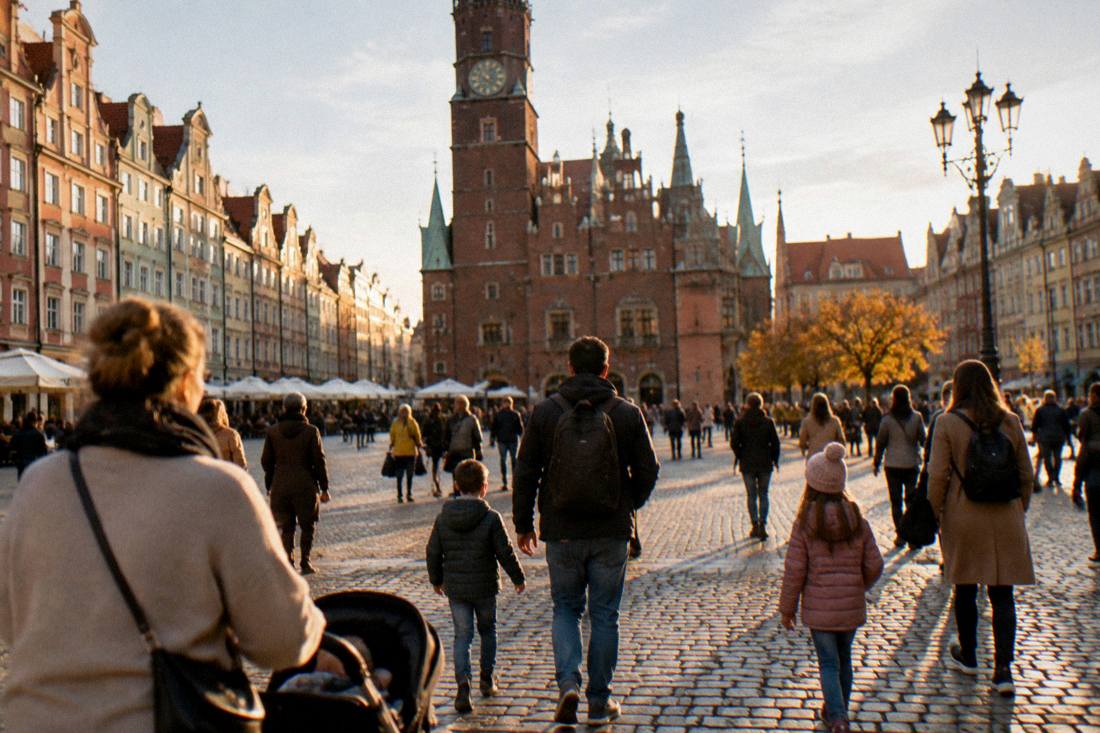
The main market square, Rynek, is the word visitors say most often, for taxis, directions and meeting points. It looks like it should have three syllables and a y, but the y is simply a short "i" sound and the whole word is two beats: RIN-ek. Cathedral Island, Ostrow Tumski, splits as OSS-troff TOOM-skee. The final w in Ostrow does the same softening as the final w in Wroclaw. Nadodrze, the street-art and creative quarter widely recognized for its community murals and revitalized courtyards, runs as na-DO-dzhe, with the rz blending into a single "zh" sound like the s in "measure".
A quick pronunciation table for the names a visitor actually needs, with the same first-syllable stress pattern as the city's name:
| Place | Rough pronunciation | What it is |
|---|---|---|
| Rynek | RIN-ek | the main market square |
| Ostrow Tumski | OSS-troff TOOM-skee | Cathedral Island, the oldest district |
| Odra | OD-ra | the river through the city center |
| Nadodrze | na-DO-dzhe | the creative and street-art quarter |
| Wyspa Slodowa | VIS-pa swo-DO-va | the student island by the river |
| Hala Stulecia | HA-la stoo-LET-sa | Centennial Hall, the UNESCO site |
| Afrykarium | af-ri-KA-ri-um | the zoo's oceanarium building |
Two of those names deserve a special note. Hala Stulecia is the Polish name for Centennial Hall, inscribed by UNESCO in 2006, designed by architect Max Berg and built between 1911 and 1913. And Afrykarium is the reason many families pick the zoo in the first place: the zoo's own price page confirms that the standard admission ticket already includes the Afrykarium, with adult tickets sold online from 69 zl and at the gate for 99 zl, so there is no separate charge to worry about pronouncing.
Hearing these names spoken by a local guide is the fastest way to make them stick. The tours below cover exactly these districts, and a guided walk doubles as a live pronunciation clinic.
Which Polish City Names Trip Travelers Up The Most?
Polish city names look harder than they sound for the same reason Wroclaw does: consonant clusters and letters doing unexpected jobs. Krakow is "KRAH-kuff", Lodz is "woodge", Gdansk is "g-DINE-sk" with a nasal ending, and Szczecin is "SHCHE-chin". Krakow, at 816,614 residents, is Poland's second-largest city and larger than Wroclaw, and its name is no easier to read.
Every one of these names yields to the same rules covered above. The cluster "szcz" in Szczecin is just "shch", a sound English speakers make effortlessly in the phrase "fresh cheese" said quickly. The dz in Lodz softens into a "j" or "dge" sound, so a city that looks unpronounceable is one syllable. Gdansk and Poznan both carry the nasal "n" with a trailing "a" that English does not have, but "nah" close enough works. Warszawa, the Polish name for Warsaw, is var-SHA-va.
| City | Polish spelling | Rough pronunciation |
|---|---|---|
| Wroclaw | Wrocław | VROTS-wahf |
| Krakow | Kraków | KRAH-kuff |
| Lodz | Łódź | woodge |
| Warsaw | Warszawa | var-SHA-va |
| Gdansk | Gdańsk | g-DINE-sk |
| Poznan | Poznań | PO-z-nah |
| Szczecin | Szczecin | SHCHE-chin |
| Katowice | Katowice | ka-to-VEE-tse |
For travelers comparing cities, the pronunciations are the easy part. Wroclaw and Krakow get compared constantly: GUS data as of 31 December 2025 puts Wroclaw at 672,601 residents against Krakow's 816,614, and Krakow's Rynek Glowny, at roughly 4 hectares, is larger than Wroclaw's Rynek. The honest comparison, including food, prices and pace, is laid out in the site's Wroclaw versus Krakow guide, with further comparisons in Wroclaw versus Warsaw and Wroclaw versus Gdansk.
If the city names have you planning a broader Polish itinerary instead, day trips from Wroclaw reach most of them, and the Krakow train guide covers the rail route, with fares and times checked live at the operator's booking engine rather than quoted as fixed numbers here.
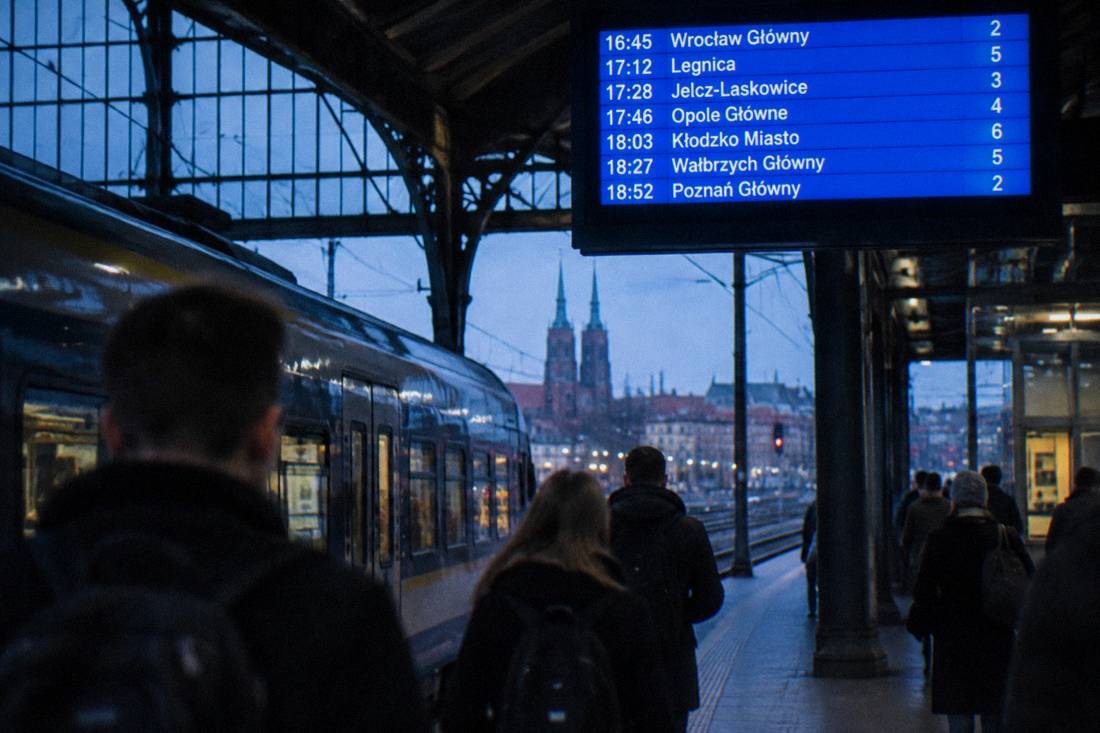
One warning from real travel conversations: the mangled versions of Polish city names cause genuine confusion at ticket counters. Asking for a ticket to "wuh-CLAW" often produces a blank look, while "VROTS-wahf" gets an immediate response. The two minutes spent on this page saves repeated small misunderstandings across an entire trip.
If a guided day out is already on the wishlist, the featured options below pair the city's headline sights with a guide who says every one of these names correctly, and booking holds with free cancellation.
Do Locals Expect Visitors To Get Wroclaw Right?
No, and this is the part that surprises visitors: Wroclaw locals are famously patient with mangled attempts, because their city's name defeats nearly everyone. The goodwill comes from trying. A rough "VROTS-wahf" earns a smile; a confident "ROCK-claw" said without any attempt at the Polish version reads as not trying. Effort is the social currency.
Wroclaw is a university city with a large student population and a long history of international contact, including its 2016 year as a European Capital of Culture. English is widely spoken in the center, in restaurants, hotels and on guided tours. Nobody will be stranded for failing at Polish pronunciation. At the same time, the small gestures land disproportionately well: saying "dzień dobry" (jane DOH-bree), good day, on entering a shop, and "dziękuję" (jen-KOO-yeh), thank you, when paying, marks a visitor as someone making an effort, and staff respond visibly to it. The wider set of guides lives on Wroclaw Travel Guide.
For families, pronunciation practice can even be part of the fun. The site's featured children's tour is a guided walk designed for younger visitors, and a family that has practiced "VROTS-wahf" on the flight over arrives ready to use it; Check availability if a kid-friendly orientation walk sounds like the right first morning. Guides on city tours also repeat place names constantly, which is how visitors finally lock in "Rynek" and "Ostrow Tumski".
What Should You Say Once You Can Pronounce Wroclaw?
A handful of Polish phrases covers ninety percent of visitor interactions: "dzień dobry" (jane DOH-bree) for hello, "dziękuję" (jen-KOO-yeh) for thank you, "przepraszam" (pshe-PRA-sham) for excuse me and sorry, "proszę" (PRO-sheh) for please and here you go, and "czy mówisz po angielsku?" (chi MOO-vish po an-GAIL-skoo) for do you speak English.
Five phrases, five pronunciation notes. The nasal "ą" and "ę" sounds that make Polish look intimidating barely appear in these particular words, which is why they are the standard tourist set. Dzień dobry carries a softened "ń" at the end of dzień, close to "jane" with a light ny. Dziękuję looks alarming with its leading dz and its final ę, but jen-KOO-yeh is completely within English reach. Przepraszam looks like a wall of consonants and is really two beats: pshe-PRA-sham. Proszę is PRO-sheh. The question about English repeats the familiar chi from "Czy", the same ts-family sound as the c in Wroclaw.
| Polish phrase | Rough pronunciation | Meaning |
|---|---|---|
| dzień dobry | jane DOH-bree | good day, hello |
| dziękuję | jen-KOO-yeh | thank you |
| przepraszam | pshe-PRA-sham | excuse me / sorry |
| proszę | PRO-sheh | please / here you go |
| tak / nie | tahk / nyeh | yes / no |
| czy mówisz po angielsku? | chi MOO-vish po an-GAIL-skoo | do you speak English? |
| Na zdrowie! | na ZDRO-vyeh | cheers! / bless you |
| do widzenia | do vei-DZE-nya | goodbye |
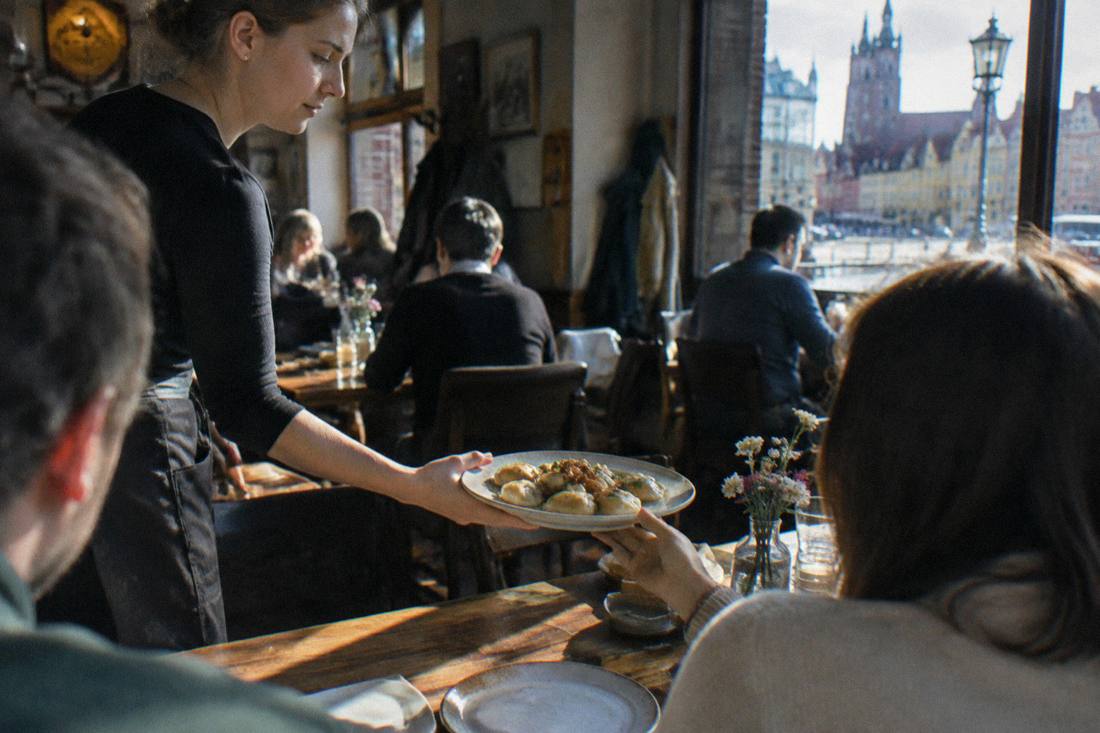
Everyday interactions reinforce these phrases fast. At a milk bar, the classic Polish canteen, ordering is often done by pointing anyway, and the milk bars guide covers how they work. At the pierogi spots covered in the pierogi in Wroclaw guide, a "proszę" and a "dziękuję" carry an entire transaction. And in the restaurants listed in the best restaurants in Wroclaw guide, staff in the center switch to English without being asked, so the Polish phrases are a bonus rather than a necessity.
Does The Spelling Of Wroclaw Change On Signs And Tickets?
In English copy the city is written plainly as Wroclaw, without accents, and that is also how this site writes it throughout. In Polish the same name carries two special letters, the l-with-a-stroke and the crossed o, which English keyboards do not have. Signs inside Poland use the full Polish spelling; signs and materials aimed at international visitors usually simplify.
The practical consequence for a traveler is small but real. When booking, searching or writing, the plain ASCII spelling "Wroclaw" is what most search engines, booking sites and airport signage expect from an international audience, and the Polish accented form will still be understood everywhere. The same applies to other names on the itinerary: Krakow versus Kraków, Lodz versus Łódź. Neither version is wrong; they are the same word at two levels of typographic detail. This site uses plain ASCII in every heading and in prose, per its own orthography standard.
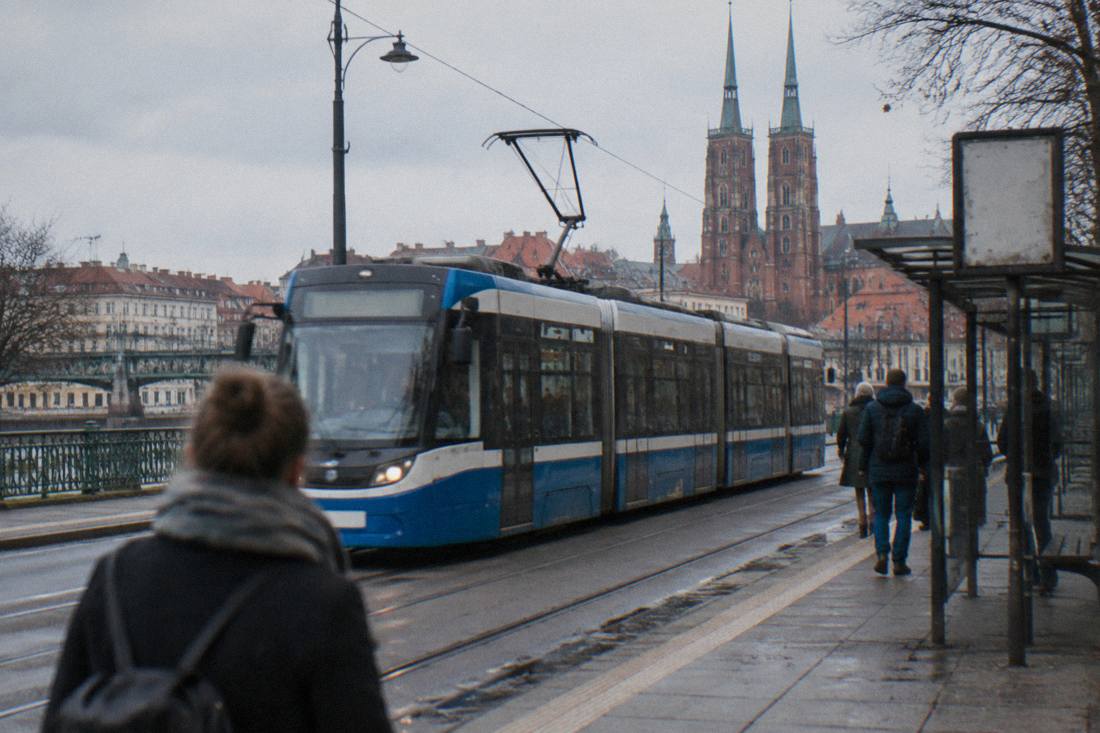
What does not change is the pronunciation. The accented and plain spellings sound identical. A traveler who has learned "VROTS-wahf" can read either form on a departures board, a tram stop or a museum ticket and know exactly what they are hearing when it is called out.
How Does Knowing The City Change How You Plan It?
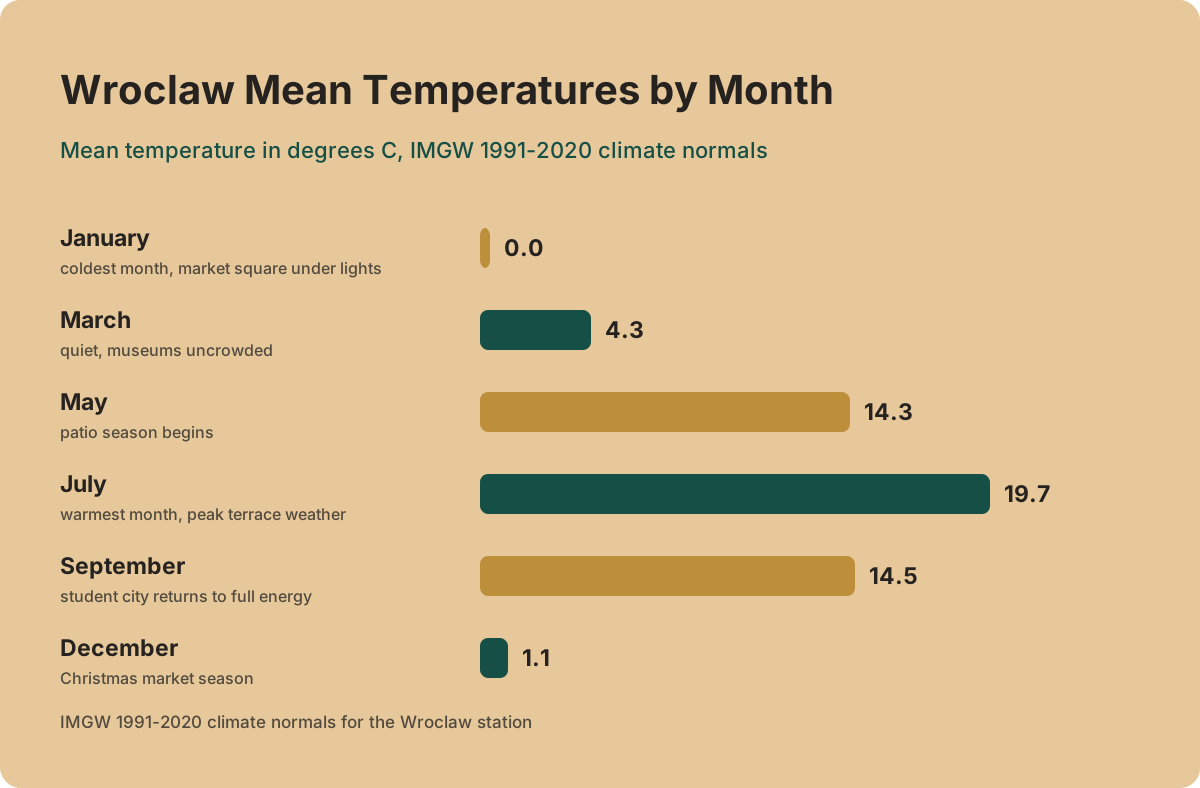
Once the name stops being an obstacle, planning Wroclaw is straightforward: the city is compact and walkable, the transit system starts with a 4.60 zl base short-hop ticket per MPK's official price guide, and the climate runs from a 0.0C January mean to a 19.7C July mean per IMGW's 1991-2020 normals. Pronunciation is genuinely the steepest part of the learning curve.
The numbers a planner actually needs are modest. MPK, the city transport operator, prices a 15-minute ticket at 4.60 zl normal and 2.30 zl reduced, with longer tiers rising to a 30-minute ticket at 7.00/3.50 zl and 24-hour and multi-day bands beyond that, all detailed in the getting around Wroclaw guide. Admission prices at the headline sights are equally concrete: the Panorama Raclawicka's own page lists 50 zl adult and 35 zl reduced for its 30-minute screening, with the ticket also covering the National Museum's permanent exhibitions, the Ethnographic Museum and the Four Domes Pavilion within three months, and the National Museum's standalone ticket is 20 zl adult, 15 zl reduced, with free entry to permanent exhibitions every Saturday. A full budget breakdown sits in the Wroclaw trip cost guide.
| Month | Mean temperature (C) | Notes for visitors |
|---|---|---|
| January | 0.0 | coldest month, market square under lights |
| March | 4.3 | quiet, museums uncrowded |
| May | 14.3 | patio season begins |
| July | 19.7 | warmest month, peak terrace weather |
| September | 14.5 | student city returns to full energy |
| December | 1.1 | Christmas market season |
That climate table comes from IMGW's 1991-2020 climate normals for the Wroclaw station, and the full month-by-month picture, including rainfall, is in the Wroclaw weather by month guide and the best time to visit Wroclaw guide. Summer visitors looking for evening plans can hand the pronunciation practice over to the nightlife options in the Wroclaw nightlife guide, while December visitors will find the Christmas market guide covers the seasonal square.
For travelers who want the city explained while hearing it pronounced properly, these tours pair a local guide's voice with the districts this article has been naming all along, and bookings can be made with free cancellation.
Cyclists get the same benefit on two wheels: a guided ride around the old town and the river islands comes with a guide narrating every name on the route, and reservations can be shifted or canceled if the weather turns.
Common Questions About Pronouncing Wroclaw
How Do You Pronounce Wroclaw?
Roughly "VROTS-wahf", with the stress on the first syllable. The Polish w sounds like v, the c sounds like ts, the l-with-a-stroke sounds like w, and the final w softens toward f. Two syllables, first one strong.
Is The W In Wroclaw Silent?
No. The initial w is fully pronounced, as a v sound. English readers often drop it or read the name as "RO-claw" because a consonant cluster like "Wr" is rare at the start of English words, but in Polish "Wr" opens many words and every letter is sounded.
Why Does Wroclaw Have Two Different Spellings?
The Polish spelling uses two special letters, the l-with-a-stroke and the crossed o, that English keyboards do not carry. International materials, including this site, write the name plainly as Wroclaw. Both spellings refer to the same city and sound identical when spoken.
Do People In Wroclaw Speak English?
Widely, especially in the center, in restaurants, hotels and on guided tours. Wroclaw is a university city with a large student population and international contact, including its 2016 European Capital of Culture year. A few Polish phrases land well, but nobody should worry about being stranded.
How Do You Pronounce Rynek And Ostrow Tumski?
Rynek, the main market square, is "RIN-ek". Ostrow Tumski, Cathedral Island, is "OSS-troff TOOM-skee". Both follow the same rules as the city's own name, with the final w in Ostrow softening the same way it does in Wroclaw.
Is Wroclaw Harder To Pronounce Than Other Polish Cities?
Not really. Lodz, Gdansk and Szczecin look equally difficult and obey the same letter rules. Krakow, Poland's second-largest city at 816,614 residents, is marginally easier only because it has fewer consonants. Once the handful of Polish letter rules is learned, all of these names become readable.
The name is the first thing every visitor learns about Wroclaw and the last thing anyone forgets. Say "VROTS-wahf", order the pierogi with a "prosze", and the city opens up from there.