Best Rooftop Bars In Wroclaw
Wroclaw, in southwestern Poland, is a low-rise city of red rooftops, church spires and river islands, and that profile is exactly what its rooftop bars trade on. This guide covers where the terraces sit, when the season actually runs, and how to plan an evening above the Old Town.
Short answer
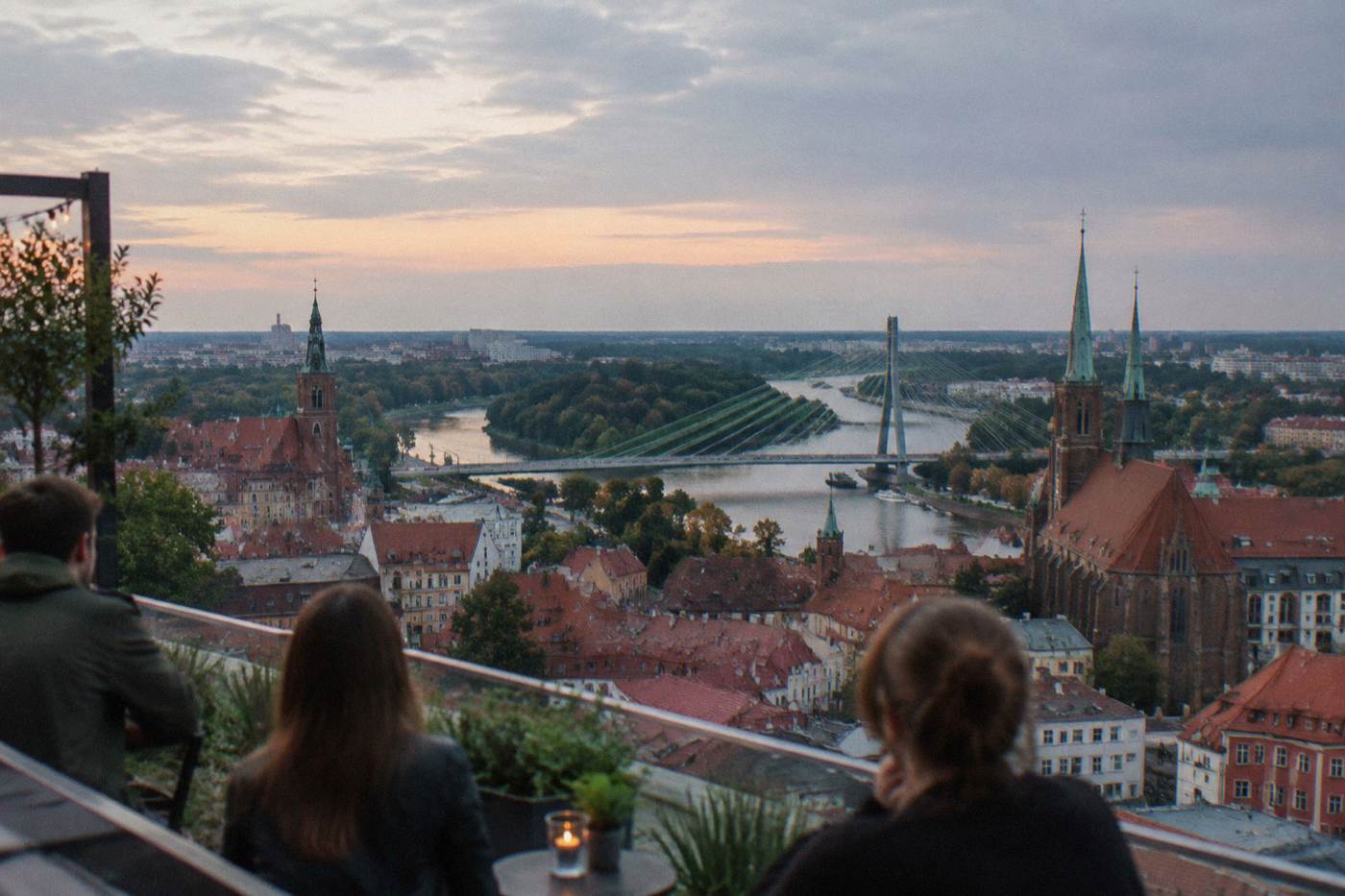
Wroclaw's rooftop bar scene is concentrated in and around the Old Town and the riverfront, with terraces looking out over the Market Square, the Odra islands and the Gothic spires of Cathedral Island. The open-air season runs from May through September, when the city's official climate normals put mean temperatures between 14.3C and 19.7C. Plan around sunset, carry zloty not euros, and book ahead on summer weekends.
Wroclaw, the largest city in Lower Silesia (Dolnoslaskie voivodeship) in southwestern Poland, is a city built for rooftop drinking. The Old Town is low and dense, all red pantile roofs and gabled townhouses, church towers rise rather than office blocks, and the Odra river splits into a chain of islands just north of the center. From a terrace a few floors up you get the whole skyline at once: the twin spires of the cathedral on Ostrow Tumski, the layered roofs around the Market Square, and the water winding through the middle of it. This guide covers how the rooftop bar scene in Wroclaw is laid out, when the open-air season genuinely runs according to the city's official climate data, and how to plan an evening, or a crawl, above the streets.
What Makes Rooftop Bars In Wroclaw Worth The Climb?
The case for Wroclaw's rooftops is scale: a compact, largely low-rise historic core means a terrace only four or five floors up already clears the skyline, so the views arrive cheap and the walk between them is short. The city's population is 672,601 (GUS, 31 Dec 2025), the third dimension that matters is the Odra river, and the islands north of the center open sightlines that denser cities can't match. The 2016 European Capital of Culture year also left the city with a polished nightlife infrastructure.
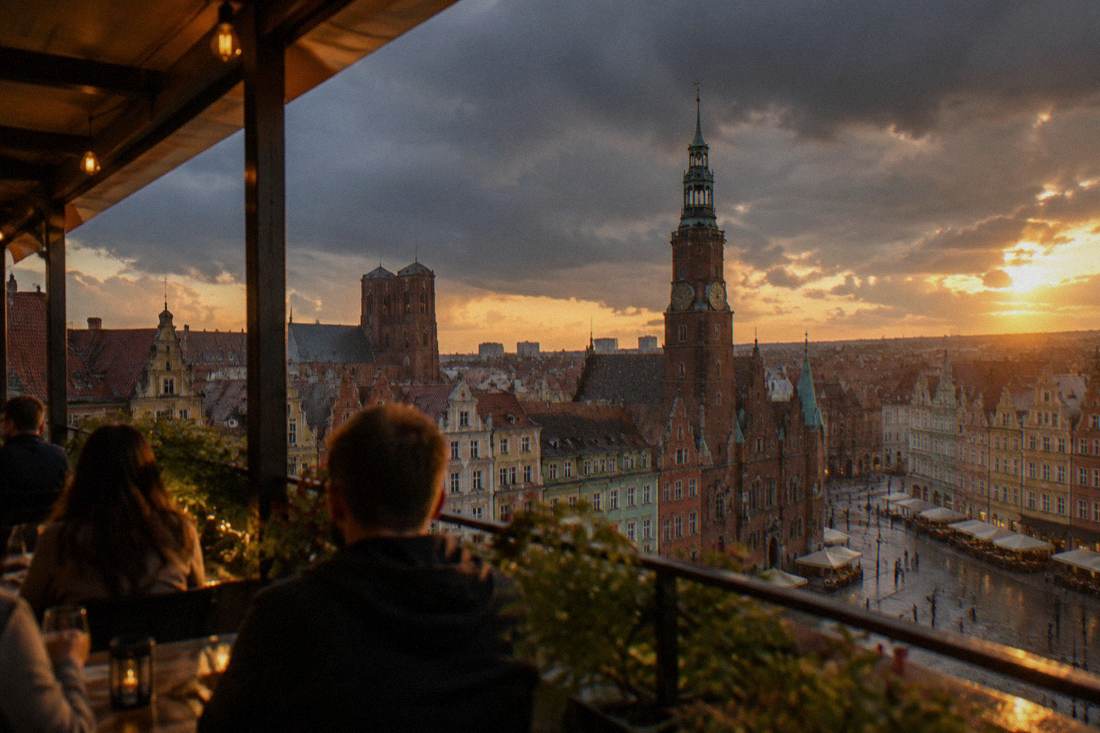
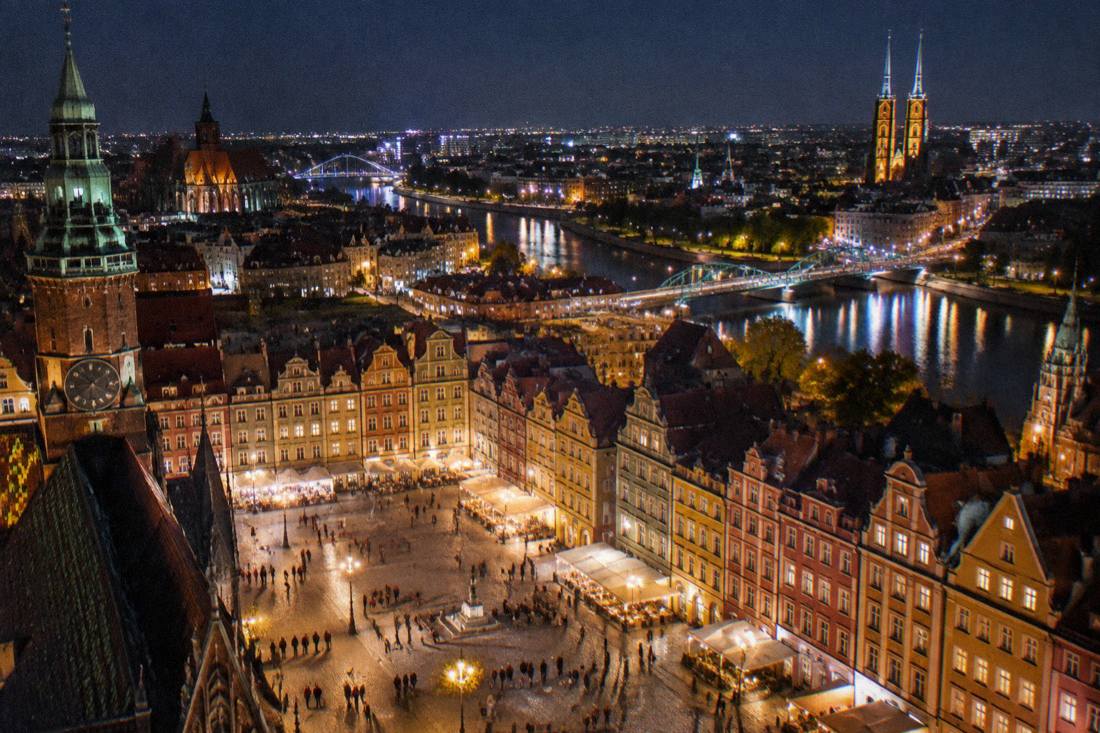
The reason Wroclaw works for rooftop drinking is structural rather than glamorous. Its historic core was rebuilt at human height, and the streets around the Market Square, the Rynek, are a dense grid of gabled houses where nothing blocks a fifth-floor view. The Rynek itself measures roughly 3.64-3.79 hectares, a huge open room of space at the center of the city, and terraces overlooking it get an unbroken sightline across the square to the towers on its far side.
The river matters just as much. The Odra cuts through the middle of the city and braids into islands, and from a terrace in the center you can see the water, the greenery of the islands and the spires beyond them in one frame. Cathedral Island (Ostrow Tumski) sits just north of the center with its cathedral towers, and it reads almost like a separate, older skyline floating above the trees.
Wroclaw's 2016 year as a European Capital of Culture left behind more than the events themselves. The city's reputation as a short-break destination, its festival calendar and its evening economy all grew through that period, and the bar scene, rooftop terraces included, is part of what it consolidated. For a fuller picture of the city's character before you plan your evening, start with Wroclaw Travel Guide, which covers the whole destination.
| Fact About Wroclaw | Figure | What It Means For Rooftop Plans |
|---|---|---|
| Population (31 Dec 2025, GUS) | 672,601 | A big-city bar scene without big-city building heights |
| Annual mean temperature (IMGW 1991-2020) | 9.7C | Four proper seasons; terraces are seasonal, not year-round |
| Warmest month mean (July) | 19.7C | Peak terrace season runs through July and August |
| Coldest month mean (January) | 0.0C | Midwinter means heated or indoor rooftop spaces |
| Currency | Zloty (PLN) | Poland is in the EU and Schengen but not the Eurozone |
| River | Odra (Oder) | Island and water views from many center-city terraces |
Where Are Wroclaw's Rooftop Bars Concentrated?
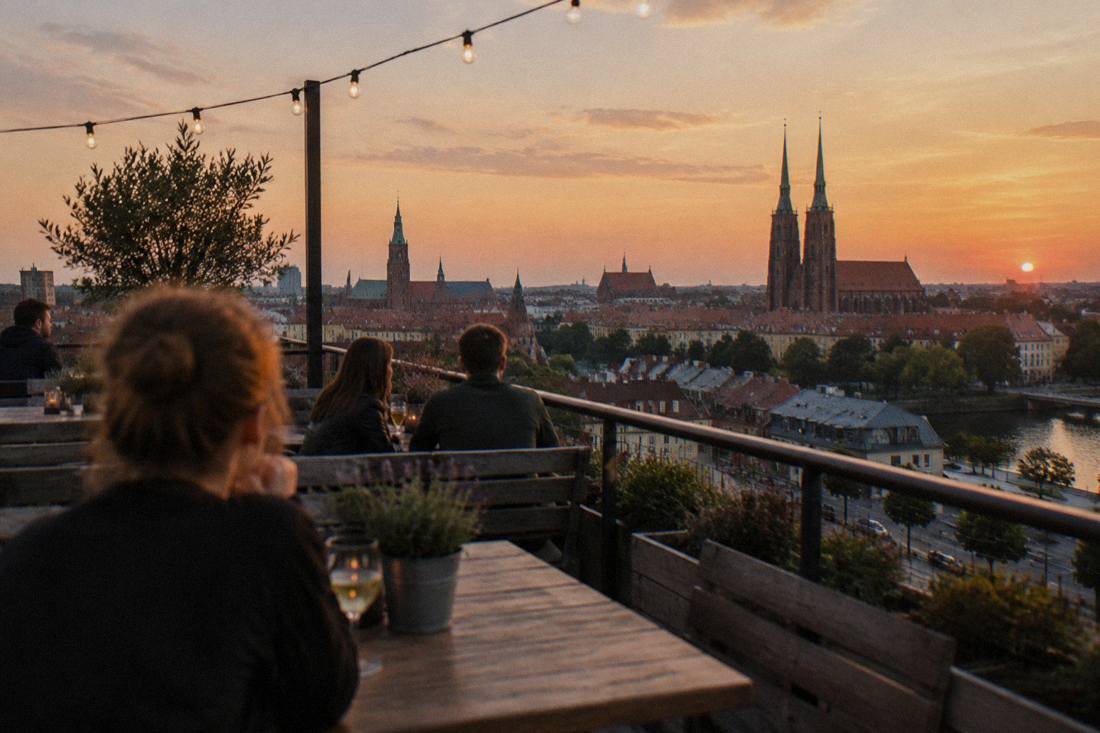
The terraces cluster in three zones: the streets immediately around the Market Square in the Old Town, the riverfront and island edges of the Odra just north and west of the center, and a scatter of hotel upper floors spread across the wider city center. The Old Town is where the density is, because the views are there. Expect a short walk, not a taxi ride, between the main rooftop options.
The Old Town around the Rynek is the natural home of the scene. Everything worth looking at from above is within a few hundred meters of the square: the gabled roofs, the towers on the square itself, and the church spires stepping up toward the cathedral. Terraces here face inward over the rooftops or outward toward the river, and in summer the square below stays lively late, so the view includes a working city rather than a dead one after dark.
The second zone is the river. The Odra's islands, including the popular student drinking meadow on Slodowa Island, mean the center's western and northern edges have water in the foreground of most views, and a handful of upper-floor and rooftop spaces take advantage of it. This is also where the evening energy moves in warm months, when the islands fill up with people drinking outdoors at ground level and the rooftops look down on all of it.
The third zone is diffuse: hotel and office upper floors across the wider center. These are the terraces to check when you want a quieter drink, a business-casual setting, or a backup in winter, since hotel rooftops are the most likely to be heated or enclosed. The city center segment as a whole is compact enough that none of these zones is more than a short walk from the others, and the getting around Wroclaw guide covers the transit and foot-bridge layout that connects them.
Wroclaw's evening culture is worth reading up on before you pick a terrace, because the rooftop scene sits at the quiet end of a very loud spectrum. The Wroclaw nightlife guide maps the whole scene, the craft beer guide covers the local brewing wave that many terraces pour from, and the best restaurants in Wroclaw list pairs a terrace drink with a proper dinner first.
One planning note specific to this city: the streets below the terraces are the main attraction too. Wroclaw's famous dwarfs, the small bronze statues scattered across the center, are on the walking routes between bars, and a guided hunt for them is a good way to occupy the hours between afternoon and terrace time. The Garden Gnome Hunt with a Local Guide does exactly that, moving through the center with a local guide and ending you in the middle of the Old Town right where the rooftop options begin. Check availability if the terrace plan needs a daytime anchor.
If you would rather see the skyline's layout before you drink above it, an electric-car city tour with an audio guide loops the Old Town, the islands and the riverfront and gives you the geography of the whole scene in one pass.
When Is Rooftop Bar Season In Wroclaw?
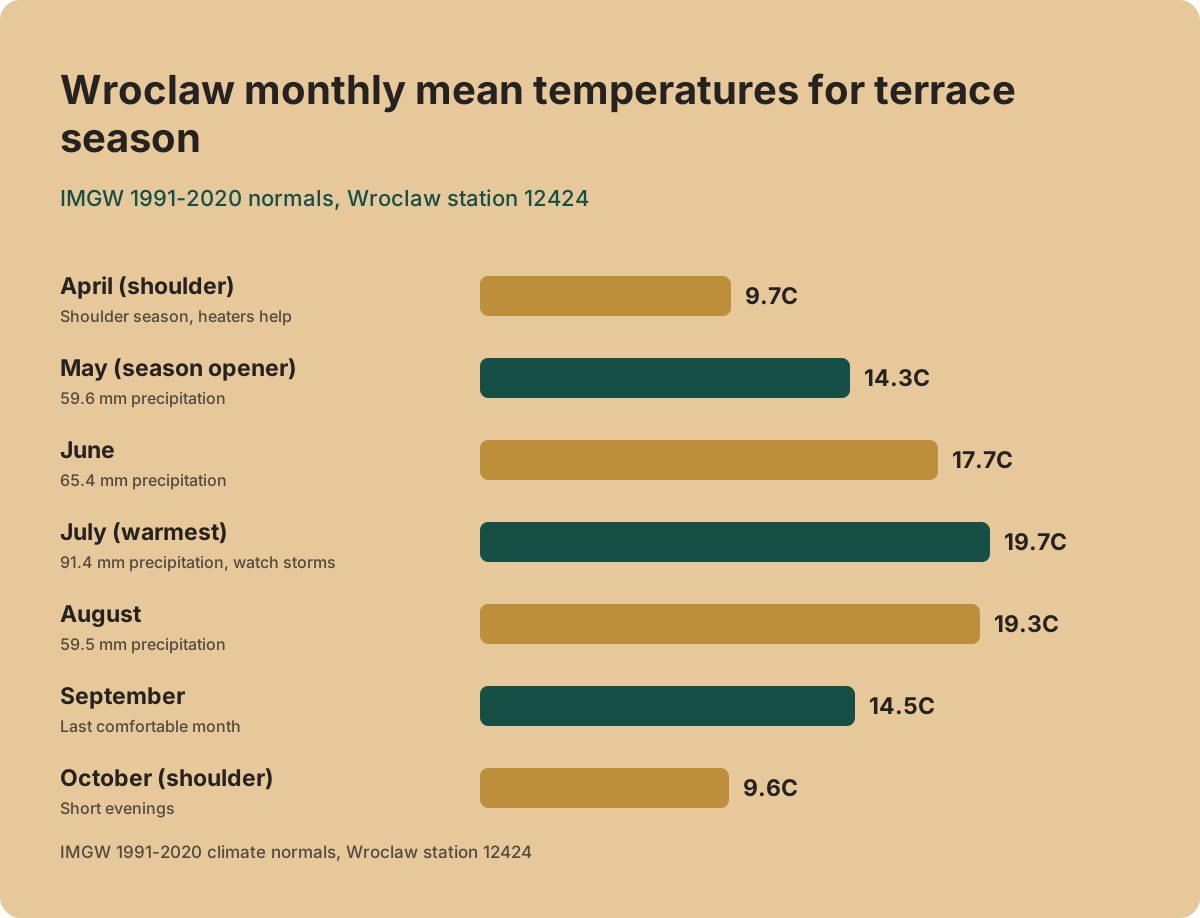
The real open-air season runs May through September. IMGW's 1991-2020 climate normals for the Wroclaw station put mean monthly temperatures at 14.3C in May, 17.7C in June, 19.7C in July, 19.3C in August and 14.5C in September, with July the warmest month of the year. April at 9.7C and October at 9.6C are shoulder-season gambles: some terraces open, some don't, and evenings drop cold fast after sunset.
That is the honest version of the season, and it matters more in Wroclaw than in southern-European terrace cities. A 19.7C July mean is a mild summer by absolute standards, but it is one of the warmer July figures among Poland's major cities in the IMGW normals, and warm evenings in the 20sC do happen regularly through July and August. What the mean also tells you is that a Wroclaw terrace evening in June can end at 12C, so the venues that thrive here are the ones with heaters, blankets and windbreaks, and the drinkers who thrive are the ones with a layer.
The monthly picture, straight from IMGW's 1991-2020 normals for Wroclaw station 12424, looks like this. The Wroclaw weather by month guide expands each month in detail, and the best time to visit Wroclaw guide ranks the whole year for a trip.
| Month | Mean Temp (C) | Precipitation (mm) | Terrace Verdict |
|---|---|---|---|
| Jan | 0.0 | 28.3 | Indoor or heated rooftops only |
| Feb | 1.1 | 25.6 | Indoor or heated rooftops only |
| Mar | 4.3 | 35.0 | Early-season, chilly evenings |
| Apr | 9.7 | 31.2 | Shoulder season, heaters help |
| May | 14.3 | 59.6 | Season opens in earnest |
| Jun | 17.7 | 65.4 | Prime season |
| Jul | 19.7 | 91.4 | Warmest month, watch storms |
| Aug | 19.3 | 59.5 | Prime season |
| Sep | 14.5 | 48.4 | Last comfortable month |
| Oct | 9.6 | 37.6 | Shoulder season, short evenings |
| Nov | 4.8 | 31.4 | Heated terraces only |
| Dec | 1.1 | 27.9 | Christmas-market season below, enclosed bars above |
Ranked purely on temperature, the five best months for open-air terraces line up like this, and the gaps between them are small enough that June and September are barely different drinks-in-hand experiences.
| Rank | Month | Mean Temp (C) | Notes For The Evening |
|---|---|---|---|
| 1 | July | 19.7 | Warmest month of the year; late sunsets |
| 2 | August | 19.3 | Nearly as warm, slightly drier |
| 3 | June | 17.7 | Long evenings, student-city energy |
| 4 | September | 14.5 | Golden light, quieter tables |
| 5 | May | 14.3 | Season opener, fresh and green |
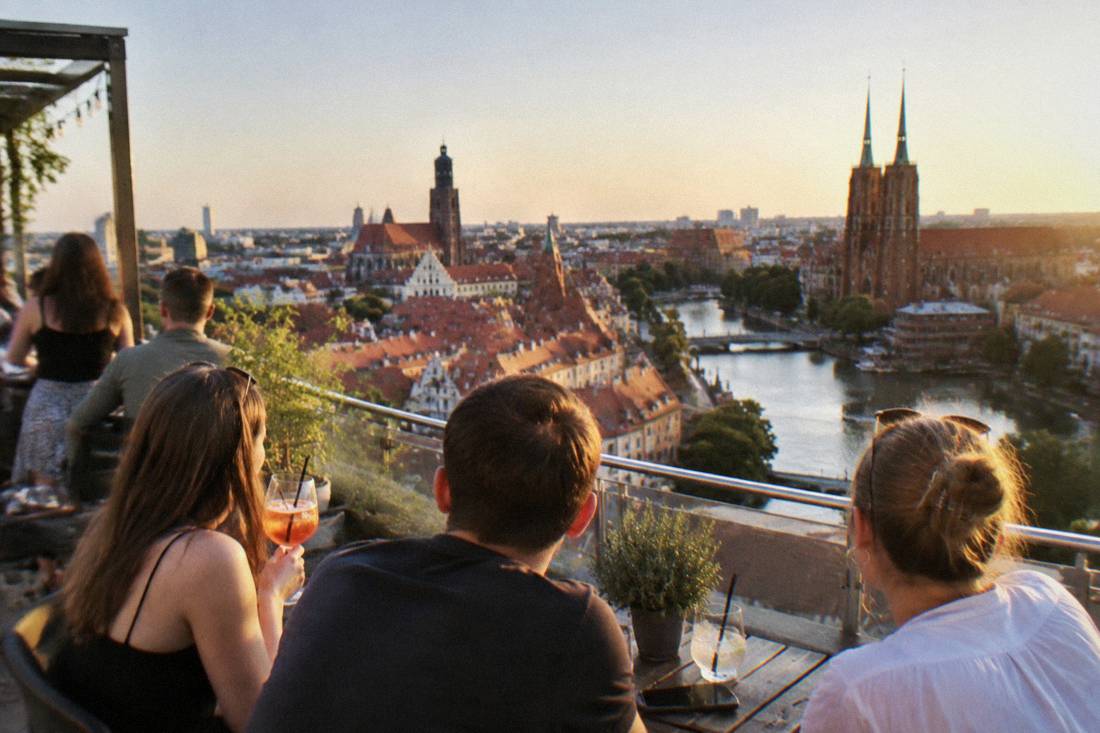
One counterintuitive read of the same data: May and June together are wetter than the peak-heat months that follow, with 59.6 mm and 65.4 mm of precipitation against August's 59.5 mm. The point is not that summer is rainy, it is that a Wroclaw terrace plan needs a covered fallback within a few streets, and the Old Town, where the rooftop density is, delivers that automatically. May is also the month where the season genuinely flips: the terraces that were enclosed all winter reopen their outdoor sections, and the terrace-and-table culture takes over the center.
Does A Rooftop Bar In Wroclaw Need A Booking?
On summer Friday and Saturday evenings, yes, for the best-known terraces, and especially for tables along the view side. Wroclaw is a 672,601-person city with a large student population and a strong short-break trade, so the finite rooftop tables fill fast on warm weekends. Midweek and early evening, walk-ins are realistic, and in May, September and the colder months most terraces never reach capacity at all.
The practical pattern: arrive before sunset rather than at it. Sunset seats are the ones everyone wants, the pre-sunset hour is calmer everywhere, and the period after sunset, when the church towers light up and the sky goes dark over the Odra, is arguably the better half of the evening anyway. The Wroclaw trip cost guide helps with the wider budgeting, since a night out across multiple terraces is a different spend than a single long sit.
How Does Rain Affect A Wroclaw Rooftop Evening?
July is both Wroclaw's warmest and its wettest month at 91.4 mm of precipitation in the IMGW 1991-2020 normals, followed by June at 65.4 mm, May at 59.6 mm and August at 59.5 mm. Summer rain in this climate tends to arrive in short, heavy episodes rather than all-day drizzle, so the realistic risk to a terrace evening is a storm, not a washout, and the recovery is usually the same evening.
This is the planning insight most first-time visitors miss. The instinct is to treat summer rainfall as a reason to avoid the season; the data says the opposite, that the warm months and the wet months are the same months, and that the terrace scene simply absorbs it. The venues that stay open through a passing shower are the ones with retractable covers and indoor upper floors, and the Old Town's density means a covered rooftop or a ground-floor bar is never more than a couple of streets away.
The precipitation ranking, from the same IMGW normals, looks like this. Note that December, at 27.9 mm, is among the drier months by total, which is part of why the Christmas season below the rooftops works so well.
| Rank | Month | Precipitation (mm) | Mean Temp (C) |
|---|---|---|---|
| 1 | July | 91.4 | 19.7 |
| 2 | June | 65.4 | 17.7 |
| 3 | May | 59.6 | 14.3 |
| 4 | August | 59.5 | 19.3 |
| 5 | September | 48.4 | 14.5 |
The other rain-adjacent factor is wind. Open terraces above a low-rise city catch more breeze than street level, and a 17.7C June evening on a rooftop can feel several degrees colder than the same temperature reads down in the Rynek. Locals plan for it; visitors learn it the first night. The best cafes in Wroclaw guide covers the warm daytime equivalents if the evening turns against you, and the rainy day Wroclaw page, which exists for exactly this scenario, covers the museum-and-interior alternatives, including the Panorama Raclawicka and the National Museum.
How Does Wroclaw's Rooftop Scene Compare With Krakow's?
Krakow is the bigger city, 816,614 residents to Wroclaw's 672,601 (GUS, 31 Dec 2025), and its Rynek Glowny is the larger main square at roughly 4 hectares against Wroclaw's roughly 3.64-3.79. In rooftop terms that translates to more terraces in Krakow but arguably better value in Wroclaw: the same low-rise skyline, the same view-per-floor ratio, fewer people competing for the tables and a river-and-island layer Krakow's core doesn't have.
Both cities have what a rooftop bar actually needs: a historic low-rise core with protected sightlines. Krakow's advantage is raw scale and a more established international tourist trade, which means more terraces, more English-language service and more competition for sunset seats. Wroclaw's advantages are compactness and the Odra. The river braiding through the center gives Wroclaw terraces a foreground Krakow's core lacks, and the islands between the banks, Slodowa Island chief among them for evening atmosphere, put a whole layer of nightlife below the rooftops that is visible from them.
| Comparison | Wroclaw | Krakow | Rooftop Implication |
|---|---|---|---|
| Population (GUS, 31 Dec 2025) | 672,601 | 816,614 | Krakow has the larger visitor base and table demand |
| Main market square | ~3.64-3.79 ha | ~4 ha | Both give terraces a huge open foreground |
| River through the center | Odra, multiple islands | Vistula, off the main core | Wroclaw's center terraces see water; Krakow's mostly don't |
| July mean temp (IMGW class of data) | 19.7C | Similar continental pattern | Comparable terrace seasons |
The full head-to-head, including food, cost and atmosphere beyond the rooftop question, is in the Wroclaw vs Krakow comparison guide, and the same logic extends to the Wroclaw vs Gdansk and Wroclaw vs Warsaw pages. The one-line version for terrace planning: if you are choosing between the two royal-route cities purely for a rooftop weekend, Wroclaw gives you the same skyline payoff with shorter queues, and the islands give your crawl a place to drift down to when the terraces close.
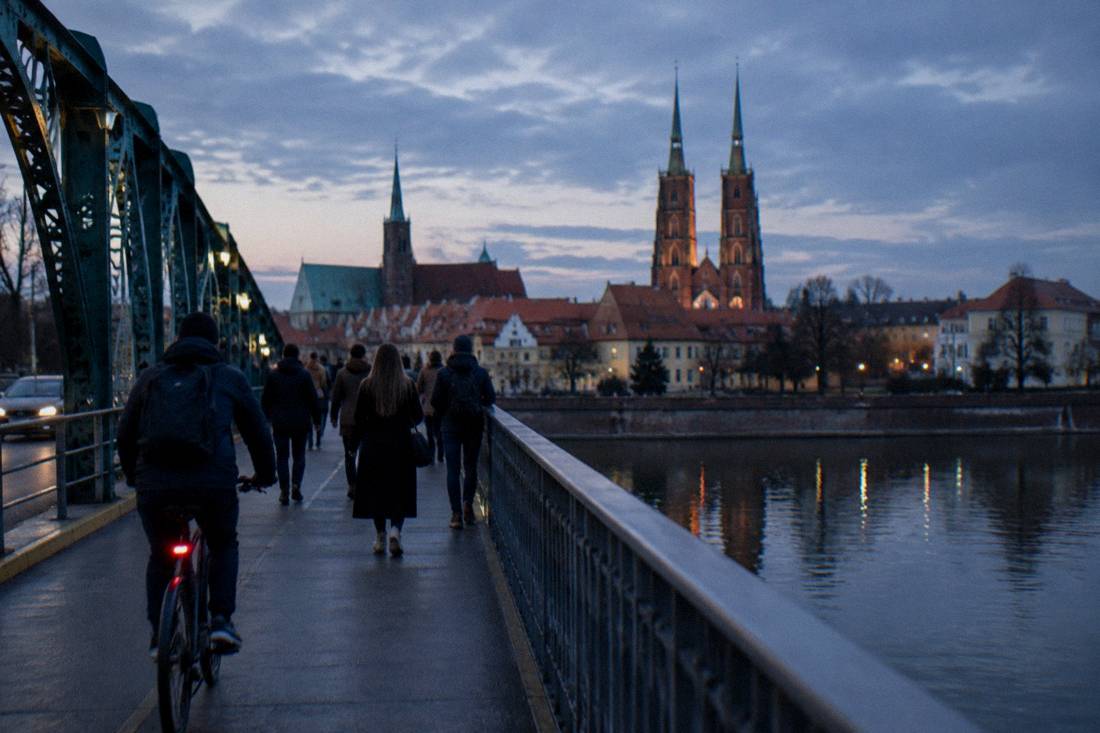
How Do You Plan A Full Rooftop Evening In Wroclaw?
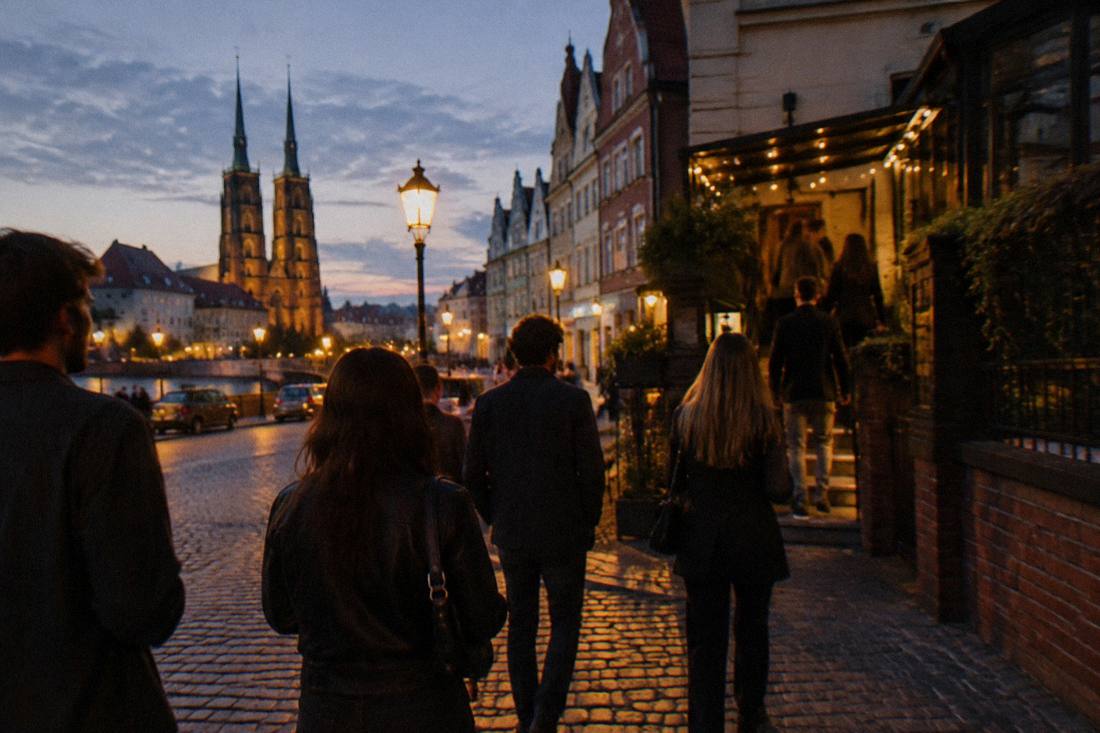
The classic formula is dinner in the Old Town, one sunset terrace overlooking the Rynek or the river, then a slow drift toward the islands for the late hours. Arrive at the terrace about an hour before sunset, eat before rather than after, and keep the whole route inside the center, where the walk between any two points is minutes on foot and the MPK base fare, 4.60 zl for a 15-minute ticket, covers any tram hop you don't feel like walking.
The reason to eat first is structural. Wroclaw's rooftop spaces are drinking spaces first; the serious food in the center is at street level. The pierogi in Wroclaw and Wroclaw street food guides cover the cheap and cheerful versions of that first course, and the standard order of the evening is food, then height, then the islands.
The drift downward is what makes a Wroclaw night different from a rooftop night elsewhere. From the terraces around the Rynek the walk to the river takes minutes, and Slodowa Island, the student meadow between the bridges, is where the evening's last hours naturally go. In summer the islands stay busy late; in winter the whole evening compresses back into the Old Town's covered spaces and the Christmas-market season gives the square below the rooftops its own draw, which the Wroclaw Christmas market guide covers in full.
Timing across the year changes less than people expect. What changes is the shape of the evening: in July it stretches long across the islands, and in January it folds into one warm interior with a view of the lit towers. The Wroclaw events calendar and the Wroclaw festivals pages tell you which evenings the city's calendar will compete with your plan for space, and the festival months, New Horizons film festival among them, are exactly the ones when a rooftop table needs booking rather than hoping.
If the evening plan starts from further out, or you simply want the geography handled for you before you drink, an evening-adjacent way to see the same skyline is a guided tour of the center first. The bike-tour option below covers the Old Town, the islands and the riverfront in a single loop, which is a good daytime warm-up for a night above them.
What Should You Know Before Your First Wroclaw Rooftop Night?
Three practical things: pay in zloty, not euros, because Poland is in the EU and Schengen but not the Eurozone; carry a layer even in July, because a 19.7C mean hides cool evenings once the sun drops; and keep the whole plan central, because Wroclaw's rooftop geography is concentrated enough that everything worth visiting is a short walk apart. Beyond that, the city is a safe, walkable, late-running student city where the evening logistics are easy.
The currency point trips people up more than any other. Cards are widely accepted in the city's bars, but the denominations, the prices and the mental arithmetic all run in zloty, and anyone arriving with euros will hit the exchange question on the first round. The Wroclaw trip cost page covers the money side of a visit in full.
The layer point is climate, not opinion. IMGW's normals give July a 19.7C mean, but means include the afternoons, and the rooftop evenings are the cooler tail of each day's curve, amplified by height and breeze. September at 14.5C is the month where this bites hardest: it looks like summer in the afternoon light and it is not summer at 9 p.m. December and January, at 1.1C and 0.0C means, are enclosed-terrace months, and the people drinking outdoors then are doing it in heated, windbreaked, blanket-supplied spaces, which Wroclaw does well because its winter nightlife runs long around the Christmas season.
The safety point is a simple one: Wroclaw's center at night is busy, lit and policed, and the walk home from a rooftop bar in the Old Town is a normal part of the evening rather than a risk calculation. The Wroclaw safety guide covers the details honestly, including the standard big-city cautions around the late-night zones, and the Wroclaw for solo travelers page extends it for people drinking alone, which on a Wroclaw terrace is an unremarkable thing to do.
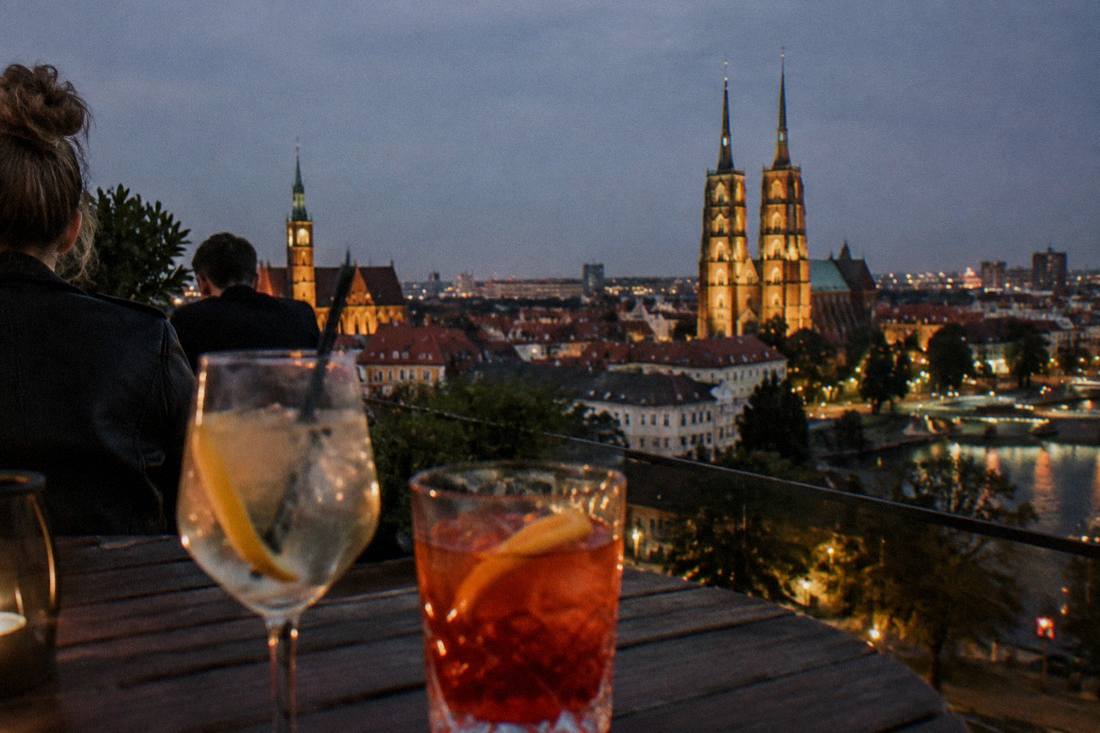
For visitors planning a longer stay, the rooftop evening is one item on a longer list. The one day in Wroclaw, two days in Wroclaw and three days in Wroclaw itineraries all end, fittingly, with an evening above the center, and the Wroclaw weekend itinerary builds the whole two-day arc around the idea that the skyline is the city's best closing shot.
Common Questions About Rooftop Bars In Wroclaw
What Is The Best Month For Rooftop Bars In Wroclaw?
July and August, with mean temperatures of 19.7C and 19.3C in the IMGW 1991-2020 climate normals, are the warmest and most reliable months for open-air terraces. June and September are close behind at 17.7C and 14.5C. July is also the wettest month at 91.4 mm of precipitation, so a covered fallback within a few streets is worth having even at peak season.
Where Should You Stay In Wroclaw For Rooftop Bars?
The city center and the Old Town, within walking distance of the Market Square, put every main terrace option minutes away on foot. Wroclaw's rooftop scene is concentrated in the historic core and the riverfront immediately around it, so a central base removes the transit question from the evening entirely. The getting around Wroclaw guide covers the tram and walking layout if you stay further out.
Do You Need To Book A Rooftop Bar In Wroclaw?
Only in peak season and mainly on summer weekend evenings, when the finite view-side tables in a city of 672,601 people plus a large student population and short-break trade fill early. Midweek evenings, shoulder months and the heated-terrace winter season rarely need a booking. Arriving before sunset rather than at it is the simplest way to secure a good table without one.
Do Wroclaw Rooftop Bars Stay Open In Winter?
Some do, in heated, windbreaked or fully enclosed form, because Wroclaw's winter nightlife runs long around the Christmas-market season in the square below. The open-air terrace experience itself is a May-to-September one: January's mean temperature is 0.0C and December's is 1.1C in the IMGW normals, so winter rooftop drinking in Wroclaw means cover and heaters, not open sky.
What Should You Wear To A Rooftop Bar In Wroclaw?
A layer, whatever the month. Even July's 19.7C mean includes cool evenings at rooftop height once the sun sets, and September's 14.5C mean ends cold. Wroclaw's rooftop scene is casual by big-city standards; the dress code guidance in the nightlife pages applies, and nothing in the center's terraces calls for formal wear.
Is Wroclaw Good For Nightlife Beyond Rooftop Bars?
Yes, and the rooftops are the quiet end of it. Wroclaw is a student city with a late-running bar culture, the island meadows fill up on summer evenings, and the craft beer scene has grown into one of the city's standing attractions. The 2016 European Capital of Culture year left the city with a festival calendar, including the New Horizons film festival, that keeps the evening economy going year-round.