The Wroclaw Marathon
The Wroclaw Marathon is the annual full-distance road race through Wroclaw, the largest city in Lower Silesia in southwestern Poland. This guide plans the whole weekend around it, with every price and climate figure taken from official sources.
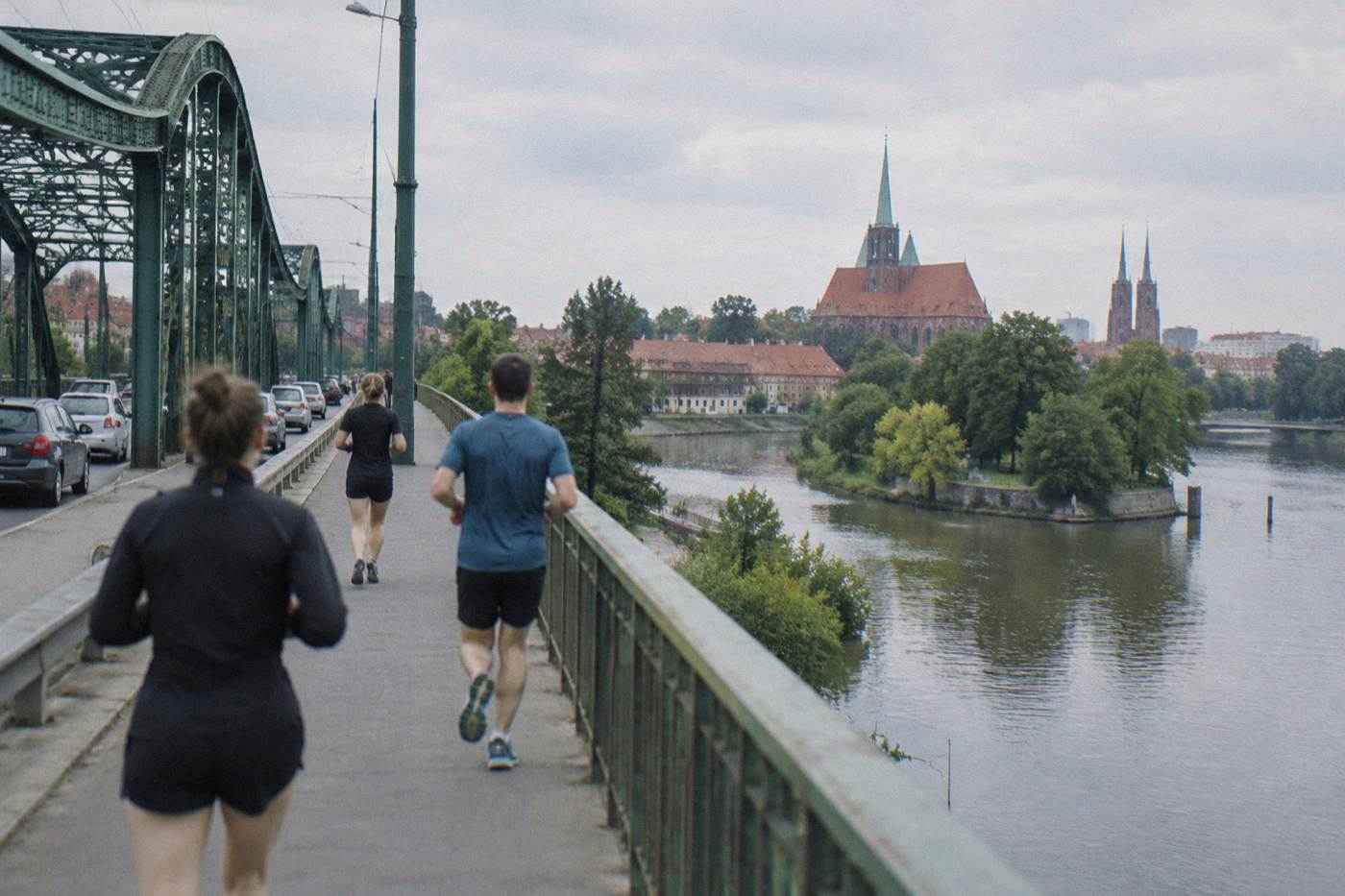
Short answer
The Wroclaw Marathon is the city's annual full-distance road race in Wroclaw, Poland, a river city of 672,601 people on the Odra. Plan around it with mild spring or early-autumn weather, cheap MPK tram fares from 4.60 zl, and recovery-day visits to the Panorama Raclawicka (50 zl adult), the National Museum (20 zl, free Saturdays) and the Zoo (online from 69 zl).
The Wroclaw Marathon is the annual full-distance road race through Wroclaw, the largest city in Lower Silesia (Dolnoslaskie voivodeship), in southwestern Poland. The city that hosts it is home to 672,601 residents as of 31 December 2025, according to GUS, Statistics Poland, and it spreads across the islands and bridges of the Odra river. Race entries, start times and course maps are published by the organizers on their own channels, and this guide deliberately does not repeat or guess at any of them. What this page does instead is plan everything around the race: which month gives you the fairest running weather by official climate normals, what a tram ticket costs, where tired legs should spend the day after, and what the museums, the castle and the zoo charge, every figure traced to an official source.
What Is The Wroclaw Marathon And Where Does It Run?
The Wroclaw Marathon is the annual full-distance road race run through the streets of Wroclaw, the largest city in Lower Silesia in southwestern Poland, a river city of 672,601 residents (GUS, 31 December 2025) built across the islands of the Odra. The full marathon distance is fixed by the sport itself, and this guide covers everything but the race result: travel, weather, transport, food and recovery-day sightseeing.
A marathon is the sport's fixed championship distance wherever it is run, and Wroclaw is a natural host for one. The city is compact, flat by the standards of the region it sits in, and stitched together by bridges over the Odra, which is why so much of any visitor's weekend here ends up involving the river in one way or another. What the race route itself covers changes from edition to edition and is the organizers' announcement to make, not ours to predict.
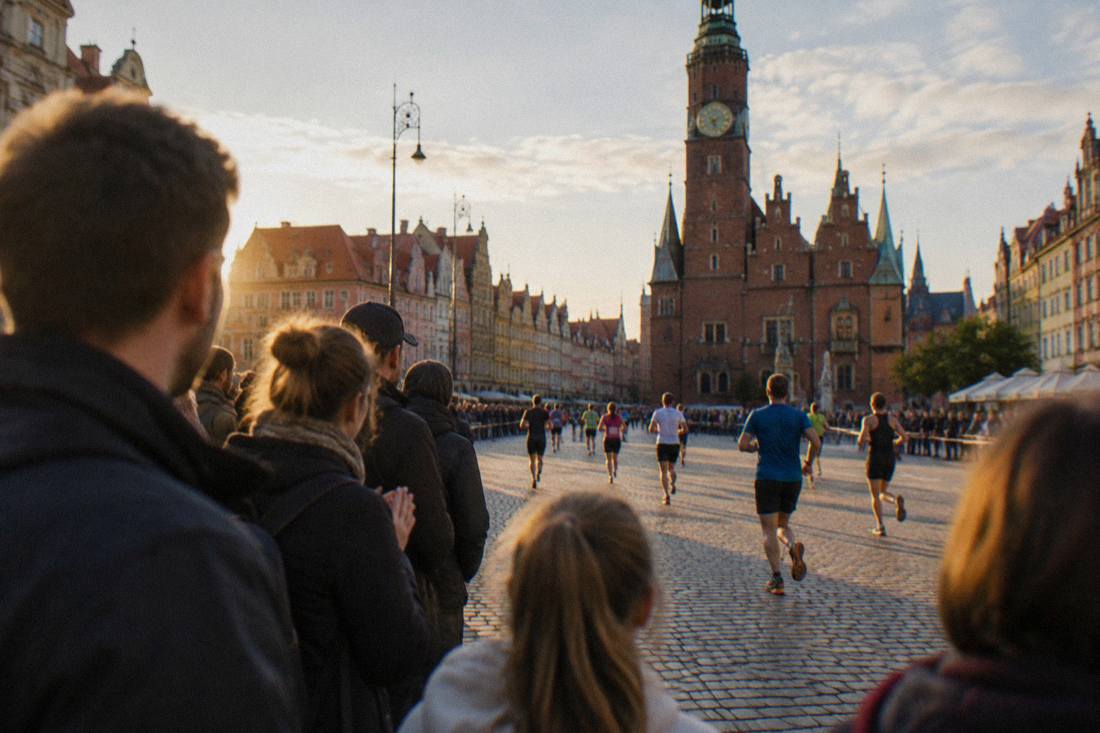
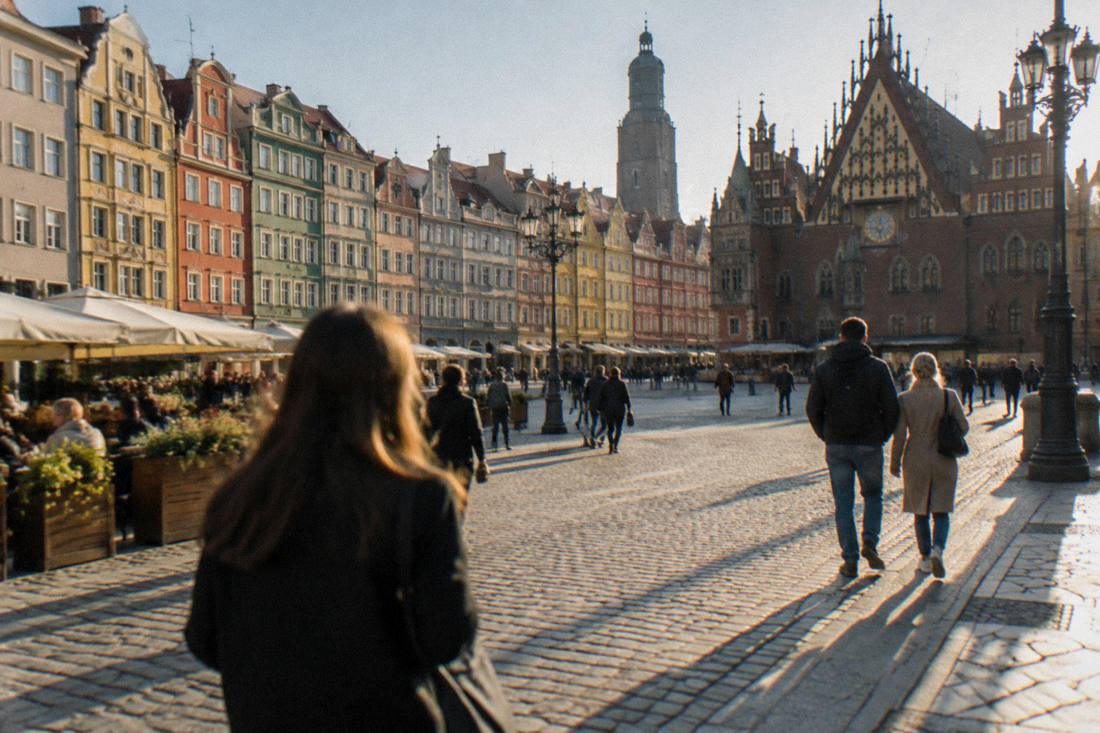
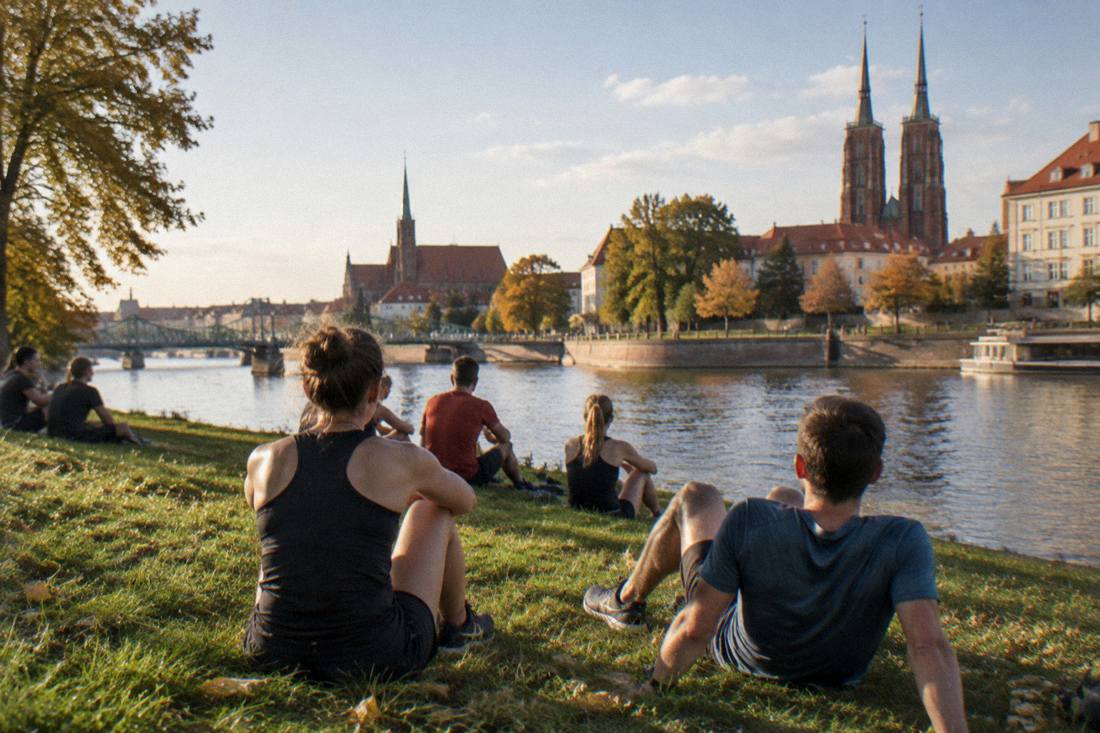
What a first-time visitor should understand is the shape of the city the race runs through. The old town with its market square sits at the center, Ostrow Tumski, the cathedral island, rises just to the north, and the modern city spreads outward across a dozen islands and branches of the Odra. Wroclaw Travel Guide covers each of these districts in depth elsewhere, and the marathon is simply the occasion that fills them with people in running shoes.
When Is The Best Time Of Year For A Wroclaw Race Weekend?
IMGW's 1991-2020 climate normals for the Wroclaw station (12424) put the coldest month at January with a mean of 0.0 C, the warmest at July with a mean of 19.7 C, and the annual mean at 9.7 C. The shoulder months either side of summer, when means sit between roughly 4.3 C and 14.5 C, are the mildest windows for running and watching a race, and no sunshine-hour figure was sourced for this city, so none is claimed here.
The normals matter because they are the official record, not a travel-writer's impression. March averages 4.3 C, April 9.7 C, May 14.3 C, September 14.5 C and October 9.6 C, which makes spring and early autumn the seasons whose averages sit in the range most runners would choose for a full marathon. July, the warmest month at 19.7 C, is also the wettest at 91.4 mm of precipitation in the normals table. April is the driest month at 31.2 mm.
| Month | Mean temp (C) | Precipitation (mm) |
|---|---|---|
| Jan | 0.0 | 28.3 |
| Feb | 1.1 | 25.6 |
| Mar | 4.3 | 35.0 |
| Apr | 9.7 | 31.2 |
| May | 14.3 | 59.6 |
| Jun | 17.7 | 65.4 |
| Jul | 19.7 | 91.4 |
| Aug | 19.3 | 59.5 |
| Sep | 14.5 | 48.4 |
| Oct | 9.6 | 37.6 |
| Nov | 4.8 | 31.4 |
| Dec | 1.1 | 27.9 |
Two caveats keep this table honest. The race date belongs to the organizers, and the month your own race weekend falls in decides which row applies to you, so read the table against the date the event announces rather than against any assumption in this guide. And a climate normal is a 30-year average, not a forecast: a warm-day norm of 14.5 C in September can still hand you a cold, wet Sunday. The month-by-month weather breakdown adds the planning detail this table cannot.
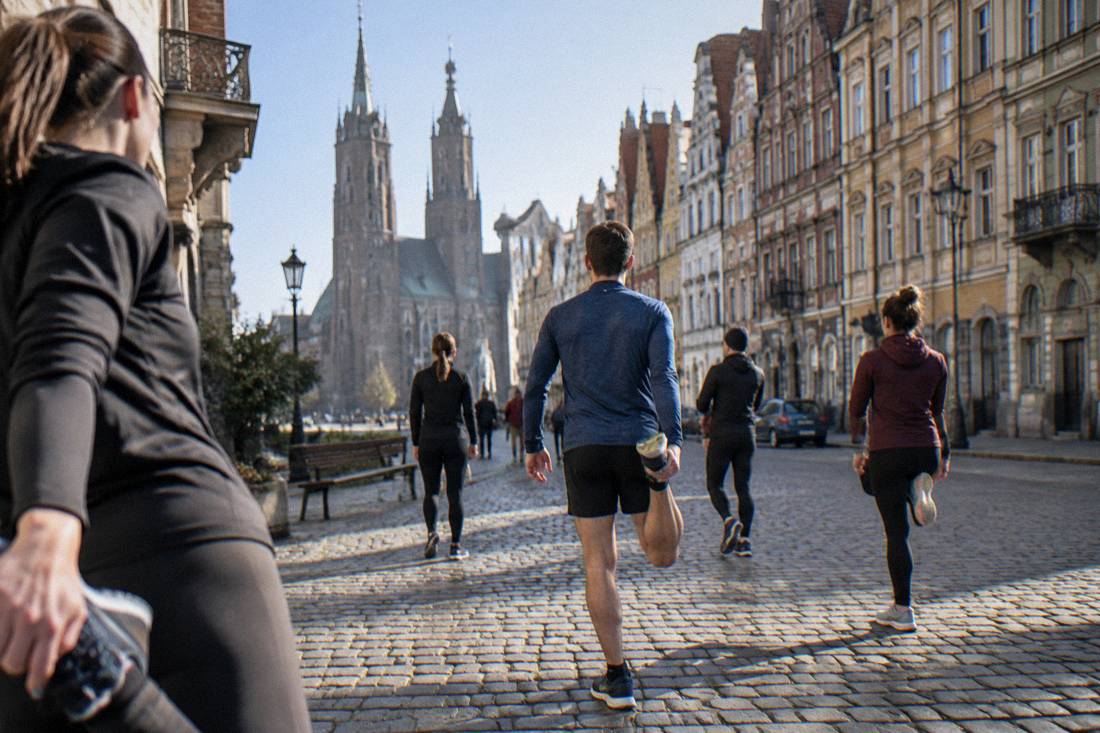
Whatever the race date turns out to be, the days around it deserve at least as much planning as the run itself. The three tours below are the ones this site rates for a marathon weekend, a private old town walk for the day after, a Ksiaz Castle day trip if the legs are willing, and a small-group old town tour for accompanying spectators.
Where Should Tired Legs Go The Day After The Wroclaw Marathon?
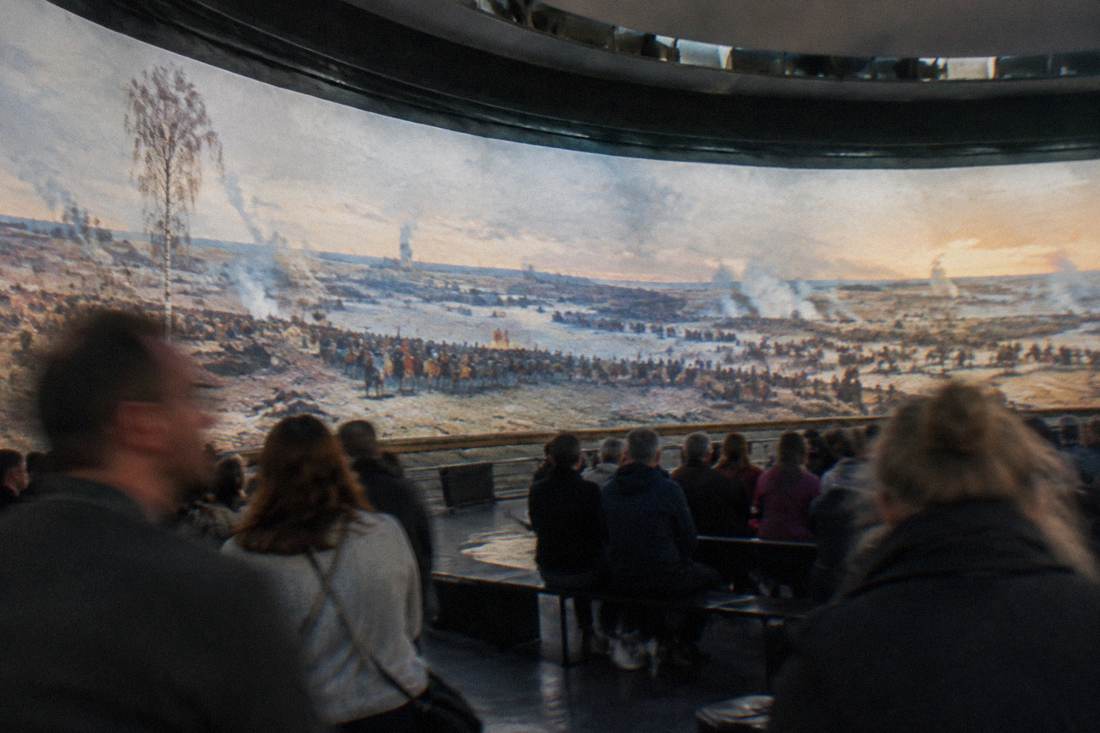
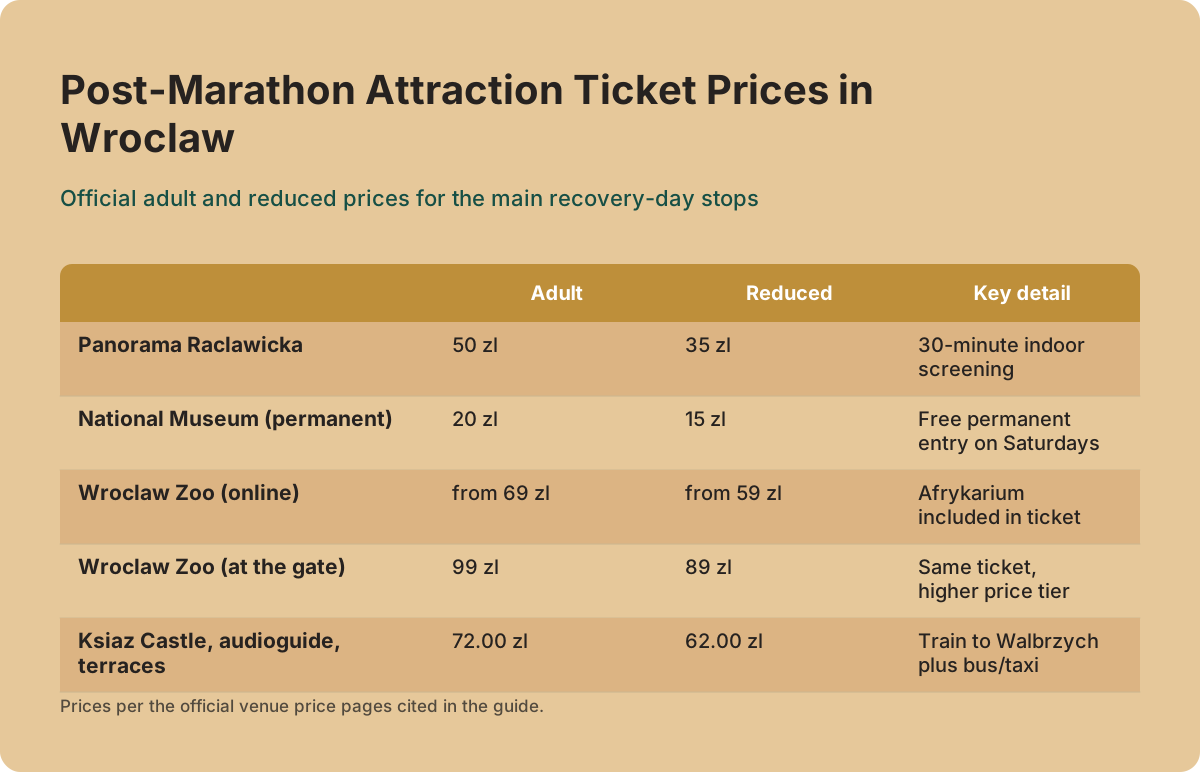
The day after the race, Wroclaw's biggest indoor payoffs are the Panorama Raclawicka at 50 zl adult and 35 zl reduced for its 30-minute screening, the National Museum at 20 zl adult and 15 zl reduced with free entry to permanent exhibitions every Saturday, and the Wroclaw Zoo with adult tickets online from 69 zl and 99 zl at the gate. Each figure comes from the venue's own official price page, not from this site's estimates.
The Panorama Raclawicka is the classic post-race stop for a reason: it is a 30-minute screening, seated, indoors, and one ticket also covers the National Museum's permanent exhibitions, the Ethnographic Museum and the Four Domes Pavilion within three months of the visit date. In winter (1 November to 31 March) it closes on Mondays; in summer (1 April to 31 October) it runs daily 8:30-19:00. The National Museum is closed Mondays year-round and, on its own pricing page, lists a "Museum for a zloty" ticket at 1 zl for students and pupils under 26.
The zoo is the third leg of the recovery triangle. It is open every day of the year including public holidays, April to September from 9:00, and the Afrykarium aquarium is included in the standard ticket, never a separate charge. Buying online rather than at the gate is the one saving the zoo's own price table makes explicit: from 69 zl against 99 zl for an adult.
| Attraction | Adult | Reduced | Key detail |
|---|---|---|---|
| Panorama Raclawicka | 50 zl | 35 zl | 30-minute screening, closed Mondays in winter |
| National Museum (permanent) | 20 zl | 15 zl | Free permanent entry every Saturday |
| Wroclaw Zoo (online) | from 69 zl | from 59 zl | Afrykarium included, no separate ticket |
| Wroclaw Zoo (at the gate) | 99 zl | 89 zl | Same ticket, higher price tier |
For legs that still want distance, the day trip everyone with a full free day considers is Ksiaz Castle, commonly reached by regional train to Walbrzych plus a bus or taxi connection, and priced on the castle's own tariff at 72 zl adult and 62 zl reduced for the castle with audioguide and terraces. The terraces open only from 15 April to 30 September, so a spring race weekend sees them open and an early-spring one may not. The full ticket ladder from the same tariff:
| Ksiaz Castle option | Adult | Reduced |
|---|---|---|
| Castle, audioguide, terraces | 72.00 zl | 62.00 zl |
| Castle, terraces, underground tour | 92.00 zl | 82.00 zl |
| Castle, terraces, stud farm | 79.00 zl | 69.00 zl |
| All Day Ticket (all six elements) | 104.00 zl | 94.00 zl |
| Underground tour alone | 45.00 zl | 39.00 zl |
| Mausoleum alone (1 Apr-15 Oct) | 13.00 zl | 8.00 zl |
| Palm House alone | 27.00 zl | 21.00 zl |
A guided day trip bundles the castle with the UNESCO Church of Peace in Swidnica (adult 18 zl, reduced 15 zl on its own listing), and the operators handle the Walbrzych connection so your legs do not have to.
Not every recovery day wants a castle, though, and the castle run does eat most of a day with travel on either end of it. For visitors who would rather stay in the city and spend the afternoon gently, the small-group option below keeps everything inside the old town, on foot, at a pace a post-race body can actually enjoy.
How Do You Get Around Wroclaw During Marathon Weekend?
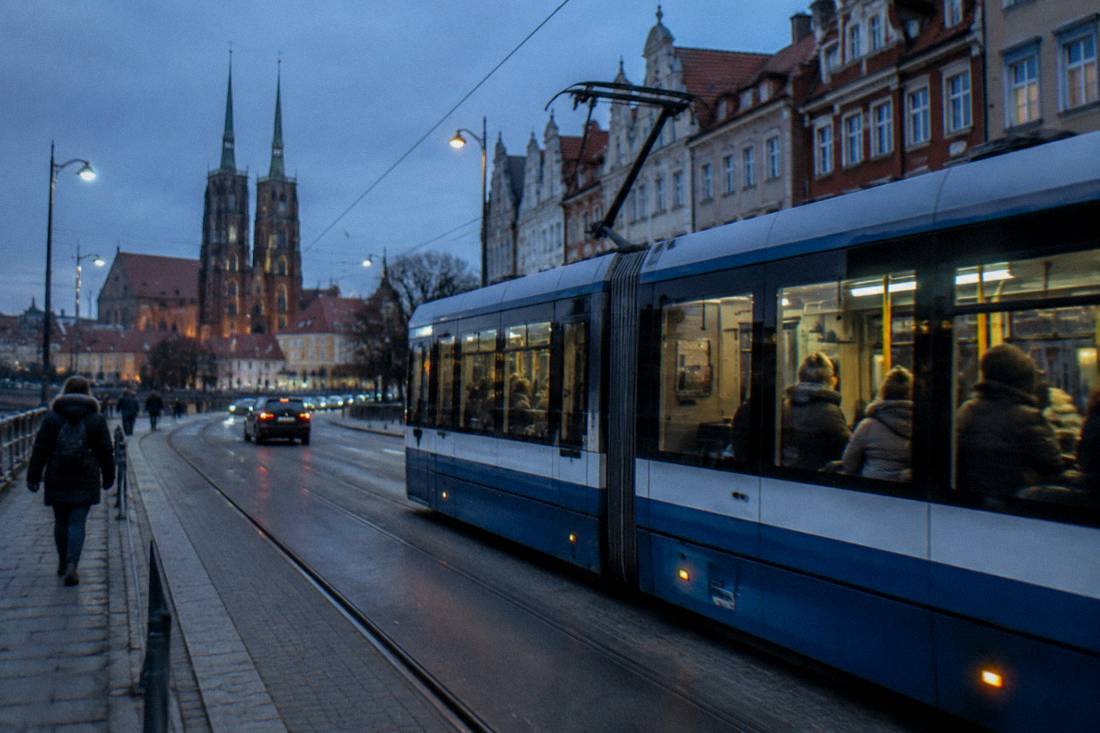
Wroclaw's MPK network sells a 15-minute ticket at 4.60 zl normal and 2.30 zl reduced as its base fare, with a 30-minute ticket at 7.00/3.50 zl and a 24-hour city ticket band around 15.00/7.50 zl above it, per the city's official fare page. Wroclaw Airport, which served 4,473,945 passengers in 2024, is open today after a completed 2025 renovation closure, so flying in for the race is straightforward.
The base fare is the number that matters for a race weekend because most marathon trips are built from short hops: hotel to start line, finish line to lunch, lunch to museum. The 24-hour and multi-day bands on the same official page (26/13, 32/16 and 54/27 zl) reward visitors who ride more, which is most people on a weekend with a race, a museum day and a zoo day stacked together. The full index of guides sits on Wroclaw Travel Guide.
| MPK ticket | Normal | Reduced |
|---|---|---|
| 15-minute | 4.60 zl | 2.30 zl |
| 30-minute | 7.00 zl | 3.50 zl |
| 24-hour | 15.00 zl | 7.50 zl |
| Multi-day band 1 | 26.00 zl | 13.00 zl |
| Multi-day band 2 | 32.00 zl | 16.00 zl |
| Multi-day band 3 | 54.00 zl | 27.00 zl |
One caution belongs here and it is an honest one: race weekends in any city can mean temporary street and tram adjustments along the course, and no such detail is sourced for Wroclaw. Treat the official fare page as reliable and any specific closure claim as unverified, and check locally on the day. The getting around Wroclaw guide carries the fuller transport picture, and the airport guide covers arrival logistics for WRO, which set passenger records in 2026 after its renovation finished ahead of schedule.
Is Wroclaw Or Krakow The Bigger Race City?
Krakow is the bigger city by every official measure: GUS puts Krakow at 816,614 residents against Wroclaw's 672,601 as of 31 December 2025, and Krakow's Rynek Glowny at roughly 4 hectares is larger than Wroclaw's Rynek at roughly 3.64 to 3.79 hectares. Wroclaw never claims the bigger population or the bigger square on this site, and the oft-repeated claim that Wroclaw's Rynek is the second-largest square in Europe was not independently confirmed here.
Why does a marathon guide carry a Krakow comparison? Because the two cities compete for the same race weekends, stag dos, city breaks and running tourists, and search engines are full of the question. The honest answer is that Krakow is larger and has the larger main square, and Wroclaw's case is different: an island-and-bridge river geography, a UNESCO-listed Centennial Hall (inscribed in 2006, architect Max Berg, built 1911-1913, capacity up to 10,000), and a compactness that suits a walking weekend.
| Measure | Wroclaw | Krakow |
|---|---|---|
| Population, 31 Dec 2025 (GUS) | 672,601 | 816,614 |
| Main market square | ~3.64-3.79 ha | ~4 ha |
| Relative size | Smaller city | Larger city |
The full head-to-head, including food, nightlife and day-trip range, lives in the Wroclaw vs Krakow comparison. For runners the practical takeaway is simple: neither city's size has any bearing on your finishing time, but Wroclaw's smaller footprint means your hotel, the start line and the post-race pierogi are more likely to sit within one 15-minute tram ticket of each other. The vs Warsaw and vs Gdansk pages cover the same question against Poland's other big-city weekend rivals.
How Much Does A Wroclaw Marathon Weekend Cost Beyond The Entry?
Beyond the entry fee (which the organizers publish and this site does not repeat), a Wroclaw weekend's costs are dominated by attractions priced 18 to 104 zl, transit at 4.60 zl per short hop, and food, with every figure below taken from an official tariff: Church of Peace in Swidnica 18 zl, National Museum 20 zl, Panorama Raclawicka 50 zl, the Zoo from 69 zl online and Ksiaz Castle's All Day Ticket 104 zl. Poland uses the zloty, not the euro, though it is in the EU and Schengen.
Stack the week honestly and the numbers stay modest. A visitor who does the Panorama, the National Museum and the zoo, rides a handful of trams and adds one Ksiaz day trip is looking at roughly 200 zl of admissions before a single restaurant bill, using only the official prices in the tables above. Race entry itself, travel to Wroclaw and accommodation are the three items no official source prices, and the Wroclaw trip cost guide works through them in detail.
| Opening hours (summer season) | Days | Hours |
|---|---|---|
| Panorama Raclawicka (1 Apr-31 Oct) | Daily | 8:30-19:00 |
| National Museum (1 Apr-30 Sep) | Tue-Fri | 10:00-17:00 |
| National Museum (1 Apr-30 Sep) | Sat-Sun | 10:30-18:00 |
| Wroclaw Zoo (Apr-Sep) | Mon-Thu | 9:00-18:00 |
| Wroclaw Zoo (Apr-Sep) | Fri-Sun and holidays | 9:00-19:00 |
| Ksiaz Castle (Apr-Sep) | Mon-Fri | 9:00-18:00 |
| Ksiaz Castle (Apr-Sep) | Sat-Sun | 9:00-19:00 |
One more cost fact saves money outright: the National Museum's permanent exhibitions are free every Saturday, per the museum's own practical-information page. If your race weekend contains a Saturday you were going to spend anyway, that is 20 zl per adult back in your pocket.
What Else Can You Do In Wroclaw When You Are Not Running?
The non-running hours in Wroclaw fill quickly: a private or small-group old town walk on the first evening, the market square and Ostrow Tumski between race events, dwarf-hunting around the city center, and free, tip-based walks led on the GuruWalk platform by guides including Walkative, whose Old Town Wroclaw tour is free and tip-based with no printed price. The city's 2016 European Capital of Culture year and the New Horizons film festival are the sourced cultural anchors, never an unearned national superlative.
Be careful with the superlatives you may have read elsewhere. Wroclaw is not "the most vegan city in Poland"; no current ranking supports that claim, and Warsaw is the internationally noted vegan hub. It is not Poland's arts-film city either, that is Lodz, the UNESCO City of Film and home of the Polish National Film School. What Wroclaw can claim, on sourced ground, is the Nadodrze district's street-art and creative-quarter reputation, the New Horizons film festival and its 2016 European Capital of Culture year.
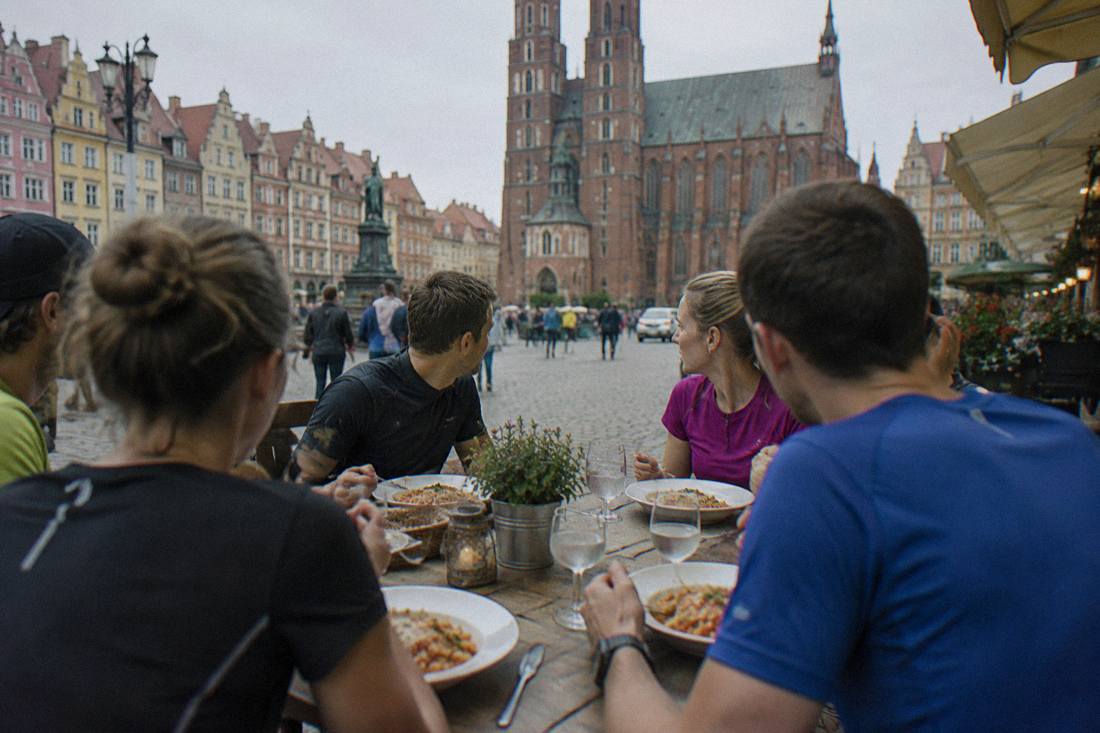
Food is where race weekends are won. Carb-loading the night before is a Wroclaw strength, and the best restaurants in Wroclaw run from pierogi houses to modern Silesian kitchens, with the street food, milk bars and cafe guides covering the cheap seats. After the finish, the craft beer guide is the celebratory option and the events calendar tells you what else the city has on that same weekend, because a marathon city rarely hosts only a marathon.
Safety questions come up less for Wroclaw than for most cities of its size, and the honest framing is the Wroclaw safety guide: a large student city, well-trafficked central streets, ordinary city precautions. The same goes for solo travelers and couples, who will find the solo travel and couples pages more useful than any blanket reassurance here.
For the day-after wander itself, a private old town walk is the gentlest way to put 10,000 recovery steps onto legs that earned them, and it is this article's featured tour:
And for the spectator in your party, who has watched you suffer through the full distance and deserves something in return, the three options below are the site's standing recommendations for a Wroclaw weekend.
Common Questions About The Wroclaw Marathon
How far is a full marathon in kilometres?
A full marathon is the sport's fixed championship distance, the same in Wroclaw as everywhere else in the world. The Wroclaw Marathon is the city's annual road race at that distance.
Is Wroclaw bigger than Krakow?
No. GUS data for 31 December 2025 puts Krakow at 816,614 residents against Wroclaw's 672,601, and Krakow's main market square, at roughly 4 hectares, is larger than Wroclaw's Rynek at roughly 3.64-3.79 hectares.
What currency does Wroclaw use?
Poland uses the zloty (PLN, "zl"), not the euro, though Poland is in the EU and the Schengen area. Attraction and transit prices in this guide are in zloty, from official tariffs.
Does a Panorama Raclawicka ticket cover anything else?
Yes. One Panorama ticket, 50 zl adult, also covers the National Museum's permanent exhibitions, the Ethnographic Museum and the Four Domes Pavilion within three months of the visit date, per the museum's own information page.
Is the Afrykarium a separate ticket at Wroclaw Zoo?
No. The zoo's own price page states the standard ticket and annual card also authorize visiting the Afrykarium, so no separate charge applies.
Is Wroclaw Airport closed?
No. Wroclaw Airport is open, having served 4,473,945 passengers in 2024, and a temporary full closure for a runway and operational-area renovation ran only from 26 October to 4 December 2025, after which the work finished ahead of schedule in September 2026 and 2026 passenger records were set.
Whether you run the full distance or stand at the barrier with a coffee while 672,601 people's worth of city cheers past, the Wroclaw Marathon weekend is best planned the way this guide has planned it: month against the climate normals, tram ticket against the official fare table, and every museum, castle and zoo price checked against the tariff that actually charges it.