Wroclaw Market Days And Local Markets
Wroclaw, the largest city in Lower Silesia in southwestern Poland, runs its market life around one of the country's great historic squares, with flea markets, seasonal fairs, and food stalls radiating out from it across the Odra river city.
Short answer
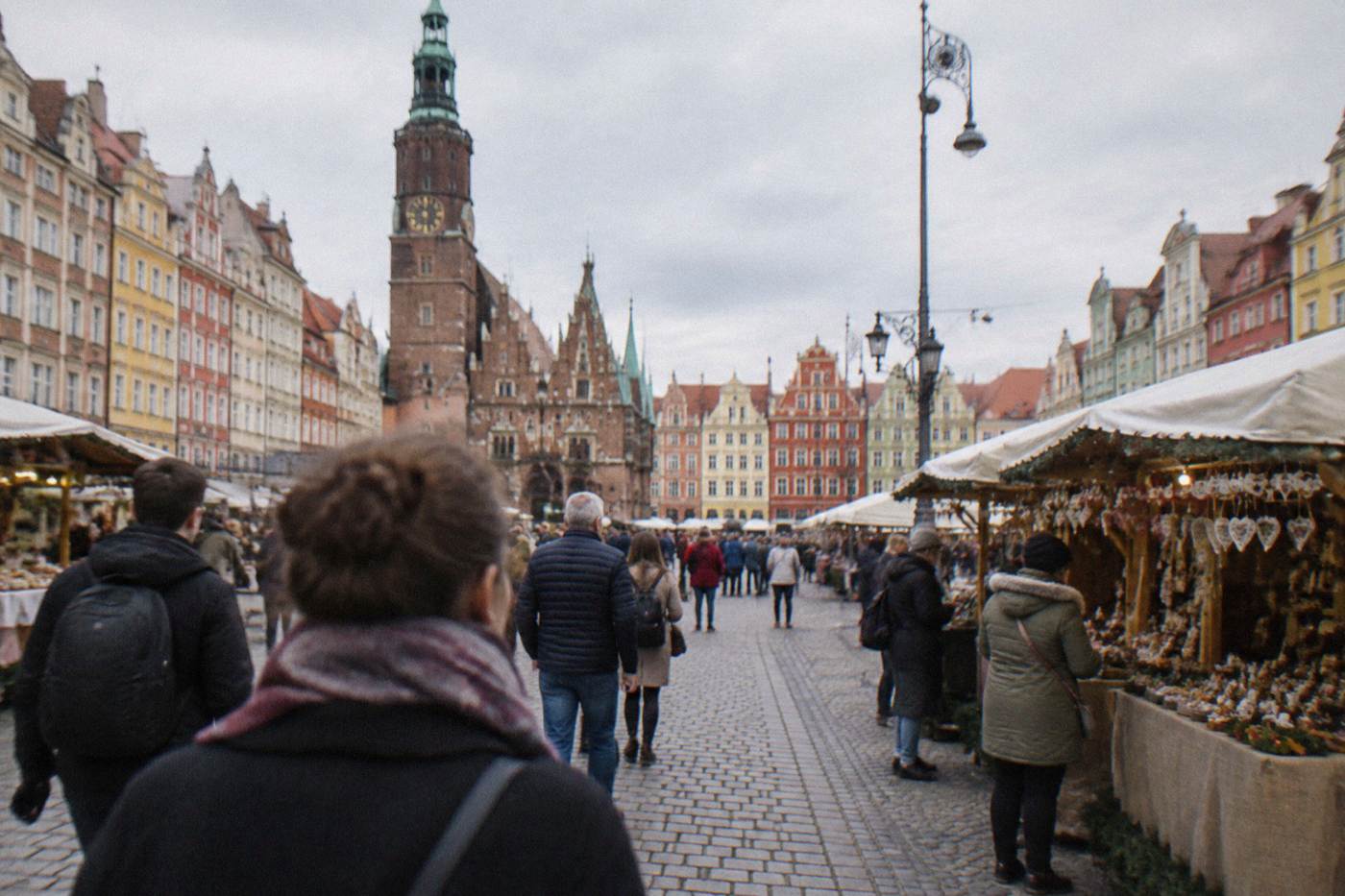
Wroclaw's market life centers on the Rynek, the city's historic Market Square, with flea markets, seasonal fairs, and food markets spread across the city. This guide covers where to look, what things cost at verified prices, and how to build market days into a wider trip.
Wroclaw, the largest city in Lower Silesia (Dolnoslaskie voivodeship) in southwestern Poland, is a city whose public life still happens in and around its markets. The Rynek, the historic Market Square at the heart of the Old Town, is the anchor: a vast paved rectangle framed by merchant houses, ringed by the city's commercial history, and still the stage for fairs, seasonal markets, and everyday browsing. From there the market habit spreads outward, to flea markets and antique stalls, to food streets and milk bars, and out into Lower Silesia, where castle and church-town visits pair naturally with craft and souvenir hunting. This guide, from the Wroclaw Travel Guide editorial desk, walks through all of it, with the verified prices and transport fares that let you plan a market day on a real budget.
What And Where Are Wroclaw Market Days And Local Markets?
Wroclaw's market life concentrates on the Rynek, the historic Market Square in the Old Town, and spreads out to flea markets, food streets, and seasonal fairs across the city, with craft-oriented day trips into Lower Silesia beyond it. The Rynek itself is the permanent centerpiece: a market square that has hosted trade for centuries and still fills with fairs and stalls through the year.
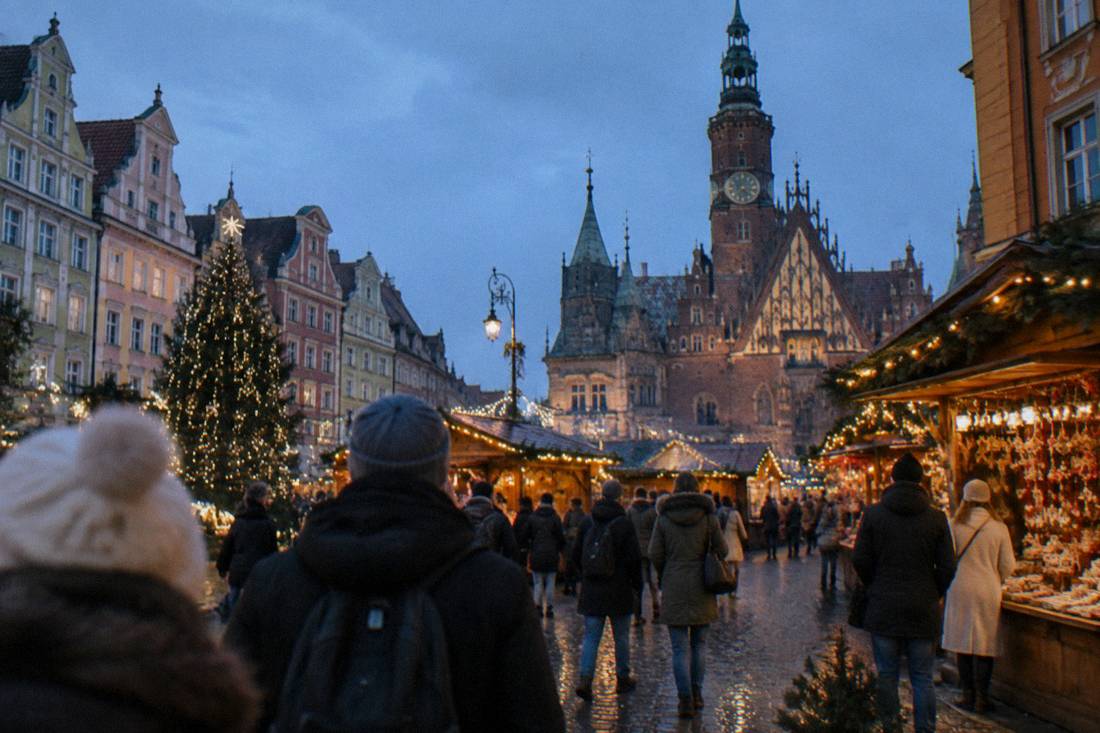
The square is the natural first stop on any market-themed visit, and our Market Square attraction guide covers it in depth. Around it, the market habit continues on streets and islands: the Old Town lanes that hold food stalls and small vendors, the flea-market scene covered in our dedicated Wroclaw flea markets guide, and the seasonal events that transform the square itself, most famously at Christmas, which we treat separately in the Wroclaw Christmas market guide.
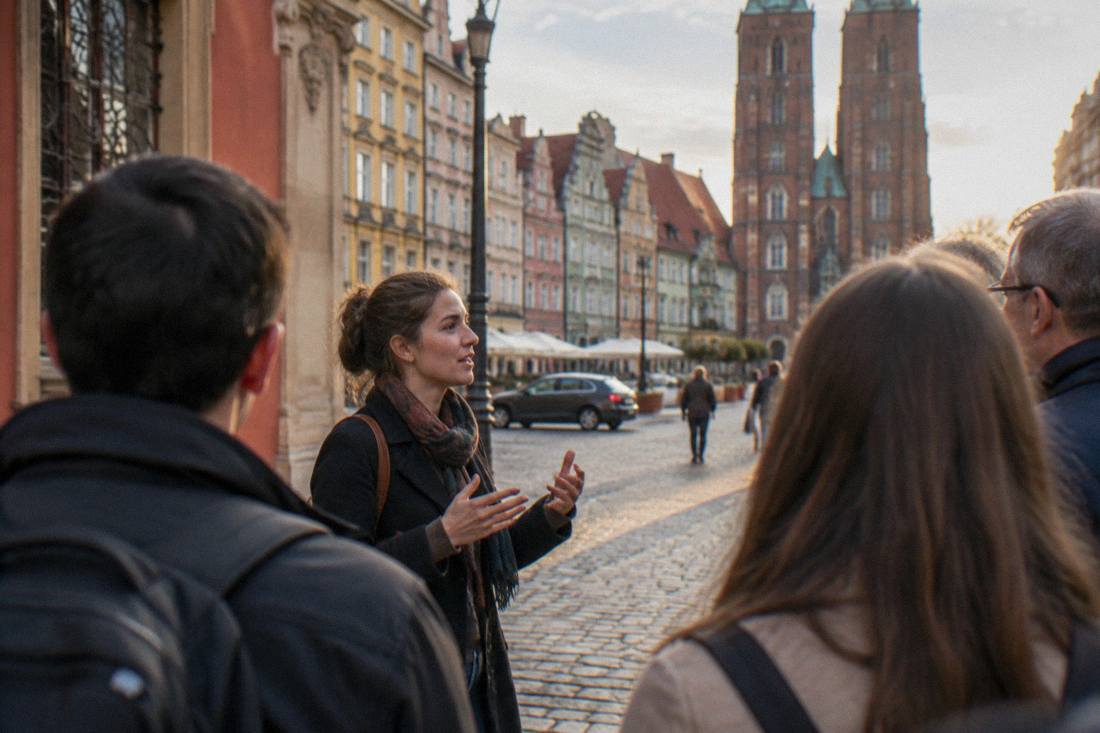
What makes Wroclaw work for market browsing is scale. This is a city of 672,601 people (31 Dec 2025, GUS/Statistics Poland), compact enough that the market square, the Odra islands, and the food streets sit within an easy walk of each other, yet large enough that each market scene has its own character. A local guide can compress that orientation into a single morning, which is why a city tour is the single most useful first purchase for a market-focused trip.
The guided city tour above walks the core with a local, and the Check availability link beside it goes to the operator's live listing for current dates. For a free alternative, GuruWalk runs a genuinely tip-based option in the same territory: "Old Town Wroclaw by Walkative!" is a free, tip-based walk listed on GuruWalk, and naming the platform and the guide company is the honest way to describe it, since it is not our product. You can see it via the walk's own listing rather than through any price claim here, because a free walk carries no price to print.
For timing your square time well, the crowds and the light change through the day, and our best time of day for the Market Square guide breaks that down for photographers and browsers alike.
Where To Find Flea Markets And Antique Stalls In Wroclaw?
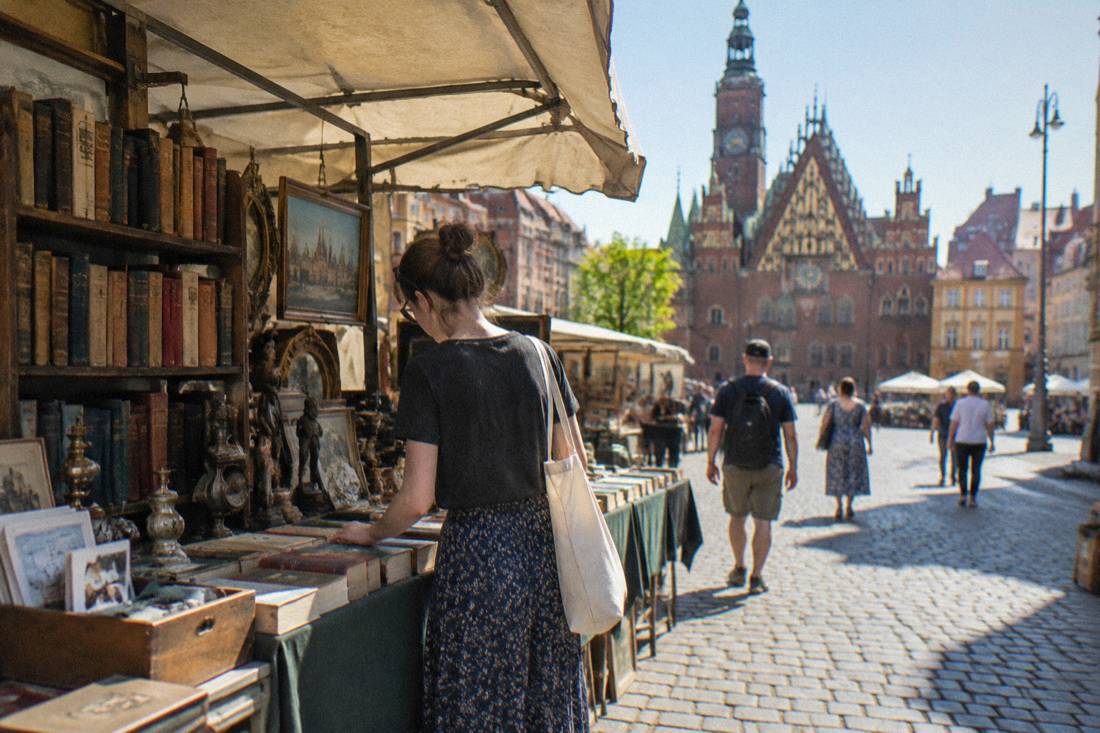
Wroclaw's flea markets and antique stalls are covered in depth by our dedicated flea-market guide, because the scene shifts with venue and season rather than sitting on one fixed square, and the honest planning advice is to treat locations and schedules as changeable and check the current details before you commit a morning. Schedules shift with the season, venues move, and no single stall row runs year-round.
That caution is deliberate. This site does not publish a market-running claim it cannot source, and flea-market logistics change often enough that a frozen timetable in an article would mislead more than it helps. What stays stable is the shape of the scene: a flea and antique tradition oriented around bric-a-brac, books, vinyl, mid-century furniture, and postcard and militaria stalls, the kind of browsing culture that rewards an early start and cash in small zloty notes. Poland uses the zloty (PLN), not the euro, so arrive with cash rather than assuming card acceptance at a stall table.
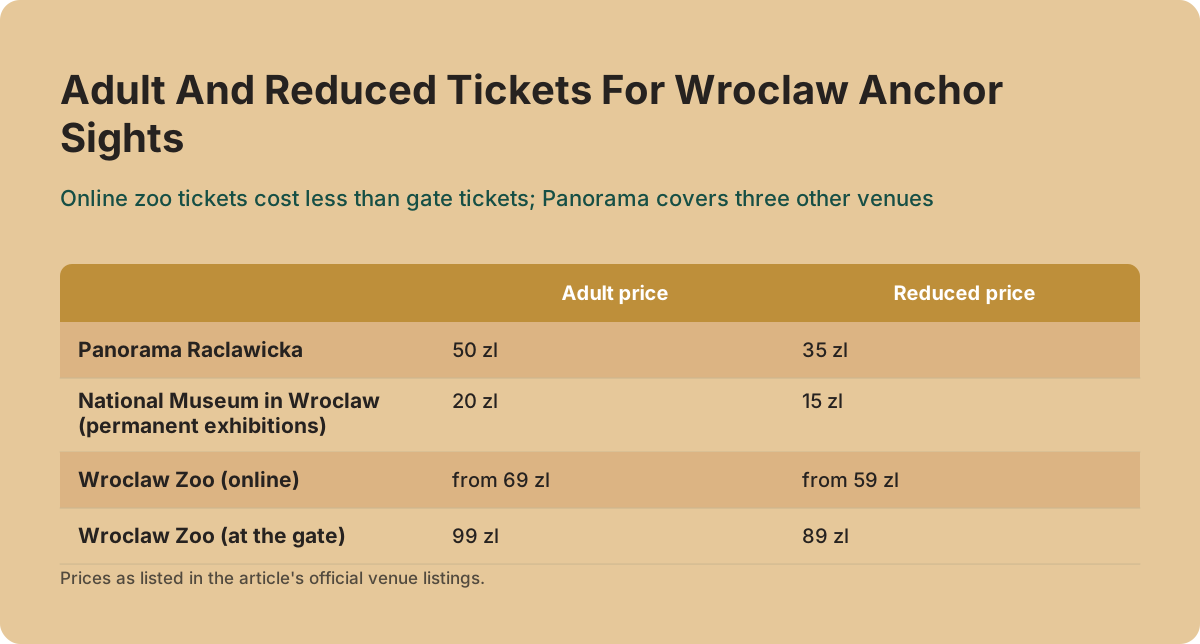
The browsing pairs naturally with the ticketed anchors around the Old Town, and those prices are verified against official sources, so you can budget a mixed day of free browsing and paid visits:
| Ticketed anchor near the market scene | Adult price | Reduced price | Notes from the official listing |
|---|---|---|---|
| Panorama Raclawicka | 50 zl | 35 zl | 30-minute screening; ticket also covers three other museum venues within 3 months |
| National Museum in Wroclaw (permanent exhibitions) | 20 zl | 15 zl | Free entry to permanent exhibitions every Saturday |
| Wroclaw Zoo (online) | from 69 zl | from 59 zl | Afrykarium included in the standard ticket, no separate charge |
| Wroclaw Zoo (at the gate) | 99 zl | 89 zl | Buying online is materially cheaper than the gate price |
The zoo row deserves a second look. The gap between the online price (from 69 zl) and the gate price (99 zl) is large enough that arriving without a pre-bought ticket is one of the few genuinely costly mistakes in Wroclaw planning, and the Afrykarium, the zoo's oceanic hall, is included in the standard ticket rather than sold as an add-on. The Panorama's bundled coverage is the other quiet win: one 50 zl adult ticket also covers the National Museum's permanent exhibitions, the Ethnographic Museum, and the Four Domes Pavilion within three months of the visit date, which turns a single morning at the rotunda into a multi-venue museum pass.
Those three picks bracket the market day from two directions: a local-led city tour for orientation inside Wroclaw, and two Lower Silesia day trips for the craft-and-heritage browsing that sits beyond the city limits. Every figure on those cards renders from verified listing data, so what you see there is what the operator publishes, not our estimate.
What Changes On The Market Square During Seasonal And Christmas Markets?
Seasonal fairs take over the Rynek and its surrounding lanes at set points of the year, most visibly the Christmas market period, when the square fills with wooden stalls, food vendors, and craft sellers, and the whole tone of the Old Town shifts from everyday browsing to festival mode. The Christmas season is the largest and most reliable of these transformations.
We keep the detailed treatment on the dedicated pages: the Wroclaw Christmas market guide covers stalls, food, and planning, and if you are weighing Wroclaw against Krakow for a Christmas trip, our head-to-head answer on which Christmas market is better, Krakow or Wroclaw compares the two cities directly. One size note worth carrying into any comparison: Krakow's Rynek Glowny is larger than Wroclaw's, at roughly 4 hectares against roughly 3.64 to 3.79 hectares, and Krakow is also the larger city, 816,614 residents against Wroclaw's 672,601 (GUS, 31 Dec 2025). Any claim that Wroclaw's square is Europe's or Poland's second-largest should be treated with suspicion; we do not repeat it here because it was not confirmed against a primary source.
Christmas aside, the seasonal rhythm matters for timing. IMGW's 1991-2020 climate normals for the Wroclaw station show January as the coldest month at a mean of 0.0C and July as the warmest at 19.7C, with an annual mean of 9.7C. Winter market browsing in Wroclaw is real but cold; summer fairs run warm but sit in the wettest stretch of the year, with July the wettest month at 91.4 mm of precipitation in the normals table. The Wroclaw weather by month guide carries the full breakdown for planning around it.
Because seasonal sections draw crowds, a guided orientation saves time on the days around them, and this mid-trip box is the natural place to put it:
The button leads to the operator's live listing, where current dates and availability sit. Cancellation terms and any pay-later options are shown on the listing itself, which is where they should be checked rather than promised here.
Beyond Christmas, the annual calendar brings the market square to life for cultural events as well as commerce, and Wroclaw's standing as a 2016 European Capital of Culture still shapes that street-level program. Film lovers should know that Wroclaw hosts the New Horizons film festival, a genuine and specific claim, though it is Lodz, not Wroclaw, that is Poland's recognized film city as a UNESCO City of Film.
What Does Local Food Cost Around Wroclaw Markets?
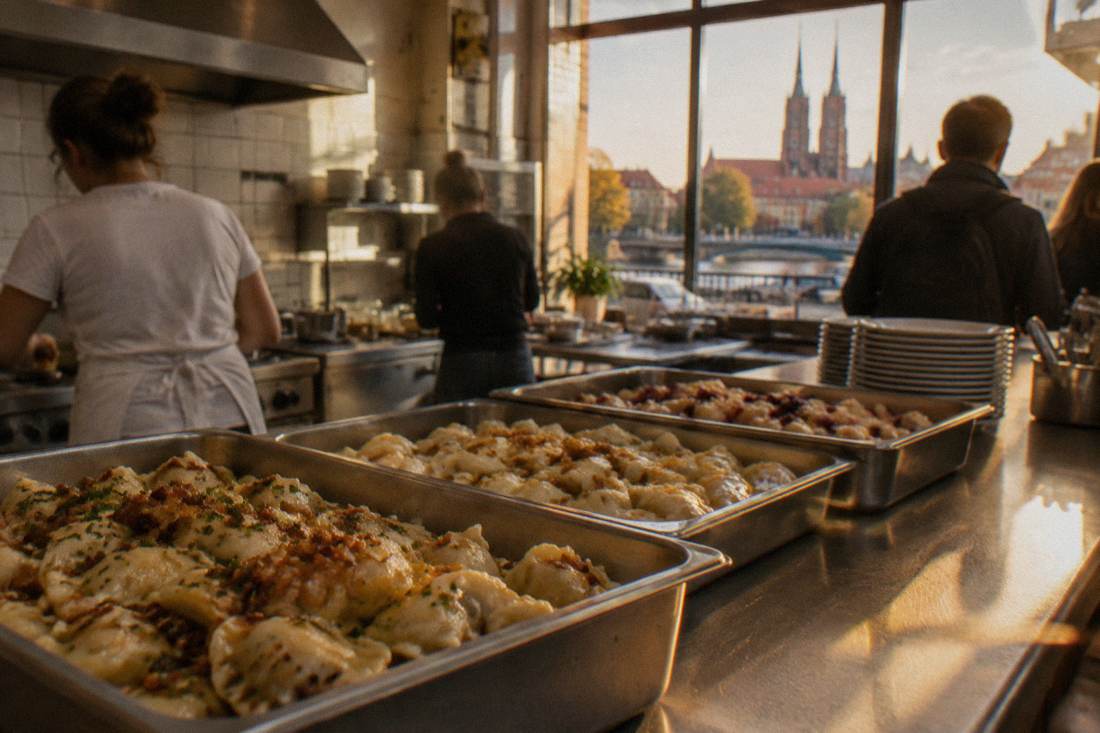
Eating around Wroclaw's markets is a zloty affair, and the honest way to budget it is through the city's cheap-eating institutions, milk bars and pierogi kitchens, rather than through invented stall-price averages, because no sourced per-stall price list exists and any band we printed would be a guess. What can be stated is the structure: milk-bar and dumpling culture keeps full meals in the low zloty range.
Our milk bars guide explains the institution: canteen-style kitchens with a short menu of soups, dumplings, and cutlets, historically subsidised and still the cheapest full meal in the city. The pierogi in Wroclaw guide covers the dumpling side of the same tradition, and the Wroclaw street food guide covers the market-adjacent snacking that has grown up around the Old Town and the student districts. For sitting-down evenings, the best restaurants in Wroclaw guide ranges well beyond market food.
A caution on food claims, in the same spirit as the flea-market caution above: this site does not call Wroclaw Poland's most vegan or vegetarian city, because no current ranking supports it. Older per-capita data favored Poznan and Krakow, and Warsaw is the internationally noted vegan hub. Wroclaw's vegetarian scene is solid and compact, and our vegan and vegetarian guide covers it on that honest footing.
Walking the food streets and the market lanes at a guide's pace is the cheapest way to eat well on a first visit, and the small-group Old Town walk below is the natural pick for a market-food-and-sightseeing morning:
The card's figures render from the listing's own verified data, and the linked page carries current dates and availability. A two-and-a-half-hour walking format suits market browsing better than anything motorized, because the whole point of a market street is stopping.
How Many Days Do You Need For Markets Plus The Main Sights?
Two days is the realistic minimum for a market-focused Wroclaw trip that also touches the headline sights, and three days lets you add the Odra islands, the zoo and Afrykarium, and one Lower Silesia day trip without rushing. The market square itself needs only hours, but flea markets, food streets, and day trips each claim a half-day or more.
Our itinerary pages carry the day-by-day detail: two days in Wroclaw and three days in Wroclaw, plus the direct answer to how many days in Wroclaw is enough. For travelers with children, the Wroclaw with kids itinerary folds the zoo and the dwarf hunt into the plan, and the dwarf hunt deserves its market-day cameo because the bronze dwarfs scattered across the city are themselves a souvenir hunt with no ticket at all.
The dwarf hunt has a guided version too, and for families splitting a day between the square and the zoo it works as a bookend:
An e-car format covers more dwarf territory than tired legs will, and the card shows the listing's own price and rating data. The free end of the same spectrum is also real: GuruWalk lists "Wroclaw Through Ages: Old Town & Cathedral Island Walking Tour", a free, tip-based walk rated highly by its users, and again the honest framing is that GuruWalk is the platform and the price is whatever you tip, because that is what a free walk is.
For anyone extending the trip, the classic pairing questions have their own pages: Krakow from Wroclaw, Prague from Wroclaw, and the Wroclaw to Krakow train guide. On rail fares and journey times for those routes, we state only that PKP Intercity operates them and that fares and times vary by date and must be checked live at intercity.pl, because no stable public figure has been sourced.
When Is The Best Season For Market Browsing In Wroclaw?
Late spring through early autumn is the comfortable window for open-air market browsing in Wroclaw, with May and June offering 14.3C and 17.7C mean temperatures before the July peak of 19.7C, while December's 1.1C mean defines the cold-weather Christmas market season that many visitors deliberately choose anyway. There is no bad month, only a trade-off between warmth and festivity.
The table below is the IMGW 1991-2020 climate normals for the Wroclaw station (station code 12424), the official Polish meteorological source, and it is the same data that should anchor any "when to go" decision:
| Month | Mean temperature (C) | Precipitation (mm) |
|---|---|---|
| Jan | 0.0 | 28.3 |
| Feb | 1.1 | 25.6 |
| Mar | 4.3 | 35.0 |
| Apr | 9.7 | 31.2 |
| May | 14.3 | 59.6 |
| Jun | 17.7 | 65.4 |
| Jul | 19.7 | 91.4 |
| Aug | 19.3 | 59.5 |
| Sep | 14.5 | 48.4 |
| Oct | 9.6 | 37.6 |
| Nov | 4.8 | 31.4 |
| Dec | 1.1 | 27.9 |
Read the table before generalizing. July is the warmest month but also the wettest at 91.4 mm; April is the driest at 31.2 mm but still only 9.7C on average; and the difference between a July stall crawl and a January one is 19.7 degrees. For seasonal strategy, the best time to visit Wroclaw guide unpacks the trade-offs, and the Wroclaw in winter guide covers the cold-weather case, Christmas market included.
How Do You Get Around Wroclaw Between Markets?
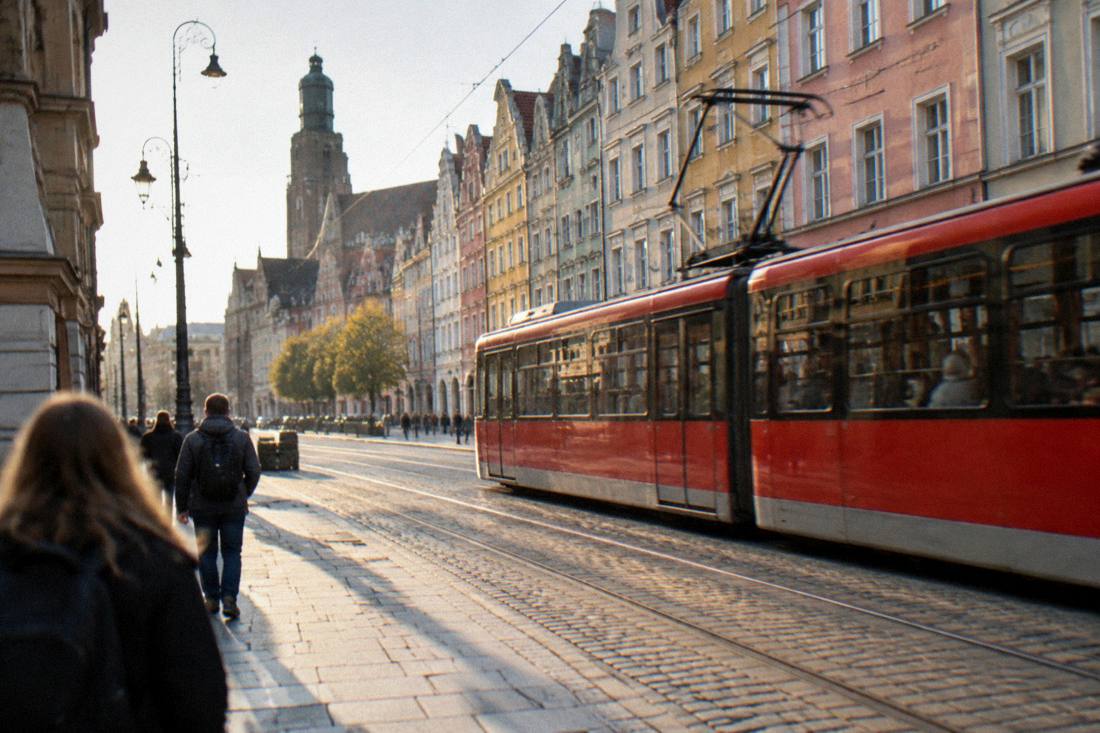
Wroclaw's markets sit close enough to walk between in the core, and MPK's city transport fills the gaps for 4.60 zl on a 15-minute normal ticket (2.30 zl reduced), with 30-minute tickets at 7.00/3.50 zl and 24-hour and multi-day bands above that, per the city's official fare page. The base short-hop fare is the one figure to remember.
The full tier structure from the official price guide looks like this:
| MPK ticket tier | Normal (zl) | Reduced (zl) |
|---|---|---|
| 15-minute | 4.60 | 2.30 |
| 30-minute | 7.00 | 3.50 |
| 24-hour band | approx. 15.00 | approx. 7.50 |
| Multi-day band | 26.00 | 13.00 |
| Multi-day band | 32.00 | 16.00 |
| Multi-day band | 54.00 | 27.00 |
The official page lists tiers by duration rather than as one flat fare, so treat the multi-day rows as the published bands and check the duration labels on the city portal when you buy. Our getting around Wroclaw guide covers trams, tickets, and walking distances in full, the Wroclaw trip cost guide builds them into a whole-trip budget, and anyone driving in should read Wroclaw with a car and parking before assuming square-side parking exists. Cyclists get a live city-bike map on this site's homepage, fed by the Nextbike city network, and the Odra river's current levels appear there too, both as live feeds rather than numbers frozen into prose.
For most visitors the honest answer is simpler than the table suggests: the market square, the flea-market territory, and the food streets all sit inside the Old Town orbit, and a day of market browsing in central Wroclaw is mostly a walking day.
That second appearance of the local-led city tour is deliberate, because orientation is the one purchase that pays off across every market day that follows it.
What Craft And Heritage Sites Lie Beyond Wroclaw's Markets?
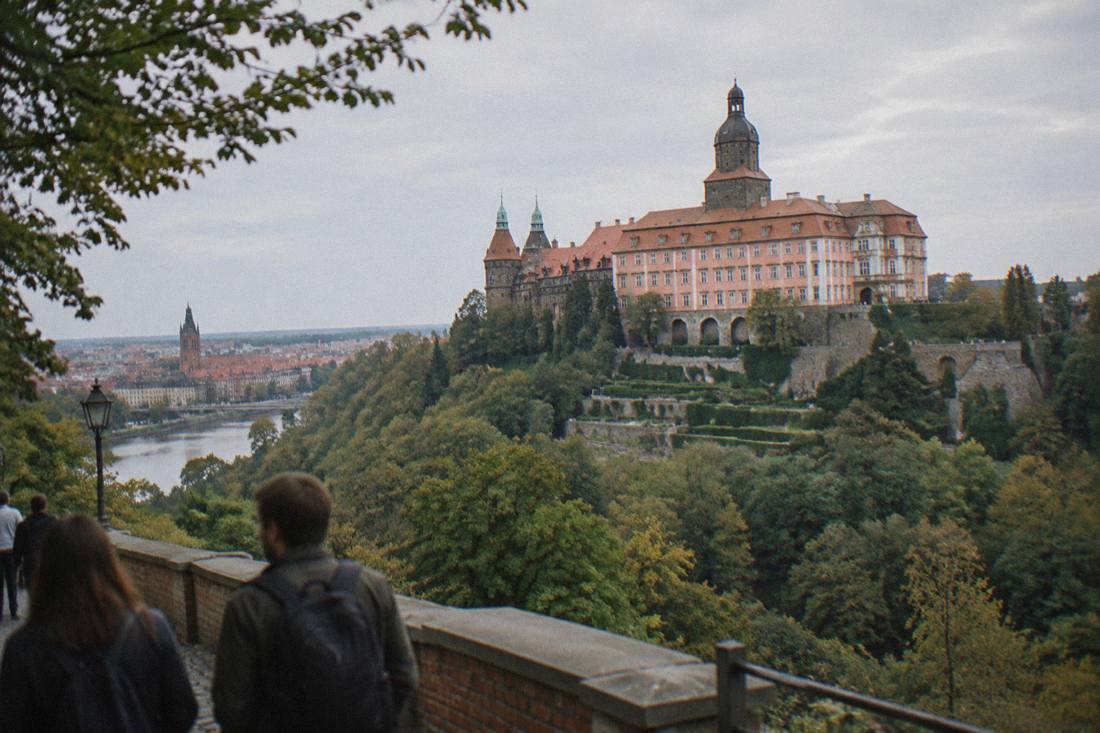
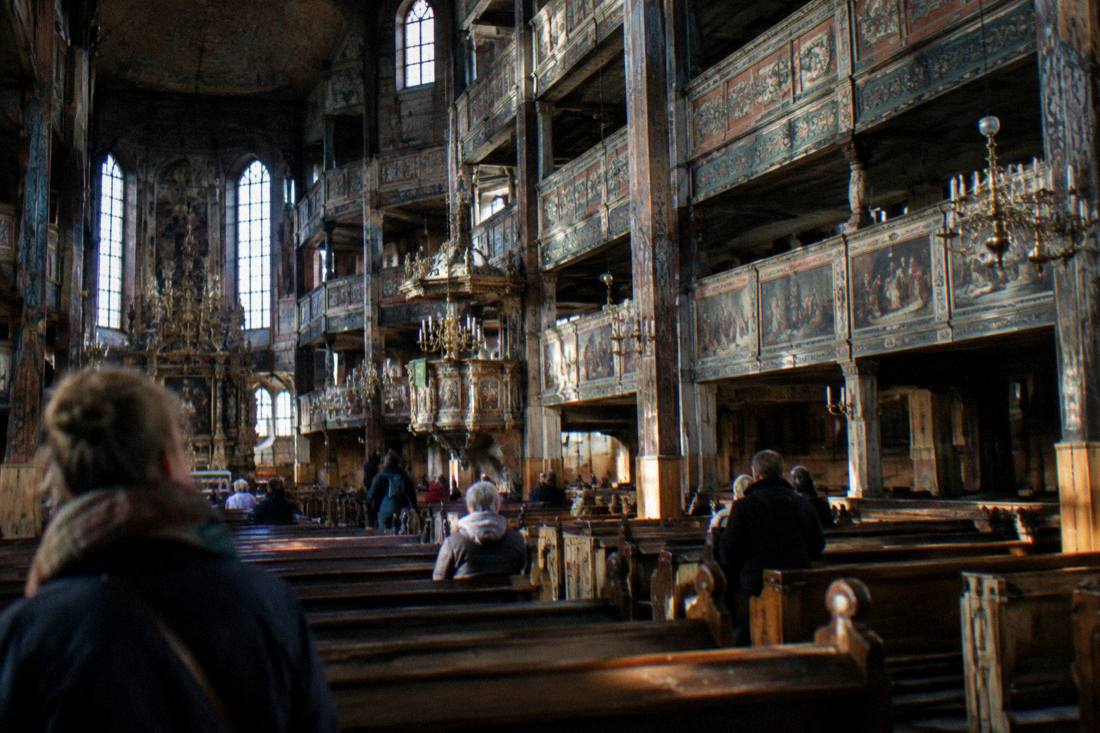
Lower Silesia, the region around Wroclaw, holds the craft-and-heritage day trips that market browsers tend to love most: Ksiaz Castle, Poland's enormous hilltop residence owned by the Walbrzych municipality, and the UNESCO-listed timber Churches of Peace in Swidnica and Jawor, whose 18 zl adult ticket makes them one of the region's cheapest headline sights. Both are standard day trips from Wroclaw.
The Church of Peace in Swidnica's own price table gives the full structure:
| Church of Peace in Swidnica ticket | Price (zl) |
|---|---|
| Adult (individual) | 18.00 |
| Reduced (students, seniors, adult groups) | 15.00 |
| Children and youth | 10.00 |
| Family (2 adults + children under 18) | 45.00 |
The Churches of Peace were UNESCO-inscribed in 2001 as part of the "Churches of Peace in Jawor and Swidnica" listing, and the buildings are timber-framed structures that reward a market-minded traveler with exactly the kind of craft-and-history overlap that a browsing day deserves. Ksiaz Castle's own cennik, effective 6 May 2026, prices out like this:
| Ksiaz Castle ticket option | Adult (zl) | Reduced (zl) |
|---|---|---|
| Castle with audioguide and terraces | 72.00 | 62.00 |
| Castle, terraces, and underground tour | 92.00 | 82.00 |
| Castle, terraces, and stud farm | 79.00 | 69.00 |
| All Day Ticket (castle, terraces, underground, Palm House, stud farm, mausoleum) | 104.00 | 94.00 |
| Underground tour alone | 45.00 | 39.00 |
| Mausoleum alone (open 1 Apr to 15 Oct) | 13.00 | 8.00 |
| Palm House alone | 27.00 | 21.00 |
Two precision notes that matter. The terraces open only from 15 April to 30 September, so the headline castle-and-terraces ticket is a seasonal product, not a year-round one. And the castle is owned by the Walbrzych municipality (Gmina Walbrzych) and operated by the municipal company Zamek Ksiaz w Walbrzychu Sp. z o.o.; it is not privately owned and not run by a state agency or a foundation. Access is commonly described as a regional train to Walbrzych plus a bus or taxi connection, and no specific timetable or duration is printed for that leg because none was sourced.
The guided versions of these trips do the logistics for you, and the two day-trip picks in the band below are the ones we would put in front of a market-and-craft traveler first:
The two Lower Silesia cards there cover both ends of the day-trip spectrum: the two Peace Churches in Swidnica and Jawor in a half-day format, and the broader Jewels of Lower Silesia circuit that strings the region's palaces and towns into a single long day. Both render their own price, rating, and review data from the listings, and both are genuinely outside the city, which is the point after a few days of urban browsing.
Common Questions About Wroclaw Market Days And Local Markets
Where are Wroclaw's main markets held?
Wroclaw's market life centers on the Rynek, the historic Market Square in the Old Town, with flea markets, food streets, and seasonal fairs spread across the city and Lower Silesian craft day trips beyond it. The square is the permanent anchor and the place to start.
Does Wroclaw have flea markets?
Yes, Wroclaw has a flea and antique market scene covering books, vinyl, furniture, and collectibles, but venues and schedules shift with the season, so treat any fixed timetable in an article as unreliable and check current details close to your visit. Our flea markets guide covers the scene's shape and what to expect when browsing.
When is the Christmas market in Wroclaw?
The Christmas season is when Wroclaw's Market Square transforms most completely, filling with wooden stalls and food and craft vendors in the winter period. Exact dates shift each year, so the Christmas market guide carries the planning detail, and our Krakow-versus-Wroclaw Christmas comparison answers the city-choice question directly.
How much does it cost to get around Wroclaw for market browsing?
A 15-minute MPK ticket costs 4.60 zl normal or 2.30 zl reduced, with 30-minute tickets at 7.00/3.50 zl and 24-hour and multi-day bands above that, per the city's official fare page. In practice the central markets sit within walking distance of each other, so most market days in Wroclaw need little more than your feet.
Is there a Wroclaw tourist pass covering markets and museums?
No all-inclusive Go City-style tourist pass is currently sold for Wroclaw. The UrbanCard is a transport-focused fare card and does not cover attraction admission. The closest real bundle is the Panorama Raclawicka ticket, which at 50 zl adult also covers the National Museum's permanent exhibitions, the Ethnographic Museum, and the Four Domes Pavilion within 3 months.
What day trips pair well with market browsing in Wroclaw?
Ksiaz Castle and the UNESCO-listed Churches of Peace in Swidnica and Jawor are the classic Lower Silesia pairings, with the Swidnica church's adult ticket at 18 zl and Ksiaz Castle's castle-and-terraces ticket at 72/62 zl. Guided day-trip versions of both run from Wroclaw, and the cards above show their live listing data.
The through-line of all of this is that Wroclaw rewards a market mindset: start on the square, browse outward, eat in the milk bars, bundle the museums where the ticket rules let you, and save a day for Lower Silesia's castles and timber churches. Bring zloty cash for the stalls, check the live weather before you commit to an open-air morning, and let a local guide handle the orientation on day one.